Great artists are usually individuals solely dedicated to their artistic fulfillment throughout the course of their life; some of them even seem to live in another world. Daniel Barenboim, born in Buenos Aires in 1942, is the supreme example in our time of an exception to this rule. As pianist, conductor and opera director he is a cosmopolitan in music, but at the same time he is a humanist who sees himself as a politically aware contemporary citizen active above all in the search for solutions to religious and national problems. His parents were music teachers, moving first to Israel, then to Europe. Daniel Barenboim gave his first concert when he was seven, and was giving piano recitals in Vienna and Salzburg at the age of ten; he sought advice as a pianist from Edwin Fischer, and as a conductor from Igor Markevitch; his London concert debut of 1955 was conducted by Josef Krips. Six years later he was standing on the conductor’s rostrum himself. As successor to Georg Solti in 1975, he assumed the position- which he held till 1989- of Director of the Orchestre de Paris and in 1981, he celebrated the first of his many Bayreuth triumphs with his Tristan premiere. He took the Berlin Philharmonic on their first tour of Israel in 1990 and since 1992 he has been General Music Director of Berlin’s Staatsoper unter den Linden and its orchestra, the Staatskapelle. The recordings on the present album were made in 1959, at the beginning of a great career.
{# optional: put hover video/second image here positioned absolute; inset:0 #}
Profil
First Steps to Glory / Barenboim
Great artists are usually individuals solely dedicated to their artistic fulfillment throughout the course of their life; some of them even seem...
Serge Jaroff passed away 1985 in his adopted country USA. The right to carry the name Don Cossak Choir he transfered some months before his death to Gastspieldirektion Otto Hofner, today led by Eberhard Bauer. After the death of Serge Jaroff a lot of agents and ensembles grasped at the world famous name Don Cossak and they didn't hesitate to bring Jaroff's name in relationship with their groups. This circumstance led to a complete irritation of the audience. Because of the existance of so many ensembles Otto Hofner could not work for a successful tour for the Don Cossak Choir. Besides, over many years of the ability of the Original Choir was questioned because the quality of these ensembles could not be compared in any way with the world famous Don Cossak Choir Serge Jaroff. It was due to this fact and Serge Jaroff's desire to carry on with the choir that Wanja Hlibka and George Tymczenko, who was also for a long time soloist of the Original Choir, started in 1991 a new beginning with the Don Cossak Soloists. In 2001 after triumphant success of this ensemble Otto Hofner transfered the name Don Cossak Choir to Wanja Hlibka. Hofner was deeply convinced to have found in Wanja Hlibka a worthy and legitimate successor of Serge Jaroff and he was confident in an authentic continuation of the Original Choir. This new release proves that Hilbka will carry on the ensemble's legacy.
{# optional: put hover video/second image here positioned absolute; inset:0 #}
Profil
Suliko
Serge Jaroff passed away 1985 in his adopted country USA. The right to carry the name Don Cossak Choir he transfered some...
I believe that Stanchinsky's time will come, the time of this mysterious man's music, which unites the childish, the naive, a great surge of tragic emotion, a fascination with folk art and folk life, the edginess and sophistication of the russian Silver Age, the opposites of simplicity and subtleness. As for his musical idiom, his search for the truth (I have not yet found myself") led him to counterpoint, one of the most sublime and purest forms of musical art: a 'Russian Bach'..." (Ekaterina Derzhavina)
{# optional: put hover video/second image here positioned absolute; inset:0 #}
Profil
Stanchinsky: Piano Works / Derzhavina
I believe that Stanchinsky's time will come, the time of this mysterious man's music, which unites the childish, the naive, a great...
Schubert: Symphony No 9 / Davis, Staatskapelle Dresden
Profil
$13.99
September 26, 2006
It's interesting that many artists will do things on recordings that they would seldom do live. Colin Davis recorded this same symphony with this same orchestra for RCA. That performance was unfailingly musical, but perhaps a touch stodgy, an effect exaggerated by the widespread adoption of repeats that are universally omitted in this live rendition. The result: no stodginess, even though in most respects the interpretation itself is almost identical. Davis still strikes me as a touch too relaxed in the scherzo (compare with Munch, or Böhm's thrilling DG recording with this same orchestra), but I'm willing to grant that he captures a surely idiomatic Gemütlichkeit that avoids dullness when the movement isn't half again as long as it ought to be--at least at this tempo.
One thing is certain: the playing of the orchestra is beyond glorious, even better than it was for RCA. The woodwinds are invariably sweet-toned and characterful, with a superb oboe soloist in the Andante. Horns, trumpets, trombones, and timpani all know their place: they have presence when they need to and offer warm and full support elsewhere. But it's the string playing that really makes the performance. I strongly doubt that you will find anything more beautiful in terms of sheer sonority and top-to-bottom richness of timbre, but by the same token this extraordinary luminosity of texture isn't purchased at the expense of good rhythm or a wide dynamic range.
In a day when so many orchestral string sections are either crudely choppy and purportedly "authentic", or pretending to be "romantic" by adopting an excessive and oily legato, this remains a model of exalted musicianship worthy of emulation. The German radio sound is, predictably, very good, with the woodwind perhaps a touch less prominent than would be ideal. But with string playing of this caliber, who cares? In short, Davis always has been a sympathetic Schubertian, and if you want to hear his way with the Ninth at its best, this release is certainly the choice option. In any case, the RCA Ninth is only available in a complete set of all the symphonies, albeit at budget price.
--David Hurwitz, ClassicsToday.com
{# optional: put hover video/second image here positioned absolute; inset:0 #}
Profil
Schubert: Symphony No 9 / Davis, Staatskapelle Dresden
It's interesting that many artists will do things on recordings that they would seldom do live. Colin Davis recorded this same symphony...
Up until fairly recently, millions of music lovers, myself included, have known Schubert’s “Unfinished” Symphony as No. 8 for their entire lives. Symphony No. 7 was essentially a placeholder for what may or may not be the previously thought to be lost “Gastein” Symphony. But in recent years things have gotten complicated.
All of this altogether unnecessary confusion began years ago with the renumbering of Schubert’s “Great” C-Major Symphony from No. 7 to No. 9, when definitive research showed it to postdate the “Unfinished” Symphony in B Minor, known by generations as No. 8. But to obsessive-compulsive minds unable to deal with the missing number 7 left vacant where the “Great C Major” used to be, this was a situation in urgent need of a remedy to ward off certain neurotic crisis. And so, another renumbering was instigated by the New Schubert-Edition, work on which began in 1965 and is still ongoing, with a 2016 targeted completion date.
The “Unfinished” B-Minor Symphony, previously No. 8, was demoted to No. 7. But that left a missing number where it used to be. So, the “Great” C-Major Symphony, which in my lifetime went from No. 7 to No. 9, was demoted to No. 8. The problem is where does that leave the other “unfinished” Symphony in E Major, still identified in the listings as No. 7?
Are you bewildered yet? Don’t worry; you’re not alone. The most recent version of the Deutsch catalog (the standard catalog of Schubert’s works), conforming to the New Schubert-Edition, now lists the “Great C Major” as No. 8, while English-speaking scholars and sources still hold it to be No. 9. Either in despair or disgust, some American orchestras have abandoned numbering altogether, simply calling it the “Great” C-Major Symphony in their printed programs. And by and large, record companies and mail-order services have not taken up the new numbering scheme. Fanfare holds to the conventional system, with the “Unfinished” remaining No. 8.
If only well enough had been left alone, we wouldn’t have this ambiguity over which Schubert symphony is which. It doesn’t seem to bother anyone that there’s a numbering gap in Mozart’s symphonies between the “Linz” (No. 36) and the “Prague” (No. 38). So why couldn’t we live with Schubert’s “Unfinished” and “Great C Major” continuing to be Nos. 8 and 9 and there being no No. 7? So much for my editorializing.
The current CD documents a single concert program featuring Colin Davis conducting the Staatskapelle Dresden in Schubert’s “Unfinished” and Brahms’s Third Symphony in October 1992. The recording is not an air-check but a professional job engineered by the Mitteldeutscher Rundfunk and remastered from the original 15-ips tapes. Consequently, the sound is excellent.
Four years later, with this same orchestra, Davis recorded a Schubert symphony cycle (the standard 1–6 and 8 and 9) for RCA, currently available as a four-disc budget import set. Predating both that cycle and the stand-alone “Unfinished” on this Profil release, Davis produced a Brahms symphony cycle, I believe, beginning in 1989 and spilling over into the early 1990s, also for RCA, but with the Bavarian Radio Symphony Orchestra. I was sure I had that Brahms set, but apparently not, so I’m pleased to have at least the conductor’s Brahms Third on this disc, for I hold Davis in high regard. I do, however, have Davis’s Schubert cycle, so I’m able to compare this “Unfinished” with his later one in the set.
The Schubert on the current CD is somewhat more striking. Perhaps because it’s a live performance, the reading comes across as bolder and more dramatic, with dynamic contrasts more arresting and the murmuring in the strings at the outset more mysterious. The later commercial recording for RCA gains in discipline what it loses in spontaneity. It’s a tighter though not necessarily tauter reading, by which I mean more controlled and scrupulous in attention to detail but, for all that, not tenser or more on edge than the performance at hand. Tempos are faster overall in the later version—not by much in the first movement (15:34 to 15:55), but considerably more so in the second movement (11:34 to 12:11). This is in keeping with what I mean by the later reading being tighter.
Between the two Schuberts, my preference would be for this Profil release of Davis’s earlier performance. The later RCA version has about it the feel of a routine commercial run-through, but only in direct comparison with this more exciting live event. Without this one at hand as a comparator, you wouldn’t feel shortchanged in any way by Davis’s RCA account.
I don’t know how I missed acquiring Davis’s Brahms cycle, but hearing his reading of the Third Symphony on this disc, even if it is with a different orchestra, makes me want to pick up a copy of the Bavarian Radio Symphony Orchestra set as soon as possible, for Davis and his Dresden forces deliver a knockout performance. Again, as in the Schubert, what distinguishes this reading is not that it’s the last word in precision of orchestral execution—there’s some occasionally less-than-perfect togetherness in the ensemble—but that it presents a gripping drama that unfolds with an uncanny sense of timing and dramatic momentum. And, perhaps a bit unusual for a performance of this vintage, Davis even observes the first-movement exposition repeat.
This, by the way, is Volume 29 in Profil’s Edition Staatskapelle Dresden. I was hoping that Davis might have been captured in live performances of Brahms’s other three symphonies, but a perusal of Profil’s catalog didn’t turn them up. Hopefully, there is more in the vaults to come.
If you’re in the market for another Schubert “Unfinished” and Brahms Third—I assume you already have several—I can definitely recommend this one for both outstanding performances and recording.
FANFARE: Jerry Dubins
-----
Sir Colin Davis has a long association with the Staatskapelle Dresden. He first appeared with them in 1981 and the association prospered to the extent that in 1991 he was named the orchestra’s first-ever Honorary Conductor. This disc is devoted to two live performances, given at the same concert in 1992 just a few days before Sir Colin led the orchestra on a twelve-concert tour of Japan, the repertoire for which included both these symphonies. It seems to me that these performances bespeak an excellent rapport between conductor and players.
The Schubert might be termed an “old-fashioned” performance. It’s spacious and romantic in conception and, in my view, none the worse for that, especially when it’s played as well as this. The first movement is especially impressive. Davis and his players make the most of the dynamic contrasts written into the score and, indeed, use these contrasts to enhance – though not exaggerate - the symphonic drama. So the movement begins at the edges of audibility and the familiar first subject steals in: all this feels just right. A bit further on, there’s another example of felicitous dynamics when a long crescendo (between 7:38 and 8:27) is superbly achieved. The sound starts almost from nothing and gradually swells, its growth organic and natural. Davis leads a deeply serious interpretation of this movement, generating a good deal of tension. He’s helped to realise his conception by some glorious, unforced playing; the whole performance is masterly.
In some ways, after this the Andante feels a little anti-climactic. However, the performance is delicate and affectionate. The playing is consistently refined but in the louder passages there’s the requisite degree of weight and strength. One can only admire the lovely wind playing – the principal clarinet is especially pleasing - while the string tone is rich and deep. It’s a glowing performance.
The Brahms Third is no less successful. Indeed this is one of those performances where everything just seems right. The first movement is launched with vigour and throughout this movement – and throughout the symphony, in fact – the strength and tonal depth of the Dresdeners is very satisfying; the sonority of the basses is particularly welcome. The exposition repeat is taken of course, and later the development section is delivered with great energy.
Davis achieves an easy, warm lyricism in II – again the playing is burnished – and I felt that the phrasing was beautifully poised, The reading of III is unforced and natural, enhanced by some singing string contributions. The horn solo at 4:00 has that distinctive East European tone and as I listened I reflected that Brahms may well have been used to hearing such a sound from the horn players of his day.
Davis’s way with the finale strikes me as ideal. He invests the very opening with a fine feeling of suppressed energy but from 0:50 he obtains real vigour from the orchestra. The main allegro material is played with vitality and dynamism. And then, from around 6:23, the extended valedictory coda is beautifully handled, bringing a most satisfying interpretation to a lovely close, the dying embers of Brahms’s music glowing gently but brightly.
The recording emanates from a broadcast by the radio station MDR Kultur. Their engineers have done a fine job in reporting the orchestra. The booklet is well illustrated though the extensive booklet note, at least in its English translation, is somewhat on the fulsome side.
This is an exceptionally satisfying disc, reminding us once again – as if we needed it – what a distinguished conductor Sir Colin Davis is and how fine an instrument is the Staatskapelle Dresden.
– John Quinn, MusicWeb International
{# optional: put hover video/second image here positioned absolute; inset:0 #}
Profil
Schubert: Symphony No 8; Brahms: Symphony No 3 / Davis
Scarlatti: Il trionfo dell'onore / Rovero, Giulini, RAI National Symphony
Profil
$24.99
October 14, 2016
According to Alessandro Scarlatti's own work catalogue, he wrote 117 dramme per musica. Even if some of them may have been only improvements or modifications, the number remains impressive. Il Trionfo Dell'Onore represents several of Scarlatti's works in a masterful program on this release.
{# optional: put hover video/second image here positioned absolute; inset:0 #}
Profil
Scarlatti: Il trionfo dell'onore / Rovero, Giulini, RAI National Symphony
According to Alessandro Scarlatti's own work catalogue, he wrote 117 dramme per musica. Even if some of them may have been only...
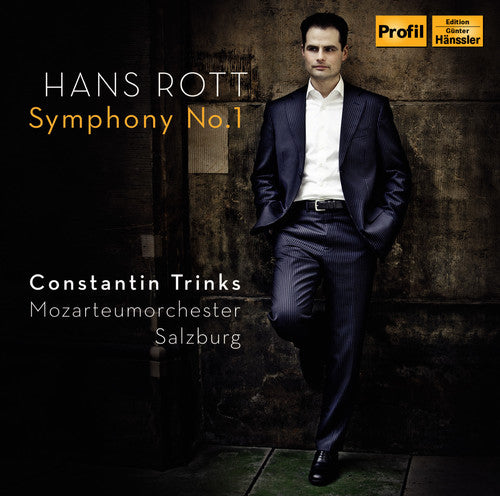
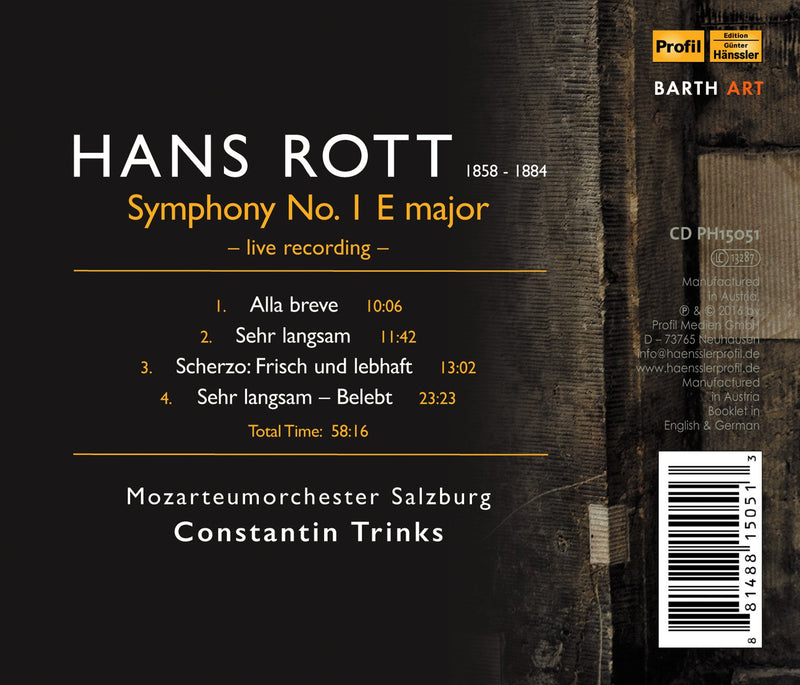
The founder of the new symphony as I understand it - Gustav Mahler, on Hans Rott Hans Rott inspired Gustav Mahler with his highly ambitious Brucknerian dimensions symphony however he fell mentally ill at a young age and died soon after. Not many recordings are available of Rott's music but are becoming more freqent in modern day.
{# optional: put hover video/second image here positioned absolute; inset:0 #}
Romantic Inspirations - Music Of Robert & Clara Schumann
Profil
$10.99
March 29, 2011
SCHUMANN Märchenbilder. 3 Romances. Widmung. Fantasy Pieces. Adagio and Allegro. C. SCHUMANN 3 Romances, op. 22 • Kronberg Academy Masters • PROFIL 10071 (57:40)
These young performers are all members of the Kronberg Academy Masters, a foundation established in connection with the Frankfurt University of Music and the Performing Arts that is dedicated to assisting young and talented artists pursuing performing careers by mentoring them with established musicians. The performers on this recital demonstrate the effectiveness and quality of the program.
Though the title of this disc is Romantic Inspirations: The music of Robert and Clara Schumann, we see that the lion’s share of the music belongs to Robert. This is not unusual, as most other compilations I have seen sort of short-shrift Clara as well. But her Three Romances for violin and piano were composed relatively late in Robert’s career, and were probably inspired by the family acquaintance of Joseph Joachim that was made at that time. The pieces are fully professional and quite entertaining, showing Clara to be no mean melodist herself—I wish there was more here, and there is certainly room for it.
Robert’s works are the standards usually given from his “late chamber music” year of 1849. Though he wrote them for specific instruments (op. 94: oboe, op. 73: clarinet, op. 70: horn, op. 113: viola), he was pragmatic enough to not be too doctrinaire about instrumentation, and all of these works have been played on alternative instruments. Only the viola-bred Märchenbilder retains its pristine scoring on this recording.
Those wanting the original intentions of the composer will have to look elsewhere, but that should not reflect poorly on these excellent performances. It is always exciting to me to hear young people perform Schumann. After all, he really never had a chance to grow old, was the consummate romantic, and it is fascinating to hear what his passion brings out in a young performer. These folks seem determined to let no stone go unturned as far as empathy for the romantic nature of these works is concerned, and though they do keep things within tasteful boundaries, they also are not afraid to give the Schumanns their full due in terms of fervency and strong emotion. The sound here can be a little boisterous for my taste, but adjusting it downward really helps. Good space around the players, and each is a master of his or her instrument. Recommended.
FANFARE: Steven E. Ritter
{# optional: put hover video/second image here positioned absolute; inset:0 #}
Profil
Romantic Inspirations - Music Of Robert & Clara Schumann
SCHUMANN Märchenbilder. 3 Romances. Widmung. Fantasy Pieces. Adagio and Allegro. C. SCHUMANN 3 Romances, op. 22 • Kronberg Academy Masters • PROFIL...
Quantz: Four Concertos for Flute & Strings / Lamb, Willens, Cologne Academy
Profil
$19.99
May 04, 2018
The four stylistically contrasting concertos of this recording represent the technical and expressive range achieved by Johann Joachim Quantz during his long career in the service of the King. Although the music of the Baroque period was becoming less fashionable and being favoured by the gallant style of composers like Carl Philipp Emanuel Bach, Quantz continued to write in a more conservative style, which pleased the Kings tastes. Flutist Eric Lamb is in demand internationally as a concerto soloist, recitalist, concert curator and chamber musician. In 2013, Eric left his post as a core member of the International Contemporary Ensemble - ICE to pursue a career as soloist and chamber musician. Eric is principal flutist of the Chineke! Orchestra London (Associate Orchestra of the Southbank Centre) and co-artistic director of ensemble paladino. Eric is on faculty of the University of Auckland School of Music as Lecturer in Flute and is coordinator of the student contemporary music ensemble.
{# optional: put hover video/second image here positioned absolute; inset:0 #}
Profil
Quantz: Four Concertos for Flute & Strings / Lamb, Willens, Cologne Academy
The four stylistically contrasting concertos of this recording represent the technical and expressive range achieved by Johann Joachim Quantz during his long...
Prokofiev: Symphonies 5 & 7 / Tennstedt, Bavarian Radio So
Profil
$10.99
August 16, 2005
Prokofiev's Fifth Symphony always has the sense of a heroic saga, akin to Beethoven's "Eroica". Klaus Tennstedt's 1977 Bavarian Radio Symphony Orchestra recording adds a feeling of sheer joy, a dance-like animal vitality relating it as well to Beethoven's Seventh. Tennstedt does not neglect the tragedy of the third movement--the horrific shock chords near its conclusion rarely have been played so aggressively--nor are the grotesque and aggressive moments of the scherzo slighted. The strings bite into their toccata-like figurations and the brass and woodwinds exult in the frequent odd sounds they are asked to make. And when the composer's lyrical side emerges, Tennstedt's crisp rhythms suddenly turn flowing.
It may be even more of an achievement that this performance of the Seventh convinces us (at least temporarily) that the work also is a first-rate symphony. Like Beethoven's Eighth, it has been criticized for being regressive because it turns back from the composer's more radical prior utterances. There is an undeniable sense of weakness and resignation in the music, but Tennstedt's performance suggests that's because Prokofiev, beseiged by illness and commissars, was feeling that way. Tennstedt reminds us that the piece is in C-sharp minor for a reason; beneath the surface innocence this conductor, himself an escapee from the same repression as the composer, suggests this positive message and tame language are imposed, and that the deeper sadness is the true message. Fittingly, Tennstedt respects Prokofiev's wishes and uses the original ending, dying out gently, instead of the tacked-on major-key "Socialist optimist" conclusion.
The Bavarian Radio engineers turn in first-rate work. The liner notes are silent as to whether the 1977 tapes came from live concerts, but I detected the faint rustle of an audience. Profil, however, made a gross error in authoring the CD: the Fifth symphony's fourth movement starts one minute and five seconds before the third track ends. Listeners going straight to the fourth track will hear what purports to be the fourth movement, but without its slow introduction. Since this error has no audible effect when the symphony is played straight through, it doesn't affect the "artistic merit" score. Although getting Kuchar's budget set from Naxos is the best way to buy any Prokofiev symphony, there is much value in this uniquely joyful approach to the Fifth, and you really should hear the Seventh without the loud ending. [6/29/2005] --Joseph Stevenson, ClassicsToday.com
{# optional: put hover video/second image here positioned absolute; inset:0 #}
Profil
Prokofiev: Symphonies 5 & 7 / Tennstedt, Bavarian Radio So
Prokofiev's Fifth Symphony always has the sense of a heroic saga, akin to Beethoven's "Eroica". Klaus Tennstedt's 1977 Bavarian Radio Symphony Orchestra...
Shura Cherkassky, born in 1909 in the Crimean port of Odessa, was noted among 20th century pianists for his wayward temperament. Even in old age, he still showed himself in full possession of seemingly effortless power. His extensive repertoire ranged the styles and the centuries. He loved the concert life, and he was a lifelong traveller. From 1928 to the start of the Second World War he was at home in the musical capitals of countries around the world; after the war was over, he developed a predilection for Europe. He was often dubbed a musician of the piano or of the keys, on account of the sounds he conjured up in his virtuosic and spontaneous playing of Liszt and Chopin or other Romantic composers. “Fidelity to the original” never was his sole preoccupation. In this respect he resembled his teacher, the great Josef C. Hofmann, at whose Curtis Institute in Philadelphia he studied once his family had found a new home in the USA in 1923. Before that he had been taught by his mother, who had studied the piano at the St Petersburg Conservatory and gained her diploma there. At the age of nine, Shura Cherkassky gave his first public concert. His childlike delight in playing certainly stayed with him all his life, audible today in the recordings he has left us.
-----
REVIEW:
Although Shura Cherkassky’s unabashedly subjective and capricious style was out of sync with the mid-20th century’s literalist zeitgeist, his way of playing gained newfound acceptance and international acclaim by the mid-1970s, together with similarly inclined pianists benefiting from the “Romantic Revival”, like Jorge Bolet and Earl Wild. If anything, interest in Cherkassky seems to have increased since his death in December 1995, with numerous archival broadcast and concert releases and reissues of long-ignored studio recordings from Cherkassky’s first European career-surge between the early 1950s and early 1960s. Profil’s 10-disc collection draws upon material that most recently appeared on the Testament, Medici Classics, Orfeo, Ermitage, Deutsche Grammophon, and Biddulph labels, much of which will be familiar to piano mavens, if not consistently easy to source.
You get most of Cherkassky’s EMI Liszt output, where colorfully fanciful accounts of the Concerto No. 1 and Hungarian Rhapsody No. 13 stand out, not to mention the glittering and exceptionally well-played Hungarian Fantasy courtesy of DG, with Herbert von Karajan and the Berlin Philharmonic. The early 1950s DG Tchaikovsky First and Second concertos hold little interest aside from Cherkassky’s full-bodied command of the solo parts. If you can accept unusual phrase groupings and frequently reversed dynamics, large-scale Chopin selections like the Fourth Ballade, the Fourth Scherzo, and the F-sharp minor Polonaise will certainly titillate your ears, and maybe even grow on you. Cherkassky’s measured tread and lapidary detailing in the Grande Polonaise is cut from the same cloth as his mentor Josef Hofmann, albeit without that controversial master’s rhythmic élan.
I’ve never been convinced by Cherkassky’s rubatos and myriad tempo modifications in either Mussorgsky’s Pictures at an Exhibition or Stravinsky’s Three Movements from Petrouchka, while such expressive notions thoroughly create character in the Schumann Sonata No. 1, Schumann Fantasy in C major, and an early 1950s Brahms Paganini Variations transmission. Indeed, the latter operates on a much higher technical and musical level than Cherkassky was able to muster in his 1984 Nimbus recording.
In the live 1961 Salzburg Mozart C major Sonata K. 330 Cherkassky prioritizes color over line and mood over structure, yet oozes charm every step of the way. Revisiting the spacious and thoughtfully voiced live 1963 Berg sonata was almost as pleasant a surprise as the most aristocratic and polished reading of Barber’s Excursions I’ve heard in ages.
Unfortunately, swimmy sonic ambience undermines much of the Prokofiev Second concerto’s brilliant scoring, and you really need a more acerbic, harder-hitting piano soloist than Cherkassky, to be honest. One can say the same about the Shostakovich First concerto. Originally issued on LP via World Record Club, the Schumann and Grieg concerto coupling with Adrian Boult and the London Philharmonic apparently turns up here for the first time on CD. Cherkassky indulges himself to the point of shapelessness, only adding to the performances’ generally lackluster impression. On the other hand, the Saint-Saëns/Godowsky The Swan and Chasins’ Rush Hour in Hong Kong capture Cherkassky at his disarming best.
The final disc contains some but not all of the adolescent Cherkassky’s remarkable 1920s solo sides for Victor in abominable and mercifully uncredited transfers, plus the early-1930s Rachmaninov cello sonata with Marcel Hubert. Basically Cherkassky’s inflected phrasing markedly contrasts to cellist Hubert’s relatively straighter reserve; chamber music clearly was not Cherkassky’s bailiwick. Essentially this grab bag of a collection adds up to about 75 percent top-drawer Cherkassky, but at least the price is right.
– ClassicsToday (Jed Distler)
{# optional: put hover video/second image here positioned absolute; inset:0 #}
Profil
Piano Masterpieces / Cherkassky
Shura Cherkassky, born in 1909 in the Crimean port of Odessa, was noted among 20th century pianists for his wayward temperament. Even...


 {# optional: put hover video/second image here positioned absolute; inset:0 #}
Profil
{# optional: put hover video/second image here positioned absolute; inset:0 #}
Profil {# optional: put hover video/second image here positioned absolute; inset:0 #}
Profil
{# optional: put hover video/second image here positioned absolute; inset:0 #}
Profil {# optional: put hover video/second image here positioned absolute; inset:0 #}
Profil
{# optional: put hover video/second image here positioned absolute; inset:0 #}
Profil {# optional: put hover video/second image here positioned absolute; inset:0 #}
Profil
{# optional: put hover video/second image here positioned absolute; inset:0 #}
Profil {# optional: put hover video/second image here positioned absolute; inset:0 #}
Profil
{# optional: put hover video/second image here positioned absolute; inset:0 #}
Profil {# optional: put hover video/second image here positioned absolute; inset:0 #}
Profil
{# optional: put hover video/second image here positioned absolute; inset:0 #}
Profil {# optional: put hover video/second image here positioned absolute; inset:0 #}
Profil
{# optional: put hover video/second image here positioned absolute; inset:0 #}
Profil {# optional: put hover video/second image here positioned absolute; inset:0 #}
Profil
{# optional: put hover video/second image here positioned absolute; inset:0 #}
Profil {# optional: put hover video/second image here positioned absolute; inset:0 #}
Profil
{# optional: put hover video/second image here positioned absolute; inset:0 #}
Profil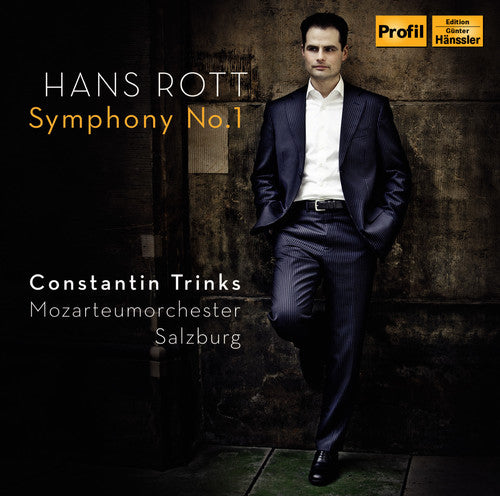 {# optional: put hover video/second image here positioned absolute; inset:0 #}
Profil
{# optional: put hover video/second image here positioned absolute; inset:0 #}
Profil {# optional: put hover video/second image here positioned absolute; inset:0 #}
Profil
{# optional: put hover video/second image here positioned absolute; inset:0 #}
Profil {# optional: put hover video/second image here positioned absolute; inset:0 #}
Profil
{# optional: put hover video/second image here positioned absolute; inset:0 #}
Profil {# optional: put hover video/second image here positioned absolute; inset:0 #}
Profil
{# optional: put hover video/second image here positioned absolute; inset:0 #}
Profil {# optional: put hover video/second image here positioned absolute; inset:0 #}
Profil
{# optional: put hover video/second image here positioned absolute; inset:0 #}
Profil {# optional: put hover video/second image here positioned absolute; inset:0 #}
Profil
{# optional: put hover video/second image here positioned absolute; inset:0 #}
Profil


 {# optional: put hover video/second image here positioned absolute; inset:0 #}


 {# optional: put hover video/second image here positioned absolute; inset:0 #}


 {# optional: put hover video/second image here positioned absolute; inset:0 #}


 {# optional: put hover video/second image here positioned absolute; inset:0 #}


 {# optional: put hover video/second image here positioned absolute; inset:0 #}


 {# optional: put hover video/second image here positioned absolute; inset:0 #}


 {# optional: put hover video/second image here positioned absolute; inset:0 #}


 {# optional: put hover video/second image here positioned absolute; inset:0 #}


 {# optional: put hover video/second image here positioned absolute; inset:0 #}


 {# optional: put hover video/second image here positioned absolute; inset:0 #}


 {# optional: put hover video/second image here positioned absolute; inset:0 #}


 {# optional: put hover video/second image here positioned absolute; inset:0 #}


 {# optional: put hover video/second image here positioned absolute; inset:0 #}


 {# optional: put hover video/second image here positioned absolute; inset:0 #}


 {# optional: put hover video/second image here positioned absolute; inset:0 #}