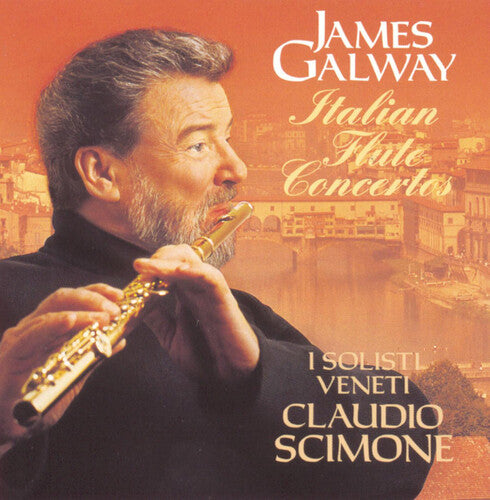
"The Italians embraced the transverse flute rather more cautiously than others, but when they did it was with characteristic enthusiasm; there are plenty more concertos where these six came from. The attribution of the Pergolesi is unqualified in the statement of contents; the annotator states that it was ''attributed to'' him, but Grove lists it as ''extremely doubtful''; it also describes the Tartini work as ''dubious'', but no hint of this is offered in the inlay-booklet. Regarding Romano Antonio Piacentino and his concerto, even that august dictionary is entirely unhelpful. The concerto proves that he existed and its style places him somewhere in the eighteenth century, but that is all. His ability to create something agreeable out of thematic commonplaces recalls Vivaldi. With Tartini and Piacentino we are in the world of the straightforward baroque instrumental concerto, while 'Pergolesi' and Galuppi show traces of operatic connections. Little is known of Louis Gianella (?1778-1817), a flautist who worked at La Scala in Milan, whose curious and otherwise unrecorded Concerto lugubre patently links his two compositional fields—those of the theatre (opera and ballet) and with-flute instrumental music, which includes two other flute concertos...Galway plays with his accustomed silver-tongued panache and has the benefit of the co-operation of both I Solisti Veneti and the recording engineers at their best."
John Duarte, Gramophone [4/1994]
{# optional: put hover video/second image here positioned absolute; inset:0 #}
RCA
Italian Flute Concertos / James Galway
"The Italians embraced the transverse flute rather more cautiously than others, but when they did it was with characteristic enthusiasm; there are...
A busy itinerant flute virtuoso must needs resort to transcriptions of non-flute compositions to provide a sufficiently wide solo repertoire. Of the three Schubert works and arranged here by James Galway, only the Trockne Blumen Variations began life as a composition for flute and piano. The variations provide scope for both the flautist and pianist to excel and the result here is very fine. The Arpeggione Sonata has a realtively humdrum accompaniment, but the solo line transcribes beautifully for the flute. The two movements are coded as tracks 1 and 2, which throws out the numbering of the two following works, but this is not indicated on the leaflet. The famous Standchen too reveals Galway at his most musically expressive and will surely please the many fans of his television appearances. Sound quality is excellent, with the flute central but not too forward, and the piano firmly set off to the right.
-- Gramophone
{# optional: put hover video/second image here positioned absolute; inset:0 #}
RCA
James Galway Plays Schubert / Phillip Moll
A busy itinerant flute virtuoso must needs resort to transcriptions of non-flute compositions to provide a sufficiently wide solo repertoire. Of the...
When Enrico Caruso recorded popular songs, he wasn't "crossing over." There was no producer telling him to go for the "youth market." The greatest opera star of his (or maybe any) time simply liked the stuff, in fact, he even wrote pop songs, as did many of his classical-composer contemporaries. And whether the tunes came from the opera, a Sicilian folk song, or American vaudeville, Caruso's response was the same, delivered in his colossal, golden tenor with a sincerity and enthusiasm that seemed to flow right out of the Victrola horn. CARUSO IN SONG shows the variety of material Caruso tackled outside opera, with songs by Rossini, Tchaikovsky, and Sullivan (without Gilbert,) and a selection of popular songs, including two he wrote himself, "Tiempo antico" and "Dreams of Long Ago." Among the special highlights are a bilingual version of George M. Cohan's "Over There," which has enough brio to bowl the listener over, the favorite "O sole mio," and "Mattinata," a song by Ruggiero Leoncavallo with the composer himself at the piano.
{# optional: put hover video/second image here positioned absolute; inset:0 #}
RCA
Caruso In Song
When Enrico Caruso recorded popular songs, he wasn't "crossing over." There was no producer telling him to go for the "youth market."...
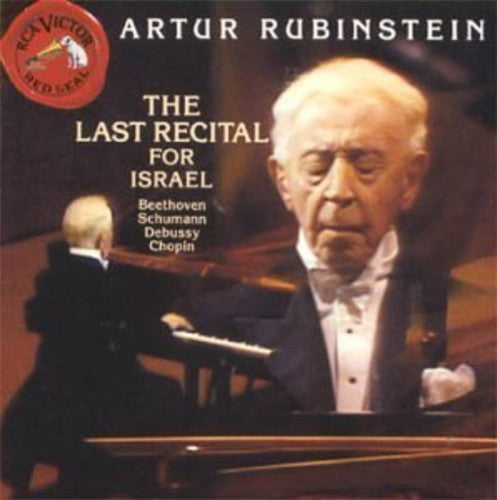
The master was in a rare mood, a mood of Olympian insights and penetrating eloquence...if he had intended this for a last will and testament, it could hardly have been more to his liking or more secure insurance for such immortality as any performer is allowed.
– Albert Goldberg, The Times, about the benefit concert for Israel at Ambassador Auditorium in January, 1975.
The CD is maddeningly uneven. There are some very imposing moments in the Beethoven sonata, but Rubinstein's technical limitations prevent me from enjoying the performance much. On the other hand, the Schumann pieces are considerably better, and Traumeswirren goes very quickly with reasonable accuracy. Maybe he just practiced this music more, or he took a while to warm up.
Many pianophiles will be picking up this disc just to hear Rubinstein play two Chopin Études, the only genre of Chopin's music he never recorded. Both of these performances are fine, and the facility required by the Étude in Co Minor is met very well, especially for an octogenarian. However, the Polonaise is a hash, and shows Rubinstein apparently willing to dispense with accuracy in the pursuit of grand effect. The audience falls for it in a big way but I didn't. The Debussy pieces are very well controlled, and the excellent recorded sound does the pianist's color justice.
In short, this is a very mixed bag, and it is recommended only with severe reservations. But if you'd be willing to pay almost anything to hear Rubinstein play a Chopin Étude, here he is playing two of them.
-- Leslie Gerber, FANFARE [5/1993] reviewing an abridged version of this release, RCA 61160
{# optional: put hover video/second image here positioned absolute; inset:0 #}
RCA
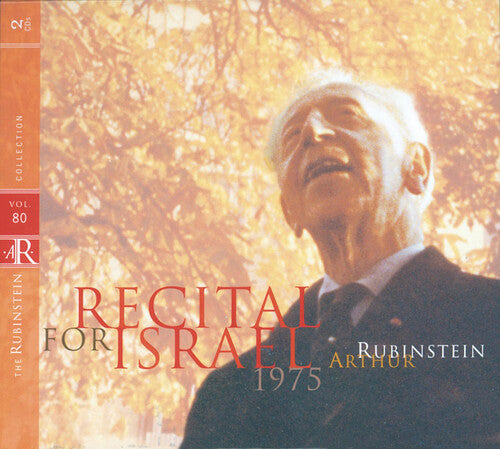
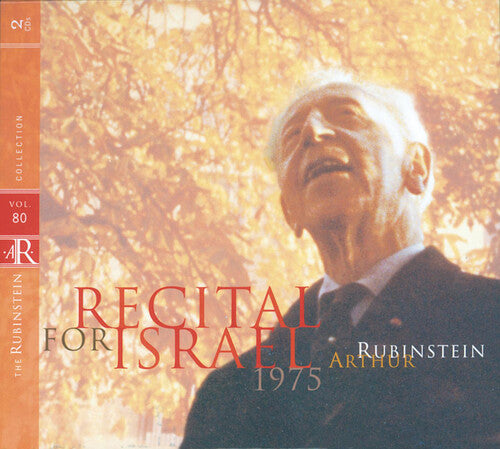
Rubinstein Collection Vol 80 - Recital For Israel
The master was in a rare mood, a mood of Olympian insights and penetrating eloquence...if he had intended this for a last...
Track Listing 1. This Is New 2. You're a Sweetheart 3. My Ideal 4. You Must Have Been a Beautiful Baby 5. Who Can I Turn to Now? 6. Can't Get Out of This Mood 7. East of the Sun 8. Limehouse Blues 9. As Time Goes By 10. Keepin' Out of Mischief Now 11. Stars Fell on Alabama 12. My Melancholy Baby 13. Ace in the Hole, The 14. Someday You'll Be Sorry 15. Hundred Years From Today, A 16. Blues in My Heart 17. Maybe You'll Be There 18. Between the Devil and the Deep Blue Sea 19. I Don't Want to Walk Without You, Baby 20. Make Believe
Featuring Billy Butterfield.
Arrangements by Ralph Burns, Bill Finegan, Al Cohn.
Shortly before she slipped completely into obscurity, singer Lee Wiley recorded two albums for Victor. This Bluebird CD has ten of the 12 songs from West of the Moon, nine of the 12 originally on A Touch of the Blues, and a rendition of "Stars Fell on Alabama" taken from a sampler album. Wiley, only 41 at the time of these last recordings, was essentially through with her career despite still being in prime form. Other than "Stars," Wiley is backed by big bands led by either arranger Ralph Burns or trumpeter Billy Butterfield and mostly performs swing standards, including "You're a Sweetheart," "Can't Get out of This Mood," "Ace in the Hole," "Between the Devil and the Deep Blue Sea," and her signature song, "A Hundred Years From Today." An excellent introduction to the work of this unusual and greatly underrated singer. ~ Scott Yanow
{# optional: put hover video/second image here positioned absolute; inset:0 #}
RCA
As Time Goes By / Lee Wiley
Track Listing 1. This Is New 2. You're a Sweetheart 3. My Ideal 4. You Must Have Been a Beautiful Baby 5....
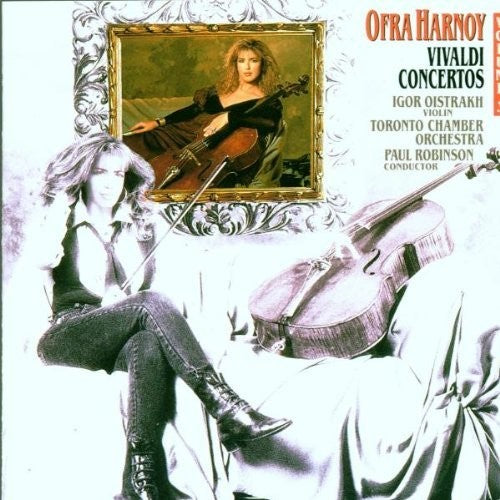
Vivaldi: Concertos / Ofra Harnoy, Igor Oistrakh, Paul Robinson
RCA
$17.99
December 23, 2009
All is now clear: we are to have from Ofra Harnoy all of Vivaldi's concertos for the cello, both alone and in combination with other soloists; moreover, the practice of having one "world premiere recording" on each disc is to be maintained. It is a prospect that pleases. Harnoy's 'lightweight' performances have not always been enthusiastically received in these pages, but with Vivaldi's music she has the happiest empathy—not, as her playing of the slow movements proves, that this is 'lightweight' territory, for she eloquently reveals their tenderness and dignified pathos with no trace of sentimentality; the Adagio of RV420 and Largo of RV407 in particular are alone worth the price of the whole disc. In the outer movements her bow skips and dances, digging as deep as is appropriate,but never more, while those of the Toronto CO do likewise, transparent but not thin in sound. The 'world premiere' work is the Concerto in D, with solo-episodic figurations similar to those in Vivaldi's concertos for that other `dual-register' instrument, the bassoon, and a brief but lovely Adagio affetuoso. Igor Oistrakh might not be the first to spring to mind as a partner for Harnoy the curiously titled double concerto, RV544, b he proves a splendid match for her in style, weigh:. and breadth of sound, and welcomely so in a work in which the soloists respond to one another, rather than play together. A clean and well-balanced recording completes the picture---another compelling disc to add to its precursors (8/88 and 4/90).
-- Gramophone [1/1994]
{# optional: put hover video/second image here positioned absolute; inset:0 #}
RCA
Vivaldi: Concertos / Ofra Harnoy, Igor Oistrakh, Paul Robinson
All is now clear: we are to have from Ofra Harnoy all of Vivaldi's concertos for the cello, both alone and in...
Schuman: Symphony No 10, Etc / Slatkin, St. Louis So
RCA
$17.99
July 23, 2007
The entire 'Bill' Schuman story in a nutshell—and Slatkin tells it like a true believer. He begins with a cheer. It was Leonard Bernstein who described conducting the American Festival Overture as like ''leading a cheer''. Let's just say that Slatkin's St Louis orchestra are some cheer-leaders. Not that Schuman needs much encouragement in this department: his brand of collective festivity is fired-up and there for the taking—shrill, excitable woodwind hoorahs, brassy fanfare-derived syncopations packed in with heavyweight percussion.
To sum up this music, you'd have to say that it exudes determination in every bolt and rivet: creativity equals energy—the American way. Schuman's is both music of the land—gritty, pioneering, open—and of the first cityscapes: iron and steel, always reaching outwards and upwards. It's always good to be reminded of the New England Triptych, of a bygone America where William Billings wrote hymns and hymn tunes became marching songs. Slatkin absolutely delivers the goods here, tough and buoyant but never muscle-bound in the celebratory outer movements, quick to respond to the old-world charm, too—as when the tumult of ''Be glad then, America'' momentarily subsides to leave flute and piccolo piping away like a distant view of the marching band. His solo oboe is an eloquent preacher in the second panel ''When Jesus wept'', the congregation of strings show great refinement.
Schuman's Tenth, and last, Symphony (here receiving its world premiere recording) quickly reveals that not much about its composer's philosophy and musical vocabulary had changed over a long and vigorous career. A survivor's resolve and strength of purpose is still at the centre of things, an overriding spirit of optimism still rules—energy still equals creativity (hence the subtitle ''American Muse''—a conscious act of homage to all those other 'creative pioneers'). But once beyond the declamatory contortions of the first movement (an abstract, but not so distant cousin of the first movement of the New England Triptych, its superstructure riveted with metallic percussion, jagged brass syncopations generating untold energy) we are into another of those protracted Schuman meditations where strings look east in heart-easing glissandos, a lone flute searches for something, and trumpets, as ever, suggest the close proximity of the city. This may be the spiritual heart of the American nation as Schuman understood it, but for all his outward optimism, it's still a very long, restless haul here to the moment of resolution: a radiant G major triad. No time to wallow, though: Schuman's finale is up and running, aspiring string legatos stabilizing inimitable rhythmic counterpoints in the wind. The pay-off—even by Schuman's standards, an uncommonly explosive tattoo of percussion—is raw energy. RCA have contained it in a spacious, vivid, punchy recording. The St Louis orchestra are again virtuosic.
Finally, it was a nice idea on Slatkin's part to throw in the Variations on ''America'', Schuman's affectionate wink to his gritty, visionary predecessor, Charles Ives. It's so deliciously irreverent, this bandstand burlesque: rarely was a tune so deserving of ridicule. The po-faced procession of muted brass and con legno strings punctuated with ludicrous baton-twirling trills of glockenspiel always makes me laugh; I love the wicked harmonic displacements, the operatic woodwinds and trumpet, the silliness of the xylophone, the mad Spanish pastiche—each and every variant, a well-turned raspberry.'
Edward Seckerson, Gramophone
{# optional: put hover video/second image here positioned absolute; inset:0 #}
RCA
Schuman: Symphony No 10, Etc / Slatkin, St. Louis So
The entire 'Bill' Schuman story in a nutshell—and Slatkin tells it like a true believer. He begins with a cheer. It was...
Mario Lanza Double Feature Vol 1 - For The First Time & That Midnight Kiss
RCA
$17.99
June 21, 2011
2 LPs on 1 CD.
Audio Remasterers: Jon Samuels; Nate Johnson.
Recording information: 1949-1959.
Directors: Rudolph Maté; George Stoll.
Two of Mario Lanza's RCA albums are combined onto one compact disc. For the First Time and That Midnight Kiss cover a span from 1949-1959. ~ Sean Westergaard
{# optional: put hover video/second image here positioned absolute; inset:0 #}
RCA
Mario Lanza Double Feature Vol 1 - For The First Time & That Midnight Kiss
2 LPs on 1 CD. Audio Remasterers: Jon Samuels; Nate Johnson. Recording information: 1949-1959. Directors: Rudolph Maté; George Stoll. Two of Mario...
Hark! features the sweet sounds and warm glow of familiar songs, all beautifully decorated in sparkling arrangements. Richard Stoltzman, along with special guests Eddie Gomez, Dave Samuels, Bill Douglas, Jeremy Wall and the Boys Choir of Harlem, swirl all their sounds together for a fantastic holiday recording. Instrumentation of Celtic harp, piano, clarinet and percussion join to make the festive sounds for "Silent Night," "O Little Town of Bethlehem/O Tannenbaum," "Deck the Halls," "Nativity Carol," and nine others.
Tracklist: 1. Ding Dong 2. Silent Night 3. What Child Is This? 4. We Three Kings 5. Adeste Fideles / Gesu Bambino 6. I Wonder As I Wander 7. O Little Town Of Bethlehem 8. Deck The Halls 9. There Is Ne Rose 10. Amay In A Manger / Amazing Grace 11. He Shall Feed His Flock 12. O Come Immanuel 13. Nativity Carol 14. Winter 15. O Holy Night
{# optional: put hover video/second image here positioned absolute; inset:0 #}
RCA
Hark! Richard Stoltzman
Hark! features the sweet sounds and warm glow of familiar songs, all beautifully decorated in sparkling arrangements. Richard Stoltzman, along with special...
Windows - Music For Trumpet And Organ / Touvron, Krapp
RCA
$17.99
$13.99
September 27, 2007
Described as ‘fortuitous’ (by trumpeter and scholar Edward Tarr) the combination of trumpet and organ has inspired a considerable number of composers in the 20th century... With [Bis 565], and a performance by John Wallace at this year’s Edinburgh Festival, Eben’s work, inspired by four of Marc Chagall’s stained-glass windows, looks to be flavour of the month... [Bis 565] sometimes loses the clarity which the closely-miked Touvron boasts. Conversely, this clarity enables Krapp’s precisely articulated chords in Golden Window to contrast more markedly with the melismatic trumpet line.
A misinterpretation of Jolivet’s title Arioso barocco in RCA’s note as ‘poetic evocation of older music’ is corrected by Tarr, who explains the ‘barocco’ derivation as an ‘irregular pearl, with the connotation “distorted” ’... Touvron has a warmer sound (note the mysterious, cup-muted opening) which the various organ stops attempt to throw off-centre.
Performance: 5 (out of 5), Sound: 5 (out of 5)
-- Deborah Calland, BBC Music Magazine
{# optional: put hover video/second image here positioned absolute; inset:0 #}
On Sale
RCA
Windows - Music For Trumpet And Organ / Touvron, Krapp
Described as ‘fortuitous’ (by trumpeter and scholar Edward Tarr) the combination of trumpet and organ has inspired a considerable number of composers...
Starting Here, Starting Now / Original Off-Broadway Cast
RCA
$17.99
November 20, 2012
A musical revue celebrating the songs of love and despair written by Richard Maltby, Jr. and David Shire, Starting Here, Starting Now first opened at the Manhattan Theatre Club in 1976, before moving in March 1977 to the Barbarann Theatre Restaurant, where it enjoyed a run of 120 performances. With Loni Ackerman, Margery Cohen and George Lee Andrews in the cast, backed by three musicians, the revue explored the various ways of tangling and untangling romantic affairs, in what Maltby and Shire described as mini-dramas set to words and music, with the first act exploring the vagaries of romance in the big cities, and act two centering on the breakups and eventual resurgences when the romance has become a thing of the past.
Track Listing 1 The Word Is Love / Starting Here, Starting Now / A Little Bit Off 2 I Think I May Want To Remember Today 3 We Can Talk to Each Other 4 Just Across The River 5 Crossword Puzzle 6 Autumn 7 I Don't Remember Christmas 8 I Don't Believe It 9 Barbara 10 Pleased with Myself 11 Flair 12 Travel 13 Watching the Big Parade Go By 14 I Hear Bells 15 What About Today? 16 One Step 17 Song of Me 18 Today Is the First Day of the Rest of My Life 19 A New Life Coming 20 Finale: Flair (reprise)
Starting Here, Starting Now is a musical revue by the celebrated and many-times-Tony®-nominated team of Richard Maltby, Jr. (lyrics) and David Shire (music). They have enjoyed a remarkably enduring and prolific collaboration dating back to their undergraduate days at Yale in the late 1950s, creating complete scores for at least half a dozen major projects.
Their first off-Broadway show, The Sap Of Life (1961), caught the interest of Harold Prince, Stephen Sondheim, and Jerome Robbins, and early songs of theirs were championed by the likes of Andy Williams, Shirley Bassey, Roberta Flack, Pearl Bailey and Robert Goulet. Barbra Streisand used the song “Starting Here, Starting Now” as the stunning finale to her Emmy® Award-winning television special Color Me Barbra, and chose “What About Today?” as the title song for her first album of exclusively contemporary music.
The pair parted ways in 1970, when Shire went to California to write music for television and film, and Maltby stayed on the east coast to build his remarkable career in theatre directing. In the fall of 1976, Maltby got a call from the Manhattan Theatre Club suggesting that he stage an evening of songs by Maltby and Shire. The offer presented a welcome challenge, for up to that point neither the lyricist nor the composer had felt that even their best scores had been adequately realized on stage.
No one was disappointed. On the opening night of Starting Here, Starting Now, Maltby and Shire experienced for the first time a full evening of their own material that was an unqualified success. In a single moment, it seemed, they had arrived fully formed. Producers appeared, and plans were immediately made to transfer the show to another theater for an extended run. It was ironic that it took a full-fledged "retrospective" to mark what was undeniably a beginning.
Working from a tiny postage-stamp stage, Loni Ackerman, Margery Cohen and George Lee Andrews light up the room with their individual and collective brilliance. At the heart of the Maltby/Shire material is an energetic, intelligent optimism about life and love. All of the songs in Starting Here, Starting Now have an immediate and contemporary impact; there is no need to know the specific origin of each one – but perhaps you may be interested:
“The Word Is Love” was part of the finale of the first Maltby/Shire musical after Yale, The Sap Of Life, which opened at the Sheridan Square Playhouse in 1961.
“Starting Here, Starting Now” was originally intended to be a gentle bossa nova for Robert Goulet. It was written at a time when David Shire was the assistant conductor of Funny Girl on Broadway. Barbra Streisand spotted the song on top of a piano one day – and you know the rest.
“A Little Bit Off” is from an unproduced musical about the denizens of Greenwich Village during the period 1910–20.
“I Think I May Want To Remember Today” survives from a show called Love Match, about Queen Victoria and Prince Albert and the Queen’s attempts to rewrite history to fit her own fantasies. Maltby and Shire were called in to "doctor" the score for this show and ended up writing an entirely new one.
“We Can Talk to Each Other” is an aggressively funny song created for Girl Of The Minute, an unproduced musical that examined the pop-culture phenomenon of instant celebrity.
“Just Across the River” was sung by Phyllis Newman in How Do You Do, I Love You. Michael Stewart (I Love My Wife, Hello, Dolly!) wrote the book for this show about computer dating, which toured on the music tent circuit in 1968. Loni Ackerman made her musical comedy debut in this show.
“Crossword Puzzle” was one of the songs Maltby and Shire contributed to a Ronnie Graham revue at the Upstairs at the Downstairs called Graham Crackers.
“Autumn”was the first song written by Maltby and Shire. During their junior year at Yale they wrote a musical version of Cyrano de Bergerac with a cast that included Dick Cavett, Carrie Nye, Austin Pendleton and John Cunningham. The song became their first to be recorded by Streisand.
“I Don't Remember Christmas” concerns the more painful side of love. It is one of two new songs written specifically for Starting Here, Starting Now.
“I Don't Believe It,” although from Love Match, was completely rewritten by Maltby for Starting Here, Starting Now and transformed into a most contemporary satire.
“Barbara” was written for Richard Maltby's wife on the occasion of their first anniversary.
“Pleased With Myself,” which closes the first act of Starting Here, Starting Now, is from the score of How Do You Do, I Love You.
“Flair” was written especially for the second act of Starting Here, Starting Now.
“Travel” is from a musical adaptation of The River, a novel (and later a film) written by Rumer Godden. The story concerns a close-knit English family living in India; they sing this around a piano after dinner one night.
“Watching the Big Parade Go By” defines, justifies, and honors the function of an audience. This song, written in 1961 for The Sap Of Life, preceded the numerous other "parade" songs from such Broadway musicals as Anyone Can Whistle ("A Parade In Town"), Funny Girl ("Don't Rain On My Parade") and Hello, Dolly! ("Before The Parade Passes By").
“I Hear Bells,” from Love Match, was written to be accompanied by all the bells in the city of London. Lacking those resources in Starting Here, Starting Now, David Shire conceived a magical and witty vocal arrangement.
“What About Today?” is the only song for which David Shire wrote both music and lyrics. Says Shire: "I worked myself out of a depression and a block with that song – it was something I needed to say."
“One Step” began as a straightforward song in How Do You Do, I Love You. For Starting Here, Starting Now, Maltby restructured it and created possibly the biggest production number in the history of three-character revues. It is a perfectly staged vest-pocket knockout.
“Song of Me” was the opening number of The River, sung by a young girl just awakening to life.
“Today Is the First Day of the Rest of My Life” was, oddly enough, from Love Match. Says Maltby: "This will give you some idea of how desperate and demented we were out-of-town with this show. We had Queen Victoria singing a line that wasn't even invented until the 1960s."
“A New Life Coming” was originally entitled "A Charmed Life" and is from the score of The Sap Of Life.
Finale: Reprise of “Flair.”
– from the original liner notes by William H. Evans
{# optional: put hover video/second image here positioned absolute; inset:0 #}
RCA
Starting Here, Starting Now / Original Off-Broadway Cast
A musical revue celebrating the songs of love and despair written by Richard Maltby, Jr. and David Shire, Starting Here, Starting Now...


 {# optional: put hover video/second image here positioned absolute; inset:0 #}
RCA
{# optional: put hover video/second image here positioned absolute; inset:0 #}
RCA {# optional: put hover video/second image here positioned absolute; inset:0 #}
RCA
{# optional: put hover video/second image here positioned absolute; inset:0 #}
RCA {# optional: put hover video/second image here positioned absolute; inset:0 #}
RCA
{# optional: put hover video/second image here positioned absolute; inset:0 #}
RCA {# optional: put hover video/second image here positioned absolute; inset:0 #}
 {# optional: put hover video/second image here positioned absolute; inset:0 #}
RCA
{# optional: put hover video/second image here positioned absolute; inset:0 #}
RCA {# optional: put hover video/second image here positioned absolute; inset:0 #}
RCA
{# optional: put hover video/second image here positioned absolute; inset:0 #}
RCA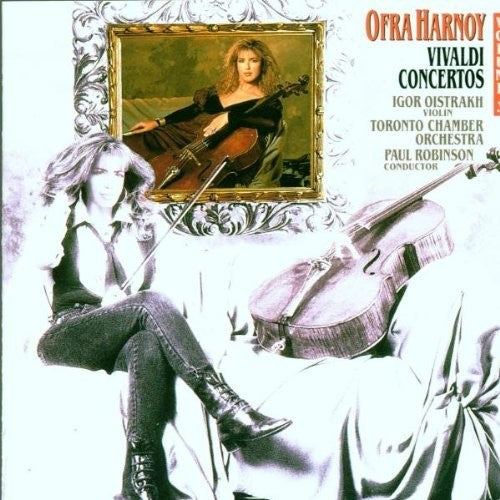 {# optional: put hover video/second image here positioned absolute; inset:0 #}
RCA
{# optional: put hover video/second image here positioned absolute; inset:0 #}
RCA {# optional: put hover video/second image here positioned absolute; inset:0 #}
RCA
{# optional: put hover video/second image here positioned absolute; inset:0 #}
RCA {# optional: put hover video/second image here positioned absolute; inset:0 #}
RCA
{# optional: put hover video/second image here positioned absolute; inset:0 #}
RCA {# optional: put hover video/second image here positioned absolute; inset:0 #}
 {# optional: put hover video/second image here positioned absolute; inset:0 #}
 {# optional: put hover video/second image here positioned absolute; inset:0 #}
RCA
{# optional: put hover video/second image here positioned absolute; inset:0 #}
RCA {# optional: put hover video/second image here positioned absolute; inset:0 #}
RCA
{# optional: put hover video/second image here positioned absolute; inset:0 #}
RCA {# optional: put hover video/second image here positioned absolute; inset:0 #}
On SaleRCA
{# optional: put hover video/second image here positioned absolute; inset:0 #}
On SaleRCA {# optional: put hover video/second image here positioned absolute; inset:0 #}
RCA
{# optional: put hover video/second image here positioned absolute; inset:0 #}
RCA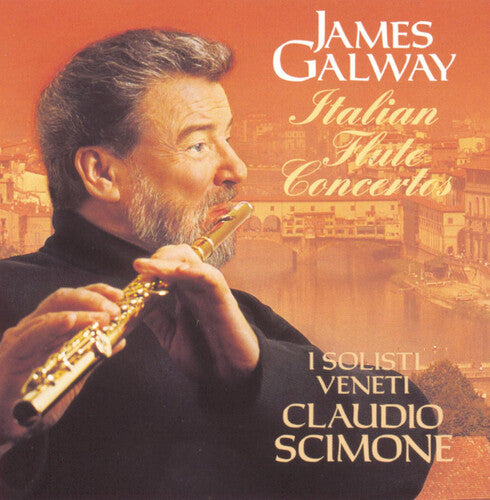
 {# optional: put hover video/second image here positioned absolute; inset:0 #}

 {# optional: put hover video/second image here positioned absolute; inset:0 #}


 {# optional: put hover video/second image here positioned absolute; inset:0 #}
 {# optional: put hover video/second image here positioned absolute; inset:0 #}
 {# optional: put hover video/second image here positioned absolute; inset:0 #}


 {# optional: put hover video/second image here positioned absolute; inset:0 #}
 {# optional: put hover video/second image here positioned absolute; inset:0 #}

 {# optional: put hover video/second image here positioned absolute; inset:0 #}


 {# optional: put hover video/second image here positioned absolute; inset:0 #}

 {# optional: put hover video/second image here positioned absolute; inset:0 #}



 {# optional: put hover video/second image here positioned absolute; inset:0 #}

 {# optional: put hover video/second image here positioned absolute; inset:0 #}
 {# optional: put hover video/second image here positioned absolute; inset:0 #}

 {# optional: put hover video/second image here positioned absolute; inset:0 #}

 {# optional: put hover video/second image here positioned absolute; inset:0 #}