World Music Sale 2026
A journey through sounds from across the globe!
Over 100 titles featuring World Music titles are on sale now at ArkivMusic!
Discover selections from composers such as Koppel, Supra, Mayotte and more!
Shop the sale now before it ends at 9:00am ET, Tuesday, May 5th, 2026.
115 products
Dvorak's Prophecy - Film 6 - Lou Harrison & Cultural Fusion [DVD]
“Lou Harrison and Cultural Fusion”
A PostClassical Ensemble “More than Music” film
Written and produced by Joseph Horowitz
Visual presentation by Peter Bogdanoff
Film six in the six-film Naxos series:
“Dvorak’s Prophecy: A New Narrative for American Classical Music”
Joe Horowitz writes of this film: "No non-Western musical idiom has so impacted on the Western concert tradition as Indonesian gamelan, beginning with the Javanese Pavilion at the 1889 Paris Exposition: an epiphany. Sampling gamelan-inspired works by Debussy, Poulenc, Messiaen, and McPhee, we arrive at a paragon exemplar of cultural fusion – Lou Harrison – and a pair of concertos, for violin and piano, unsurpassed by those of any other American. The composer/scholar Bill Alves demonstrates the layered complexity of Javanese gamelan, and how it translates into keyboard textures composed by Harrison for Keith Jarrett. For Harrison’s Concerto for Violin and Percussion, we tour the “junk percussion” – including flowerpots and washtubs – that Harrison made sing and dance."
He goes on to write "We now inhabit a “postclassical” musical aesthetic that, rather than piling on modernist complexity, draws inspiration from a variety of sources, Eastern and Western, “high” and popular. The prophetic figure, it seems to me is Lou Harrison, who practiced world music before there was a name for it. Harrison was certainly a composer who discovered a usable past – including music from Indonesia, China, and Japan. In the New World, a usable starting point was and remains the sorrow songs of African Americans, so eloquently celebrated around the turn of the twentieth century by W. E. B. Du Bois and Antonin Dvořák. Dvořák’s 1893 prophecy that “negro melodies” would foster a “great and noble” school of American music has never seemed more pertinent.”
"These six beautiful films reveal a compelling, inclusive musical tradition, deeply interwoven with American culture." – J. Peter Burkholder, author of 'A History of Western Music' and 'Listening to Charles Ives'.
Folk Music of China, Vol. 19 - Folk Songs of the Lahu, Jingpo, Jino & Achang Peoples
China’s rich and diverse musical heritage has been recorded and documented in a stunning, original collection. With twenty albums in the pipeline, this is a highly specialized series with the appeal of perhaps being the closest thing to the ‘complete works’ of traditional Chinese music.Each album features a different region of the vast territory; an historical snapshot of China’s heritage. Due to the cultural privacy China mandates, these are in fact rare, musical gems. This is volume nineteen of a twenty album series, exploring China’s rich and diverse musical heritage. It includes ballads and love songs of the Lahu, featuring the gourd mouth organ and Jew’s harp; the most famous working song of the Jingpo people, the husking rice tune Yue Lu; mountain and hunting songs of the Jino peoples, played on bamboo ideophones; and excerpts from the Achang opera of spring lantern.
Dvorak's Prophecy - Film 1- Dvorak's New World Symphony - A Lens on the American Experience of Race [DVD]
“Dvořák's New World Symphony - A Lens on the American Experience of Race”
A PostClassical Ensemble “More than Music” film
Written and produced by Joseph Horowitz
Visual presentation by Peter Bogdanoff
Film one in the six-film Naxos series:
“Dvorak’s Prophecy: A New Narrative for American Classical Music”
The six documentary films in this series align with Joe Horowitz's new book 'Dvořák’s Prophecy and the Vexed Fate of Black Classical Music'. Like the book, they explore a “new paradigm” for the history of classical music in the United States. Why classical music in America “stayed white” is a central concern of Dvořák’s Prophecy." The films incorporate Naxos recordings as well as live performances, including William Sharp singing Ives, Kevin Deas singing Harry Burleigh, and Dennis Russell Davies conducting Harrison’s Piano Concerto. Participating commentators include critic Alex Ross, Black Classical Music pioneer George Shirley, music historians Bill Alves, Beth Levy, and Judith Tick, and the African-American conductors Roderick Cox and the late Michael Morgan.
This first film in the series keys on Dvořák’s prophecy and explores its present-day pertinence. In New York City and Spillville, Iowa, Dvořák boldly chose to regard African-Americans and Native Americans as representative Americans. That decision was both acclaimed and ridiculed at the time. It remains inspirational. His New World Symphony, still the best known and best loved symphonic work conceived on American soil, is saturated with the influence of plantation song, and also with Henry Wadsworth Longfellow’s The Song of Hiawatha. This act of appropriation, the film argues, was an act of empathy performed by a great humanitarian. The musical selections here are mainly taken from the Hiawatha Melodrama, which Joe Horowitz co-composed with the music historian Michael Beckerman with orchestrations by Angel Gil-Ordonez. It mates Dvorak with Longfellow. The participating commentators include the music historians Mark Clague and Lorenzo Candelaria, the literary historian Brian Yothers, the conductor JoAnn Falletta, faculty members from Howard University – and also (sagely commenting on cultural appropriation) the bass-baritone Kevin Deas, and the late Michael Morgan.
"Horowitz's six beautiful films reveal a compelling inclusive tradition in American classical music, open to influences from popular, Black, Native American, and world music, this music is deeply interwoven with American culture." – J. Peter Burkholder, author of A History of Western Music and Listening to Charles Ives.
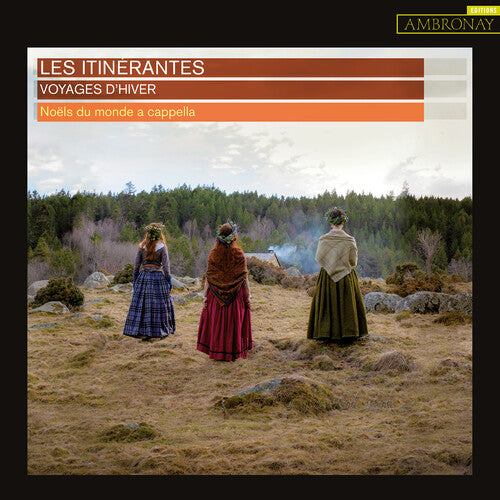
Voyages D'Hiver / Les Itinerantes
| The three singers-explorers of the ensemble Les Itinérantes invite us on an exhilarating journey through the heart of winter. The program of this release includes popular and traditional songs from the whole world, whose a cappella interpretation warms the soul and the senses. The story of Les Itinérantes begins in January 2017, Paris, France. Three women who met through their musical comedy training sing together for the first time for what was supposed to be "One or two shows just like that" and very quickly switched to "Ok, we have to continue together!" Three musicians with varied influences: from old music (Pauline) to jazz and song (Manon) through world music (Elodie)… who have decided not to choose and to mix everything together. There you have it, Les Itinérantes are born: an a cappella trio whose repertoire currently covers 11 musical styles, 9 centuries and 19 languages. |
Folk Music of China, Vol. 20 - Folk Songs of the Hui, Manchu, Xibe, Korean & Gin Peoples
| China’s rich and diverse musical heritage has been recorded and documented in a stunning, original collection. With a total of twenty albums, this is a highly specialized series with the appeal of perhaps being the closest thing to the ‘complete works’ of traditional Chinese music. Each album features a different region of the vast territory; an historical snapshot of China’s heritage. Due to the cultural privacy China mandates, these are in fact rare, musical gems. This is the concluding volume of a twenty album series, exploring China’s rich and diverse musical heritage. It features banquet and hua’ersongs of the Hui; folk songs of the Manchu, featuring the Ba jiao gu (octagonal drum); dingba tunes of the Xibe, accompanied by the feite kena; lyrical songs of the Korean peoples, including songs from Arirang tune group; and sea songs of the Gin peoples accompanied by the duxianqin. |
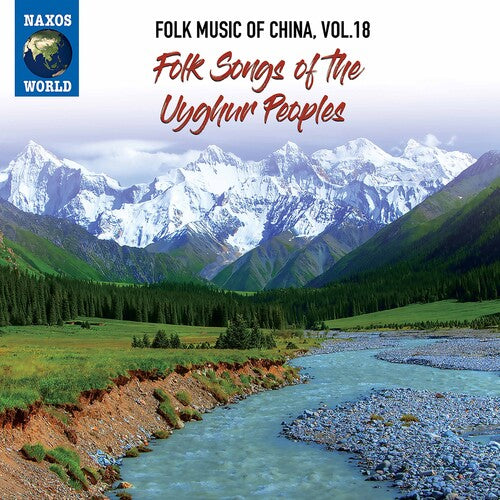
Folk Music of China, Vol. 18 - Folk Songs of the Uyghur Peoples
| China’s rich and diverse musical heritage has been recorded and documented in a stunning, original collection. With twenty albums in the pipeline, this is a highly specialized series with the appeal of perhaps being the closest thing to the ‘complete works’ of traditional Chinese music. Each album features a different region of the vast territory; an historical snapshot of China’s heritage. Due to the cultural privacy China mandates, these are in fact rare, musical gems. Folk songs from the Uyghur peoples of the Xinjiang Uyghur Autonomous Region. This album features six folk songs from the Yili region in northern Xinjiang, five folk songs from Kashgar and Artux in southern Xinjiang and two excerpts from the Uyghur Twelve Muqam. All are played on traditional instruments such as rewap, dap, tembor and dotar. This is volume eighteen of a twenty album series, exploring China’s rich and diverse musical heritage. |
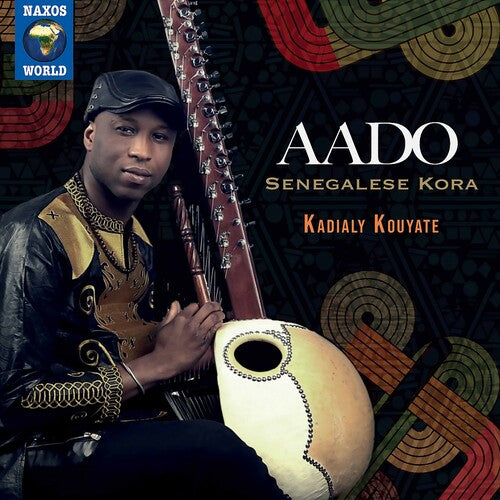
Kouyate: Aado - Senegalese Kora
Kadialy’s captivating kora skills originate from his long family history of Kouyate griots. Embracing the art of traditional storytelling, via the 21-stringed kora, he draws on his past heritage for inspiration while creating his own uplifting compositions. In the Senegalese society, ‘aado’ stands for ‘moral customs and values’. Kadialy’s enchanting songs touch on these principles and reflect on the Mandinka culture.“...Admirable skill and precision.” (Songlines #125) “Kadialy’s skillful and emotional playing of the kora produces some peaceful ethereal and yet highly melodic rhythms which I truly love.” (The Folk Roots) “Kadialy Kouyate’s kora playing soothes the soul with its beautiful melodies and deep messages from the griot tradition of West Africa.” (Penny Black Music, Nicky Crew)
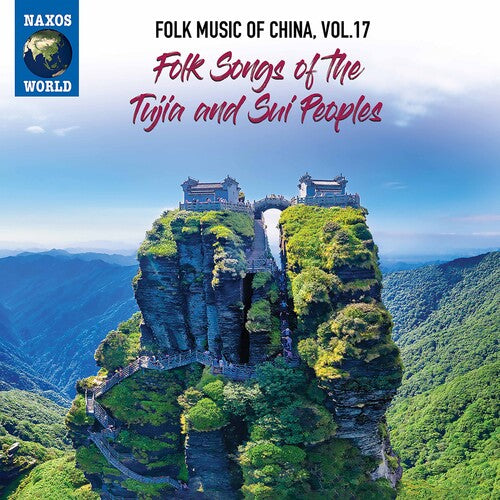
Folk Music of China, Vol. 17 - Folk Songs of the Tujia & Sui Peoples
China’s rich and diverse musical heritage has been recorded and documented in a stunning, original collection. With twenty albums in the pipeline, this is a highly specialized series with the appeal of perhaps being the closest thing to the ‘complete works’ of traditional Chinese music. Each album features a different region of the vast territory; an historical snapshot of China’s heritage. Due to the cultural privacy China mandates, these are in fact rare, musical gems. Folk songs from the Tujia and Sui peoples of Hubei and Guizhou Province. This album features ‘inserting chant’ songs and south songs of Changyang by the Tujia peoples, and various ancient songs of the Sui. All played on traditional instruments such as mouth organs, bronze drums, gongs and suona, as well as the popular dongdong kui (bamboo clarinet), that dates back thousands of years. This is volume seventeen of a twenty album series, exploring China’s rich and diverse musical heritage.
Chouyu, Scott: Little Universe / A Moving Sound
A Moving Sound has established worldwide recognition as a truly innovative ensemble. They borrow melodic and rhythmic inspiration from the musical traditions of Asia, Africa and the West to create rich and unique compositions. ‘Little Universe’ has been praised for its crossing of stylistic and cultural boundaries, beautiful melodies and avant-garde originality. “One of the few groups offering truly creative music from Asia.” (Marco Werman, BBC Public Radio International) “A Moving Sound is one of the most original outfits working in the world music arena today. An inspired marriage of Taiwanese traditional sounds and Western pop experimentation that forges an important new musical dialogue.” (Tom Pryor)
Transkrypton: Piano and Accordion / Duo Wolanska/Gajda
On the present release Duo Wolanska/Gajda presents transcriptions for Piano and Accordion. DUO WOLAŃSKA/GAJDA is an unusual chamber music ensemble. The combination of piano and accordion opens unlimited performance possibilities. Two solo, independent instruments collide with each other on a sonoristic level, thus creating a new quality of instrumental dialogue. Established in 2014, the ensemble is formed by pianist Julia Wolańska-Gajda and accordionist Michał Gajda. On a regular basis, the artists give concerts in Poland and abroad (New York, Virginia, Arkansas, Japan, Malaysia, Korea, Indonesia, Vietnam, Cambodia, Thailand, Austria, Germany, or the Netherlands). They have already performed in the most prestigious concert halls in the world: New York’s Carnegie Hall, Berliner Philharmonie, Mozarteum Saal in Salzburg, Musikverein in Vienna, Kioi Hall in Tokyo, or Guri Art Hall in Seoul. Duo Wolańska/Gajda has won a number of coveted awards and accolades. They are prizewinners of, among others, the Gold Medal in the 4th Manhattan International Music Competition (2019), 1st prize in the 1st Vienna International Music Competition (2019), 1st prize in the Salzburg Grand Prize Virtuoso Inter-national Music Competition (2018), 1st prize in the 54th Internationaler Akkordeonwettbewerb Klingenthal (2017), ‘Top Winner’ 1st prize in the 25th Ibla Grand Prize World Music Competition in Ragusa (2016), or 1st prize in the Val Tidone International Music Competitions (2015).
Outstanding / Timba MM
Folk Music of China, Vol. 15 - Folk Songs of the She, Miao & Li Peoples
China’s rich and diverse musical heritage has been recorded and documented in a stunning, original collection. With twenty albums in the pipeline, this is a highly specialized series with the appeal of perhaps being the closest thing to the ‘complete works’ of traditional Chinese music. Each album features a different region of the vast territory; an historical snapshot of China’s heritage. Due to the cultural privacy China mandates, these are in fact rare, musical gems. This album features ballads from the She, wandering love songs from the Miao, and lullabies from the Li peoples. All played on traditional instruments such as the suona, lu sheng and yehu. This is volume fifteen of a twenty album series, exploring China’s rich and diverse musical heritage.
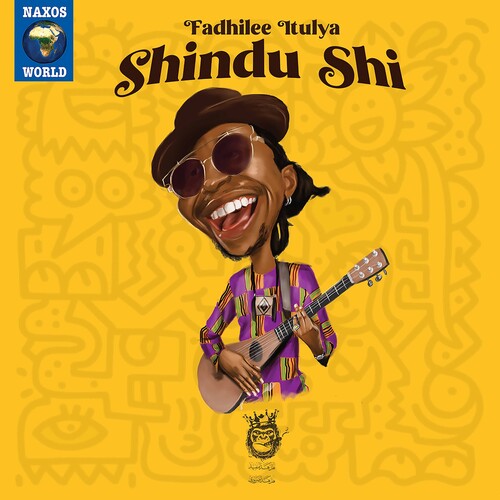
Itulya: Shindu Shi
In 2018, Fadhilee was asked to take part in a research program to explore the musical genre Omutibo. This finger-picking style of guitar playing, which originated from the Luhya people of Western Kenya, was popular around the mid ‘50s to the late ‘60s. Fadhilee started implementing it into his own songs after noticing his own natural playing style was similar. He is now a modern-day pioneer known for bringing Omutibo music to a new generation. SHINDU SHI is an album of good-time music, fetching its roots from the Luyha technique ‘Omutibo’ from Western Kenya. With a comical, dramatic and playful flair, Fadhilee is a breath of fresh air to the Kenyan and international music market, creating his own vibrant style.
Folk Music of China, Vol. 14 - Songs of the Tibetan Plateau: Monba & Lhoba Peoples
China’s rich and diverse musical heritage has been recorded and documented in a stunning, original collection. With twenty albums in the pipeline, this is a highly specialized series with the appeal of perhaps being the closest thing to the ‘complete works’ of traditional Chinese music. Each album features a different region of the vast territory; a historical snapshot of China’s heritage. Due to the cultural privacy China mandates, these are in fact rare, musical gems. This is volume fourteen of a twenty album series, exploring China’s rich and diverse musical heritage. Folk songs from the Monba and Lhoba peoples of the Tibet Autonomous Region. These celebrational love songs of the Monba and the Jia yi jia and Bai li songs of the Lhoba, are played on a range of traditional instruments such as the Da beng, Jew’s harp and double-tube flutes.
Folk Music of China, Vol. 13 - Songs of the Tibetan Plateau
China's rich and diverse musical heritage has been recorded and documented in a stunning, original collection. With nineteen albums in the pipeline, this is a highly specialized series with the appeal of perhaps being the closest thing to the 'complete works' of traditional Chinese music. Each album features a different region of the vast territory; an historical snapshot of China's heritage. Due to the cultural privacy China mandates, these are in fact rare, musical gems. This series explores China's rich and diverse musical heritage. The songs featured in these recordings are folk songs from the Tibetan peoples of Qinghai province and the Tibet autonomous region. Beautiful folk singing, atmospheric soundscapes of nature and varied traditional instruments are heard in this colorful album from Tibet.
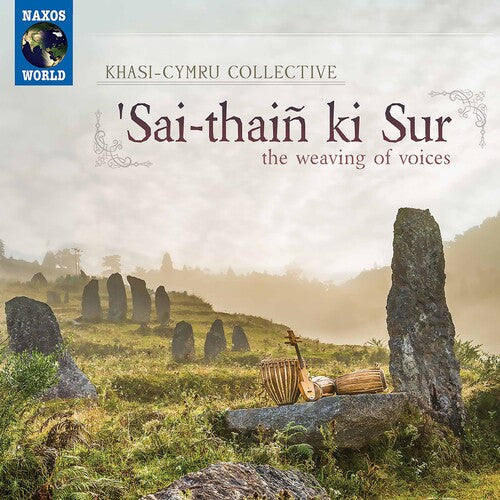
Sai-Thain Ki Sur - The Weaving of Voices
Bringing together the music of Wales and the Khasi Hills in North East India, 'Sai-thaiñ ki Sur (the weaving of voices in Khasi) is a unique cross-cultural collaboration. Between 1841 and 1969, hundreds of men and women left Wales to establish and maintain the first Welsh Overseas Mission in the Khasi and Jaiñtia Hills. This three-year album project explores the folk songs, poetry, missionary hymns, folklore, and resultant culture of the crossing of Wales and India. Welsh songwriter Gareth Bonello (The Gentle Good) has recorded this poetic, beautiful album with artists from the indigenous Khasi community.
Folk Music of China, Vol. 12 - Folk Songs of the Bai, Nu & Derung Peoples
China's rich and diverse musical heritage has been recorded and documented in a stunning, original collection. With nineteen albums in the pipeline, this is a highly specialized series with the appeal of perhaps being the closest thing to the 'complete works' of traditional Chinese music. Each album features a different region of the vast territory; an historical snapshot of China's heritage. Due to the cultural privacy China mandates, these are in fact rare, musical gems. This series explores China's rich and diverse musical heritage. The songs featured in these recordings are folk songs from the Bai, Nu and Derung peoples of Yunnan province. As with Chinese traditional visual arts, the song titles explain their mood and origin.
Territorial Songs - Recorder Music by Sunleif Rasmussen
Since his emergence on the musical scene in 2002 when his Symphony No. 1, “Oceanic Days” was the winner of The Nordic Council Music Prize, Faroese composer Sunleif Rasmussen has continued to make a name for himself and his island home on the world music scene. Among his many striking compositions is a growing corpus of works featuring the recorder. Beginning with his expansive concerto for recorders and large orchestra, Territorial Songs (2008-09), Rasmussen sought to expand the instrument’s persona and possibilities, freeing it from its historic associations with the music of the Renaissance and Baroque, pushing it into new territories. In this mission, the composer has been exceptionally fortunate to have as muse and musical partner one of the greatest recorder players ever, Michala Petri. The current project represents an overview of works composed from 2009 to 2020. All are scores featuring the recorder: as concerto soloist with a symphony orchestra, (Territorial Songs), a string ensemble (Winter Echoes), an obbligato in a complex choral setting (“I” ), chamber music (Flow), and unaccompanied (Sorrow and Joy Fantasy), each work a milestone in Rasmussen’s musical development . As always, Michala Petri brings each score to life with consummate artistry and is perfectly matched by each of the ensembles performing with her.
Folk Music of China, Vol. 11 - Folk Songs of the Dai & Hani Peoples
China’s rich and diverse musical heritage has been recorded and documented in a stunning, original collection. With nineteen albums in the pipeline, this is a highly specialized series with the appeal of perhaps being the closest thing to the ‘complete works’ of traditional Chinese music. Each album features a different region of the vast territory; an historical snapshot of China’s heritage. Due to the cultural privacy China mandates, these are in fact rare, musical gems. This series explores China’s rich and diverse musical heritage. The songs featured in these recordings are folk songs from the Dai and Hani peoples of Yunnan province. As with Chinese traditional visual arts, the song titles explain their mood and origin.
Folk Music Of China, Vol. 10 - Folk Songs Of The Pumi, Lisu & Nakhi Peoples
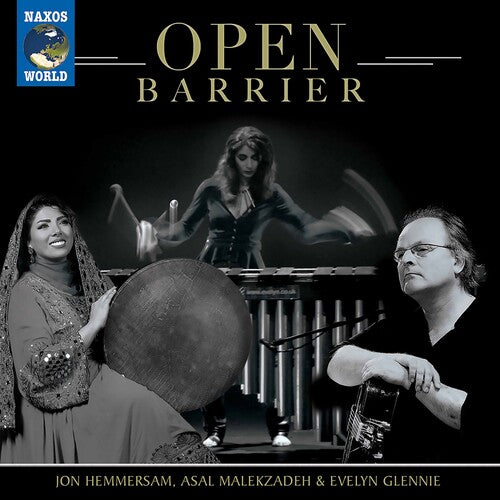
Open Barrier / Evelyn Glennie, Jon Hemmersam, Asal Malekzadeh
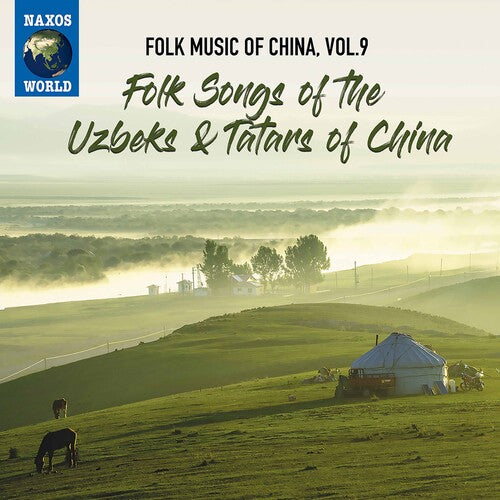
Folk Music Of China, Vol. 9 - Folk Songs Of The Uzbeks & Tatars Of China
China’s rich and diverse musical heritage has been recorded and documented in a stunning, original collection. With fifteen albums in the pipeline, this is a highly specialized series with the appeal of perhaps being the closest thing to the ‘complete works’ of traditional Chinese music. Each album features a different region of the vast territory; an historical snapshot of China’s heritage. Due to the cultural privacy China mandates, these are in fact rare, musical gems. The Uzbek and Tatar peoples both live in Xinjiang province and speak Turkic languages. The population of Chinese Uzbeks is around ten thousand, which is approximately three times that of the Tatars. The majority of these two peoples live in the northern and western regions of Xinjiang province. The Uzbek music displays its artistic charm with complex melodic variations and gorgeous ornaments. Their instrumental music mainly includes interludes of Shashmaqam and dutars accompany all the Uzbek musical pieces. The music of the Tatars is the gemstone in Xinjiang’s musical crown, with many of their songs being popular among different ethnic groups. In this album, the accordion accompanies all the Tatar songs. The kubyz, the brass jew’s harp, is another popular instrument among them and they also perform on an instrument similar to a long end-blown flute, the qurai.
Sones de Aqui y de Ajazz / Martinez Herrera, Moreno
The present release is a unique compilation of Mexican music and jazz fusion. Reinventing music, making unusual fusions, attending the Zacatecan Jazz and Blues University festivals, meeting world musicians, Samuel Martines Herrera, the pianist from Potosí, is a brand of the major leagues who always give a home run, throwing himself without fear of what they will say as he collects the best of jazz, composes, illustrates the avant-garde, and provides surprise. Jorge Morenos is a musician, composer, author, and expert of the Mexican stringed instrument, the jarana. He has performed all over the world, including the US, Canada, Hong Kong, and Costa Rica.
Rapsodia Cubana / Yamile Cruz Montero, Christos Asonitis
The Cuban classical pianist Yamile Cruz Montero and the Greek jazz drummer Christos Asonitis are a couple in life and in music. Although they come from two different musical worlds, they have found a common language. Both of them arrange classical to contemporary Cuban piano music with great precision and feeling, such as compositions by Aldo López Gavilán, Andrés Alén, José Maria Vitier & Ernán López-Nussa for piano and percussion. They present the traditional and popular Cuban music styles and fuse them with influences from world music. Some of the works leave space for improvisation, which the two musicians use with creative enthusiasm. The international duo has already played live in Cuba, Germany, Great Britain and Greece. They are very proud to present their debut album as a creative duo: Rapsodia Cubana.“Magical, authentic, touching” (The New Listener)
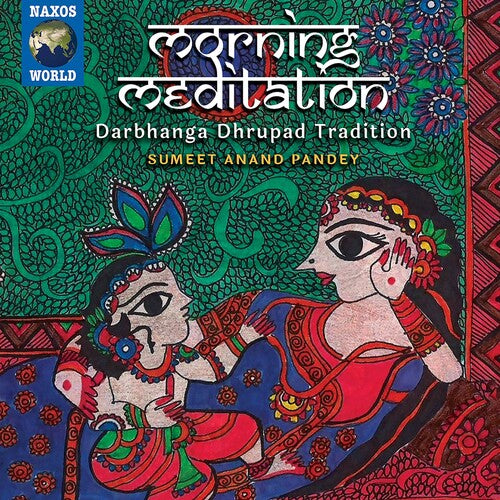
Morning Meditation - Darbhanga Dhrupad Tradition / Sumeet Anand Pandey
Sumeet Anand Pandey is a 10th-generation Dhrupad singer, a genre of Hindustani classical music that dates back to the 15th century and the most ancient form of Indian classical music still alive today. There is no Indian musical heritage that has lasted the test of time this far, based on original documentation. Originally for meditative, spiritual and religious purposes, the ancient Dhrupad writings are often ‘in praise of the Almighty’. As the artform progressed, it was adopted by more confined groups and eventually became popular in Courts of the Mughal Emperor and even among the masses. Immovable and permanent; spiritual, heroic, thoughtful... gradually developing to an accelerating rhythmic pulse. Sumeet has been interviewed on Indian TV (video, right): “listening to Sumeet was educational and made putting this web series together all worth it.” (Arteree TV)