Based on real events and drawing on Georg Büchner’s revolutionary play, Alban Berg’s Wozzeck turns a grimly tragic narrative of violence and murder into one of the most powerful and original operas of the 20th century. Berg’s uncompromising portrayal of brutality and madness generated much controversy, but the significance of Wozzeck was soon recognised; its compelling lyrical expansiveness, large-scale dramatic gestures and remarkable musical structures producing music of overwhelming emotional intensity. The Financial Times declared this to be "a beautiful, moving, engrossing production… this is a consummate Wozzeck, blending clarity, lyricism, compassion and crushing force."
-----
REVIEW:
Marc Albrecht embeds Wozzeck within a lineage of lyrically sprung, dance-driven operas from Weber’s Oberon to Der Rosenkavalier, taking in Lortzing and Die Fledermaus along the way. The singing is accomplished with style, especially the astonishingly secure Captain of Marcel Beekman and the engagingly sinister comic turn of Willard White as the Doctor. Even were it not among the most beautifully played and sung accounts on record and film, this Wozzeck would command attention for Krzysztof Warlikowski’s staging.
23 Vocalise-Études (Arr. For Alto Saxophone & Piano)
BIS
CD
$21.99Jun 10, 2016
Saxophonist Harry White and pianist Edward Rushton present this album of 23 etudes by composers such as Ravel, Dukas, Poulenc, Villa-Lobos, and more. The history behind these works dates back to 1906, when a voice professor at the Paris Conservatoire, Amedee-Landely Hettich, made it his mission to change vocalises and etudes from monotonous scalar exercises to works of art in themselves. In the three decades that followed, Hettich persuaded some of France’s most respected composers to write etudes that would not only challenge the performer’s skills, but also exude musicality.
The Love Unlimited Orchestra were the instrumental voice of Maestro Barry White. Rhapsody in White, the group's debut LP written and produced by BW, was issued in 1974, following his breakthrough solo success the year before. Mostly instrumental, it's highlighted by their No. 1 signature song, "Love's Theme," a.k.a. The launchpad of the 1970s disco movement - but also includes Barry White vocal appearances on the wildly popular LP cuts, "Midnight and You" and "Baby Blues." 140g Limited Edition Black Vinyl
Britten: Beggar's Opera / Curnyn, Bickley, White, Jones, Randle
Chandos
CD
$43.99Oct 27, 2009
This Chandos production must now be first choice for this work.
Welcome to John Gay’s and Benjamin Britten’s romp through some seamy but also colourful and vibrant elements of 18 th century London. This work established the ballad opera in which spoken dialogue alternated with musical items. Gay’s satirical words were set to well-known traditional and popular tunes. Two hundred and twenty years later Britten added 20 th century accompaniments.
What’s entirely Britten here is the fresh caterwauling Overture (tr. 2) in which the various characters are given brief sound-portraits. There’s an oboe of sinuous sweetness for Polly (0:40), a cavorting clarinet for Macheath (1:29), suave strings and a jocular bassoon for the highwaymen (2:35) and a bantering circus-like master of ceremonies style for Mr Peachum (3:25). It’s all terrifically realized by the City of London Sinfonia who play marvellously throughout.
But what of the songs? Filch’s ‘’Tis woman that seduces all Mankind’ (tr. 5) is a good example of Britten allowing an original tune free rein while giving it modern dress with balmy woodwind and harp. The heroine Polly comes in (tr.12) to strains of her first song over which there are snatches of dialogue. This, like the melodrama which shortly follows (tr. 20), is Britten’s neat way of subverting the claim in the opening dialogue that this opera will have no “unnatural” recitative. Polly’s first song, ‘Virgins are like the fair flower in its lustre’ has as its tune Purcell’s ‘What shall I do to show how much I love him?’ from Dioclesian. Like its original, it is shown by Leah-Marian Jones to be at once wistful and coy. Her duet with Susan Bickley’s Mrs Peachum, ’O Polly, you might have toyed and kissed’ (tr. 15) catches well a cosy lullaby make-believe, aided by the gently rocking strings’ accompaniment. It’s lovely but only fleeting. Another notable accompaniment is the flutter-tonguing flute illustrating Polly’s ‘The Turtle thus with plaintive crying’ (tr. 19).
The highwayman hero Macheath enters and Tom Randle proves courteous enough to Jones’ simpering. The duet between Macheath and Polly, ’Were I laid on Greenland’s coast’ (tr. 22) is sweetly done but I felt the singers were over-conscious of the need to match the flowing orchestration and then the addition of chorus and drum. Some of the natural freshness is lost that’s present in the 1963 Aldeburgh Festival staging on DVD (Decca 074 3329). In this Chandos CD ‘The Miser thus a shilling sees’ (tr. 24) responds better to the typical careful attention of conductor Christian Curnyn’s approach. The disciplined emphasis of rhythm in its thorny progression matches the text’s poetic expression of loss. A pity, however, the second appearance of “Till home and friends are lost at last” (1:54) isn’t, as marked in the score ‘(in the distance)’ as the lovers go their separate ways. It’s an effect achieved in the BBC broadcast recording of the original 1948 production conducted by Britten (Pearl GEM 0225).
The highwaymen’s ’Fill ev’ry glass’ (tr. 26) is a drinking song of the sturdy, resolute variety in 2009 where a lustier abandon was shown in 1948. ‘Let us take the road’ (tr. 28) is infused with eagerness because of the excitement Britten and Curnyn convey in sketching the approach of the coach. Tom Randle’s Macheath has a too cultivated spoken voice but his singing is virile enough. You can hear this in ‘If the heart of a man is depressed with cares’ (tr. 29), marked as a caressing Andante backed by sweetly musing violin solo and rocking clarinet. Again I felt the line was held back a little in deference to the detail of the accompaniment. At this point Macheath is visited by a parade of prostitutes and what’s entertaining in the Decca DVD is rather curious here. With no sounds incorporated of women moving around, squealing and the like , you might think Macheath is imagining it all. I guess this is so as not to detract from Britten’s own variety parade of instruments, a kind of ‘Young Person’s Guide to Women’. There’s a superb tambourine to enliven the headiness of ‘Youth’s the season made for joys’. Randle sings with sunny freedom the ad libitum ‘Ah’s above the chorus repeat, though the top C final phrase is left to a soprano. Now betrayed by the women, his ‘At the Tree I shall suffer with pleasure’ has a disciplined testiness but less venom than Decca’s Kenneth McKellar.
Again more telling in this Chandos production is the more meditative material. The opening song of Act 2, ‘Man may escape from rope and gun’ (CD2, tr. 2), where Randle shows how transfixed Macheath is in his repetition of ‘woman’, savours past joys even while aware they’re the cause of present pain. Sarah Fox, as Lucy Lockit, is scarily efficient in her spite in ‘Thus when a good Housewife sees a rat’ (tr. 3). Polly’s response is the more sensitively elegiac ‘Thus when the Swallow seeking prey’ (tr. 10) and here Leah-Marian Jones is rich, smooth and eloquent. For me, however, Macheath’s ‘How happy could I be with either’ (tr. 11) is taken so fast it becomes too much a tongue-twister virtuoso piece losing some of its whimsy. In 1948 Peter Pears’ lighter touch was more effective. Polly has the easier task of rising above all this with ‘Cease your funning’ (tr.12), whose merging into the chorus and distancing of perspective are successfully achieved before we’re brought back to earth with a vengeance by Lucy’s crisp, snappy ‘Why how now, Madam Flirt!’ (tr. 13). The finale begins with Lucy and Polly showing great resolve. ‘No power on earth can e’er divide’ (tr. 14) is well progressed by Curnyn to an exciting ‘Horay’ trio response from Macheath, Lockit and Peachum. The there’s then increasing speed with a backing chorus in Sullivanesque abandon.
The opening song of Act 3, Lucy’s ‘When young at the bar’ (tr. 16) should be familiar as the tune is Purcell’s ‘If love’s a sweet passion’ from The Fairy Queen. Fox invests it with its original sad yearning while Curnyn points the claustrophobic cloying nature of Britten’s rich scoring of the wry accompaniment. Of a different order and part of the score’s kaleidoscopic variety is the relished archness of Frances McCafferty as Mrs Trapes delivering ‘In the days of my youth I could bill like a dove’ (tr. 21) with relished archness. To this is added the raucous carousing of Lockit and Peachum. Shortly there’s also the poignancy of Lucy and Polly’s ‘A curse attends a woman’s love’ (tr. 25). The paradox that these two candidates for Macheath’s affection can at one moment be united in their shared sense of rejection and understanding of the impossibility of their situation and at the next daggers drawn as rivals and eager still to court Macheath with warm affection at ‘Hither, dear husband, turn your eyes’ (tr. 28) is exploited dramatically. Fox’s pleading for Macheath’s life with ‘When he holds up his hand’ (tr. 31) ought to be the more persuasive, aided by Britten’s obbligato oboe accompaniment. ‘The Charge is prepared’ is a stock, formal chorus considerably pepped up by Mrs Peachum’s triumphant ‘Ah’s and glissando shrieks over its orchestral postlude.
Britten creates a closing scena (tr. 34) with Macheath in the condemned cell at first extolling the virtues of drink when about to die, then recalling pretty women. This gives way to the questioning protest ‘must I die?’. This is well sung by Randle but doesn’t quite have Pears’ grasp of the torment of ever-fluctuating contrasts of mood. Polly and Lucy offer a moving show of support, ‘Would I might be hanged’ to the heavily insistent backdrop of the funeral knell. In 1948 Britten’s knell is less weighty but more searing. Macheath realistically confesses ‘my courage is out’. The spoken dialogue wipes this all away. The highwaymen begin an address directly to the audience to demand the playwright provides a reprieve and all the players join in so the work can end with a dance. This bit of trickery and the rejection of the moral that vice must be punished works better in sound alone than the quicker and tamer removal of justice in the DVD. So you finish the Chandos sound recording remembering the company’s lusty tra-las and Fox’s top C.
This Chandos is the fullest version of the three currently available in the UK, playing at 117:52 in comparison with Decca’s 93:50 and Pearl’s 79:03. The differences are largely down to the Chandos including more of Gay’s spoken dialogue with alterations and additions by Tyrone Guthrie though even here I’d guess about a quarter of the dialogue published in the full and vocal scores has been cut. I don’t think this is a disadvantage because there’s a good deal of repetition in the text anyway. However, some musical numbers are also cut in the other recordings: Mrs Peachum’s ‘If Love the Virgin’s Heart invade’ (CD1 tr. 9) can only be heard here. To see the piece staged is a benefit. On the DVD the dialogue generally has a touch more pace and life, being less self-conscious in delivery. In the same vein the switch from dialogue to music flows more seamlessly and the folksong origins of many of the tunes are delivered with a more disarmingly innocent directness. The feeling between the characters is clearer in the ensemble numbers. The 1948 recording is striking for the verve of Britten’s direction, the charm of Pears’ light heroic manner and the lovely unforced upper register of Nancy Evans as Polly. Listen to her in ‘The Miser thus a shilling sees’. On the other hand it also at times adopts an over-romantic style, as in ‘O Polly, you might have toyed and kissed’ or is too patrician as in ‘Virgins are like the fair flower’.
To conclude, then, although sometimes more studied and deliberate than it might be, including careful points of emphasis within the dialogue, this Chandos production must now be first choice for this work. It also offers you in most luxuriant detail the colour and density of Britten’s orchestration.
Copland: Old American Songs I & Ii, Etc / Willard White
Chandos
CD
$21.99Jun 01, 1991
Includes traditional folksong(s) from barbados. Soloists: Willard White, Graeme McNaught. Includes traditional folksong(s) from jamaica. Soloists: Willard White, Graeme McNaught. Includes traditional spiritual(s). Soloists: Willard White, Graeme McNaught.
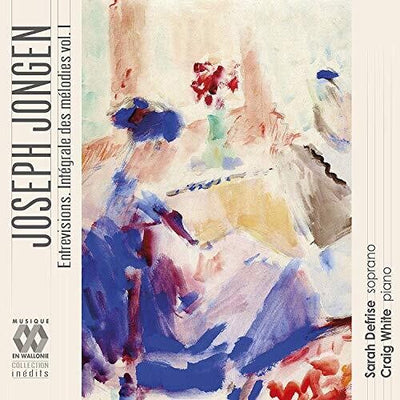
Jongen: Entrevisions (Intégrale des mélodies, Vol. I)
Musique en Wallonie
CD
$20.99Oct 11, 2019
In 2016 Sarah Defrise unearthed more than twenty unpublished songs by Joseph Jongen (1873-1953), some of them preserved amongst the composer's private papers. Such a discovery is an important event in the Belgian musical landscape. This young soprano now offers the first complete recording of these songs, of which this constitutes the first volume. We have chosen to focus on works from both the composer's youth and his maturity. This album therefore presents an unpublished cycle of setting of poems by Armand Silvestre (1892), the famous cycle op. 25 (1902), from which the first song had always previously been missing, and a selection of later songs dating from 1909 to 1928. Jongen's sensitive and subtle art is carried by the intelligent and luminous performance by the duo formed by Sarah with the English pianist Craig White.
Cavalli: Il Giasone / Alarcon, Sabadus, Hammarstrom, Cappella Mediterranea
Alpha
DVD
$34.99Feb 22, 2019
This production of Francesco Cavalli’s Il Giasone was filmed in January 2017 at the Grand Théâtre of Geneva. It forms a part of the ‘Cavalli tetralogy’ of the past few years, conducted by the man who has become Cavalli’s great ambassador: Leonardo Garcia Alarcón. Il Giasone, Dramma musicale, in a Prologue and Three Acts, first performed on 5 January 1649, alternates the tragic with the comic, with no concern for fidelity to the mythological legend of Jason and Medea. Francesco Cavalli’s opera, composed for the carnival season in Venice, presents a mosaic of contrasted episodes, rich in musical emotions. His music here attains a remarkable degree of evocative power, with la musica having the upper hand over la dramma. Il Giasone represents the subtle equilibrium between lyricism and narrative. The comic, the tragic, and the supernatural all meet and mingle, and Cavalli’s Lamenti – forming the climax of the work – are particularly unequalled,. Resolutely burlesque and zany, Serena Singaglia’s production celebrates the opera’s sensuality. Le Temps commented: ‘In the pit, the Cappella Mediterranea with Garcia Alarcón pursue a sense of musical flux with delicacy, lightness and quick-footedness, ideally responding to the score’s demands. With an instrumental sound that is both round and sprightly, they succeed in capturing the ludic dimension of the work, its melodic freshness, and its harmonic tensions. Drama and rapture are artfully fused together.”
-----
REVIEW:
The top-notch cast really savor the score’s lyricism, balancing all the cross-dressing camp with something disarmingly heartfelt. Dominique Visse is an irrepressible Delfa, taking ‘her’ pleasure wherever possible, and there are fine cameos from the veteran tenor Raúl Giménez as the cuckolded Egeo (cruelly styled as Peter Ustinov’s Poirot in Death on the Nile), Willard White’s Oreste and Migran Agadzhanyan as a nervily energetic Demo.
Leocadia Begbick - Jane Henschel Fatty "the Bookkeeper" - Donald Kaasch Trinity Moses - Willard White Jenny Smith - Measha Brueggergosman Jim Maclntyre - Michael König O’Brien/Higgins - John Easterlin Bank-Account Bill - Otto Katzameier Alaska-Wolf Joe - Steven Humes
Conductor: Pablo Heras-Casado Stage Direction : Alex Ollé, Carlus Padrissa – La Fura dels Baus
A hard-hitting new production of Kurt Weill’s Rise and Fall of the City of Mahagonny by the Catalan collective La Fura dels Baus at the Teatro Real de Madrid.
Composed in the 1930s by Kurt Weill and Bertolt Brecht, this is a mordant satire on capitalism and the inexorable industrialisation of a society in which the ultimate crime is not having money. In twenty scenes the authors tell the story of a city lost in the middle of a desert and run by three thugs; in Mahagonny food, sex, gambling and violence rule supreme.
The production by Alex Ollé and Carlus Padrissa, both of La Fura dels Baus, combines enormous inventiveness, joy and energy with awe-inspiring ferocity.
Perfect casting brings together a group of singers – Measha Brueggergosman, Michael König, Jane Henschel and Willard White – who are also marvellous actors.
The Teatro Real Orchestra and Chorus are directed by young Spanish conductor Pablo Heras-Casado, who actually began his career at the Teatro Real. In November 2010, he received the “El Ojo Crítico” prize, awarded annually to Spain’s most outstanding artists in the classical music field.
Director: Andy Sommer Length: 138 min - Image: 16/9 NTSC Audio: PCM Stereo, Dolby Digital 5.1 Subtitles: French / English / German / Spanish Zones: All Zones - 1 disc
Bach: Cantatas Vol 23 / Suzuki, Bach Collegium Japan
BIS
CD
$21.99Dec 01, 2003
BWV 10, composed for the feast of the Visitation of the Blessed Virgin Mary, is a setting of the German translation of the Magnificat. The cantata is more compact than Bach’s Latin Magnificat––seven numbers (instead of 12) and about two thirds as long––and not as grand (one trumpet, for example, instead of three). The choir, as in most cantatas of the period, appears only in the opening chorus and the final chorale. In a duet for alto and tenor, the chorale melody is not sung, but intoned by the solo trumpet. Cantatas 93, 107, and 178 were composed for the fifth, seventh, and eighth Sundays after Trinity respectively. No. 93 is a prime example of the chorale cantata; all of its seven movements quote the chorale melody wholly or partially. Cantatas 107 and 178 show how flexible Bach was in applying the principle. BWV 107’s chorale tune appears in the opening choral fantasia and again in the expanded chorale finale, but not in the intervening movements, a recitative, and four consecutive arias. However, Bach uncharacteristically uses the unedited text of the chorale in all movements. In BWV 178, the chorale tune appears in four of the seven movements, but the text is paraphrased in the middle five. When listening to Bach’s cantatas one must always expect to be surprised.
Some general notes: after Maestro Suzuki himself, the closest thing to a constant in the series remains Peter Kooij’s steady bass. The leading soprano is now Yukari Nonoshita, whose clear, near white tone is entirely appropriate for Bach’s music. Tenors come and go; note that four different tenors, all satisfactory, appear on these four discs. Suzuki continues to alternate between male or female altos depending on the specific task at hand. The soloists participate in the chorus but do not sing alone. Western names have become quite rare in the list of performers, with Japanese musicians handling most parts, vocal and instrumental, with their by-now-accustomed excellence. The notes remain exemplary, but Klaus Hofmann now shares that task with Suzuki, whose function is generally to explain his decisions regarding problems with the performing editions. As always, BIS’s recordings are first-rate... Of course, I’m going to urge interested listeners to acquire [this disc]. Bach and Suzuki are still one of the best tandems going.
This second release from Globe Music celebrates the 400th anniversary of Shakespeare’s death by recording the music from two legendary and Tony and Olivier award-winning productions that enjoyed sold-out runs on Broadway, the West End, in the cinema and at Shakespeare’s Globe. Featuring Mark Rylance and Stephen Fry. (Globe Music)
Robert White Sings Beethoven / White, Ma, Kavafian, Sanders
Sony Masterworks
CD
$17.99Jan 15, 2014
When I reviewed Robert White's Angel collection of Beethoven and Weber folk-song arrangements {The Gallant Troubadour, Fanfare 9:4), I mentioned this RCA collection as another possible source of pleasure to those who enjoyed the Angel set. Here it is on compact disc sounding at least as good as ever with the tenor in his element supported by virtuoso playing (Beethoven's settings were supposed to be playable by amateurs but they'd better be good amateurs). Full texts are provided, but so clear is White's enunciation that you'll have little need for them; one of the songs, “The Soldier,“ is probably better known nowadays as “The Minstrel Boy.“ Unfortunately, RCA could think of nothing appropriate that would serve to fill the CD out, so it contains only 44:25 of music, including pauses between songs, but what's here is certainly choice.
Tafelmusik Baroque Orchestra and Chamber Choir salutes its 40th anniversary season with the release of Gloria, a program originally recorded and released by CBC Records in 2008. Ivars Taurins directs the 25-voice choir and the orchestra under Music Director Emerita Jeanne Lamon in this program of sacred baroque works that distinguishes Tafelmusik as being “head and shoulders above most of its competitors. Tafelmusik’s performance breathes such fresh life into this ancient score that it catches one up in its rare enthusiasm.” (Fanfare) Soprano Ann Monoyios, countertenor Matthew White, and tenor Colin Ainsworth are the featured vocal soloists. The recording opens with Gloria in excelsis Deo by J.S. Bach, a festive if rarely performed work that the composer later adapted for the Mass in B Minor. Paired with Vivaldi’s exuberant and joyous Gloria, Tafelmusik “emphasizes the legato of the vocal line, allowing the clipped rhythms of the accompanying orchestra to buoy the music along naturally.” (Fanfare). With its gracious airs and its lively choruses, Mondonville’s Dominus regnavit is a splendid example of the 18th-century grand motet.
-----
REVIEW (An excerpt of a review of a previously released edition of this album):
The program here is the most distinctive aspect of the performance: whereas most readings pair the Gloria with other Vivaldi choral works, this begins with Bach's Gloria in excelsis deo, BWV 191 -- a work in the same festive mood but packed with characteristic polyphony. In the middle comes a change of pace: de Mondonville's grand motet Dominus regnavit. It's as imposing as the Bach and Vivaldi pieces, but soberer, with dark outer choruses surrounding delicate movements for soloists and a representation of a flood that calls for virtuoso playing from both the choristers and the instrumentalists. All handle these difficulties confidently.
The program's tripartite structure casts a new light on Vivaldi's very familiar work, and this remains a strong choice for anyone getting to know Vivaldi's Gloria.
Leocadia Begbick - Jane Henschel Fatty "the Bookkeeper" - Donald Kaasch Trinity Moses - Willard White Jenny Smith - Measha Brueggergosman Jim Maclntyre - Michael König O’Brien/Higgins - John Easterlin Bank-Account Bill - Otto Katzameier Alaska-Wolf Joe - Steven Humes
Conductor: Pablo Heras-Casado Stage Direction : Alex Ollé, Carlus Padrissa – La Fura dels Baus
A hard-hitting new production of Kurt Weill’s Rise and Fall of the City of Mahagonny by the Catalan collective La Fura dels Baus at the Teatro Real de Madrid.
Composed in the 1930s by Kurt Weill and Bertolt Brecht, this is a mordant satire on capitalism and the inexorable industrialisation of a society in which the ultimate crime is not having money. In twenty scenes the authors tell the story of a city lost in the middle of a desert and run by three thugs; in Mahagonny food, sex, gambling and violence rule supreme.
The production by Alex Ollé and Carlus Padrissa, both of La Fura dels Baus, combines enormous inventiveness, joy and energy with awe-inspiring ferocity.
Perfect casting brings together a group of singers – Measha Brueggergosman, Michael König, Jane Henschel and Willard White – who are also marvellous actors.
The Teatro Real Orchestra and Chorus are directed by young Spanish conductor Pablo Heras-Casado, who actually began his career at the Teatro Real. In November 2010, he received the “El Ojo Crítico” prize, awarded annually to Spain’s most outstanding artists in the classical music field.
Director: Andy Sommer Length: 138 min Subtitles: French / English / German / Spanish Zones: All Zones - 1 disc
Parsifal, Wagner's last opera, is a work of intense humanity. + Created in honor of the Wagner bicentenary, Stephen Langridge's new production, with designs by Alison Chitty, distils with 'intellectual fiber and visual eloquence' (Financial Times) the timeless and universal nature of the Parsifal story. + Tenor Simon O'Neill stars in the title role. + René Pape as Gurnemanz is 'immaculate' (Guardian), Gerald Finley as Amfortas is 'compelling' (Telegraph) and Angela Denoke as Kundry is 'dramatically electrifying' (Telegraph). + Antonio Pappano leads the Orchestra of the Royal Opera House
"I attended the premiere, fearful that the opera would be tawdry and terrible, that the work would make fun of Smith, who died in 2007 at 39. But it proved a weirdly inspired work: engrossing, entertaining and ultimately quite moving... Here is an unlikely holiday gift that should delight and fascinate anyone interested in contemporary opera and American popular culture." -- Anthony Tommasini, The New York Times [11/20/2012]
In a tragic-comic take on the extremes of celebrity culture, composer Mark Anthony Turnage, librettist Richard Thomas and director Richard Jones add Anna Nicole Smith to opera’s gallery of bad, sad girls. A pneumatic Playboy model who married an octogenarian billionaire, she achieved grotesque fame before her destitute, drugriddled death. With its jazz-coloured score and Eva-Maria Westbroek’s starry performance, this is, as the New York Times said: “an engrossing outrageous, entertaining and, ultimately deeply moving opera”.
"...It's a tremendous show...shocking it isn't; stunning it is!" The Independent
Anna Nicole – Eva-Maria Westbroek Old Man Marshall – Alan Oke The Lawyer Stern – Gerald Finley Virgie – Susan Bickley Cousin Shelley – Loré Lixenberg Larry King – Peter Hoare Aunt Kay – Rebecca de Pont Davies Older Daniel – Dominic Rowntree Blossom – Allison Cook Doctor – Andrew Rees Billy – Grant Doyle Mayor – Wynne Evans
Royal Opera Chorus Royal Opera House Orchestra Antonio Pappano, conductor
Richard Jones, stage director
Recorded live at the Royal Opera House, 23 & 26 February 2011.
Bonus: - Cast Gallery - Illustrated synopsis - Behind the scenes feature including artist interviews
Picture format: 1080i High Definition Sound format: LPCM 2.0 + DTS 5.1 Region code: 0 (worldwide) Subtitles: English, French, German, Spanish Running time: ca. 120 mins No. of Discs: 1 (Blu-ray)
"I attended the premiere, fearful that the opera would be tawdry and terrible, that the work would make fun of Smith, who died in 2007 at 39. But it proved a weirdly inspired work: engrossing, entertaining and ultimately quite moving... Here is an unlikely holiday gift that should delight and fascinate anyone interested in contemporary opera and American popular culture." -- Anthony Tommasini, The New York Times [11/20/2012]
"Anna Nicole may not be the new Madame Butterfly, but its subject matter certainly constitutes a modern-day Lulu of sorts. Prudes should run for cover, ’cause almost everything in this opera is out in the open. Everyone else has gotta see it." -- San Francisco Classical Voice
In a tragic-comic take on the extremes of celebrity culture, composer Mark Anthony Turnage, librettist Richard Thomas and director Richard Jones add Anna Nicole Smith to opera’s gallery of bad, sad girls. A pneumatic Playboy model who married an octogenarian billionaire, she achieved grotesque fame before her destitute, drugriddled death. With its jazz-coloured score and Eva-Maria Westbroek’s starry performance, this is, as the New York Times said: “an engrossing outrageous, entertaining and, ultimately deeply moving opera”.
"...It's a tremendous show...shocking it isn't; stunning it is!" The Independent
Anna Nicole – Eva-Maria Westbroek Old Man Marshall – Alan Oke The Lawyer Stern – Gerald Finley Virgie – Susan Bickley Cousin Shelley – Loré Lixenberg Larry King – Peter Hoare Aunt Kay – Rebecca de Pont Davies Older Daniel – Dominic Rowntree Blossom – Allison Cook Doctor – Andrew Rees Billy – Grant Doyle Mayor – Wynne Evans
Royal Opera Chorus Royal Opera House Orchestra Antonio Pappano, conductor
Richard Jones, stage director
Recorded live at the Royal Opera House, 23 & 26 February 2011.
Bonus: - Cast Gallery - Illustrated synopsis - Behind the scenes feature including artist interviews
Picture format: NTSC 16:9 anamorphic Sound format: LPCM 2.0 + DTS 5.1 Region code: 0 (worldwide) Subtitles: English, French, German, Spanish Running time: ca. 120 mins No. of DVDs: 1
Amfortas is sung and acted with the greatest distinction by Gerald Finley. Denoke is always striking as Kundry but doesn't have quite a large enough voice for the demanding role. The minor roles are well taken. And the orchestra covers itself with glory, tirelessly magnificent for all 270 minutes.
– BBC Music Magazine
This is a well-thought-through production whose ideas don’t fight against the music. In musical terms, too, this is a simply excellent performance. Gurnemanz is a role that René Pape might have been born to sing. Finley is similarly balm to the ears as Amfortas. Denoke seizes every dramatic opportunity which the role gives her.
– MusicWeb International
Richard Wagner PARSIFAL
Parsifal - Simon O’Neill Gurnemanz - René Pape Kundry / Voice from Above - Angela Denoke Amfortas - Gerald Finley Klingsor - Willard White Titurel - Robert Lloyd
Royal Opera Chorus and Orchestra (chorus master: Renato Balsadonna) Antonio Pappano, conductor
Stephen Langridge, stage director Alison Chitty, set and costume designer Paul Pyant, lighting designer Dan O’Neill, choreographer
Recorded live at the Royal Opera House, February 2014
Bonus: - Interviews with Antonio Pappano and Simon O’Neill - Cast gallery
Picture format: 1080i High Definition Sound format: LPCM 2.0 / DTS 5.1 Region code: 0 (worldwide) Subtitles: English, French, German, Japanese, Korean Running time: 270 mins (opera) + 25 mins (bonus) No. of Discs: 2 (Blu-ray)