The two works on this release are highly contrasting- Johannes Brahms’s Clarinet Quintet and David Bruce’s Gumboots. David Bruce describes his inspiration for Gumboots: “…it was born out of the brutal labour conditions in South Africa under Apartheid, in which black miners were chained together and wore Gumboots while they worked in the flooded gold mines… slapping the boots and chains was used by the workers as a form of communication which was otherwise banned… this later developed into a form of dance.” Clarinetist Julian Bliss performs here alongside the Carducci Quartet.
For this album, renowned classical guitarist Christoph Denoth joins with the London Symphony Orchestra under conductor Jesus Lopez Cobos to bring us a beautiful recording of compositions by Lorenzo Palomo (b. 1938), Joaquin Rodrigo (1901-1999), and Joquin Malats (1872-1912). The title track of the album, Palomo's Nocturnos de Andalucia, was composed for Pepe Romero. The full suite for guitar and orchestra was premiered in Berlin on January 27, 1996, with Romero performing. Christoph Denoth began his concert career at age 15. He regularly performs with chamber ensembles, such as the Nouvel Ensemble Contemporain and the Offenburger Streichtrio. He also performs solo concerts internationally. Joquin Malats' Serenata Espanola is arranged for this recording by Christoph Denoth and Jonathan Rathbone, and is the world premiere recording.
The third volume in our series of Charles-Marie Widor’s Organ Symphonies, performed by Joseph Nolan on the magnificent Cavaillé-Coll organ of L’église de la Madeleine, Paris. Bridging the generations from Mendelssohn to Messiaen, Empire to Republic, Widor was born to the organ. His Lyonnaise kinsfolk were organ-builders, he showed early talent for the instrument, and for decades was the embodiment of its might and splendour across the Gallic domain - his ‘Organ Symphonies’ were genre-defining in their influence.
Joseph Nolan is an internationally renowned organist, acclaimed as ‘brilliant and such an astute musician’ (Gramophone UK). He was appointed to Her Majesty’s Chapels Royal, St James’s Palace in 2004, and has since been invited to perform and record in some of the world’s premiere venues – including the refurbished Organ of Buckingham Palace Ballroom and the Organ of Saint- Sulpice in Paris.
"Gothic music meets Gothic organ here in performances that encompass a broad expressive spectrum from quiet meditation to dramatic thunder and lightning.” The Times
Tenebrae return to the sublime music of Tomás Luis de Victoria on Signum with this recording of his timeless Tenebrae Responsories. The works mix the words of the Gospels with other texts commenting on collective suffering written around the 4th century, and would traditionally have been performed as part of a moving service in which candles are slowly extinguished to mark the progress and suffering of Christ that forms the Passion story.
Britten: War Requiem / McCreesh, Gritton, Ainsley, Gabrieli Consort
Signum Classics
CD · 2 discs
$27.99Sep 24, 2013
BRITTEN War Requiem • Paul McCreesh, cond; Susan Gritton (sop); John Mark Ainsley (ten); Christopher Maltman (bar); Gabrieli Young Singers’ Scheme; Trebles of the Ch of New College Oxford; Wroclaw P Ch; Gabrieli Consort & Players • SIGNUM 340 (2 CDs: 84: 05)
Time was when Paul McCreesh was considered a specialist—and a brilliant one—in the Baroque and Classical periods, primarily in operas and liturgical choral works. In the last two years, however, he has released four extraordinary recordings, three of which might seem, at least to the record collector, to be outside his domain: the Berlioz Grande Messe des Morts, Mendelssohn’s Elijah, and a collection of British choral works on loss and consolation, A Song of Farewell, featuring the Herbert Howells Requiem. (The only exception is a newly refined conjectural reconstruction of the 1595 coronation service for Doge Marino Grimani in Venice.) Now, for the Benjamin Britten centennial, he has produced a new studio recording of the incomparable War Requiem. Each of these large scale undertaking is an outgrowth of McCreesh’s association with the International Festival of Oratorio and Cantata Music in Wroclaw, Poland (Wratislavia Cantans) and each employs not only a much augmented Gabrieli Consort and Players, but also the very fine Wroclaw Philharmonic Choir. Those familiar with McCreesh’s earlier masterful shaping of the large musical canvasses of Berlioz and Mendelssohn with his hundreds of performers will know exactly what to expect here.
And in fact, from the hushed suspense of the opening of the Requiem aeternam, to the more gentle than usual beginning to an extraordinarily powerful Dies irae, on to a more accurate than typical Sed signifier sanctus Michael, and an explosive Hosanna in excelsis, McCreesh and his 175-voice adult choir combine huge dynamic range with precision and flawless balance, perfect intonation, and great depth and variety of tone. The equally fine youth choir is made up of trebles from the Choir of New College Oxford, as well as choirs from McCreesh’s educational project, the Gabrieli Young Singers’ Scheme: Chethams Chamber Choir, North East Youth Chorale, Taplow Youth Choir, and Ulster Youth Chamber Choir. From its first appearance in a perfectly judged halo of resonance, the distanced body of treble voices is touchingly angelic.
The full orchestral forces make an awesome commotion in all the right places, the brass especially impressive in the various apocalypses and dramatic explosions; the one with organ near the end of the Libera me gave me chills. However, the chamber music, with an ensemble of superb soloists, lingers just as long in memory, aided as they are by McCreesh’s willingness to suspend forward momentum, to focus more than customary attention on details in the settings of Owen’s poems. I do not know a recording that gives greater support to the soloists than this.
These soloists know how to use the opportunities afforded them. McCreesh opts for an all-British trio, rather than continuing the symbolic use of English, German, and Russian soloists. More than many tenor soloists, John Mark Ainsley manages to break the hold of the Peter Pears tradition in the solos, while still being true to the substance of the work. He sings “One ever hangs” with breathtaking beauty of tone, and finds great poignancy and palpable fury in “Move him into the sun.” Baritone Christopher Maltman does the same in “Bugles sang,” sounding little like Dietrich Fischer-Dieskau but matching him in text pointing and intelligence of phrasing, here and in a chillingly scornful “Be slowly lifted up.” Together, they are arresting in “So Abram rose,” aided by McCreesh’s perceptive pacing, as they had been in the earlier sardonic “Out there, we’ve walked.” Susan Gritton is not as piercingly imperious as Galina Vishnevskaya in the Sanctus or Libera me, but the beauty of her voice in the Benedictus and the concluding In paradisum is more than ample compensation. The two male soloists outdo themselves in the concluding scena, “It seemed that out of battle I escaped,” and if “Let us sleep now” does not reduce you to tears, nothing in music can.
My two small complaints seem almost churlish in the face of such perfection: first, the books in which this and all of McCreesh’s Signum/Winged Lion releases are issued are quite beautifully done—texts, intelligent notes, and striking illustrations—but the endsheet sleeves invite scratches and, as in my case, surface scuffs. There must certainly be a better way. The second is the decision to provide only six tracks for the entire work, one at each of the major divisions of the Mass. Maybe only critics making comparisons care, but it would have been simple to add more.
But enough, the essential question is, does this new recording supplant Britten’s own with the soloists for whom he wrote the work? Britten was a master conductor of his own music, so almost inevitably the answer is, well … no. And yet, so powerful is McCreesh’s performance, so insightful the interpretive choices, so fine the soloists, and so clear and dynamic the recording, it would be hard indeed to have to choose between this and the original. Adding to the dilemma, Decca has just remastered the 1963 Britten recording from the master tapes—described as increasingly fragile—for its comprehensive anniversary issue and has made yet another incremental improvement in the transfer of the always fine Culshaw production. I recommend having both in the collection—this is, after all, no different than having multiple Beethoven symphony sets—and for the truly devoted, add Noseda’s hyper-dramatic performance on LSO Live and Rilling’s on Hänssler. There are other fine performances of this masterpiece, but these four—and definitely this new one—now define summa cum laude.
Composing over 150 works for piano and voice over a period of 44 years, the songs of Francis Poulenc remain consistently popular to concert audiences the world over. Varying in their individual style and character, Poulenc set music to a wide range of different French poetry – both ancient and modern, and from the serious to the surreal. The final disc in Signum’s series of The Complete Songs of Francis Poulenc features a cast of the finest singers of our generation, accompanied by Malcolm Martineau as well as additional instrumental soloists for Poulenc’s larger-ensemble settings of his songs.
Rodrigo: Concierto De Aranjuez, Fantasia Para Un Gentilhombre / Ramirez
Signum Classics
CD · 1 disc
$19.99Jan 01, 2011
Charles Ramirez is a guitarist of rare skill. A preeminent performer in the generation of guitarists that followed Segovia, he has held the post of Professor of Guitar at the Royal College of Music since the age of 25, raising the profile of the instrument through his concerts and education activities since mid-1970s. This disc is the first in a new series of recordings featuring Charles Ramirez and sees him perform works by Joaquín Rodrigo with the Chamber Orchestra of Europe - the Concierto de Aranjuez and Fantasia para un gentilhombre - under conductor and founding member of the orchestra Douglas Boyd. The programme is completed with Rodrigo's enchanting solo-guitar piece Elogio de la guitara.
Tchaikovsky: Swan Lake Suite; Rachmaninov: Symphonic Dances / Temirkanov
Signum Classics
CD · 1 disc
$19.99Jan 01, 2011
Signum’s fourth disc with the St Petersburg Philharmonic Orchestra continues their series of the great core Russian repertoire. Featuring the Orchestral suite of one of Tchaikovsky’s most famous ballets Swan Lake, complemented with Rachmaniov’s final composition Symphonic Dances.
This recording follows the St Petersberg Philharmonic’s 2010 releases of Verdi’s Requiem (SIGCD184), Shostakovich’s Symphony No. 7 "Leningrad" (SIGCD194) and Prokofiev’s Cinderella and Romeo & Juliet Orchestral Suites (SIGCD214).
“This is a full-blooded performance of Verdi?s late work … Full marks for passion” The Telegraph, January 2010
“Temirkanov is good, noble and intense, gripping our attention with Shostakovich?s sustained lines.” Musicweb-International, June 2010
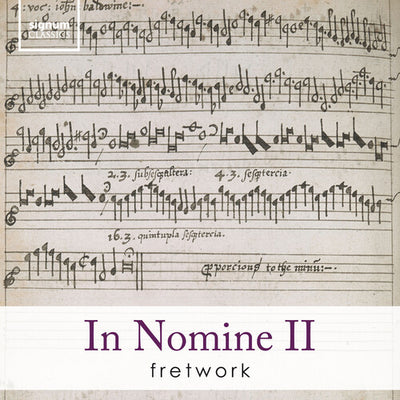
Over thirty years ago, Fretwork made it's first recording - well, technically speaking it was the second album to be recorded, but the first to be released - and it was called 'In nomine', which consisted mainly of 16th-century examples of this remarkable instrumental form. While this isn't an anniversary of that release, we want to look both back to that first release and forward, to bring the genre up to date. There were several examples of the In nomine and related forms that we didn't or couldn't record in 1987, and this album seeks to complete the project. The form was created unwittingly by John Taverner (1490-1545). His 6-part mass, Gloria tibi Trinitas, is based on the plainchant of that name. In the Sanctus, at the words Benedictus qui venit in nomine Domini (Blessed is he that comes in the name of the Lord), the six-part texture is pared down to two and three parts; and then, with the words in nomine Domini, Taverner makes, for the only time in the mass, a complete statement of the cantus firmus, accompanied by three voices. This four-parts section - very beautiful as it is - must have struck contemporaries as some kind of perfection, to be used as a template, to be emulated and copied. And then those copies were copied and changed again.
Milestones is a cross-genre project by violinist Hugo Ticciati and the O/Modernt Chamber Orchestra, bringing together music by Josquin des Prez, Igor Stravinsky, and Miles Davis. Conceived around shared anniversary years, the album reflects O/Modernt's practice of placing music from different periods and traditions into direct conversation. Instrumental arrangements and collaborative performances draw attention to common ground between Renaissance polyphony, early modernism, and jazz, particularly in approaches to rhythm, texture, and improvisation. Recorded in Germany and the UK in 2021, the project documents an ensemble-led approach that emphasises attentive listening, flexible roles for soloists, and collective music-making across stylistic boundaries.
in between - Choral works by Jessica Ulusoy-horsley
Signum Classics
CD · 1 disc
$19.99Jun 26, 2026
This recording brings together recent choral works by British-Swiss composer Jessica Ulusoy-Horsley exploring sound, silence, and the spaces between them, performed by Tenebrae under Nigel Short. The programme includes the work Engelsmusik, inspired by writings on angelic music which draw on texts by Rumi, Greek liturgy, and spiritual philosophy. At it's centre is the large-scale work The 99 Names, setting Arabic and Aramaic texts from Islamic and Christian traditions, and finishing with Cycle of Peace, responding to contemporary conflict. Together, the works examine listening, stillness, and shared spiritual experience across cultures.