Evil Penguin
68 products
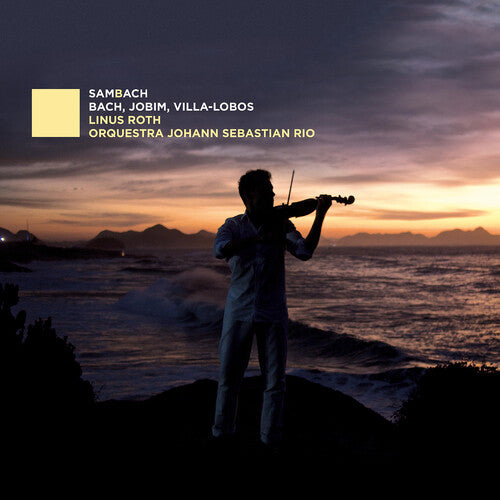
Bach, Jobim & Villa-Lobos: SamBach / Linus Roth
German violin virtuoso Linus Roth brings a unique project and program; SamBach. Starting with J.S. Bach’s E -Major concerto getting via Villa-Lobos to the most famous Samba melodies arranged for solo violin; string orchestra; harpsichord; guitar and percussion…
A peculiar and exciting musical journey. Together with the Brazilian orquestra Johann Sebastian Rio; whose name is a testimony of their admiration for the baroque composer; Linus Roth creates a mesmerizing musical collaboration.
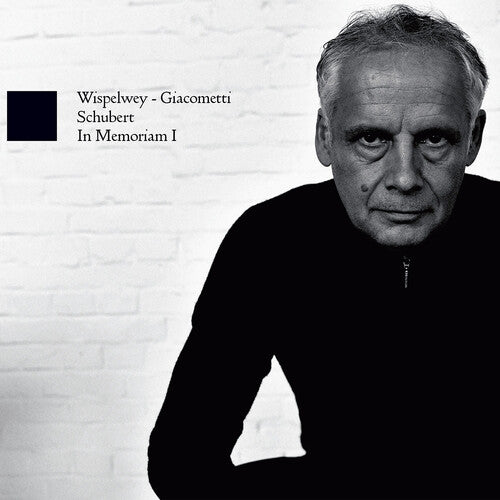
Schubert: In Memoriam I / Wispelwey, Giacometti
The first of two discs by Pieter Wispelwey that will be released in 2023 is a re-assembling of previously released recordings of works by Schubert. This short series is titled In Memoriam and is inspired by a grave loss Pieter suffered a few months ago. The disc includes Schubert’s masterpieces for violin and piano, transcribed for cello – and the most famous Trockne Blumen, originally for flute. To accompany Pieter on piano is his faithful musical companion Paolo Giacometti.
Celis, Debussy & Ravel: Jeux de Couleurs
The idea of the 'Jeux de Couleurs' recording came to us when we thought of combining Frits Celis' trio with one of the greatest works of the chamber music repertoire, Ravel’s Piano Trio, and an arrangement of Debussy's 'La mer' by Sally Beamish. Combining well - and lesser- known pieces, performing vast orchestral works in the smaller context of the piano trio, and searching for nuance and colours are recurrent themes in our musical choices. The painting that we have chosen for the cover of the CD, Paul Klee’s ‘Architektur der ebene’, expresses how we feel about the music and what we would like to communicate with it. As is the case with all of Klee’s paintings, it is very musically structured and features the use of motifs and an explosion of colour.
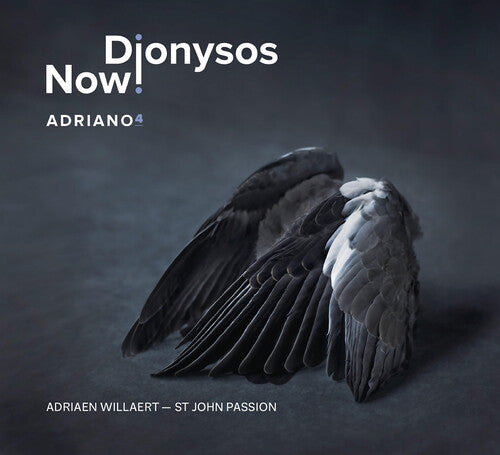
Willaert: Adriano 4 / Dionysos Now!
Dionysos Now! performing Adriaen Willaert (1490-1562) - finally on CD! After three releases exclusively on LP, the group founded by tenor Tore Tom Denys, that has swiftly become a reference for Flemish polyphony performance, issues their first CD. The CD contains the world premiere recording of Adriaen Willaert’s St. John Passion, composed around 1545, followed by three Easter motets. An event in the world of Renaissance recorded music.
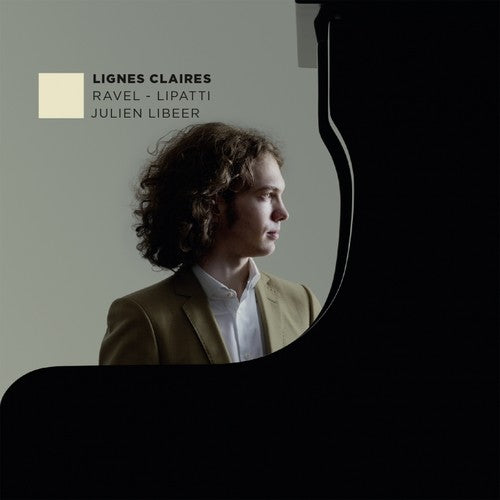
Lignes Claires: Music For Piano (Dig)
Irrsal: Lieder By Hugo Wolf / Henschel, Herreweghe, Royal Flemish Philharmonic [with Dvd]
Hugo Wolf’s most poignant songs were inspired by poet-priest Eduard Mörike, whose lifelong struggle with the moral turmoil caused by an early love affair appealed to similar traumas in Wolf. Baritone Dietrich Henschel performs Wolf’s Mörike songs with Philippe Herreweghe conducting the Royal Flemish Philharmonic, but he also stars in a film (directed by Clara Pons, included on DVD) which dramatizes the content of the songs, exploring the thin line between erotic and mystic love, but ultimately depicting a tormented soul’s quest for redemption and release.
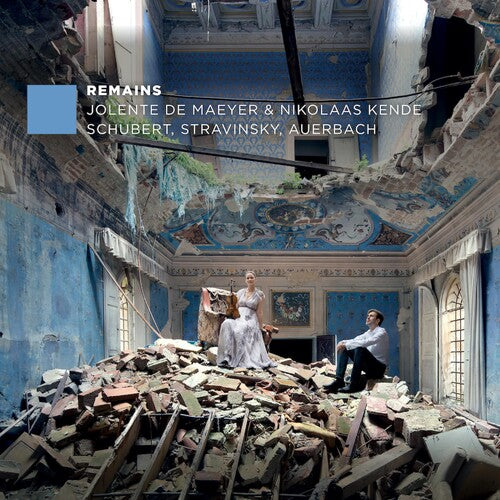
Remains / Maeyer, Kende
'Remains' is the second album by Jolente de Maeyer and Nikolaas Kende, after 'Kreutzer Sonata' (2016). It is a reflection on how the remains of the past inspire and influence our fast-changing world. Both Stravinsky and Auerbach faced the difficulties of their time and society and chose to seek a future in a different world by deciding to leave their homeland, Russia. Although both composers found a unique, personal and visionary style in their compositions, often inspired by modern times and their new surroundings, one can hear how much inspiration they found in music from the past and in their Russian background. How different, by contrast, was Schubert's life. He too dreamed of a better world but was only to reach that place in his music.
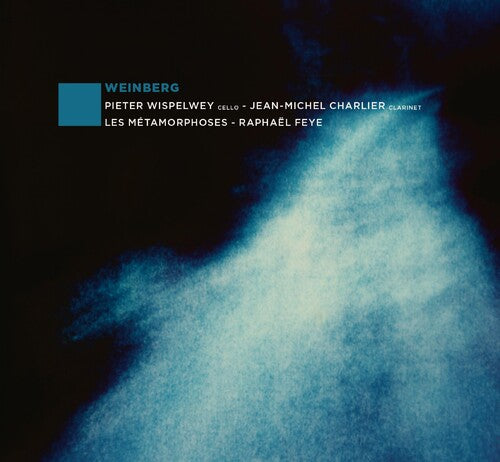
Weinberg: Cello Music, Chamber Symphony no. 4 / Wispelway, Charlier, Feye, Les Métamorphoses
Christ Lag in Todes Banden, BWV 4 / Naessens
Our fetishist regard for John Sebastian Bach as the pinnacle of Western art music obscures the fact that his talent was spawned by at least three generations of gifted predecessors. We celebrate this lineage by exploring the musical family archive Bach discovered in 1735. Among the hidden gems are intensely moving Geistliche Konzerte by his cousin Johann Christoph Bach, and the latter’s father Heinrich Bach. In his earliest preserved cantata Christ lag in Todesbanden, Johann Sebastian superbly imitates the polyphonic motet style of these foregoers, which was going out of fashion.
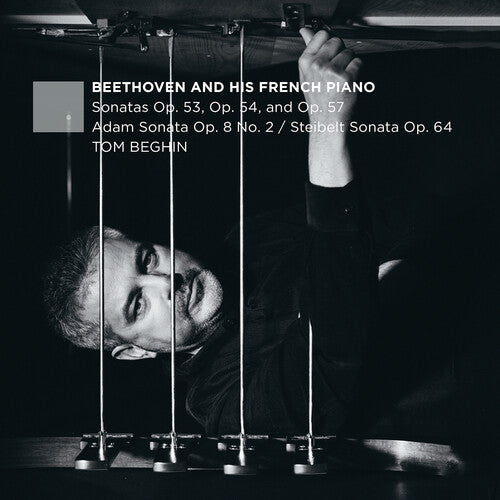
Beethoven & His French Piano / Tom Beghin
In 1803 Beethoven received a piano from Erard Frères in Paris. Why had he been so keen to own a French instrument and how did it inspire him, both as a pianist and a composer? The answer may lie in these performances on a new replica of Beethoven’s French piano, created as part of a unique research project. Placing the iconic “Waldstein” and “Appassionata” sonatas alongside equally grand pieces by two of his Parisian contemporaries, they reveal an unfamiliar French aspect to Beethoven’s genius. The present release is the first recording ever on the first (and brand new) replica of Beethoven’s Erard piano. It tells the story of a “French” Beethoven; someone who related to what happened in Paris through the piano’s technology.
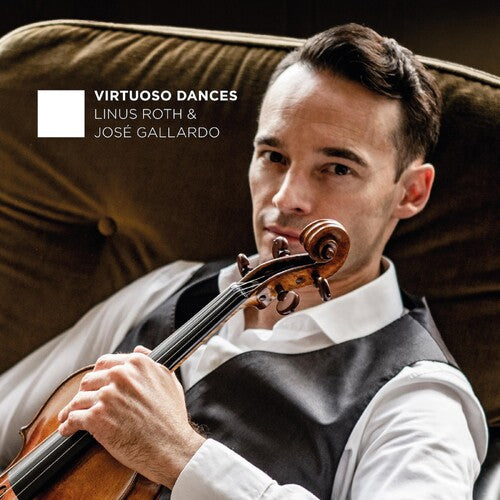
Virtuoso Dances / Linus Roth, José Gallardo
2020... Sitting at home with no performances ahead brought Linus Roth back to his notebooks, in which he had been jotting down random musical ideas over the course of many years. One of them that suddenly struck him, was an idea for a recording program made up of some of his most beloved pieces for violin and piano, all of which had in common both a virtuoso character and that they were all dances. What better way to lift the spirits than with dance music? Linus called his long term musical partner, pianist José Gallardo and five weeks later, they had the remarkable opportunity to record the album in the visually stunning and acoustically unique Library of the former monastery in Ochsenhausen, Germany, home of the Music Academy of Baden-Württemberg.
Pergolesi: Stabat Mater / Naessens, Dieltiens, Linde, Capriola di Gioia
Mozart, Beethoven: Quintets for Pianoforte and Wind / W. Romaniuk, A. Romaniuk
Mozart's quintet made such an impression on his contemporaries that the young Ludwig van Beethoven also used it as a template for his own Op. 16. The unusual combination of instruments employed in these pieces, unique in Mozart's case, encouraged them to experiment with genres, blurring the boundaries between chamber music, symphonic writing, concerto, and operatic aria. WOLF's approach to this repertoire is guided by its use of historical instruments; they are joined for these works by fortepianist Anthony Romaniuk. WOLF is a Belgian collective of wind instrumentalists specializing in the interpretation of classical music on period instruments. The musicians play on original instruments or faithful copies and strive to maintain their historical characteristics. The specificities of ancient instruments guide the ensemble in the aesthetic approach of a repertoire mainly made up of great works from the 18th and 19th centuries.
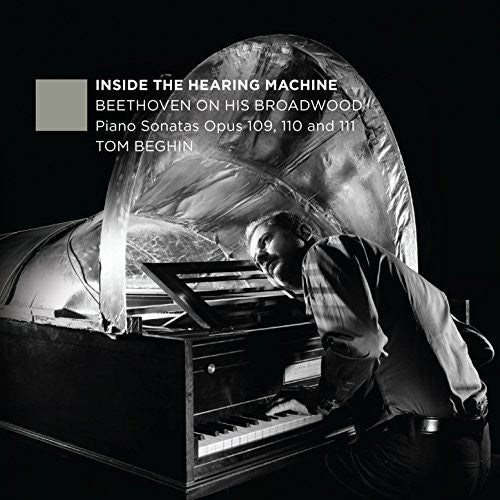
Inside The Hearing Machine
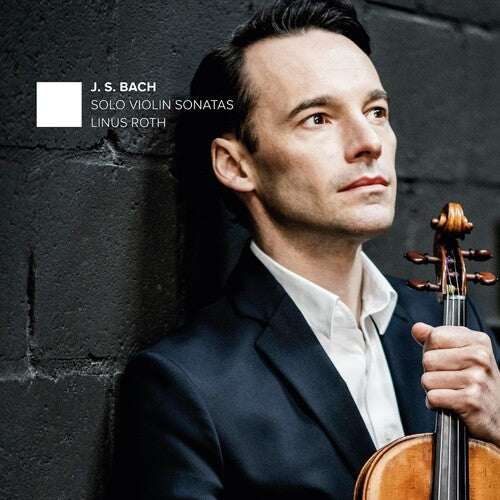
Bach: Solo Violin Sonatas / Roth
| The cycle of six solo Sonatas and Partitas by J.S. Bach is arguably one of the most powerful and most important compositions in musical history. These works have been with Linus Roth since he was nine years old, when he first learned the Gigue from the E major Partita, moving on by the ageof twelve to the first Fugue in G minor to tackling at fifteen the Ciaconna, which represents a cosmos in its own right. By seventeen, Roth had finally learned the entire oeuvre for the first time and since then he is fortunate to have been able to grow as a musician through the constant and welcome challenge of interpreting these remarkable works. This recording was made during lockdown, in which all of our lives have had to be reduced to a minimum in almost every area. The chance to renew the intense preoccupation with this miraculous music in preparation for the recording was a huge privilege as it allowed Linus an escape into a spiritual freedom which helped me greatly on a personal level at this time. |
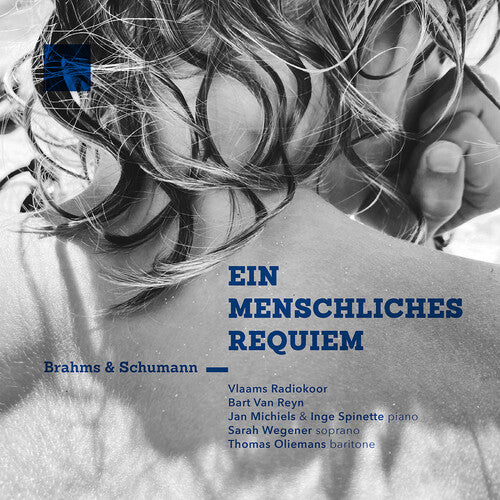
Brahms & Schumann: Ein Menschliches Requiem / Michiels, Spinette, Wegener, Oliemans, Van Reyn, Vlaams Radiokoor
Bach: Solo Violin Partitas / Roth
Weinberg: Light in Darkness / Roth, Ishizaka, Gallardo, Wawrowski
After Weinberg and his wife were able to move to Moscow in 1943 with the help of Shostakovich, he wrote the Piano Trio op. 24 in 1945. The present recording is based on a copy of the manuscript from 1945, which contains all of the original ideas about the dynamics, phrasings and peculiarities of the composition.
Until shortly before his death in 1996, Weinberg’s works were regularly performed with great enthusiasm by Russian artists and now, they slowly but increasingly are reaching the international concert stage. His Trio, like his other numerous works, shows his immense mastery of all compositional forms, genres and styles - always shaped by events in his own fateful life.
REVIEWS:
Violinist Linus Roth writes in his notes for this disc that he really became aware of Mieczysław Weinberg only in 2010. A lot of water has gone under the musical bridge since then: there is barely a month when another disc of his music has not been released. I have just finished one review, and here I am writing another; a few more are in the offing. If you have discovered this endlessly fascinating composer, this is a marvellous prospect. We should be truly thankful, for once bitten the listener cannot get enough of Weinberg.
The Piano Trio begins in a characteristically bold, almost challenging fashion, as if we had been eavesdropping on a conversation which had just reached a declamatory stage. This mood is soon replaced by a tentative violin with gentle piano asides. There follows a section in which the violin’s strings are plucked, accompanied by odd piano notes. The second movement, a toccata, leaps in all guns blazing with an energetic irresistible drive. The notes fairly rain down upon you, particularly from an insistent piano. The piano seems still to be in assertive mood in the opening of the third movement marked Poem before it calms down. The violin and the cello weave a gentle melody maintained for some time, rising in intensity at various stages. All three instruments end up raising their voices, demanding to be heard. The climax comes in the form of a return to the opening melody, and the movement disappears like a puff of smoke. The finale, the work’s longest movement, shows each instrument off with some dazzling flashes. They remind the listener of Shostakovich but there is a distinct, easily identifiable way which Weinberg made his own.
As the disc’s title, Light in Darkness, suggests, Weinberg always ensured that in the most despairing episodes in his music he was determined to inject a shaft of sunlight to burn through the stormiest of clouds. That gave hope, as it very definitely does at the end of the Piano Trio, an early composition for Weinberg. He wrote it only two years after arriving in Moscow, fleeing from Nazi-occupied Poland. However, it embodies a style and power that remained uniquely his own throughout his compositional life.
Linus Roth notes that substantial sonatas for two violins are rare in the repertoire but Weinberg’s piece stands critical comparison with Prokofiev’s better known one. Dedicated to Leonid Kogan and his wife Elizaveta Gilels, the great pianist Emil’s sister, this sonata explores the very limits of the instrument’s abilities. The opening, with a Bachian flavour, is a complex set of variations whose forward propulsive energy is interrupted by a contemplative central section that further explores the main theme of the opening. The urgency returns, taking this onward towards the movement’s close. Bookended by a plaintive phrase, the second movement is a heartfelt and very lovely melody, amongst which Weinberg characteristically slips in some Jewish themes. A very pleasant melody which opens the final movement is present throughout it though in a mix of frenetic energy and looming threat in its central section. Linus Roth suggests there is material here that the makers of horror films and thrillers could usefully mine. He must have had in mind Bernard Herrmann’s shower scene from Hitchcock’s Psycho.
Next up are Two Songs without Words for violin and piano. They are nearer to a 19th century sound than usual for Weinberg’s music, and uncommonly sweet. Unsurprisingly, he never allows any hint at banality. A nod to Mendelssohn, they would I can imagine be an obvious choice for such a duo to present as encores in a recital.
The final offering on this disc is a piece entitled Sonatensatz II, a beautiful tune shared between violin and piano. It is considerably dark though with a veiled promise of lighter times to come. Linus Roth writes that this could be a warning: we should work to ensure that we will never permit such dark times as Weinberg had to live through to recur, and that hope always follows darkness.
Among the increasing number of discs of Weinberg’s music that have been thankfully appearing in recent years, this one is especially significant. It shows the superb command Weinberg displayed in his chamber music. Each of these works, an exemplar of its genre, get a superlative performance. Linus Roth has written how much of a revelation Weinberg’s music has been to him. The obvious thrill he experiences in playing it is shared with the other three performers, and through them is imparted to the listener. This disc will never be far from my player, and it is thoroughly recommended.
--MusicWeb International (Steve Arloff)