Reference Recordings
136 products
Reference Classics - First Sampling
Mahler: Symphony No. 1 / Fischer, Utah Symphony
Reviews:
This recording celebrates 75 years of superb orchestral work from the Utah Symphony and it is nice to see them back on record. It’s also nice to see an SACD from that bastion of audio excellence, Reference Recordings… Young conductor Thierry Fischer also proves himself a fine Mahlerian…this is a very competitive issue done by superb partners on each side of the microphone, and is easily recommended.
– Audiophile Audition ( Steven Ritter)
It is tempting to dismiss yet another Mahler First entering a crowded market as simply not needed. In this case it would be a mistake because this does offer something special in several respects. First and most important, a reminder that the Utah Symphony Orchestra is clearly still a splendid band for whom this complex work, with which they have a long recorded history, offers no terrors. Conducted briskly by their well established Music Director Thierry Fischer, these players respond with as rhythmically vital a performance as you could wish to hear. Tempi are a little faster than the norm but compared with some of the great Mahlerians like Abbado, Walter and Bernstein, Fischer is little different in terms of timings. He is different in approach, encouraging a dance-like quality from music where we are used to more pauses for introspection. One could support his upbeat view by reference to Mahler's own programmes but since the composer admitted these were often written after the music as a means for audiences to access it more easily, we will avoid such quotation. For whatever reason, Mahler's 'Titan' is often presented as positive. For example, the first movement has lots of characterful and very rhythmic woodwind playing, a sort of Mahlerian jam-session. It is a perfectly valid view. The second movement is in any case rhythmic, here it becomes more so, encouraged by Fischer's brisk tempi. It is an exciting virtuoso display. I have one small but significant criticism of the third movement. The double-bass solo is much too well played. There is none of the straining that Mahler must have expected. He could not have predicted how good modern players would become. As a result the theme gets a rather too sophisticated presentation. The explosive opening of the finale, helped by a very present bass drum and gong, pins one back in one's seat just as it should. The mystery and angst others find in this music is replaced by a lively and confident traversal through Mahler's teeming ideas ending with an eruption of sound that must have stimulated loud cheers from the Utah audiences but which the engineers have excluded for the home listener. Since the hall resonance has time to fade away this is either a 'patch' job, or the audience were asked for restraint.
The recording level is quite high but with digital media this doesn't matter. The Soundmirror engineers, long famous for their skill, have captured a convincing concert hall acoustic and though extra microphones were used beyond the five main ones, it does have a feeling of reality not often captured. Finally the notes are well written, detailed, extensive, give historic context and, thank you notes editor, printed in a readable size font.
– MusicWeb International (Dave Billinge)
Fiesta!
The Bach Gamut Vol 1 / Virgil Fox
BACH Fantasia and Fugue in g, BWV 542. Sheep May Safely Graze. Toccata, Adagio, and Fugue in C, BWV 564. St. Matthew Passion: Finale. Prelude and Fugue in a, BWV 543. Air on a G String. Prelude and Fugue in D, BWV 532. I Call to Thee, Lord Jesus Christ • Virgil Fox (org) • REFERENCE 107 (66:19) Live: San Francisco 9/1976
From Professor Keith Johnson, the man committed to producing state-of-the-art vinyl recordings, who once claimed his company would never succumb to the siren call of CDs, comes this 24-bit HDCD transfer of a live recital given by Virgil Fox on the Ruffatti pipe organ and the Rodgers “Royal V” touring organ in San Francisco’s St. Mary’s Cathedral.
Virgil Fox remains a controversial figure in serious organ circles. Often looked upon as the Liberace of organists, Fox was noted for his flamboyant style and an approach to his craft that often put theatrics above respect for the composers whose music he played. The story, quite possibly apocryphal, is told of a visit Fox paid to the Wurlitzer electric organ factory. VIP that he was, he was conducted on a tour of the facility by the president of the company himself. At tour’s end, Fox was escorted into a sealed, temperature-controlled room that contained a pipe from an actual pipe organ. The president proudly announced that the pipe was used as a standard against which Wurlitzer’s organs were measured. To which Fox replied, “Fancy that, a real organ pipe in an electric organ factory! That’s like finding bird poop in a cuckoo clock!”
Not that Fox ever showed much discernment for the instruments he played on. His was a phenomenal technique often wedded in equal proportion to excess and lack of taste. His last years in particular, devoted to his “Heavy Organ” concerts and psychedelic light shows, were especially sad; though in his defense it could be said that he exposed many young people of that generation (the late 1960s and early 1970s)—even if it was through a haze of pot smoke—to the world of classical music.
This will not be a CD for those who take a serious view of the organ in general or of Bach’s masterpieces for the instrument in particular. But no one can take away from Fox his virtuosity or his showmanship. Nor can anyone take away from this recording its astonishing presence and stunning sound. For an organ spectacular to impress friends and alienate neighbors, recommended.
FANFARE: Jerry Dubins
Doin' What It Takes
Sander: The Divine Liturgy of St. Chrysostom / Jermihov, PaTRAM Institute Singers
-----
REVIEW:
Within the body of repertoire contained in the Russian-based jurisdictions of North America, it is the first and only complete setting of the Liturgy of St. John Chrysostom in English. Rooted in the 19th Century Russian models of such masters as Tchaikovsky, Rachmaninoff, Gretchaninoff, and others, Sander’s Liturgy grows out of the monumental choral edifices of these masters and rightfully belongs in their midst.
– WFMT-FM (98.7 FM), Chicago, IL (Lisa Flynn)
Arnold For Band / Jerry Junkin, Dallas Wind Symphony
Arnold, as a lapsed trumpet player, seems a natural for the brass band. And so it proves here in a collection that some may have wondered about simply because of the US origin of the performers. Point 1: this is a stunning performance and is recorded to match: lots of bass extension and raspberry ripe tone for the blatant moments and plenty of subtlety for the poetry. Point 2: if any music is to survive and succeed internationally it needs to find acceptance amongst the best in other countries and so it proves here.
This is a generous collection and is well worth adding to your Arnold collection. Those who love the symphonies and the film music need not feel short-changed or put off. The music is played not for brass band specialists (this is after all for wind symphony anyway!) but for lovers of good music and especially of Arnold's gorgeous tunesmithery."
Rob Barnett, MusicWeb International
Mike Garson's Jazz Hat
What do Freddie Hubbard, Stan Getz, Elvin Jones, Lee Konitz, Stanley Clarke, Eddie Daniels, Joe Farrell, David Bowie, Nine Inch Nails, The Smashing Pumpkins, Gwen Stefani, Seal, the Los Angeles Philharmonic and Martha Reeves (to name a few) have in common? The answer is, Mike Garson has played with them all!.
These have been called “The fastest fingers in jazz.” David Bowie, for whom Garson has long been music director, says, “He’s the best rock & roll pianist I know.” Recording group Free Flight took advantage of his classical training, and Hollywood calls when it needs a virtuoso assoluto. In short, Mike Garson is a phenomenon, able to mimic Bill Evans or Liberace on command, or to soothe an audience with New Age hypnotics. But he’s at his very best wearing his “jazz hat.”
Supported by a stellar cast of Brian Bromberg (acoustic bass), Ralph Humphries (drums) and Eric Marienthal (alto saxophone), Garson turns in a memorable set of originals and imaginative arrangements of standards. Most tracks were previously available on RR-53-—long out of print—plus, for this re-release, we’ve added Garson’s “take no prisoners” improvisation on Gershwin themes—also long out of print. The package is graced by his own computer art. Is there no limit to Garson’s talent?
Everyone at RR thinks this is one of our finest jazz productions. Recorded acoustically at the Oxnard, California, Civic Auditorium, Mike Garson’s Jazz Hat was captured in three-dimensional, high-resolution HDCD sound by RR’s resident guru, “Prof.” Keith Johnson, recipient of seven GRAMMY® nominations for engineering.
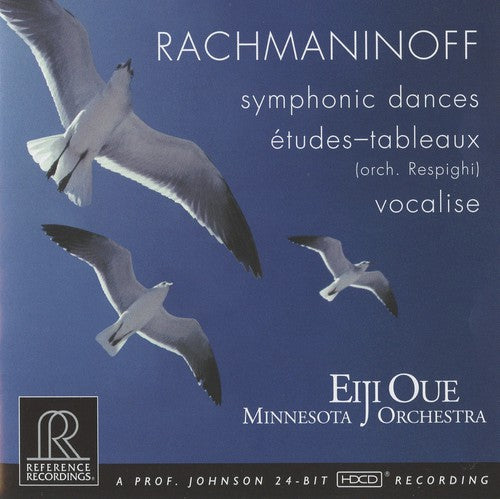
Rachmaninoff: Symphonic Dances, Etudes-tableaux, Etc / Oue
Eiji Oue sets an ideal tempo for the first movement and employs perfectly timed rubato in its lyrical central section. The second movement flags a bit, lacking the snarling sexuality of Jansons with the St. Petersburg Philharmonic, which remains the most gripping performance of recent years; but with the finale Oue gears up again for a blockbuster reading of tremendous excitement and bracing virtuosity. And yes, he lets the final tam-tam stroke reverberate uninterrupted, as (confusingly) indicated in the score.
A gently passionate performance of the ubiquitous Vocalise functions as an interlude (with serenely singing strings) before the Études-tableaux, where Oue again exploits his orchestra's radiant sonorities to fully flesh out Respighi's brilliant orchestrations of these mysterious, sensuous, and evocative pieces. Reference's recording renders all the music's color, irony, and drama in true high fidelity. An excellent conclusion to an excellent disc, one you are wholeheartedly urged to investigate.
--Victor Carr Jr., ClassicsToday.com
Trittico / Frederick Fennell, Dallas Wind Symphony
This selection is a High Definition Compatible Digital (HDCD) recording.
A Dream So Bright - Choral Music of Jake Runestad
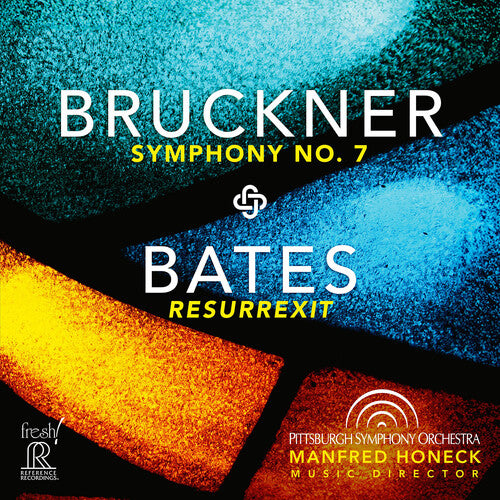
Bruckner: Symphony No. 7 - Bates: Resurrexit / Honeck, Pittsburgh Symphony
Tempo do Brasil
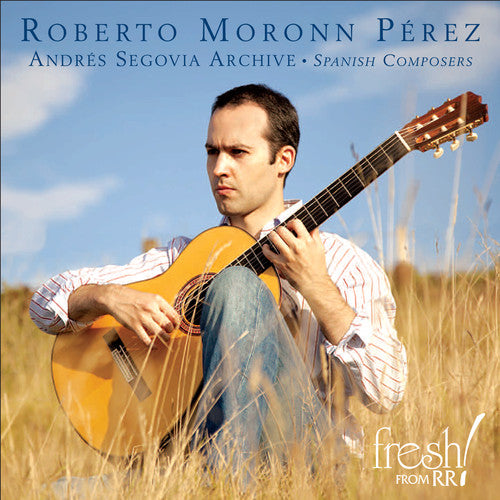
Andrés Segovia Archive
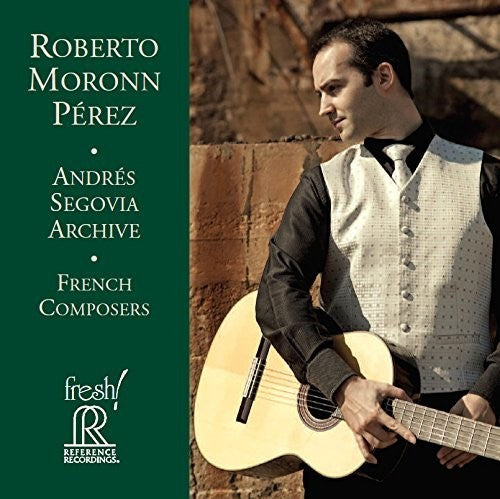
Andrés Segovia Archive: French Composers
Outta My Soul
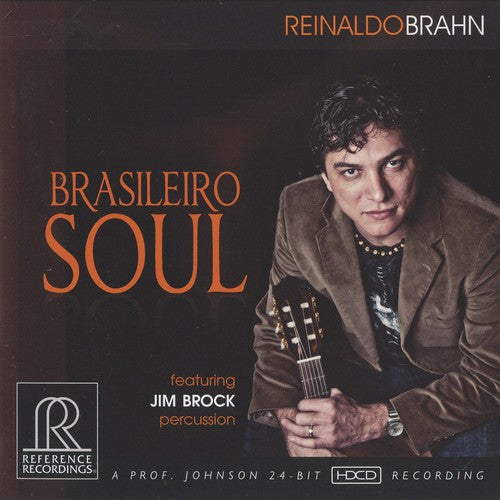
Brasileiro Soul
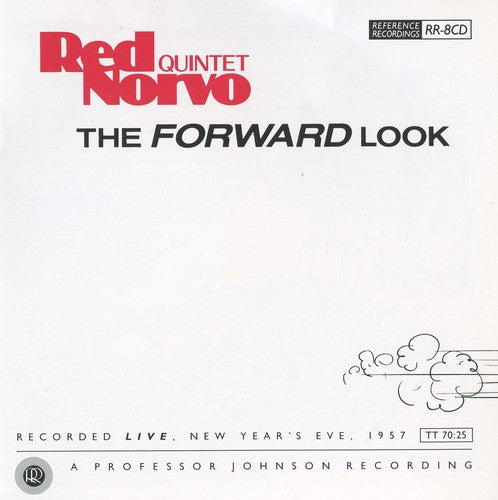
The Forward Look (Live)
Bach & Rameau
Bolero!: Orchestral Fireworks
John Mackey: Asphalt Cocktail
The Great Organ at St. Mary's Cathedral, San Francisco
Woman at the New Piano: American Music of 2013
Crazed Women