Classical CDs
25001 products
-
Bohemian Legacy
$16.99CDChallenge Classics
Feb 06, 2026CC 720047 -
-
-
-
-
#51 - Helmut Lachenmann, Vol. 2
$19.99CDBR Klassik
Jan 30, 2026BRK900651 -
Nicolaus Richter de Vroe: #49 - Tetraдb Iv; Shibuya Movement
$19.99CDBR Klassik
Oct 24, 2025BRK900649 -
-
-
Nicolaus Richter de Vroe: #48 - Violinkonzert; Avenir
$19.99CDBR Klassik
Oct 24, 2025BRK900648 -
Liza Lim: A Sutured World; Mary; The Compass
$19.99CDBR Klassik
Jul 25, 2025BRK900647 -
L’apotheose de Corelli - Triosonatas
$16.99CDChallenge Classics
Apr 10, 2026CC 720033 -
-
-
-
-
-
-
-
-
String Quintets, Op. 72 & 61
$16.99CDChallenge Classics
Oct 31, 2025CC 720026 -
-
-
Whitacre: The Pacific Has No Memory / Anne Akiko Meyers
$8.99CDAvie Records
Jan 30, 2026AV2853 -
-
Bohemian Legacy
Potter: Complete Symphonies, Vol. 2
MADLANDS
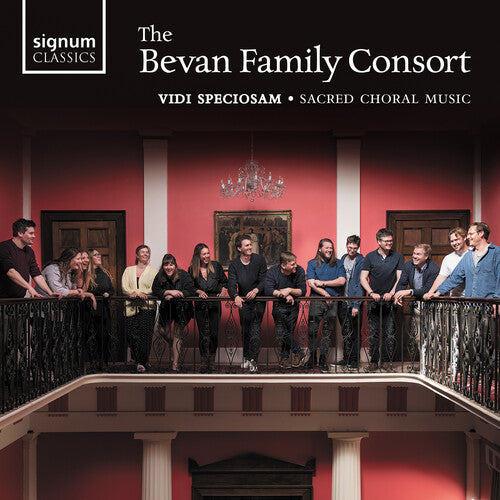
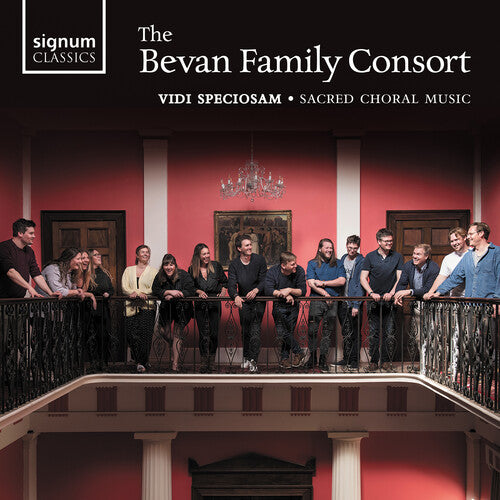
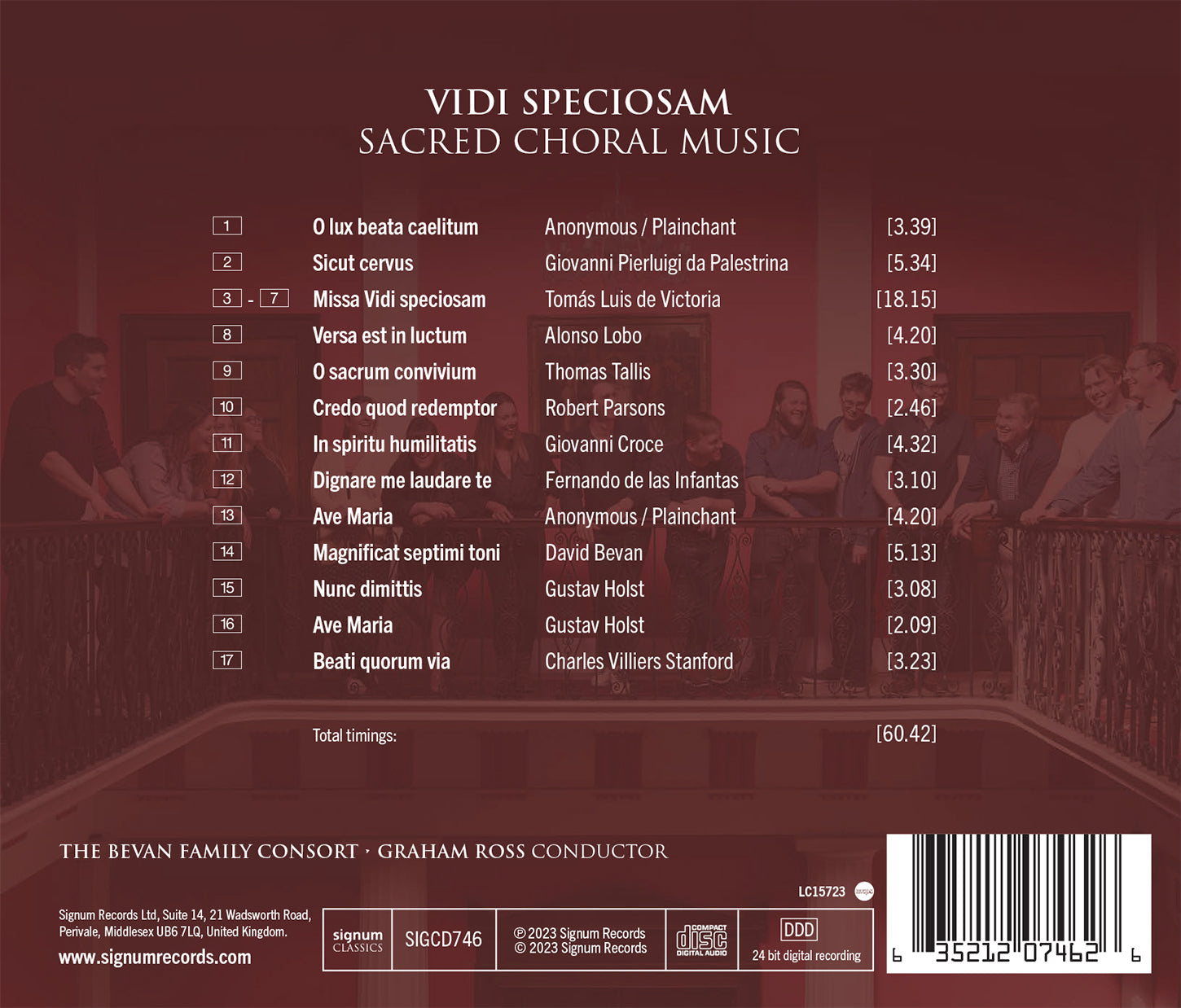
Vidi Speciosam - Sacred Choral Music / Bevan Family Consort
Soprano Mary Bevan writes: In 1975, the original Bevan Family Choir released their debut album on vinyl, featuring an eclectic programme of sacred choral works, Welsh folk songs, and piano music. The Choir consisted of 11 of the 14 Bevan siblings and was conducted by their father, Roger. Later on the Choir was taken over by the second eldest son, David, who was to go on to become Assistant Director of Music at Westminster Cathedral. The musical tradition continued to flourish within the family until, in 2013, some of the second generation of cousins decided to create their own version of the family choir, naming themselves the Bevan Family Consort so as to distinguish them from their parents’ generation. The Consort has since ranged in size from 15-22 of the 53 first cousins. To honour David and the influence he had over us all as musicians, this disc consists of music that was introduced to us by him during his years at the Holy Redeemer Church and that have since become beloved by us as a choir.
REVIEW:
The Bevan Family Consort are particularly good at strongly textured works such as Croce’s In spirito humilitatis, tinged with Venetian monumentalism, or Holst’s Nunc dimittis with its ecstatic ending. This last piece was not discovered until 1979, some 45 years after Holst’s death. Other rarities include the Dignare me by Fernando de las Infantas, apparently a Spanish nobleman working in Rome – so obscure as to be practically confidential. The works with intricate polyphony are pleasingly performed, though in the Kyrie and Gloria of Victoria’s Missa Vidi speciosam the upper voices are a little sharp and the overall acoustic seems rather distant. Breath control and phrasing is always musical and is apparent even in the plainsongs (Ave Maria). The most beautiful work here is Alonso Lobo’s Versus est in luctum. The voices of the Bevan Consort are slightly too disparately coloured to match the magical poise of this work achieved by the group Tenebrae (also on Signum) which shares an album with Victoria’s Requiem.
-- BBC Music Magazine
Intimate Voices - Chamber Music of David Conte
Bach: Clavier-Ubung III / Jeremy Filsell
The monumental third part of the Clavier-Übung (1739) is perhaps one of J S Bach’s greatest musical sequences with its explorations into both Lutheran hymnody and the ‘German Organ Mass’. As a didactic work, it also pursues virtually every contrapuntal device and structure. In giving voice to this immensely varied work, fascinating, inspiring and spiritual in equal measure, it seems particularly apt to make through it an ‘organ tour’ of Saint Thomas Church, with its rich and rewarding instrumental resources.
REVIEW:
Each piece is played with fastidious care, with its mood and scale perfectly matched to an appropriate organ. Jeremy Filsell provides yet another masterclass in manual and pedal dexterity, packed with interpretative insights and always mindful of a sense of flow and grace. Recorded by David Hinitt in the very best sound, this is a Clavier-Übung III to savor and revisit.
-- Gramophone
Senfter: Chamber Music
#51 - Helmut Lachenmann, Vol. 2
Nicolaus Richter de Vroe: #49 - Tetraдb Iv; Shibuya Movement
De Araujo: Organ Music
Pedro de Araújo (c. 1630-1707) is an important figure in Portuguese keyboard music of the late 17th century. His oeuvre consists of a total of 13 keyboard works, one of them with merely attributed authorship. These have come down to us through two manuscript sources in Portuguese collections: the Livro de obras de Orgaõ juntas pella coriosidade de Fr. Roque da Conceição, a source dated 1696, and the Livro de Obras de Órgão, a source compiled in the 17th and 18th centuries and originating in the Bouro Monastery (Braga). De Araújo’s output covers the genres that were in vogue in his day on the Iberian Peninsula (e.g. Batalha, Tento, Meio Registo, Fantasia) and which constituted the traditional repertoire of Iberian keyboard players in the service of ecclesiastical institutions.
The Batalha do 6º Tom and the [Susana] do 2º Tom hark back to the 16th century tradition of intabulating existing vocal works, the former based on the chanson ‘La Guerre’ by Clement Janequin, the latter on ‘Susane un jour’ by Orlando di Lasso, a famous vocal work throughout Europe and the target of many other composers’ intabulations.
The Phantasias, Obras and Tentos fall within the stylistic sphere of the tento (Spanish: tiento), an Iberian genre characterised by contrapuntal writing and multiple contrasting sections. In them De Araújo displays his mastery at weaving contrapuntal lines and varying the thematic material. The Consonâncias de 1º Tom corresponds stylistically to a tento de falsas (Sp.: tiento de falsas / It.: durezze e ligature), with the work developing in a succession of dissonances. The Passo solto de 7º Tom is a work entirely in triple meter with a succession of iambic rhythms reminiscent of the vilancico style.
Nicolaus Richter de Vroe: #48 - Violinkonzert; Avenir
Mozart: Complete Masses, Vol. 3 / Poppen, Cologne Chamber Orchestra
Liza Lim: A Sutured World; Mary; The Compass
L’apotheose de Corelli - Triosonatas
Dvořák: String Quartet No. 2 / Fine Arts Quartet
The stellar Fine Arts Quartet returns to Naxos with an album of Dvorák gems and surprises. The Second String Quartet is a fascinating example of early experimentation that would foreshadow the modernistic innovations of Schoenberg and his contemporaries. The Bagatelles are heard here in their original instrumentation featuring the harmonium.
REVIEW:
Did Antonín Dvořák suspect that his second string quartet was musically ahead of its time? Was he himself perhaps surprised, even shocked, by its harmonic boldness? Did he not yet feel confident enough as a composer? All of this could explain why the first private performance of the B flat major quartet did not take place until 63 years after it was written – in 1932 – from a reconstructed score. In the meantime, the quartet has been recorded more often than it has been heard in the concert hall.
In its complete recording, the Fine Arts Quartet has now also reached this second string quartet and places it in relation to the Bagatelles op. 47 and the Rondo op. 94.
In both works, the Fine Arts Quartet touchingly captures the Bohemian character, the folk song-like quality that is a basic element in Dvořák’s music. Lots of charm, a soft sound and supple bowing provide the necessary lightness and a slight smile behind the notes.
This grace can also be found in the string quartet – here, however, it comes across more as intimate passion, which is transformed into convincing expressivity through the daring harmonies. Despite the quasi-rhapsodic structure of the work, the Fine Arts Quartet never allows the songfulness of Dvořák’s music to be forgotten by finely differentiating the forward-looking harmonies so that the composition never becomes piecemeal. This also applies to the dance-like moments, which appear again and again and form an exciting symbiosis with Dvořák’s new ideas in this interpretation – in a quartet that also formally dispenses with classical structures.
-- Pizzicato (Guy Engels)
musica viva #46 - Johannes Kalitzke & Luc Ferrari
Brahms, Kahn & Frühling: Trios for Clarinet, Cello & Piano / Quantum Clarinet Trio
The human factor determines the path. The Clarinet Trio op. 114 by Johannes Brahms more or less represents the DNA of the Quantum Clarinet Trio, and the piece was one of the driving forces behind the founding of this young chamber ensemble, whose members first met at the Mozarteum University in Salzburg in 2014. At that time, Italian clarinettist Elena Veronesi had been searching for fellow musicians to collaborate in a late work trio, and she found them in the German cellist Johannes Przygodda and Korean pianist Bokyung Kim. What started as a project has now evolved into a permanent ensemble. This great Brahms trio has continued to be a enterprise in which life converges with art.
Cellists, pianists and clarinettists usually come together when a work requires such a constellation, the line-up going their own separate ways once the project is completed. Compared to piano trios or string quartets, these particular instruments unfortunately rarely come together as a fixed ensemble. The Quantum Clarinet Trio is a welcome exception to the rule, making this encounter with one of Brahms' most important works much more than just a "fleeting liaison".
A Most Marvellous Party: Tribute to Noël Coward / Bevan, Spence, Middleton
To mark the 50th anniversary of Noël Coward's death, celebrated musicians and regular Signum artists Mary Bevan, Nicky Spence and Joseph Middleton join forces for this album of works by Coward and his contemporaries. Featuring songs such as Parisian Pierrot and The Man I Love, the album comprises of a collection of solos, duets and instrumental songs by composers such as Ned Rorem, Liza Lehmann, William Walton, and Benjamin Britten.
Reger: Complete Organ Music / Marini
The most comprehensive survey ever made of Reger’s organ music, on a range of superb Austrian, German, and Swiss instruments: a fitting tribute to the composer on the 150th anniversary of his birth.
Roberto Marini's feat of performing Reger's entire output for organ in Italy within a single year (2002) was followed in 2011-13 by this remarkable achievement on record. On the basis of authoritative new critical editions compiled by the Max Reger Institute, Marini recorded the works on historical instruments of Reger's time, which with their orchestral richness of color and dynamic possibilities correspond to the soundworld of an epoch that believed in progress in every dimension and embodied a kind of striving heroism as an attitude to both life and art.
First released in individual albums on the Fugatto label, this box compiles Roberto Marini’s Reger albums complete for the first time, together with an authoritative essay by Suzanne Pepp on Reger’s output for organ.
String Quintets, Op. 72 & 61
Dietrich: Orchestral Works / Sahatçi, König, Luxembourg European Soloists
Brahms: Piano Concerto No. 2 & Three Intermezzi, Op. 117
Rieti: Piano Concertos
Whitacre: The Pacific Has No Memory / Anne Akiko Meyers
Haydn: Baryton Trios / Valencia Baryton Project
Hear an episode of the Naxos Classical Spotlight podcast on this release!
The Valencia Baryton Project return with their second instalment of Haydn’s fascinating trios for baryton, viola and cello. The baryton is a bowed, stringed instrument similar to the viol but with extra plucked strings that enable the performers to accompany themselves. Volume 1 (8.574188) was widely acclaimed for the ensemble’s well attuned performances and also for showcasing this virtually unknown repertoire from Haydn’s vast output.