Classical CDs
25001 products
-
-
-
-
-
J. S. Bach & Sons: Flute Sonatas
$20.99CDChannel Classics
Oct 03, 2025CCS49725 -
VI Ouvertures à 4 ou 6 (1736)
$18.99CDCPO
Aug 15, 2025555519-2 -
-
-
-
-
-
-
-
-
-
-
-
-
-
-
-
-
-
-
-
-
-
-
-
-
-
-
-
Manu Sinistra
Kodály: Organ Works / Quinn
This album brings together all of Kodaly's extant pieces for organ, plus works by his contemporaries. They are performed on the Chancel Organ at Peachtree Road United Methodist Church, Atlanta by the acclaimed Welsh organist Iain Quinn, professor of organ at Florida State University.
REVIEW:
The disc opens with Ernő Dohnányi’s quite substantial Fantasie in C minor which is listed as a world premiere recording. As is my preference when encountering unknown music, I listen before I read any of the detail, so my surprise as to why this work should sound so unlike this composer’s other music is easily explained, as it is a student work by a fifteen year old. For sure, there is talent and confidence and no little skill but this does sound rather like a test or exercise piece where some Bachian passages jostle with imposing hymn-like melodies and some rather broad-brush Romantic gestures.
Sandwiched between music by familiar composers are a couple of pieces by less well-known names. Bedřich Antonín Wiedermann's Pastorale dorico is another modest, rather unassuming work with a conservative outlook that belies its 1942 composition.
Kodály's set of nine Epigrammák are in fact transcriptions for solo organ made by Gábor Trajtler of songs by Kodály written originally in 1954. These are consciously unaffected and simple pieces. As a sequence they come across as a bit unvaried, but I cannot imagine a better case being made for them than here by Iain Quinn
Just in time the work around which the whole disc was planned arrives. This is Kodály’s quite wonderful Csendes mise. There is an immediate substance and stature to the music here. There is a variety of expressive and musical style that makes for a compelling experience – and this is most definitely a work that benefits from being heard complete.
The disc is completed by another unfamiliar name and work: Miloš Sokola’s Passacaglia quasi toccata na téma B-A-C-H. Dating from 1963 this work makes for an interesting and energetic ‘recessional’ piece for this program
— MusicWeb International
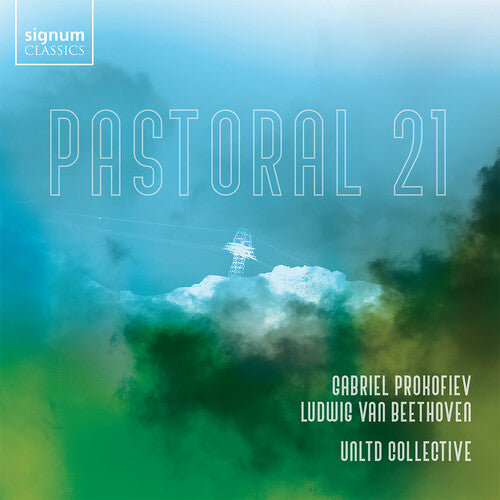
Beethoven & Prokofiev: Pastoral 21 / UNLTD Collective
Pastoral Reflections is a contemporary exploration on what the concept of ‘Pastoral’ means to us in this time of climate crisis. It features classical string sextet alongside field recordings, electronic bass & angular beats, centered around Gabriel Prokofiev’s contemporary response to Beethoven's 250 year old Pastoral Symphony.
The Album opens with the original first movement of Beethoven’s famous symphony (arranged for sextet) - reminding listeners of our less troubled relationship with nature 250 years ago - before moving on to the modern beats of Prokofiev’s recent composition Breaking Screens, which explores ideas of consumerism, digital life and impending crisis. The programme climaxes with 5 movement 'Pastoral Reflections' which echoes Beethoven’s symphonic narrative, but from a contemporary perspective.
Amalie's Cosmos
Gerhard: Don Quixote (Complete Ballet); Suite from Alegrias;
J. S. Bach & Sons: Flute Sonatas
Lloyd: The Works for Brass
VI Ouvertures à 4 ou 6 (1736)
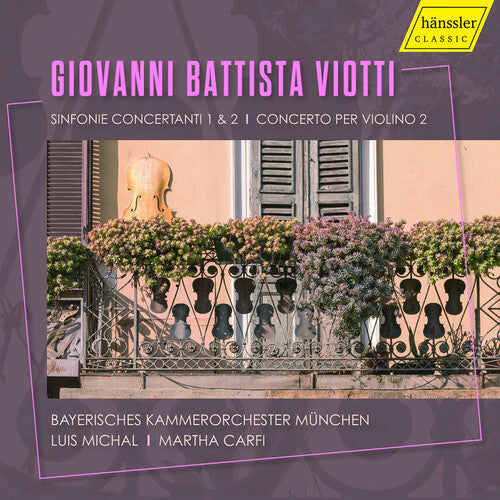
Viotti: Sinfonie concertanti 1 & 2; Violin Concerto no. 2 / Carfi, Michal, Bayerisches Kammerorchester Munchen
In June 1878 Johannes Brahms wrote to Clara Schumann: "The A minor Concerto by Viotti is my very special passion. It is a splendid piece with a remarkable freedom of invention: it sounds as if he were fantasizing, and everything has been designed and executed with such mastery …" Already during his lifetime Viotti was regarded as one of the most brilliant violin virtuosos, and his violin concertos also enjoyed special renown. As a composer Viotti brings in the schemes of the Italian School but also weaves in romantic motifs far ahaead of their times.
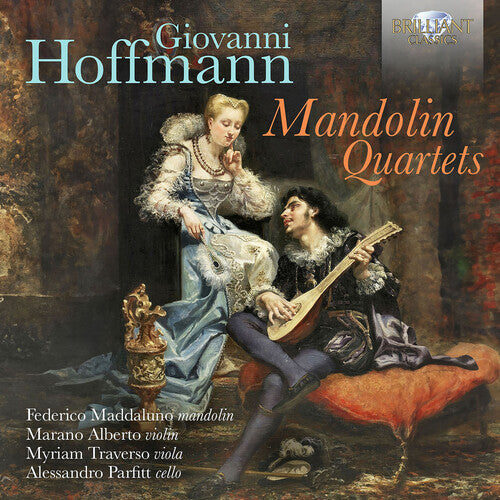
Hoffmann: Mandolin Quartets
There is still much we do not know about the veritable mandolin-mania of late 18th-century Europe, particularly Vienna, which in that period was home to the three greatest musicians of the Classical period: Haydn, Mozart and Beethoven. The instrument certainly enjoyed dazzling success in Viennese musical circles, embraced by the cultured aristocrats who resided in the Habsburg capital, and its meteoric rise was supported by some extraordinary virtuosos who helped promote its high-quality and fast-growing repertoire.
Giovanni Hoffmann’s refined chamber music featuring the mandolin was warmly received among the Viennese elite, making him one of the foremost figures behind the burgeoning mandolin repertoire of late 18th-century Vienna. Very little is known about his life; the Italianate first name alongside a clearly central-European surname adds to the mystery shrouding his birthplace and sphere of education.
Hoffmann was both a mandolin virtuoso and an esteemed composer. In 1799, the music merchant Johann Traeg advertised a list of the mandolin scores available to purchase from his shop on Vienna’s Singerstraße. It included a Trio for mandolin & bass by Hoffmann, and that same year, the composer released a further number of manuscript works through Traeg including his Quartets for mandolin, violin, viola & cello and
Serenatas for mandolin & viola. Hoffmann’s work is recorded again in Austria in the early decades of the 19th century, but – like his birth – the place and date of his death have not yet come to light. His music, however, lives on, a testament to his talent for composing delightful music in a Classical style evoking the fascinating gatherings of the Viennese literati.
Romberg: The Song of the Bell / Guido Knüsel
Friedrich Schiller no doubt reckoned his Lied von der Glocke (The Song of the Bell) among his best poetic creations. He is supposed to have been inspired to write it by a 1788 visit to a bell foundry in Rudolstadt, Thuringia, and carried the idea for his bell founder´s song around with him for years. When Schill failed to finish it on time for the Musenalmanach in 1797, Goethe, the alamac´s editor, gave him the good advice and encouragement that „The bell will now have to sound all the better since the ore has been kept longer in the flux and has been rid of all slag“ (Goethe´s letter of 14 October 1797). The poem was published three years later in the Musenalmanach of 1800. Andreas Romberg set the whole long poem of 424 verses at one go - it was published by Simrock in 1809.
The composer Andreas Romberg, who certainly did not know Schiller´s wishes, made this idea a reality and set the whole long poem of 424 verses at one go. A bass part is assigned to the honest bell-founder master. His ten strophes all have the same design and the same simple melody, with the latter being varied or modulated now and again in what is a well-crafted composition. As the master directs the casting of the bell, so too the bass moves from station to station of the poem. The master´s big hour comes at the conclusion, when the bell is inaugurated. His solemn word of inauguration (Und dies sei fortan ihr Beruf) has him sing tones reminiscent of Sarastro.
Suppé: Works for Orchestra / Rudner, Tonkünstler-Orchester
This album presents a selection of Suppé rarities and classics. Poet and Peasant and Morning, Noon and Night in Vienna are two popular examples of Suppé’s mastery. The previously unrecorded Fantasia Symphonica was rediscovered in Viennese archives by Ola Rudner who conducts the Tonkünstler-Orchester on these recordings. Includes two world premiere recordings.
Mozart: Violin Concertos nos. 1, 2 & 5 / Dego, Norrington, Royal Scottish National Orchestra
Following their critically acclaimed first volume of Mozart’s violin concertos (CHAN 20234), Francesca Dego and Sir Roger Norrington complete the set, once again with outstanding support from a reduced Royal Scottish National Orchestra. This cycle not only represents the first time Sir Roger has recorded these concertos, but the present album is also his final recording project. All five concertos were written before Mozart was twenty; nevertheless, his rapid development as a composer is evident in the progression from the first to the fifth, which has an unusual Adagio section within the first movement, an extensive slow movement, and of course the extensive ‘Turkish’ episode in the final movement (probably based on Hungarian folk music). Whilst given on modern instruments with metal strings, these are performances immersed in Norrington’s lifetime of experience in period performance practice. As The Sunday Times noted of the first album: ‘Pairing the veteran Mozartian Norrington – a pioneer of historical performance practice – with the young Italian-American soloist Dego proves inspiring in what promises to be one of the freshest of recent cycles of the Mozart concertos.’
REVIEWS:
Dego’s finespun tone, exquisite timing and enchanting musical inquisitiveness, not to mention her delightfully spontaneous decorating of musical lines, combine to create an uplifting sense of the music being composed as it goes along…[Norrington] could hardly have wished for a finer recorded swansong than this Mozart series.
-- BBC Music Magazine (Julian Haylock)
This recording is characterized by excellently balanced interpretations. They are characterized by a light-hearted and fluid gesture… Francesca Dego also finds an exciting approach to Mozart… she scores here with a creative approach, tonal freshness and noblesse. The orchestra from Scotland, conducted by Roger Norrington, soars, with the violins in oppositional seating as in Mozart’s day, to intense music-making that doesn’t overpower, creating a fitting complement to the solo mood.
-- Pizzicato (Uwe Krusch)
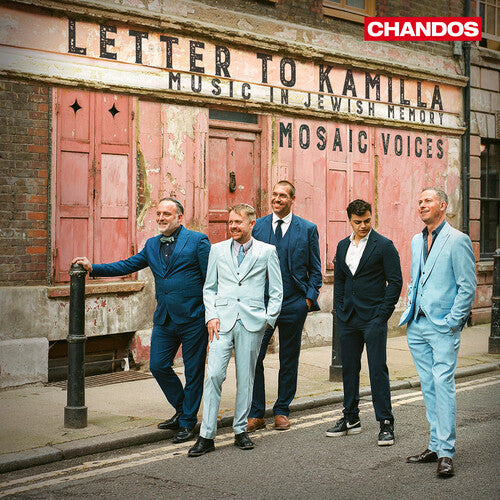
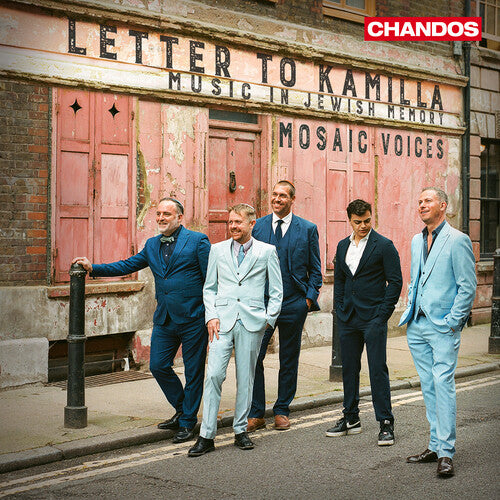
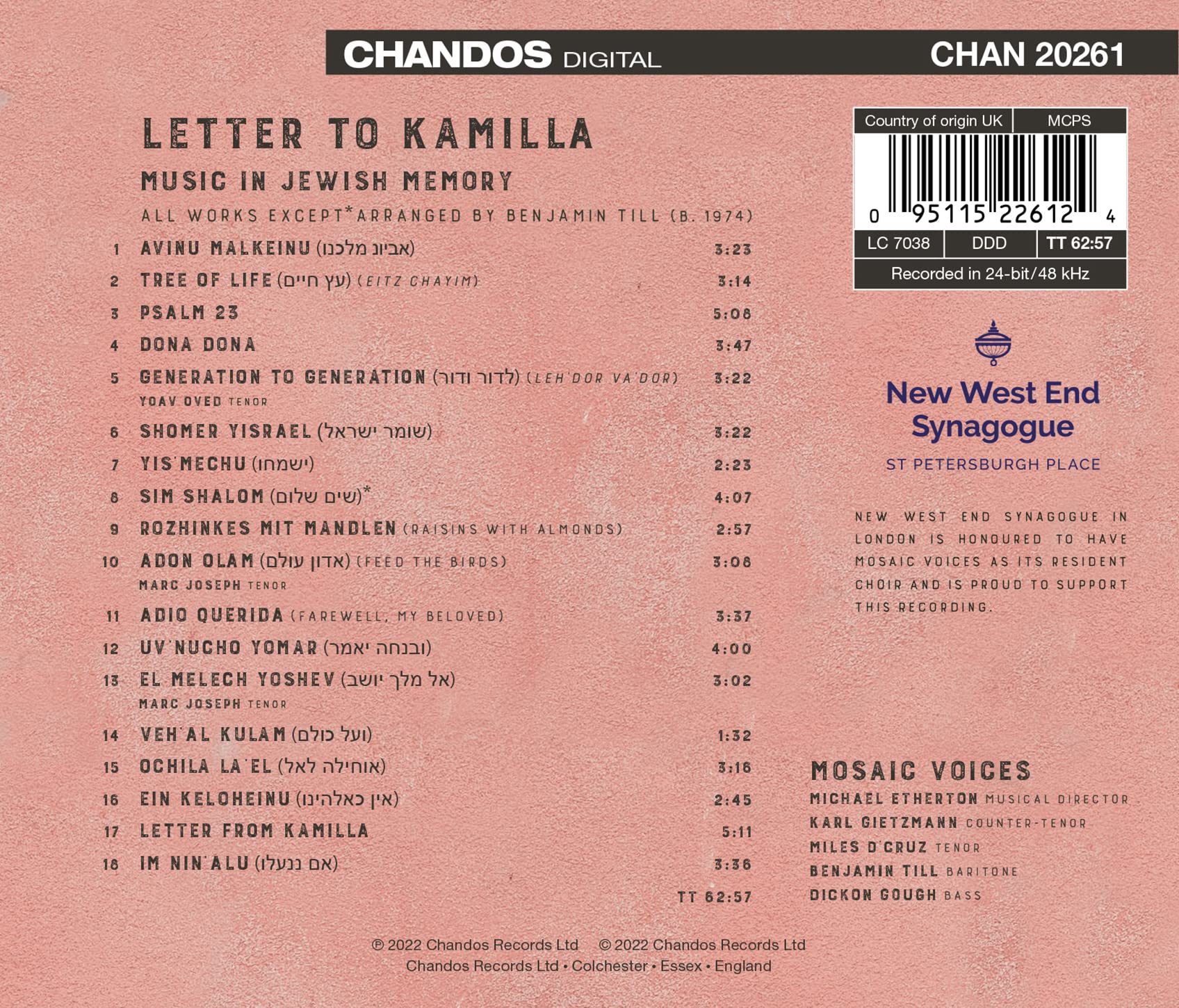
Letter to Kamilla – Music in Jewish Memory / Mosaic Voices
Puccini: Heroines
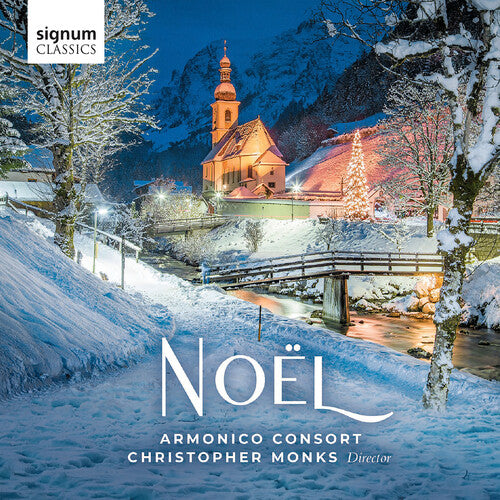
Noël! Carols Old & New / Monks, Armonico Consort
Their second Christmas album on Signum Records, Armonico Consort and Christopher Monks return with a new album featuring a collection of carols both old and new. They have created the perfect soundtrack for those who love an atmosphere at Christmas. Featuring world premiere recordings by Composer Toby Young and the first ever recording of ‘Star Song’ by Jonathan Dove on a Christmas album, there are also exquisitely sublime versions from ‘Silent Night’ to ‘Away in a Manger’.
"It is ten years since our last carols recording, and we have collected some incredible works we have been so keen to record, including several commissioned from our composer in residence. Christmas somehow manages to inspire composers to write the most imaginative, both in terms of creativity and melodiousness, and Toby is an expert at making Christmas music sound just as we want it to be!" -- Christopher Monks
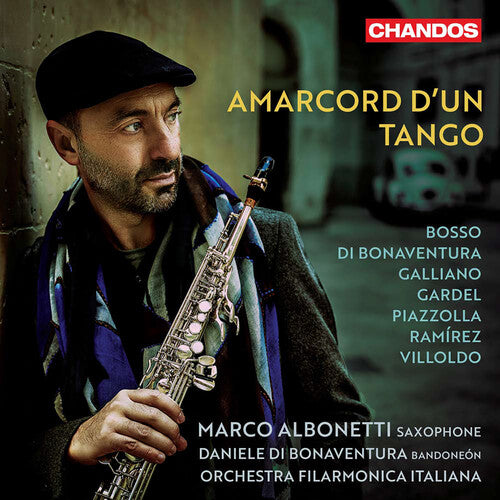
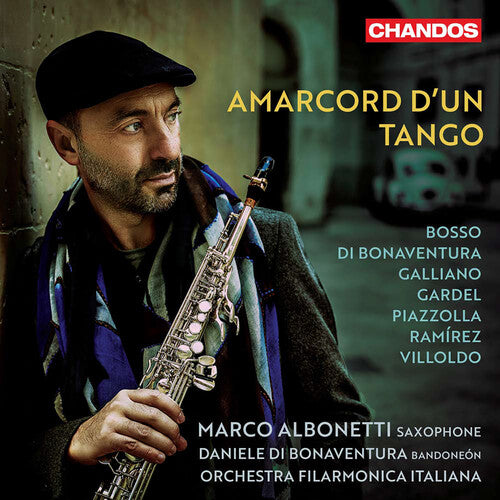
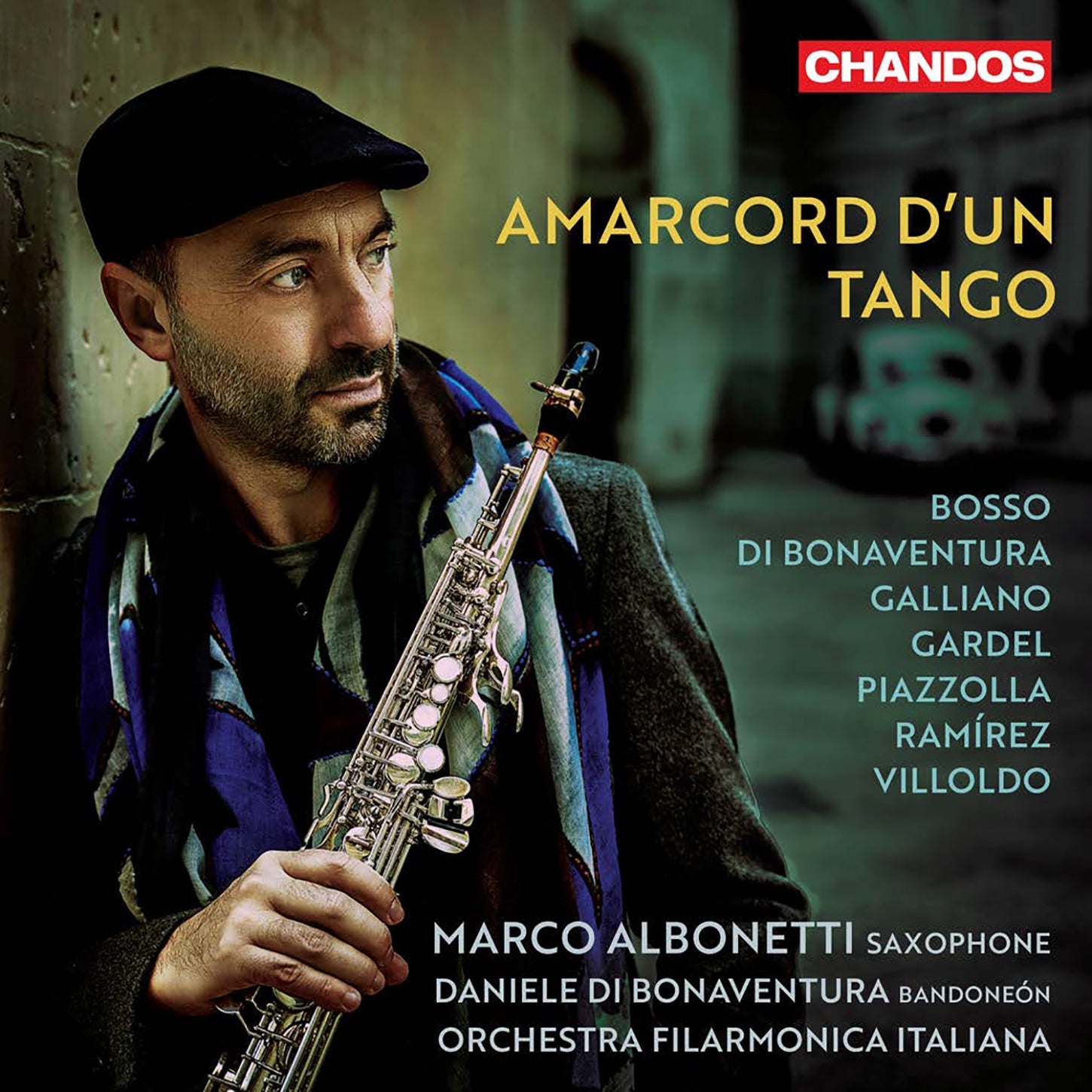
Piazzolla, Gardel, et al.: Amarcord d'un Tango / Albonetti, Bonaventura, Orchestra Filarmonica Italiana
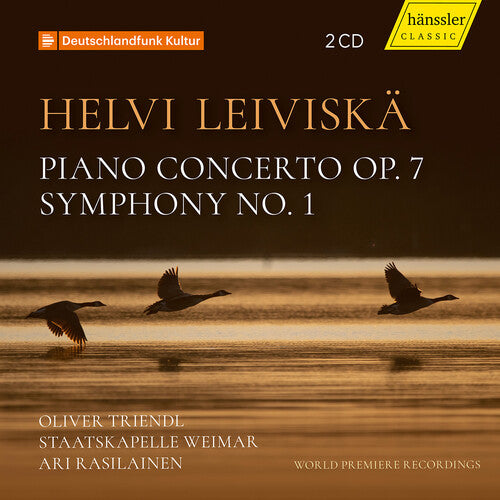
Leiviskä: Piano Concerto; Symphony No. 1 / Triendl, Rasilainen, Staatskapelle Weimar
The piano concerto in D minor was composed between 1931–1935 and premiered on November 23, 1935, by the Helsinki Philharmonic Orchestra conducted by Toivo Haapanen, with Ernst Linko as the soloist. The concerto is preserved only as a piano reduction and instrument parts, but the original score is lost. The piano part contains several cuts and facilitations by the 1935 soloist, while the instrument parts show no omissions. The most probable result was that the orchestra played some passages without the soloist.
For this recording, Leiviskä’s original solo part was restored. Several reviews, mostly under pseudonyms, discussed the symphony after its first performance. The reviews were mostly favorable. It was both praised and criticized for its structure and the inclusion of the waltz motive, and comments of the themes and melodies were also ambiguous. After 1948, the symphony was performed three more times until 1951. After 70 years of silence, the symphony was resurrected in 2022.
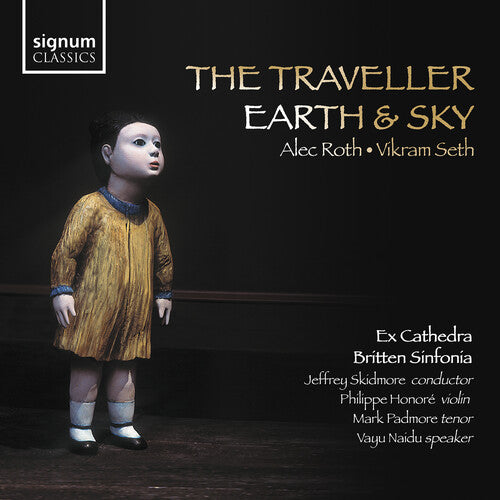
Roth: The Traveller; Seth: Earth & Sky / Ex Cathedra, Britten Sinfonia
THE TRAVELLER for choir, children’s choir, orchestra, tenor, violin and speaker. The Traveller was the third in a series of four major works with words by Vikram Seth and music by Alec Roth, commissioned jointly over four years by the Salisbury, Chelsea and Lichfield Festivals (2006-09). Each work featured the violinist Philippe Honoré as soloist, and each took a different geographical/cultural area as its starting point.
EARTH AND SKY for children’s choir and piano (with optional percussion). Earth and Sky was commissioned by the BBC for the Proms 2000 season. In keeping with the millennial theme, a work presenting a vision of the future was requested. Trying to be helpful, the BBC provided me with a video containing the predictions of various experts, but their ideas seemed dizzyingly contradictory.
-Alec Roth
Ex Cathedra has performed Alec’s music in over 200 concerts since 2007. There have been large-scale commissions and recordings and many short ‘gems’. It is of consistently high quality with moments of absolute genius. The relationship continues to flourish.
Heinichen: Two Passion Oratorios / Willens, Kölner Akademie
Affecting Passions by Heinichen. The Passion music Johann David Heinichen wrote for the Dresden court is a document of cultural and confessional openness of the Saxon residence, and his two Italian oratorios heard here are surrogates of large-scale Passion music. "Come? S'imbruna il ciel" - composed in 1728 - is the latest of the sepolcri, his other Passion "L'aride tempie ignude" the first of the sepolcri to survive from Heinichen in Dresden. Both texts are by Stefano Pallavicino, who had been active at the Dresden court since 1719. In the first-mentioned Passion, the meditation on the Passion event recurs to the experience of the earthquake that, according to biblical accounts, occurred immediately after the death of Jesus. The description of the violent natural events gives Mary the Mother of God, John (Jesus' favorite disciple), and Mary Magdalene an opportunity to reflect on their relationship to the Crucified. Different aspects of affection and love are thematized. The meditation on the Passion event in the second-named Passion is designed as an allegorical play of death (Morte) and hope (Speranza), divine love (Amor divino) and penance (Poenitenza), and follows an easily comprehensible dramaturgy. The affinity to opera seria is evident in both passions not only in the arrangement of the pieces. The keys, gestures and instrumentation also correspond to the models familiar from baroque musical theater. Full of affect!
Petzold & Kayser: Harpsichord Music
Beethoven: Complete Works for Cello & Piano, Vol. 1 / Schwabe, Rimmer
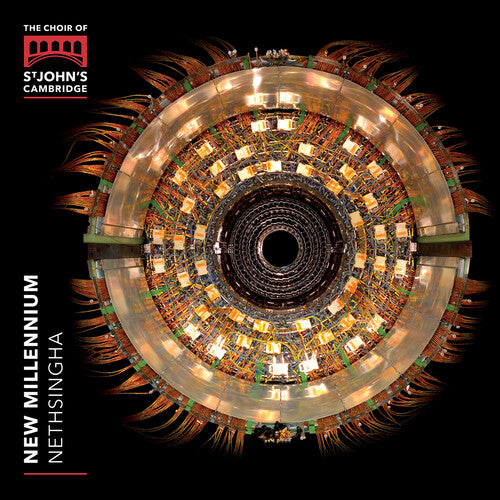
New Millennium / Nethsingha, Choir of St John's College Cambridge
About the album; Andrew Nethsingha says: “Contemporary music and Commissioning have been central features of the last fifteen years at St John’s. It’s been a joy to work with talented student composers; singers and instrumental- ists; my own musicianship has been greatly enriched by their creativity and energy... After a 30-month break from sessions during the pandemic; we were very pleased to be able to record again in 2022. The material on this album comes from various times of year; whilst we were also continuing our Magnificat series. For the final sessions in December the outdoor temperature was forty degrees colder than it had been for the previous recording in July! The personnel of the lower voices had also largely changed; but I hope you will hear a successful continuity of sound- world. All the composers are alive today but; at the suggestion of one of them; we have omitted dates of birth so as not to intrude on their privacy. I’ve curated a sequence of music which aims to celebrate some of the broad range of styles in 21st-century choral writing. The premiere of Iain Farrington’s Nova Nova was the final piece in my last St John’s broadcast - I have often enjoyed pushing the boundaries of the Anglican choral tradition!”
Mayr: Messa solenne in D minor / Hauk, Concerto de Bassus
Franz Hauk has spearheaded the rediscovery of Johann Simon Mayr work’s during the last two decades. This latest premiere recording presents the substantial Messa solenne in D minor which sets the full ordinary. The Simon Mayr Chorus and Concerto de Bassus are joined by a team of stellar soloists.
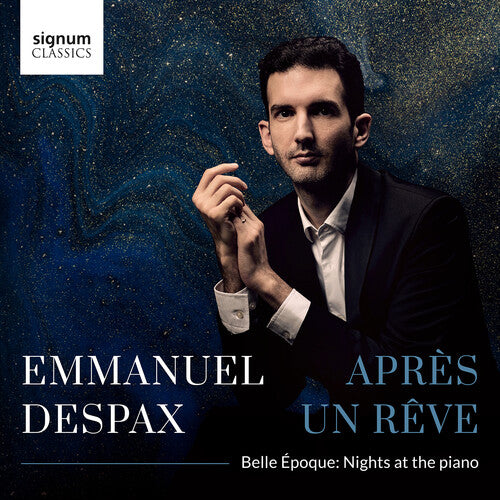
Après un rêve - Belle epoque: Nights at the Piano / Emmanuel Despax
“Après un rêve” is an ode to the French Belle Époque repertoire, depicting the beauty of dreams and the night. The album is an opportunity to hear and perhaps discover rarely played / rarely recorded wonderful works (Chaminade Nocturne, Duparc Aux étoiles, Poulenc Les soirées de Nazelles), alongside central pillars of the repertoire, and includes a world premiere of Despax’s arrangement of Après un rêve. The album is attributed to his grandfather, Jacques Charpentreau, a French poet who adored this repertoire and frequently drew inspiration from the night in his works. Despax has curated some of his poetry, as well as works by other poets he admired to complement this music, taking the listener on an immersive poetic and musical journey through this noctur- nal landscape.
REVIEW:
Despax has recorded Bach, Brahms, Chopin, but the works here particularly suit his sensibility. In Maurice Ravel’s haunting masterpiece Gaspard de la Nuit, he masters the ferocious challenges with ease, delicacy, strength.
-- The Guardian (UK)