Charles Ives
54 products
American Road Trip / Hadelich, Weiss
The Glass Menagerie - A ballet by John Neumeier
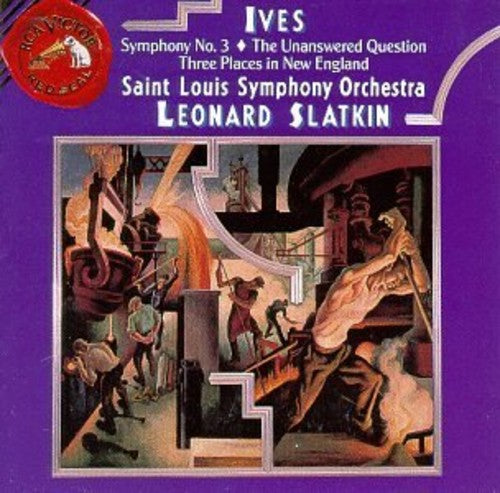
Ives: Symphony No 3, Etc / Slatkin, St Louis So
It is good to have The Unanswered Question and Central Park in the Dark where they belong—together. The separate layers of activity in both pieces, with the strings static and the other instrumental textures dynamically changing, create the quintessential Ives experience in the simplest form. The spacing is carefully engineered in this recording and the detail at all levels is clear.
I have compared the Tilson Thomas recording of the Third Symphony unfavourably with that by Sir Neville Marriner. Slatkin, in this third recording in the British catalogue, now has the edge on both of them, with an affectionate treatment of this hymn-saturated score. Tilson Thomas used a new edition. I think Slatkin does too, and there are extras in the strings at the end of the second movement which I have never heard before.
The two novelties are both early, from the 1890s. The March is all infectious razzle-dazzle and the Fugue in four keys is experimental for its period but smoothly contrived and haunting in its ending. They complete a well planned and competitive Ives release.
-- Peter Dickinson, Gramophone [4/1993]
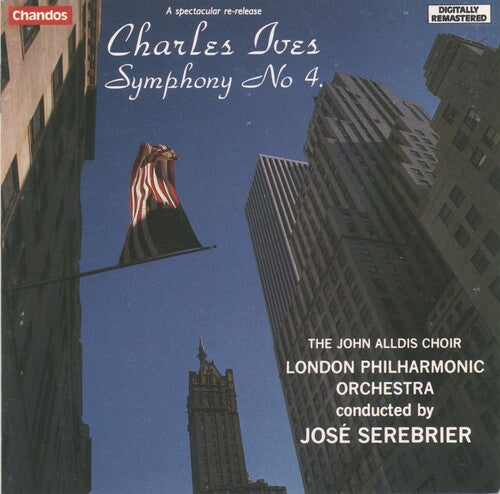
Ives: Symphony no 4 / Serebrier, LPO, John Alldis Choir
This interpretation, however, is by no means an echo of Stokowski's (CBS 77424, 9/74—part of a four-LP set). For example, and as MM pointed out when Serebrier's recording first appeared, the second movement's representation of chaos resolves quite differently. It is reassuring that this performance is at its most impressive in the visionary last movement, although on a more mundane level one has to point out that at 32'44" the overall playing time is not generous.
-- Gramophone [9/1985, reviewing the LP release, Chandos 1118]
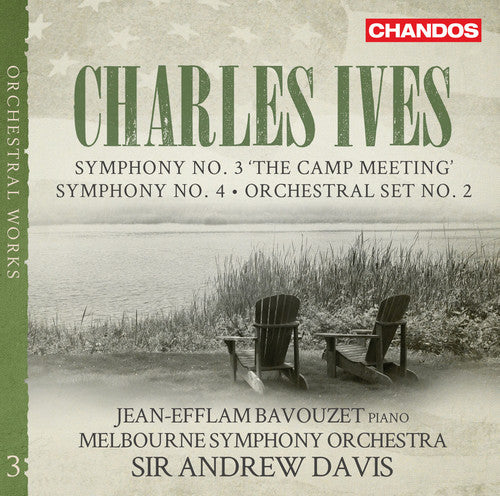
Ives: Orchestral Works, Vol. 3 / Davis, Bavouzet, Melbourne Symphony
For this third volume in an Ives series that Sir Andrew Davis and his Melbourne Orchestra have already made globally popular, Jean-Efflam Bavouzet takes on the challenge of the solo piano part in Symphony No. 4. The work is famous for its ubiquitous difficulties, not least the apparent impossibility of realizing many of the composer's creative intentions in a live performance, as evidenced by the forty pages of background discussion and practical advice to conductors that introduce the published score. It is complemented by the less-often-performed triptych Orchestral Set No. 2 and the Pulitzer Prize winning Symphony No. 3. This album is a "must-have" for anyone who wants to experience this monumental music under optimal conditions.
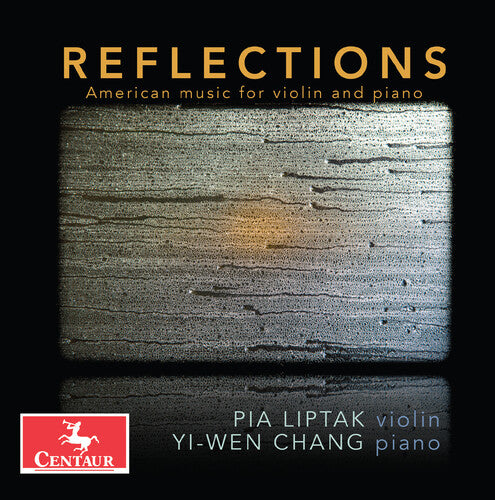
Ives, P. Liptak, D. Liptak & Sekhon: Reflections
Ives, C.: Unanswered Question (The) / Central Park in the Da
AMERICANS
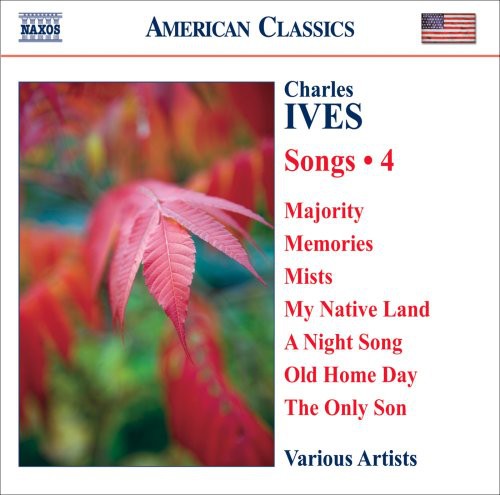
IVES, C.: Songs, Vol. 4
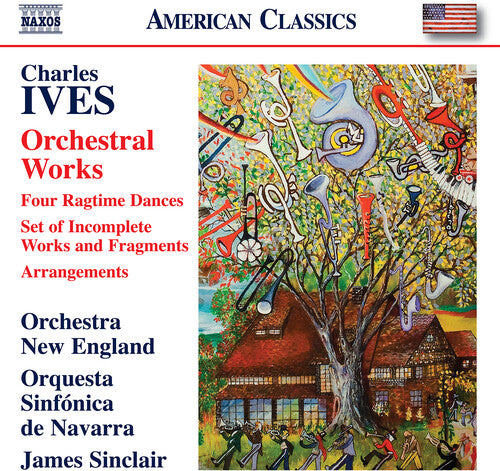
Ives: Orchestral Works / Sinclair, Orchestra New England, Navarre Symphony
This album showcases a selection of Ives’ shorter works for orchestra. Experiments, marches, arrangements, and enticingly incomplete fragments are included alongside the Four Ragtime Dances and Chromâtimelôdtune, one of Ives’ most startling creations. Ives specialist James Sinclair conducts. Includes seven world premiere recordings. Released to mark the 150th anniversary of Ives’s birth.
Piano Sonata No. 2
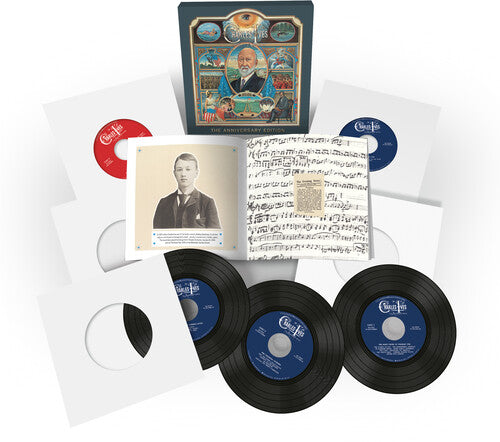
Ives: The Anniversary Edition
On the 150th anniversary of the birth of Charles Ives - acclaimed by his champion Leonard Bernstein as the "first great American composer", who, "all alone in his Connecticut barn, created his own private musical revolution" - Sony Classical presents the most authoritative recording collection ever released of works by this eccentric, prophetic genius.
The 5-CD box set Charles Ives - The Anniversary Edition is a unique and provocative introduction only released previously 50 years ago on LP by Columbia Masterworks under the art direction of Henrietta Condak to celebrate Ives's centenary.
The first disc examines "The Many Faces of Charles Ives" through eight diverse works recorded between 1964 and 1970: Bernstein conducts the New York Philharmonic in The Fourth of July and The Unanswered Question; General William Booth Enters into Heaven, one of Ives's towering achievements, and The Circus Band are performed by the Gregg Smith Singers; baritone Thomas Stewart sings the moving song In Flanders Fields; organist E. Power Biggs plays Ives's Variations on "America"; composer Gunther Schuller conducts The Pond for chamber orchestra; and the Largo cantabile Hymn is performed by the New York String Quartet and double bass player Alvin Brehm. CD 2, "The Celestial Country", offers Ives's early cantata by that name, composed in 1897-99 for his conservative Yale composition teacher Horatio Parker. It is sung by the Gregg Smith Singers (accompanied by the Columbia Chamber Orchestra), who also perform arrangements of four of Ives's most powerful patriotic songs with the American Symphony Orchestra and Leopold Stokowski conducting. "The Things Our Fathers Loved", CD 3, contains 25 of Ives's songs, delivered by the soprano Helen Boatwright, who specialized in American song. She is partnered by John Kirkpatrick, who studied and worked closely with Ives and is still regarded as the most authoritative interpreter of his piano music. Gramophone in 1974 praised this famous recording as "the finest selection ever to appear" on LP of "what may well turn out to be considered his most important, characteristic and consistently inspired body of music."
Ives, C.: Songs
Ives: A Songbook
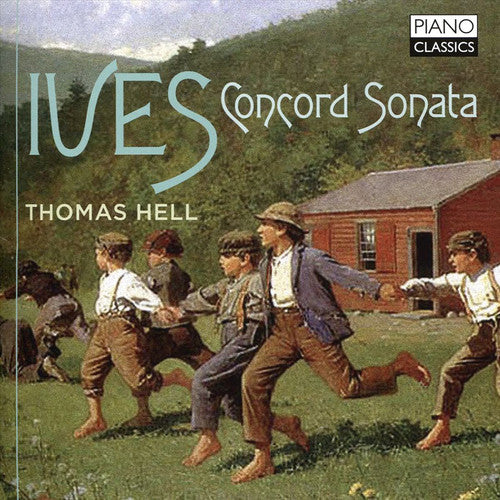
Ives: Concord Sonata / Thomas Hell
Ives: Piano Sonata No. 2 "Concord, Mass., 1840-60"
Ives: Sonatas for Violin & Piano Nos. 1-4
Ives: Sonata No. 2, 'Concord, Mass.' - Three Page Sonata - S
Songs of Charles Ives
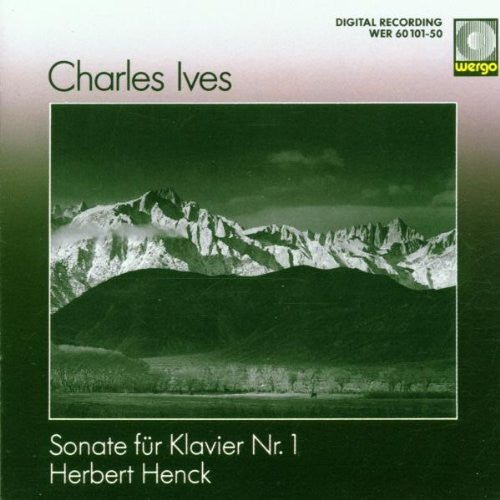
Ives, C.: Piano Sonata No. 1
Ives: Piano Pieces
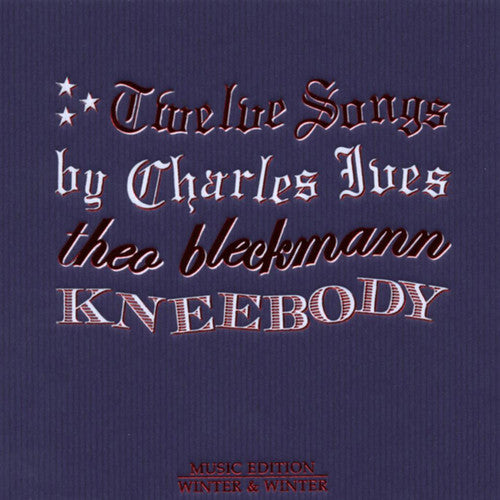
Kneebody: Twelve Songs by Charles Ives
Ives: Symphonies Nos. 1 & 2 / Davis, Melbourne Symphony
As I hear it, Sir Andrew Davis’s interpretations take that authentic approach, removing the wilder later works from the picture and approaching these scores as serious attempts to create grand personal statements based on the musical influences to hand at the turn of the century and, in the case of the First Symphony, being tamed by the conventions held as gospel by Ives’s teacher Horatio Parker. Parker both restrained the harmonic excesses of his student while at the same time introducing him to the greats of the Germanic tradition. Davis is sensitive to this, and you can hear Brahms in the shaping of the string notes of the melodic lines in the Second Symphony in particular. Ives’s grafting of American tunes onto his Romantic symphonic model has little effect in releasing the work from its historic constraints. Ives wasn’t writing for laughs, and ‘hamming-up’ the naïve strangeness and unusual confluence in either of these symphonies doesn’t help their cause. A side-effect of seeking refinement is indeed a loss of boisterous energy, but is that what Ives would have been after at this point?
Unencumbered by controversy and artificially introduced passions but filled with atmospheric expression and full of clarity in their adherence to the letter of these scores, I really quite like these performances, and look forward to what Sir Andrew Davis does with the later symphonies. That twinkle in his eye tells me this series might be starting out as something of a sleeper and, as with Ives himself, the best is yet to come.
– Dominy Clements, MusicWeb International