Enrique Granados
48 products
Granados: Goyescas
I feel Catalan through and through, but in my music I want to express what I feel, what I admire and what attracts me, be it Andalusian or Chinese – Enrique Granados. I hope that this album will provide a deeper understanding of the Goyescas, drawing not only the most common images of Spanish folklore such as the sevillanas or the bullfighters, but also a more complete picture of a diverse country. It was the inspiration for an artist like Goya who was at once deeply local and universal. It is this fascinating mixture of tradition and modernity, of Spain and Europe, that Granados liked and loved in his illustrious predecessor.
Spanish Classics - Granados: Spanish Dances / Brotons
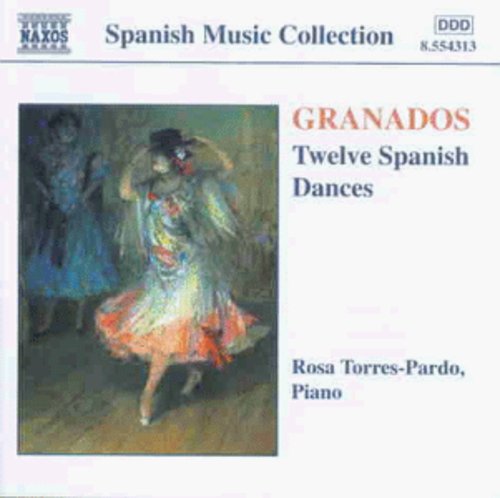
Granados: Twelve Spanish Dances / Rosa Torres-pardo
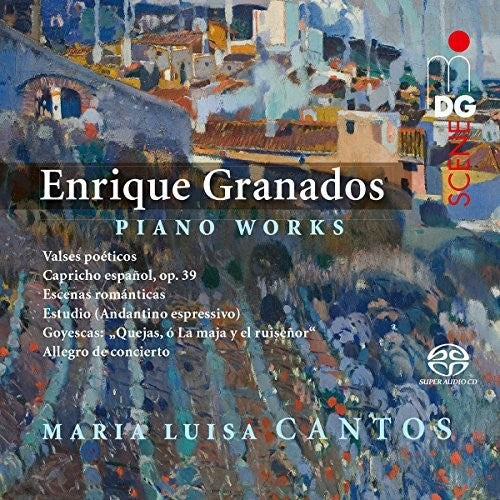
Granados: Piano Works / Cantos
A little over a hundred years have passed since Enrique Granados met his death in the English Channel. After an acclaimed concert tour that took him to New York at the height of World War I, a German submarine sank the ship on which he was returning to Europe. Many manuscripts by the famous pianist were also lost in the ciy waters and must have included priceless treasures - as we may gather from the interpretations of his surviving works by Maria Luisa Cantos, the grande dame of Spanish piano music, on her latest recording. After Granados had initially been brought to safety, he plunged into the water to save his beloved wife and lost his life in the effort - lending a romantic element to this extremely tragic episode.
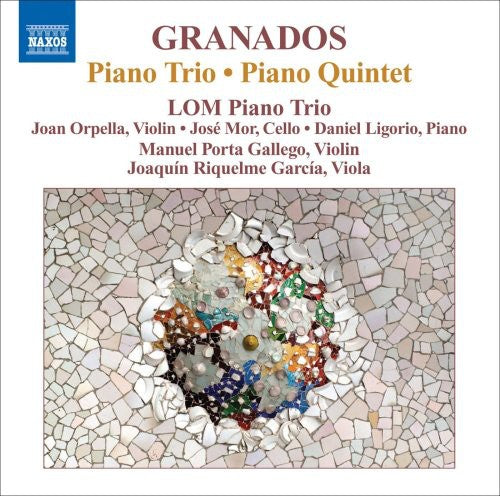
Granados: Piano Trio; Piano Quintet / LOM Piano Trio
Performer, composer and teacher, Enrique Granados stood with de Falla and Albéniz as the most outstanding Spanish musician of his time. Among his dozen or so chamber works the Piano Trio and Piano Quintet, both from 1894, exemplify Granados’s highly expressive, Neo-romantic style, his piano writing revealing the hand of a virtuoso. Amiable touches of dance and salon music, hints of Moorish, gypsy and folkloric elements, co-exist in these beautiful, refined pieces. The famous Intermezzo from his opera Goyescas, an Aragonese jota, is heard here in Gaspar Cassadó’s popular arrangement.
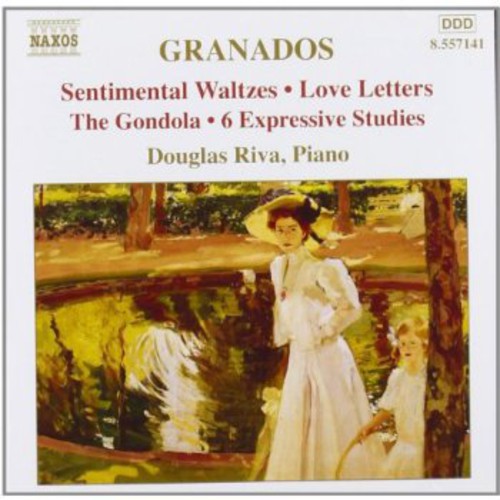
Granados: Piano Music Vol 8 / Douglas Riva
Includes work(s) for piano by Enrique Granados. Soloist: Douglas Riva.
Granados: Piano Music Vol 7 / Douglas Riva
Includes work(s) for pno by Enrique Granados. Soloist: Douglas Riva.
Granados: Piano Music Vol 6 / Douglas Riva
Granados: Piano Music Vol 3 / Douglas Riva
Granados: Piano Music, Vol 10 - In The Village, Etc
Includes work(s) for piano by Enrique Granados. Soloists: Douglas Riva, Jordi Masó.
Granados: Orchestral Works, Vol. 1 / Gonzalez, Barcelona Symphony
Enrique Granados is known for composing some of the most popular Spanish piano masterpieces. Along with these famous compositions, he also wrote a sequence of orchestral works. Marcha de los vencidos, which is the first track featured on this album, evokes the emotion of the painful march of "the defeated" from a lost battle. This album is the first in a series to be released in honor of the centenary of the composer’s death. The compositions on this album are performed by the Barcelona Symphony Orchestra, conducted by Pablo Gonzalez.
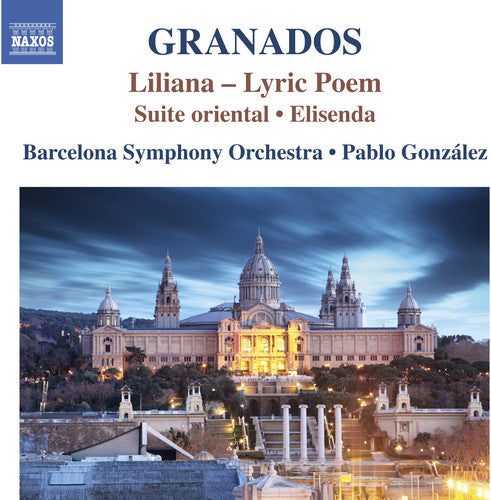
Granados: Liliana, Suite oriental & Elisenda / Gonzalez, Barcelona Symphony
-----
REVIEW:
Pablo González and the Barcelona Symphony Orchestra respond, as they have throughout this series, with warmth and an attractively natural sense of how to turn a phrase. The woodwinds are the real stars, though: supple oboes with just a hint of nasal buzz.
– Gramophone
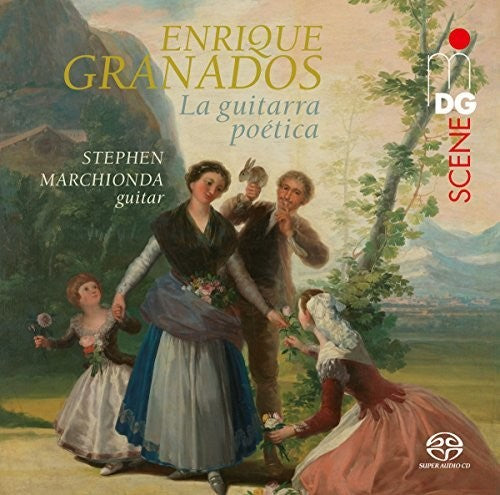
Granados: La guitarra poetica / Marchionda
During his lifetime, Enrique Granados was highly valued above all for the poetry of his piano playing - and his compositions also breathe the same poetic spirit. Stephen Marchionda honors the composer on the occasion of the 150th anniversary of his birth with a highly personal selection from these works. His own arrangements for the guitar create an illuminating link to Granados' roots in Spanish folklore. In the quieter pieces, Marchionda displays the quality of his guitar playing: flageolet passages with a touch of the ethereal, yearningly traced melodic lines, and gentle arpeggios magically generating a unique color are especially fitting for the "Eight Poetic Waltzes" concluding this highly atmospheric collection. As special encores the Spain resident presents two wonderful songs brightening Andalusian and Catalonian melancholy with fine humor.
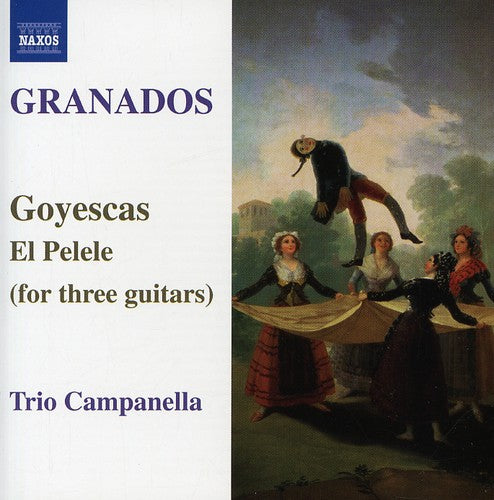
Granados: Goyescas (For Three Guitars) / Trio Campanella
To begin with, the material is beyond reproach. Granados’s musical renderings of Goya’s portraits of eighteenth century life in Madrid are amongst the finest compositions in the piano literature. Dejour has sensitively adapted the music for his ensemble, and none of the striking piano colors are lost. Too complicated for a single guitar, this ensemble idea fits the music like a glove, and the sound is divine.
Of equal importance is the quality of the playing. These three musicians play together with the perfection of a Swiss timepiece. The palette of tonal color that they achieve is almost orchestral.
Best yet, the recording is devoid of all the things that I hate in guitar recordings. There are no incessantly squeaking strings. I am told that guitarists often restring their instruments just before a recording session, and that the new strings tend to squawk with every change of hand position. Gone also is the maddening sniffing and snorting for which guitarists - and string quartets - are notorious.
What is left is a beautiful sound, warmly recorded and oh my, what splendid music! There are some purists who will fuss at the transcription idea, but there should be no reason to quibble here. The rich warm tone of the three guitars is perfectly suited to the vivid colors and sophisticated rhythms of the music. There is little to say other than “go buy this disc and enjoy it.” It makes me anxious to revisit their earlier recording of the Albeniz mentioned above (Naxos 8.557064), and anxiously to await what will come next from this outstanding ensemble.
-- Kevin Sutton, MusicWeb International
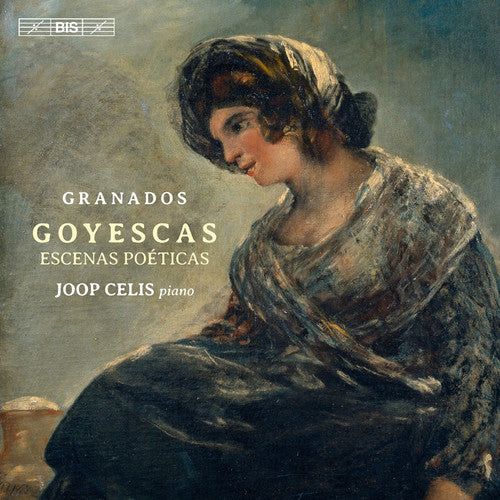
Granados: Goyescas & Escenas Poeticas / Celis
Performing these wonderfully sensuous works is the Dutch pianist Joop Celis, who here makes his first appearance on BIS, but who has earned plaudits for previous recordings, for instance in International Record Reviewer: ‘He dispatches the heroic and virtuosic with ease, yet his playing displays a great sensitivity to the more romantic side…’ On this well-filled disc, Celis also includes Granados’s collection of seven ‘Poetic scenes’ as well as the brief Intermezzo which Granados composed for his opera Goyescas, a work in one act otherwise based on the music from the suite for piano. The opera was premièred in New York in 1916, and it was on his journey home to Spain that Granados died, when the ship he was travelling on was torpedoed in the English Channel.
Review:
Celis unsurprisingly navigates Granados's labyrinthine textures with no sweat and strain, and with a beautiful, evenly modulated sonority to boot…interestingly, the relatively modest technical and musical parameters of Escenas poeticas elicit more consistently inspired and organically poetic playing…in short, Goyescas may get star billing, yet the Escenas poeticas walk away with top honors.
– Gramophone
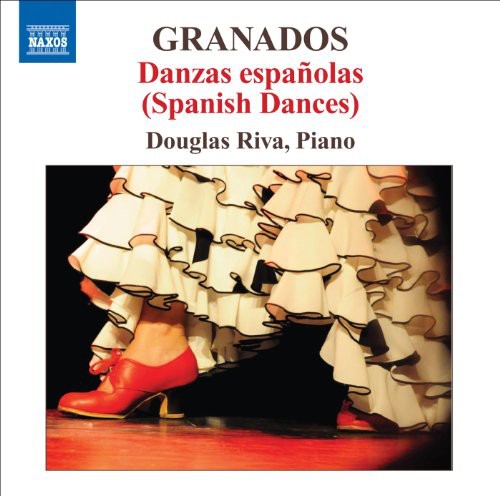
Granados: Danzas Espanolas / Douglas Riva
Enrique Granados performed extensively in Spain, France and the United States, collaborating with many of the leading artists of his day. His first masterpiece was the collection of 12 Danzas españolas, refined and expressive evocations of the richness of Spain’s regions and dances, which gained high praise by composers as diverse as Massenet, Saint-Saëns, Grieg and Cui. By turns vivacious, melancholy and hypnotic, they are as fresh as his poetic Improvisation on the Valencian Jota, heard here in a transcription from a piano roll recording made by Granados himself.
Granados: Complete Piano Music, Vol. 1 / Dosse
Granados, Janacek, Scriabin: Arc 1 / Weiss
The Best of Martin Jones: Discover Enrique Granados
Granados: Complete Piano Music Vol 2 / Marylene Dosse
This set does not contain a booklet.
Granados: Piano Works / Xiayin Wang
-----
REVIEW:
Both books of Goyescas are essentially sensual and/or passionate love poems, something that she conveys with sensitivity and obvious affection.
– Gramophone
Granados: Orchestral Works, Vol. 2 / Gonzalez, Barcelona Symphony
The CD opens with what is probably the only one of the composer’s orchestral works to become a hit – the ‘Intermezzo.’ It was derived from his opera Goyescas (1915), which was premiered in New York on 28 January 1916. It was a by-product of the great piano suite. The composer described his opera as displaying in the ‘rhythm [and] colour, a portrait of quintessentially Spanish life and a sense of emotion that leaps from the amorous to the passionate, the dramatic or even the tragic…just as in Goya’s works you find aspects of both love and tragedy, and both quarrels and flirtations.’ The delightful ‘Intermezzo’ was composed very quickly just before the premiere, to accommodate a longer than expected scene change between the first and second acts of the opera. Its mood is of passion, drama with a hint of sultry sunshine and romance in the ‘big tune.’
The delightfully named ‘Danza de los ojos verdes’ (Dance of the green eyes) was first heard in New York’s Maxine Elliot Theatre just a few days after the opera’s premiere. It was presented as a part of an ‘evening of dance’ performed by Antonia Merce (1890-1936), who was billed as ‘La Argentina.’ The present short dance was written for, and dedicated to, Merce. It is an uncomplicated little piece that uses the usual ‘mechanics’ of a Spanish dance – tambourines, castanets, and ‘gypsy tinged orientalism’. It is a magnificent little tone-poem that depicts the flamenco celebrations in the Sacromente district of Granada.
The mood of celebration continues in the Danza gitana (Gypsy Dance), which was composed in 1915 and was dedicated to the dancer Carmen Tórtola Valencia (1882-1955). It is full of vibrancy, instrumental colour and Iberian rhythms. The liner notes point out that the composer used a large orchestra for this short work, which succeeded in ‘limiting its opportunities for performance.’ This three-and-a-half-minute dance would make an ideal ‘encore’ for any symphony orchestra, in Spain or elsewhere.
A very different mood is evoked in the major symphonic poem La nit del mort (Night of the dead man). It was subtitled ‘poem of desolation.’ The work, which includes a tenor solo and a chorus, was composed in 1897. As I understand it, La nit del mort was left unfinished by the composer and remains unpublished. I can only assume that it was completed by someone unknown. It is very much a work of two parts. The first section, as Rob Barnett has pointed out, is almost Delian in its subtlety and soft impressionistic mood. However, about halfway through things change. It becomes almost a mini-opera, with a tenor aria ‘I am death, my girl…’ The chorus insists that the ‘horns of war are sounding’ and that ‘those who die defending their country will be glorified and will not die.’ The ‘libretto’ is by Apel-les Mestres (1854-1936). As a piece, I am only partially impressed. The first section (which I love) is beautiful; the second (which I do not like) is bombastic, over the top and sub-Verdi in its effect.
‘Dante’ was premiered during June 1908 in Barcelona’s then new Palau de la Música Catalana. It was remarkably successful at the time, with performances in the USA, as well as at the Queen’s Hall, London with Sir Henry Wood. It subsequently fell into neglect. As the titles of the two ‘movements’ suggest, Granados took two important themes from Dante’s great poem: the meeting with the great Roman poet Virgil and the tragic love affair between Paolo e Francesca. In this latter movement the mezzo-soprano sings beautifully Francesca’s story. The composer suggested that it was not ‘my intention to mirror The Divine Comedy line by line, but to give my impression of a life and a work; the lives of Dante and Beatrice and The Divine Comedy are, for me, one and the same thing.’ The listener must not look for an Iberian influence in the pages of the two-part symphonic poem. The liner notes quote Carol A. Hess, who has pointed out that this is ‘a vast and sombre work with little hint of the traditional images of a lively, sunlit Spain…’ There are influences from Richard Wagner, César Franck, Alexander Scriabin and even the romantic side of Arnold Schoenberg. The harmonies are chromatic, rich and ‘voluptuous’. Tantalisingly, there exists a third movement of this massive tone-poem, ‘La Laguna Estigia’ (The Stygian Lake) but unfortunately there are only sketches. The work was originally planned to be in four movements.
All the music is finely played and performed by the soloists, the chorus and the Barcelona Symphony Orchestra under Pablo González. Mezzo-soprano Gemma Coma-Alabert gives a stunning performance in the ‘Dante’. The liner notes are helpful in approaching this little-known music. They are written by Justo Romero and well-translated by Susannah Howe. They are also given in Spanish. The text of La nit del mort and ‘Paulo e Francesca’ are presented in both languages. Details of the performers are included.
– MusicWeb Internationsl (John France)
The first section shows González and his orchestra at their best, with grainy strings, piquant soft-edged woodwinds and a natural, musicianly way of shaping a phrase. Those qualities are all in evidence in two short gypsy dances and the familiar Goyescas Intermezzo; the slightly hazy Naxos sound complements performances that are affectionate and characterful.
– Gramophone
Granados: Goyescas, Op. 11
Spanish music reached a peak early in the 20th century, with Enrique Granados’ Goyescas numbered amongst the crowning masterpieces of its day. Infused with the innovations of Debussy and Ravel, and inspired by the colors and emotional depth of Goya’s paintings and engravings, the Goyescas are like brilliant and psychologically elaborate improvisations filled with seductively ornamented harmonies. The cycle also conceals a narrative of love and death that Granados would later develop into an opera. Multi-award-winning pianist Viviana Lasaracina’s playing was admired for its ‘beautiful liquid tone’ and summed up as ‘breathtaking’ in the New York Concert Review.