Erich Wolfgang Korngold
59 products
-
The Korngold Collection
$29.99CDCedille
Nov 14, 2025CDR 240 -
Mendelssohn: String Symphony No. 10; Widmann: Ikarische Klag
$20.99CDChannel Classics
Nov 14, 2025CCS49225 -
Alma Mahler, lovers & friends - Lieder by Korngold, A. Mahle
$16.99CDChallenge Classics
Jul 18, 2025CC 720015 -
-
-
-
-
-
-
-
-
-
-
-
-
-
-
-
-
-
-
-
-
-
-
-
-
-
-
-
-
-
Hidden Legacies
Echoes of Vienna
The Korngold Collection
Mendelssohn: String Symphony No. 10; Widmann: Ikarische Klag
Alma Mahler, lovers & friends - Lieder by Korngold, A. Mahle
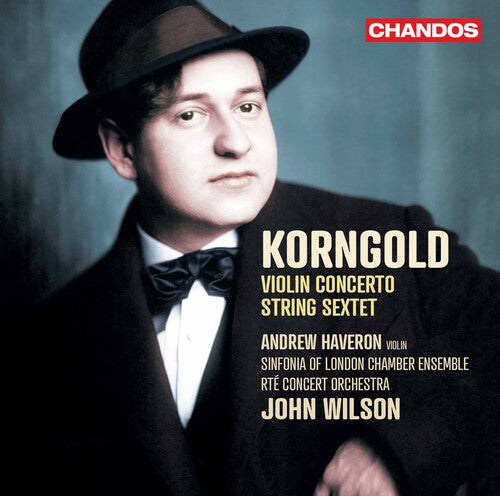
Korngold: Violin Concerto & String Sextet / Haveron, Wilson
Andrew Haveron and John Wilson deliver a fresh and intensely idiomatic reading of Korngold’s Violin Concerto, coupled with the formidable String Sextet. One of the most sought-after violinists of his generation and a laureate of some of the most prestigious international violin competitions, Andrew Haveron studied in London at the Purcell School and the Royal College of Music. As a soloist, he has collaborated with conductors such as Jirí Belohlávek, Sir Colin Davis, Sir Roger Norrington, David Robertson, Stanislaw Skrowaczewski, and John Wilson, performing a broad range of well-known and less familiar concertos with many of the finest orchestras in the UK. In 1999 he was appointed first violinist of the internationally acclaimed Brodsky Quartet. In 2007 he was appointed leader of the BBC Symphony Orchestra. He joined the Philharmonia Orchestra in 2012, has been the leader of The John Wilson Orchestra since its inception, and in 2013 took up his current post of concert master of the Sydney Symphony Orchestra.
REVIEW:
Violinist Andrew Haveron comes unusually close to the precise yet sentiment-filled Heifetz (the Violin Concerto's first player) sound ideal. His sheer endurance at the top of the violin's range in the slow movement is especially notable. Players from the Sinfonia of London are heard in the companion work, the teenage Korngold's String Sextet, Op. 10, a terrifically lush slice of prewar Vienna. A very fine Korngold release that should find a place on the shelves and hard drives of lovers of Korngold, film music, and the last, or at least penultimate, bloom of late Romanticism.
– AllMusic Guide (J. Manheim)
Korngold, Messiaen, Prokofiev, Ravel & Szymanowski: Myths &
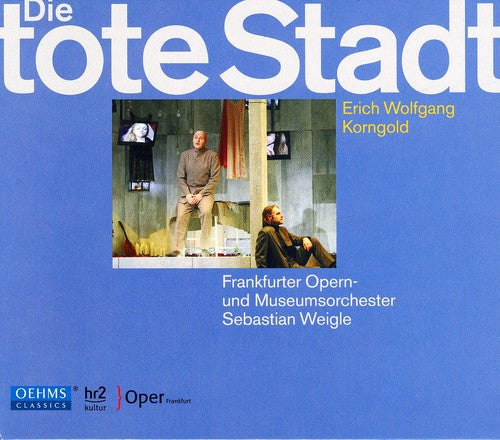
Korngold: Die Tote Stadt / Weigle, Vogt, Pavlovskaya, Nagy, Fassbender
Included is a 43 page color booklet with notes on the performance, musicians and sung texts.
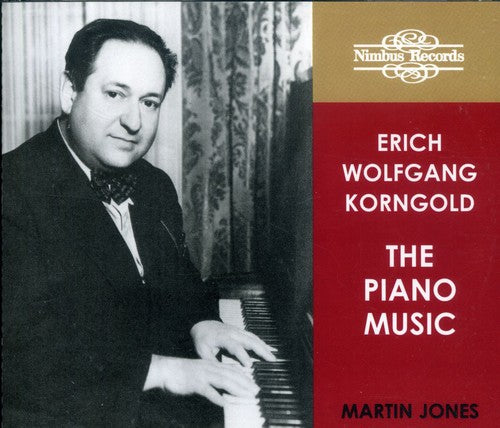
Korngold, E.W.: Piano Music
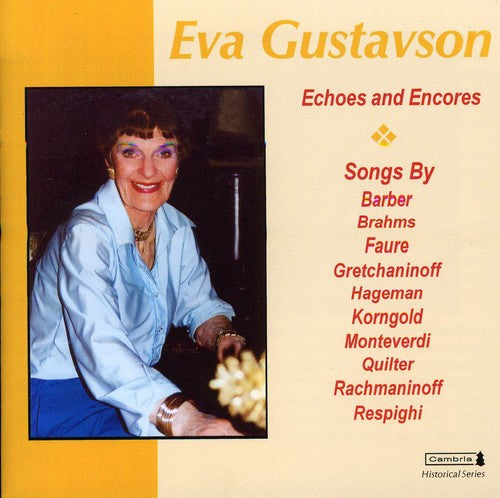
Echoes And Encores
Erich Wolfgang Korngold
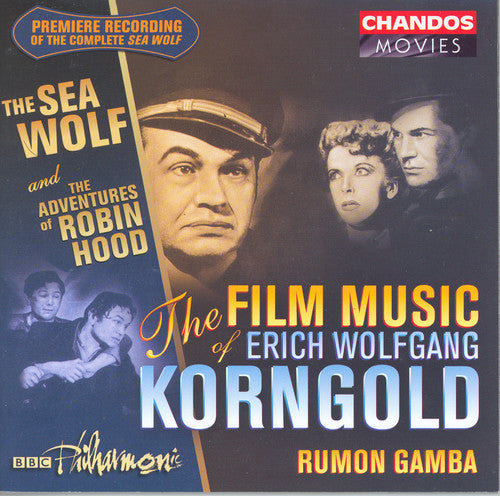
The Film Music Of Erich Wolfgang Korngold / Gamba
Let me come right out and say it: this is the most important film-music recording of the year, and perhaps for many years. The stunning Main Title sequence, with its powerful, sweeping orchestral chords depicting the motion of the sea, followed by the angular, dissonant descending six-note theme for Wolf Larsen’s ship, the Ghost , explores new territory for anyone who identifies Korngold by his scores for swashbucklers ( The Sea Hawk , Captain Blood , The Adventures of Robin Hood ) or costume spectacles ( The Private Lives of Elizabeth and Essex ). The Sea Wolf (and Between Two Worlds ) is stylistically closer to his two most famous operas, Die Tote Stadt and Das Wunder der Heliane .
Based on the Jack London novel, The Sea Wolf is the story of a sophisticated but sadistic and psychotic captain who psychologically tortures three passengers he has taken aboard his ship. The score is a series of variations on the brutal theme for the “Ghost.” The music is dark and sinister throughout the film, until some light seeps in at the end after Larsen’s death. There is also a haunting and atmospheric contrasting melody for solo harmonica that Korngold later used effectively in his Third String Quartet. The huge orchestra, including piano, celesta, vibraphone, and nova chord, makes you realize how Korngold would have relished utilizing synthesizers in his orchestra. This is the premiere recording of the complete score for The Sea Wolf . In addition to emphasizing the lost art of the composer presenting his principal musical statement in a concise Main Title, the CD also includes nearly five minutes of music composed for the film’s trailer. One thinks of a trailer like that for The Nun’s Story , which is virtually choreographed to Franz Waxman’s symphonically developed music. This is something you unfortunately no longer see in the present age of temp-tracked trailers.
The substantial filler is a 16-minute concert suite that Korngold arranged from his score for The Adventures of Robin Hood . Many feel that Robin Hood is Korngold’s greatest and most original score. While I freely acknowledge its seminal importance and influence in the history of film music, I prefer to listen to any number of his scores, including Kings Row , Anthony Adverse , Between Two Worlds , Devotion , and The Sea Wolf . The technically dazzling and flamboyantly orchestrated swashbuckling and swordfight music wears a little thin after awhile. In arranging his concert suite, Korngold seems to have recognized this. The gorgeous love scene is the centerpiece, and there is more emphasis on lyrical music than the action underscores. What is missing is the dazzling “Coronation Procession,” which is the orchestral highlight of the score.
Rumon Gamba’s interpretation of The Sea Wolf is excellent in every conceivable way. He doesn’t stint on the angry edginess of the music, and its unique atmosphere comes through perfectly. I can pay Gamba no higher compliment than to say that he matches Charles Gerhardt’s short Suite from the RCA “Classic Film Score” series in every way except the sound. Robin Hood does not work quite as well. Some of this is due to sound that lacks the transient speed and fine inner detail necessary to project the complex but transparent orchestration. Gamba is also a little laid back in the love music, and he doesn’t have the feel for those gorgeous climactic final cadences that Gerhardt has. To get back to the sound, the CD is recorded at a very low level, but if you turn the volume sufficiently high, the music explodes with a front and center aural perspective that complements the dynamic impact of The Sea Wolf . The distant harmonica is beautifully phrased and flawlessly integrated with the orchestra. It effectively emphasizes the loneliness of the sailor’s life, especially on this ship from hell. In sum, great music, dynamic conducting, brilliant orchestral execution, and sound that works well for The Sea Wolf , but somewhat less so for the Robin Hood Suite. The album contains excellent program notes written by the composer’s biographer, Brendan G. Carroll. This is essential for Korngold aficionados, film music fans, and music-lovers everywhere. One hopes that Chandos will follow this valuable recording with the many other Korngold scores that have never had adequate complete recordings.
FANFARE: Arthur Lintgen
The Sea Wolf is one of Erich Korngold's darkest and most evocative scores. This recording includes the entire work, plus the original trailer for the film--more than an hour of music in all. Despite the claim that Korngold's scores link up perfectly when played continuously, there's still a good bit of atmospheric noodling and some clear stops and starts. This is movie music, after all, but the vast majority of the piece really does hang together on its own, and as always Korngold's handling of texture and sonority is simply amazing. The suite from Robin Hood is quite popular and no stranger to disc, but the performances here are uniformly fine and very well recorded. Indeed, the BBC Philharmonic sounds like a good Hollywood pick-up band, perhaps lacking only that last ounce of schmaltz to the string tone. I can't imagine film music buffs or Korngold fans being disappointed.
--David Hurwitz, ClassicsToday.com
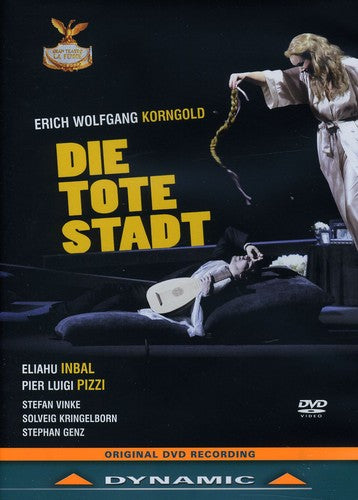
DIE TOTE STADT
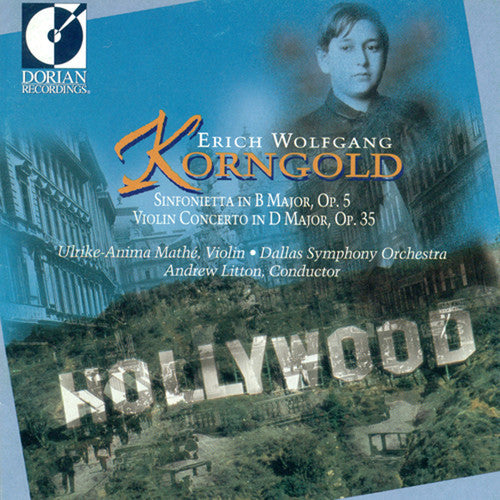
Korngold, E.W.: Sinfonietta, Op. 5 / Violin Concerto, Op. 35
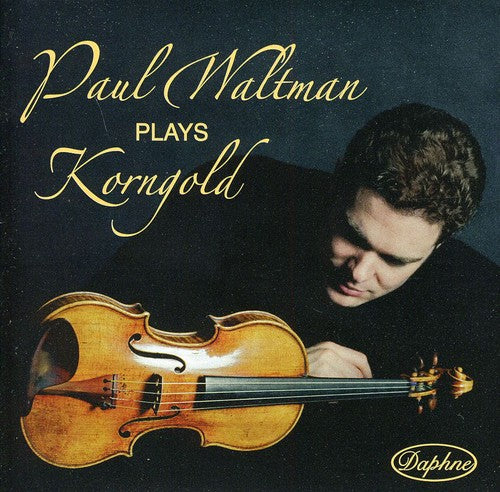
Paul Waltman Plays Korngold
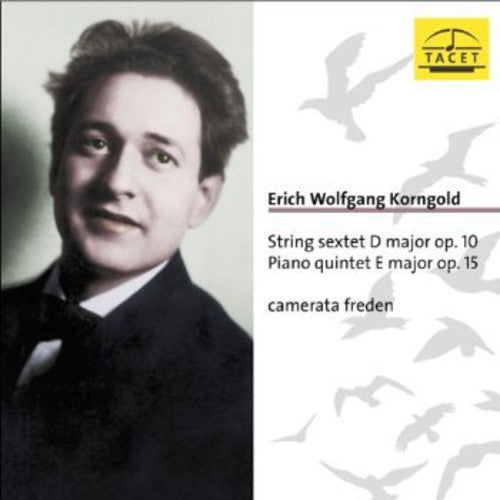
STRING SEXTET, PIANO QUINTET
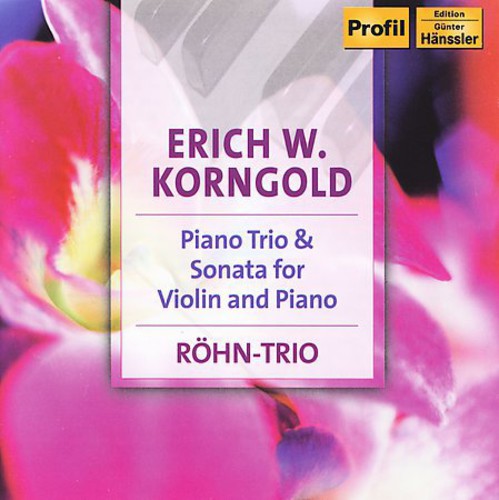
KORNGOLD: Piano Trio, Op. 1 / Violin Sonata, Op. 6
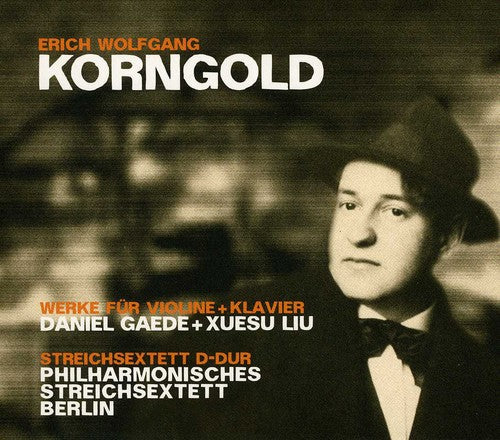
ERICH WOLFGANG KORNGOLD
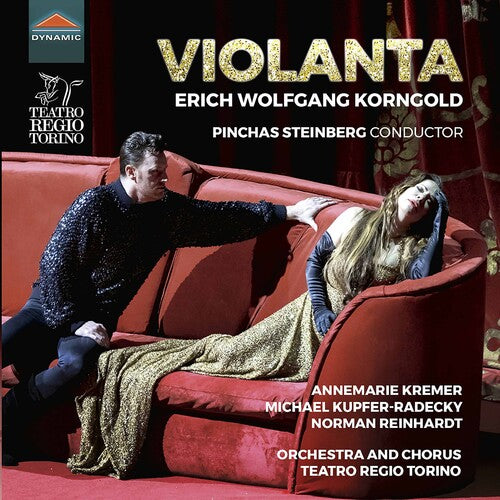
Korngold: Violanta / Steinberg, Teatro Regio Torino
Erich Wolfgang Korngold was a child prodigy whose early genius was recognized and admired by the likes of Gustav Mahler and Giacomo Puccini. His musical style, deeply affected by music for the theatre, possessed great lyrical breadth; he managed to develop his own voice by blending all the different influences he absorbed in Vienna during his studies. The advent of Nazism in 1934 forced him to seek refuge in the United States, where he became the first composer of film scores, winning two Oscars and marking a milestone in the Hollywood film industry. Teatro Regio di Torino has contributed to the rediscovery of this precious one-act opera by staging its Italian premiere. Violanta is Korngold's second opera, which the composer wrote in 1914 at the age of 17. It was premiered with great success at Munich’s Hoftheater on 28 March 1916, and a few days later in Vienna. The influence of the Austrian capital is key to understanding Korngold’s style. From the late 1800s to the early 1900s Vienna was a place of contrasts: nostalgia for the past and innovative trends; conservatism and creative energy. Korngold grew up in this environment, absorbing various influences which are all present in Violanta, making this opera a sort of 'small-scale Vienna'. Pier Luigi Pizzi, stage director, costume and lighting designer for this production, chose to set the action at the beginning of the 1920s in a decadent Venice, where distant echoes of a melancholic Carnival add a sense of gloom to the whole performance.
Korngold: Violanta / Steinberg, Teatro Regio Torino [Blu-ray]
Also available on standard DVD
Erich Wolfgang Korngold was a child prodigy whose early genius was recognized and admired by the likes of Gustav Mahler and Giacomo Puccini. His musical style, deeply affected by music for the theatre, possessed great lyrical breadth; he managed to develop his own voice by blending all the different influences he absorbed in Vienna during his studies. The advent of Nazism in 1934 forced him to seek refuge in the United States, where he became the first composer of film scores, winning two Oscars and marking a milestone in the Hollywood film industry. Teatro Regio di Torino has contributed to the rediscovery of this precious one-act opera by staging its Italian premiere. Violanta is Korngold's second opera, which the composer wrote in 1914 at the age of 17. It was premiered with great success at Munich’s Hoftheater on 28 March 1916, and a few days later in Vienna. The influence of the Austrian capital is key to understanding Korngold’s style. From the late 1800s to the early 1900s Vienna was a place of contrasts: nostalgia for the past and innovative trends; conservatism and creative energy. Korngold grew up in this environment, absorbing various influences which are all present in Violanta, making this opera a sort of 'small-scale Vienna'. Pier Luigi Pizzi, stage director, costume and lighting designer for this production, chose to set the action at the beginning of the 1920s in a decadent Venice, where distant echoes of a melancholic Carnival add a sense of gloom to the whole performance.
Korngold: Der Ring Des Polykrates / Seibel, Wottrich, Et Al
Ponce, M.M.: Violin Concerto / Korngold, E.W.: Violin Concer
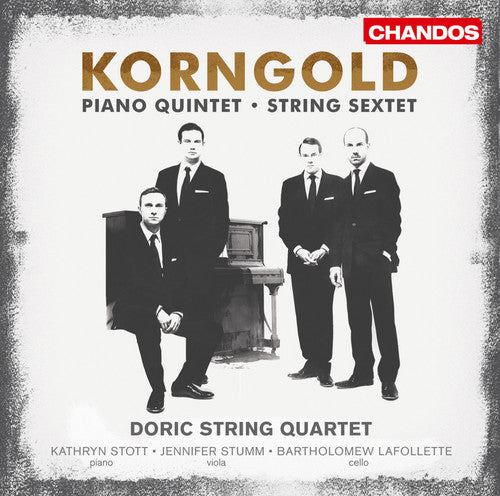
Korngold: Piano Quintet & String Sextet / Stumm, LaFollette, Stott, Doric String Quartet
Erich Wolfgang Korngold was one of the most astonishing prodigies in the history of western music, admired by Mahler, Strauss, and Puccini. His compositions were regularly performed by renowned musicians from around the world. Korngold composed his Sextet for Strings between 1914 and 1916, at the same time as his opera Violanta, and for this reason perhaps, it takes on some of the theatrical elements of that work. The first movement presents some highly intricate counterpoint among the different voices. In the Adagio the mood shifts to one of intense sensuousness. The third movement brings relief to the highly charged atmosphere. Here Korngold plays - sometimes with an air of irony, sometimes jokingly, sometimes more straightforwardly - with that most Viennese of genres, the waltz. The finale, in typical Korngold fashion, is high-spirited and good-humoured. The highly successful premiere of the Quintet for Two Violins, Viola, Cello, and Piano took place in Hamburg in 1923 with the composer at the keyboard. The work is in three elaborate and complex movements, with a piano part of considerable difficulty, and string writing on a virtuosic scale. With good humour and charm aplenty, the quintet displays the composer's sunny disposition. In the work Korngold incorporated a musical code that he had developed to send secret, loving messages to his fiancée during concert performances. Described by the magazine Gramophone as 'one of the finest young string quartets', whose members are 'musicians with fascinating things to say', the Doric String Quartet has received rave responses from audiences and critics across the globe. The Quartet's recent recording of Korngold's string quartets was a 2010 Critics' Choice in Gramophone, and the group's most recent recording on Chandos (CHAN 10692), of Schumann's three string quartets, was 'Recording of the Month' in BBC Music. The Quartet is joined on this recording by Kathryn Stott on piano, Jennifer Stumm on viola, and Bartholomew LaFolette on cello.
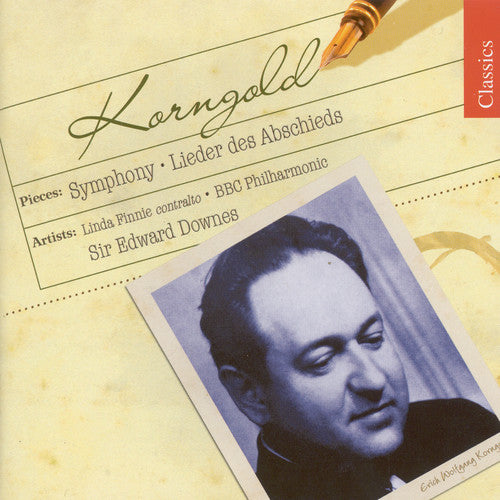
Korngold: Lieder Des Abshieds, Etc / Downes, Finnie
Scored for large forces - the rare Symphony in F Sharp major is a work of real imaginative power and ranks alongside the major symphonic works of Mahler and Bruckner; with a powerful and deeply felt slow movement of grandiose character. Coupled with the exquisite yet, rarely performed 'Lieder des Abshieds' a cycle of four orchestral songs are much earlier and completed in 1920; clearly influenced by Strauss, Mahler and Zemlinsky and performed here with the persuasive soloist, Linda Finnie. Conducted by Edward Downes, the BBC Philharmonic performs with enthusiasm and sensitivity. 'Korngold's lush orchestration needs sound with a full bloom, and the Chandos engineers provided that in spades.' - The Times
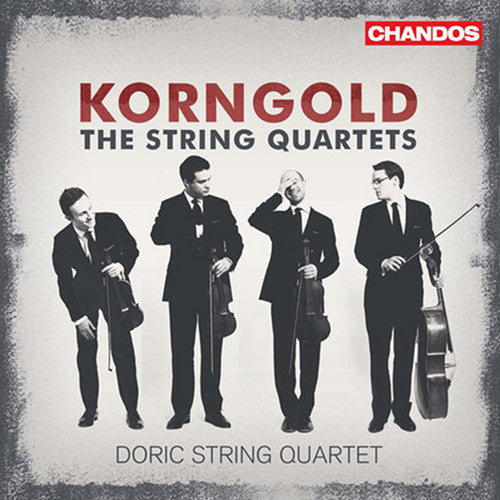
Korngold: String Quartets Nos. 1, 2 & 3 / Doric String Quartet

There's very little competition for this music, which is a shame because these are excellent quartets. It's really very remarkable how Korngold uses timbre to keep the busy textures clear and prevent his often chromatic harmony from turning into sludge. The main competition comes from the Flesch Quartet on ASV, so-so performances spread over two discs because they include the string Sextet as well. In general, the Doric Quartet offers livelier, more colorful, more accurate performances. To give just one example: the score of the Second quartet lists the work's duration at an optimistically fast 18 minutes. Flesch takes 25, while the Doric clocks in at an ideal 21 minutes.
These quartets are quite difficult to play, the first especially, which features frequent changes of tempo, often within a few bars. The Doric players handle all of these with astonishing ease and naturalness. There are a couple of points, as at figure 3 in the Second quartet's first movement, where the group slows down a bit in anticipation of Korngold's marking (his "Un poco più tranquillo" doesn't arrive until seven bars later), but if this is a fault, it's a vanishingly minor one.
Otherwise, you can only applaud the group's tonal richness, immaculate intonation, and a stylishness that never turns tacky (excellent application of portamento). First violinist Alex Redington deserves particular mention for handling his vibrato-less "ohne Ausdruck" moments (figure 7 in the First quartet's first movement, for example) with the right expressive point while never letting his tone turn just plain ugly ("period" performers take note). Violist Simon Tandree also features a particularly attractive timbre in his many solo licks. Korngold asks for many "special effects", including harmonics, col legno, open strings, muting, and lots of pizzicato; all of these are rendered with consistent musicality and are beautifully integrated into the ensemble texture.
Excellent sonics complement this obvious first choice for this music. If you don't know these pieces, you should. There's much more to Korngold than you might think--check out the wonderfully spiky scherzo in the Third quartet for a particularly bracing "fact check" on his theoretically unabashedly late-Romantic style. One final note for score collectors: all three works are available from Schott, the first two quartets in convenient study format, the Third only as a score and parts. An important release for chamber music devotees, and a terrific example of first-rate quartet playing.
--David Hurwitz, ClassicsToday.com