Gabriel Fauré
123 products
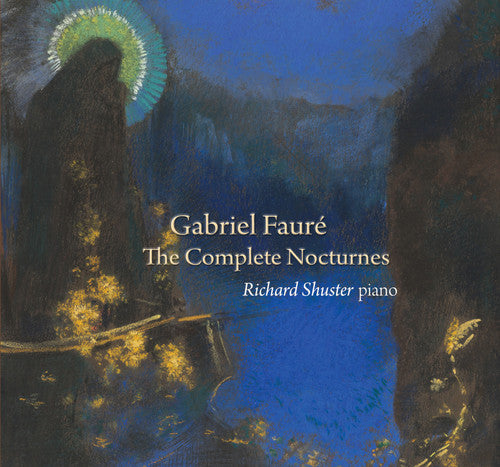
Fauré: The Complete Nocturnes
Fleur de Son
Available as
CD
$20.99
Sep 09, 2014
Pianist, Richard Shuster, captures “the magic that Fauré wrought into the Nocturnes across a 46 year period…stunning.”– Classical Voice of North Carolina Music is a nocturnal art, a dreamlike art. It reigns in winter at the hour when the soul is confined. – Odilon Redon (private diary, 1972) The Nocturnes spam Fauré’s youth and old age. No composer after Chopin wrote as many nocturnes as Fauré. These are complex and sometimes melancholy works.
Though they embody a lifetime of work in one genre, each nocturne stands alone and commands its own emotional world.
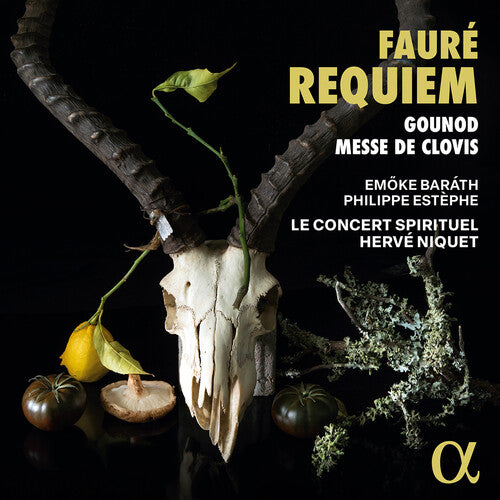
Faure: Requiem; Gounod: Messe de Clovis
Alpha
Available as
CD
While Faure's Requiem is a monument of French sacred music, Gounod's Messe de Clovis is much less well known. It was composed from 1891 onwards as a tribute to Clovis who, like Joan of Arc, had become an iconic figure after the defeat of France in the Franco-Prussian war of 1870. The two works share a reflective and intimate character that gives the impression of a return to the purity of Gregorian chant, although this does not detract from the jubilant character of Faure's Requiem: "this warm, luxuriant sound leads to an elevation of the spirit", says Herve Niquet. The work is recorded here in it's 1893 version, in an orchestration that uses neither violins nor woodwind; a later version with full orchestra was published in July 1900. O salutaris by Louis Aubert (1877-1968) for soprano, violin, harp, organ and choir and L'Adagio for violin and organ by Andre Caplet (1878-1925) complete this programme, a co-production with the Palazzetto Bru Zane and performed with fervour by the Concert Spirituel.
V3: MELODIES
CRD Records
Available as
CD
$20.99
Jan 01, 1995
Classical Music
Fauré: Mélodies, Vol. 4
CRD Records
Available as
CD
$20.99
Jan 01, 1998
Classical Music
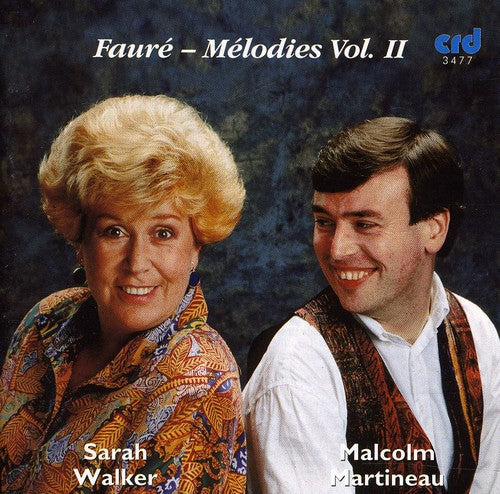
Gabriel Fauré: Mélodies, Vol. 2
CRD Records
Available as
CD
$20.99
Jan 01, 1995
Classical Music
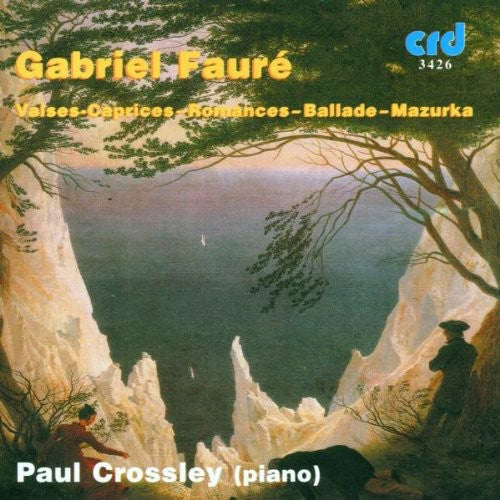
Fauré: Valse-caprices - Romances - Ballade - Mazurka
CRD Records
Available as
CD
$20.99
Jan 01, 1991
Classical Music
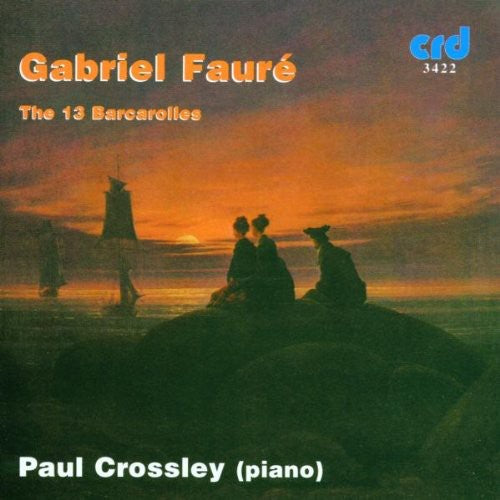
Fauré: The 13 Barcarolles
CRD Records
Available as
CD
$20.99
Jan 01, 1991
Classical Music
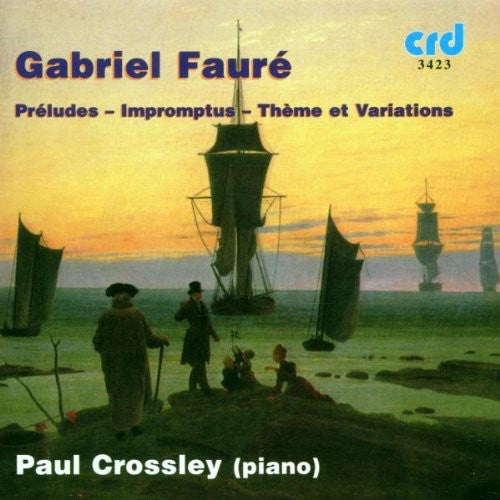
Fauré: Préludes - Impromptus - Thème et Variations
CRD Records
Available as
CD
$20.99
Jan 01, 1991
Classical Music
Fauré: Nocturnes Nos. 8-13 - 8 Pieces breves
CRD Records
Available as
CD
$20.99
Jan 01, 1991
Classical Music
Fauré: La Bonne Chanson Op. 61
CRD Records
Available as
CD
$20.99
Jan 01, 1991
Classical Music
Fauré: Cello Sonatas, Op. 109 and 117 - Sicilienne - Élégie
CRD Records
Available as
CD
$20.99
Jan 01, 1986
Classical Music
LES MELODIES
CRD Records
Available as
CD
$42.99
May 01, 2009
Classical Music
Fauré: Chansons, Vol. 1
CRD Records
Available as
CD
$20.99
Jan 01, 1995
Classical Music
REQUIEM
Evil Penguin
Available as
CD
$18.99
Sep 26, 2014
Classical Music
Fauré: Mélodies
Centaur Records
Available as
CD
$18.99
Feb 01, 2002
Classical Music
Faure: Les 13 Barcarolles / Namji Kim
Centaur Records
Available as
CD
$17.99
Sep 04, 2020
The Faure Bacarolles are unique and wonderful works for piano. Pianist Namji Kim plays these works with exquisite sensitivity and warmth. Dr. Namji Kim graduated from the National Superior Conservatory of Paris with First Prizes (Premiers Prix) in piano, chamber music, and harmony. She earned her Bachelor and Master of Music degrees from the Juilliard School, and her Doctor of Musical Arts degree from the Manhattan School of Music. Her doctoral thesis was a study of prosody in French Operas. A finalist at the Kahn International Piano Competition in Paris and at the Chopin International Competition in Majorca, Ms. Kim's concert schedule has included performances around North America, Europe, Russia, and Korea, where in addition to her recitals she appeared on television and radio broadcasts. Also an active accompanist, Ms. Kim has accompanied singers in the master classes of Ned Rorem and Louise Talma as well as accompanying for the vocal studios of Gabor Carelli, Paul Sperry, Cynthia Hoffmann, and Gary Kendall. Her chamber music activities include performances within various string ensembles and duos with wind and brass instruments notably performances with cellist Paul Kosower, clarinetist Robert Spring, and trumpeter Thomas Pfotenhauer. In addition to her performing, she has published several review essays relating to the interrelationships among philosophy, theology, and music in the Boston College Journal, "Religion and the Arts." Namji Kim is an active pedagogue in chamber music, piano, and music theory.
Fauré: Cantique De Jean Racine / La Naissance De Venus / Pav
Chandos
Available as
CD
Classical Music
Faure: Pavane, Songs, Requiem
OSJ Alive
Available as
CD
$18.99
Jun 01, 2014
Fauré: Pavane, Songs & Requiem
MELODIES / SONGS
MUSO
Available as
CD
$20.99
Jun 01, 2017
Although a great specialist of 17th and 18th century repertories, the tenor Thibaut Lenaerts has chosen for his first solo album to plunge into the world of Gabriel Faur�'s songs, accompanied by Philippe Riga and the soft, warm tones of a magnificent 1873 Erard piano. An alchemy of colors that promises a superb recital, imbued with a sense of irresistible nostalgia for both performer and listener. Thibaut Lenaerts studied singing at the Royal Conservatory of Liege with Greta de Reyghere, where he won first prize for singing. He subsequently won first prize for chamber music in the class of Guy Van Waas as well as first prize for opera singing with Thierry Migliorini at the Royal Conservatory of Mons. He divides his life between Brussels and Paris, where he appears as a soloist with numerous ensembles.
Fauré: Concert-Centenaire, Vol. 3
Accentus Music
Available as
CD
$17.99
Sep 30, 2016
Both accomplished soloists with impressive international careers, violinist Judith Ingolfsson and pianist Vladimir Stoupel began their successful collaboration in 2006. The duo devotes themselves to the discovery and performance of uncommon repertoire. The music of French composer Gabriel Faure (1845-1924) is marked by lyrical lines and flowing harmonies. His elegant music is transparent and virtuosic. These two pieces were written more than four decades apart, and show turning points in the composer’s artistic life. The first sonata was the composer’s breakthrough hit. The success of this work unleashed an interest in his pieces across France. The second sonata is the first piece from the composer’s final period, when he wrote primarily chamber music.
Faure: Dolly, Masques et Bergamasques, Trio / Le Sage, Pahud, Tharaud
Alpha
Available as
CD
$20.99
Nov 19, 2013
FAURÉ Dolly for Piano Four-Hands. Masques et bergamasques for Piano Four-Hands. Fantaisie for Flute and Piano, op. 79. Morceau de concours for Flute and Piano. Piano Trio, op. 120. Aprés un rêve for Cello and Piano (trans. Casals). Pelléas et Mélisande: Sicilienne, for cello & piano. FAURÉ-MESSAGER Souvenirs de Bayreuth for Piano Four-Hands • Eric Le Sage (pn); Alexandre Tharaud (pn); Emmanuel Pahud (fl); Pierre Colombet (vn); Raphaël Merlin (vc); Françoise Salque (vc) • ALPHA 603 (70:32)
This comes wrapped in a certain air of carelessness. It might be called Eric Le Sage and Friends , and one assumes that Le Sage is the principal pianist, but there is no attempt to identify who plays what, on the jacket or in the booklet. Likewise, there is a reluctance to credit the arrangers and collaborators of several items, e.g., the contribution of André Meassager to the Souvenirs de Bayreuth ; some of which are taken at breakneck speed, thus obscuring their allusions to the Wagner operas they’re guying. In other pieces, however, gung-ho spontaneity is salutary. Going for the gusto, finesse occasionally takes a hit. Nestled amid the bonbons, a movingly elegiac reading of Fauré’s late Trio, too often dismissed as a feebly geriatric effort, makes a superb case for it and prompts one to hear Le Sage & Company’s three other Fauré albums. Despite occasional reservations, this gives pleasure. Recommended.
FANFARE: Adrian Corleonis
Fauré: Works for Violin and Piano
Alpha
Available as
CD
$20.99
Feb 25, 2014
Fifth and final volume of Alpha's Faure chamber music series. French master composer and pedagogue whose harmonic advancements greatly influenced later generations of composers, including those of the famed 'Les Six'. Renowned pianist Eric Le Sage completed an internationally acclaimed Robert Schumann cycle for Alpha in 2010. Violinist Daishin Kashimoto is presently concertmaster of the Berlin Philharmonic Orchestra. Mr. Le Sage and Mr. Kashimoto have collaborated often in concert.
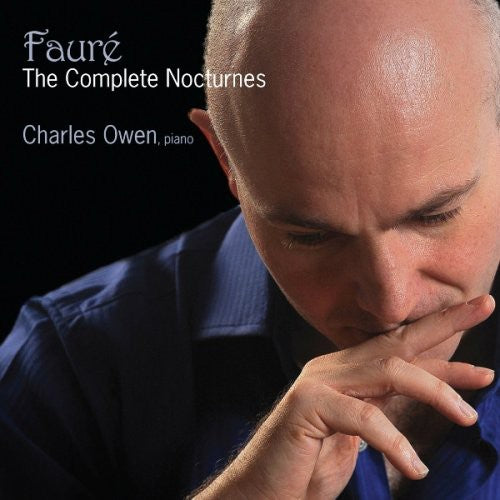
Faure: Complete Nocturnes / Charles Owen
Avie Records
Available as
CD
Unaffectedly straightforward with a disarming simplicity in which charm lifts imperceptibly into the most intense utterance, moving us compellingly through the salon-like early pieces to the increasingly desolate soundscapes of old age. Exemplary. Classic. Spellbinding.
3211180.az_FAURE_Nocturnes_Charles.html
FAURÉ Nocturnes (complete) • Charles Owen (pn) • AVIE 2133 (79:36)
Fauré’s son, Philippe Fauré-Fremiet, described the composer’s playing: “His hands were strong and looked heavy; in fact they were supple and light. He hardly raised them above the keys but was able to obtain any effect he wanted. He had a horror of virtuosity, of rubato and effects aimed at making the audience swoon. He followed the printed notes meticulously, keeping strict time. What was so overpowering about his playing lay below the surface, in the areas of thought and emotion where teaching is helpless to guide you.” To which Jessica Duchen, in her annotations for David Jalbert’s unfortunate tilt at the nocturnes (Endeavour 1014, Fanfare 30:1), adds, “To play Fauré’s piano works successfully, a pianist must have a tremendously flexible technique, a strong sense of contrapuntal voicing and, perhaps above all, the ability to convey those sensuous, intertwining lines and subtle harmonies without allowing structural rigor to slacken. While playing this music with no expressive fluctuation whatsoever could seem excessive, a healthy respect for his ‘pudeur’—modesty veiling the immense sensuality beneath—is as essential to faithful Fauré interpretation as good posture is to the dance.” Both observations describe Charles Owen’s way with the nocturnes—unaffectedly straightforward, rhythmically steady (but breathing and never rigid or inflexible), the pedal sparingly used, allowing a light touch (graciously deft in animated passages) to articulate with absolute clarity while imparting moments of aquarelle-like color (rather than the heavily sustained impasto of the average pianist), all making for a disarming simplicity in which charm lifts imperceptibly into the most intense utterance, moving us compellingly through the salon-like early pieces, the opulent ecstasies of the middle nocturnes, and the increasingly desolate and despairing soundscapes of old age. Duchen confects a final elegance with other, no less gracefully penetrating, annotations. Avie captures Owen closely, at the optimal point where clarity flares into spaciousness. Exemplary. Classic. Spellbinding. And enthusiastically recommended.
FANFARE: Adrian Corleonis
FAURÉ Nocturnes (complete) • Charles Owen (pn) • AVIE 2133 (79:36)
Fauré’s son, Philippe Fauré-Fremiet, described the composer’s playing: “His hands were strong and looked heavy; in fact they were supple and light. He hardly raised them above the keys but was able to obtain any effect he wanted. He had a horror of virtuosity, of rubato and effects aimed at making the audience swoon. He followed the printed notes meticulously, keeping strict time. What was so overpowering about his playing lay below the surface, in the areas of thought and emotion where teaching is helpless to guide you.” To which Jessica Duchen, in her annotations for David Jalbert’s unfortunate tilt at the nocturnes (Endeavour 1014, Fanfare 30:1), adds, “To play Fauré’s piano works successfully, a pianist must have a tremendously flexible technique, a strong sense of contrapuntal voicing and, perhaps above all, the ability to convey those sensuous, intertwining lines and subtle harmonies without allowing structural rigor to slacken. While playing this music with no expressive fluctuation whatsoever could seem excessive, a healthy respect for his ‘pudeur’—modesty veiling the immense sensuality beneath—is as essential to faithful Fauré interpretation as good posture is to the dance.” Both observations describe Charles Owen’s way with the nocturnes—unaffectedly straightforward, rhythmically steady (but breathing and never rigid or inflexible), the pedal sparingly used, allowing a light touch (graciously deft in animated passages) to articulate with absolute clarity while imparting moments of aquarelle-like color (rather than the heavily sustained impasto of the average pianist), all making for a disarming simplicity in which charm lifts imperceptibly into the most intense utterance, moving us compellingly through the salon-like early pieces, the opulent ecstasies of the middle nocturnes, and the increasingly desolate and despairing soundscapes of old age. Duchen confects a final elegance with other, no less gracefully penetrating, annotations. Avie captures Owen closely, at the optimal point where clarity flares into spaciousness. Exemplary. Classic. Spellbinding. And enthusiastically recommended.
FANFARE: Adrian Corleonis
Faure: Complete Barcarolles; Trois Romances Sans Paroles
Avie Records
Available as
CD
FAURÉ Barcarolles (complete) . 3 Romances sans paroles , op. 17 • Charles Owen (pn) • AVIE AV 2240 (63:20)
At the midcentury there were still artists active who had known Fauré and were cognizant of his world, however rapidly it may have been passing. One thinks of Marguerite Long, Yvonne Lefébure, Vlado Perlemuter, Robert Casadesus, Jean Doyen. As Fauré passed from living memory, a new generation of pianists approached his works with the generic, heavily pedaled, freely rubatomized manner that was the pianistic lingua franca of the 20th century’s last third. Matters of touch—light or sec, and sparing—and rhythmic steadiness were forgotten or ignored, and the public came to accept what was offered, that is, a sound very different from that which Fauré took for granted. The matter is not one of insisting upon slavish adherence to a “sacred tradition”—now, in any case, beyond recall—but of cultivating those oddments of style facilitating the optimum realization of Fauré’s music, which trails a dimension not always evident from close reading of its performing directions.
The marvel is the breathing naturalness with which Charles Owen has accomplished it—a marvel so complete that one is delighted, moved, entranced, noting only how deftly it is done. Without giving accompaniments or subsidiary figures undue prominence, every part is alive and singing with absolute, silvery clarity. Complementing his nonpareil traversal of the nocturnes (Avie 2133, Fanfare 32:1), Owen wings the barcarolles’ expressive curve, from early blithesomeness through middle-period pith and wizardry to the spare poetry of wizened old age, with a sympathetic grasp reviving, for an hour, a vanished world. One leaves it overcome with gratitude—gratitude to the composer, the artist, and for their rare endeavor, which has turned out so ravishingly well. For decades, the great and aptly named Jean Doyen’s traversal of the complete piano works was an unfailing touchstone for revealing Fauré’s manner of saying important things conversationally. Unfortunately, Erato’s masters were in sorry shape and their transfer to CDs was a disappointment. The good news is that Owen overtops him, and in sound of detailed, open, savoring immediacy. Jessica Duchen’s knowing annotations—a beautifully written contribution to the Fauré literature—confect a final elegance. This is for the ages, classic and indispensable.
FANFARE: Adrian Corleonis
Fauré: Piano Music for Four Hands
Naxos
Available as
CD
Fauré: Piano Music for Four Hands