Heinrich Isaac
27 products
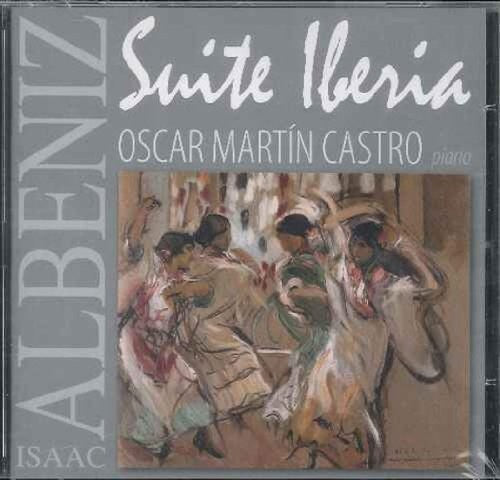
SUITE IBERIA
Albeniz: Suite Iberia / Juan Manuel Canizares
SIN OF JESUS
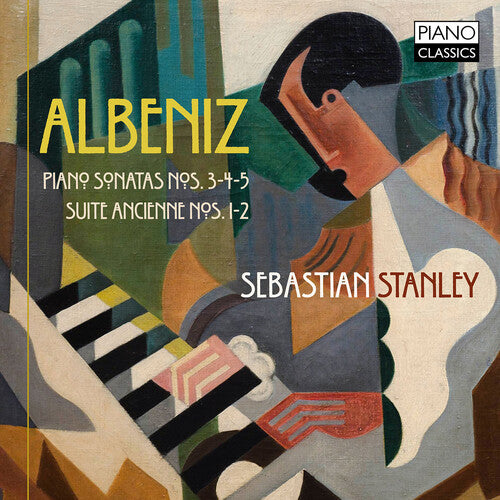
Albéniz, I.: Piano Sonatas Nos. 3-5 / Suite ancienne Nos. 1-
Albeniz: Iberia
Albéniz: Complete Piano Music Vol 2 / Miguel Baselga

As the talented young Spanish pianist Miguel Baselga mentions in this release's excellent booklet notes, there's a considerable gap between much of Isaac Albéniz's salon-like piano output and the labyrinthine originality of Iberia's four books. For this reason, the pianist is allotting one book from Iberia per release in his ongoing complete Albéniz cycle for BIS. The project's second installment improves upon its predecessor in that Baselga truly is making this music his own. His assertive, communicative virtuosity uncovers all the poetic layers interwoven throughout Iberia Book Two's technical hurdles. Similarly, the pianist makes a cogent case for the composer's slighter but utterly charming, neo-Lisztian Seven Studies in the Natural Minor Keys. Baselga's fanciful yet tender treatments of the two salon mazurkas (Amalia and Ricordatti) and the evocative 1897 Souvenirs are absolute delights. The disc concludes with the wild and wooly La Vega, whose elemental impressionism sizzles under Baselga's hot hands. All the music on this disc conveys as full a scope of Albéniz's artistic development as can be contained on one CD. In sum, a disc guaranteed to perk up anyone's piano collection. --Jed Distler, ClassicsToday.com
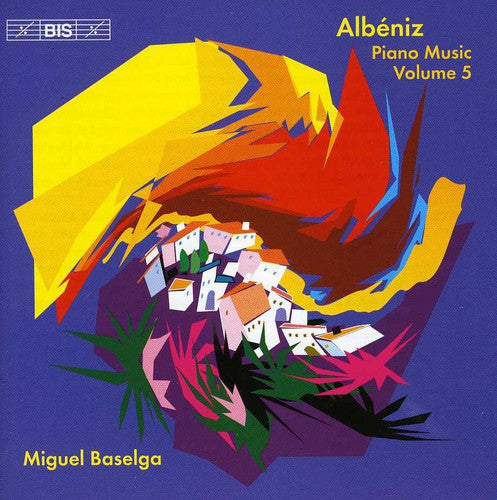
Albeniz, I.: Complete Piano Music, Vol. 5
Albéniz: Complete Piano Music Vol 3 / Miguel Baselga
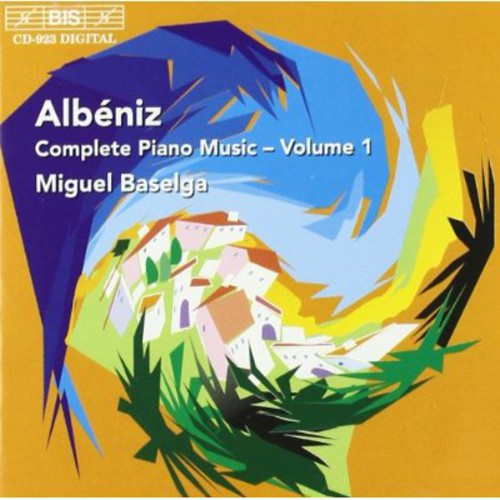
Albeniz, I.: Complete Piano Music, Vol. 1
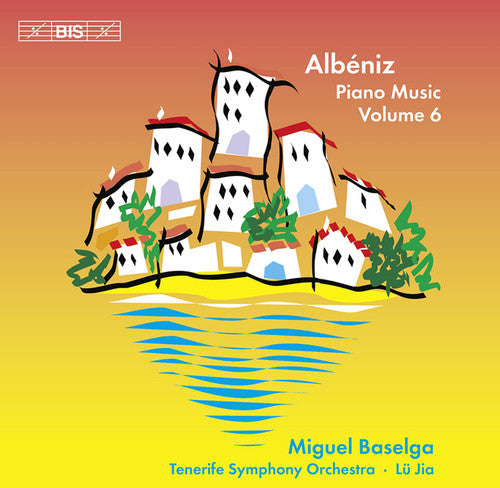
Albeniz: Complete Piano Music Vol 6 / Miguel Baselga
The Luxembourg-born pianist Miguel Baselga has now recorded six well-regarded discs of solo piano music by Albéniz, the latest of which includes works for piano and orchestra. In typical BIS fashion the band chosen is the Tenerife Symphony, which celebrates its 75 th anniversary this year, under Shanghai-born Lü Jia. This strategy of employing little-known ensembles is a risky one, but in the case of the Singapore Symphony it paid off handsomely. Indeed, the latter’s Seascapes was one of my Recordings of the Year for 2007. Kees Bakels and the Malaysian Philharmonic’s Rimsky-Korsakov collection (BIS-CD-1667) is just as desirable, proof - if it were needed - that second-rank need not mean second-rate.
Rapsodia Española, originally written for two pianos and usually heard in one of several versions for piano and orchestra, is presented here in a completion by Spanish musicologist Jacinto Torres. Both the band and soloist make a striking impression in the brooding first bars of the piece, Baselga wonderfully fluent and rhythmically sophisticated. The piano sound is warm and detailed, the bass especially well caught, the brief orchestral tuttis suitably powerful. But it’s the soloist who really impresses, with rollicking rhythms and variegated colours. Yes, the orchestra is a little uncouth at times, but they certainly add terrific swing to the demonic dance that begins at 10:17.
An intoxicating start to this recital, and an ideal curtain raiser to the glitter and glitz of the unfinished Navarra, presented here in a version by Spanish pianist Pilar Bayona. One usually hears the somewhat anodyne orchestration by Déodat de Séverac - as played in the recently reviewed Ansermet reissue from Eloquence - but whichever version one prefers there’s no denying the virtuosity of this one. Baselga is simply dazzling, producing bright cascades of sound that will surely gladden the hearts of all Lisztians. As the late Paul Shoemaker remarked in his review of Volume 5, this is pianism of the highest order, and very well recorded to boot.
The Piano Sonata No. 5 also has strong links to the virtuoso pianist-composers of the 19 th-century; in his liner-notes Jean-Paul Vachon characterises the opening Allegro as Schumannesque, although its reach and cool, free-flowing harmonies seem closer to Chopin at times. As for the tiny Minuet, it’s anything but a genteel interlude; indeed, Baselga despatches it with devilish glee. The real gem, though, is the ensuing Rêverie, with its nod to the north. There’s an ease to the playing here, a command, that’s most impressive, the music’s pointilliste elements rendered with great precision and inner feeling. As for the final Allegro, rhythms are superbly articulated, the BIS engineers conveying the crystalline quality of Baselga’s playing without allowing the sound to harden or become brittle.
Albéniz looks back to an earlier century - the 18 th - with the Troisième Suite ancienne, whose Minuet and Gavotte are played with a genuine feel for late Baroque style and proportions. The latter is especially fine, the bones of the stately dance fleshed out with writing of great lucidity and charm. As for Azulejos - another unfinished work, this time completed by Enrique Granados - Baselga uncovers a remarkable amount of detail and colour, the music’s gentle ebb and flow adroitly managed. Daringly, he has replaced Granados’s ending with one of his own; it’s seamlessly done, the piece ending with the lightest of flourishes.
The brighter acoustic of the Auditorio de Tenerife - not such an issue in the Rapsodia - is something of a disappointment after the warm, velvety sound captured in the Auditorio y palacio de congresos, Zaragoza. The orchestral sound is certainly a tad aggressive, but at least the piano is well placed in the mix. Baselga seems fractionally less involved in this concerto, although as always detail and colour are high on his list of musical priorities. Rêverie is a real joy, even if the orchestral interjections are a little coarse. And despite some delectable rhythms in the closing Allegro, I feel the band is the weakest element here.
Ironically, Miguel Baselga first registered on my radar when I heard that his recording of Manuel de Falla’s Pour le tombeau de Couperin (BIS-CD-773) was passed off as a performance by the infamous Joyce Hatto. A compliment of sorts, I suppose, but anyone listening to this new disc will recognise Baselga as a pianist of great range and sophistication. So, even though Alicia De Larrocha will always be favoured in this repertoire, she may just have met her match.
-- Dan Morgan, MusicWeb International
Albeniz: Piano Music Vol 7 / Miguel Baselga
Isaac Albeniz needs little introduction to readers of these pages. However, one important fact must always be borne in mind when approaching his piano music. The oeuvre divides largely into two main stylistic entities. The first of these are those by which he has gained considerable fame – the Spanish works. These include the great masterpieces such as Iberia and España. However, there is a considerable body of music that owes its being to the late nineteenth century corpus of salon music. These early works often have little to do with Spanish folk music and are more likely to nod to Chopin and Liszt. Additionally there was a transitional phase when Albeniz began to make use of the Spanish idiom from a largely parochial standpoint. The present CD has examples of all three ‘periods’.
The earliest work on this disc is ‘Marcha Militar’ which dates from around 1869. It is also the earliest of the composer’s music to have survived. Albeniz was only nine years old when he wrote it. There is a good tale told about the origins of this work which the careful reader of the excellent liner-notes will enjoy. It is not a bad little piece really, however it hardly foretells what was to come from the composer’s pen.
Chronologically, the next work is Deseo - estudio de concierto which was dedicated to the composer’s wife. Franz Liszt and his Hungarian’s ‘Etudes de Concert’ and the Fantasia après un lecture du Dante are almost certainly the models for this highly virtuosic piece. Nevertheless, it is hardly one of Albeniz’s best efforts and is well summed up by the present pianist. He suggests that it is ‘a highly virtuosic pianistic trifle’. It is well worth having for completeness; however I doubt that it will gain a hold in the repertoire. Deseo is translated as ‘desire’.
I have always loved the Mazurkas de Salon which balances the commercial requirements of the salon and recital room with the need to provide quality ‘teaching’ pieces. These six numbers were written for the composer to use whilst teaching the daughters of the wealthy. The original piano score of these delightful numbers is reputed to have a cover picture showing visiting cards with the corner turned down and bearing the name of the dedicatees. The six young ladies were Isabel, Casilda, Aurora, Sofia, Christa and Maria. It is fair to suggest that each of these pieces was specially tailored to suit the personality and the technical ability of these young ladies. From a musical point of view, Chopin is never far away, however they are not pastiche. Albeniz imbues each dance with a beauty and poignancy that is entirely his own. They were composed around 1887.
Three years later, Albeniz presented the gorgeous L’Automne Waltz. It would be easy to define this piece simply as a reversion to ‘salon’ music, especially coming after some of his ‘Spanish’ influenced pieces such as Recuerdos de viaje and España. However there is nothing trivial about this music. This is a waltz of the highest sophistication and technical creativity. It is written in three sections, preceded by a lugubrious introduction, with each section written in a different key. The coda is impressive with lots of references back to earlier material. It is a perfect example of why a work of this type should be kept in the repertoire and not consigned to history.
Ever since hearing my school-friend Alan Kitchen playing Cordoba from the Chants d’Espagne, in 1971, I have wanted a complete recording of this fine work. Strangely no recording ever came my way. Nearly forty years on I have discovered a version that moves, impresses and fulfils all my expectations of the piece. I can battle my way through parts of this suite on my piano; however there is nothing to beat a superb professional recording.
The Cantos de España, to give the work its Spanish title was originally conceived as a suite of three movements – the Prelude, Orientale and Sous le Palmier. These were published in 1892. In 1898 two further movements were added Cordoba and Seguidillas. The liner-notes sum up the work’s musical style with a quotation from Walter Aaron Clark who wrote that ‘the suite represents the furthest advance in Albeniz’s Spanish style to date in its seriousness, harmonic richness, and formal variety’. The work has the sights, sounds and location of Andalusia as its inspiration.
The opening Prelude is full of exuberance and excitement. This is better-known in the version for guitar, however it sounds well on the piano and the predominantly Flamenco sound of the first and last sections mimics the guitar well. The Orientale, in spite of its name, is based on tunes from Andalusia. This is a moody piece in comparison to the preceding Prelude. Sous le Palmier is written with the rhythm of the habañera, which is a dance originating in Cuba. The piece balances good humour with a touch of melancholy. Cordoba, which I discovered all those years ago, is a little tone poem. It opens with the sound of the bells of the town churches. This is followed by a hymn. The spell is broken by an outburst of flamenco dancing and a big romantic tune. The work closes with a reminiscence of the hymn tune before concluding with a final dance. Seguidillas is once again pure Andalusian folk music with the dance rhythms being complemented by brief ‘coplas’.
Altogether a great work and a superb performance. I am glad to say that my school friend is still making music both on the piano and the organ. I am extremely grateful to him for introducing me to Albeniz’s music.
The Improvisation is an interesting little piece. Only published in 2009, it was transcribed by Milton Laufer from a wax cylinder recorded by the composer in 1903. The work is a short two-minute study of dance rhythms that the composer was planning to use. It is a lively, vibrant piece of work that explores syncopation, alternating rhythms and unison writing in the manner of a recitative. The music of España is called to mind. There were three improvisations recorded and this present one is the first. So there are good things to look forward to in subsequent volumes of Albeniz’s ‘complete’ piano music!
Yvonne en visite! is simply charming. It was composed the year before the composer’s death and forms part of a collection of pieces for ‘children young and old’ assembled by the professors of the Schola Cantorum in Paris. Albeniz’s contribution was a musical depiction of events in the life of Yvonne Guidé who was the daughter of Guillaume Guidé, co-director of the Théâtre de la Monnaie in Brussels. With a Satie-like commentary written into the piano score the composer describes the visit of the young pianist and her being made to perform in front of Albeniz. The poor child is nervous and makes a number of mistakes. Her mother becomes more and more annoyed with her and threatens her with ten days of Hanon – which was a terrifying book of piano exercises ‘popular’ at that time. The work is in two short movements – La révérence and Joyeuse rencontre et quelques pénibles événements (Joyful meeting and painful events!).
I enjoyed this CD and would recommend it to all enthusiasts of Isaac Albeniz’s piano music. It presents an excellent balance of masterpieces, salon music of the very best quality and some unknown quantities. The playing is superb. Miguel Baselga is always sympathetic to this music – whether it is technically difficult or within the grasp of Grade 6-ers like myself. He is never condescending towards the Mazurkas and the Waltz and plays them with attention and obvious love and enthusiasm. The liner-notes written by Jean-Pascal Vachon are informative and provide all the information required for a good understanding of each of these pieces. The sound quality is excellent as would be expected from BIS.
Finally, some of these pieces are recorded elsewhere, however as far as I am aware, the Marcha, the Improvisation and Deseo are not currently in the CD catalogues, apart from the present disc. The other works have precious few recordings available. This apparent lack of interest does not imply that any of this music lacks quality, interest or inspiration: many of these works are little masterpieces.
-- John France, MusicWeb International
Albeniz, I.: Complete Piano Music, Vol. 4
Albéniz: The Complete Piano Music / Baselga, Lü, Tenerife Symphony Orchestra
The piano works by Isaac Albéniz range from indisputable masterpieces to ravishing salon music, the composer painting with bright Spanish colors as well as the hues of Classicism and Romanticism. On nine discs, originally released between 1998 and 2017 and gathered here, Miguel Baselga guides listeners through the music of his compatriot, earning acclaim from reviewers worldwide: ‘pianism of the highest order’ (MusicWeb-International); ‘berauschend agil und rhytmisch spannungsgeladen’ (PIANONews); ‘un pianista elegante y refinado’ (CD Compact). Composed between December 1905 and January 1908, only a year before the death of Albéniz, Iberia is the crowning achievement of the composer’s genius. Marking a high point of the post-romantic piano literature, this collection of ‘12 nouvelles impressions’ was to serve as an endless source of inspiration for other composers throughout the twentieth century, admired by Debussy and Messiaen, who called it 'the marvel of the piano'. Baselga’s exhaustive series places Iberia in its proper context, and with the assistance of Albéniz scholar Jacinto Torres, he has been able to access original editions and scores, including rarities such as the Marcha militar by a nine-year-old Albéniz and the composer's two scores for piano and orchestra. We are also given the opportunity to hear three improvisations, transcribed from a phonograph recording made by the composer in 1903.
REVIEW:
Miguel Baselga was the first and (I believe) only pianist to have recorded Albéniz’s complete solo piano works, a project encompassing nine CDs. The cycle has been reissued in a boxed set, together with each individual release’s original booklet. It remains a significant catalog milestone.
As a stylist, Albéniz covered all bases, from unabashedly salon-like trifles and flashy neo-Lisztian fare to the Iberia Suite’s astonishing originality and labyrinthine complexities. Since Baselga wanted each disc to represent different aspects of Albéniz’s musical personality, he cunningly divided Iberia’s four parts across the first four volumes, aiming to give lesser-known masterpieces like the wild and woolly La Vega and tender Barcarola Op. 202 their due.
The two concerted works (the Piano Concerto No. 1 and Rapsodia Espanola) also receive impressively fresh and well-balanced readings. And for those who can’t get past the faded sound of Albéniz’s three 1903 improvisations preserved on private cylinders, Milton Laufer’s painstakingly notated editions will be revelations, especially in Baselga’s inspired hands.
In all, Baselga’s combination of technical brilliance, exuberant temperament, and tonal imagination yields consistently idiomatic and enjoyable results. A must-have for serious aficionados of Spanish piano music.
– ClassicsToday.com (Jed Distler)
Schwartz: Yellow Stars
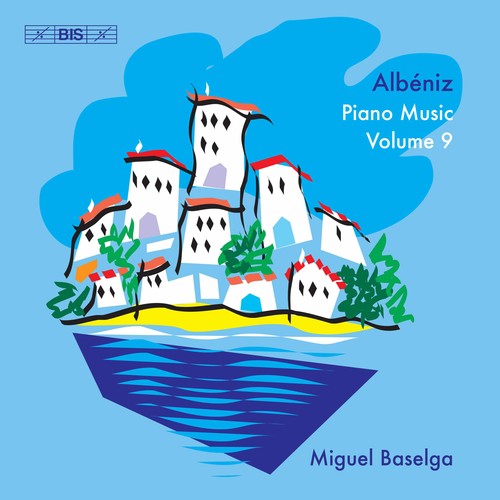
Albeniz: Piano Music, Vol. 9 / Baselga
The piano works by Isaac Albeníz range from indisputable masterpieces to highly enjoyable salon music, the composer painting with bright Spanish colours as well as the hues of Classicism or Romanticism. On eight previous volumes, Miguel Baselga has guided listeners through the music of his compatriot, earning acclaim from reviewers worldwide: ‘pianism of the highest order’ (MusicWeb-International); ‘berauschend agil und rhytmisch spannungsgeladen’ (PIANONews); ‘un pianista elegante y refinado’ (CD Compact). With the assistance of Albeníz scholar Jacinto Torres, Baselga has been able to access rare editions and scores, and his exhaustive series includes the Marcha militar by a nine-year-old Albeníz (Vol. 7), as well as the four books that make up the celebrated Iberia (Vols. 1-4) and the composer's only two scores for piano and orchestra (Vol. 6). On the present disc Baselga offers us the chance to hear the last of the three Improvisations, transcribed from a phonograph recording made by Albeníz in 1903. A large part of the programme is from the late 1880s, however, a period during which the composer was a fixture at the fashionable salons of Madrid, and composed works in which the influence of composers such as Mendelssohn, Schumann and Chopin is often evident. Recuerdos de viaje, one of the best-known works from the period, nevertheless displays the Spanish flavours that were to become one of the distinguishing features of the music of Isaac Albeníz.
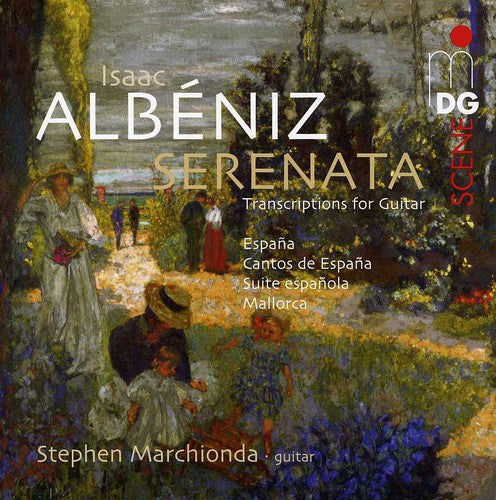
Albeniz: Serenata / Marchionda
Stephen Marchionda resides in Barcelona and is a proven expert in the field of Spanish music. This production is his second release on MDG, once again in the finest 2+2+2 SACD technique, which makes the listener feel that he or she is there in person. A fine and opulent result!
Albeniz: Piano Music, Vol. 8 / Miguel Baselga
If at least some part of Isaac Albéniz' music may justifiably be described as 'salon music', this is not something that the composer would have objected to. Quite the opposite: he was himself very much a man of the salon, especially in his youth in the 1880s, which is when most of the pieces on Miguel Baselga's new disc were composed. It was in the salons of Madrid that he recruited new pupils among the young ladies of the bourgeoisie, performed his latest compositions and, presumably, had a good time in general. And although his greatest work - the four books that make up Iberia - was composed much later, in Paris, Albéniz never disassociated himself from the earlier works: 'There are among them a few things that are not completely worthless', he once remarked, '... there is less musical science, less of the grand idea, but more colour, sunlight, flavour of olives.' It was in the 1880s that a strong influence of Spanish style becomes evident in his music, as a result of the influence of the teacher and composer Felipe Pedrell. Folk music, especially that of Andalusia, and the characteristic idiom of Spanish guitar music make themselves felt in compositions such as Zaragoza and Sevilla, the two pieces published in 1890 as Seconde Suite espagnole. Other works on this disc are of a more 'international' character, for instance Les Saisons, Albéniz' own 'Four Seasons': four miniatures in an almost impressionistic style. Also included is the transcription, published in 2009, of one of the three improvisations that Albéniz recorded on a phonograph roll in 1903, permitting us a unique peek into the composer's creative mind.
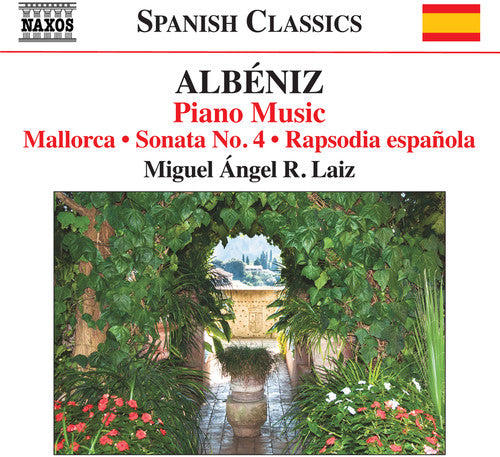
Albeniz: Piano Music, Vol. 8 / Laiz
Most known for his piano works which were based on folk music idioms, Isaac Albeniz is a figurehead in Spanish classical music. Transcriptions of many of his pieces are part of the classical guitar repertoire, although he never composed for the instrument. Pianist Miguel Angel Rodriguez Laiz studied in Murcia, Madrid, Dallas, and Canada. He currently serves as a piano professor, chamber music professor, and theory professor at the Real Conservatorio Superior de Musica “Victoria Eugenia” de Granada. On this release he presents some of Albeniz’s most colorful and influential piano works, including the Rapsodia espanola.
Albeniz: Piano Music, Vol. 5
Albeniz: Piano Music, Vol. 4 / Ruben Ramiro
Just as Albéniz did in his concert programmes, this recording alternates pieces in Spanish style with some of the entertaining salon miniatures written for Spain’s aristocracy during the last two decades of the 19th century. The Suite ancienne reflects Albéniz’s delight in creating personal versions of 18th-century dances, while echoes of Chopin and Grieg lurk behind the themes of the Sonata No. 5. The Rêverie is a work of great expressive intensity, the Serenata árabe is more recognisably Albéniz, and the Tres improvisaciones are a transcription of the only recording ever made by the composer.
Albéniz: Piano Music Vol 3 / Guillermo González
ALBÉNIZ Danzas españolas. Pequeños valses. Mazurkas de salon • Guillermo González (pn) • NAXOS 8.572196 (69:42)
Isaac Albéniz wrote some of the defining piano music of the Spanish school. By and large, this is not it. This disc, the third in Naxos’s Albéniz series, is devoted to salon music composed early in the composer’s life. At the time, he was known as a piano virtuoso who also gave lessons to young ladies to whom he dedicated many of his salon pieces, including all six of these mazurkas.
Premonitions of the mature Albéniz may be glimpsed in the Danzas españolas , which shares a pleasant lilt, usually in habanera rhythm, and the composer’s predilection for a melodic line in three against a languid accompanying figure in four. The pieces resemble Granados’s later set of Spanish Dances in their occasional underlying hint of melancholy, but those in Albéniz’s set are neither as formally diverse nor as pianistically challenging as are those of his slightly younger contemporary. Chopin is the predominant influence in the sets of waltzes and mazurkas. Once again the results, while mellifluous and polished, are no comparison to the works of the Polish master in terms of ingenuity and memorability.
González, a noted Albéniz specialist, has the kind of muscular technique necessary to tackle Iberia and the late masterpieces, but lacks delicacy in this refined repertoire. There would be no whispering or throat clearing in his salon! Overall, this is a pleasant collection but unrepresentative of the composer’s most exciting work. If you are curious about the antecedents of Iberia , it is worth a listen.
FANFARE: Phillip Scott
Albeniz: Piano Music - Espana; Deseo; Zortzico; Yvonne En Visite!
Albeniz: 12 Piezas Caracteristicas, Sonata No 3 / Hernan Milla
The seventh volume in this acclaimed series is devoted to two works of Albéniz’s early maturity. The 12 Piezas características is a cycle of exquisite miniatures encompassing a wide variety of styles, including the assimilation of Andalusian folk music into his own personal idiom, reminiscences of earlier greats such as Scarlatti and Chopin, and elements of nineteenth-century salon music. The work led Felipe Pedrell, the father of Spanish musical nationalism, to call Albéniz not only a superbly equipped pianist but a great composer as well. The romantic and virtuosic Piano Sonata No. 3 opens with a richly contrapuntal Allegretto, followed by a slow movement of the utmost delicacy in the manner of a romanza and concludes with a technically complex Allegro assai.
Isaac: Choralis Constantinus 1508 / Utz, ensemble cantissimo