Heitor Villa-Lobos
68 products
-
-
-
-
-
-
-
-
-
-
-
-
-
-
-
-
-
-
-
-
-
-
-
-
-
Mendelssohn: Songs without Words, Book 2 (6), Op. 30, No. 3
- Bach, J S: Prelude & Fugue Book 1 No. 8 in E♭ minor, BWV853
- Schumann: Kinderszenen, Op. 15, No. 7 ‘Träumerei’
- Bach, J S: Prelude & Fugue Book 1, No. 1 in C major, BWV846: Fugue
- Schubert: Schwanengesang, D957, No. 4: Ständchen
- Bach, J S: Prelude & Fugue Book 1 No. 21 in B♭ major, BWV866: II. Fugue
- Chopin: Waltz No. 7 in C# minor, Op. 64 No. 2
- Bach, J S: Prelude & Fugue Book 1 No. 22 in B♭ minor, BWV867: Prelude
- Rachmaninoff: Morceaux de Fantaisie, Op. 3, No. 2 in C# Minor, Prélude
- Bach, J S: Prelude & Fugue Book 2 No. 14 in F sharp major, BWV883: Prelude
- Massenet: Elégie
- Bach, J S: Prelude & Fugue Book 2 No. 5 in D major, BWV 874: Fugue
- Beethoven: Piano Sonata No. 8, Op. 13 'Pathetique': Adagio cantabile
- Villa-Lobos: Bachianas Brasileiras No. 9 for chorus or string orchestra
-
-
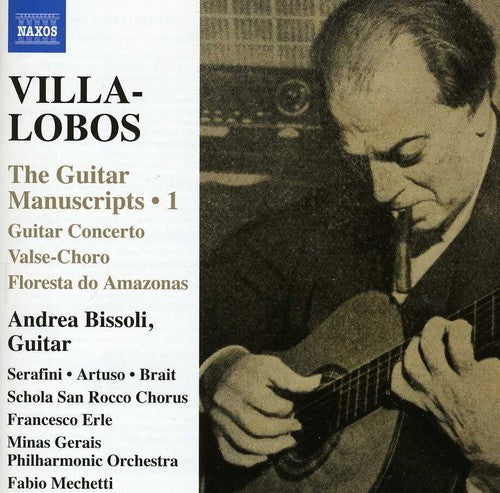
Villa-lobos: The Guitar Manuscripts, Vol. 1 / Andrea Bissoli
This is the first of three volumes including rare and recently discovered works by Heitor Villa-Lobos. Guitarist Andrea Bissoli’s researches have revealed new sources for lost manuscripts, and these recordings of the Valsa, the Motivos Gregos and Canção do poeta do século XVIII represent the revival of music thought to have vanished forever. These works are joined by transcriptions which include one of Villa-Lobos’ best loved melodies, the Ária from Bachianas Brasileiras No 5, as well as the Concerto he wrote for the legendary Segovia.
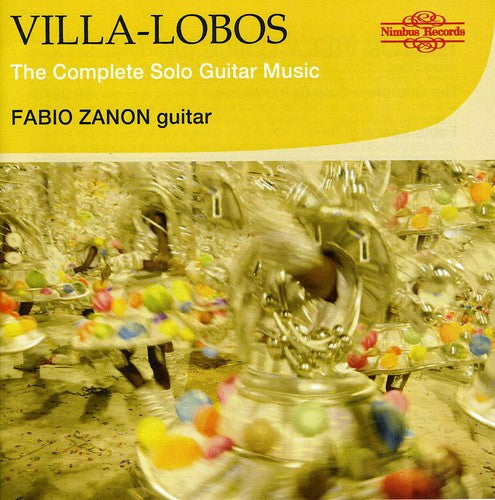
Villa-lobos: The Complete Solo Guitar Music
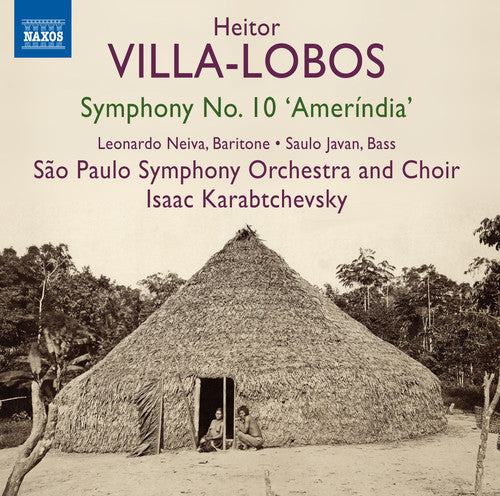
Villa-Lobos: Symphony No 10 "Amerindia" / Karabtchevsky
Heitor Villa-Lobos was instrumental in developing a national Brazilian musical culture, writing in a wide variety of forms. Composed in 1954 for the 400th anniversary of the founding of São Paulo, Ameríndia is the composer’s largest symphony. Effectively a hybrid symphony and oratorio for soloists, chorus and orchestra, it is memorable for its stylistic variety and breadth, drawing on many different sources of Brazilian music. This recording is based on a newly revised edition made by Editora Criadores do Brasil (the São Paulo Symphony Orchestra’s publishing house) in collaboration with the Academia Brasileira de Música.
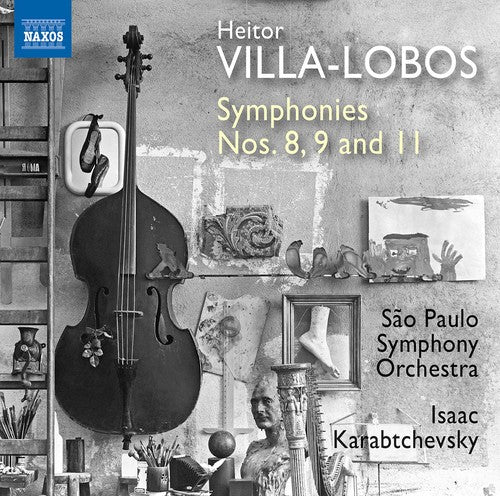
Villa-Lobos: Symphonies Nos. 8, 9 & 11 / Karabtchevsky, Sao Paulo Symphony
By the 1940s Heitor Villa-Lobos was widely recognized as Latin America’s greatest composer. Working in the United States gave him new perspectives, and his later symphonies move away from the folk influences and exotic effects of works written in the 1920s and 30s, such as the Bachianas Brasileiras, towards more concise, sometimes neo-classical, models. The Eighth and Nineth share a transparent lightness of touch while the Eleventh, described as a work of ‘immediate charm,’ is the perfect introduction to the later work of Villa-Lobos. Since its first concert in 1954 the Sao Paulo Symphony Orchestra has developed into one of today’s leading orchestras. An indispensable part of Sao Paulo and Brazillian culture that promotes deep cultural and social transformation, the orchestra has released over 60 recordings and has toured throughout Brazil, Latin Aerica, the United States, and Europe. In 2012 Marin Alsop was engaged as principal conductor, and in 2013 she was appointed music director. That same year the orchestra went on a fourth European tour, performing to great acclaim at the Salle Pleyel in Paris, the PHilharmonie in Berlin, and at the Royal Festival Hall in London.
-----
REVIEW:
Isaac Karabtchevsky's sure-footed pacing conveys a deep understanding of these scores. The orchestra is wonderfully on point, which makes an enormous difference in music as finely shaded as this. An absolutely essential release.
– Gramophone
Villa-Lobos: Symphonies No 3 & 4 / Karabtchevsky
Villa-Lobos’ War and Victory Symphonies were commissioned by the Brazilian government following the end of the country’s involvement in World War I. Using very large orchestral forces, and conveying the composer’s feelings about the conflict with no sense of triumphalism, the two Symphonies display a confident use of unusual and evocative effects, such as the collage of fragments of the Brazilian national anthem and La Marseillaise in the ‘Battle’ movement of the Third Symphony. Villa-Lobos’s Symphonies Nos 6 and 7 can be found on Naxos 8.573043 in “superb...full-blooded” performances. (ClassicalCDReview.com)
Villa-Lobos: Symphonies No 6 & 7 / Karabtchevsky, Sao Paulo SO
The Sixth Symphony features a gimmick: its principal thematic ideas were supposedly derived from superimposing a topographical map of Brazil on music paper and reducing the mountainous outline to musical ideas. The result, as you might guess, has a certain unmelodic rise and fall, but Villa-Lobos doesn’t worry too much about that, and after making his initial point the rest of the music sounds, well, normal (for him). Symphony No. 7 is one of his most impressive large works, scored for a huge orchestra and loaded with those characteristic gestures—divided violins, low trombone chords, chattering wind ostinatos—that will be instantly familiar to anyone who knows and loves his music.
CPO has a fine complete symphony cycle available featuring Carl St. Clair and the Stuttgart Radio Symphony Orchestra. You might think that having native players, as here, constitutes an advantage, but that’s not necessarily the case. Isaac Karabtchevsky recorded the least compelling version of the complete Bachianas Brasileiras, but that was a few decades ago with a very inferior Brazil Symphony Orchestra. The São Paulo Symphony is a much finer ensemble, and Karabtchevsky’s performances are far more persuasive here. He’s different enough from St. Clair, marginally slower but arguably to the music’s advantage in the numerous thickly textured passages, that there’s no reason not to collect this new series. The sonics are rich, full, and remarkably clear given the music’s density. This is going to be fun.
-- David Hurwitz, ClassicsToday.com
Villa-lobos: Piano Music Vol 5 / Sonia Rubinsky

Villa-Lobos compiled 137 traditional Brazilian songs into an anthology entitled Guia Prático that later served as the basis for 11 short volumes of piano miniatures under the same title. A pedagogic agenda governs these piano pieces, but not to the rigorous, progressive specifications of, say, Bartók's Mikrokosmos. In fact, the churning rhythms and chordal complexities of Villa-Lobos' piano textures are anything but child's play; yet no matter how sophisticated the pianism, the infectious spirit of the original tunes always remains fresh and vibrant.
Almost every one of the 48 selections included here (books Ten and Eleven are slated for a future release) is a delightful, unpretentious bauble. Sample Espanha, the third piece from Book Two, and you'll get generous helpings of upbeat white-key Petrouchka harmonies, while Book Three No. 5 (Oh, Whirligig!) is pure South American Schumann. Book Five No. 4 (The Stick or Cat Miaow) makes its succinct, lyrical point with simple chromatic chords that remind me of Duke Ellington's intimate keyboard noodling. Either listen in order, or give your random play function a workout, and you'll marvel at Villa-Lobos' unflagging invention from one number to another. It helps, of course, that Sonia Rubinsky's colorful and technically shipshape interpretations are as lovingly nuanced and thoroughly idiomatic as we can desire, and they're beautifully recorded as well. In sum, this valuable addition to the Villa-Lobos discography deserves no less than the highest rating and warmest recommendation. [8/7/2006]
--Jed Distler, ClassicsToday.com
Villa-Lobos: Piano Music Vol 1 / Sonia Rubinsky

Is Heitor Villa-Lobos the last great 20th century composer to be rediscovered? Because he wrote so much, it's easier to sidestep rather than face his overwhelming catalog point by point. The folks at Naxos, though, are tackling his Amazonian output, starting with the piano music. Brazilian pianist Sonia Rubinsky controls the undulating chordal syncopations in the wonderful Book One of A Prole do Bebê with a left hand propelled by an imaginary, rock-steady rhythm section, and never lets the pungent dissonances overshadow the melodies. Rarely heard, the delightful Cirandas are virtually the Brazilian equivalant of Bartok's folk-inspired character pieces. The improvisatory Hommage à Chopin evokes the Polish master's decorative syntax, filtered through Villa-Lobos' more lush keyboard deployment. Rubinsky is both on top and inside of the Brazilian composer's idiom, and her vivid playing is beautifully reproduced. As they say in Portuguese: "um CD sensacional."
– Jed Distler
Villa-Lobos: Complete Solo Guitar Works / David Leisner
Includes work(s) for gtr by Heitor Villa-Lobos. Soloist: David Leisner.
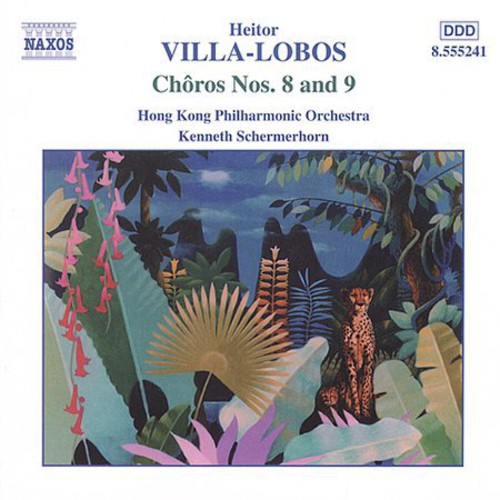
Villa-lobos: Chôros No 8 & 9 / Schermerhorn, Hong Kong Po
Originally issued on Marco Polo, these performances make a welcome reappearance on the Naxos label. Villa-Lobos used the "Chôro", a popular type of urban street music found in Rio de Janeiro, as the basis for a new and vibrant type of orchestral composition. Chôros No. 8 evokes a primeval Amazonian jungle with its wonderfully vivid sound-imagery. By making extensive use of Brazilian rhythms and percussion, particularly the caracaxa, which sounds like a huge set of maracas, Villa-Lobos gives the music an impetuous, even sinister feel. This powerful rhythmic thrust pervades throughout, taking a strangely Coplandesque turn for a brief mid-point sequence that brings to mind El salon Mexico.
Chôros No. 9 opens in a brightly festive atmosphere, punctuated by kinetic bass drum thuds. In its colorful character, varied moods, and scenes that segue one into another, the piece is reminiscent of Respighi's Feste Romane (though there's nothing Italianate about Villa-Lobos' language). This is fun stuff--mysterious, exciting, and sensuous--and it's all done with astonishingly authentic flair by the Hong Kong Philharmonic (they really whack the percussion!) under conductor Kenneth Schermerhorn. The 1985 recordings retain their clarity, but also their tendency to brightness. At the Naxos price, this is an irresistible invitation to sample the music of this Brazilian master.
--Victor Carr Jr., ClassicsToday.com
Villa-lobos: Chamber Music / Mobius
Includes song(s) by Heitor Villa-Lobos. Ensemble: Mobius. Soloists: Lorna McGhee, Alison Nicholls.
Villa-Lobos: Piano Works / Baumann
Villa-Lobos: The String Quartets, Vol. 6 / Cuarteto Latinoamericano
This selection was nominated for the 2001 Grammy Award for Best Chamber Music Performance.
Villa-Lobos: Concertos for Guitar & Harmonica & Other Works / Guerrero, Sao Paulo Symphony
The concertos and chamber works on this album show Villa-Lobos’s unceasing enthusiasm for new colors and sonorities in his music. The Concerto for Guitar and Small Orchestra was his last work for the instrument and written for Segovia. A cornerstone of the repertoire, it contains soaring melodies and rhythmic vitality couched in virtuosic writing. Exploring the instrument’s full harmonic and chromatic possibilities, the Concerto for Harmonica is also deftly orchestrated. New and daring sonic combinations are to be heard in the two chamber works demonstrating the composer’s extraordinary gift for seductive lyricism.
REVIEW:
The more you listen to Villa-Lobos, the more it seems as though he had a giant block of characteristic music that allowed him to cut off chunks of different shapes and sizes that he called “Guitar Concerto”, “Harmonica Concerto”, “Sexteto Místico”, etc. It’s not that it all sounds the same–it’s just so much the product of a single, unique personality. This splendid program consists of chunks featuring unusual instruments, or combinations of instruments. The best known work here is the Guitar Concerto, an almost impossible piece as regards balance of forces that’s marvelously played by Manuel Barrueco. The problems of audibility are easily solved on recordings, as here, by placing the soloist well out in front of the orchestra, but I’m happy to report that performance noises are still minimal.
The Harmonica Concerto is a rarity, and sounds atrociously difficult to perform. If you don’t know the instrument well, you would never imagine its wide range of pitch and expression, and surprisingly pleasant basic timbre. José Staneck must have lips of steel just to get through the piece, but he does much more than that, offering moments of real sensitivity and grace. The Sexteto Místico is a brief work in one movement scored for–get this–flute, oboe, alto saxophone, guitar, harp, and celesta. There’s nothing like it anywhere else, and the sheer sound of it is so captivating that it almost doesn’t matter what notes the musicians are playing. Fortunately, it seems that they offer the right ones.
The most “normal” piece here is the Quinteto Instrumental for flute, harp, and string trio, a substantial work in three movements as long as any of the concertos (about 17 minutes). Villa-Lobos revels in the music’s exotic sounds and luscious textures, and you will too. The uniformly first-rate performances by members of the São Paulo Symphony under the vital and sensitive direction of Giancarlo Guerrero are excellently engineered, making the whole disc a joy from start to finish–a true voyage of discovery and delight.
– ClassicsToday (David Hurwitz)
Villa-Lobos: Tristorosa / Herbig
In his music, Heitor Villa-Lobos wanted to combine the culture of the street with high culture, to fuse indigenous elements with the polyphonic structures of European classical music. The German-Brazilian guitarist Gunter Herbig, who lives in New Zealand, expands this spirit by transferring the guitar music of the Brazilian grand master to the electric guitar, giving it a meditative expanse and cosmopolitan openness that transcends the classical field of sensibility. After his groundbreaking Gurdjieff album for BIS Records, this is already the second unorthodox album on which Herbig uses the fine-nerved possibilities of his Gretsch White Falcon electric guitar to breathe into the music a dreamy spirit that flies over and unites worlds, transporting us to unknown dimensions. And finally, in the famous Aria from Bachianas Brasileiras No. 5, he unites with the samba singer Alda Rezende, who here too - an octave lower than usual - makes the music shine in a completely different new light. An album for dreamers between worlds and those who want to become one.
Villa-Lobos: Symphonies Nos. 1 & 2 / Karabtchevsky, Sao Paulo Symphony
Heitor Villa-Lobos’s first two symphonies take the European tradition head-on, absorbing French models prevalent in Brazil in the early twentieth century. The confident swagger of the First Symphony is characteristic of Villa-Lobos’s ‘Brazilianness,’ while the cyclical Second Symphony filters myriad influences including the music of Tchaikovsky, Rimsky-Korsakov, Debussy and Puccini. Its slow movement heralds the affecting melodic content that would later become the trademark of the Bachianas Brasileiras. This is the sixth and final volume of an acclaimed complete edition of Villa-Lobos’s symphonies in which ‘Karabtchevsky leads the way.’ (Gramophone).
Villa-Lobos: Choral Transcriptions / Peleggi, Sao Paulo Symphony Choir
Choral music holds a central position in Villa-Lobos’s catalogue of works, but among these famous pieces is a series of little-known transcriptions for a cappella choir taken from the standard classical repertoire. They were intended for a teachers’ chorus and for use in schools, and through astonishing alchemy they achieve a true ‘orchestration’ of largely piano originals, adding a fresh new repertoire for vocal ensembles. This album also includes the first ever recording of Villa-Lobos’s complete set of a cappella transcriptions from Bach’s The Well-Tempered Clavier.
REVIEW:
Unbelievable Villa-Lobos Choral Transcriptions
The Bottom Line: Don’t miss this disc! These transcriptions for unaccompanied choir of keyboard music by Bach, Mendelssohn, Beethoven, Schumann, Massenet, Chopin, Rachmaninoff and Villa-Lobos himself have to be heard to be believed. They are extraordinary. Check out the sound samples in the video and add this splendid Naxos release from the São Paulo Symphony Choir under Valentina Peleggi to your collection post haste.
ClassicsToday.com
These transcriptions for unaccompanied choir of keyboard music by Bach, Mendelssohn, Beethoven, Schumann, Massenet, Chopin, Rachmaninoff and Villa-Lobos himself have to be heard to be believed. They are extraordinary.
– ClassicsToday.com (David Hurwitz)
CONTENTS:
Villa-lobos: String Trio & other chamber works / Mark Rothko Ensemble
Gathering in a single album the artistic experience of a seldom performed repertoire is the aim of this anthology, featuring compositions for strings of Villa-Lobos. Especially daring, the string trio w460, only attempt of the author in this peculiar genre, followed by various pieces where an exotic style is mixing with a sophisticated tonal research, show the versatility of whom is considered to be the most prominent Brazilian composer. The Mark Rothko ensemble was created in 2011 from the encounter of some of north eastern Italy’s best string players. Its members share a wide array of professional experiences in the chamber music, solo, orchestra and education fields to promote a magnificent repertoire that audiences are not often given an occasion to listen to.