Hugo Alfvén
13 products
-
Northern Horizons
$21.99SACDBIS
Jan 16, 2026BIS-2712 -
…a riveder le stelle
$21.99SACDBIS
Nov 21, 2025BIS-2687 -
Such stuff as dreams are made on
$20.99CDSignum Classics
Mar 14, 2025SIGCD887 -
-
-
-
-
-
-
-
-
-
Alfven & Rautavaara: Orchestral Works
Northern Horizons
…a riveder le stelle
Such stuff as dreams are made on
Swedish Songs & Operatic Scenes
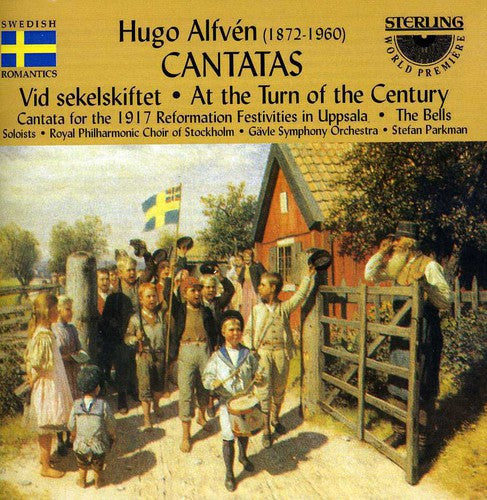
CANTATAS
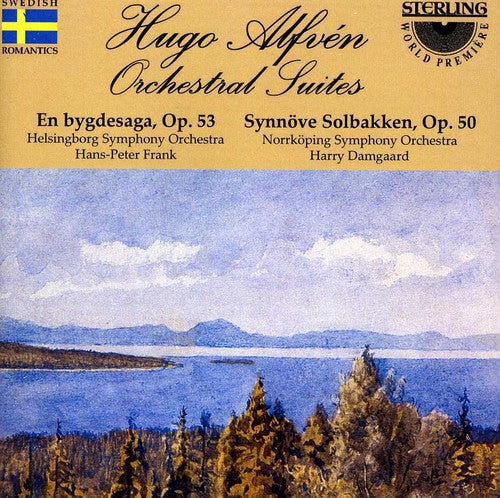
ORCHESTRAL SUITES
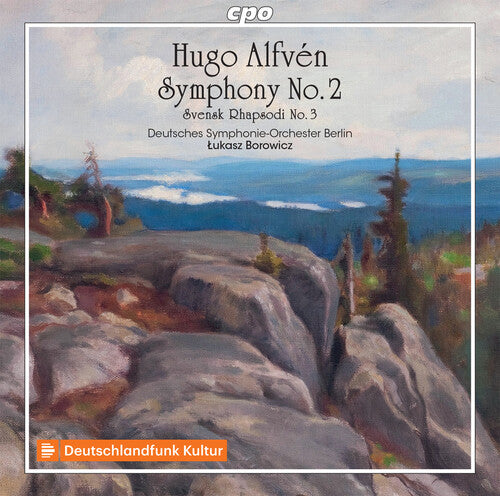
Alfvén: Symphonic Works, Vol. 3 / Borowicz, German Symphony Orchestra Berlin
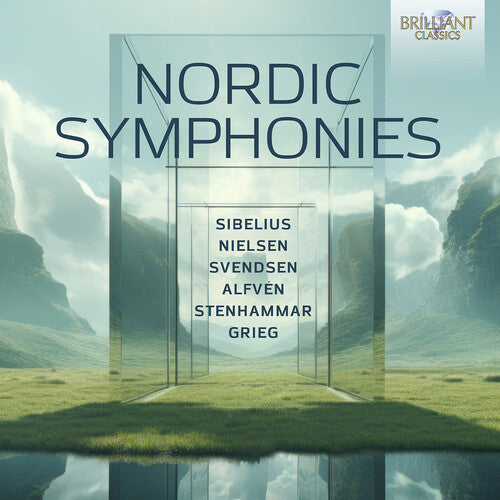
Nordic Symphonies
From the outset of his career, Jean Sibelius was recognized as an outstanding representative of a musical language perceived as typically Finnish. In Finland, the dawn of the 20th century saw a veritable outbreak of nationally inspired artistic activities., It was a time of cultural and national self-discovery for Sibelius, too. He allowed himself be stimulated by the whole of Finland’s folklore tradition, without resorting to specific examples of folksong.
For many years, Carl Nielsen was viewed outside his native Denmark as the poor cousin of his more famous Scandinavian counterparts, Grieg and Sibelius. Yet his achievements as Denmark’s greatest symphonist of the 20th century were, if anything, even more remarkable than the successes of his geographical neighbors. Nielsen’s symphonic output is some of the most remarkable of its time.
The Norwegian conductor and composer Johann Svendsen was born in 1840 in Christiania (now Oslo). in 1867, he finished his Symphony No. 1, a work that Grieg later described as showing scintillating genius, superb national feeling and really brilliant handling of an orchestra. In 1872 Svendsen returned to Christiania beginning a fruitful period that saw the creation of his Symphony No. 2 in B flat major Op. 15.
Hugo Alfven's First Symphony (1897) has a melancholy Sturm und Drang mood that recurs at intervals in his later compositions, but there is also a life affirming side that flourished in his Second Symphony, two years later. Of his Third Symphony, he stated "it depicts neither concrete nor abstract. It is an expression of the joy of living, an expression of the sun-lit happiness that filled my whole being.”
Wilhelm Stenhammar's Symphony Op. 34 saw the light of day in 1907, dedicating it to “my dear friends, the members of the Goteborg Symphony Orchestra.” He was to remain its chief conductor until 1922. That symphony, which had its first performance under the composer’s direction in 1915, was in fact Stenhammar’s second and is today called Symphony No. 2, even if the composer himself never gave it that number.
Edvard Grieg’s Symphony in C minor, which the composer withdrew, saw scholar after scholar writing about it disparagingly, with much discussion of the its style, all too often based on the question: what are its unoriginal or unsuccessful features? But it was Grieg himself who began the tradition with his admonition that it “must never be performed”. Now, however, very few feel, on moral grounds, that the work should not be performed.
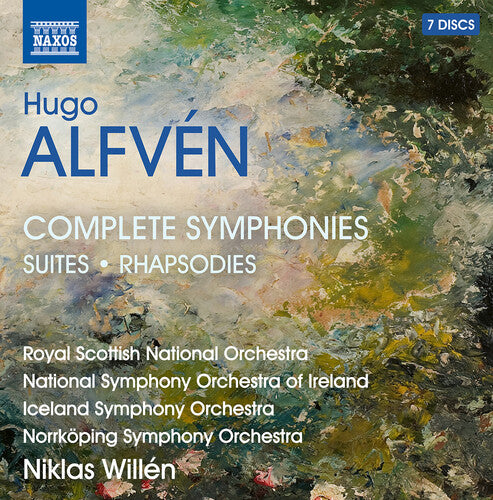
Alfvén: Complete Symphonies; Suites; Rhapsodies / Willén
Hugo Alfvén’s music has always been close to the hearts of the Swedish people, and ranks among some of the most significant and representative of the spirit of the country. Alfvén is known as a cheerful entertainer in compositions such as Den forlorade sonen (‘The Prodigal Son’), but his symphonies reveal a different, more elegiac and often more dramatic side. The success of Alfvén’s symphonies fundamentally changed Sweden’s musical climate and, with a substantial collection of further orchestral music representing his gloriously rich and varied style, these recordings sweep us into the remarkable world of Scandinavian landscape and culture.
Past praise for previously released volumes included in this set:
Symphony No. 5; Andante Religioso / Willén, Norrköping Symphony
The Norrköping Symphony plays with confidence and fervor. Alfvén was nothing if not expansive, and if his formal touch was never all that deft, he did know how to fill up time with arresting ideas, glowingly scored. A serenely lovely Andante religioso makes a perfect encore, one that puts the finale of the symphony’s straining for heroic effect in its proper perspective in the gentlest and most affecting way. Naxos’ sonics for this production are also excellent. Very enjoyable indeed.
-- ClassicsToday.com (David Hurwitz)
The Prodigal Son, Symphony No. 2 in D major, Op. 11 / Willén, Ireland NSO
Listen as Niklas Willén teases the skittish polka from “The Prodigal Son” ballet suite, or steers his players through the vehement fugue that rounds out his Symphony No. 2, and you’ll appreciate why this release commands unreserved praise. These works come to life in Willén’s hands.
Willén’s reading of the Symphony's Andante conjures a huge range of textures and sonorities, with the dark-hued horns and sombre lower winds particularly impressive. The players give all they have in music that’s probably new to them, and that extra effort is just one of the factors that makes these performances so compelling.
-- ClassicsToday.com (10/10; David Hurwitz)
Symphony No. 3; Skerries; Dalecarlien Rhapsody / Willén, RNSO
If you haven’t heard these charming, folk-music-inspired gems of late Romantic music, then here’s an excellent place to start. The Symphony also sounds consistently fresh and lively, though it’s hard to shake the impression that the composer was happier writing programmatic works in free form than in indulging the more intellectual rigors of symphonic development. In Willén’s sympathetic hands, however, none of its four movements outstays its welcome. In any event, the Royal Scottish National Orchestra plays with confidence and evident enjoyment, and the recorded sound is very good.
-- ClassicsToday.com
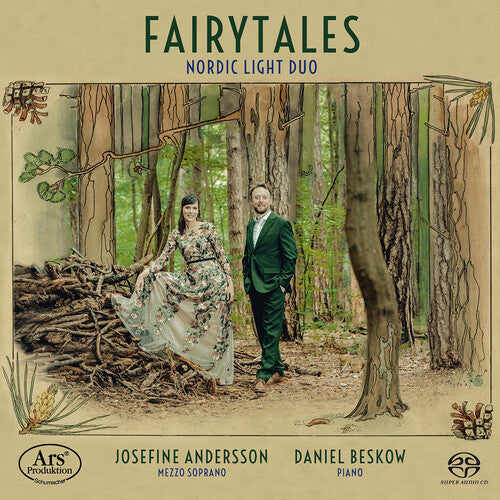
Fairytales: A Swedish Children's Book Set to Art Songs / Nordic Light Duo
Märchenhaft (Swedish "sagolikt") is a concert program by Nordic Light Duo inspired by the wonderful fairy tale world of the popular children's book author Elsa Beskow. Devotedly and lovingly designed, Beskow's fairy tales and illustrations run like a thread through the musical delightful experiences in it. The program is divided into five sections, each representing a fairy tale: Flower Festival in Täppan, The Story of the Curious Perch, Putte's Adventure in the Blueberry Forest, The Journey to the Land of Long ago, and The Sun Egg. Each section immerses you in an exciting story, enhanced by Elsa's original illustrations. These texts and pictures are then accompanied by songs and piano pieces chosen to match the stories.
Two illustrations are even firsts and can only be seen in this publication, thanks to Daniel Beskow's family ties to Elsa Beskow, his paternal great-grandmother. Because of this connection, the idea for the Märchenhaft project was born in 2018. With it, the two musicians wanted to contribute to the rebirth of Elsa's fantasy world and bring a new musical fairy tale series to life. They firmly believe that this fairy tale treasure belongs to the European cultural heritage and with its re-release in a musical guise, they found an opportunity to pay tribute to Elsa's work in an original way and bring it to a new, larger audience. Fairy Tale has become a huge success in Sweden and the duo has given over a hundred concerts under this name in recent years. The intimate setting, the imaginative mood and the interplay between literature, music and visual arts remain the main features of this exciting project, which we can now also experience on this sound recording.
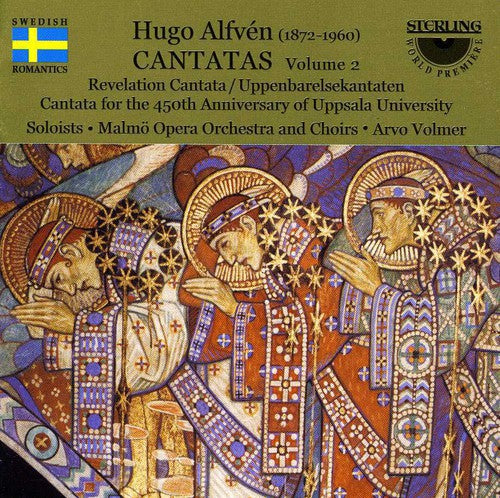
Hugo Alfven: Cantatas, Vol. 2
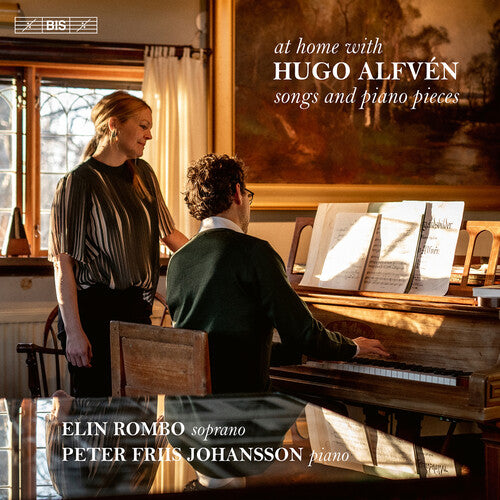
At Home with Hugo Alfvén / Rombo, Johansson
During his lifetime, Hugo Alfvén became known as one of Sweden’s principal composers of his time, with works that struck a chord with a wide audience. As a result of his popularity, a nationwide collection was held in celebration of his 70th birthday in 1942, with the proceeds used to build Alfvéngården, the composer’s home during his final years. Now, 80 years later, Elin Rombo and Peter Friis Johansson are releasing their tribute to Alfvén’s 150th anniversary, recorded at Alfvéngården using the composer’s own piano. Alfvén is primarily known for his orchestral music – including the ubiquitous Swedish Rhapsody No. 1 – and as a composer of choral music. As befits the setting, the focus of the present disc is on more intimate works, however – namely songs and piano pieces. Some of the pieces are closely related to the venue – Fyra låtar från Leksand (Four Tunes from Leksand) is a piano version of folk tunes collected from a local fiddler and Så tag mit hjerte (‘So take my heart’), Alfvén’s most frequently performed song, was composed there in 1946 as a present to his wife.
REVIEW:
Soprano Elin Rombo has a lithe voice that suits the songs exquisitely, dulcet in ‘The Evening’ and dramatic in the following Seven Poems by Ernest Thiel. She’s not afraid to modulate her tone down to a nearly Gollum-like whisper to wring all possible expression out of a phrase. Four Tunes from Leksand are folk settings for piano that don’t mind taking advantage of the instrument’s capabilities while steering clear of both over-decorating and obtuse reharmonizations.
Rombo rejoins for Two Lyrical Moods and their warm-blooded charm; the recital ends with ‘Sa tag mit Hjerte’ (So Take My Heart), Alfven’s best-known song. Johansson brings plenty of personality to the piano parts. He plays Alfven’s own Steinway A-188 from around 1908; its sound is a little lighter and tangier than a modern grand. Texts in Swedish and English.
-- American Record Guide