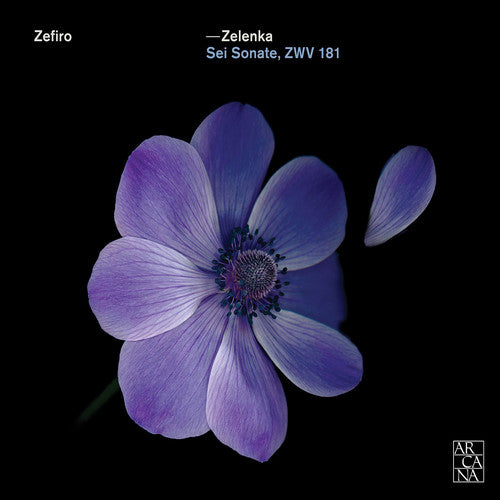
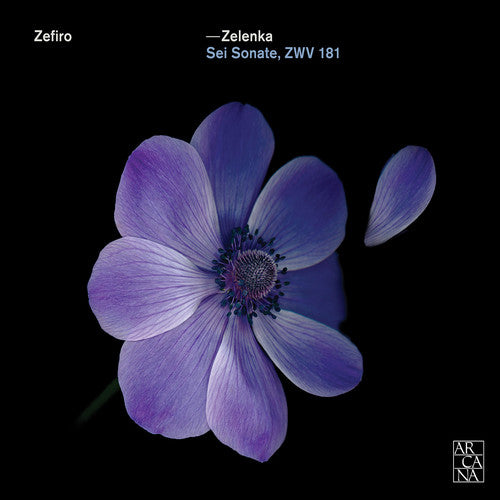
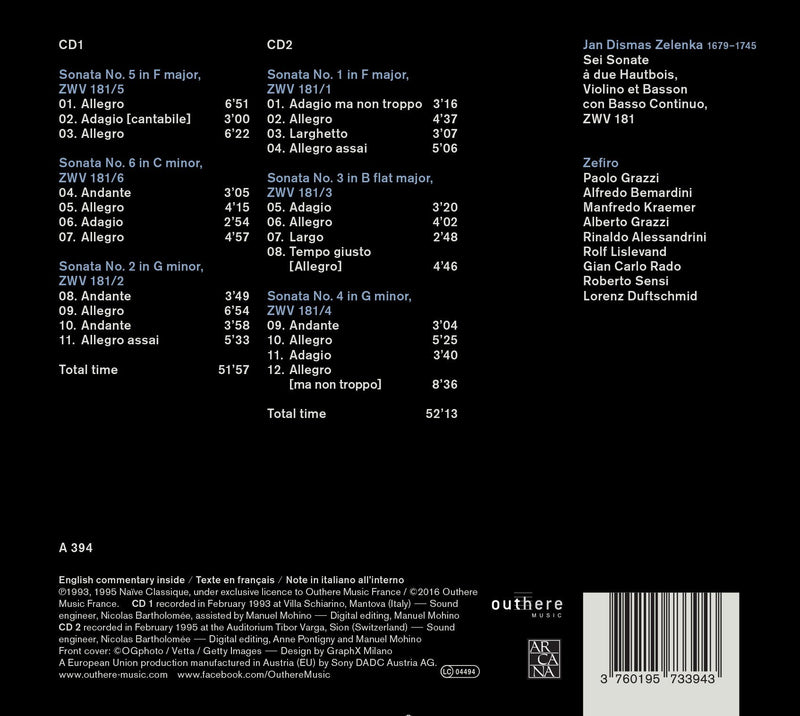
Zelenka's output contains mostly sacred music. His instrumental works, however, show the composer's talent and shouldn't be overlooked. The work included on this release, Sonate a due Hautbois e Basson con Basso Continuo, ZWV 181, was written in Vienna between 1715-1716. The work is notable in double reed literature for the required virtuosity of both instruments, which was uncharacteristic for the music of that time. This release is the first recording from the ensemble Zefiro. The featured double reed performers are oboists Alfredo Bernardini and Paolo Grazzi, and bassoonist Alberto Grazzi.
{# optional: put hover video/second image here positioned absolute; inset:0 #}
Arcana
Zelenka: 6 Sonatas, ZWV 181
Zelenka's output contains mostly sacred music. His instrumental works, however, show the composer's talent and shouldn't be overlooked. The work included on...
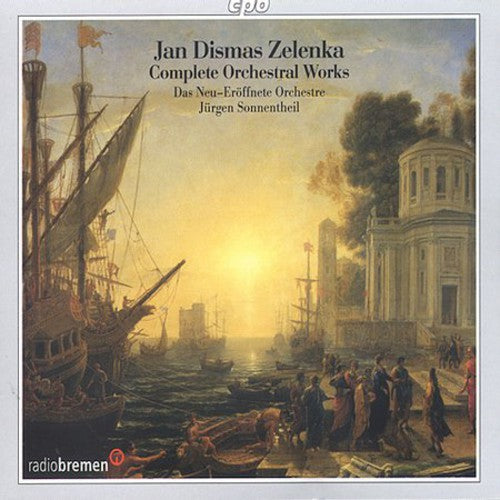
Zelenka: Complete Orchestral Works / Sonnentheil, Et Al
CPO
$28.99
September 01, 2002
We badly need a complete set of Zelenka's orchestra works, as Arkiv's edition has long vanished into the remainder bins, and this one (previously issued as three separate CDs) fits the bill nicely. Although the players use "authentic instruments", their sound is comparatively warm and gentle, though this doesn't mean that they don't handle with aplomb the insanely virtuosic horn parts in the Capriccios, or the bubbling wind writing in the Concerto. The inclusion of the overture from Melodrama de S. Wenceslao makes an interesting bonus, with its fascinating opposition of simultaneous duple and triple rhythms. If you haven't heard this music, let's just say that Zelenka wrote some of the most enjoyable and colorful music of the Baroque era, and he is supremely well served by CPO's engineers, conductor Sonnentheil, and his New-Eröffnete Orchestre.--David Hurwitz, ClassicsToday.com
{# optional: put hover video/second image here positioned absolute; inset:0 #}
CPO
Zelenka: Complete Orchestral Works / Sonnentheil, Et Al
We badly need a complete set of Zelenka's orchestra works, as Arkiv's edition has long vanished into the remainder bins, and this...
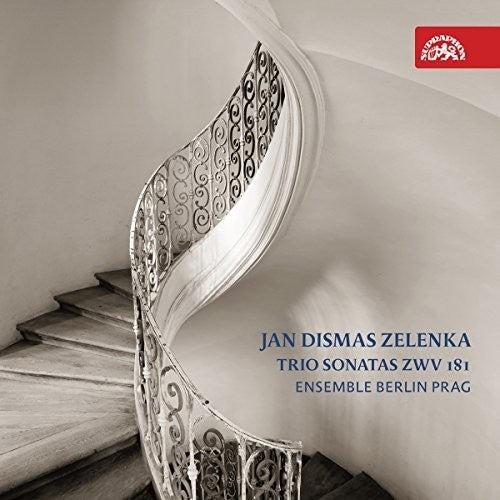
Zelenka: Trio Sonatas, ZWV 181 / Ensemble Berlin Prag
Supraphon
$42.99
$32.99
January 19, 2018
Reinhard Goebel, an esteemed Baroque music connoisseur, ranks Zelenka among the five best composers of the first half of the 18th century. The cycle of six sonatas for two oboes, bassoon and continuo serves to prove that his assertion is far from being mere hyperbole, that it is a justified opinion worthy of being giving serious thought. Although for many years Zelenka performed all the duties of Kapellmeister and court composer of the Dresden Hofkapelle, he did not gain the appraisal he deserved. Zelenka’s sonatas are among his “free” works, which he wrote urged by innermost needs, above and beyond his official commitments. The pieces reach the very limits of musical possibilities – both as regards placing high technical requirements on the performers and the compositional methods and means of expression applied, including the striking architecture of the cycle as a whole. The result is magnificent and fascinating indeed; owing to its complexity and timelessness, the sonatas may perhaps only be compared with J. S. Bach’s six cello suites. And when these gems are undertaken by musicians as open-minded and of such superlative quality as members of the Berliner Philhamoniker, the listener can look forward to a great feast. The present recording is extraordinary due to the combination of the technical facilities of modern instruments and the profound insight into Baroque performance.
{# optional: put hover video/second image here positioned absolute; inset:0 #}
On Sale
Supraphon
Zelenka: Trio Sonatas, ZWV 181 / Ensemble Berlin Prag
Reinhard Goebel, an esteemed Baroque music connoisseur, ranks Zelenka among the five best composers of the first half of the 18th century....
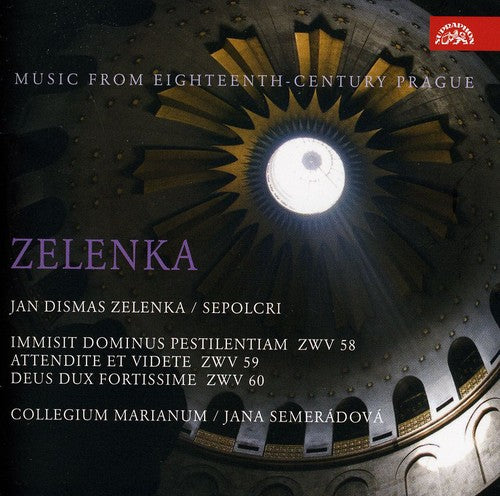
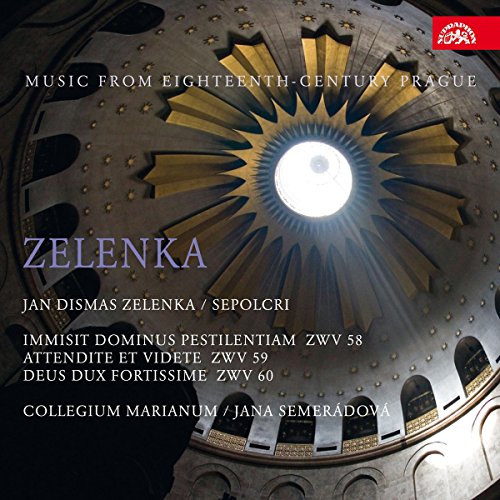
Zelenka: Musica Ad Sepulchrum Domini / Semeradova, Collegium Marianum
Supraphon
$31.99
$23.99
October 27, 2011
Splendid, incisive, rhythmically well sprung.
3564690.az_ZELENKA_Immisit_Dominus_ZWV.html
ZELENKA Immisit Dominus pesilentiam, ZWV 58. Attendite et videte, ZWV 59. Deus Dux Fortissime, ZWV 60 • Jana Semerádová, cond; Hana Blažíková (sop); David Erler (alt); Tobias Hunger (ten); Tomá? Král (bs); Collegium Marianum (period instruments) • SUPRAPHON 4068 (65:33 Text and Translation)
There are many smaller subgenres of sacred music that are often little explored. One of these is the sepolcro, a short oratorio-like work that is meant to be performed after the Good Friday services in Roman Catholic regions. The similarity in purpose with the Lutheran cantata is clear, since they often incorporate responses and reflections on the Liturgy, and because of this were particularly favored by the Jesuits as a means of reinforcing the seasonal message. Common enough during the Baroque and early-Classical periods, these works have been largely ignored, probably because they do not easily fit any particular category. They are mostly in Latin (though German and Italian sepolcri do exist), and the poetic texts most often reflect contemplations of horror and disaster. The first of this trio, for instance, talks about a plague that slaughtered 70,000 people, hardly a subject guaranteed to evoke pleasant visions.
Zelenka’s three works were composed in a five-year period beginning in 1709 for the Clementinium in Prague, his hometown. Each of these is relatively compact, too small to be labeled an oratorio but perhaps more expansive than your normal cantata. There are usually three or four choruses, often with extensive and quite intricate counterpoint, but the usual recitatives and arias are not always arranged in a conspicuous order. Indeed, in the Immisit Dominus the crux of the work revolves around two accompanied recitatives with soft string suspensions, and in the case of the last, it devolves into a lilting duet between the alto and bass soloists, hardly something that is common during the period. The arias follow each other in sequence and without recitative, so that the music is more continuous than the conventional cantatas of the period. The rich suspensions of the “Recordare, Domine” and the multilevel continuo and oboe punctuations of the aria “Omnes gentes” in the Attendite bring to mind the clockwork rhythms of Purcell, though the vocal line that floats above it is positively Handelian. There are two back-to-back duets in the Deus dux Fortissime, the first of which Zelenka plays off the two soloists in imitation, while in the next, the soprano and alto blend seamlessly with a deliberate marching continuo. The choruses are, as noted, mostly strict counterpoint, and the fugues that the composer uses in “Adoramus te, Christe” of the second work and the final massive “Da robut, fer auxilium” of the last are every bit as complex and intricate as anything written by Johann Sebastian Bach. In the chorus that precedes the latter, however, the militant “Bella premunt hostilia,” the homophonic voices make a bold pronouncement that stops dead in order for a lone cantus firmus to appear as if out of nowhere. The echoes of Carissimi’s oratorios are clearly in the background here, and the effect is rather audacious.
The Collegium Marianum is a Czech group that includes a chorus of eight voices, out of which the four soloists emerge. This gives the sound a wonderful clarity, though of course it reveals any slight mistakes. I will say that I do not find any, and whether or not the recording placement was changed, it sounds as if the choir is much larger. All four of the soloists have a good grasp of the stylistic nuances that bring this to life. Bass Tomá? Král, for instance, has that light, almost baritone quality to his voice that seems just right for this sort of music: flexible enough to handle the ornamentation of the “Deus regit nos” in the second work, but also easily blending with his colleagues, such as with the rich alto (or rather countertenor) voice of David Erler in the “Clamate, guttae sanguinis” of the first. The performance by the ensemble seems to be larger than their one-on-a-part actual displacement, and the way this is done, with clear direction by the conductor, allows for it to blend with the singers, no matter if with strings or when the various woodwinds are added. In short, this is a wonderful disc, dramatic and focused, musically adroit, and something that may make my Want List for the year.
FANFARE: Bertil van Boer
---------
We are living in fortunate times for the lover of Zelenka; not the zenith, yet, I suspect, but if we are to keep getting discs such as this one and Accent’s recent recording of Officium deferntorum and the Requiem in D, then not far short. I mention the Accent disc in particular, not simply because it’s a revelation — astonishing, really — but also because two of the singers reappear in this disc; feisty soprano Hana Blažiková and the smooth, evenly produced bass of Tomáš Král. One of Supraphon’s recent secret weapons, Collegium Marianum directed as ever by Jana Semerádová, is on hand, and to complete the good news the recording venue is, again, the Church of Virgin Mary under the Chain, in Prague, which offers a tremendous acoustic, one that Supraphon’s engineers know well.
Should one add more? What about that all three of these Cantatas for Holy Sepulchre are heard in their first ever recordings or that the performances are, again, outstandingly good? It’s true that these three works are relatively early, dating between 1709 and 1716 — which is to say between Zelenka’s thirtieth and thirty seventh birthdays. But they do not lack for finesse, nor do they lack affecting features such as to warrant the closest interest.
Immisit Dominus pestilentiam is the earliest of the three, a compact twenty minute cantata finely balanced between arias, choruses and recitative. It offers numerous opportunities for instrumental felicity; try the absolutely lovely chalumeau playing - it’s by Igor Františák, and he should be name checked - which is almost folk-like in its address. The string staccatos are appropriately brusque in the Clamate, guttae sanguinis. Male alto David Erler has a most pleasing voice but Blažiková, always an incisive, powerful but never strident singer, shades the honours. Attendite et videte possesses great amplitude and breadth, once again illuminated by many subtle accompanying touches — note here, for instance, the bassoon line in Deus regit nos as it intertwines with the strings. Král sings especially well in this movement. Confidence and subtlety mark out these performances and when the organ and double bass are as well balanced as they are in the Deus dux fortissime we are assured of another splendid performance. The chorus is incisive, rhythmically well sprung. In fact everything about this disc is of the highest class.
This ‘Music from Eighteenth Century Prague’ series is shaping up to be in the very best tradition of this label. I recall their gorgeous LPs with vivid colour art work and pockets for booklet notes, which restored performances of baroque music conducted by the likes of Talich and Ancerl amongst more contemporary practitioners.
I’m keen to hear more from Jana Semerádová and her forces.
-- Jonathan Woolf, MusicWeb International
{# optional: put hover video/second image here positioned absolute; inset:0 #}
On Sale
Supraphon
Zelenka: Musica Ad Sepulchrum Domini / Semeradova, Collegium Marianum
Splendid, incisive, rhythmically well sprung. 3564690.az_ZELENKA_Immisit_Dominus_ZWV.html ZELENKA Immisit Dominus pesilentiam, ZWV 58. Attendite et videte, ZWV 59. Deus Dux Fortissime, ZWV 60...
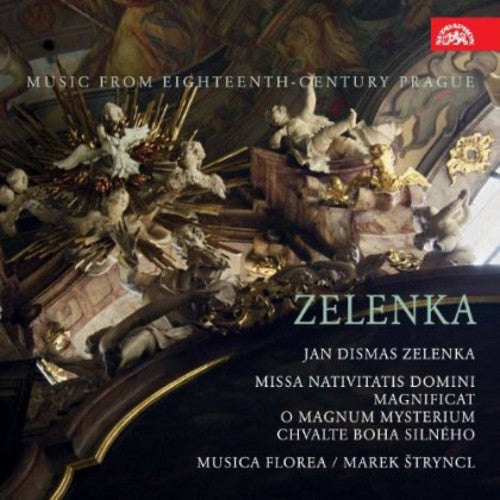
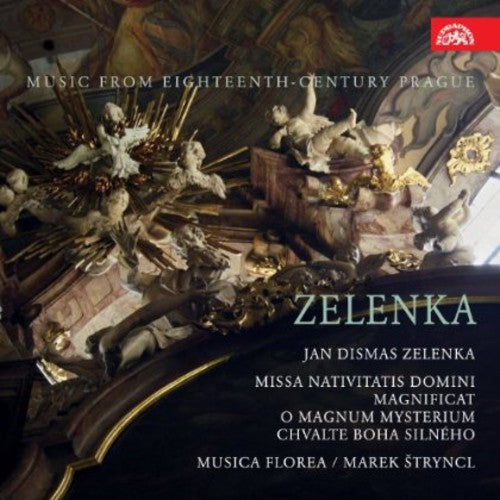
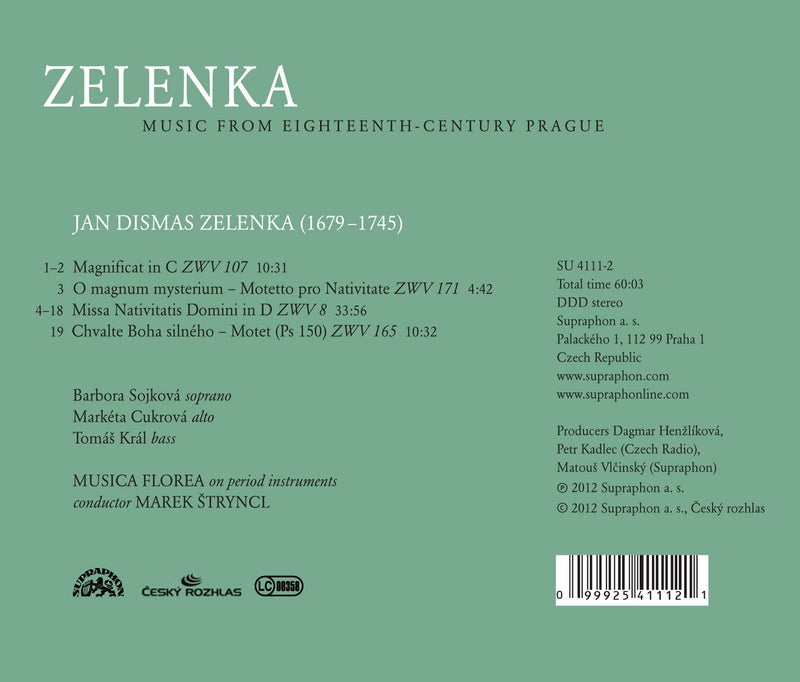
Zelenka: Missa Nativitatis Domini; Magnificat; O Magnum Mysterium / Stryncl, Musica Florea
Supraphon
$31.99
$23.99
January 29, 2013
At times startling and innovative sacred choral works by the most important Bohemian composer of the Baroque era, Jan Dismas Zelenka. Digitally recorded on 7 and 8 December, 2011 in the Church of St. Simon and St. Jude in Prague. Album includes booklet notes in English, French, German and Czech with lyrics sung in Latin and translated in four languages.
{# optional: put hover video/second image here positioned absolute; inset:0 #}
On Sale
Supraphon
Zelenka: Missa Nativitatis Domini; Magnificat; O Magnum Mysterium / Stryncl, Musica Florea
At times startling and innovative sacred choral works by the most important Bohemian composer of the Baroque era, Jan Dismas Zelenka. Digitally...
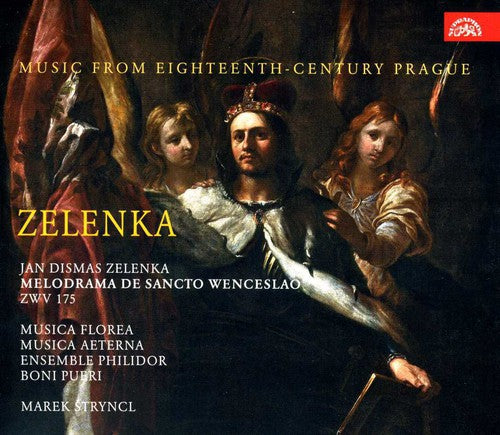
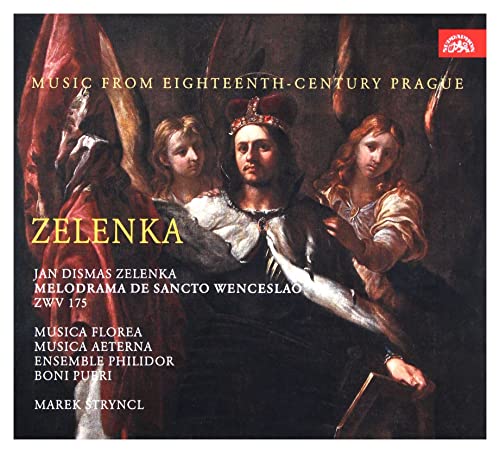
Zelenka: Melodrama De Sancto Wenceslad / Stryncl, Musica Florea
Supraphon
$47.99
$35.99
January 29, 2013
Here's a case where the music so completely and satisfyingly transcends the texts, that we can thoroughly enjoy the proceedings without really having to know what all the singing and playing is about. The texts--the singing is in Latin--are in the most serious, heavily ornate, flowery Baroque poetic style, and are concerned with religious devoutness and allegorical representations of traits such as "Fortitude", "Suspicion", "Dignity", "Faith", and "Godliness". Even the work's title, which translates "Under the olive tree of peace and the palm tree of virtue the Crown of Bohemia splendidly shines before the whole world", tells you something of the solemnity and high importance of the occasion for which it was written: the 1723 coronation ceremony in Prague of Emperor Charles VI and his wife Elisabeth Christine. Zelenka's music, which amounts to a kind of oratorio-type structure--orchestral introductions and interludes, choruses, arias, and various other solo/choral combinations--actually was designed to accompany a dramatic presentation that also included dances and parts for actors. Fortunately for us today, we can sit back and just listen to some of the more delightful--sometimes breathtakingly powerful--music from this period that didn't come from the pen of Bach or Handel. Even Zelenka was impressed enough with some of the work's movements that he reused them in adapted form the following year for sections of his Te Deum.
The opening Sinfonia is a brilliant enough piece all on its own, but the chorus that immediately follows takes us to yet another level of excitement, setting a sumptuously decorated stage for what is to come. Although there's a substantial amount of music here, no one section stays too long, and the arias show care for musical beauty well beyond anything suggested by the texts. And there's nothing pale or simple in the writing either, whether for instruments or voices: much of it, especially the vocal solos, requires performers of considerable accomplishment, even virtuosity. The opening chorus is quite a tour de force, and in this performance we're treated to the lovely sound and impeccable technique of the boys' and men's voices of the Czech choir Boni Pueri. That this is a Czech production mirrors its original performance in Prague's Jesuit Clementinum, which not only involved native Czech singers and actors, but also was conducted by the Czech-born Zelenka. The orchestral writing, which includes such ceremonial staples as trumpets and timpani, used to great effect, is bright-spirited and masterfully constructed to hold our interest and maintain dramatic momentum. The soloists are generally very good and there's some really terrific interaction in duets and in dialogs with the chorus. The sound is full-bodied and sufficiently detailed to give immediate presence to all the performers while preserving appropriate balances. Anyone who enjoys large-scale Baroque choral/orchestral music will love this unusual and musically engaging work--another gem in the crown of a composer that's finally getting just recognition.
--David Vernier, ClassicsToday.com Reviewing original release, Supraphon 3520
{# optional: put hover video/second image here positioned absolute; inset:0 #}
On Sale
Supraphon
Zelenka: Melodrama De Sancto Wenceslad / Stryncl, Musica Florea
Here's a case where the music so completely and satisfyingly transcends the texts, that we can thoroughly enjoy the proceedings without really...
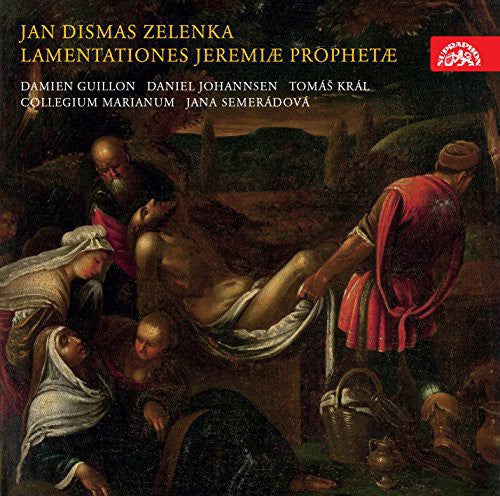
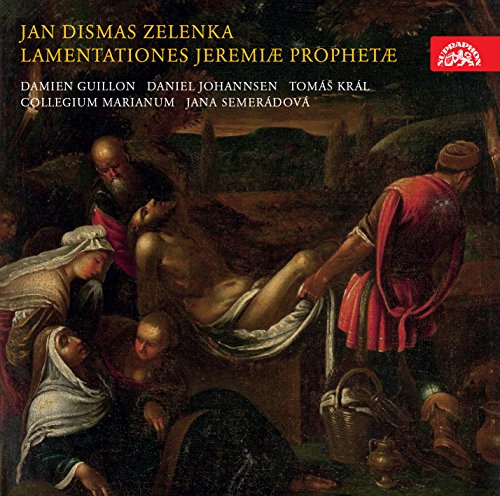
The Old Testament Book of Lamentations has been subjected to a number of settings since the Middle Ages; that of Jan Dismas Zelenka occupies a significant position among them. In his Lamentations, Zelenka succeeded in combining the contemplative aspect with a powerful dramatic charge. His penchant for unusual instrumentation is evident in, for instance, the final Lamentation (solo violin, bassoon and chalumeau). Zelenka only set to music two lessons of the first Nocturne for each day; here, every third reading takes the form of Gregorian chant, as was most likely heard at the Dresden court.
{# optional: put hover video/second image here positioned absolute; inset:0 #}
On Sale
Supraphon
Zelenka: Lamentationes Jeremia Propheta
The Old Testament Book of Lamentations has been subjected to a number of settings since the Middle Ages; that of Jan Dismas...
It was the pioneering Archiv recordings from 1978 of Jan Dismas Zelenka’s trio sonatas and orchestral works, with an instrumental ensemble including the celebrated oboist Heinz Holliger, that put the composer’s name and music back into circulation after two centuries of obscurity. Since then the sonatas have become far and away Zelenka’s most recorded compositions, continuing to attract admirers for their inventive quirkiness. As three other Fanfare critics—John Bauman, Michael Carter, and Brian Robins—have ably discussed the music in extensive detail in their reviews of previous sets, I will refer readers to their discussions and focus upon a comparison of complete recordings in the original instrumentation for two oboes (with one replaced by a violin in the Third Sonata), bassoon, and continuo. (There have also been partial sets and recordings of arrangements made for string ensembles.)
The aforementioned Archiv recording with Holliger either was not reviewed in these pages, or else any such review has not yet made its way into the online Archive; it is available as both a reissue in its original form from ArkivMusic.com and in a budget version from Brilliant Classics. Holliger made a second recording, for ECM in 1999, with some of the same instrumentalists as before; Robins praised that set in 23: 2 as well played but stated it was not to his taste, as he “simply cannot accept the thin, pinched sound of a pair of modern oboes in this music.” By contrast, Carter placed it in the Classical Hall of Fame in 26:4. In successive reviews in 17:5, 19:2, 19:4, and 19:5, Bauman praised both an MDG set with the Northwest German Chamber Soloists and a Claves set with members of the Chamber Orchestra of Europe, ranking them above the older Archiv set and dismissing a Berlin Classics set with oboist Burkhard Glaetzner with the comment that “these fine German musicians come as close to making Zelenka as dull as seems likely.” However, he endorsed as first choices an Accent set with a group of Belgian performers and two discs by Astrée with the Ensemble Zefiro as being “far and away the most exciting and imaginative we have had in the last several decades.” Robins also endorsed the Ensemble Zefiro as a first choice in his review of the ECM set. Contrary to Baumann, Carter had high praise for the Berlin Classics set in 30:1, ranking it as being virtually equal to the ECM release. There is one other set in print that has not been reviewed here, a Matous release from 1993 with a group of Czech musicians.
For my part, I do not find myself in complete agreement with any of the above critics. For fans of Holliger, the ECM set is clearly superior to the old Archiv version: I agree with Robins and Carter on its merits, and unlike the former I do not object to hearing this music played on modern instruments, even though I do prefer period instruments for it. Unfortunately the Astrée discs and MDG set are both out of print. The few used copies of the former available through Amazon.com are advertised at obscene prices; those for the latter are more reasonable. Movements from some of the sonatas as played by Ensemble Zefiro are posted on YouTube; while handsomely played, I’m not as enthusiastic for them as either Bauman or Robins. The MDG set is solid, but I would prefer both the ECM and Astrée versions to it. I cannot concur with Bauman’s enthusiasm for the Accent set; it is a rare instance of a period ensemble engaging in stodgy, foursquare playing, and has an unnaturally reverberant recording acoustic. I agree with Bauman and disagree with Carter regarding the Berlin Classics recordings; they are indeed rather dull affairs, as is the Claves set. However, my endorsement would go to the hitherto neglected Matous release, which features elegant, vibrant, and heartfelt playing in a very attractive recorded acoustic. The fly in the ointment there is that it is the most expensive alternative, costing over $40.00, whereas the ECM set can be had far more cheaply.
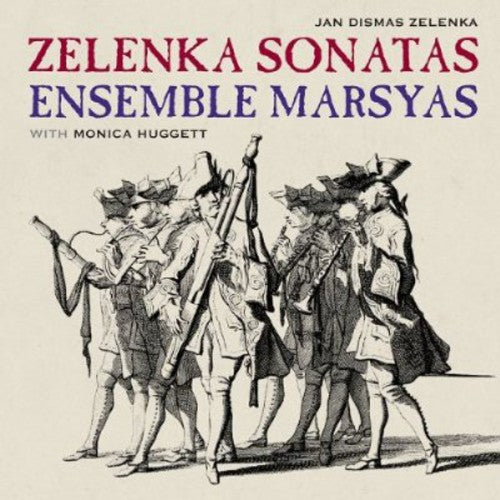
How does the present release compare with all of the preceding alternatives? Quite favorably; Ensemble Marsyas is a newly formed Scottish ensemble of baroque musicians, and this release marks an impressive recording debut. The performances are on period instruments, with the continuo parts variously played on violone, theorbo, harpsichord, and/or organ. Everyone blends well, and the tone colors are striking; I am particularly taken with bassoonist Peter Whelan, the ensemble’s founder, who offers by far the most pungent rendition of his part in any recording made of this music. Violinist Monica Huggett is, as one would expect, a most accomplished soloist in the Third Sonata, and the two oboists are quite agile. The booklet provides detailed and informative notes and several color photos. While I’m not convinced that SACD technology adds anything significant to a chamber ensemble beyond standard digital recording, the recorded sound is quite pleasing. My one point of hesitation is that I cannot find any indication as to whether a sequel disc is planned for the other three sonatas. If and when that appears, this would become the new set of choice. Until then, for a complete cycle go with ECM or Mantous, but do buy this now if you love these pieces and have the cash to spare; recommended.
FANFARE: James A. Altena
{# optional: put hover video/second image here positioned absolute; inset:0 #}
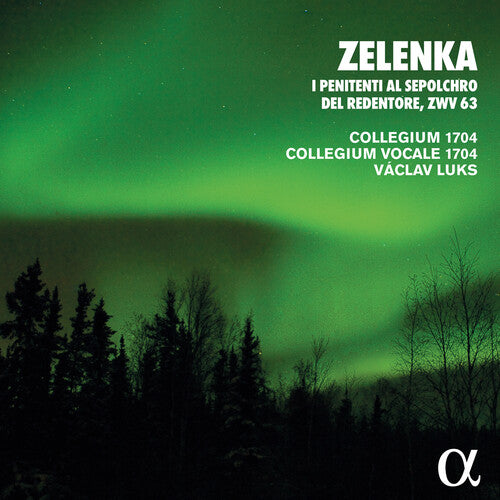
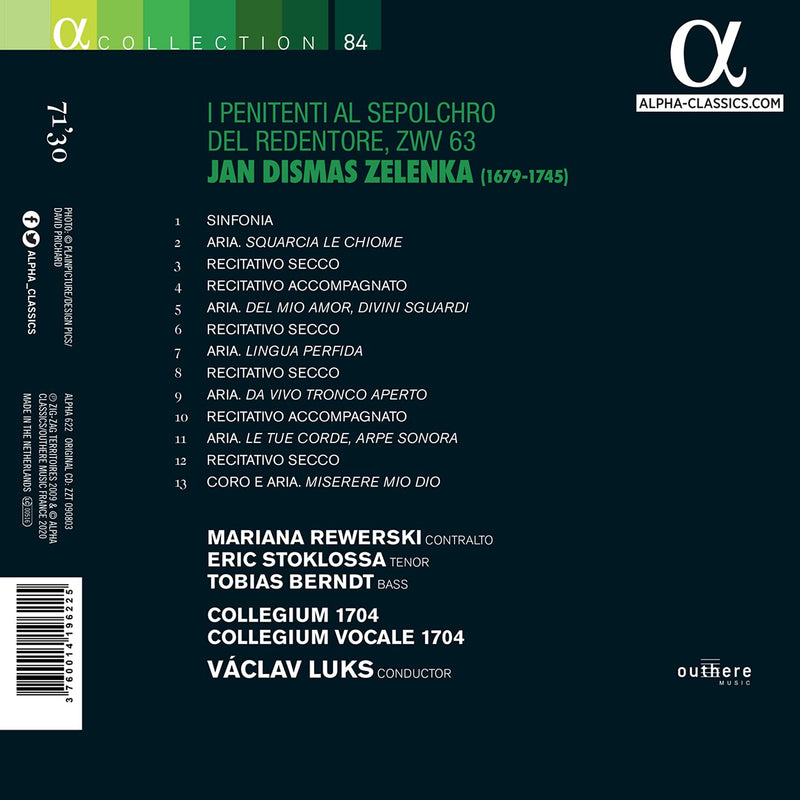
Zelenka: I Penitenti al Sepolcro / Luks, Collegium 1704
Alpha
$11.99
June 25, 2021
The Prague-based ensemble Collegium 1704 and its founder Vaclav Luks here perform an oratorio by the Czech composer Jan Dismas Zelenka. This edifying work, typical of the oratorios produced during the Counter-Reformation, presents the faithful with an imaginary meeting of Mary Magdalene, King David and St Peter at the Tomb of Christ. After the success of the Red, Yellow, Blue, Pink and White collections (a total of sixty reissues) which gave a new lease of life to the pearls of the Baroque catalogues from our house labels, here are fourteen new titles which offer a chance to discover other treasures, whether Baroque or dating from an earlier or later era. Like the most recent series, this sixth instalment opens out onto the Classical repertory (Mozart by Ensemble 415 and Chiara Banchini) and the Renaissance (Févin by Doulce Mémoire and Denis Raisin Dadre); recordings that are an integral part of Alpha’s identity and history. Fourteen reissues performed by the leading musicians in the field, most of which received one or more awards on their original release. Proper booklets accompany the discs, with notes in three languages (French, English, German). Photographers from all over the world have been selected to illustrate the covers, this time with the guiding thread of the color green, a symbol of nature, fertility... and hope!
{# optional: put hover video/second image here positioned absolute; inset:0 #}
Alpha
Zelenka: I Penitenti al Sepolcro / Luks, Collegium 1704
The Prague-based ensemble Collegium 1704 and its founder Vaclav Luks here perform an oratorio by the Czech composer Jan Dismas Zelenka. This...


 {# optional: put hover video/second image here positioned absolute; inset:0 #}
 {# optional: put hover video/second image here positioned absolute; inset:0 #}
Arcana
{# optional: put hover video/second image here positioned absolute; inset:0 #}
Arcana {# optional: put hover video/second image here positioned absolute; inset:0 #}
Berlin Classics
{# optional: put hover video/second image here positioned absolute; inset:0 #}
Berlin Classics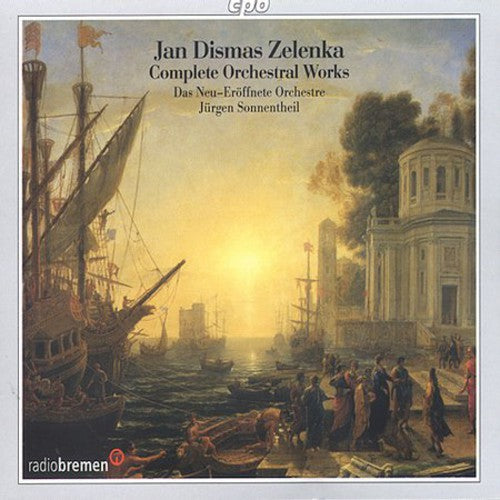 {# optional: put hover video/second image here positioned absolute; inset:0 #}
CPO
{# optional: put hover video/second image here positioned absolute; inset:0 #}
CPO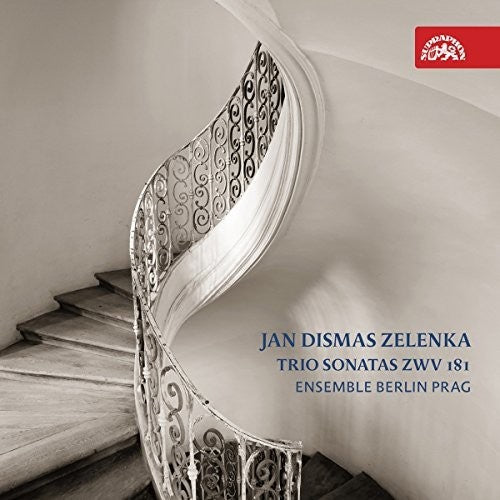 {# optional: put hover video/second image here positioned absolute; inset:0 #}
On SaleSupraphon
{# optional: put hover video/second image here positioned absolute; inset:0 #}
On SaleSupraphon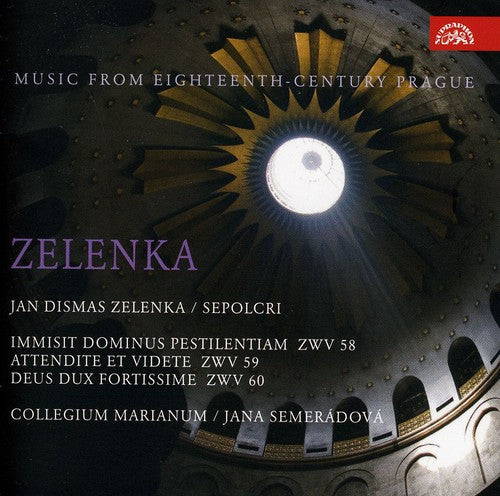 {# optional: put hover video/second image here positioned absolute; inset:0 #}
On SaleSupraphon
{# optional: put hover video/second image here positioned absolute; inset:0 #}
On SaleSupraphon {# optional: put hover video/second image here positioned absolute; inset:0 #}
 {# optional: put hover video/second image here positioned absolute; inset:0 #}
On SaleSupraphon
{# optional: put hover video/second image here positioned absolute; inset:0 #}
On SaleSupraphon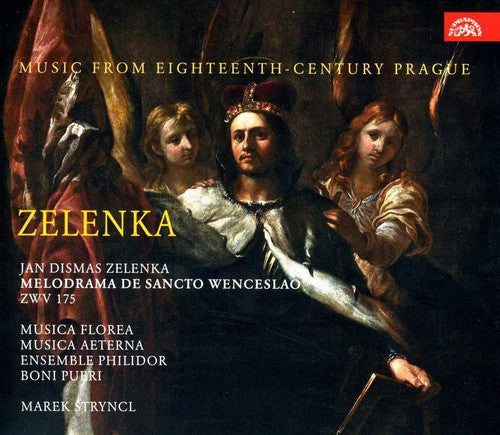 {# optional: put hover video/second image here positioned absolute; inset:0 #}
On SaleSupraphon
{# optional: put hover video/second image here positioned absolute; inset:0 #}
On SaleSupraphon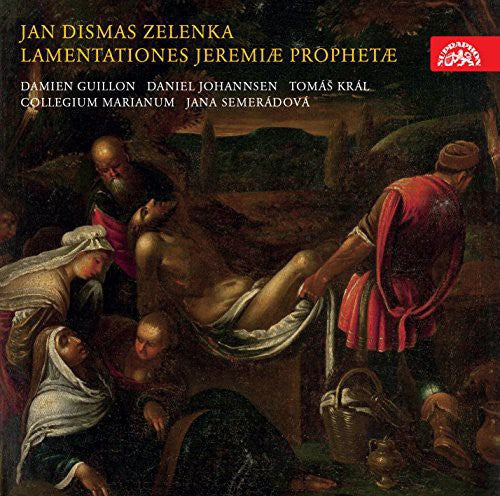 {# optional: put hover video/second image here positioned absolute; inset:0 #}
On SaleSupraphon
{# optional: put hover video/second image here positioned absolute; inset:0 #}
On SaleSupraphon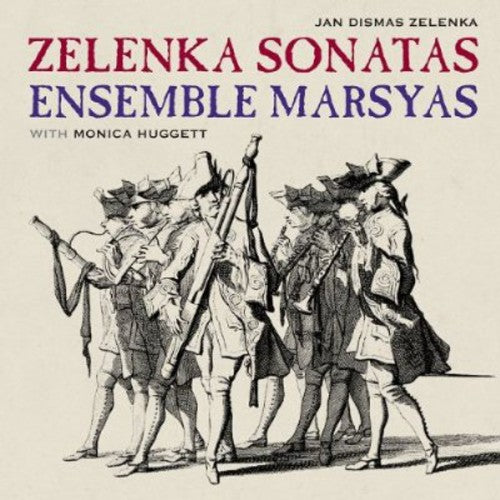 {# optional: put hover video/second image here positioned absolute; inset:0 #}
Linn Records
{# optional: put hover video/second image here positioned absolute; inset:0 #}
Linn Records {# optional: put hover video/second image here positioned absolute; inset:0 #}
Alpha
{# optional: put hover video/second image here positioned absolute; inset:0 #}
Alpha
 {# optional: put hover video/second image here positioned absolute; inset:0 #}


 {# optional: put hover video/second image here positioned absolute; inset:0 #}
 {# optional: put hover video/second image here positioned absolute; inset:0 #}

 {# optional: put hover video/second image here positioned absolute; inset:0 #}
 {# optional: put hover video/second image here positioned absolute; inset:0 #}


 {# optional: put hover video/second image here positioned absolute; inset:0 #}


 {# optional: put hover video/second image here positioned absolute; inset:0 #}


 {# optional: put hover video/second image here positioned absolute; inset:0 #}


 {# optional: put hover video/second image here positioned absolute; inset:0 #}


 {# optional: put hover video/second image here positioned absolute; inset:0 #}


 {# optional: put hover video/second image here positioned absolute; inset:0 #}


 {# optional: put hover video/second image here positioned absolute; inset:0 #}