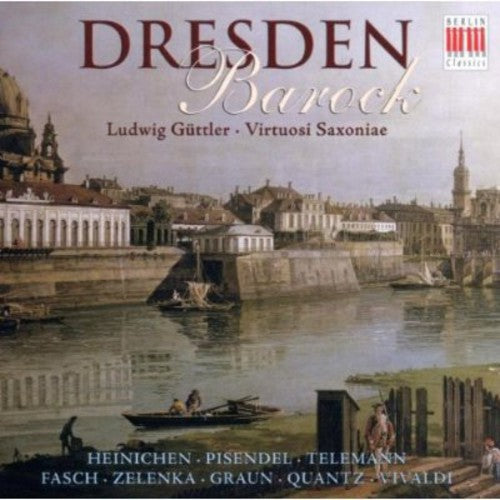
Johann David Heinichen
6 products
Heinichen: Unpublished Dresden Sonatas
Baroque Concertos - Fasch, J.F. / Zelenka, J.D. / Graun, J.G
Heinichen: Concertos & Sonatas / Epoca Barocca
Includes work(s) by Johann David Heinichen. Ensemble: Epoca Barocca.
Heinichen & Telemann: Early Cantatas
"As a piece from an opera" was the intention of the Protestant theologian and poet Erdmann Neumeister (1671-1756) in his Geistliche Cantaten (sacred cantatas), which he first published in 1702. No wonder that several composers of sacred music jumped at the chance to use his texts to fulfill their duties. The varied structure of the poetry, some of which rhymes quite drastically, lends itself well to musical settings, in which recitatives, arias, choruses, and chorales alternate quite easily. As such, devout congregations could be presented with theological subjects in a non-ascetic manner. There were, of course, more austere cantatas with settings of psalms or other passages of the Holy Scriptures, either on their own or in connection with new poetic creations. This present production combines four examples from the quills of two contemporaries who successfully attempted various playing techniques, apparently in a relatively undogmatic phase.
Heinichen: Two Passion Oratorios / Willens, Kölner Akademie
Affecting Passions by Heinichen. The Passion music Johann David Heinichen wrote for the Dresden court is a document of cultural and confessional openness of the Saxon residence, and his two Italian oratorios heard here are surrogates of large-scale Passion music. "Come? S'imbruna il ciel" - composed in 1728 - is the latest of the sepolcri, his other Passion "L'aride tempie ignude" the first of the sepolcri to survive from Heinichen in Dresden. Both texts are by Stefano Pallavicino, who had been active at the Dresden court since 1719. In the first-mentioned Passion, the meditation on the Passion event recurs to the experience of the earthquake that, according to biblical accounts, occurred immediately after the death of Jesus. The description of the violent natural events gives Mary the Mother of God, John (Jesus' favorite disciple), and Mary Magdalene an opportunity to reflect on their relationship to the Crucified. Different aspects of affection and love are thematized. The meditation on the Passion event in the second-named Passion is designed as an allegorical play of death (Morte) and hope (Speranza), divine love (Amor divino) and penance (Poenitenza), and follows an easily comprehensible dramaturgy. The affinity to opera seria is evident in both passions not only in the arrangement of the pieces. The keys, gestures and instrumentation also correspond to the models familiar from baroque musical theater. Full of affect!
Heinichen: Dresden Wind Concertos / Dean, Stadler, Et Al

A few years ago, the name of Johann David Heinichen (1683-1729) came out of the blue as a wonderful surprise. Baroque music lovers around the world were amazed to discover an obscure composer who, in his best works, was second to none--easily comparable to Vivaldi in terms of originality, rhythmic exuberance, and boundless imagination. A half decade and a few recordings later, Heinichen has become a popular name, and rightly so. These Dresden Wind Concertos display treasures of passionate invention, energized by a spectacular use of dynamic contrasts and poetized by delicate touches of lyricism in the solo writing for woodwinds. Just listen to the dialogue (an obbligato figure in Heinichen's style) between traverso flute and pizzicato strings in the Concerto S. 225's last movement, or the biting orchestral outbursts in the G minor oboe concerto. Examples of Heinichen's vivid, sometimes unpredictable inspiration abound in every page of these extraordinary works. The Fiori Musicali ensemble, on period instruments, plays with enthusiasm and poetic commitment. The virtuosity may not be as extreme as that of Concerto Köln (on Capriccio), but each performance reaches a perfect balance between expressive ardor and precision--a quality mirrored by the accurate and natural sonics of the Radio Bremen engineers. --Luca Sabbatini, ClassicsToday.com