Leo Brouwer
17 products
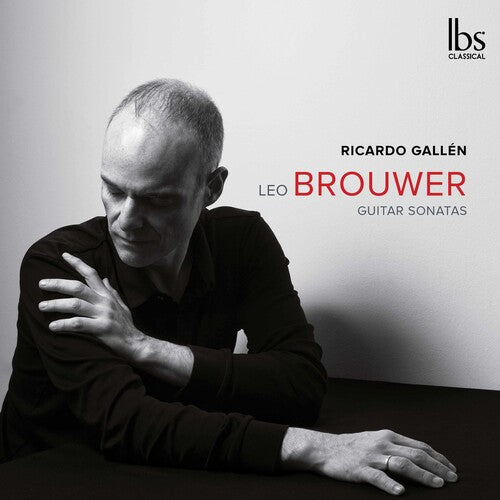
Bouwer: Guitar Sonatas Nos. 1-6 / Gallen
Guitar Recital - Ausias Parejo
Chamber Music – Shattered Glass / Lonely Lake / Clarinet Quintet (Shattered) (+BACH, J.S. / DEBUSSY)
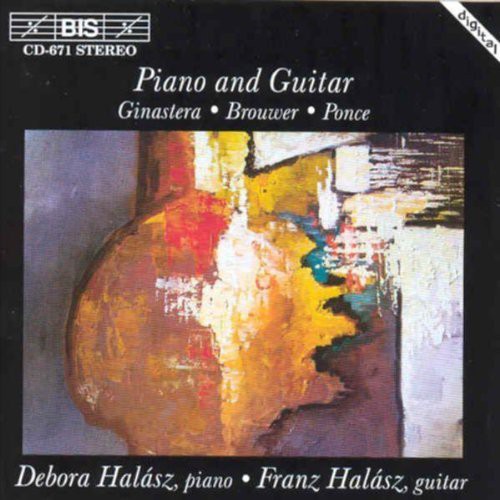
Ginastera / Brouwer / Ponce: Piano And Guitar Music
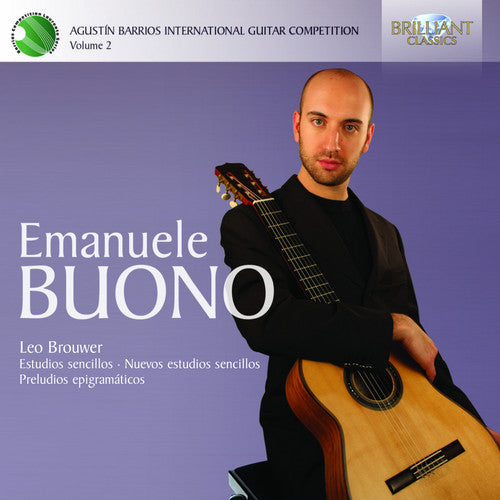
Agustín Barrios International Guitar Competition, Vol. 2
Brouwer, Docx, Lemke & Mora: Transcend
The novel Lux Nova Duo is already releasing its third CD with GENUIN. Lydia Schmidl, accordion, and Jorge Paz Verastegui, guitar, are joined this time by the Wurttemberg Chamber Orchestra under the direction of Eddie Mora and the soprano Marcia Lemke-Kern. The track list offers an exciting program comprised exclusively of world premiere recordings – all dedicated to the Duo Lux Nova, including works by guitar alto master Leo Brouwer as well as Sascha Lino Lemke, Eddie Mora, and Hector Docx. The CD's color palette is vast, ranging from Brouwer's Latin American colors to Mora's eclectic take on György Ligeti and Lemke's variations on the human breath to Hector Docx's "Transfigurations", which plumbs the depths of silence.
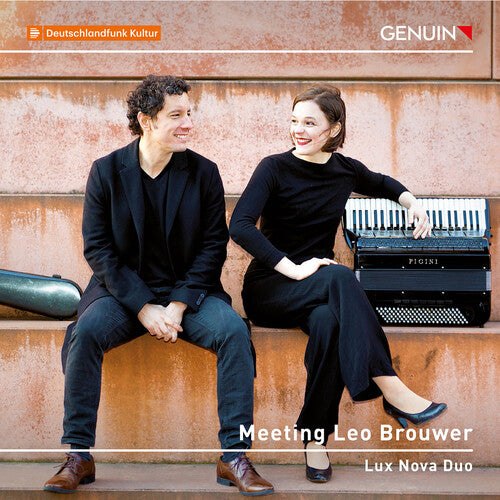
Meeting Leo Brouwer / Lux Nova Duo
On its new GENUIN album, the Lux Nova Duo takes up the cause of composer Leo Brouwer. The Cuban old master is well known to guitarists and lovers of guitar music but deserves more attention for his gripping, pulsating and multifaceted music! In the unusual line-up with Lydia Schmidl on accordion and Jorge Paz Verastegui on guitar, the Lux Nova Duo presents smaller and more extensive works by Brouwer, such as his Souvenir de Liège, the expansive Triptico concertante or the centuries-spanning Folía a través de los siglos. Through the subtle playing of the Lux Nova Duo, we discover Brouwer's stylistic range, which extends from folkloristic impressions to new, advanced musical language.
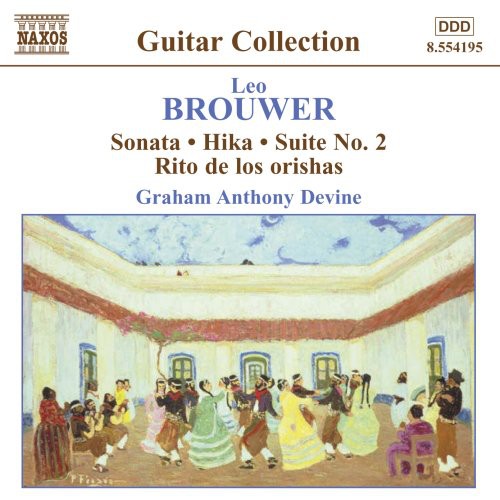
Guitar Collection - Brouwer: Guitar Music Vol 4 / Devine
Havana-born Brouwer has claims to be one of the foremost present-day composers for the classical guitar. He wrote his first mature composition when he was sixteen, the neo-classical Suite Antigua, which is included here alongside some of his more recent compositions. This is the fourth volume in the Naxos Brouwer series, which started ten years ago. As with volume three the guitarist is Graham Anthony Devine, a player I have admired on several occasions. With his fluent technique and musical phrasing he is an ideal interpreter of Brouwer’s music. I haven’t heard the previous volumes but am quite familiar with his works. For someone coming new to him I would rather recommend one of the earlier volumes as a starter; possibly Volume 2 with the evocative El Decameron Negro, which I count as his finest work. The present volume has a great deal to offer, too, and the little suite from 1955 is charming.
When we turn to his more recent efforts we recognize the ‘real’ Brouwer. Much of his work is permeated with a kind of harsh lyricism, which can seem like a contradiction in terms. He often creates melodies, or themes, with great immediacy but spiced with dissonances to avoid any sweetness.
La ciudad de las columnas (The City of Columns) is a nickname for Havana. The six movement composition is a portrait of his native city and it shows how much he loves the place, even the busy and chaotic life of Obispo Street (IV).
As early as 1959 Brouwer began writing Estudios sencillos (Simple Studies) for pedagogical purposes. He composed several sets that have become very popular, also as concert music. In 2001 he wrote another set of ten pieces, each of them dedicated to a 20th century composer. Here we find omaggios a: Debussy, Mangoré, Caturia, Prokofiev, Tarrega, Sor, Piazzolla, Villa-Lobos, Szymanowski and Stravinsky. As can be seen this list includes several Latin-Americans, who have championed the guitar, but there are also some European composers who haven’t. My personal favourites are the last two: Szymanowski, whose omaggio has a suggestively alluring melodic charm, and Stravinsky, who sounds as jagged as he looks on Jean Cocteau’s famous drawing of him playing The Rite of Spring.
Nineteenth century Cuban pianist and composer Manuel Samuell was perhaps the most important musician in creating Cuban national music, forging together influences from French contredanse with African rhythms. Habanera, mambo, rumba, salsa, all have their origin here. Leo Brouwer arranged eight of Samuell’s dances for guitar and the whole suite is like a hors d’oeuvre of tasty melodies and rhythms. Anyone can find a favourite piece here – try, for example, the melancholy No. VII Recuerdos tristes or the lively No. VIII La Maria.
Brouwer’s Hoja de album (Album Leaf): La gota de agua (The Raindrop) is truly descriptive, with sparse drops and long silences in between. The final composition on this disc is by Brouwer’s friend and protégé Joaquin Clerch. Yemaya is a goddess from the Afro-Cuban Santería-Yoruba religion. She is described as the ocean, the essence of motherhood and a protector of children and she appears in many guises. Clerch’s composition, which is in seven short sections played without a break, starts almost inaudibly with the wind blowing over the waves. Then we are confronted with Yemaya’s many and varied personalities before we are again transported to where we started.
Devine confirms through this disc his position as one of the most accomplished guitarists now before the public and for the many admirers of Brouwer’s music this is an essential buy. Devine contributes his own highly informative liner-notes and Norbert Kraft and Bonnie Silver have once again produced an immaculate recording. Of the many precious jewels in Naxos’s luminous crown, their guitar collection is certainly one of brightest shining.
-- Göran Forsling, MusicWeb International
Brouwer: Concierto Elegiaco, Danzas Concertantes / Sung-ho
Brouwer has freshened our expectations of the classical guitar. While not rejecting the work of Rodrigo he has revived the genre with dissonant draughts that permeate recognisable moods and manners. Hispanic coolness and passion are still present but the progress and structure of ideas is achieved through suggestion rather than direct statement. The Concerto Elegiaco is his third guitar concerto. It was written for the BBC and premiered by Julian Bream with the Langham Chamber Orchestra. In 1987 Bream and Brouwer recorded the piece with the RCA Victor Chamber Orchestra. The music is poised, rhythmically challenging and constantly in motion around subtle and beautiful tendrils of melody. On a very simplistic level you might describe this as Rodrigo filtered through Berg.
The Three Concertante Dances for string orchestra and guitar are more direct in expression with the elements of Iberian courtly passion we recognise from Rodrigo being engaged but they are mixed with a Stravinskian delicacy: sometimes steely, sometimes yielding. Subtle impressionistic half-lights are the order of the day in the second dance yet the plangent asides are developed with even sharper definition in the Elegiaco. The dances were premiered on Cuban Radio in 1958 by Brouwer and the Orchestra of Cuban Radio conducted by Roberto Valdés Arnau.
Lastly we hear guitar juxtaposed with string quartet. This Quintet, begun at age 18, was not completed until the composer was encouraged to do so by Italian guitarist Oscar Ghiglia who gave the premiere in Florence. It is a work of violent Tippett-like onslaughts by the quartet and of pattering rhythmic insurgency by the guitar. The slow central movement is a jewel and the standout track in the whole CD. A simple sinuous idea sings out in verdant innocence with a sentimental core - more Classic FM material.
A refreshing take on received wisdoms about the Latin-American classical guitar.
-- Rob Barnett, MusicWeb International
Brouwer: Reactions - Songs & Chamber Music / Beaty, Skoog, Sato, Nelson, Wang
Margaret Brouwer’s music has for decades been admired for “inhabiting its own peculiarly bewitching harmonic world” (The New York Times). These recently composed pieces reflect her musical representations of particular events: Rhapsodic Sonata charts an internal journey of love, whereas Declaration is a set of songs that addresses ideas of violence and war. Composed at the height of the Covid-19 pandemic, I Cry – Summer 2020 outlines a process of isolation and restriction. All Lines are Still Busy is a satirical monologue that should intrigue anyone who has been placed “on hold “during a telephone call.
REVIEWS:
Reactions – Songs and Chamber Music presents a rewarding glimpse into Brouwer’s rich compositional world and the broad tonal range it encompasses…[Brouwer] draws on her vast knowledge of classical music to create personalized expressions that render into compositional form the essence of a particular subject matter or emotional state.
-- Textura
Naxos presents a portrait CD of American Margaret Brouwer, born in 1940, featuring chamber music & songs. The program opens with an impassioned performance of the Rhapsodic Sonata for viola and piano by Eliesha Nelson and Shuai Wang. This pianist also acts expressively in the song cycle Declaration, sung very eloquently and sensitively by mezzo-soprano Sarah Beaty. The shorter pieces ‘I Cry – Summer 2020’ for violin & piano and The Lake for tenor & piano are also heard in very appealing interpretations.
-- Pizzicato
The American composer has the expressive skills to evoke the passions she sets out to describe – love, ecology, racism, even being trapped in telephone hell…Brouwer’s musical language – tonal with deft sprinklings of harmonic spice – draws the instruments into ardent and wistful conversations.
-- Gramophone
Guitar Collection - Brouwer: Guitar Music Vol 3 / Devine
Brouwer: Music for Bandurria and Guitar / Chamorro, Gonzalez
Brouwer: Hika & the Young Composer / Zigante
Brouwer: Guitar Music, Vol. 5 / Gonzalez
-----
REVIEW:
Much of the disc does not call for extended periods of virtuosity, but the music requires an inner feeling for the composer so as to provide a shape to movements that are frequently slow moving and sparing in notes. The distinguished Spanish guitarist, Pedro Mateo Gonzalez, has an affinity to Brouwer.
– David's Review Corner (David Denton)
American Classics - M. Brouwer: Aurolucent Circles, Etc
Margaret Brouwer (born in 1940) is head of the composition department at the Cleveland Institute of Music. Based on this excellent new Naxos recording, she has an individual voice with a fine ear for orchestral colors. Her 2002 Concerto for Evelyn Glennie? Aurolucent Circles ?is immediately arresting, with its powerfully phrased opening voiced in the lower strings. The evocative entrance of Glennie in its potent mystery reminded me of some of Holst?s outer and more arcane planets. This is appropriate, as the concerto?s first movement is titled ?Floating in Dark Space.? Besides virtuoso passages for the soloist accompanied by full orchestra, the work has strongly contrasting sections employing two concertino groups which show off the very fine first-desk players in the Royal Liverpool Philharmonic. Glennie?s solos cover a kaleidoscopic range of percussion instruments and colors. The second movement, ?Stardust,? takes those colors and plays them about the stage, drifting and more often sweeping through various sections of the orchestra. The final movement, ?Cycles and Dances,? continues the notion of motion about and through the orchestra in a frenetic dance interrupted by lower brass?a favorite gesture of Brouwer?s. Glennie is the star around which all this revolves. The recording of the concerto (and the remainder of the disc as well) is both exciting and detailed, with a convincing sense of space around the instruments.
Mandala was inspired by a Tibetan sand painting and a Dutch psalm melody (Psalm XCI in the Dutch Reformed hymnal.) The trombone intoning the Psalm tune could equally be playing a version of the Buddhist om. Adding to this interesting musical-cultural mix are musicians whispering barely audible bits of random text, always with the ever-present Psalm never far from the surface. Whether this adds up to a work that will stand up to repeated hearing remains to be seen: I have a strong feeling it well may.
Pulse is an accessible and attractive score with an unexpectedly melismatic theme heard mainly from the winds and then the solo violin. As someone who usually appreciates the elegiac mood, I was looking forward to hearing Remembrance, dating from 1996 and the earliest score on the recording. It is affirmative rather than mournful, but perhaps somewhat long for its material.
Brouwer?s musical commentary on the rapid pace of 21st century life is expressed in the disc?s final work SIZZLE . Three trombones and a horn play a similar role here as in Mandela : they stand apart in time and space, representing different currents in a fast moving stream.
Gerard Schwarz?s performance of all these works is authoritative and convincing. He is ably abetted by his orchestra and the fine production and engineering.
FANFARE: Michael Fine
20th Century Guitar Works / Timo Korhonen
Aigua / Cordas et Bentu Duo
The ensemble writes of their new release: “Undoubtedly our interest and passion for the works composed throughout the 20th Century have informed the choice of repertoire proposed in this record – the result of a long period of study and artistic collaboration. This repertoire has been part of our concert programs for many years and represents four major milestones of the chamber music repertoire for the flute and guitar. Each work proposes a different compositional style – peculiar musical grammars and language with a varied and contrasting artistic vision delivered by each composer. The album opens and closes with water, acqua, (in Algherese dialect, aigua) which has for many centuries been a source of artistic inspiration, subject of myth and for some civilizations, even religious worship.”
REVIEW:
This new release by Stradivarius records features the impeccable artistry of international award-winning guitar and flute duo Cordas et Bentu. Flutist Francesca Apeddu and Maria Luciani have been refining their sound together since they first played as an ensemble in 2013. They released another album together, Portrait of Sardinia earlier in 2021 from Brilliant Classics. That recording was dedicated to new music for guitar, not flute and guitar duo. Out of the four discs in the set there are only two pieces that include flute. Aigua is their true first release dedicated to the addicting sound of flute and guitar duo.
Aigua is dedicated to the theme of water, connection to the natural environment, and the duo’s attachment to their beloved homeland, Sardinia. There are four multi-movement works included that take the listener on a relaxing journey. Takemitsu’s Toward the Sea opens the album in a passionate and picturesque performance. Since it is Takemitsu’s only duo for flute and guitar there is no shortage of available recordings. Apeddu encapsulates elements of the shakuhachi and modern flute playing perfectly. They also both have multiple sections where parts sound spontaneously improvised. This piece acts as an attention getter for the album. My urge to keep listening increased more and more as the work progressed.
The second work on the album is another well-known duo. The Sonata for Flute and Guitar by Françaix is an exercise in maintaining flawless light technique and blending. This return to a tonal center gives the listener’s ear a chance to settle and offers a stark contrast to the previous piece. The liner notes characterize the sonata as being filled with shrewd humor and an effervescent vivacity. I honestly think this describes most of Françaix pieces. Using the guitar as an accompaniment instrument, instead of piano, offers an entirely different level of balance and light articulation. Apeddu and Luciani seamlessly blend with the flute melody melting into the strumming guitar.
Cordas et Bentu Duo didn’t know how much they had to work to please me during my first listening of Castelnuovo-Tedesco’s Sonatina. To be perfectly honest, I have never liked Tedesco’s Clarinet Sonata with piano. I remember learning it when I was younger and felt like it was torture. Apparently the not-so-secret ingredient to this new revelation is the guitar. Sonatina for Flute and Piano has me rethinking everything I ever thought I knew about Tedesco. I must explore more of Tedesco’s guitar works. The world needs more beautiful and introspective music like this, and the other works included on the album.
The last piece on the album returns the listener back to the theme of water in Brouwer’s Mítologia de las aguas (Mythologies of the Waters). The water is deep, dark, and mysterious. Both the flute and guitar are the water, the wave, and the atmosphere at the same time. Similarly to Takemitsu’s duo for flute and guitar, this is also Brouwer’s only duo for flute and guitar.
The liner notes state that the recordings were made at the Church of Santa Maria Maddalena in Casalborgone and that you can sometimes hear bats. Apparently there was a colony living in the organ pipes, which had become a nuisance. I became unexpectedly interested and devoted to trying to hear the bat sounds on the album. There are a couple of moments in this piece that I believe I heard the rustling of wings. The only negative thing I can say about this album is that it isn’t long enough! This is likely the first of many albums to come for Cordas et Bentu.
-- Fanfare (Natalie Szabo)