Leonard Bernstein
77 products
-
-
-
-
-
Cinema Memories - Morricone, Williams, Bernstein, Rota & Sko
$20.99CDArcana
Dec 12, 2025A585 -
Parole in Musica - Music for Guitar Trio
$19.99CDNaxos
May 23, 20258579172 -
Transatlantic
$15.99CDCentaur Records
Apr 11, 2025CRC4105 -
Gershwin, Montsalvatge, Bernstein & Campo
$20.99CDFuga Libera
Mar 14, 2025FUG832 -
-
-
-
-
-
American Road Trip / Hadelich, Weiss
Antonio Pappano - Complete Santa Cecilia Symphonic,Concertante & Sacred Music Recordings
Cinema Memories - Morricone, Williams, Bernstein, Rota & Sko
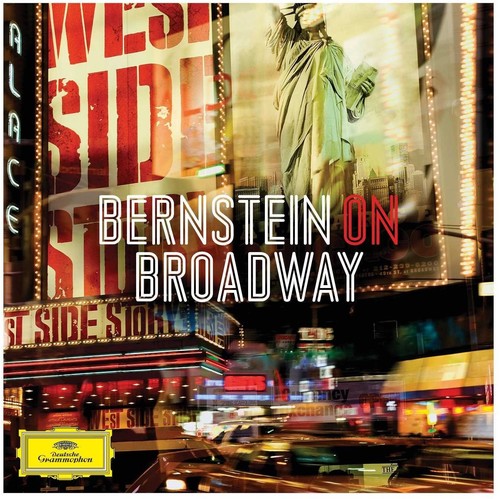
BERNSTEIN ON BROADWAY
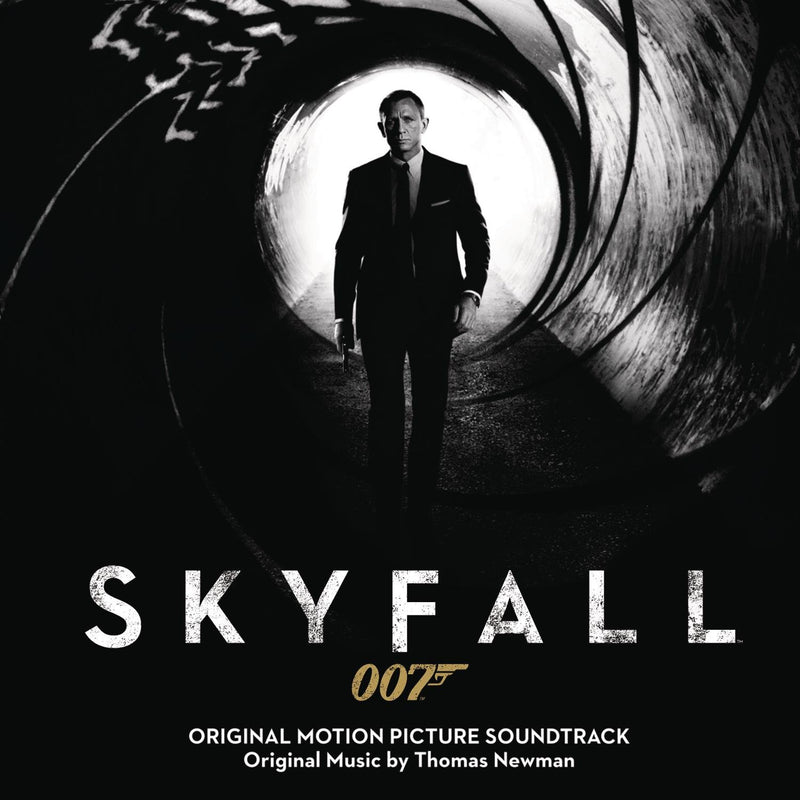
SKYFALL
Parole in Musica - Music for Guitar Trio
Transatlantic
Gershwin, Montsalvatge, Bernstein & Campo
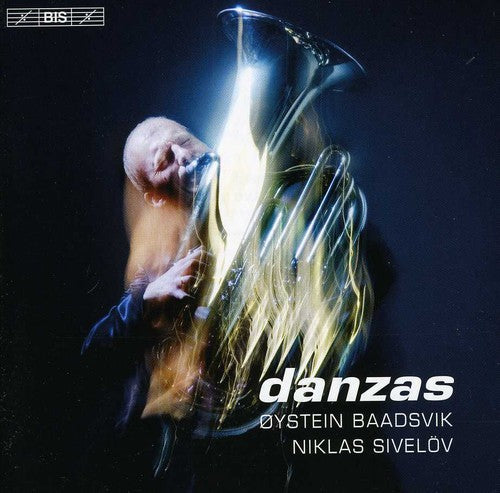
Jacob, G.: Tuba Suite / Hindemith: Tuba Sonata / Sivelov: 3
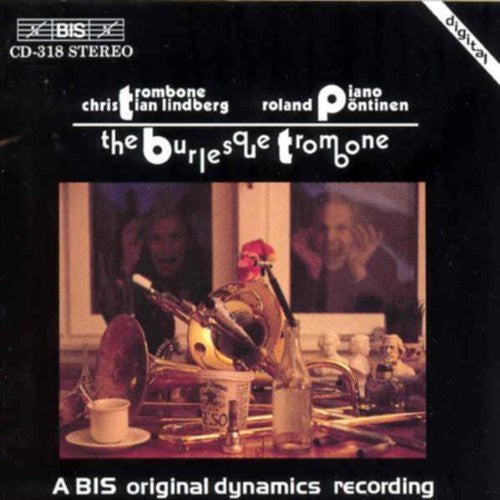
Burlesque Trombone
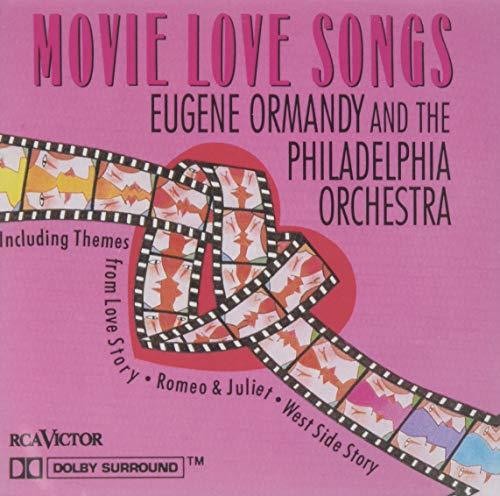
Movie Love Songs / Ormandy, Philadelphia Orchestra
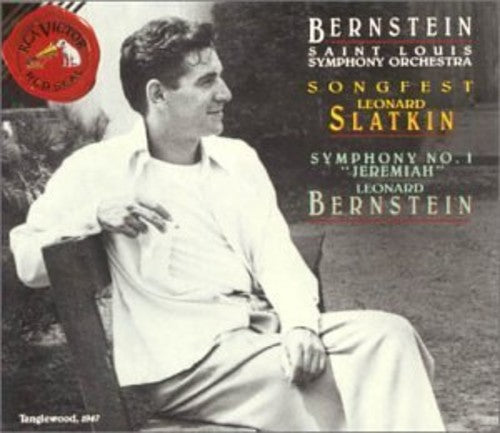
Bernstein: Songfest, Symphony No 1 / Slatkin, Bernstein
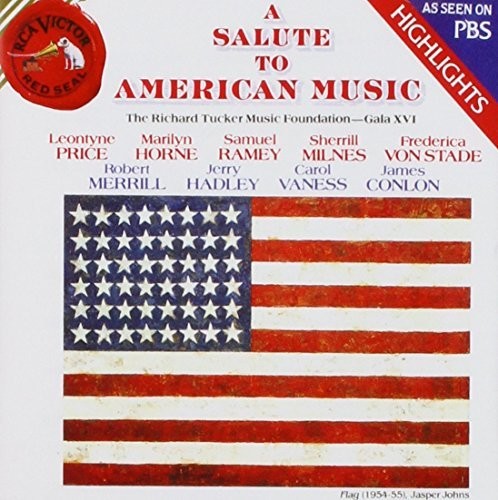
A Salute To American Music
This is the sixteenth gala of the Richard Tucker Music Foundation—''a look at an era just gone by'', as conductor James Conlon calls it—recorded live before an enthusiastic audience. It starts with a great lift-off: America the Beautiful (no mention of its composer Samuel Augustus Ward, whose hymn is treated to a showbiz arrangement) sung by Leontyne Price. At the age of 63 she can still summon enough patriotic fervour to make non-Americans want to apply for citizenship papers on the spot! And she isn't the oldest performer by any means. Robert Merrill is ten years her senior and delivers Weill's ''September Song'' touchingly but with a maddening tendency to anticipate the beat.
Weill is also represented by the ecstatic virtuosity of the Ice-Cream Sextet from Street Scene, still fresh in one's memory from the ENO performances in London and the two recordings now available on Decca and TER. Then there are two settings of William Blake's ''Tiger! Tiger! burning bright'' (''Songs of Experience''). Virgil Thomson set the poem twice: this is the second of his Five Songs from William Blake written in 1951, but it is William Bolcom who brings the house down with his version for chanting chorus backed by a variety of orchestral percussion.
One of the most moving performances is Karen Holvik in Stephen Foster's immaculate Ah! May the red rose live alway, with piano (Steven Blier). More calculating, but equally polished nostalgia comes from Barber, especially ''Must the winter come so soon'' from Vanessa, hauntingly sung by Frederica von Stade, recently admired for her Melisande at Covent Garden. But also ''Give me my robe'' from Barber's Anthony and Cleopatra, sung with equal poignancy by Carol Vaness.
Tatiana Troyanos sings Copland's setting of Robert Lowry's ''At the river'' with impressive, quiet dignity. Bernstein is the only composer who gets in three times—the Collegiate Chorale is on form for the first of the Chichester Psalms; Jerry Hadley sings ''Maria''; and there's an ensemble from Candide. Finally, in case you didn't sign on for US citizenship, Marilyn Horne gives a truly commanding performance of Berlin's classic God bless America. This is not just an anthology which works—it's a wow!
-- Peter Dickinson, Gramophone [6/1993]
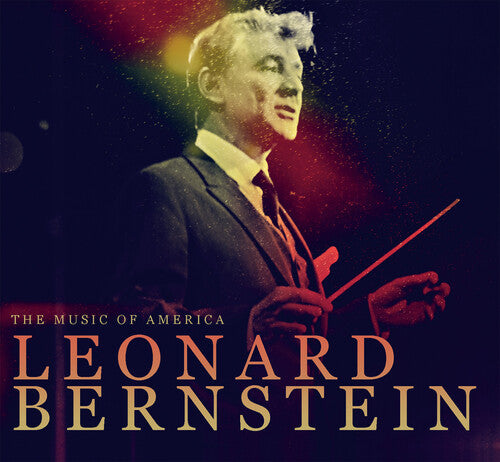
The Music Of America: Leonard Bernstein
We kick off proceedings with the superheated sprint and flicker of the Candide Overture. It takes the breath away even in the broad romantic theme.
West Side Story is reflected in the Ramin and Kostal orchestration that makes up the Symphonic Dances. They’re all here: sleazy, laid-back, bluesy, woozily romantic, eager and rowdy. The highlight comes in the ever-so-on-your-toes Cha Cha. one can virtually see Bernstein's smile as well as his sentimentality in the Adagio finale where Prokofiev’s Romeo and Juliet must have had its influence. Spun silver meets a fine drizzle of Stateside lachrymose romance!
This version of the dry and witty Prelude, Fugue and Riffs has seen plenty of action on disc. Here is Benny Goodman holding on by his fingernails.
After three tapes from the 1960s we have Hilary Hahn's 1998 Serenade. Its transparency lets light and air into a piece which although more dynamic in the hands of Francescatti and Stern responds well to this more diaphanous and nuanced recording and approach from Hahn, Baltimore and Zinman. There’s a touch of Pulcinella in Aristophanes, of the Barber concerto in Ericymachus and of Schuman or and Glass in Agathon. It’s all most beautifully done by Hahn.
CD 2
Classic 1965 Britten meets New York pizzazz in Bernstein’s Chichester Psalms. The booklet, in common with the other four issues, is pretty thin on information and certainly no sign of the sung words. The Songfest is a cycle of 12 poems set for six singers and orchestra. Good to hear this Slatkin-conducted version from St Louis. This Britten-modelled anthologised structure ranges from portentous to histrionic. It is also touched with Copland's traditional queasy-wincey Old American Songs. There are two lovely - almost Sondheim-style - ballads in the shape of To My Dear and Loving Husband and Storyette HM.
Bernstein's Mass has been written about elsewhere on this site. A Simple Song is beautifully sung by Alan Titus - its popular sentimental roots show through and do no harm. To close the disc Marilyn Horne treats us to a group of gentle Bernstein songs with Martin Katz.
CD 3
This comprises groups of songs from West Side Story, On the Town, Wonderful Town and Candide. There's hardly a Latino DNA strand to be heard in the voices of Larry Kert and Carol Lawrence in Maria and Tonight but the magic flows like mercury still. Mind you - contrary to the critical consensus and my own expectations - I also enjoyed immensely DG's Te Kanawa West Side Story. Before we get to the 1957-recorded Somewhere ballet we have a bright 2009 America. The 1957 tapes have been very well revived indeed.
On the Town 1960 recalls the world of Allegro (wonderfully given new life by Sony in their recent definitive set) in John Reardon's voice not to mention in those of Comden and Green. In Some Other Time there 's a real lump in the throat with the repeated words Oh well, we'll catch up some other time. I recall that I first heard this extraordinary and fragile song in that wonderful 1980s radio series Book, Music And Lyrics from Robert Cushman. There’s not a dry eye in the house but it’s not sentimental trash. It’s an irresistible hymn to sentiment with real power to move. By contrast I found little to like in the wince-making Wonderful Town.
Candide is a big flouncy piece of Hollywood, complete with orange blossom, cotton bolls and twirling sun parasols. It has real glitter and sentiment and delights in the Latino style in I'm easily assimilated. It ends with Make Our Garden Grow with what amounts to a touching hymn to Thoreau’s Walden. It’s not out of place that the listener may also sense the benevolent shadow or pre-echo of Copland's The Tender Land.
I had forgotten how powerful is Some Other Time but there is so much here to be reminded of and to smile about. Interestingly the sources are predominantly 1950s and 1960s before a degree of self-importance came into his music. I note that the selection also avoids the symphonies.
-- Rob Barnett, MusicWeb International
Broadway Magic - 1970s
1. Overture
2. Ladies Who Lunch, The
3. He Tossed a Coin
4. Two by Two
5. I Want to Be Happy
6. Coffee in a Cardboard Cup
7. Lucky to Be Me
8. Send in the Clowns
9. I'm Always Chasing Rainbows
10. Over Here!
11. What I Did For Love
12. Mack the Knife
13. Tomorrow
14. Fifty Per Cent
15. Come Follow the Band
16. Folies Bergere
Stravinsky: Le Sacre du printemps; Bernstein: West Side Stor
Les chansons des roses
Leonard Bernstein - A Total Embrace - The Composer
Leonard Bernstein - A Total Embrace - The Conductor
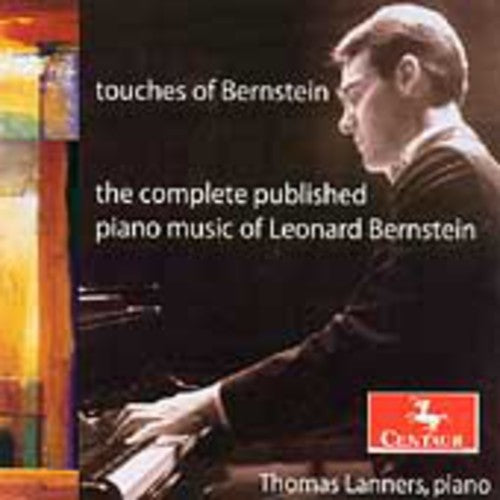
Touches of Bernstein
A BERNSTEIN STORY
I Will Breathe A Mountain / Horne, Katz, Tokyo Quartet
Horne has always been a distinguished interpreter of Bernstein. Here she sings excerpts from his theater and concert works to great effect, including the number from 'Songfest' intended for her as well as a song from the elusive '1600 Pennsylvania Avenue,' his final musical. Although recorded a bit late in the singer's career, it is good to have Horne's thoughts on the music of Samuel Barber. The songs are among the most beautiful of American art songs. This is an important addition to the legacy of recorded American song.
AMERICANS
Bernstein: Mass / Davies, Vienna Radio Symphony
Few people had comparable charisma to him, few like him could blur the borders between ‘serious’ classical music and ‘entertaining’ popular music and few apart from him could find access to people of all generations like Bernstein. Living together and love instead of antagonism and hatred permeate his entire life’s work in words and notes. Many of the attributes mentioned apply to MASS, premiered in 1971. For the understanding of this unusual work, it is crucial to note that it is not really seen as a mass composition, but in keeping with Bernstein’s intentions as ‘a theatrical piece with the title ‘MASS’. So, it is perhaps the most audacious interpretation of the liturgical contents up to then and since then. The responses to the premiere were thoroughly ambivalent, as, apart from enthusiasm, there was also rejection on the part of conservative minded circles. And the clearly conveyed message of peace was partly rejected since it could be understood not least as an unmistakable indictment of the Vietnam War still in progress.