Lili Boulanger
13 products
-
Ode to Mother Nature
$20.99CDFuga Libera
Nov 21, 2025FUG851 -
Lili & Nadia Boulanger: Piano Music
$21.99CDPiano Classics
Jan 09, 2026PCL10325 -
-
-
-
-
-
-
-
-
-
-
-
Vers La Vie Nouvelle
Ode to Mother Nature
Lili & Nadia Boulanger: Piano Music
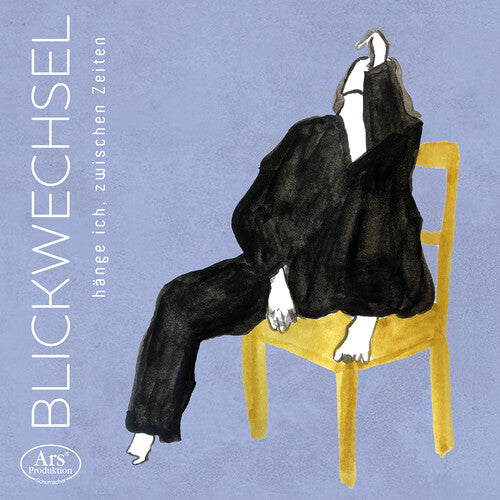
Duo Blickwechsel – hange ich, zwischen Zeiten
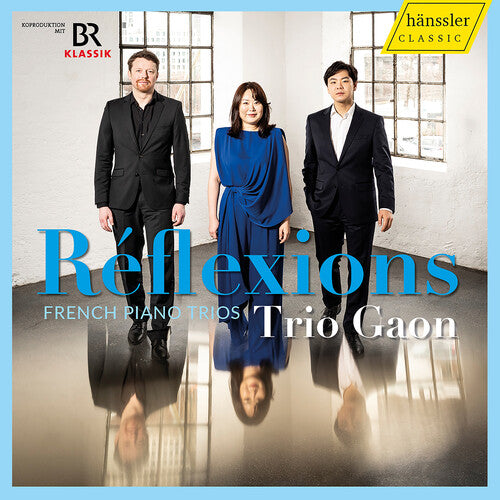
Boulanger, Debussy, Francaix & Ravel: Reflexions - French Pi
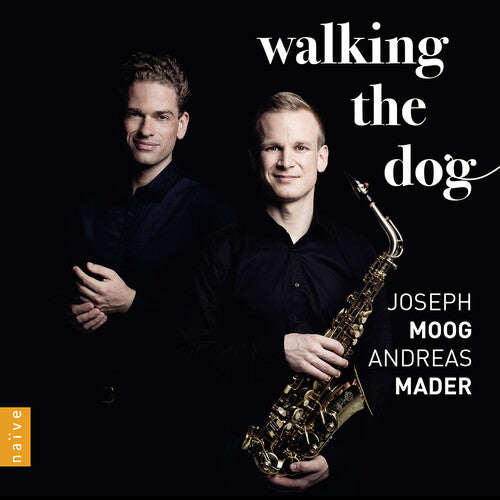
Walking The Dog
A surprising and refreshing journey which explores the confines of the repertoire for saxophone and piano, Walking the Dog unites two formidable virtuosos of the contemporary classical scene, the Austrian Andreas Mader and the German Joseph Moog.
Walking the Dog is a multifaceted work, an authentic melting-pot, a surprising witness to the richness of the international musical scene at the beginning of the 20th century. One would then encounter styles as diverse as the mambo, the merengue, the habanera, or the samba, or even fusions of these seemingly separate genres.
Andreas Mader and Joseph Moog open their recital with Gershwin's Rhapsody in Blue in the inspiring version of the Japanese Jun Nagao. Under their sensitive and incisive fingers, it becomes the spirit of Jazz itself, sparkling and fresh. The Suite of seven pieces adapted from Prokofiev's Romeo and Juliet pursues it in a trenchant and caustic way: the saxophone, part soprano part tenor, displays all its colours.
This programme also pays tribute to France – a well-deserved homage to the country where Adolf Sax fathered such a great family of instruments. Some works are iconic, such as Debussy's Rhapsody (in a new and impressive version by the saxophonist), Milhaud's Scaramouche, some less known, like the Two Pieces by Lili Boulanger, and we have a genuine rarity, the Five Exotic Dances, a brilliant and exciting suite of miniature compositions from 1961 by Jean Francaix. Andreas Mader and Joseph Moog conclude their journey by a return to the origins – New York – by giving us the little Promenade, under the title "Walking the Dog", that Gershwin composed for the film Shall We Dance with Fred Astaire and Ginger Rogers.
This is an absolutely thrilling album which arouses both curiosity and senses, a true revelation from this surprising duo. It is impossible to resist Andreas Mader's voluptuous saxophone interlocked into the golden piano playing of Joseph Moog.
Filigrane - Piano Works by Boulanger, Debussy, Franck, Ravel et al. / Franqué
The internationally acclaimed pianist Adriana von Franqué takes a musical journey through Paris on her GENUIN debut album. The world-concerting musician, known for innovative concert formats and unusual program selections, focuses on the delicate and poetic aspects of the "City of Lights". With a sensitivity for sound and clarity, she plays music by Lili Boulanger, César Franck, Claude Debussy, Maurice Ravel, and Simon Laks from Warsaw. The result is floating, atmospheric, finely crafted music that seems to incorporate the Tuileries Garden, the banks of the Seine, or the intricate lacework of the Eiffel Tower…
Path to the Moon / van der Heijden, Coleman
The performers write: ‘Selecting the repertoire for our album Path to the Moon, we wanted to explore a number of possibilities for binding together a programme. To place different works alongside one another is a wonderful way of bringing out new and unusual qualities in each piece. William T. Horton’s fantastic image The Path to the Moon immediately inspired a flurry of ideas, including works on the subjects of both night and the moon, as well as pieces which invoke the exploratory nature of humankind’s voyage to the moon. Britten wrote his Sonata for Cello and Piano only two years after the first object made by humans had touched the surface of the moon, in 1959. Humans throughout history and from all cultures have been drawn to and taken inspiration from the moon and we have tried to reflect this in our eclectic choice of song repertoire: from Toru Takemitsu to Nina Simone and from Lili Boulanger to Florence Price. As we hope you will hear on this album, Walker’s Cello Sonata rings with echoes of the sound-worlds of blues and jazz and is infused with a beautiful lyricism. We really believe that Walker’s Cello Sonata deserves to become a staple of the chamber music repertoire and are absolutely thrilled to offer you a recording of it in the context of our own exploration of a path to the moon.’
A Room Of Her Own / Neave Trio
In a follow-up to its extremely successful album Her Voice, the Neave Trio on A Room of Her Own once again champions the works of female composers. The only non-French composer on the album is Ethel Smyth whose Piano Trio, one of her earliest works, was composed in 1880. Like many of her works from this era, it shows a clear nod to the Austro-German influences of her studies in Leipzig, particularly of Brahms. Cecile Chaminade was born just a year before Smyth, and her First Piano Trio was written in the same year as Smyth’s. The Paris première was very well received by the critics, and the Trio was published a year later. Germaine Tailleferre’s Piano Trio began life in 1916 – 17 as a work in three movements, and then gathered dust for over sixty years, until a commission from France’s Ministère de la Culture, in 1978, enabled Tailleferre to revive and re-imagine it. By then in her mid-eighties, Tailleferre replaced the original second movement and added a fourth. The Trio is an excellent example of her compositional style – a voice that remained consistent though her long compositional career. Lili Boulanger’s D’un matin de printemps and D’un soir triste are perhaps now better known in their orchestral versions: this recording proves that the two pieces work equally well at either scale. As they are among the last compositions of her short life (she died of chronic illness at twenty-four), we are left to imagine what she might have written had she lived longer.
REVIEW:
These chamber works are still not in the mainstream. The Neave Trio put their case eloquently.
-- The Guardian (U.K.)
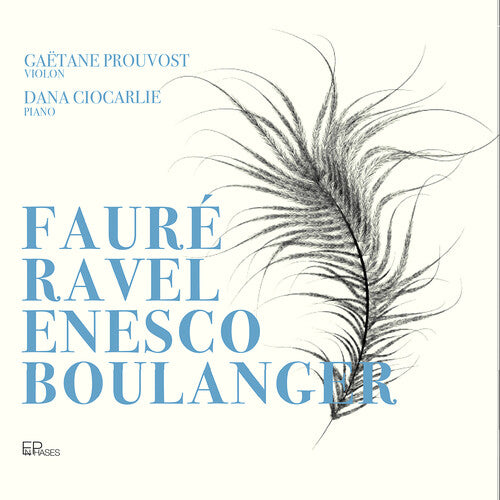
Fauré, Ravel, Enescu & L. Boulanger: Music for Violin & Piano / Prouvost, Ciocarlie
We know Gabriel Fauré the composer well but little the pedagogue. This recording aims to highlight the influence of the composer in France and even in Europe when, in 1896, he became professor at the Paris conservatory taking over from Massenet. The program of this disc wishes to bring together one of the work of his last period and compositions by his illustrious students: Ravel, Lili Boulanger and Enescu.
L. Boulanger & C. Schumann: Two Columbines - Songs / Duo Bols & Bjørkøe
Clara Schumann and Lili Boulanger – Duo Bols & Bjørkøe – The Duo Bols and Bjørkøe have their fifth anniversary in 2022. They met each other at Holmen's Church in Copenhagen where they were both soloists at a Niels W. Gade concert celebration that was broadcast on the Danish National Radio. Since then, the duo has played multiple concerts throughout Denmark. In 2020, the Roskilde Music Association encouraged the duo to perform a program consisting only of female composers, a program that was also recorded for the Danish National Radio. This program became the basis for the repertoire on this CD. The duo most recently performed a concert for Hjørring Music Association with previously unknown songs by the Danish composer Nancy Dalberg, a concert which was also broadcast on the Danish National Radio. The duo is already planning to record these songs in the near future.
Visages / Andrea Cagnin, Patricia Pagny
“Today we have turned the page. A brutal youth proposes a new ideal and employs every means to affirm it. A fierce struggle is taking place around Akela at the Council Rock”. In a markedly polemical tone, the biting critic Émile Vuillermoz used images from The Jungle Book to describe, in February 1921, the emergence of new breakaway voices on the French musical scene. The body of Akela, the authoritative leader preyed upon by jackals in Kipling’s tales, was none other than that of Claude Debussy, who had died just three years earlier. The void created by the disappearance of this master of symbolism was added to the broader crisis emanating from the Great War. For younger composers, particularly those belonging to the Group of Six, the war seemed to have rid older composers’ musical legacy of meaning, for example the likes of Debussy, Gabriel Fauré, and Maurice Ravel. The faces that give this disc its title are some of the protagonists of this explosive, chaotic moment in the early postwar period that so impacted the trajectories of these composers. The works presented here, which range from first recordings of relatively unknown pieces to staples of the concert canon, focus on the viola, an instrument long neglected but rediscovered during the 20th century. On the one hand, composers favored the viola for the intimate atmosphere it evokes. On the other hand, they took advantage of the possibilities offered by an instrument that didn’t bear the heavy legacy of repertoire and virtuosity that weighs down the viola’s better known string family sibling, the violin.” (Alberto Napoli)
The New Epoch - Boulanger, Debussy, Faure & Ravel / Lucia Lin, Miller, Walsh
Artists tend to be liminal figures in any given society, and they thrive in equally liminal times. This is the inevitable thought one encounters when listening to THE NEW EPOCH. Three musicians from the Boston Artists Ensemble rivetingly interpret works by French composers Fauré, Debussy, Ravel, and Lili Boulanger, infusing these pieces with unprecedented freshness and clarity. Each celebrated in their own right, cellist Jonathan Miller, violinist Lucia Lin, and pianist Diane Walsh join forces in every duo setting possible from this assortment of instruments. It’s a marvelous concept; not only does it lend a restful homogeneity to THE NEW EPOCH, it also underlines the commonalities between the composers’ unique voices, and even more impressively, pulls their work from the turbulent early 20th century into our perhaps equally liminal time, and with great success.