Luigi Cherubini
27 products
CHERUBINI: MEDEA (1957)
CHERUBINI DISCOVERIES
Cherubini: Complete string quartets
Cherubini: Sei Sonate per cimbalo
Cherubini: The Cracovian Album
The Italian composer Cherubini came to occupy a dominant position in French musical life. He was employed at the Conservatoire in Paris on its foundation and from 1822 was director of the institution, retaining this position until the year of his death. His works include compositions for the stage, for the church and for political purposes, a requirement of the turbulent revolutionary years. On this release, Andrea Chudak, Yuri Mizobuchi, Irene Schneider, Liv Migdal, Anne Bussewitz, and Yuki Inagawa present a wide selection of works for voice and accompaniment.
Cherubini: Messa Solenne
Cherubini: Faniska
Cherubini: Les deux journées (Sung in German) [Recorded 1950
Cherubini: Der Wasserträger
Cherubini, L.: Requiem No. 1
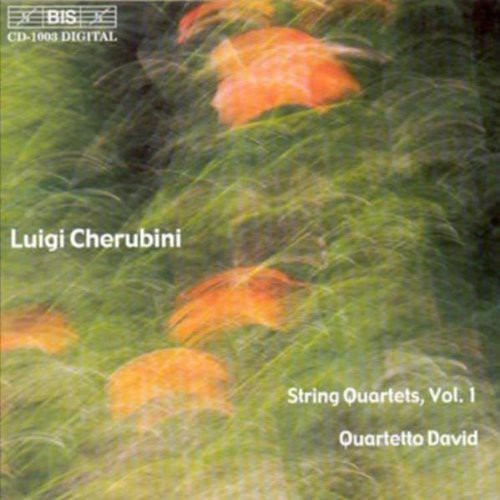
Cherubini: String Quartets Vol 2 / Quartetto David
Fanfare (1-2/00, pp.232-233) - "...The Third Quartet has an unusually bouncy opening movement for a minor-key work, and the playing here is a beath of fresh air....As a Cherubini enthusiast, I welcome the David Quartet recordings wholeheartedly..."
Cherubini: String Quartets Vol 3 / Quartetto David

The Quartetto David's Cherubini cycle concludes with this excellent disc containing the composer's last two quartets. Their playing is up to the very high standards of the series thus far, and features impeccable phrasing, optimal balances, and a truly enlivening sense of rhythm. This last quality not only gives the finales a welcome jolt of energy and minimizes any suspicion of academicism in the often busy contrapuntal writing, but it also carries the listener through both of the long opening movements, in which the "moderato" stipulation might otherwise offer a temptation to allow the music to bog down. In truth, these works are excellently proportioned: Cherubini compensates for the broad beginnings by writing relatively brief, aria-like slow movements and highly developed scherzos and finales. The music thus builds in excitement as each quartet progresses, and the Quartetto David's characterful response ideally captures the increase in tension and brilliance. Recorded sound is outstanding too. This is clearly the finest cycle of Cherubini's quartets currently available. --David Hurwitz, ClassicsToday.com
Cherubini: String Quartets Vol 1 / Quartetto David

Luigi Cherubini was the Napoleon of the music world. Like the "little corporal" (who was, by the way, a great admirer), he was a Frenchified Italian who for years reigned at the helm of the Paris Conservatoire, the most prestigious institution of its kind in Europe, just as Napoleon dominated France. Unlike his less fortunate compatriot, however, Cherubini survived the restoration of the monarchy, living out his 82 years in honor and comfort, becoming one of the first composers to actually write his own Requiem Mass (in our own century, Frank Martin was another). As a composer, his reputation is kept alive solely by the opera Medea, one of Maria Callas' major vehicles, and in the instrumental realm, by his six late string quartets. Fastidiously crafted and supremely musical, these quartets recall Haydn, Beethoven, and Mozart in their superior thematic workmanship and classical sense of balance. They've ranked among the best-kept secrets of quartet lovers for years, and only the comparative dearth of recordings has kept them from a wider public. The complete set appeared on Deutsche Grammophon for about 15 minutes several years ago--if you blinked you probably missed it--so kudos to BIS for not only undertaking this worthy project, but also for the determination to keep it in print! The Quartetto David sounds like the best group to come out of Italy since the old Quartetto Italiano, and they do the music proud, playing with sensitivity, taste, and a real singing tone. --David Hurwitz, ClassicsToday.com
Viotti: Violin Concerto No. 22; Cherubini: Symphony In D
Viotti: Musiche per arpa
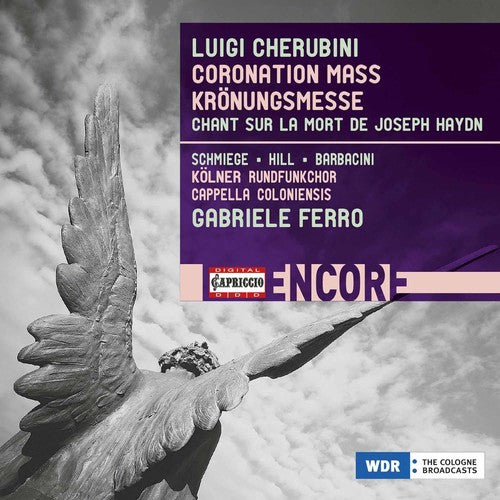
Cherubini: Coronation Mass & Chant sur la mort de Haydn / Ferro, Cologne Radio Choir
Capriccio Encore is a series of re-releases of the most famous recordings from Capriccio’s back catalogue, fully re-mastered and competitively priced. The legendary recordings of artists such as Sandor Végh, Ton Koopman, Sir Neville Marriner and the Vienna Boys’ Choir also contain repertoire highlights that have a particularly special appeal, from the baroque to the present day. This Encore release's highlight is Luigi Cherubini's Coronation Mass Krönungsmesse, performed by Kölner Rundfunkchor and Capella Coloniensis.
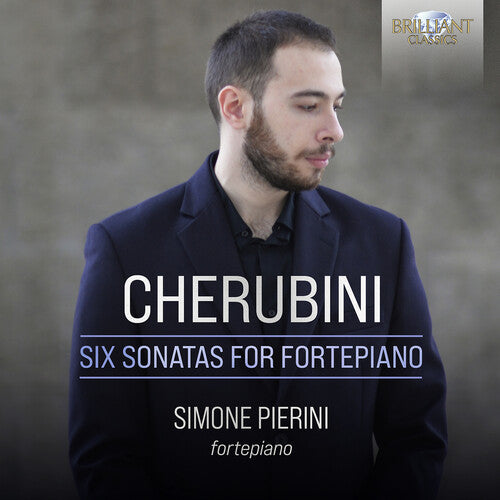
Cherubini: Six Sonatas for Fortepiano / Pierini
In the second half of 18th century, keyboard music in Tuscany was flourishing. Many composers wrote music for both the fortepiano and the harpsichord: the former, which was invented just before the turn of the 18th century in Florence by harpsichord maker Bartolomeo Cristofori (1655–1731), rose to an incredible degree of popularity in the last decades of the century at the expense of the latter, which experienced the last moments of its glorious history. At any rate, it was by no means uncommon that composers published music intended to be played on either instrument, as almost all keyboard pieces written in Tuscany during the 1780s were explicitly addressed per il clavicembalo o fortepiano (for the harpsichord or piano).
The Florence-born composer Luigi Cherubini (1760–1842) published his Sei Sonate per il Cimbalo around 1780; they are currently believed to be the first published work by the composer, although he had written operas and religious music prior to the publication of this work. The style of these sonatas is not too far from the musical fashion of the time: they all consist of two movements, the first in sonata-form, the second a rondò where the second theme is typically characterized by highly virtuosic writing. All six sonatas follow this strict formal code, however, Cherubini manages to create a surprising variety in the themes and their development. Each sonata could, in fact, depict a different stock character from the commedia dell’Arte, with their strict formal codification employed in a theatrical way thanks to the perfect balance of ideas set out each time. Even the bass seems to be adjusted depending on the mood of the theme – Cherubini employs Murky bass, Alberti bass and even counterpoint. The harmonic closeness between the key signatures of each sonata gives further cohesion to the whole set.
After careful consideration, Simone El Oufir Pierini found the fortepiano to be the best instrument to play these works on, although in the printed edition it was explicitly said that they should be played on the harpsichord. The piano, a new instrument, was highly favoured by the new Tuscan court, and the potential of this new instrument was sought out with keen interest by composers. The employment of the fortepiano for these sonatas hopefully sheds new light on these pieces, written by one of the most influential composers of the time.
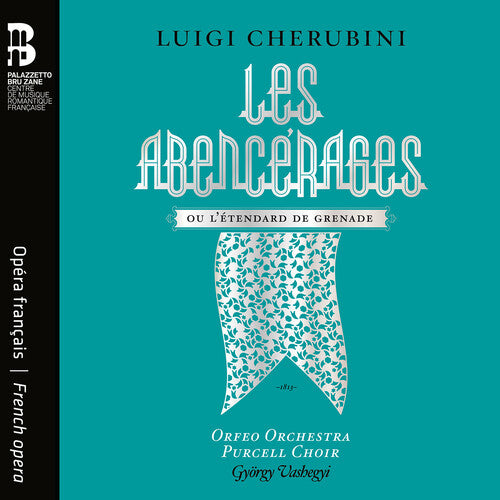
Cherubini: Les Abencérages or The Standard of Grenada / Vashegyi, Orfeo Orchestra
Cherubini’s Les Abencérages, premiered in 1813, heralds the spectacle and extravagance of Romantic grand opera. From the Alhambra gardens to the battlefield, the action skillfully intertwines political conspiracies with a love story. Underpinned by the energy and timbres of period instruments, this recording demonstrates the work’s modernity and its musical qualities. Anaïs Constans valiantly tackles the demanding role of Noraïme, while Edgaras Montvidas displays his lyric tenor voice in a series of sublime airs whose beauty was already hinted at by none other than Roberto Alagna in a recital disc released in 2003. Around this couple, a plethoric cast of soloists (Dolié, Sargsyan, Williams, Martin, Lavoie, etc.) achieves the same high standards of French diction and style. The Hungarian conductor György Vashegyi, flanked by the Purcell Choir and Orfeo Orchestra, reveals here another key milestone of French Romantic opera.
REVIEWS:
Unstaged in Paris for over two centuries Les Abencérages, a kind of ‘missing link’ in the history of French opera, has been disinterred by Bru Zane. The overture with its two warring themes – romantic passion versus battlefield chivalry – announce a changed sensibility where the political is properly personal.
György Vashegyi and the Orfeo Orchestra find Beethoven – drums and trumpets and driving rhythms – in Cherubini’s score, and hints at the start of Act III of the Romanticism to come with Mendelssohn. While Étienne de Jouy’s libretto is set in the exotic Alhambra of late-15th century Moorish Grenada, its spectacle and masterly use of the chorus suggests the coming French Grand Opéra. Its story presents two warring factions within the last Spanish caliphate ready to be reconciled through the warrior Almazor’s marriage to Princess Norïme. That is until the villainous Vizier Alémar starts to plot!
Cherubini’s vocal line is free of Italian decorative thrills. Anaïs Constans handles Norïme’s high tessitura with grace, and Edgaras Montvidas’s Almanzor is a worthy heir to Louis Nourrit, the tenor who created the role in 1813. His farewell when exiled from Grenada having ‘lost’ the kingdom’s sacred standard on the battlefield is properly affecting.
Yet it’s the Purcell Choir who steal the vocal honours, with magnificent singing by the women in Act I as they prepare for the wedding, and the men rattling their vocal sabres handsomely as the plot thickens in Act II. For all that, the musical history is perhaps more striking than the opera itself.
-- BBC Music Magazine
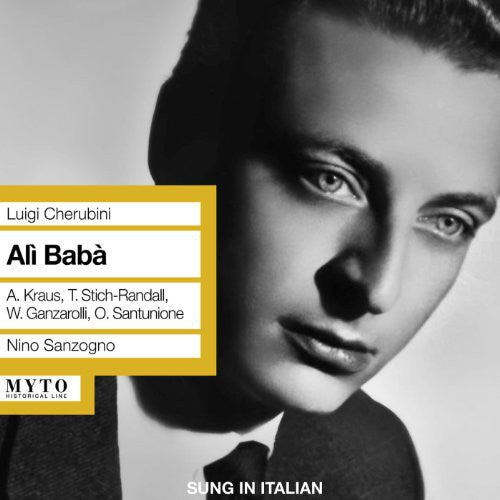
Luigi Cherubini: Ali Baba
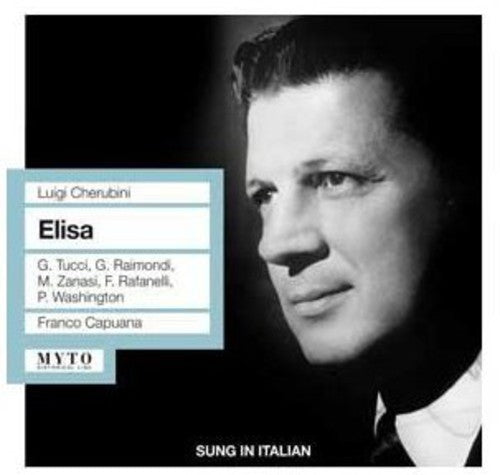
Elisa
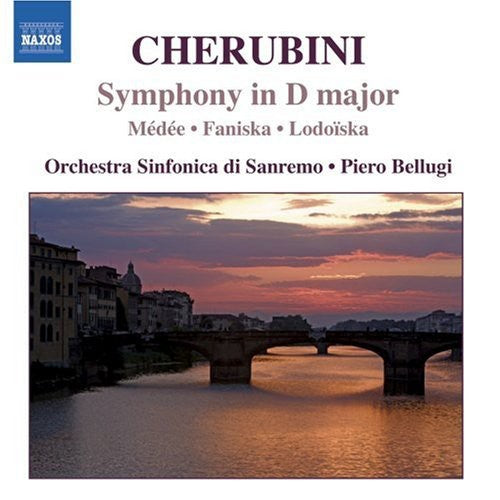
Cherubini: Symphony In D Major, Etc / Piero Bellugi, Et Al
CHERUBINI Symphony in D. Overtures: Médée; Faniska; Lodoïska • Piero Bellugi, cond; Sanremo SO • NAXOS 8.557908 (56:07)
The orchestra of San Remo, a small town just east of Monaco, is one of Italy’s finest: brilliant, if not subtle; and displaying a varied palette. This performance of Cherubini’s only symphony is big and potent. In a work we normally hear as a last remnant of the Classical era, Bellugi points ahead toward the Romantic. Although one misses the tightly disciplined readings of Toscanini, Cantelli, and—best of all—Donato Renzetti (currently on Arts Music 47102, see Fanfare 20:2), the grand style and delicious colors of this performance make it a strong competitor. Naxos’s recorded sound is fresh and up close; strings are spread widely across the soundstage, woodwind solos are spotlighted, and a highly reverberant ambience clouds the tutti at or above f . Nevertheless, it is hard not to love this recording, which frees Cherubini from his dry-as-dust reputation, making him sound much like the free-spirited Arriaga.
Bellugi’s romantic style suits the opera overtures equally well. Although labeled a comedy because it has a happy ending, the fiery Lodoïska is no less dramatic than the more famous Médée . All three of these operas were produced in Vienna from 1802 to 1806, and they had great influence on Fidelio. Lodoïska and Faniska are both “rescue operas,” the latter sharing its librettist with Beethoven’s masterpiece. Along with the C-Minor Requiem, these were the works that made Beethoven (in a moment of false modesty?) name Cherubini the greatest living composer. In two tightly packed pages, Keith Anderson’s program notes explore corners of Cherubini’s life which I had not previously encountered. He led a charmed life in dangerous times, obtaining and losing the favors of reigning powers from royalty to Napoleon, slipping away to the countryside when the politics got rough.
All in all, a winning disc.
FANFARE: James H. North
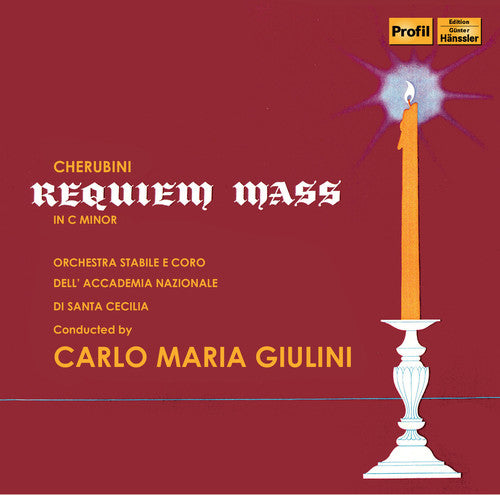
Cherubini: Requiem Mass / Giulini
In the post-war gramophone record era, the great conductor Arturo Toscanini was the first to record the work on February 19, 1950. Carlo Maria Giulini followed him only two years later and conducted Cherubini's Requiem in C Minor in his first studio recording. It is that which is presented on CD here for the first time.
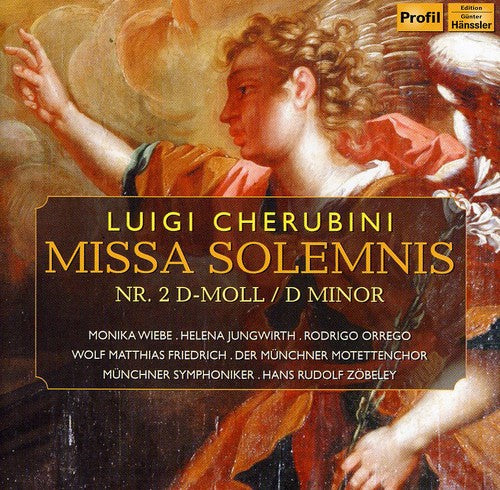
Cherubini: Missa Solemnis / Munich Motet Choir
Luigi Cherubini (1760–1842) spanned the era of the first Vienna school, composing operas when young and Masses when old. He was to some extent a one-hit wonder: His 1816 Requiem in C Minor is a masterpiece, one that Beethoven asked to have played at his own funeral. Medée was popularized by Maria Callas (in an Italian version, as Medea ) in the 20th century, and it hangs around for that association, but Cherubini’s finest opera is Les Deux Journées , a “rescue drama” so filled with gorgeous music that Beethoven stole much of it for Fidelio . There are many other fine Cherubini works (none more so than this Mass), but none of them are individual enough to have carved a place in the repertory. On the surface, he seems a shadow hovering through the period, outshone by Haydn, Mozart, and Beethoven. So it was, but his music does have an easily recognizable, highly personal characteristic, a hint of modality seldom found among his three great peers. Many performances play down that character, choosing to emphasize the similarities with Beethoven; this is unfortunate, as it often produces second-rate Beethoven (which we don’t need) rather than first-rate Cherubini.
All of which leads to Riccardo Muti’s lifelong devotion to the composer. He has recorded one opera ( Lodoïska ), five Masses (one twice, on CD and DVD), and both Requiems over a span of three decades. For many of them, there is no alternative recording; for others, the competition comes mostly from semiprofessional groups—rightly called amateurs, for their love of the music. Muti’s way has undeniable attractions: top orchestras, soloists, and choruses; fine EMI recorded sound, with a master hand at the tiller. None of them can be criticized, but they tend to embody the Cherubini-as-Beethoven syndrome, so alternate views are always welcome. In Fanfare 25:4, I praised Muti’s recording of this D-Minor Mass as a shelf-clearer (my highest compliment), claiming that three earlier recordings, Newell Jenkins on Vanguard, this 1992 one (then on a Calig disc), and that by Hemuth Rilling on Hännsler Classics, “demonstrated the strengths of the work, but each had minor failings of its own and left this listener unsatisified.”
I don’t remember my exact objections to the Calig disc, but this time around I like the performance very much. It has a warm joy that contrasts with Muti’s cool intensity. Both choruses are large ones; Hans Rudolf Zöbeley’s choristers sing their hearts out; so do Muti’s when the mood strikes them (or him). Soloists are seldom important in Cherubini Masses; Zöbeley’s are recorded up close and are strong enough to make the most of that; Muti’s are more distant and make less of an impression. Both are all-Munich productions; neither the Munich Symphony nor the Bavarian Radio Orchestra plays particularly well (a surprise in any Muti recording), and the recorded sound is a bit bloated and unclear on both CDs. Both have the Latin text; Muti’s EMI disc (5 57166 2; there has been a reissue I haven’t seen) has an English translation as well. Despite similar tempos, the Zöbeley runs 13 minutes less than the Muti, three minutes of that in each of three sections of the Gloria. There might be times when I would prefer a 66-minute Cherubini Mass to a 79-minute one, but PC requires a nod to Muti. You should find this a most rewarding Mass no matter which recording you hear; I can’t offer a compelling reason to buy a second one or to switch allegiances.
FANFARE: James H. North
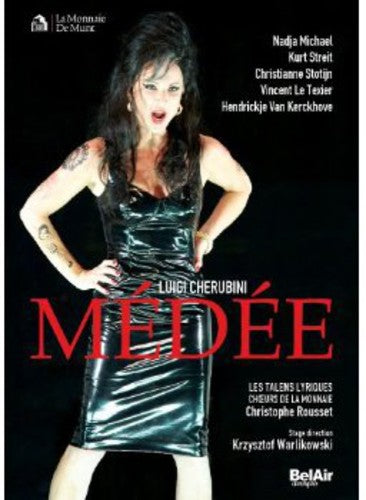
Cherubini: Medee / Rousset, Michael, Streit, Stotijn, Le Texier
Three years after the creation of Médée, Krzysztof Warlikowski and Christophe Rousset were together again at La Monnaie for the revival of one memorable production whose staging reinforces the violence, tension and cruelty of this tragedy.
Whilst this work by Cherubini is considered part of the 'opéra-comique' genre, it is only due to the presence of spoken dialogue, which has been modernised here in the Polish stage director's interpretation.
Written in 1797, Cherubini's faithful version of Euripides' ancient tragedy is one of the most savage and powerful works of the opera repertoire, relating the cruel vengeance of a wounded woman for whom infanticide seems to be the only solution to her humiliation in love. As a continuation of Gluck's music, Cherubini's work is of boundless emotion, at once a refined, terrifying and desperate portent of a tragic outcome.
The cast : Nadja Michael as Médée, Kurt Streit as Jason, Christianne Stotijn as Néris Médée’s slave, Vincent Le Texier as King Créon and Hendrickje Van Kerckhove as Dircé Créon’s daughter. Christophe Rousset is conducted Les Talens Lyriques and the Chœurs de la Monnaie.
Director: Stéphane Metge
Length: 138 min - Image: Color, 16/9, NTSC
Audio: PCM Stereo, DTS HD Master Audio 5.1
Subtitles: French / English / German / Dutch
No. of Discs: 2
Cherubini: Medee / Rousset, Michael, Streit, Stotijn, Le Texier [blu-ray]
Also available on standard DVD
Three years after the creation of Médée, Krzysztof Warlikowski and Christophe Rousset were together again at La Monnaie for the revival of one memorable production whose staging reinforces the violence, tension and cruelty of this tragedy.
Whilst this work by Cherubini is considered part of the 'opéra-comique' genre, it is only due to the presence of spoken dialogue, which has been modernised here in the Polish stage director's interpretation.
Written in 1797, Cherubini's faithful version of Euripides' ancient tragedy is one of the most savage and powerful works of the opera repertoire, relating the cruel vengeance of a wounded woman for whom infanticide seems to be the only solution to her humiliation in love. As a continuation of Gluck's music, Cherubini's work is of boundless emotion, at once a refined, terrifying and desperate portent of a tragic outcome.
The cast : Nadja Michael as Médée, Kurt Streit as Jason, Christianne Stotijn as Néris Médée’s slave, Vincent Le Texier as King Créon and Hendrickje Van Kerckhove as Dircé Créon’s daughter. Christophe Rousset is conducted Les Talens Lyriques and the Chœurs de la Monnaie.
Director: Stéphane Metge
Length: 138 min - Image: Color, 16/9, NTSC
Audio: PCM Stereo, Dolby Digital 5.1
Subtitles: French / English / German / Dutch