

Conductor: Christian Thielemann
43 products
-
![]()

-
![]()

-
 On Sale
Bruckner: 11 Symphonies / Thielemann, Vienna Philharmonic
CD$79.98$59.99Sony Masterworks
Oct 13, 202319658760172 -
 On Sale
Bruckner: Symphony No. 5 / Thielemann, Vienna Philharmonic
CD$11.98$5.99Sony Masterworks
Sep 02, 202219658706142 -
![]()

-
![]()

-
![]()

-
![]()

-
![]()

-
 On Sale
Wagner: The Bayreuth Edition
Available as DVD or Blu-Ray or CD$99.99$74.99Opus Arte
Sep 10, 2021OA CD9048BD -
![]()

-
![]()

-
![]()

-
![]()

-
 On Sale
Bruckner 11 - Symphonies nos. 1 & 7 / Thielemann, Vienna Philharmonic
Available as Blu-Ray or DVD$39.99$19.98UNITEL Edition
Aug 26, 2022807004 -
![]()

-
![]()

-
![]()

-
![]()

-
 On Sale
Bruckner 11 - Symphonies nos. 5, 0 & 00 / Thielemann, Wiener Philharmoniker
Available as Blu-Ray or DVD$39.99$19.98UNITEL Edition
Jul 22, 2022806804 -
![]()

-
![]()

-
![]()

-
![]()

-
 On Sale
Bruckner 11 - Symphonies nos. 2 & 8 / Thielemann, Wiener Philharmoniker
Available as Blu-Ray or DVD$40.99$20.48UNITEL Edition
Nov 18, 2022807204 -
![]()

-
![]()

-
![Bruckner: Symphonies Nos. 1-9 / Theielemann, Staatskapelle Dresden [Blu-ray]](//arkivmusic.com/cdn/shop/files/3945399-2684278.jpg?v=1749389791&width=800)
Bruckner: Symphonies Nos. 1-9 / Theielemann, Staatskapelle Dresden [Blu-ray]
$118.99Blu-RayC Major Entertainment
Apr 16, 2021757504 -
![]()

-
![]()

-
![]()

-
![]()

-
 On Sale
Bruckner 11: Symphonies nos. 4 & 9 / Thielemann, Wiener Philharmoniker
Available as DVD or Blu-Ray$40.99$20.48UNITEL Edition
Apr 28, 2023807604 -
![]()

-
![]()

-
 On Sale
Bruckner: Symphony No. 3
CD$11.98$8.99Sony Masterworks
Apr 23, 202119439861382 -
![]()

-
![]()

-

Bruckner 11 - Complete Symphonies, nos. 00-9 / Thielemann, Wiener Philharmoniker
$102.99Blu-RayUNITEL Edition
Sep 22, 2023809504 -
![]()

-
![]()

-
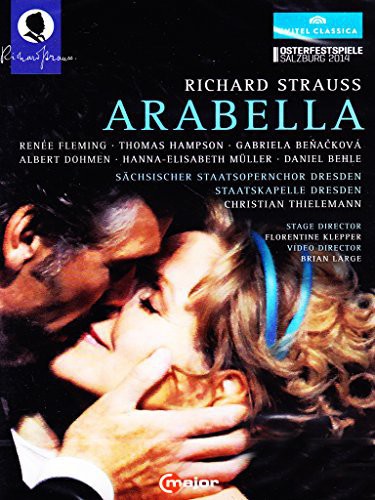 On Sale
Strauss: Arabella / Fleming, Hampson, Thielemann
DVD$42.99$21.48C Major Entertainment
Sep 30, 2014717208 -
![]()

-
![]()

-
 On Sale
Bruckner: Symphony No. 8 / Thielemann, Vienna Philharmonic
CD$11.98$8.99Sony Masterworks
Jan 15, 202119439786582 -
![]()

-
![]()

-
 On Sale
VERDI: Otello
DVD$35.99$17.99C Major Entertainment
Apr 28, 2017740008 -
![]()

-
![]()

-
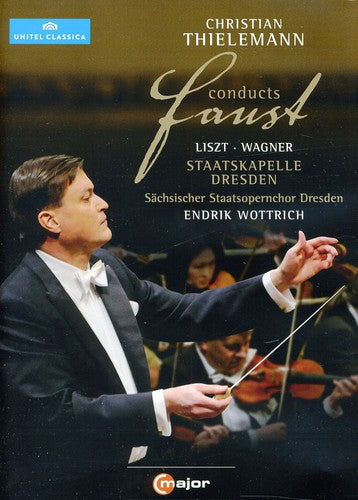 On Sale
Thielemann Conducts Faust - Liszt, Wagner
DVD$26.99$13.49C Major Entertainment
Oct 25, 2011707708 -
![]()

-
![]()

-
 On Sale
Bruckner: Symphony No 7; Wolf: Lieder / Fleming, Thielemann, Staatskapelle Dresden
DVD$40.99$28.99Opus Arte
Jul 30, 2013OA 1115D -
![]()

-
![]()

-
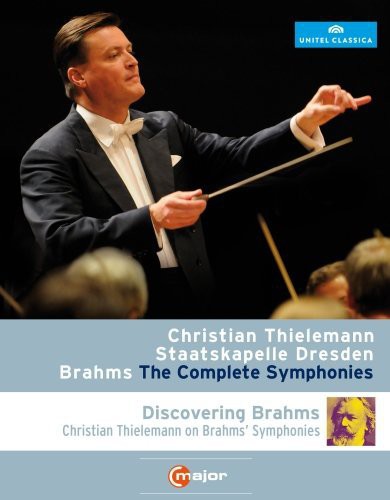 On Sale
Brahms: Complete Symphonies & Discovering Brahms / Thielemann
DVD$66.99$50.99C Major Entertainment
Jan 28, 2014715108 -
![]()

-
![]()

-
![]()

-
![Wagner: Wesendonck Lieder - Bruckner: Symphony No. 4 / Garanca, Thielemann, Wiener Philharmoniker [DVD]](//arkivmusic.com/cdn/shop/files/805108.20210721022027.jpg?v=1751115421&width=800) On Sale
On SaleWagner: Wesendonck Lieder - Bruckner: Symphony No. 4 / Garanca, Thielemann, Wiener Philharmoniker [DVD]
Available as DVD or Blu-Ray$32.99$16.49UNITEL Edition
Sep 03, 2021805204 -
![]()

-
![]()

-
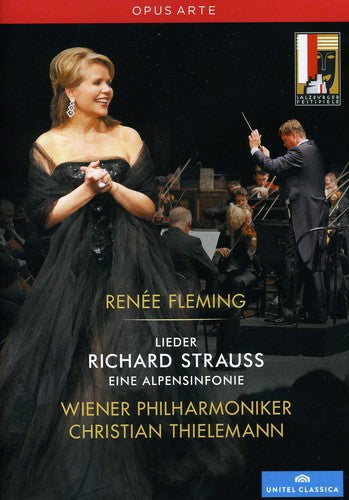 On Sale
Strauss: Lieder, Alpensinfonie / Fleming, Thielemann
DVD$21.99$15.99Opus Arte
Jun 26, 2012OA 1069D -
![]()

-
![]()

-
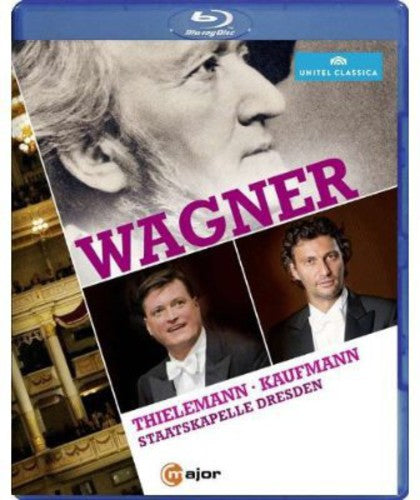
Wagner Gala / Kaufmann, Thielemann, Dresden
$32.99DVDC Major Entertainment
Jan 28, 2014714908 -
![]()

-
![]()

-
![]()

-
 On Sale
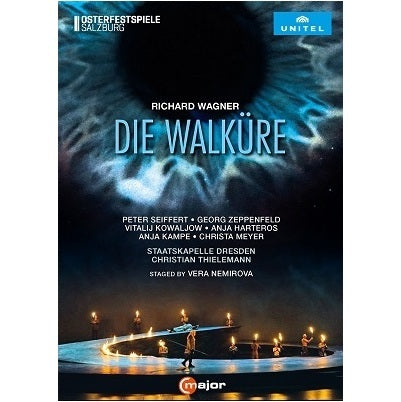
Wagner: Die Walküre / Thielemann, Staatskapelle Dresden
Available as Blu-Ray or DVD$45.99$25.98C Major Entertainment
Nov 17, 2017742808 -
![]()

-
![]()

-

Beethoven: Missa Solemnis / Thielemann, Stoyanova, Garanca, Schade, Selig
$32.99DVDC Major Entertainment
Mar 29, 2011705408 -
![]()

-
![]()

-

Wintersturme - Concert with Excerpts from Wagner`s "The Ring of the Nibelung"
$32.99CDProfil
Jul 01, 2022PH22038 -
![]()

-
![]()

-
 On Sale
Wagner: Der fliegende Hollander / Thielemann, Bayreuth Festival
CD$34.99$26.99Opus Arte
Jul 27, 2018OA CD9043D -

Weber: Der Freischutz / Erod, Sachsischer Staatsopernchor
$45.99DVDC Major Entertainment
Nov 13, 2015733108 -
![]()

-
![]()

-
![Thielemann Conducts Faust - Liszt, Wagner [blu-ray]](//arkivmusic.com/cdn/shop/files/1900762.jpg?v=1749393317&width=800) On Sale
On SaleThielemann Conducts Faust - Liszt, Wagner [blu-ray]
Blu-Ray$66.99$50.99C Major Entertainment
Oct 25, 2011707804 -
![]()

-
![]()

-
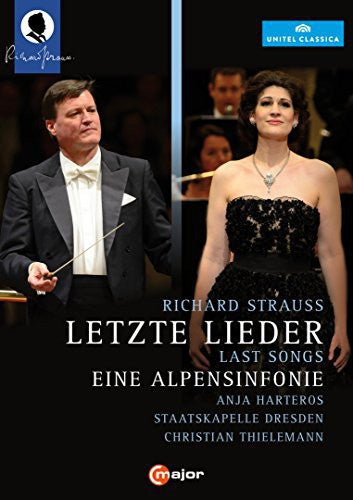
Strauss: Four Last Songs, Alpine Symphony; Rihm / Harteros, Thiielemann
$32.99DVDC Major Entertainment
Jan 27, 2015726408 -
![]()

-
![]()

-
 On Sale
Strauss: Elektra / Watson, Henschel, Thielemann
DVD$34.99$26.99Opus Arte
Jan 25, 2011OA 1046D -
![]()

-
![]()

-
![Richard Strauss Gala - Thielemann, Goerke, Harteros, Nylund [2 DVDs]](//arkivmusic.com/cdn/shop/files/2848703.jpg?v=1749391590&width=800) On Sale
On SaleRichard Strauss Gala - Thielemann, Goerke, Harteros, Nylund [2 DVDs]
DVD$40.99$20.48C Major Entertainment
Mar 31, 2015728908 -
![Renee Fleming in Concert [Blu-ray]](//arkivmusic.com/cdn/shop/files/3763198.jpg?v=1749390839&width=800)
Renee Fleming in Concert [Blu-ray]
$52.99Blu-RayOpus Arte
Jan 26, 2018OA BD7235BD -
 On Sale
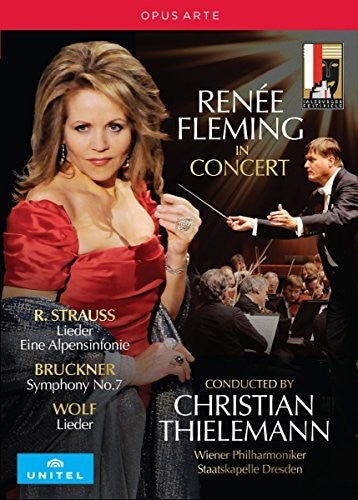
Renee Fleming in Concert
DVD$39.99$29.99Opus Arte
Jan 26, 2018OA 1258BD


Bruckner: 11 Symphonies / Thielemann, Vienna Philharmonic
Sony Classical releases the full cycle of Bruckner’s symphonies recorded by the Vienna Philharmonic under Christian Thielemann on 11 CDs. The box set, featuring the composer’s nine numbered symphonies, his ‘Study Symphony’, his ‘Nullified’ symphony, and a 172-page booklet. This release constitutes the first complete recording of the Austrian composer’s symphonies from the orchestra under a single conductor. Christian Thielemann enjoys a strong rapport with the Vienna Philharmonic and has established himself as one of his generation’s most esteemed interpreters of the Romantic Austro-German repertoire.
Past praise for previously released CDs included in this set:
Bruckner: Symphony No. 4 / Thielemann, Vienna Philharmonic
This new Bruckner Fourth deserves a strong recommendation. It is a reading of undeniable power and presence.
-- Fanfare
Bruckner: Symphony No. 8 / Thielemann, Vienna Ohilharmonic
Overall, there’s an aliveness to the music, inspired by the concert setting, which adds another reason this Bruckner Eighth is so satisfying. If you want to hear Thielemann at his best, conducting a stupendous orchestra, that’s precisely what we have here.
-- Fanfare
Bruckner: Symphony No. 9 . Thielemann, Vienna Philharmonic
Thielemann's interpretation has intimacies hard to find in other versions, and a vulnerability movingly communicated in the Vienna Philharmonic’s super-empathetic playing.
-- BBC Magazine


Bruckner: Symphony No. 5 / Thielemann, Vienna Philharmonic
Sony presents the next installment of Christian Thielemann’s complete cycle of Anton Bruckner’s symphonies with the Vienna Philharmonic - the orchestra’s first Bruckner cycle under a single conductor.
The Vienna Philharmonic premiered four of Anton Bruckner’s nine symphonies, including No. 4 in 1881 and has enjoyed a unique relationship with the Austrian composer’s music since 1873. Christian Thielemann, Principal Conductor of the Staatskapelle Dresden, Artistic Director of the Salzburg Easter Festival since 2013 and Music Director of the Bayreuth Festival, is his generation’s most esteemed interpreter of the Romantic Austro-German repertoire. In the midst of a mutually stimulating relationship with the Vienna Philharmonic, he conducted his first New Year’s Concert with the orchestra in 2019.
REVIEW:
From expectant pizzicatos and hallowed strings to the blazing brass at the finish, for eighty-two minutes Christian Thielemann and the Vienna Philharmonic engage and illuminate us with this majestic, sonorous and deeply expressive account of the mighty Fifth (Nowak’s edition), captured during March last year in the Golden Hall of the Musikverein, resplendently and with focus within the generous acoustic.
It’s an eloquent and powerful performance, detailed, dynamic, as capable of cathedral hush and awe as being sonically magnificent in Heaven-reaching fortissimos, the latter avoiding coarseness and brass-heavy balances. Drama, too, in the way Thielemann adjusts tempos without losing the movements’ threads and invests such as a quiet bass line with significance.
-- Colin's Column


Wagner: The Bayreuth Edition
This epic collection brings together all of Opus Arte's recordings from the Bayreuth Festival. Included are many of Wagner's much-admired operas which show how the mastery of composer, conductor, and performer can combine to create a true musical excellence. Wagner's epic four-opera cycle, Der Ring des Nibelungen, is a work of extraordinary scale and is given an interpretation that is both thrilling and sensitive by the conductor Christian Thielemann and a cast of renowned Wagner interpreters. Thielemann also presents an incredible account of Der fliegende Holländerin a recording which secured his place as the world's greatest Wagner conductor. Klaus Florian Vogt is staggering in the title role of Lohengrin, with Andris Nelsons brings out the best in the festival chorus and orchestra. This recording of Tannhäuser, Wagner’s tale of the struggle between spiritual and profane love, and of redemption through love, was described by Opera Journal as 'outstanding’, whilst Die Meistersinger von Nürnberg, which tells a humorous tale about artistically inclined craftsmen, was described as ‘on an entirely new Wagnerian scale...” (The Washington Post). The set is completed by the critically acclaimed recording of Tristan und Isolde starring the leading Wagner exponents Robert Dean Smith and Iréne Theorin in the title roles.


Bruckner 11 - Symphonies nos. 1 & 7 / Thielemann, Vienna Philharmonic
This is one volume in a multi-volume set. Find the complete box set here.
On the occasion of the Bruckner bicentenary, the Wiener Philharmoniker recorded its first ever complete Bruckner cycle under the baton of Christian Thielemann. In addition to the well-known canon of nine symphonies, the two earliest Bruckner symphonies in F minor and D minor, which are a world premiere on DVD and Blu-ray, were also recorded for the first time in the orchestra's history. This uniquely complete edition from the Musikverein and Salzburg Festival, featuring 11 symphonies, also includes extensive conversations with Christian Thielemann about each symphony and insights into his rehearsal work. “With the First, they [...] provided an hour of happiness. [...] An overwhelming event, entirely of philharmonic sound”. (Kronen Zeitung) “Thielemann conducted Bruckner's Seventh as a human drama in philharmonic splendour”. (Die Presse)


Bruckner 11 - Symphonies nos. 5, 0 & 00 / Thielemann, Wiener Philharmoniker
This is one volume in a multi-volume set. Find the complete box set here.
On the occasion of the Bruckner bicentenary, the Wiener Philharmoniker recorded its first ever complete Bruckner cycle under the baton of Christian Thielemann. In addition to the well-known canon of nine symphonies, the two earliest Bruckner symphonies in F minor and D minor, which are a world premiere on DVD and Blu-ray, were also recorded for the first time in the orchestra's history. This uniquely complete edition from the Musikverein and Salzburg Festival, featuring 11 symphonies, also includes extensive conversations with Christian Thielemann about each symphony and insights into his rehearsal work.
“Two symphonies that document Bruckner's path to mastery quite excellently. (…) Conclusion: The next interesting Bruckner milestone in the cycle.” (Kurier) / “Masterly, kapellmeisterlike, dreamlike.” (Der Standard) / Beautiful to weep for and artistically accomplished. [...] The interpretation of the Fifth may be considered a milestone. The way the musicians realized this work was simply grand." (Kurier)


Bruckner 11 - Symphonies nos. 2 & 8 / Thielemann, Wiener Philharmoniker
This is one volume in a multi-volume set. Find the complete box set here.
On the occasion of the Bruckner bicentenary, the Wiener Philharmoniker recorded its first ever complete Bruckner cycle under the baton of Christian Thielemann. In addition to the well-known canon of nine symphonies, the two earliest Bruckner symphonies in F minor and D minor, which are a world premiere on DVD and Blu-ray, were also recorded for the first time in the orchestra's history. This uniquely complete edition from the Musikverein and Salzburg Festival, featuring 11 symphonies, also includes extensive conversations with Christian Thielemann about each symphony and insights into his rehearsal work. “Orchestra and conductor impressed with Anton Bruckner's Second.” (Der Standard on Bruckner 2) “Only the highest musical perfection sounds like this.” (Die Presse)


Bruckner: Symphonies Nos. 1-9 / Theielemann, Staatskapelle Dresden [Blu-ray]
This release contains the international acclaimed Bruckner cycle of Christian Thielemann, a “magician of the Bruckner sound”(Kurier on Symphony No. 5) and the Staatskapelle Dresden, whose own Bruckner tradition dates back more than a century. Outstanding reviews emphasize the exceptionally high artistic quality of the concerts: “Once again Thielemann proved to be the unrestricted ruler on his ancestral territory, German Romantic repertoire” (Hamburger Abendblatt on Symphony No. 2). Christian Thielemann “displays the full musical maelstrom of Bruckner’s Symphony No. 3” (Münchner Merkur). “Another Bruckner triumph for Dresden” (Sächsische Zeitung on Symphony No. 6). “… one would have to be hard-hearted not to be touched by this heartfelt music” (Der Tagesspiegel on Symphony No. 8).
![Bruckner: Symphonies Nos. 1-9 / Theielemann, Staatskapelle Dresden [Blu-ray]](http://arkivmusic.com/cdn/shop/files/3945399-2684278.jpg?v=1749389791&width=800)


Bruckner 11: Symphonies nos. 4 & 9 / Thielemann, Wiener Philharmoniker
This is one volume in a multi-volume set. Find the complete box set here.
On the occasion of the Bruckner bicentenary, the Wiener Philharmoniker recorded its first ever complete Bruckner cycle under the baton of Christian Thielemann. In addition to the well-known canon of nine symphonies, the two earliest Bruckner symphonies in F minor and D minor, which are a world premiere on DVD and Blu-ray, were also recorded for the first time in the orchestra's history. This uniquely complete edition from the Musikverein and Salzburg Festival, featuring 11symphonies, also includes extensive conversations with Christian Thielemann about each symphony and insights into his rehearsal work.


Bruckner: Symphony No. 3
Sony Classical releases the second installment of Christian Thielemann’s complete cycle of Anton Bruckner’s symphonies with the Vienna Philharmonic – the orchestra’s first Bruckner cycle under a single conductor.
Christian Thielemann, Principal Conductor of the Staatskapelle Dresden, Artistic Director of the Salzburg Easter Festival since 2013 and Music Director of the Bayreuth Festival, is his generation’s most esteemed interpreter of the Romantic Austro-German repertoire. In the midst of a mutually stimulating relationship with the Vienna Philharmonic, he conducted his first New Year’s Concert with the orchestra in 2019.
Thielemann’s interpretations of Bruckner’s music are rooted on deep expertise and sympathy. Few conductors can match the solemnity and patience he finds in composer’s symphonies, or his ability to draw on the unparalleled beauty of the orchestra’s sound and the special acoustic of its home in Vienna, the Musikverein.
Bruckner conceived the Symphony No 3 as a tribute to his musical guiding light, Richard Wagner. The result is a monolithic memorial that manages to convey deep intimacy – the first symphony in which Bruckner properly revealed his own musical voice. The work heralded a sense of breadth and awe new to symphonic music.
REVIEW:
The Viennese players give Thielemann everything he commands, elegantly shaping and sculpting the bigger structural pillars and bringing crafted nuance and color to the shorter phrases. The sound of the Vienna Philharmonic is nothing less than beautiful, most noticeable in the more complex textures.
– The Classic Review


Bruckner 11 - Complete Symphonies, nos. 00-9 / Thielemann, Wiener Philharmoniker
On the occasion of the Bruckner bicentenary; the Vienna Philharmonic recorded its first ever complete Bruckner cycle with a single conductor; Christian Thielemann. In addition to the well-known canon of nine symphonies; the two earliest Bruckner symphonies in F minor and D minor were also recorded for the first time in the orchestra’s history. This uniquely complete edition from the Musikverein and Salzburg Festival; featuring 11 symphonies also includes extensive conversations with Christian Thielemann about each symphony and insights into his rehearsal work.
“In this audiovisual edition Bruckner 11; the Vienna Philharmonic pays tribute to the symphonic works of the great Austrian composer Anton Bruckner; whose 200th birthday anniversary will be celebrated in 2024. The Vienna Philharmonic; perhaps more than any other ensemble; can look back on a shared history with Bruckner that was shaped by the composer’s great esteem for the orchestra and which was to have a decisive influence on Austrian musical culture. The premiere of the Symphony No. 2; for example; which Bruckner himself conducted in 1873; was a great success and; despite considerable opposition at the time; led to numerous performances and premieres. The close artistic and personal relationship between Anton Bruckner and the Vienna Philharmonic also contributed to the development of an unmistakable “Brucknerian” sound and style of playing which has had an enduring influence on the composer’s legacy up to the present day.This anniversary provides a welcome occasion to celebrate the music of Anton Bruckner.
For the first time in our orchestral history we have made a complete recording of all nine symphonies and two of his brilliant yet rarely performed early works with a single conductor. We enjoy a very close artistic partnership and friendship with Christian Thielemann; who is an acknowledged expert on the music of Anton Bruckner and one of the most influential contemporary conductors in this repertoire. In this recording; our long tradition comes alive in both sound and images. We hope it will encourage people to rediscover the treasures of Bruckner’s music; a legacy that the composer bestowed upon present and future generations of music lovers.” Prof. Daniel Froschauer; Chairman of the Wiener Philharmoniker


Strauss: Arabella / Fleming, Hampson, Thielemann
2014 marks a year of celebration recognizing the 150th birthday year of the German late-Romantic orchestral, operatic and lied master composer, Richard Strauss (1864-1949). Arabella (premiered 1933, Dresden) was the last of the half dozen Strauss works to feature a libretto by the great Austrian writer Hugo von Hofmannsthal. This production, from the most recent Salzburg Easter Festival is, after Capriccio, the second of three Richard Strauss operas C Major is releasing in honor of the composer’s birth, life and work. The star-laden cast includes soprano Renèe Fleming, baritone Thomas Hampson, Albert Dohmen (Covent Garden, Wiener Staatsoper, MET) and Gabriela Benacková (Wiener Staatsoper, Covent Garden). With Christian Thielemann and the Staatskapelle Dresden, “the music of Richard Strauss is in the best of hands.” (ORF) “Thielemann gets the best out of the cast...especially Renée Fleming with her “luxurious” soprano …” FAZ
Richard Strauss
ARABELLA
Graf Waldner - Albert Dohmen
Adelaide - Gabriela Be?a?ková
Arabella - Renée Fleming
Zdenka - Hanna-Elisabeth Müller
Mandryka - Thomas Hampson
Matteo - Daniel Behle
Sächsischer Staatsopernchor Dresden
(chorus master: Wolfram Tetzner)
Staatskapelle Dresden
Christian Thielemann, conductor
Florentine Klepper, stage director
Martina Segna, set designer
Anna Sofie Tuma, costume designer
Bernd Purkrabek, lighting designer
Volker Michl, choreographer
Recorded live at Salzburg Easter Festival, 2014
Picture format: NTSC 16:9
Sound format: PCM Stereo / DTS 5.0br> Region code: 0 (worldwide)
Subtitles: German, English, French, Spanish, Chinese, Korean, Japanese
Booklet notes: English, German, French
Running time: 178 mins
No. of DVDs: 1


Bruckner: Symphony No. 8 / Thielemann, Vienna Philharmonic
The Vienna Philharmonic initiated a new Bruckner symphony cycle with Christian Thielemann in 2019. The new cycle is planned to last until 2024, the the 200th anniversary year of Anton Bruckner’s birth. We will release the live performances from the Musikvereinsaal, Vienna.
-----
REVIEW:
Thielemann draws fulsome, richly burnished playing from the orchestra. Orchestral textures are transparent, and he has a full grasp of the work’s architecture. Each climax is carefully prepared and powerfully executed. Melodic phrases are shaped with great affection and he uses a wide color palette from his players. Every ingredient is there, carefully measured out and expertly blended, poured into the pan and placed into the oven with care. Sony’s engineers capture the Musikverein’s exalted acoustic and the orchestra’s glorious sound with enviable precision and warmth. This is an exceptionally beautiful performance, with orchestral playing that cannot be bettered.
– TheClassicReview.com


VERDI: Otello


Thielemann Conducts Faust - Liszt, Wagner
THIELEMANN CONDUCTS FAUST
Richard Wagner: A Faust Overture
Franz Liszt: A Faust Symphony, S108/R425
Endrik Wottrich, tenor
Dresden State Opera Chorus
Dresden Staatskapelle
Christian Thielemann, conductor
Recorded live from the Semperoper Dresden, 2011.
Picture format: NTSC 16:9
Sound format: PCM Stereo / DTS 5.1
Region code: 0 (worldwide)
Subtitles: German, English, French, Spanish, Korean, Chinese, Japanese
Running time: 90 mins
No. of DVDs: 1
R E V I E W:
LISZT A Faust Symphony. WAGNER A Faust Overture • Christian Thielemann, cond; Endrik Wottrich (ten); Dresden St Op Ch; Staatskapelle Dresden • C MAJOR 707708 (DVD: 90:00) Live: Semperoper, Dresden 02/21–22/2011
Now here’s a good release, entering an uncluttered field with repertoire that coincides neatly with an anniversary and that fits its performers like a glove. Where I recently argued that Christian Thielemann just about makes a (flawed) case for himself in the congested world of Beethoven symphonies, his credentials for Wagner and Liszt are far less controversial. A retro knight of big-boned, smoothly contoured orchestral playing, he is here heard to great effect in repertoire that is shamefully underrepresented. I also cannot fault the pairing of a young Wagner’s aborted attempt at a symphony with Liszt’s epic achievement on the same subject. Before Cosima, what linked Wagner and Liszt were their respective attempts to set Goethe’s Faust to music. Wagner intended this, written during his Paris years, to be merely the first movement of a Faust symphony, before Der fliegende Holländer and his Saxony post got in the way. So it remained an overture, and it was Liszt who would carry on some of Wagner’s initial intentions, such as a second movement based on the character of Gretchen. Liszt himself conducted Wagner’s piece in 1852, but despite a final revision in 1855 (the version given here) and a sketch for Gretchen’s theme, Wagner’s “symphony” remains a tantalizing what-if, giving clearance for the older composer to work on his vast set of Faustian character portraits. As Tobias Niederschlag’s admirable notes point out, Lizst’s late addition of tenor and chorus (always a bit of an afterthought in my view) to his tonal portraits can be seen as a nod to Beethoven’s Ninth, a sign of the massive ambition on display.
Given its fractious birth, Wagner’s A Faust Overture tends, not surprisingly, to be dismissed as a rather nothingy, juvenile work, but Thielemann and the Dresdeners really do make a fine case for it. Despite the full string textures and grandly played climaxes, Thielemann wisely doesn’t linger or pull things about for effect, as he sometimes does, and the Dresdeners’ dark, burnished sound helps underline the familiar traits of mature Wagner, without preventing it from being an intense, nimble account of a work that deserves to be better known. Yes, there are hangovers of Weber in the tuttis, and obvious foreshadows of the Holländer overture, but also there is a germ of Wagner’s later epic arches of texture and melodic development. The dying chords of Tristan und Isolde , for instance, can surely be heard in the finals bars of this piece.
With those mournful broken woodwind phrases in the “Nostalgia” opening, Wagner must have had Liszt’s symphony at the back of his mind during Tristan’s development. Although grotesque humor doesn’t feature in Wagner’s opera, both pieces share that introverted sense of Weltschmerz that naturally brings out the best from Thielemann. Faust’s feverish obsession is brilliantly conveyed in the frenzied string writing, but Thielemann doesn’t let the symphony as a whole become the empty showpiece that some of Liszt’s vast tapestries can become. The second movement (Gretchen) is, likewise, very well controlled, with the love theme played with sincerity, but no less heartfelt than many more drawn-out versions, and with much exquisite solo playing from the orchestra.
I still have the occasional feeling of extreme control-freakery, as on Thielemann’s recent Beethoven, but here his quirks and homogenized sound fit the repertoire brilliantly, and although as typically plush and molded an experience as I had predicted from this team, this DVD confounds a lot of my prejudices about him. Most surprising is how swift Thielemann is, with the Liszt falling roughly between young (Sony audio) and old (Euroarts DVD) Leonard Bernstein in basic length, and similar in scale to Barenboim’s audio version. Likewise I wouldn’t have predicted how well Thielemann creates a sense of fun on the podium; the ironisch comes out well in the opening of the grotesque Mesphisto episode, spritely in tone, in complete contrast to the opening two sections. I would almost say light and fleet-footed, but after some comparison with 1960s Bernstein, or a terrific YouTube clip of Dmitri Mitropoulos rehearsing the same section, Thielemann cannot yield all of his steeliness. Choral singing is excellent, although I can think of more alluring sounds than the rather pinched, clunky tones of tenor Endrik Wottrich, in rather tense form here. DVD competition is scarce, but Kenneth Riegel on Leonard Bernstein’s 1976 Boston DVD is better. For true vocal allure, if weird German, Plácido Domingo on Barenboim’s Warner CD is the obvious choice.
I do wish concert DVDs would come with the option of having an mp3 of the audio only. I, for one, would love the Wagner overture on my iPod. But C Major’s presentation is still very fine, with good booklet notes and logical DVD menuing. Pity that there are no extras (Thielemann’s Beethoven symphonies on the same label came with a 60-minute discussion of each work), but camerawork is unobtrusive and the sound is very clear and balanced, possibly at times allowing that Dresden acoustic to give quieter moments a rather cold demeanor. Perhaps, because of that last point, I find myself preferring the Bernstein DVD, boisterous and all-embracing despite much slower tempi throughout. But it is not a clear victory, especially considering modern picture, sound, and so fine a Faust Overture performance as a filler. So, yes, unlikely readers who only want one version: Get the Thielemann.
FANFARE: Barnaby Rayfield


Bruckner: Symphony No 7; Wolf: Lieder / Fleming, Thielemann, Staatskapelle Dresden

Also available on Blu-ray
The Dresden Staatskapelle has a living Bruckner tradition, stretching back a century and more, which is lovingly curated by its new music director, Christian Thielemann, who is himself a powerful advocate for the composer's symphonies as the pinnacle of the Austro-German tradition; and in particular for the Wagnerian resonances of the Seventh, whose Adagio was shaped by news of Wagner's death in Venice. Hugo Wolf was also deeply affected by that news; his songs, like Bruckner's symphonies, can be seen as oblique reflections on the influence of Wagner, especially when sung, as they are here by Renée Fleming, with the utmost delicacy and intimacy.
Hugo Wolf:
Verbogenheit
Er ist’s
Elfenlied
Anakreons Grab
Mignon (2nd version)
Richard Strauss: Befreit, Op. 39, No. 4
Anton Bruckner: Symphony No. 7 in E major, WAB 107
Renée Fleming, soprano
Dresden Staatskapelle
Christian Thielemann, conductor
Recorded live at Semperoper Dresden, September 2012
Picture format: NTSC 16:9
Sound format: LPCM 2.0 / DTS 5.1
Region code: 0 (worldwide)
Running time: 106 mins
No. of DVDs: 1


Brahms: Complete Symphonies & Discovering Brahms / Thielemann
Christian Thielemann and the Staatskapelle Dresden turn to the symphonic work of Johannes Brahms.
Bonus features include: an extensive 52 minute interview with Christian Thielemann on Brahms’ Symphonies and provides and in-depth look into his interpretation of Brahms.
Recorded live from the Semperoper Dresden (Nos. 2 and 4) and the NHK Hall, Tokyo (Nos. 1 and 3)
Picture format: NTSC 16:9
Sound format: PCM Stereo / DTS 5.0 / DTS 5.1 Surround
Region code: 0 (worldwide)
Language (bonus): German
Subtitles (bonus): English, Korean, Japanese
Running time: 208 mins (symphonies) + 52 mins (bonus)
No. of DVDs: 3


Wagner: Wesendonck Lieder - Bruckner: Symphony No. 4 / Garanca, Thielemann, Wiener Philharmoniker [DVD]
Christian Thielemann is a compelling advocate for German music, and his Salzburg Festival 2020 programme with the Wiener Philharmoniker is smack-dab at the heart of his favoured repertoire. For his long-awaited return to the Summer Festival, he opens with Wagner's Wesendock Songs, considered musical sketches for the opera Tristan und Isolde, with terrific Latvian mezzo-soprano Elina Garanca as soloist. The centerpiece is Bruckner’s Symphony No. 4, the Romantic. Storms of applause. “Together with an orchestra that breathes with her, Elina Garanca proved that she currently represents the non plus ultra in the mezzosoprano category. Grandiose the fusion of intensity and noble sound” (Der Standard) “An event with goose bumps“ (Kurier)
![Wagner: Wesendonck Lieder - Bruckner: Symphony No. 4 / Garanca, Thielemann, Wiener Philharmoniker [DVD]](http://arkivmusic.com/cdn/shop/files/805108.20210721022027.jpg?v=1751115421&width=800)


Strauss: Lieder, Alpensinfonie / Fleming, Thielemann
Gloriously affirming the Salzburg Festival’s long-standing reputation as a supreme musical event, this concert honours one of its founding fathers, Richard Strauss. Renée Fleming, Christian Thielemann and the Vienna Philharmonic Orchestra unite for a programme of song, opera and tone poem, genres central to the composer’s extraordinarily fruitful career. Fleming interprets four of his songs with orchestra, including the deeply moving Befreit, and provides a substantial taste of perhaps her finest operatic role, Arabella. New vistas then open as Thielemann and the Vienna Philharmonic take the spectacular mountain journey mapped by the composer in his titanic Alpine Symphony.
Richard Strauss:
Befreit, Op. 39, No. 4
Winterliebe, Op. 48, No. 5
Traum durch die Dämmerung, Op. 29, No. 1
Gesang der Apollopriesterin, Op. 33, No. 2
Arabella: Mein Elemer!
Eine Alpensinfonie, Op. 64
Renée Fleming, soprano
Vienna Philharmonic Orchestra
Christian Thielemann, conductor
Recorded live at the Salzburg Festival, August 2011
Picture format: NTSC 16:9
Sound format; LPCM 2.0 / DTS 5.0
Region code: 0 (worldwide)
Subtitles: English, French, German, Spanish
Running time: 84 mins
No. of DVDs: 1
R E V I E W:
R. STRAUSS An Alpine Symphony. Befreit. Winterliebe. Traum durch die Dämmerung. Gesang der Apollopriesterin. Arabella: act I concluding scene • Christian Thielemann, cond; Renée Fleming (sop); Vienna PO • OPUS ARTE 7101 (Blu-ray: 84:00) Live: Salzburg 8/2011
Renée Fleming, Christian Thielemann, and the Vienna Philharmonic Orchestra giving a Richard Straus concert at Salzburg would seem to be a no-brainer for Richard Strauss fans. Put it on your Blu-ray machine, turn off the lights, and surrender to Strauss’s beloved soprano voice and luscious orchestration. Fleming has stated that his music is ideal for her voice. And so it is. Strauss was seemingly addicted to the soprano voice, but you have to wonder if he ever heard an instrument like Fleming’s singing his music. Her rich, creamy tone blends so perfectly with Strauss’s lush orchestration that you have to forgive her when she sometimes tends to over-interpret these songs. Her lovely tone and wistful mood are perfect for the concluding scene from Arabella. Yes, she owns the part with a voice that is even more innately suited to this music than Kiri Te Kanawa’s. Gesang der Apollopriesterin is overwhelming in the hands of Fleming, Thielemann, and the Vienna Philharmonic. Despite sometimes seemingly getting lost in the sheer beauty of the sound of her voice as it relates to this music (who can blame her?), Befreit also shows why Fleming is a great Straussian. The magnificent Vienna Philharmonic plays an equal role in the songs, as it should.
For some, An Alpine Symphony will never be more than a monstrous exercise in musical megalomania (sometimes I wonder whether those critics are afraid to allow themselves to actually enjoy music, rather than view it as a painful academic exercise). After all, orchestration and melody are in many cases just as important as counterpoint and structure (which is not to say that Strauss could not write structurally sound music, even if he was not a symphonist). Anyway, Thielemann seems content to let the orchestra do its thing with just the right amount of control, and the video director discreetly gives us a helpful view of all the soloists within Strauss’s gigantic orchestra, especially the woodwinds. What a pleasure it is to hear the trumpets playing effortlessly without sounding annoying or inappropriately piercing through the instrumental fabric. And those trombone fanfares are stunning. Thielemann’s tempos are generally slow, but he presses forward in the climactic “At the Summit,” thus assuring that his interpretation does not bog down or sound over-indulgent. On the other hand, he slows too much to the point of micro-managing without enhancing the music’s atmosphere for the “Vision,” “Elegy,” and “Calm Before the Storm.” For Thielemann, the true climax appears to be “Sunset,” where he broadens the tempo and unleashes a torrent of luxurious sound. The organ is too subdued in the “Storm,” but blends nicely with the orchestra elsewhere.
The DTS surround sound is ideal for the Alpine Symphony, and the video direction shows plenty of detail without being choppy. My one quibble would be that you never get a complete view of the important percussion section. There are extreme close-ups of drum sticks (but not the timpanist) and the wind and thunder machines, but not the rest of the players. Subtitles are available in English, French, German, and Spanish. What more can I say? It is hard to imagine a better audio-visual feast for Straussians.
FANFARE: Arthur Lintgen


Wagner Gala / Kaufmann, Thielemann, Dresden
THE WAGNER GALA
In memory of the great Richard Wagner and mindful of their own Wagner tradition, the Staatskapelle Dresden staged this glittering gala concert in the Semperoper on the eve of Richard Wagner’s bicentenary. They were directed by their principal conductor Christian Thielemann, indisputably one of the great Wagner conductors of our time, and he was joined by the hottest young heroic tenor of recent years, Jonas Kaufmann. The programme features the overtures to the Wagner operas written and premiered in Dresden – 1842 Rienzi, 1843 The Flying Dutchman and 1845 Tannhäuser – as well as great tenor scenes from Rienzi, Tannhäuser and Lohengrin. “Star tenor Jonas Kaufmann was celebrated with bravos and tumultuous applause – as were the musicians and Thielemann.” (Focus)
Richard Wagner:
Der fliegende Holländer: Overture
A Faust Overture
Rienzi (excerpts)
Lohengrin (excerpts)
Tannhäuser (excerpts)
Hans Werner Henze: Fraternité
Jonas Kaufmann, tenor
Dresden Staatskapelle
Christian Thielemann, conductor
Recorded live at the Semperoper, Dresden, 21 May 2013
Picture format: NTSC 16:9
Sound format: Dolby Digital 2. 0 / DTS 5.1
Region code: 0 (worldwide)
Subtitles: German, English, French, Spanish, Korean, Chinese
Running time: 117 mins
No. of DVDs: 1 (DVD 9)


Wagner: Die Walküre / Thielemann, Staatskapelle Dresden
Overall this production, designed originally and very specifically for the very wide stage of the Festspielhaus, impresses as a worthwhile piece of theatrical archaeology, for the initial production concept of the Ring as a whole cosmos, and its homage to the stripped-back aesthetic of Wieland Wagner’s Bayreuth, remain highly effective scenically. There are just enough long shots to remind us of the epic scale within which the intimate drama is unfolding. The giant tree that also forms Hunding’s hut in Act I, and the ring-shaped platform for Act II, still functions well – simple, effective design does not date. The chalked up listing of the cast of characters on the floor, then back wall, in Act II is an intelligent reminder that after Das Rheingold, the Ring is deeply engaged with its own back-story, like the Oresteia of Aeschylus that formed part of its genesis. One wonders what Karajan would have made of some new directorial details, such as Hunding’s nastily aggressive groping of Sieglinde’s crotch, but generally the characters and their situations are well served by the direction. There is little here to upset a traditionalist, for Brünnhilde even has a winged helmet and a spear for the great ‘annunciation of death’ scene with Siegmund in Act II. The filming, editing and sound recording do it all justice.
Karajan liked younger, fresher voices rather than what he called the “old Wagnerian cannons”. He would not have liked Siegmund’s ill-focussed barking of “Wälse, Wälse” in Act I, but for much of the part Peter Seiffert still makes a very good Walsung. Anja Harteros has the measure of his twin Sieglinde to a still greater degree, vocally bright and secure through the range, and looking the part. Christa Mayer as Fricka is outstanding too, imposing in her insistence on her moral stance, but in full command of her rich voice so that she is never shrill or shrewish, which gives her an authority that makes the drama more interestingly ambiguous. It’s not just a case here, as it sometimes is, of ‘Fricka wrong, Wotan right’. The Wotan of Vitalij Kowaljow is splendidly focussed of voice and suitably imposing in presence – not at all the sort of woolly-voiced veteran Wotan which is the undoing of too many recordings of this work. Anja Kampe is on top vocal form as Brünnhilde, whose interactions with Wotan are the emotional heart of this most human of the Ring dramas. Her wide experience in Wagner really tells, and she acts and sings those scenes with her father most affectingly. Her eight spear-voiced (and spear-carrying) Valkyrie sisters make a joyous noise in the opening to Act III.
Christian Thielemann’s pedigree could hardly be more auspicious for this enterprise, since as a young man he was an assistant to Karajan, as well as to Barenboim at Bayreuth. He even followed the traditional route of progressing through smaller German opera houses, learning his craft en route to his current eminence as one of the world’s leading Wagner conductors. His musical direction is superb, for he has the essential long-term perception of Wagner’s musico-dramatic structures, control of the broad tempi he often favours, and a truly magnificent orchestra in the Dresden Staatskapelle. Like Karajan, he understands that the drama is essentially in the pit. Perhaps too Thielemann was inspired by this reclamation of a classic production by his mentor. Karajan once said in a BBC interview “When I see staging and lighting that is right, the music runs out of my hand without effort”. So it does for Thielemann here, not least in the magnificent account of Wotan’s moving farewell to his favourite daughter that closes the opera.
– MusicWeb International (Roy Westbrook)
The sound of Thielemann’s orchestra, darker-sounding than usual from more Western-based orchestras and with plangent winds and an aggressively present timpani balance, is one of the pleasures of this set. Thielemann has long been a ‘stopgoer’ in Wagner with large tempo contrasts. Now, perhaps following his Bayreuth Tristan, he is even more daringly slow in his pointing up of love and suffering. For that and the cast this set is valuable.
– Gramophone


Beethoven: Missa Solemnis / Thielemann, Stoyanova, Garanca, Schade, Selig
Beethoven's Missa Solemnis was performed on 13 and 14 February, 2010 at the traditional memorial concert to commemorate the bombardement of Dresden during the last weeks of World War II. Under Christian Thielemann, the Staatskapelle Dresden proved itself exeptionally qualified to master this work´s magnificent challenges. Thielemann “conjured up the gigantic cosmos of the Missa with such lightness and grace that its mystery seemed to reveal itself”, wrote the Frankfurter Allgemeine Zeitung. No less remarkable was the fabulously homogeneous solo quartet formed of El?na Garan?a, Krassimira Stoyanova Michael Schade, Franz-Josef Selig.
Subtitles: German, English, French, Spanish, Japanese
Booklet: English, German, French
No. of Discs: 1
Run time: 90 minutes
Disc Format: DVD 9
Picture: NTSC, 16:9
Audio: PCM Stereo, PCM 5.1
Region Code: 0 (worldwide)


Wintersturme - Concert with Excerpts from Wagner`s "The Ring of the Nibelung"
Christian Thielemann on Wagner’s Ring of the Nibelung “From 2006 to 2010, I spent some 300 hours in the orchestra pit in Bayreuth just on the Ring… Each year I looked forward to this task anew, and I am by no means of the opinion that I have completely finished with it. The Ring is so multifaceted musically that it can never exhaust one’s curiosity and one’s urge to explore further. In the Ring, the conductor feels like a battery that is permanently being recharged. That’s because of the contrasting worlds you move through for 15 whole hours, and the four highly different temperaments of the tetralogy. The orchestra is gigantic, with contrabassoon, bass tuba and eight horns – yet how nuanced and differentiated Wagner’s handling of this machine is!... As I see it, then, the Ring cuts a swathe through “the German sound”, it shows its extremes and its facets, from light and playful to heavy, serious and fraught with meaning. The German sound, Wagner teaches us, is never only the one thing and never just the other. Holländer, Tannhäuser, Lohengrin, Tristan, Meistersinger: when he comes to the Ring, Wagner starts again from scratch. In its compositional technique, in its treatment of the orchestra, in terms of its dimensions, harmonically, everything is different. When he composed the Ring, Wagner had no orchestra at his disposal to test whether what he imagined actually worked. Everything was playing out in his head. When he finally heard it in 1876, he did alter a thing or two – and would undoubtedly have liked to make even more alterations later. Not that I see any point in speculating about it. We have to address ourselves to the work as it is, and that task is hard enough.”


Wagner: Der fliegende Hollander / Thielemann, Bayreuth Festival
-----
REVIEW:
Samuel Youn as the Dutchman is firmly centred, steady as a rock, and also displays a close engagement with the text. His German is sometimes rather suspect sounding to me - with my unidiomatic command of the language - as if he mangles both vowel sounds and consonants in places, but non-German-speakers will delight in the tonal variety he produces.
Christian Thielemann intends to stamp his authority on things, with a strongly romantic performance that makes very little concession to notions of early nineteenth century style. His approach pays rich dividends throughout in illuminating details of the score in a manner that the composer would surely have approved.
– MusicWeb International


Weber: Der Freischutz / Erod, Sachsischer Staatsopernchor
Carl Maria von Weber’s dark Romantic era tale of love, faith, and temptation is grippingly performed by the Dresden Staatskapelle led by conductor, Christian Thielemann in this live DVD performance from early 2015. With highly acclaimed staging by Axel Köhler, the singers in leading roles add to the luster of the production with the tenor Michael König’s performance of the anti-hero Max displaying a gloriously free upper register bringing heroic weight to his role and Sara Jakubiak sweet toned and melancholic Agathe.
Carl Maria von Weber
DER FREISCHÜTZ
Ottokar - Adrian Eröd
Kuno - Alberto Dohmen
Agathe - Sara Jakubiak
Ännchen - Christina Landshamer
Kaspar - Georg Zeppenfeld
Max - Michael König
Ein Eremit - Andreas Bauer
Kilian - Sebastian Wartig
Saxon State Opera Chorus
(chorus master: Jörn Hinnerk Andresen)
Dresden Staatskapelle
Christian Thielemann, conductor
Axel Köhler, stage director
Arne Walther, set designer
Katharina Weissenborn, costume designer
Fabio Antoci, lighting designer
Recorded at Semperoper Dresden, 2015
Picture format: NTSC 16:9
Sound format: PCM Stereo / DTS 5.0
Region code: 0 (worldwide)
Subtitles: German, English, French, Spanish, Chinese, Korean, Japanese Booklet notes: English, German, French
Running time: 149 mins
No. of DVDs: 2 (1x DVD 9 + 1x DVD 5)


Thielemann Conducts Faust - Liszt, Wagner [blu-ray]
Also available on standard DVD
Under the musical direction of their chief conductor designate, Christian Thielemann, the Staatskapelle Dresden performed this special concert to celebrate Franz Liszt and his bicentenary. At its home, the prestigious Semperoper in Dresden, the orchestra presented a Faust-themed concert with two works by Wagner and Liszt inspired by Goethe’s drama. “Fired up by inspiration, the Dresden musicians and their leader offer a superb demonstration of their ability, their precision and their feeling for colour and temperament … A top orchestra and a top conductor have found each other” (Die Welt).
THIELEMANN CONDUCTS FAUST
Richard Wagner: A Faust Overture
Franz Liszt: A Faust Symphony, S108/R425
Endrik Wottrich, tenor
Dresden State Opera Chorus
Dresden Staatskapelle
Christian Thielemann, conductor
Recorded live from the Semperoper Dresden, 2011.
Picture format: 1080p High Definition
Sound format: PCM Stereo / DTS-HD Master Audio 5.1
Region code: 0 (worldwide)
Subtitles: German, English, French, Spanish, Korean, Chinese, Japanese
Running time: 90 mins
No. of Discs: 1 (BD 25)
![Thielemann Conducts Faust - Liszt, Wagner [blu-ray]](http://arkivmusic.com/cdn/shop/files/1900762.jpg?v=1749393317&width=800)


Strauss: Four Last Songs, Alpine Symphony; Rihm / Harteros, Thiielemann
The city of Dresden and the Staatskapelle Dresden have a special relation to Richard Strauss. Many of his compositions had their world premiere in Dresden and the composer dedicated his Alpine Symphony to its orchestra. The program on this DVD, led by Christian Thielemann, includes Strauss’s aforementioned Alpine Symphony as well as his Four Last Songs and Wolfgang Rihm’s Ernster Gesang, sung by soprano Anja Harteros, as well as the German premiere of the last completed Strauss song "Mallows" in an orchestral version, arranged specifically for Dresden by Mr. Rihm.


Strauss: Elektra / Watson, Henschel, Thielemann
Conducted by Christian Thielemann, this performance was the sensation of the 2010 Baden-Baden Festival. A one-act masterpiece inspired by Greek mythology, it is a dense, jagged cry for justice and vengeance. With its powerfully expressive chords, spooky waltz rhythms and mad dance of triumph, it shakes the audience to the core. Herbert Wernicke’s legendary production for the Bayerische Staatsoper stands out for its clear lines, classical structural elements and striking colour contrasts. Linda Watson, one of the great Wagnerian sopranos of today, superbly masters her role debut as Elektra, one of opera’s most demanding roles.
Elektra – Linda Watson
Klytämnestra – Jane Henschel
Chrysothemis – Manuela Uhl
Aegisth – René Kollo
Orest – Albert Dohmen
Orest's Tutor – Andreas Hörl
A young servant – Jörg Schneider
An old servant – Carsten Sabrowski
An overseer – Irmgard Vilsmaier
Vienna Philharmonia Chorus
Munich Philharmonic Orchestra
Christian Thielemann, conductor
Herbert Wernicke, stage director
Recorded live at Festspielhaus Baden-Baden, 29 January, 1 and 4 February 2010.
Bonus:
- Cast gallery
Picture format: NTSC 16:9
Sound format: LPCM Stereo 2.0 / DTS 5.1
Region code: 0 (worldwide)
Menu language: English
Subtitles: English, French, German, Spanish
Running time: 100 mins
No. of DVDs: 1


Richard Strauss Gala - Thielemann, Goerke, Harteros, Nylund [2 DVDs]
The DVD includes the documentary My Strauss with Christian Thielemann, including a lot of archival footage with Richard Strauss, rehearsals and concert excerpts of Elektra, Rosenkavalier, Frau ohne Schatten, Heldenleben, Four last songs and more.
RICHARD STRAUSS GALA
Gala Concert featuring highlights of these operas by Richard Strauss:
Der Rosenkavalier
Elektra
Feuersnot
Salome
Arabella
Intermezzo
Die Ägyptische Helena
Die schweigsame Frau
Daphne
Christine Goerke, soprano
Anja Harteros, soprano
Camilla Nylund, soprano
Dresden Staatskapelle
Christian Thielemann, conductor
MY STRAUSS
A documentary by Andreas Morell
---
Picture format: NTSC 16:9
Sound format: PCM Stereo / DTS 5.1
Region code: 0 (worldwide)
Subtitles: German, English, French, Spanish, Chinese, Korean, Japanese
Running time: 101 mins (concert) + 45 mins (documentary)
No. of DVDs: 2 (x1 DVD 5 + x1 DVD 9)
![Richard Strauss Gala - Thielemann, Goerke, Harteros, Nylund [2 DVDs]](http://arkivmusic.com/cdn/shop/files/2848703.jpg?v=1749391590&width=800)
![Renee Fleming in Concert [Blu-ray]](http://arkivmusic.com/cdn/shop/files/3763198.jpg?v=1749390839&width=1200)
Renee Fleming in Concert [Blu-ray]
Also available on standard DVD
Two unforgettable evenings showcase the artistry of Renée Fleming alongside Christian Thielemann’s mastery of the Austro-German Romantic idiom, as the Salzburg Festival honours one of its founding fathers, Richard Strauss, and the Staatskapelle Dresden draws on the deep well of its living Bruckner tradition. The mixed vocal and symphonic programmes feature five lieder by the prolific Austrian songsmith Hugo Wolf in addition to four of Strauss’s finest and an opera scene featuring Fleming in one of her career-defining roles, Arabella. At Dresden’s Semperoper, the Staatskapelle’s then newly appointed music director leads them in Bruckner’s lyric Seventh in which the composer mourns the death of Wagner, whereas in Salzburg, Thielemann helms the Vienna Philharmonic Orchestra for the spectacular mountain journey of Strauss’s titanic Alpine Symphony. Filmed in High Definition and recorded in true Surround Sound. "Thielemann, whose reading is satisfyingly spacious, reveals the work's structural mastery in intermingling and transforming its many themes. The excellent video director Michael Beyer expertly lays out the orchestra in front of us, following the music sensibly so that we can relish Strauss's detailed scoring...[Fleming] sings gloriously and the result is ravishing " (Gramophone)
![Renee Fleming in Concert [Blu-ray]](http://arkivmusic.com/cdn/shop/files/3763198.jpg?v=1749390839&width=800)

Renee Fleming in Concert
Also available on Blu-ray
Two unforgettable evenings showcase the artistry of Renée Fleming alongside Christian Thielemann’s mastery of the Austro-German Romantic idiom, as the Salzburg Festival honours one of its founding fathers, Richard Strauss, and the Staatskapelle Dresden draws on the deep well of its living Bruckner tradition. The mixed vocal and symphonic programmes feature five lieder by the prolific Austrian songsmith Hugo Wolf in addition to four of Strauss’s finest and an opera scene featuring Fleming in one of her career-defining roles, Arabella. At Dresden’s Semperoper, the Staatskapelle’s then newly appointed music director leads them in Bruckner’s lyric Seventh in which the composer mourns the death of Wagner, whereas in Salzburg, Thielemann helms the Vienna Philharmonic Orchestra for the spectacular mountain journey of Strauss’s titanic Alpine Symphony. Filmed in High Definition and recorded in true Surround Sound. "Thielemann, whose reading is satisfyingly spacious, reveals the work's structural mastery in intermingling and transforming its many themes. The excellent video director Michael Beyer expertly lays out the orchestra in front of us, following the music sensibly so that we can relish Strauss's detailed scoring...[Fleming] sings gloriously and the result is ravishing " (Gramophone)
