

Conductor: Seiji Ozawa
9 products
-
![]()

-
![]()

-
 On Sale
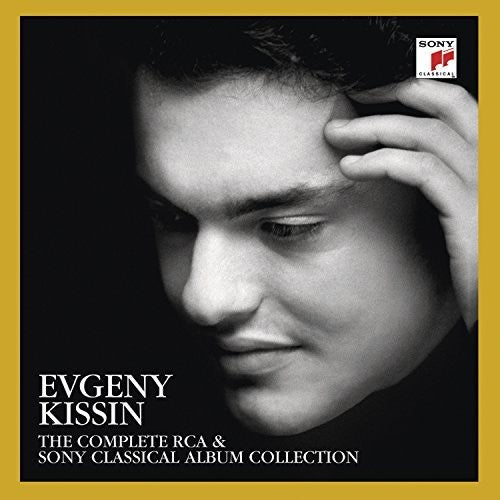
Evgeny Kissin: The Complete RCA & Sony Classical Album Collection
CD$83.99$62.99Sony Masterworks
Oct 14, 201688875127202 -
![]()

-
![]()

-
 On Sale
Benjamin Schmid - The Complete Oehms Classics Recordings
CD$47.99$23.98Oehms Classics
Sep 14, 2018OC019 -
![]()

-
![]()

-
 On Sale
Gabriel Fauré
CD$13.98$6.99Sony Masterworks
May 13, 201688875192912 -
![]()

-
![]()

-

Beethoven, Mozart: Piano Concertos / Argerich, Ozawa, Jochum
$19.99CDBR Klassik
Sep 29, 2009403571900701 -
![]()

-
![]()

-
Radio France: 80 Years of Concerts Remastered / Orchestre National de France
$40.99CDRadio France
Mar 24, 2015FRF020.27 -
 On Sale
Mstislav Rostropovich - The Indomitable Bow
DVD$27.99$24.99Naxos AudioVisual
Dec 07, 20182110583 -
![]()

-
![]()

-

Dvorak: Symphony No. 9; Carnival Overture / Ozawa, San Francisco Symphony
$21.99SACDPENTATONE
Oct 26, 2010PTC5186168 -
![Mstislav Rostropovich - The Indomitable Bow [Blu-ray]](//arkivmusic.com/cdn/shop/files/3844016.jpg?v=1749386326&width=800) On Sale
On SaleMstislav Rostropovich - The Indomitable Bow [Blu-ray]
Blu-Ray$30.99$21.99Naxos AudioVisual
Dec 07, 2018NBD0082V -

Berlioz: The Damnation of Faust / Mathis, Burrows, McIntyre, Ozawa, Boston Symphony
$38.99SACDPENTATONE
Mar 10, 2015PTC5186212


Evgeny Kissin: The Complete RCA & Sony Classical Album Collection
A 2017 Critics' Choice Winner at American Record Guide!
Evgeny Kissin (b. 1971) made his debut with the Ulyanovsk Symphony Orchestra when he was only eleven years old. The next year, he performed his first solo piano recital in Moscow. When he recorded the two Chopin piano concertos with the Philharmonic Orchestra of Moscow in 1984, his fame exploded. Each and every piano masterwork is included in this set, as Kissin was a master of broad-ranging repertoire. Staples by Bach, Beethoven, Brahms, Chopin, Stravinsky, Scriabin, and more are all here. This specially priced hardcover box set documents many of Kissin’s extraordinary achievements, as it holds all of Kissin’s recordings for both RCA and Sony Classical.


Benjamin Schmid - The Complete Oehms Classics Recordings
It was a long-standing wish to combine all 18 albums recorded by Benjamin Schmid into one release because they yield an impressive mirror of this unique violinist’s concert activities. The desire was given new impetus by the two magnificent new albums Benjamin Schmid approved for release by OehmsClassics on the occasion of his fiftieth birthday in 2018. The prize-winning recordings of this set, covering almost five centuries, explain why Benjamin Schmid has been perceived by the music public not just as ‘the specialist’ in one individual field. Benjamin Schmid, a native of Vienna, has won a number of awards including the 1992 Carl Flesch Competition in London, where he also won the Mozart, Beethoven and audience prizes. Since then he has been a guest soloist in the world’s most renowned concert halls with prestigious orchestras. His soloistic quality, the range of his repertoire, and especially his improvisatory abilities in jazz make him a violinist with a unique profile.
Set contents in addition to individually listed works:
DISC 2: My favourite Paganini (Works by Paganini & others, arr. by F. Kreisler, etc)
DISC 3: Bach:Reflected (Improvisations on J. S. Bach)
DISC 7: Hommage à Grappelli
DISC 12: Fritz Kreisler - Originals and Adaptations for Jazz-Trio
DISC 20: Pièces de concert (Works of Bazzini, Saint-Saëns, Paganini, and more)


Gabriel Fauré
Gabriel Fauré Centenary (1845 - 1924)
A collection of his solo piano, chamber music, and vocal works, most prominent among them the composer's favored Requiem.


Beethoven, Mozart: Piano Concertos / Argerich, Ozawa, Jochum
BEETHOVEN Piano Concerto No. 1. 1 MOZART Piano Concerto No. 18 2 • Martha Argerich (pn); Seiji Ozawa, cond; 1 Eugen Jochum, cond; 2 Bavarian RSO • BR 900701 (63:37) Live: Munich 7/17/1983; 1 Würzburg 6/22/1973 2
If there are two composers not normally associated with the kind of white-heat performances of Martha Argerich, they are Beethoven and Mozart. Though generally thought of as a pianist of the virtuoso repertoire, including everything from the Liszt Sonata to the Prokofiev concertos, Argerich here shows herself to be not only a stylish player, but a profoundly interesting one as well. While some might describe Argerich’s playing here as “holding back,” I would disagree; she has absorbed the style of the music that she’s playing here so completely that, rather than giving less than normal, it sounds like she is giving just enough.
The Beethoven is very good. The orchestra, at times seems a bit sluggish, especially in the opening tutti before the piano makes its entrance, but Argerich has an ability to breathe life into the performance. Her playing has spontaneity; one feels at times that she is almost improvising the figurational patterns. The vitality and the lightness, which Argerich brings out so well, are evident from her very first entry. The balance between orchestra and piano is maintained well throughout; the soloist and instrumentalists of the orchestra always playing off of each other well. The pianist’s dynamic control is, as always, superb. When Argerich plays the trill in the first movement at 12: 14, the notes detached, and pulls back at 12:16 to begin the trill pianissimo and legato, to only crescendo up a few seconds later, the effect is not only breathtaking, but palpable. The movements that follow are equally well done. Argerich’s ability to produce a transparent , mezza voce sound in the slow movement is ideal. The rapid scalar runs are easy for her, and the effect more of a dynamic surge than ornamental filigree. The third movement is taken at a lively pace, and the offbeat accents sound naturally done—never over the top. This recording is similar in conception to another of Argerich’s live performances with the Royal Concertgebouw under Heinz Wallberg (EMI 56974), though I prefer this rendition with Ozawa.
This is the only recording I know of Argerich playing this Mozart Concerto. As good as the Beethoven is, the Mozart is better. The balance here is even finer than in the previous Concerto, and the colors inherent in the orchestration are brought to the fore—Mozart’s mastery is in evidence here and the performers bring this out especially well. One of my favorite moments is in the second variation of the second movement, the Andante un poco sostenuto, where the strings take over the melody and the piano is left to wander about with its figurative patterns. Later, after the Maggiore section, the same treatment of the melody in the strings and the piano with figurative accompaniment is again done perfectly; this time the figurative wandering, in both the left and right hands of the piano, is even more delicately accomplished. Argerich shows her understanding of this passage and does so with sensitivity. The third movement is the epitome of jollity. The tempo, perfectly chosen, again allows Argerich to keep the scalar patterns light and graceful.
These are both fine performances, ones that I would not hesitate to have in my collection. The sound is good, the piano a bit forward at certain moments, but musically made up for in the performances. As these are staples of the concerto repertoire though, I would still recommend owning a few other fine performances: in the Beethoven, Adrian Aeschbacher with Wilhelm Furtwängler conducting the Lucerne Festival Orchestra (Music & Arts 1018), an older recording with less than modern studio sound, but a fabulous performance, and in the Mozart, Peter Serkin with Alexander Schneider conducting the English Chamber Orchestra (RCA Victor Red Seal 35123—now available on arkivmusic.com as an ArkivCD).
FANFARE: Scott Noriega


Radio France: 80 Years of Concerts Remastered / Orchestre National de France

Mstislav Rostropovich - The Indomitable Bow
The Indomitable Bow is a unique portrait of Mstislav Rostropovich, a formidable personality as well as a complex, deeply political musician constantly engaged in a whirlwind of activities. Including unreleased documents, archive films, interviews and concert performances from this key figure of the 20th century, The Indomitable Bow is a remarkable testimony of the life and work of the legendary ‘Slava’. Mstislav Rostropovich remains one of the greatest cellists of the twentieth century. In addition to his lauded interpretations and impeccable technique, he was well known for inspiring and commissioning new works, which grew the cello repertoire more than any other cellist before or since. In fact, he inspired and premiered more than one hundred pieces, and formed long-standing partnerships with composers including Shostakovich, Prokofiev, Messiaen, Penderecki, Bernstein, and Britten, to name a few.
-----
REVIEW:
“Your Indomitable Bow” is a phrase addressed to Mstislav Rostropovich by Alexander Solzhenitysn, in reference to the help and shelter given in dark times to the writer, at some risk, by the musician. It is a reminder that Rostropovich – or Slava as he was affectionately known – had public and political roles during the cold war, and that he used his eminence in Soviet artistic life for selfless aims, which led to his eventual expulsion. Bruno Monsaingeon’s outstanding film deals with this theme alongside the remarkable musical career. It is thus a comprehensive portrait of Rostropovich, whose large and generous personality comes across in each of his many roles – cellist, piano accompanist, conductor, teacher, and collaborator with the great composers of his era. He emerges as a key cultural figure of the 20th century.
The research behind this production was doubtless exemplary, but it also benefitted from some good fortune, as we learn from the filmmaker’s booklet notes. Bruno Monsaingeon knew the cellist, who in 2000 gave him “a whole trunkful of film material about him…containing a number of treasures”. From that and other sources, such as unreleased documents, archive films, new interviews, and filmed concert performances, a compelling narrative has been put together. One element of almost any documentary though is completely absent. There is no commentary or narration by the director or anyone else. Every scene throughout the film is simply left to speak for itself, but so skilful is the editing that we do not miss the customary unseen narrator. Perhaps a viewer who barely knew who the subject would get a bit lost at points, but that is hardly a typical viewer of such a film. The voice of an unseen Sviatoslav Richter contributes a couple of sentences about his (ambiguous) relationship to the cellist, but it is clear that that is just a small part of building the picture.
The composers we see and hear, and from whom Rostropovich inspired or commissioned major works, are mainly Prokofiev, Shostakovich and Dutilleux. Britten, though seen conducting a couple of times, does not get much of a look-in despite the five substantial works he wrote for the cellist, which made England Rostropovich’s most productive foreign destination musically, and the main omission from the story line in the film. But there is so much here to be grateful for. Solzhenitsyn’s widow, and the next generation, Solzhenitysn’s son and Rostropovich’s daughters, offer important insights in interview – and there is a 40-minute extra film, which expands on their recollections of the experiences of those two giant artists. There is also some gripping detail about life under the regime.
Rostropovich’s wife, Galina Vishnevskaya, is seen in archive interviews and in filmed recitals, with Rostropovich accompanying. She is the butt of one of Slava’s better jokes. When asked what voice type his wife’s soprano is, lyric or dramatic, he replies, “In the theatre, lyric; at home, dramatic.” She in turn is no shrinking violet and has some amusing things to say about their domestic and musical arguments. Whether quarrelling at home, or taking on the Soviet state, it is the artist himself who comes across as indomitable as much as his bow. There is always the famous charm and wit. The overwhelming impression is of a great musician who was also a great man.
Apart from the marvellous film itself, there are those very valuable extras. In addition to the bonus of family recollections mainly concerning Solzhenitsyn, we have films of three previously unreleased performances. Rostropovich plays the Sarabande from Bach’s 2nd Suite, and the closing variations and coda of Tchaikovsky’s Rococo Variations with the Boston Symphony and Ozawa. Yet perhaps the best of all is the film of a 1974 UNESCO Paris concert of Beethoven’s Archduke Trio in which the cellist is joined by Yehudi Menuhin and Wilhelm Kempff. Three elder statesmen of their instruments from three countries playing one of the greatest of piano trios live - that is quite some “extra”.
It was a couple of years later that I met him. I was a hanger-on at an LSO rehearsal that he was conducting. I took the chance to offer him to sign my much-loved recording of him in the Britten cello suites 1 and 2 and he did. Emboldened, I asked him, “when will you record the Third Suite, maestro?” “Not now, later,” he said, and disappeared. (Bruno Monsaingeon’s research has not discovered this important cultural exchange so I mention it here.) Rostropovich did never record the Third Suite, alas. Not long before this episode, he had taken the arm of Peter Pears at Britten’s funeral. That Third Suite is based on the Kontakion, the Russian Hymn for the Departed. Perhaps he could never quite face it and did not need insensitive hangers-on with their LPs coming up to him after a rehearsal.
Discussing his dual role of conductor and cellist with Herbert von Karajan on the film Rostropovich says, “when I conduct I am happy, but the audience is not; when I play the audience is happy, but I am not.” Karajan replies, “so you must play and conduct, so that everyone is happy”. I can’t imagine anyone being less than happy after watching this highly recommended, indeed already prize-winning, film. It is one of the best films about a musician that even Bruno Monsaingeon has ever given us.
– MusicWeb International (Roy Westbrook)


Dvorak: Symphony No. 9; Carnival Overture / Ozawa, San Francisco Symphony
This is a hybrid Super Audio CD playable on both regular and Super Audio CD players.

![Mstislav Rostropovich - The Indomitable Bow [Blu-ray]](http://arkivmusic.com/cdn/shop/files/3844016.jpg?v=1749386326&width=1200)
Mstislav Rostropovich - The Indomitable Bow [Blu-ray]
Also available on standard DVD
The Indomitable Bow is a unique portrait of Mstislav Rostropovich, a formidable personality as well as a complex, deeply political musician constantly engaged in a whirlwind of activities. Including unreleased documents, archive films, interviews and concert performances from this key figure of the 20th century, The Indomitable Bow is a remarkable testimony of the life and work of the legendary ‘Slava’. Mstislav Rostropovich remains one of the greatest cellists of the twentieth century. In addition to his lauded interpretations and impeccable technique, he was well known for inspiring and commissioning new works, which grew the cello repertoire more than any other cellist before or since. In fact, he inspired and premiered more than one hundred pieces, and formed long-standing partnerships with composers including Shostakovich, Prokofiev, Messiaen, Penderecki, Bernstein, and Britten, to name a few.
-----
REVIEW:
“Your Indomitable Bow” is a phrase addressed to Mstislav Rostropovich by Alexander Solzhenitysn, in reference to the help and shelter given in dark times to the writer, at some risk, by the musician. It is a reminder that Rostropovich – or Slava as he was affectionately known – had public and political roles during the cold war, and that he used his eminence in Soviet artistic life for selfless aims, which led to his eventual expulsion. Bruno Monsaingeon’s outstanding film deals with this theme alongside the remarkable musical career. It is thus a comprehensive portrait of Rostropovich, whose large and generous personality comes across in each of his many roles – cellist, piano accompanist, conductor, teacher, and collaborator with the great composers of his era. He emerges as a key cultural figure of the 20th century.
The research behind this production was doubtless exemplary, but it also benefitted from some good fortune, as we learn from the filmmaker’s booklet notes. Bruno Monsaingeon knew the cellist, who in 2000 gave him “a whole trunkful of film material about him…containing a number of treasures”. From that and other sources, such as unreleased documents, archive films, new interviews, and filmed concert performances, a compelling narrative has been put together. One element of almost any documentary though is completely absent. There is no commentary or narration by the director or anyone else. Every scene throughout the film is simply left to speak for itself, but so skilful is the editing that we do not miss the customary unseen narrator. Perhaps a viewer who barely knew who the subject would get a bit lost at points, but that is hardly a typical viewer of such a film. The voice of an unseen Sviatoslav Richter contributes a couple of sentences about his (ambiguous) relationship to the cellist, but it is clear that that is just a small part of building the picture.
The composers we see and hear, and from whom Rostropovich inspired or commissioned major works, are mainly Prokofiev, Shostakovich and Dutilleux. Britten, though seen conducting a couple of times, does not get much of a look-in despite the five substantial works he wrote for the cellist, which made England Rostropovich’s most productive foreign destination musically, and the main omission from the story line in the film. But there is so much here to be grateful for. Solzhenitsyn’s widow, and the next generation, Solzhenitysn’s son and Rostropovich’s daughters, offer important insights in interview – and there is a 40-minute extra film, which expands on their recollections of the experiences of those two giant artists. There is also some gripping detail about life under the regime.
Rostropovich’s wife, Galina Vishnevskaya, is seen in archive interviews and in filmed recitals, with Rostropovich accompanying. She is the butt of one of Slava’s better jokes. When asked what voice type his wife’s soprano is, lyric or dramatic, he replies, “In the theatre, lyric; at home, dramatic.” She in turn is no shrinking violet and has some amusing things to say about their domestic and musical arguments. Whether quarrelling at home, or taking on the Soviet state, it is the artist himself who comes across as indomitable as much as his bow. There is always the famous charm and wit. The overwhelming impression is of a great musician who was also a great man.
Apart from the marvellous film itself, there are those very valuable extras. In addition to the bonus of family recollections mainly concerning Solzhenitsyn, we have films of three previously unreleased performances. Rostropovich plays the Sarabande from Bach’s 2nd Suite, and the closing variations and coda of Tchaikovsky’s Rococo Variations with the Boston Symphony and Ozawa. Yet perhaps the best of all is the film of a 1974 UNESCO Paris concert of Beethoven’s Archduke Trio in which the cellist is joined by Yehudi Menuhin and Wilhelm Kempff. Three elder statesmen of their instruments from three countries playing one of the greatest of piano trios live - that is quite some “extra”.
It was a couple of years later that I met him. I was a hanger-on at an LSO rehearsal that he was conducting. I took the chance to offer him to sign my much-loved recording of him in the Britten cello suites 1 and 2 and he did. Emboldened, I asked him, “when will you record the Third Suite, maestro?” “Not now, later,” he said, and disappeared. (Bruno Monsaingeon’s research has not discovered this important cultural exchange so I mention it here.) Rostropovich did never record the Third Suite, alas. Not long before this episode, he had taken the arm of Peter Pears at Britten’s funeral. That Third Suite is based on the Kontakion, the Russian Hymn for the Departed. Perhaps he could never quite face it and did not need insensitive hangers-on with their LPs coming up to him after a rehearsal.
Discussing his dual role of conductor and cellist with Herbert von Karajan on the film Rostropovich says, “when I conduct I am happy, but the audience is not; when I play the audience is happy, but I am not.” Karajan replies, “so you must play and conduct, so that everyone is happy”. I can’t imagine anyone being less than happy after watching this highly recommended, indeed already prize-winning, film. It is one of the best films about a musician that even Bruno Monsaingeon has ever given us.
– MusicWeb International (Roy Westbrook)
![Mstislav Rostropovich - The Indomitable Bow [Blu-ray]](http://arkivmusic.com/cdn/shop/files/3844016.jpg?v=1749386326&width=800)

Berlioz: The Damnation of Faust / Mathis, Burrows, McIntyre, Ozawa, Boston Symphony
Recorded with a solid team of performers such as Edith Mathis (soprano), Stuart Burrows (tenor), Donald McIntyre(bass), Thomas Paul (bass), Judith Dickinson (solo in Dans le ciel), Tanglewood Festival Chorus, Boston Boy Choir, together with Boston Symphony Orchestra conducted by Seiji Ozawa, this recording lets us relish in their prime performance of orchestral playing and singing.
