

Ensemble: Malmö Symphony Orchestra
28 products
-
![]()

-
![]()

-
 On Sale
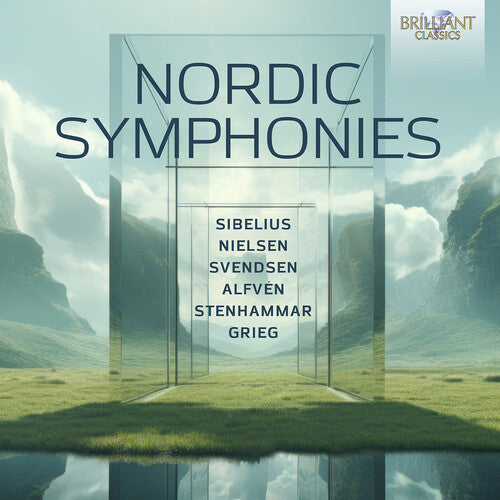
Nordic Symphonies
CD$42.99$12.90Brilliant Classics
Feb 16, 2024BRI96936 -
![]()

-
![]()

-
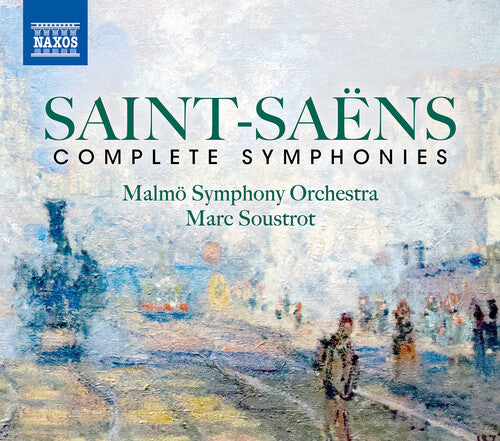
Saint-Saëns: Complete Symphonies / Soustrot, Malmö Symphony
$35.99CDNaxos
Jun 11, 20218503301 -
![]()

-
![]()

-
 On Sale
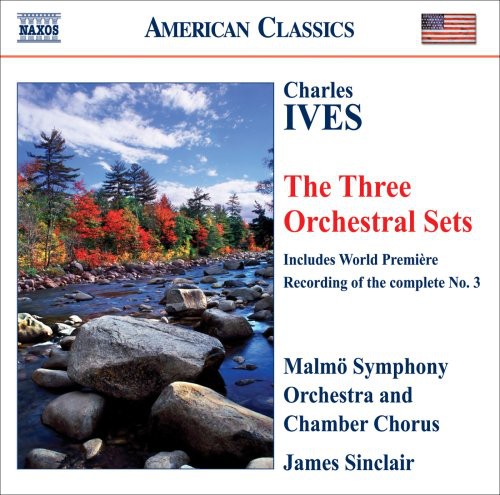
Ives: The Three Orchestral Sets / Sinclair, Malmö Symphony
CD$19.99$13.99Naxos
May 27, 20088559353 -
![]()

-
![]()

-
 On Sale
Saint-Saens: Piano Concertos / Descharmes, Soustrot, Malmo Symphony
CD$19.99$9.99Naxos
Mar 10, 20178573476 -
 On Sale
Nystroem: Symphonies Nos. 4 & 6 / Andersson, Malmö Symphony
CD$21.99$10.99BIS
Oct 01, 2004BIS-CD-1082 -

Saint-saens: Symphonies No 1 & 2 / Soustrot, Malmo
$19.99CDNaxos
Feb 10, 20158573138 -
![]()

-
![]()

-
 On Sale
Schmidt: Symphony No. 3, Chaconne / Sinaisky, Malmo Symphony
CD$19.99$9.99Naxos
Jul 27, 20108572119 -
![]()

-
![]()

-
 On Sale
Saint-Saens: Piano Concertos 4 & 5 / Descharmes, Soustrot, Malmo Symphony
CD$19.99$9.99Naxos
Apr 13, 20188573478 -

Gade: The Symphonies / Jarvi, Stockholm Sinfonietta, Malmo Symphony Orchestra
$64.99CDBIS
Jan 01, 2010BIS-CD-1835-36 -
![]()

-
![]()

-

Stenhammar: Piano Concertos No 1 & 2 / Sivelov
$19.99CDNaxos
Nov 15, 20118572259 -
![]()

-
![]()

-

Schmidt: Symphony No 2, Fuga Solemnis / Sinaisky, Malmo SO
$19.99CDNaxos
Sep 29, 20098570589 -
![]()

-
![]()

-

Grieg: Music For String Orchestra / Engeset, Malmo Symphony
$19.99CDNaxos
Oct 25, 20118572403 -
![]()

-
![]()

-
 On Sale
Beethoven: 13 Times the Same and 13 Times Different / Vienna Symphony Orchestra, Saarbrucken Radio Symphony Orchestra
CD$29.99$14.99Naxos
May 28, 20218551451 -
![]()

-
![]()

-

Saint-Saens: Ascanio Ballet & Overtures / Märkl, Malmö Symphony
$19.99CDNaxos
Nov 22, 20198574033 -
![]()

-
![]()

-
 On Sale
Schmidt: Symphony No 1, Music From Notre Dame / Sinaisky, Malmö SO
CD$19.99$13.99Naxos
Mar 31, 20098570828 -
![]()

-
![]()

-
 On Sale
Saint-Saëns: Works for Violin & Orchestra / Tianwa Yang, Schwabe, Soustrot, Malmö Symphony
CD$19.99$13.99Naxos
Nov 10, 20178573411 -
![]()

-
![]()

-
 On Sale
Halvorsen, Nielsen & Svendsen: Music for Violin & Orchestra / Kraggerud, Engeset, Malmo Symphony
CD$19.99$9.99Naxos
Feb 10, 20178573738 -
![]()

-
![]()

-

Franz Schmidt: Symphony No 4, Variations On A Hussar's Song / Sinaisky, Malmo Symphony
$19.99CDNaxos
Nov 16, 20108572118 -
![]()

-
![]()

-
 On Sale
Saint-Saens: Works for Cello & Orchestra / Schwabe, Soustrot, Malmo Symphony
CD$19.99$13.99Naxos
Oct 13, 20178573737 -
 On Sale
Saint-Saens: Symphony in F "Urbs Roma" / Soustrot, Malmo
CD$19.99$13.99Naxos
Sep 11, 20158573140 -
![]()

-
![]()

-
 On Sale
Saint-Saens: Piano Concertos, Vol. 2 / Descharmes, Soustrot, Malmo Symphony Orchestra
CD$19.99$13.99Naxos
May 12, 20178573477 -

Rachmaninov: Piano Concertos 1 & 4, Rhapsody On A Theme Of Paganini / Ogawa, Hughes
$21.99CDBIS
May 01, 2012BIS-CD-975 -
 On Sale
My Playlist for Baking
CD$19.99$9.99Naxos
Nov 09, 20188578344 -
 On Sale
My Playlist for Gardening
CD$19.99$13.99Naxos
Nov 09, 20188578345 -
![]()

-
![]()

-

Grieg: Symphony, Old Norwegian Romance / Engeset , Malmo Symphony Orchestra
$19.99CDNaxos
Jun 26, 20078557991 -

Grieg: Peer Gynt Suites, etc / Engeset, Dam-Jensen, Knudsen, Malmö Symphony
$19.99CDNaxos
Oct 30, 20078570236 -

Concertos Dedicated To Benny Goodman / Martin Fröst
$21.99CDBIS
Jun 01, 1998BIS-CD-893 -
![]()

-
![]()

-

Castelnuovo-tedesco: Piano Concertos / Maragoni, Magrelia, Malmo Symphony
$19.99CDNaxos
May 29, 20128572823


Nordic Symphonies
From the outset of his career, Jean Sibelius was recognized as an outstanding representative of a musical language perceived as typically Finnish. In Finland, the dawn of the 20th century saw a veritable outbreak of nationally inspired artistic activities., It was a time of cultural and national self-discovery for Sibelius, too. He allowed himself be stimulated by the whole of Finland’s folklore tradition, without resorting to specific examples of folksong.
For many years, Carl Nielsen was viewed outside his native Denmark as the poor cousin of his more famous Scandinavian counterparts, Grieg and Sibelius. Yet his achievements as Denmark’s greatest symphonist of the 20th century were, if anything, even more remarkable than the successes of his geographical neighbors. Nielsen’s symphonic output is some of the most remarkable of its time.
The Norwegian conductor and composer Johann Svendsen was born in 1840 in Christiania (now Oslo). in 1867, he finished his Symphony No. 1, a work that Grieg later described as showing scintillating genius, superb national feeling and really brilliant handling of an orchestra. In 1872 Svendsen returned to Christiania beginning a fruitful period that saw the creation of his Symphony No. 2 in B flat major Op. 15.
Hugo Alfven's First Symphony (1897) has a melancholy Sturm und Drang mood that recurs at intervals in his later compositions, but there is also a life affirming side that flourished in his Second Symphony, two years later. Of his Third Symphony, he stated "it depicts neither concrete nor abstract. It is an expression of the joy of living, an expression of the sun-lit happiness that filled my whole being.”
Wilhelm Stenhammar's Symphony Op. 34 saw the light of day in 1907, dedicating it to “my dear friends, the members of the Goteborg Symphony Orchestra.” He was to remain its chief conductor until 1922. That symphony, which had its first performance under the composer’s direction in 1915, was in fact Stenhammar’s second and is today called Symphony No. 2, even if the composer himself never gave it that number.
Edvard Grieg’s Symphony in C minor, which the composer withdrew, saw scholar after scholar writing about it disparagingly, with much discussion of the its style, all too often based on the question: what are its unoriginal or unsuccessful features? But it was Grieg himself who began the tradition with his admonition that it “must never be performed”. Now, however, very few feel, on moral grounds, that the work should not be performed.


Saint-Saëns: Complete Symphonies / Soustrot, Malmö Symphony
Saint-Saens wrote five symphonies between the years 1850 and 1886. The cycle began with the Mozart-influenced Symphony in A but as a precocious composer of 17 he wrote his first numbered symphony, a work much admired by Berlioz and Gounod. He progressed to his most popular piece in the genre, the ground-breaking Symphony No. 3 with its inclusion of organ and piano. This critically admired cycle includes a sequence of atmospheric and dramatic symphonic poems, including Phaeton and the ever-popular Danse macabre.
REVIEWS:
The standard reference versions for these works have been Martinon’s EMI (now Warner) recordings, but Soustrot’s are different enough to justify duplication. In the First Symphony, particularly, Soustrot adopts a very slow, dreamy tempo for the Adagio, but it works very well, particularly in contrast to the bold and brassy finale which follows without a break. Soustrot correctly highlights the adventurous writing for the harps, but never tastelessly, and some listeners may feel that the interpretation finds additional expressive depth in music often denigrated as merely sentimental. It’s good to hear it played with no apologies.
In the Second Symphony Soustrot comes closer to Martinon in terms of timing, but there’s no denying the extra clarity and nimbleness of the Malmö ensemble as compared to the old French National Radio and Television Orchestra for EMI. Soustrot’s exciting and rhythmically sharp reading of Phaéton makes a welcome bonus. This is unquestionably one of the best recordings of the piece, with an especially effective thunderbolt as Zeus hurls the hapless chariot (of the sun) driver from his seat. Attractively natural sonics round out a very promising start to this new series.
– ClassicsToday.com (David Hurwitz; in an earlier review of the CD release of Symphonies 1 & 2)
Marc Soustrot has some very good ideas about how the music should go. Soustrot prefers urgency even at the expense of some occasionally blurred articulation. The very slow tempo for the introduction followed by that agitated allegro highlights the broad range of contrasts typical of the performance more generally. The organ, excellently played by Carl Adam Landström, is very well balanced by the Naxos engineers. All told, this is a very fine performance of the Thrid.
– ClassicsToday.com (David Hurwitz; in an earlier review of the CD release of Symphony No. 3)


Ives: The Three Orchestral Sets / Sinclair, Malmö Symphony
Charles Ives 150 (1874-1954)
REVIEW:
Of all the composers on whom modern musicology is inflicting its current "completion mania", the cause of Ives makes more sense than most. His manuscripts were a mess, his decision-making random, and much of his music consists of "works in progress". He was working on a Third Set for orchestra in the late 1920s when he gave up composing, and with the exception of the last movement--that at 12 minutes lasts way too long--this collaboration between David Gray Porter and Nors Josephson comes across as pretty convincing. Certainly this is true of Porter's reconstruction of the first two movements (of three).
James Sinclair conducts Ives with unflagging confidence and expertise. He uses the first version (1914) of Three Places in New England--less angular than the chamber orchestral revision, with its prominent piano part--and the result sounds markedly less radical, more "late Romantic", and that's a refreshing change. Now that the shock value of Ives has largely worn off, we need to be able to experience his works simply as good music, and Sinclair makes that case here, as he also does in the Second Set. This neglected piece is every bit as fine as the more popular Three Places, and it deserves as much attention. Warmly detailed engineering keeps the often dense textures clear, and the Malmö orchestra plays with an easy naturalness that goes hand in hand with Sinclair's sure guidance.
--David Hurwitz, ClassicsToday.com


Saint-Saens: Piano Concertos / Descharmes, Soustrot, Malmo Symphony
Soustrot’s Saint-Saëns symphony cycle was quite good, and this new project looks to be similarly successful. For my money, the five piano concertos remain one of the most underrated groups of major works in the entire romantic repertoire. Yes, Nos. 2 and 4 get played more often than the rest, but there isn’t a dud in the bunch. It’s really only prejudice against the French aesthetic–the formal freedom, love of color, flash, and the dance–that prevents the music from getting the recognition that it deserves. That, and perhaps the fact that the melodious ease that informs all of Saint-Saëns’ writing makes a mockery of German pretensions to ownership of instrumental music in large forms.
These performances demonstrate a thoroughly “French” sensibility. Romain Descharmes savors the music’s charm and brilliance without indulging in excessive sentimentality. The First Concerto, with its surprising wiring for horns, has a breezy freshness that completely disarming. It’s played with joyful directness and a complete lack of affectation. I enjoy fast and dazzling versions of the Second Symphony, with its whirlwind finale, but Descharmes treats the piece with almost epicurean relish, nowhere more so than in this sassy, witty account of the central scherzo. There’s no lack of virtuosity, but also time to savor the music’s many harmonic delights.
Through it all, Soustrot accompanies with total confidence, and the sonics are terrific. A disc to savor.
– ClassicsToday (David Hurwitz)


Nystroem: Symphonies Nos. 4 & 6 / Andersson, Malmö Symphony
Nystroem's orchestration also is very colorful and effective. His evocative use of high strings to open many of his individual movements should not blind us to the fact that he was very much a composer for the whole orchestra. This means full sonorities, plentiful use of winds, brass, and percussion, and beautifully judged, fluid textures. Although there are plenty of good tunes, Nystroem was not a melodist in the conventional sense. But his basic sonorities always fall gratefully on the ear, and his driving rhythms in quicker music produce a great deal of physical excitement. In short, this is really good, solid, characterful symphonic writing, and the performances give the full measure of each work. The only possible missing ingredient might be a bit more assertiveness from the brass at the big climaxes, but I can't imagine anyone being dissatisfied with either the interpretations or the vivid sound.
--David Hurwitz, ClassicsToday.com
This premiere release of the two remaining unrecorded symphonies of the half-dozen by the singular Swede Gösta Nyström (1890–1966) represents for this writer the fulfillment of a long-cherished wish list.
Together with Hilding Rosenberg (1892–1985) and Allan Pettersson (1911–1980), Nystroem stands at the pinnacle of Swedish music during the 20th century. His sui generis expressionistic voice (which sounds like no other) seems to embody the brooding but aloof Swedish soul in sound. Spiritually speaking, his only significant parallel, perhaps because of his dozen years of study and experience in Paris, could be that of the Swiss Arthur Honegger. Although Nystroem was an occasional painter—as well as a music critic—and thus quite concerned with questions of orchestral color, there is nothing especially pictorial about his music.
His intensely direct and dramatic idiom—a very personal blend of post-Impressionism and post-Romantic elements—gave rise to some of the most emotionally raw and vulnerable-sounding music of the modern period. Beginning in 1931 with the Sinfonia breve, which was followed shortly by the Sinfonia espressiva for string orchestra, in the late 1940s Nystroem wrote the sublime Sinfonia del mare (“Sea Symphony”), probably his masterpiece in the form; then in 1952 this Fourth Symphony, subtitled “Sinfonia Shakespeariana” followed by the Sinfonia seria in 1963, and finally by the posthumously premiered sixth and last, “Sinfonia tramontana” in 1966. (There is also an unnumbered Sinfonia concertante for cello and orchestra from the 1940s.) All six vary in length from 20 to 30 minutes.
Even though he utilizes a very distinctive blend of modal-diatonic and intermittently very chromatized dissonance—in fact, some of his themes are close to atonal but still lyrically graspable—Nyström’s language is never convoluted or forbidding. He always addresses the listener very forthrightly on a level of almost painfully naked subjectivity. The guiding principal of his work is one of extreme contrast or energetic conflict: in just a single measure or two, he can veer from a threatening tone of violent relentlessness to a piercingly short-lived moment of tenderness, but his basic background is one of unrelieved lugubriousness. He often writes in large instrumental blocks, pitting strings as a group against winds or brasses, with the timpani always closely on call. Formally, the symphonies vary from the single-movement Sinfonia breve to the five interrelated sections of the Sinfonia del mare, but the thematic materials are often derived from a single generating motivic source.
The Fourth Symphony, though subtitled “Shakespeariana,” does not quote from any of the rather functional though appealing incidental scores he wrote for The Tempest and The Merchant of Venice. The Shakespeare reference is probably meant to evoke a sense of tragic humanity that pervades the three movements. As in most of the symphonies, the outer Allegro movement begins as a barely audible Lento before bursting out into full force; at the center, it suddenly drops into an unexpected, secluded oasis of sad serenity before plunging back into its initial turbulence. By the same token, the midpoints of many of his slow movements erupt into quick passages of savage agitation, even though the same or similar themes are present in both modalities.
The Sixth or “Tramontana” Symphony (the subtitle carries an implication of a visionary statement coming from beyond the range of everyday life) is a kind of transcendental diptych, with two panels of almost equal length following the same characteristic expressive arc of Lento–Allegro–Lento (or Andante). In the symphony’s concluding measures, Nystroem attempts a grand resolution, but to these ears the sorrowful reverberations win out.
B. Tommy Andersson offers splendidly charged and maintained readings of these almost schizoid works; he is always careful not to let Nyström’s multiple lines and towering climaxes get out of hand. Typically, the dynamic spectrum of BIS’s engineering is so unusually wide that only the best reproduction equipment will be able to do justice to its shattering power. In short, a major addition to the 20th century Scandinavian symphonic discography.
Paul A. Snook, FANFARE


Saint-saens: Symphonies No 1 & 2 / Soustrot, Malmo
The standard reference versions for these works have been Martinon’s EMI (now Warner) recordings, but Soustrot’s are different enough to justify duplication. In the First Symphony, particularly, Soustrot adopts a very slow, dreamy tempo for the Adagio, but it works very well, particularly in contrast to the bold and brassy finale which follows without a break. Soustrot correctly highlights the adventurous writing for the harps, but never tastelessly, and some listeners may feel that the interpretation finds additional expressive depth in music often denigrated as merely sentimental. It’s good to hear it played with no apologies.
In the Second Symphony Soustrot comes closer to Martinon in terms of timing, but there’s no denying the extra clarity and nimbleness of the Malmö ensemble as compared to the old French National Radio and Television Orchestra for EMI. Soustrot’s exciting and rhythmically sharp reading of Phaéton makes a welcome bonus. This is unquestionably one of the best recordings of the piece, with an especially effective thunderbolt as Zeus hurls the hapless chariot (of the sun) driver from his seat. Attractively natural sonics round out a very promising start to this new series.
-- David Hurwitz, ClassicsToday.com


Schmidt: Symphony No. 3, Chaconne / Sinaisky, Malmo Symphony
Franz Schmidt’s Third Symphony was composed in 1927–28, dedicated to and premièred by the Vienna Philharmonic Orchestra, winning a first prize from the Columbia Graphophone Company of New York for the best symphony in the spirit of Schubert’s ‘Unfinished’ Symphony as part of the centenary commemorations of Schubert’s birth. Schmidt’s symphony is lyrical, includes a set of variations, a Ländler-like Scherzo and finale rich in thematic invention. In 1931 Schmidt added wind and percussion instruments and a large body of strings to his monumental Chaconne for organ, in which form it too was premièred by the Vienna Philharmonic.


Saint-Saens: Piano Concertos 4 & 5 / Descharmes, Soustrot, Malmo Symphony
Descharmes and conductor Marc Soustrot understand the music well. The opening variations are nicely contrasted, the ensuing Andante attractive in its flow. The long finale effectively integrates the ongoing return of the main themes, with Descharmes weaving into and out of the instrumental textures smartly and sensitively. It’s an interpretation that consistently holds your attention, and rewards your patience.
The “Egyptian” Concerto isn’t quite as good. The outer movements are fine, especially the rollicking finale, but the long central movement could be more effectively shaped, its “orientalisms” indulged just that more characterfully. Still, as in the Fourth, the performance reveals a lot of meaningful detail, especially in the finale, and Descharmes isn’t afraid to take a step back and let other instrumental colors take center stage once in a while. Ultimately this complete set of the five piano concertos stands among the best out there, even if everyone will have favorite individual performances. This is an achievement of which everyone can be proud.
– ClassicsToday (David Hurwitz)


Gade: The Symphonies / Jarvi, Stockholm Sinfonietta, Malmo Symphony Orchestra
REVIEW:
Niels Gade was a musical conservative, very much of the Mendelssohn school, but he had a distinctive personality and...he knew how to make his music move. These symphonies have good tunes, almost no dead spots, and the Fifth, which has an important concertante part for solo piano, really is an entertaining and original piece by any standard.
At five discs for the price of two, this set is a steal. Neeme Järvi's versions of the eight symphonies are as fine as any available, certainly as good as Hogwood's excellent Chandos set which now costs several times as much. Niels Gade was a musical conservative, very much of the Mendelssohn school, but he had a distinctive personality and, more to the point, he knew how to make his music move. These symphonies have good tunes, almost no dead spots, and the Fifth, which has an important concertante part for solo piano, really is an entertaining and original piece by any standard. Järvi secures crisp, lively playing from the Stockholm Sinfonietta; there isn't a weak performance in the lot.
The Violin Concerto is also a fine, unaccountably neglected piece, very well played by Anton Kontra (of the eponymous quartet fame). Its central Andantino espressive really is a gem, but then the entire piece has a formal compactness and confidence typical of Gade. The Crusaders (featuring the Aarhus Symphony under Frans Rasmussen) is an hour-long cantata for soloists, chorus, and orchestra, and it makes a considerable bonus. Of course in today's world it's kind of hard to sympathize with the crusades, or with any piece in which Peter the Hermit is the good guy, but give Gade credit: he gets through the entire Armida/Rinaldo love story in 23 minutes, and it's the best part of the work. Enough talk: just get this box, and your Gade collection will be pretty much complete.
--David Hurwitz, ClassicsToday.com


Stenhammar: Piano Concertos No 1 & 2 / Sivelov
Listening to this instantly appealing and well-crafted music put a query in my head. I wondered how many times one of Sweden's greatest composers had been performed at the self-styled "The World's Greatest Classical Music Festival" - the BBC Proms. The answer - in over 100 hundred years might surprise - seven pieces. Dig a little further and you find that of the seven, three are of the same brief orchestral work; the interlude from the cantata The Song and three are of orchestral songs. Indeed three items were in a single concert. Which leaves a single performance of an important work - the Symphony No.2 on 12 September 1985. As part of "The World's Greatest Classical Music Festival" we have benefited from a concert by Michael Ball, two MGM Musicals extravaganzas and a homage to Stephen Sondheim to name but four recent 'happenings' but clearly Stenhammar simply does not measure up in the pantheon of the greats.
All of which is a slightly long-winded way of saying this is wonderfully attractive music of consummate skill that deserves to be far better known. Although there is recorded competition for this music - I have not heard the recent Hyperion disc - in their Romantic Piano Concerto series - at the Naxos price advantage and deploying the idiomatic and ever excellent Malmö Symphony Orchestra this is a winner. Soloist Niklas Sivelöv has a Stenhammar pedigree having recorded a solo recital disc of the composer also on Naxos (8.553730); not forgetting Martin Stürfalt’s solo recital on Hyperion. He proves to be an excellent and confident guide. Stenhammar was one of those extraordinarily gifted musicians initially famed as a pianist - his 1892 solo debut was playing the mighty Brahms Piano concerto No. 1 - then as a conductor - he was artistic director and principal conductor of the Gothenburg Symphony Orchestra from 1906-1922. Only after that did be become known as a composer. His death from a stroke at the age of just 56 deprived the world of a major talent. As ever in such circumstances it is hard not to speculate what great works might have sprung from his pen if only he had lived another twenty years.
Naxos place the larger sprawling Piano Concerto No. 1 Op. 1 second on the disc. Stenhammar had written earlier works but the addition of the Op.1 status shows the significance he felt the work had for him as a composer. The date proximity to his concert debut mentioned above makes the shade of Brahms that hangs over the work all the more understandable; particularly in his deployment of a 'symphonic' four-movement form. If one is being harsh - at over forty minutes it probably outstays its young composer's ability to handle his material over such a time-span. That being said, Sivelöv makes a very convincing and muscular case for the work. Certainly, by taking a good five minutes less time than Mats Widlund on Chandos (an epic 47:18) he minimises the discursive elements in the work. At the budget price point the main challenge comes from the Brilliant Classics re-release of BIS-sourced recordings. I have not heard the Brilliant/BIS first concerto but this current recording's 2nd Concerto is considerably finer than Cristina Ortiz's performance. Simply put Sivelöv has a more impressive technique. This is most clear in the quicksilver scherzo which is interpolated into the first movement proper. Here the kinship with Rachmaninov in general and the Rhapsody on a theme of Paganini in particular stands out. Important to note though that the Stenhammar is the earlier work by some twenty-seven years. Sivelöv is absolutely superb here; all fleet gossamer passage-work and dextrous cross-rhythms. Ortiz plays the notes - just about - but it is far more laboured and as such counter to the spirit of the music. Undoubtedly this is one of Stenhammar's finest works - he still uses the four movement form but here it has been distilled down to a powerfully concise twenty-five minutes and is played in a single unbroken span. I would have thought that there is little debate that it is the finest Scandinavian piano concerto post-Grieg pre-Rautavaara and as such its neglect in the UK at least is a mystery - especially given its instant appeal. Conductor Mario Venzago is totally at home in this idiom and the Malmö orchestra sound very fine. It is not quite an open and shut case in favour of the new disc; the Brilliant set offers three discs thereby including the superb Symphony No.2 as well as the very Germanic - and subsequently disowned - Symphony No.1 and as such is excellent value. It should be noted that the important Symphony No.2 receives a good but not great performance in that Brilliant set. The Naxos disc is better recorded - the early BIS sonics just a little glassy and distant compared to the new disc but conversely the Gothenburg players - in the second concerto at least are just a little tighter than the current Malmö group. Stenhammar deploys thematic material that joins notes across beats almost obsessively and 'coming off the tie' with perfect unanimity gives the orchestra an occasional headache. Nothing in the recording information or indeed in terms of extraneous noise suggest live performances but that kind of technical performance glitch is more common in the concert hall than the recording studio.
Naxos have been slowly working their way through the bulk of Stenhammar's modest catalogue - in quantitative terms - although in a rather piece-meal fashion with each disc using a different combination of orchestras and soloists/conductors. I would suggest this new release would be a fine place to start an investigation of Stenhammar's music although the Symphony No.2 and the Serenade would need to be high up the list of requirements - the former in the classic Stig Westerberg/ Stockholm Philharmonic Orchestra version. Certainly it remains both absurd and shameful that institutions like the Proms have yet fully to embrace the music of this most talented yet modest man
For all lovers of romantic piano concertos this disc will bring great pleasure.
-- Nick Barnard, MusicWeb International


Schmidt: Symphony No 2, Fuga Solemnis / Sinaisky, Malmo SO
The second instalment of the Naxos Schmidt symphonic cycle is with us. It preserves another impressive performance, this time of the E flat major Symphony. As before, the major competition comes from the Detroit Symphony and Järvi on Chandos CHAN9568 -- a four-disc collection.
The Symphony lasts around forty-eight or so minutes -- in this performance -- and is cast in three movements. Written between 1911 and 1913 it opens in genial fashion before some hefty Straussian brass calls puncture the amiable laissez faire. Schmidt is a minor master at alternation of brass fanfare and diaphanous gauzy textures; there’s even an Elgarian contour to his melodic way of thinking, a product of late-Romantic brio, surely, rather than anything else. Those Brucknerian caesuri are another strong influence. Pliant and neat, the second movement moves off into variational waters. These range from the lissom and fast to evocative, if ghostly, ballroom scenes. The baroque-leaning finale with its Bachian Fugue, solenelle style, has a grandly developing sense of space and drives onwards to a stirring and invincible chorale conclusion. The playing is splendid, and the interpretative decision-making vis-à-vis Järvi is a matter of individual taste. The latter has the more virtuosic orchestra but Sinaisky handles the thematic development of the symphony with equal authority.
The bonus, if one can call it that, is the 1937 Fuga Solemnis for organ, sixteen wind instruments and percussion. The organ begins its nobly reserved soliloquy whilst the orchestral forces are only allowed to enter with their stirring blocks of sound at around the mid-point of its 14 minute length. Again a stirring climax is ensured by Schmidt and whilst this one sounds a touch forced, its impact can’t be doubted.
Once again these forces prove to be fully conversant with Schmidt’s own personalised brand of late-romanticism, and its allied harmonic richness. The results are admirably bracing and sympathetic, and have been excellently recorded by the Naxos team.
-- Jonathan Woolf, MusicWeb International


Grieg: Music For String Orchestra / Engeset, Malmo Symphony

The excellence of Bjarte Engeset's Grieg recordings speaks for itself. This disc contains all of Grieg's music for string orchestra, plus the Lyric Suite. As with previous releases in this series, the performances are outstanding. Much of this music is slow and nostalgic, and Engeset paces it perfectly. You might not want to listen to all of it at a sitting, but then Grieg didn't either. In the Holberg Suite, it's particularly enjoyable to hear the Prelude and concluding Rigaudon not taken too quickly, but with a resilient, athletic sense of rhythm that propels the music forward.
There's a tendency today, perhaps as a result of the period-performance craze, to make too much of the music's Baroque inspiration, racing through it as if it were the real thing (not that Baroque music was actually played that way either, but that's another story). Engeset lets the music's romantic pedigree shine through. As for the Lyric Suite, each movement is well-characterized, with the March of the Dwarfs bringing the program to a satisfying conclusion. The sonics are terrific too.
--David Hurwitz, ClassicsToday.com


Beethoven: 13 Times the Same and 13 Times Different / Vienna Symphony Orchestra, Saarbrucken Radio Symphony Orchestra
G-G-G-E flat, better known as "Ta-ta-ta-taaa", are perhaps the four most famous notes in all of classical music, four notes that almost the whole world knows. They form the opening motif of the 5th Symphony in C minor, Opus 67 by Ludwig van Beethoven. In various interpretations by Otto Klemperer, Michael Gielen, Stanislaw Skrowaczewski and Ádám Fischer, among others, the range of Beethoven's reception at the turn of the millennium is to be compared. At the end the whole symphony will be heard under Robert Trevino: Hear, discover and compare.


Saint-Saens: Ascanio Ballet & Overtures / Märkl, Malmö Symphony
REVIEW:
Of Camille Saint-Saens's eleven operas only one, Samson et Dalila, still enjoys a place in the international repertoire. That was premiered in 1877, three years before Ascanio. That opera's thirty-minute ballet suite contains much that is pleasingly tuneful and suitably pictorial. The Les Barbares Prologue included here has the length and content of a movement from a very serious symphony. There is still more more music here, and all of it is played with the high quality of performance we have come to expect from the Malmo orchestra.
– David's Review Corner (David Denton)


Schmidt: Symphony No 1, Music From Notre Dame / Sinaisky, Malmö SO
The scherzo is best: it features a catchy tune with beguiling turns of melody and harmony that foreshadow the Schmidt of the Fourth symphony (particularly in the colorful and distinguished woodwind writing), his finest work in the genre. The finale returns to the prosaic, though it does boast an affirmative if seemingly obligatory chorale toward the conclusion.
Vassily Sinaisky shows real belief in and affection for the piece, and he leads a convincing performance with the Malmö Symphony Orchestra. He's certainly more involving than Neeme Järvi, who with his Detroit Symphony gives the impression he's always in a hurry to get to the good parts.
There are good parts aplenty in the Notre Dame excerpts. Composed only five years after the symphony, Schmidt's opera displays the composer's keen dramatic instincts and developing orchestral mastery (the colorful Carnival Music is quite captivating). Again Sinaisky and the Malmö players deliver a first-rate performance, captured in excellent sound by Naxos. If you're interested in early Schmidt, you'll do quite well with this release.
--Victor Carr Jr, ClassicsToday.com


Saint-Saëns: Works for Violin & Orchestra / Tianwa Yang, Schwabe, Soustrot, Malmö Symphony
Tianwa Yang is ‘an artist of exceptional technique and musicianship’ (BBC Music Magazine) and has established herself as a leading international performer and recording artist, winning the Annual Prize of the German Record Critics 2014 for her acclaimed recordings of Sarasate’s complete violin works. Her ‘stunning effortless virtuosity’ and ‘uncanny affinity for Spanish music’ (All Things Strings) make her the ideal advocate for the music presented on this recording. The Introduction et Rondo capriccioso is a glittering showcase imbued with the passion of Iberian dance, while the Havanaise in E major is a languorous habanera. Less frequently heard are the evocative Caprice andalou, the songful Romance in C major, the rhapsodic Morceau de concert, and the improvisatory La Muse et le Poete.
REVIEW:
Tianwa Yang’s Saint-Saëns performances are totally spellbinding, not just in technical matters, but in their stylish sensibility as well. Her partners, Gabriel Schwabe and the Malmö Symphony Orchestra conducted by Marc Soustrot, are in peak form on this highly exciting disc.
– Pizzicato


Halvorsen, Nielsen & Svendsen: Music for Violin & Orchestra / Kraggerud, Engeset, Malmo Symphony
In his day, Johan Halvorsen was one of Norway's most talented violinists and an internationally renowned conductor and composer. With its beautifully lyrical themes and Norwegian character including Hardanger fiddle effects, his Violin Concerto was described by contemporary critics as "an outstanding work" and performed to great acclaim in 1909. It was considered lost, only to be rediscovered in 2015 in the archive of its original soloist. With its equally confident opening and symphonic proportions, Nielsen's Violin Concerto combines emotive power with a delightfully pastoral character, while Johan Svendsen's spontaneously inventive and melodic Romance has become one of his best-loved works.
-----
REVIEW:
This release really deserves wide attention, for it contains something rather rare: the world's recorded premiere of a major lost violin concerto, that being Johan Halvorsen's 1909 Violin Concerto, Op. 28. The work sounds less like Grieg than like a Norwegian version of Josef Suk, with strong folklore elements.
It's joined with Carl Nielsen's Violin Concerto, a work matching the Halvorsen well with its mix of dance rhythms and serious virtuosity. Svendsen's Romance is a tuneful interlude that likewise deserves a revival.
A highly enjoyable release, and a must for lovers of Scandinavian music.
– All Music Guide (James Manheim)


Franz Schmidt: Symphony No 4, Variations On A Hussar's Song / Sinaisky, Malmo Symphony
The symphony, on the other hand, is a masterpiece, and it has been well treated on disc. Mehta's Vienna Philharmonic recording remains the benchmark, and if you want modern sound, Kreizberg's (PentaTone) also is quite good. So is this one. To be sure, the Malmö strings haven't the weight and richness of the Vienna Philharmonic, but the performance is very well paced and the Naxos engineers see to it that textures remain clean and clear (the harp is particularly well caught). Given the fact that the Variations constitute a genuine rarity, and you may well enjoy that work more than I did, this release is certainly recommendable as a supplement to the Mehta recording of the symphony.
--David Hurwitz, ClassicsToday.com


Saint-Saens: Works for Cello & Orchestra / Schwabe, Soustrot, Malmo Symphony

Composed during a period of social readjustment in post-war France, the First Cello Concerto marked Saint-Saens’ acceptance as a composer among the establishment, and has long been one of his most admired works. Recognition for the fiendishly technical Second Cello Concerto took longer, although its tranquil central movement contains one of the most sublime melodies Saint-Saens ever wrote. The supremely famous Le Cygne appears alongside the less well-known Bach-inspired Suite in D minor, and with the inclusion of the Romance this programme contains Saint-Saens’ complete works for cello and orchestra.


Saint-Saens: Symphony in F "Urbs Roma" / Soustrot, Malmo
– Blair Sanderson, All Music Guide


Saint-Saens: Piano Concertos, Vol. 2 / Descharmes, Soustrot, Malmo Symphony Orchestra
The Third Piano Concerto has been considered the "Cinderella" among Camille Saint-Saëns' five works in this genre, but it owes its comparative neglect to an adventurous approach to harmony which caused unrest in the audience at its premiere. Daring enough in the first movement, the search for tonality in the second was such an extreme experience that is caused unrest in the audience at its premiere. Saint-Saëns also composed for piano and orchestra in more rhapsodic forms, exploring folk tunes and rhythms from Africa, and revealing his playful side in the charming Wedding Cake Waltz. Volume 1 can be heard on 8573476.


Rachmaninov: Piano Concertos 1 & 4, Rhapsody On A Theme Of Paganini / Ogawa, Hughes
RACHMANINOV OGAWA, NORIKA; MALMO SYM. ORCH/ O.HUGHES PIANO CTOS NO.S 1&4; PAGANINI RHAPSODY


My Playlist for Baking
Wooden spoons at the ready! Turn the oven on, weigh out the sugar and immerse yourself in a feast of classical music – from Tchaikovsky’s enchanting Dance of the Sugar Plum Fairy to Clara Schumann’s delicious Notturno. Perhaps you fancy making a sweet French Pastry with Hayman, baking a pie with Bax – or maybe even conjuring up a wedding cake with Saint-Saëns? Whatever you’re baking, this album will serve as the perfect accompaniment to your culinary creativity.


My Playlist for Gardening
The garden is a magical place to spend a day, and this playlist of cultivated classical pieces is the perfect accompaniment to working amid the flowers and foliage. Hear the sun rise in Grieg’s exquisite Morning Mood from Peer Gynt, waltz among the flowers with Tchaikovsky and watch the sparkling Fountain Dance with Elgar before drifting into the Haze of Noon with Alwyn. In the afternoon, shelter from the shower with Debussy and listen to the Birds in the High Hall Garden, exquisitely brought to life by Julian Lloyd Webber, before Gibbs’ Dusk falls.


Grieg: Symphony, Old Norwegian Romance / Engeset , Malmo Symphony Orchestra
Disconcertingly, Grieg wrote of his own ‘forbidden’ C minor Symphony - composed when he was just 20/21 - that it ‘must never be performed’. As conductor, Bjarte Engeset, remarks in his fulsome and admirable notes: “… during its 113-year enchanted sleep (commentators) wrote about it disparagingly: it was ‘clumsy’, ‘stiff’, ‘barely out of school’ and not Norwegian enough”. Granted that there are clear associations with the styles of Beethoven, Mendelssohn, Schumann and the Danish composer Niels Gade, but it is to Engeset’s credit that he and his orchestra and production team recognized the youthful ebullience, out-of-doors freshness and lyrical qualities of the work enough to proceed to record it again. There have been other recordings including those by the Norwegian Radio Orchestra with Ari Rasilainen (Apex), Gothenburg Symphony Orchestra with Okko Kamo (Bis), Lithuanian National Symphony Orchestra/Terje Mikkelsen (Simax), Neeme Järvi DG box, and the very first recording now on Decca Eloquence with Karsten Andersen and the Bergen Symphony Orchestra. That pioneering recording was issued in splendidly expensive isolation on a full price CD circa 1984.
The opening movement is a procession of attractive melodies: stirring marches, heroic material and romantic themes. The lyrical, tender Adagio espressivo second movement and especially the more rustic Intermezzo are quite Schumann-like with a dash of Mendelssohn - influences too apparent, or so it seems, in Grieg’s estimation. Virtuosically fast tempos inform the finale which crackles with joie de vivre. The Malmö players rise magnificently to the work’s challenges, sensitively recognizing the Symphony’s subtle harmonic shifts and nuances of colour.
Grieg’s Old Norwegian Romance with Variations is built on the heroic ballad melody, ‘Sjugur and the Troll-Bride’, stated after a short rather belying dark introduction. Grieg wanted to show how great a potential there was in such a folk-tune. Certainly, through its 18 variations, Grieg skilfully assembles music in an impressive range of moods and styles: marches, minuets, waltzes, dramatic and playful interludes, lyrical and pastoral, tempestuous, tranquil and pompous, all engagingly melodic.
With the Three Orchestral Pieces from ‘Sigurd Jorsalfar’ we reach more familiar ground. The play revolves around two brothers: Sigurd with his calling to the crusades and the gentle home-loving Eystejn. ‘Borghild’s Dream’ begins calmly but grows agitated as her sleep becomes increasingly troubled, the music building a powerful sense of dread. The Malmö players perform, with nice intensity, the much-performed ‘Homage March’ which has a ceremonial and regal-heroic quality.
Grieg’s ‘forbidden’ Symphony in C minor might be derivative, nevertheless it is a real find.
An altogether delightful programme with all the freshness of a Norwegian spring.
-- Ian Lace, MusicWeb International


Grieg: Peer Gynt Suites, etc / Engeset, Dam-Jensen, Knudsen, Malmö Symphony
Includes work(s) by Edvard Grieg. Ensemble: Malmö Symphony Orchestra. Conductor: Bjarte Engeset. Soloists: Inger Dam-Jensen, Palle Knudsen.


Concertos Dedicated To Benny Goodman / Martin Fröst


Castelnuovo-tedesco: Piano Concertos / Maragoni, Magrelia, Malmo Symphony
R E V I E W:
CASTELNUOVO-TEDESCO Piano Concertos: Nos. 1, 2. Love’s Labour’s Lost: 4 Dances • Alessandro Marangoni (pn); Andrew Mogrelia, cond; Malmö SO • NAXOS 8.572823 (76: 43)
Naxos’s two discs of this composer’s Shakespeare overtures really turned a lot of heads, mine included, a couple of years ago. Therefore, it was inevitable that the label would add to its Castelnuovo-Tedesco discography. The two piano concertos are not new to CD. However, as happens with greater frequency these days, alternative recordings have either gone out of print or are prohibitively expensive imports. This new release makes a lot of sense then, and it has been made all the more attractive by the addition of the four dances from Love’s Labour’s Lost , in not only their first recording but also their first performance!
That’s probably a good place to start. Castelnuovo-Tedesco composed these in 1953, but apparently Boosey & Hawkes, to which they were offered, did not publish them, and neither did Ricordi. Thus, they remained in manuscript, and unheard, until they were lent by the composer’s niece, Lisbeth Castelnuovo-Tedesco, to Alessandro Marangoni, who prepared a performing edition. This utterly delightful music should not have waited 60 years for a performance. The composer’s affinity for Shakespeare, already demonstrated in the concert overtures, also comes forward here. There is a gently ironic, somewhat Ravel-like and somewhat cinematic approach to old dance forms here. A lush Sarabande (for the King of Navarre) is followed by a mocking Gavotte (for the Princess of France) and a quietly loquacious Spanish Dance (for Don Adriano de Armado). Last is a Russian Dance—the flavoring is subtle—which corresponds to the scene in Shakespeare’s comedy in which the King and his scholarly companions disguise themselves as Muscovites to woo the Princess and her three ladies. Again, it floors me that this music had to wait so long to be heard.
A similar situation applies to the Piano Concerto No. 2. The original score appears to have been lost, but Marangoni found a copy in the Library of Congress and prepared a performing edition of the piano part. (The orchestral parts were found somewhere else—talk about pieces and parts!) Both of the concertos are an unusual marriage of virtuoso writing and Castelnuovo-Tedesco’s relatively relaxed compositional style. The second concerto is the darker of the two; it was composed in 1936–37, shortly before the composer, who was a Jew, left Italy, ending up in Hollywood. It is, however, not a tragic work, but it lacks the lightness and wit of the other two works on this CD. For me, its romantic gestures don’t add up to a lot, given the not very distinctive quality of the melodic writing. Also, Castelnuovo-Tedesco’s longer works don’t have the structural strength of the Shakespeare overtures, for example, and this also contributes to the sense that the music is always going somewhere but never quite arriving. It is, by the way, proudly tonal. I am reminded of Respighi’s comment, around this time, that “dissonance has its place as a medium of tone-color, and polytonality has important uses as a means of expression, but for their own sake, they are completely abhorrent to me.”
So, as suggested, the Piano Concerto No. 1 (1927), which opens the CD, is less moody. As Graham Wade writes in his booklet note, it “was written in a spirit of optimism and ebullience.” Like the second concerto, its middle movement is a Romanza, although here, its introspection is less merited, and perhaps driven simply by the need for contrast. As I relisten to both of these concertos, I think the best way to describe them would be “Nino Rota meets Rachmaninoff,” although the First, in particular, is less impressive than either of those composers usually managed to be.
Away from the piano bench, Marangoni appears to be putting unusual effort forward on behalf of the composer, and I have no reason to believe that his pianism is holding either of these concertos back. He seems to enjoy their romantic lushness, and he has the fingers to make the most of that quality. Andrew Mogrelia, a familiar name from many Naxos releases, is associated with ballet music, and so it is not surprising that color and transparency are two strong features of these recordings. The Swedish orchestra is just fine, as is the engineering.
This is most desirable, I think, for the 16 minutes allotted to the dances from Love’s Labour’s Lost. I don’t reject the possibility, however, that the two piano concertos might grow on me, in time.
FANFARE: Raymond Tuttle
