

Half Off Box Sets
Dozens of box sets are on sale now for 50% OFF at ArkivMusic!
Discover box sets from ensembles such as the Wiener Philharmoniker and the Radio-Symphonieorchester Stuttgart des SWR, featuring Mozart's operas, Villa-Lobos' string quartets, Ravel's orchestral works and more.
Shop the sale while supplies last — no back orders at these prices!
Sale ends at 9:00am ET, Tuesday, September 2nd, 2025.
70 products
-
![]()

-
![]()

-
 On Sale
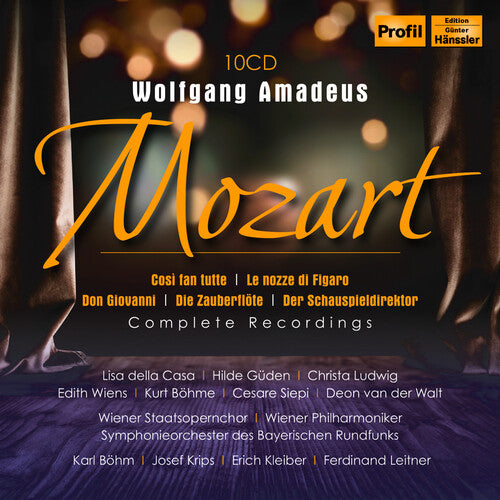
Mozart: 4 Complete Operas - 1955 Historical Recordings
CD$37.99$28.99Profil
Apr 07, 2023PH23005 -
![]()

-
![]()

-
![]()

-
![]()

-
 On Sale
Wagner: Der Ring des Nibelungen / Stemme, Hilley, Runnicles, Deutsche Oper Berlin
Available as Blu-Ray or DVD$129.99$90.99Naxos AudioVisual
Nov 11, 20222107001 -
![]()

-
![]()

-
 On Sale
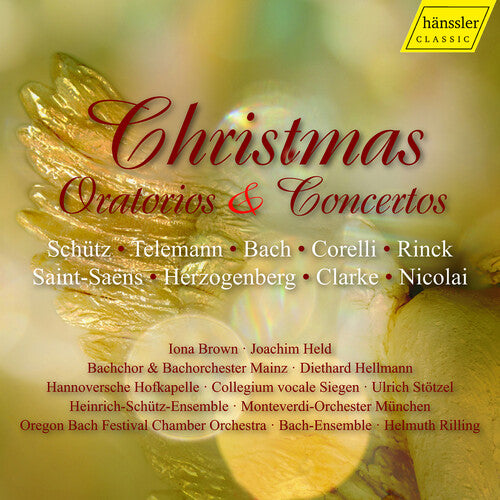
Christmas Oratorios & Concertos - Bach & Beyond
CD$32.99$24.99Haenssler Classic
Oct 07, 2022HC22034 -
![]()

-
![]()

-
 On Sale
Perfect Moods: Contemplative, Contemporary Piano Miniatures
CD$51.99$25.98Grand Piano
Sep 09, 2022GP898X -
![]()

-
![]()

-
 On Sale
Villa-Lobos: Complete String Quartets / Danubius Quartet
CD$51.99$36.99Naxos
Sep 09, 20228206006 -
![]()

-
![]()

-
 On Sale
Martini: Complete Organ Music / Tomadin
CD$50.99$38.99Brilliant Classics
Aug 26, 2022BRI96182 -
![]()

-
![]()

-
 On Sale
Brahms: Great Vocal Works / Rilling
CD$32.99$24.99Haenssler Classic
Jul 01, 2022HC22044 -
![]()

-
![]()

-
![]()

-
![]()

-
 On Sale
Verdi, Mozart: Arena di Verona Box
Available as DVD or Blu-Ray$92.99$46.47C Major Entertainment
Jun 24, 2022761908 -
![]()

-
![]()

-
 On Sale
French Impressions: A Potpourri of Piano Styles from the Romantics to a New Age
CD$51.99$36.99Grand Piano
Jun 10, 2022GP900X -
![]()

-
![]()

-
 On Sale
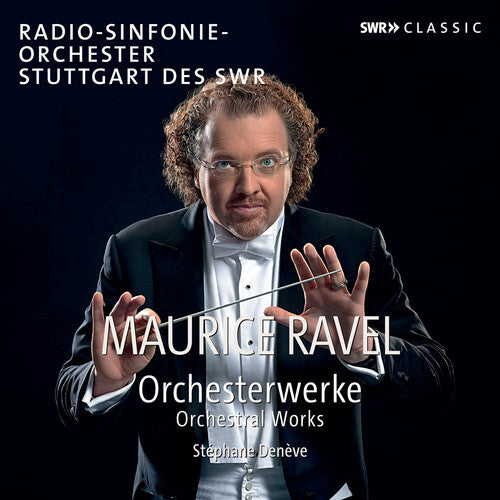
Ravel: Orchestral Works / Denève, SWR Radio Symphony Orchestra Stuttgart
CD$37.99$28.99SWR
May 13, 2022SWR19428CD -
![]()

-
![]()

-
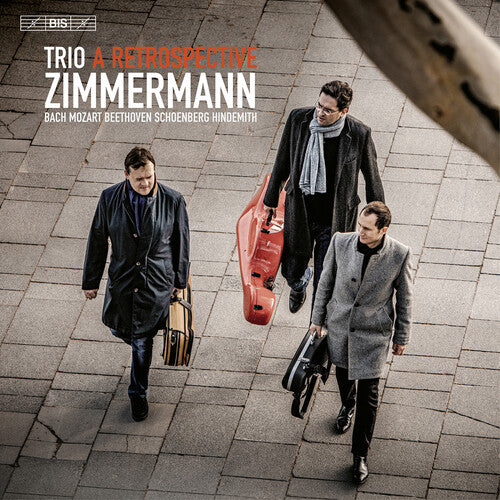
A Retrospective / Trio Zimmermann
SACD$64.99$58.49BIS
May 06, 2022BIS-2677 -
![]()

-
![]()

-
 On Sale
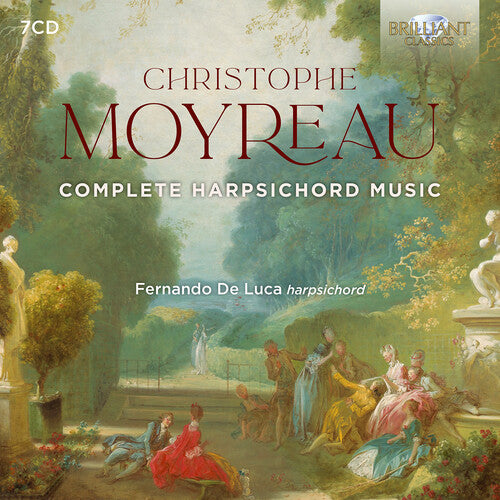
Moyreau: Complete Harpsichord Music / Luca
CD$37.99$28.99Brilliant Classics
Apr 22, 2022BRI96285 -
![]()

-
![]()

-
 On Sale
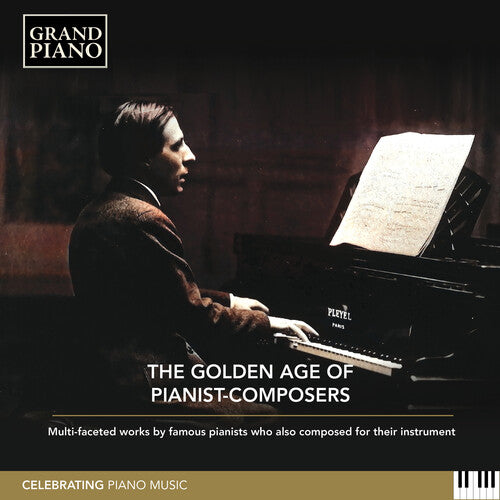
The Golden Age of Pianist-Composers
CD$51.99$36.99Grand Piano
Apr 22, 2022GP899X -
![]()

-
![]()

-
 On Sale
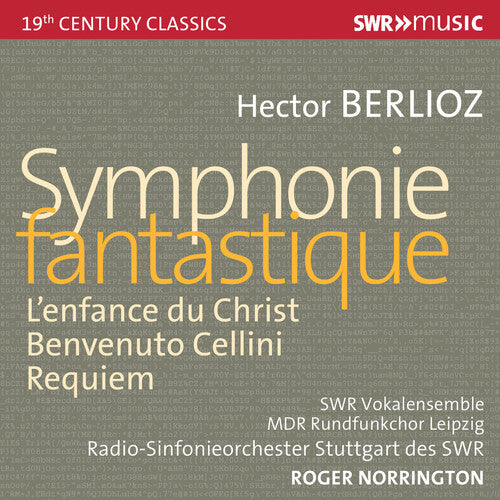
Sir Roger Norrington Conducts Berlioz / Stuttgart Radio Symphony Orchestra
CD$33.99$16.99SWR
Apr 08, 2022SWR19531CD -
![]()

-
![]()

-
 On Sale
A Vaughan Williams Anthology
CD$56.99$28.48Naxos
Apr 08, 20228508021 -
![]()

-
![]()

-
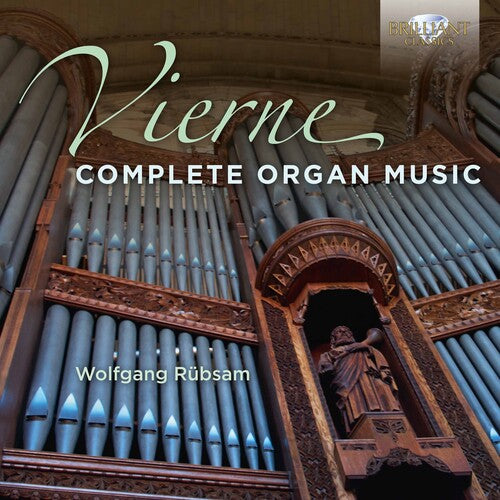
Vierne: Complete Organ Music / Rübsam
$41.99CDBrilliant Classics
Mar 25, 2022BRI96398 -
![]()

-
![]()

-
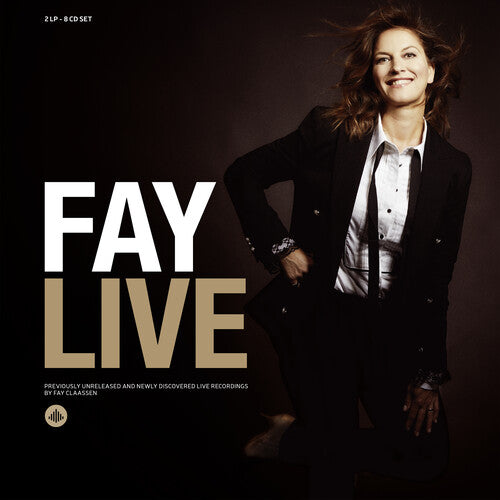 On Sale
Fay Live (2 LP + 8 CD Box) / Claassen
CD$96.99$72.99Challenge Records
Mar 11, 2022CR 73537 -
![]()

-
![]()

-
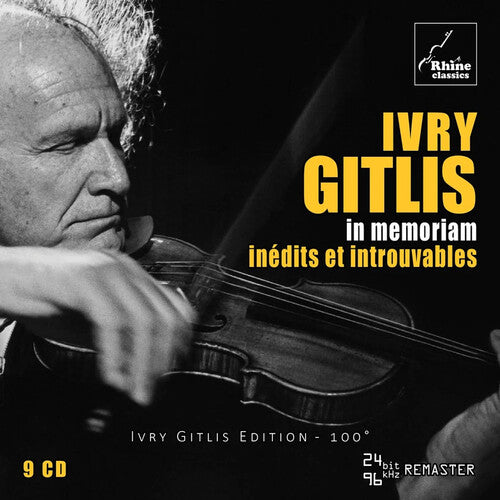 On Sale
Ivry Gitlis - In Memoriam
CD$128.99$96.99Rhine Classics
Mar 11, 2022RH 019 -
![]()

-
![]()

-
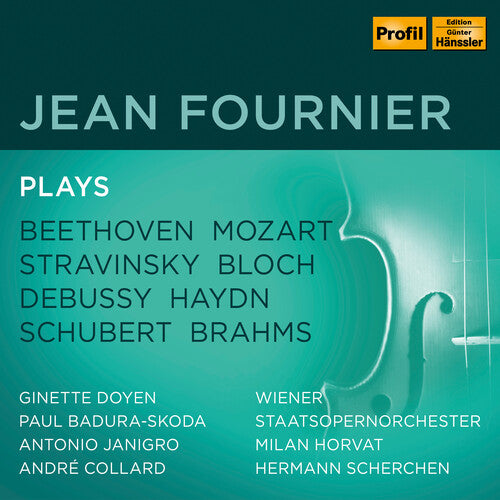 On Sale
Jean Fournier Plays Chamber and Concerto Works
CD$37.99$28.99Profil
Mar 04, 2022PH22003 -
![]()

-
![]()

-
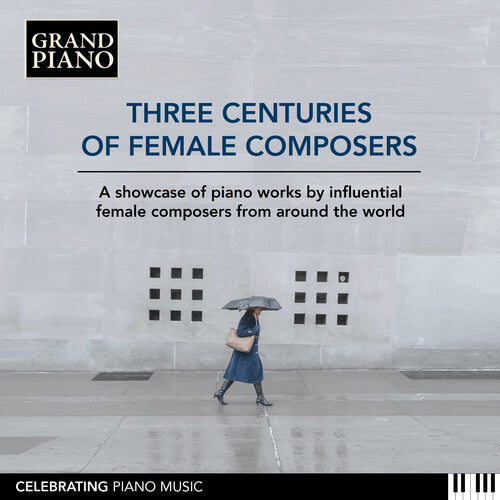 On Sale
Three Centuries of Female Composers
CD$69.99$34.98Grand Piano
Mar 04, 2022GP897X -
![]()

-
![]()

-
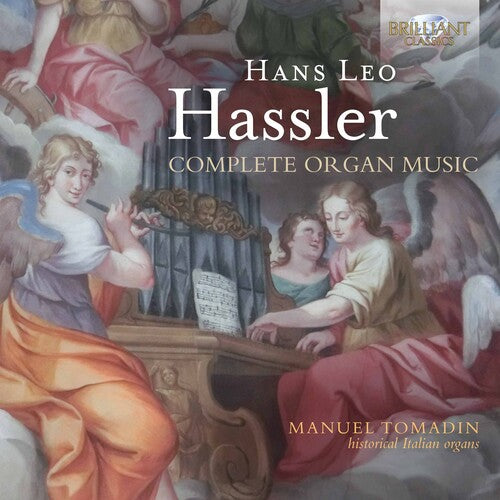 On Sale
Hassler: Complete Organ Music / Tomadin
CD$54.99$41.99Brilliant Classics
Feb 25, 2022BRI95331 -
![]()

-
![]()

-
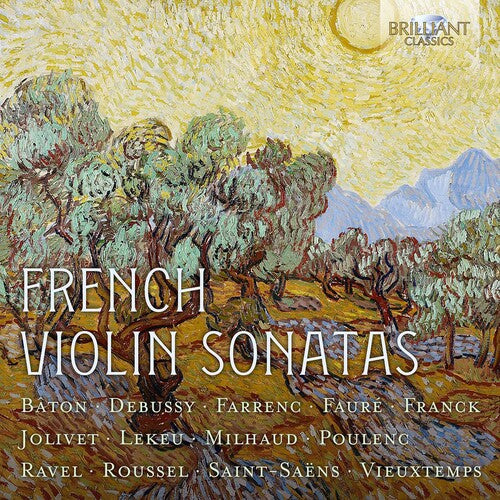 On Sale
French Violin Sonatas
CD$37.99$28.99Brilliant Classics
Jan 21, 2022BRI96549 -
![]()

-
![]()

-
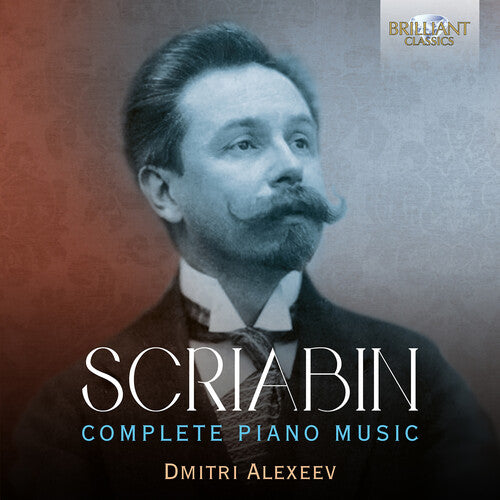 On Sale
Scriabin: Complete Piano Music / Alexeev
CD$41.99$31.99Brilliant Classics
Jan 07, 2022BRI95913 -
![]()

-
![]()

-
 On Sale
Rossini: Complete Piano Music - Péchés de vieillesse (Sins of Old Age) / Marangoni
CD$64.99$32.48Naxos
Nov 26, 20218501306 -
![]()

-
![]()

-
![Teatro alla Scala Ballets / Ballet Company and Orchestra of Teatro alla Scala [DVD]](//arkivmusic.com/cdn/shop/files/4018062-2764543.jpg?v=1762452314&width=800) On Sale
On SaleTeatro alla Scala Ballets / Ballet Company and Orchestra of Teatro alla Scala [DVD]
DVD$92.99$69.99C Major Entertainment
Nov 19, 2021758608


Mozart: 4 Complete Operas - 1955 Historical Recordings
Mozart created 22 stage works in his lifetime. This 10 CD box comprises the world-famous ‘evergreens’ in historical recordings from Vienna 1955. Soloists are Christa Ludwig, Lisa Della Casa, Hilde Gülden, Alfred Poell, Cesare Siepi, Fernando Corena, Kurt Böhme and many more.
REVIEW:
Böhm's conducting creates a slim, fluid Mozart sound in which the dynamic pendulum could swing a little more impulsively here and there, but which still has an instinctive feel for theatrical and dramaturgical diction on the one hand and interaction with the singers on the other.
-- Klassik.com


Wagner: Der Ring des Nibelungen / Stemme, Hilley, Runnicles, Deutsche Oper Berlin
The tetralogy of four operas that form Der Ring des Nibelungen (‘The Ring of the Nibelung’) explores the conjunction of love and power in a mythic landscape in which true power resides in possession of the ring. Composed over more than a quarter of a century, monumental in scale, and structured after the precedent of Greek drama, the cycle was first performed in 1876. Staged by the award-winning director Stefan Herheim, this innovative new production from Deutsche Oper Berlin features a leading international cast conducted by Sir Donald Runnicles.
REVIEW:
The Deutsche Oper Berlin is an important Wagner house, once dubbed “the winter Bayreuth”. This Ring, directed by the Norwegian Stefan Herheim, had a very long-serving predecessor in Götz Friedrich’s much-admired cycle that ran for 33 years (1984–2017).
Das Rheingold introduces several of the design tropes that unite the cycle visually and dramaturgically. Herheim is aware that this is in Berlin, and there are some World War Two and Wehrmacht references, about which he is quite unapologetic, speaking in the Rheingold booklet of “a chapter in German history which…systematized the extinction of entire people groups”. Those suitcases symbolize more than voluntary migration.
Derek Welton and Annika Schlicht have impressive voices well suited to their roles, although Fricka’s affectedly silly acting manner sometimes takes playfulness a bit far. Equally well sung are the Loge of Thomas Blondelle, the Freia of Flurina Stucki, and the Erda of Judit Kutasi, but then, this whole cycle deploys a seasoned Wagner cast, with few weak links.
The final scene leads us to Die Walküre, for which we need major new characters to be born, namely Brünnhilde, Siegmund, and Sieglinde. That means Wotan has some procreative work to do, so he does not enter Valhalla, but goes down through the prompt box whence Erda arose, there to sire with her the warrior maiden who is the Valkyrie of the title.
Die Walküre brings a change of Wotan, and another experienced Wagnerian, Iain Paterson, gives a sympathetic, authoritative, and well-sung account of his immensely demanding role. His huge Act 2 monologue – sometimes cited as one of longueurs of the Ring – is compelling. Hunding’s rather one-dimensional role is always watchable in Tobias Kehrer’s strongly played interpretation. Brandon Jovanovich’s Siegmund has pathos and when needed, vocal power, but Elisabeth Teige’s Sieglinde takes the vocal honors for a beautiful and touching portrayal. Nina Stemme is now a veteran Brünnhilde, having sung that and other Wagner leading roles all over the world, and she is probably still heading the list for casting directors of major opera houses; certainly she is on ringing form.
Herheim brings a surprise addition to the cast of Die Walküre in inventing the role of Hundingling, a young, soft-toy cuddling offspring of Hunding and Sieglinde. He is not mere decoration but plays a real role in Act 1, interacting with his bullying father and occasionally irritable mother, and often being comforted by the newly arrived stranger who seems to resemble his mother. Herheim explains in the booklet that this child is the embodiment of the shame Sieglinde feels about her enforced marriage. As Siegmund pulls the sword from the tree (or piano keyboard), Sieglinde slits the throat of Hundingling, who falls dead. Herheim references Medea, and says Sieglinde makes the tragic mistake of thinking the sacrifice of Hundingling is necessary for her to extricate herself.
In the third act, the opening “Ride of the Valkyries” begins with the Valkyries appearing out of the migrant crowd and donning proper Valkyrie kit – well, helmets and spears. The playing of the “Ride” itself has the usual wrong accenting, but most conductors ignore Wagner’s specific instruction that the main stress is always on the first beat (“I’m sick on a see saw”, not “I’m sick on a see saw”). Maybe the singers, as they perused the score on stage, and who do occasionally ‘conduct’ one another, could have given the correct beat! The fallen heroes arise from under their winding sheets and act as sex pests to the Valkyries, with Wotan’s seeming approval, a sign maybe of how he sees love. The end of Act 3 is strong as ever, tenderly affecting as Wotan bids farewell to his favourite daughter, and banishes Brünnhilde to her rock (or piano) against a curtain of flames, as the migrants look on in concern.
Talking points in Siegfried begin with Mime’s costume. He has the whiskers and hat of the mature Wagner, and the striped jacket of a concentration camp prisoner – so both notorious antisemite and a victim of that racist prejudice. Siegfried’s bear is none other than Alberich, who wonders into other scenes where the text does not place him. Siegfried is garbed traditionally, for some costumes reference the design history of the Ring. He also forges Nothung convincingly enough, hammer taps and all, and when it’s done, a map of the world briefly covers the stage, suggesting he could now conquer it all. The Woodbird is a boy soprano, as the composer initially intended. He does not sing his music very convincingly alas, and for some reason later adopts Alberich’s clown make-up. The dragon is a pair of enormous glowing eyes, and a mouth full of sharp teeth, and extras wielding the giant bells of brass instruments (the fight is a noisily brassy piece, and the weakest music in the Ring). We have a new singer for Alberich, Jordan Shanahan, who is as effective as his predecessor.
In Götterdämmerung the now familiar features of this production are used and varied, adding aspects of the opera house itself including its audience. Thus the sculptural metal feature of interlinked discs from the foyer is now an onstage backdrop to the opening scene, where Hagen, in modern dress, sips his interval drink at a table. He fetches Waltraute from the front row of the stalls, where he dozes through his nocturnal colloquy with Alberich. As before characters operate some of the time, e.g. for the blood brotherhood oath, in their underwear. There are some details of which the meaning is elusive, such as the burning man crossing the stage in Act 2, just as Hagen begins to summon the Gibichungs. Others, such as Gunther joining Siegfried in visiting Brünnhilde in the final scene of Act One and sharing his lines, instantly make some dramatic sense. As befits this mighty closing work of the tetralogy, there is plenty of spectacle to bring the cycle to a blazing conclusion.
The new singers are uniformly very good. Hagen is the vocally and physically imposing Albert Pesendorfer, wonderfully baleful in his night watch. His half-brother Gunther is also well sung and acted by Thomas Lehman. His sister Gutrune is the assured Aile Asszonyi, and Okka von der Damerau sings Waltraute with touching beauty; her scene with Brünnhilde is a strong one.
The Brünnhilde of Nina Stemme and Siegfried of Clay Hilley bring the same qualities heard in Siegfried. The American Heldentenor was a sensation as a last-minute replacement at Bayreuth’s 2022 Götterdämmerung, and should be heard by anyone who fears that no-one can truly sing the role these days. He has the range, the shining sound, the musicality and stamina required. Nina Stemme also has those qualities, but is about twenty years Hilley’s senior. All those performances of the repertoire’s most demanding roles begin to take a toll, of course, and she perhaps tires as this performance progresses, with one or two top notes ‘spreading’ – but really it matters little, for she triumphs over the difficulties and remains the consummate performer of this role.
Runnicles and the Orchestra of the Deutsche Oper Berlin are superb throughout, as is the chorus (in Götterdämmerung Act 2). Their familiarity with this work shows in the confidence of the playing, and the orchestral set pieces such as Siegfried’s Funeral Music are tremendous. If you want to hear incandescent playing in Wagner, try the Prelude to Act 3 of Siegfried, but the many subtle moments (always listen for the bass clarinet in Wagner) are deftly touched in, too. You will realise that Nietzsche, in calling Wagner a supreme miniaturist, was not just indulging his fondness for paradox.
The filming and surround sound are excellent. The filmed interview and Herheim’s contribution to the booklets are very useful addition in explaining his concept. Perhaps it will be worth consulting both ahead of viewing each opera, but there is also merit in viewing these works as if it is opening night in the Deutsche Oper, and you don’t know what you will see until the curtain rises. Then, to quote T.S. Eliot’s The Waste Land, you can “get the beauty of it hot”. If that beauty is mainly in the highly eloquent singing and playing, you will find much to impress, question, debate and decode in the innovative production.
-- MusicWeb International


Christmas Oratorios & Concertos - Bach & Beyond
The importance of Christmas inspired many composers to write music for the occasion, some designed to be performed in church services, others for concert or secular celebration. This 6 album set combines oratorios and concertos by Schütz, Telemann, Bach, Corelli, Rinck, Saint-Saëns, Herzogenberg, Clarke, Nicolai. Some of the finest artists and ensembles in the Hanssler catalog are showcased on these recordings, including Iona Brown, Joachim Held, Hannoversche Hofkapelle, Collegium vocale Siegen, Monteverdi-Orchester Munchen, Oregon Bach Festival Chamber Orchestra, and many more.
REVIEWS:
Christmas has inspired many composers to compose magnificent music, on the one hand for church services and on the other hand for festive concerts outside the church. This masterful box with 6 CDs contains oratorios and concertos by Schütz, Telemann, Bach, Corelli, Rinck, Saint-Saëns, Herzogenberg and Clarke, performed by some of the best artists and ensembles in the Hänssler catalogue, including Iona Brown, Joachim Held, Hannoversche Hofkapelle, Collegium vocale Siegen, Monteverdi-Orchester Munchen, and the Oregon Bach Festival Chamber Orchestra.
-- Stretto
As Christmas approaches, an avalanche of familiar Christmas tunes rumbles in the distance. Even in the case of large-scale Christmas compositions, the same works seem to be repeated too often, but Hänssler's six-disc box set reminds us that the repertoire is much wider.
The greatest work is Heinrich von Herzogenberg's (1842–1900) idyllic oratorio "The Birth of Christ" (1894), which spreads the event into a spectacle borrowing familiar and lesser-known Christmas carols based on the Old Testament and the Gospel of Luke. Herzogenberg, who was one of Brahms's supporters, represents full Romanticism at its tenderest, sometimes generously sweet. Schütz's "A Christmas Story" is more familiar and would work better as a period-style performance. Arnold Bruckhorst's (c. 1675–c. 1725) twenty-minute "Christmas History" is, on the other hand, a new acquaintance, as is Christian Heinrich Rinck's (1770–1846) even shorter classic Romantic Christmas Cantata. All performances are homely and competent, without causing great artistic tremors. Saint-Saëns' Christmas Oratorio can be found in more sophisticated recordings, but why, for example, Otto Nicolai's charming Christmas Overture is never heard in concerts?
Telemann's big and handsome oratorio Heilig, heilig, Heilig ist Gott (1747) is useless to look for elsewhere. The documentation only includes lists of works and performance information.
-- Rondo Classic


Perfect Moods: Contemplative, Contemporary Piano Miniatures
This six album boxed set comprises Tanya Ekanayaka’s Twelve Piano Prisms performed by the composer (GP785); works by Valentin Silvestrov performed by Elisaveta Blumina (GP639); Philip Glass’ piano music played by Nicholas Horvath (GP692); and Haro Stepanian’s Preludes (GP760) and Baal HaSulam’s Melodies of the Upper Worlds (GP808) performed by Mikael Ayrapetyan, alongside the pianist’s own A Whole in 12 (GP809). These contemplative contemporary piano miniatures have been expertly curated from the Grand Piano discography, and are sure to leave listeners and critics alike extremely satisfied.
Past praise for previously released volumes included in this set:
Stepanian: 26 Preludes for Piano / Ayrapetyan
Haro Stepanian was a fellow student of Aram Khachaturian. Stepanian himself was certainly a fine composer, based on this collection of preludes written between 1947 and 1965. There are three sets of eight here, completed in 1947, 1948, and 1956, plus two individual preludes written near the end of his life. His style is consistently folk derived, nothing one could call revelatory, but simply well-crafted work across a broad spectrum of emotional expression. The young Armenian pianist Mikael Ayrapetyan is a very fine advocate for this decidedly obscure music.
-- Fanfare
Ekanayaka: 12 Piano Prisms
Tanya Ekanayaka certainly hits her musical mark with these piano pieces. At times contemplative, sometimes raucous, these works have been injected generously with beauty and Rachmaninoff-like technique and drama. These works are certainly recommended to pianists to program for recitals: not only do they take the audience on a lovely, dark journey through the music of different cultures via the lens of a classically-trained pianist, but they sound enjoyable to play.
-- American Record Guide
Silvestrov: Piano Works / Blumina
Silvestrov seems well served by pianist Elisaveta Blumina. All is played and recorded with close and calmingly fervent engagement. Silvestrov’s surprising but pleasing commitment is to a vocabulary chronologically distant from the predominance of the twentieth century, let alone the twenty-first. If he occasionally sounds briefly like Einaudi it is only to remind us that once we listen for more than a couple of minutes Silvestrov is not a minimalist. In this context he is just a composer, one strand of whose creativity is inextricably in thrall to a style that, while familiar, serves his expressive needs better than any other. It is one dimension of the man.
-- MusicWeb International


Villa-Lobos: Complete String Quartets / Danubius Quartet
This set consists of previously released recordings. - ArkivMusic
Heitor Villa-Lobos once confessed that he loved to write string quartets, stating ‘one could say that it is a mania.’ His 17 quartets form a substantial part of his chamber music output, covering a long career that embraced national pride and musical experimentation leading to the rarefied atmosphere of the final masterpieces. Often drawing on the musical folklore of Brazil, these quartets are an outpouring of spontaneous and daring invention. Ranging from austere polyphony to compelling expressiveness and virtuosity, they represent one of the most distinctive bodies of chamber works in 20th-century music.
REVIEWS:
Villa-Lobos once confessed that he loved to write string quartets, stating ‘one could say that it is a mania.’ His 17 quartets form a substantial part of his chamber music output, covering a long career that embraced national pride and musical experimentation leading to the rarefied atmosphere of the final masterpieces. Often drawing on the musical folklore of Brazil, these quartets are an outpouring of spontaneous and daring invention. Ranging from austere polyphony to compelling expressiveness and virtuosity, they represent one of the most distinctive bodies of chamber works in 20th-century music. 6 CDs. Danubius Quartet. Original 1992–1994 Marco Polo releases.
-- Records International
Established in 1983, the Danubius Quartet was a Hungarian group – this set was recorded in Budapest – so while they may lack the Latinamericanlo’s Brazilian ‘accent’, they nevertheless hail from Europe’s great centre of string playing. Their brightly projected sound is ideal for Villa-Lobos’s life-affirming music.
-- Limelight


Martini: Complete Organ Music / Tomadin
Giovanni Battista Martini (1706-1784) was born in Bologna, in that era part of the Papal States. His father, Antonio Maria Martini, a violinist, taught him the elements of music and the violin and he later learned singing and harpsichord playing and the art of counterpoint from Giacomo Antonio Perti. Having received his education in classics from the priests of the "Congregation of the Oratory of Saint Philip Neri”, he became a priest himself in 1722. In 1725, though only nineteen years old, he received the appointment of chapel-master at the Basilica of San Francesco in Bologna, where his compositions attracted attention. At the invitation of amateurs and professional friends he opened a school of composition at which several celebrated musicians were trained; as a teacher he consistently declared his preference for the traditions of the old Roman school of composition. Martini was a zealous collector of musical literature, and possessed an extensive musical library, estimated at 17,000 volumes. Among his many students was…Wolfgang Amadeus Mozart, who held him in high regard and always spoke fondly of him. “Padre” Martini, as he was called, wrote an immense oeuvre of more than 2500 works, many of them sacred vocal works. His keyboard works include more than 100 sonatas.
This new recording presents the complete organ works of Martini, consisting mainly of Sonatas, but also shorter pieces like fugues, toccatas and preludes. In his earlier works Martini adopted the style of his illustrious predecessors, the masters of Baroque counterpoint, later he wrote in a less learned, more elegant and “pleasant” style, according to the demands of his audience. Played on a variety of historic Italian organs from the 18th century by Manuel Tomadin, one of the foremost Italian organists of today, a scholar and passionate musician, with an impressive discography to his name.
REVIEW:
Scholar, bibliophile, musicologist, teacher, composer: the life of Giovanni Battista Martini was divided between faith and scores. After brilliant studies, he was admitted to orders at the Monastery of San Francesco in his native Bologna. He became chapel master at just nineteen years old. It was from there that he corresponded with luminaries of the time, where he taught for five decades without asking for remuneration, to students from all over Europe. A certain W.A. Mozart took lessons (a CD by Stefano Molardi from Divox paid tribute to this meeting). A selfless, affable, modest person - revered as such. And prolific: sacred music of course, but also symphonies, and numerous keyboard pages.
Until now, however, the discography had not panicked around the organ work of Padre Martini, sporadically included in the 18th century anthologies of gallant style. Few albums are entirely dedicated to him...As in his box sets covering works by Johann Ludwig Krebs, Hans Leo Hassler and Christian Erbach on the same label, Manuel Tomadin sees broad and dares long-distance running, total immersion: nothing less than an announced complete works edition, here a dozen hours on the clock; a treasure hunt. We do not know according to what criteria the works were distributed over the nine discs, but the fact remains that the allocation optimizes the timings (78'47, 75'15, 77'42, 79'32, 77'41 , 79'09, 75'23, 78'36, 75'41).
The two large collections of sonatas [Op. 2 and Op. 3] are there, except that the fifth of opus 3, dedicated to the harpsichord, does not appear...The rest provides a harvest of sweet Sonata sui flauti, Toccatas, Elevazioni, (simili) solemn Pieni, but also liturgical contributions...
...the exhaustive discovery turns out to be addictive...The recipes never tire (we salute here a certain genius for loquacity), the delicacies are renewed, especially as Manuel Tomadin chooses the registrations masterfully. Another incentive for immoderation in listening: the box set alternates locations from one disc to another. No less than nine historic organs from Northern Italy, including five by Gabriel Callido, all built at the end of the settecento except that of Val di Zoldo (1812, the last of this maker), and the Pescetti of Polcenigo, a bit earlier (1732). The distinguished plenitude of the Principals, the enchanting Flutes, the luscious basses, the verbose reeds which take us to the theater: we swoon, especially when the sound recordings flatter the ear like this.
...the desire for completeness did not compromise the care of the production, carried out over only sixteen months. Manuel Tomadin, who is known to be an expert in the less luminous and more austere regions of Northern Germany, here demonstrates a sonic imagination and a Latin volubility which do more than convince...his marathon approach does not prevent perfectionism or preciousness. In this regard, note that the last page of the booklet details the temperature and humidity of each session.
For this great euphonious work and its lively and colorful interpretation, this inexhaustible candy box erects a powerful bulwark against all gloom.
-- Crescendo


Brahms: Great Vocal Works / Rilling
On six albums, this new release features great musical moments for all admirers of Brahms and fans of choral singing at its very best! The program leads the listener through Brahms´ essential vocal works and a splendid set or artists grant highest quality of interpretation. The recordings included are taken from the Haenssler catalog and were recorded over the course of the last few decades. Featured artists include Donna Brown, Ingeborn Danz, Dietrich Fischer-Dieskau, Lioba Braun, Gilles Cachemaille, Bach-Collegium Stuttgart, Kammerchor Stuttgart, and more.
SET CONTENT HIGHLIGHTS:
• Ein deutsches Requiem (A German Requiem), Op. 45 • Liebeslieder Waltzes (18), Op. 52 • Neue Liebeslieder Waltzes (15), Op. 65 • Vier Ernste Gesänge (4 Serious Songs), Op. 121 • Deutsche Volkslieder (49), WoO 33 (excerpts)


Verdi, Mozart: Arena di Verona Box


French Impressions: A Potpourri of Piano Styles from the Romantics to a New Age
The range and variety of French piano music in the 19th and 20th centuries is exemplified in these critically acclaimed albums bringing together rarely encountered pieces, a number of which are performed on period instruments. Théodore Gouvy’s little-known sonatas and Benjamin Godard’s fragrant lyricism are part of a lineage that includes the masterful large-scale Piano Sonata of Vincent d’Indy, the virtuosic rarities – many in première recordings – of Saint-Saëns, Satie’s tenderness and wit, and unknown piano versions of some of Debussy’s greatest orchestral masterpieces.
Review excerpts of previously released volumes included in this set:
Gouvy: Sonatas for Piano 4 Hands / Naoumoff, Yau Cheng
Their ensemble and musicality allow these works to be heard in their best light. The sound is excellent and the booklet notes are quite well written.
-- American Record Guide
Saint-Saëns: Complete Piano Works, Vol. 5 / Burleson
Burleson proves to be a fine advocate for this music: He balances just the right amount of elegance and grace with the fieriness that this music requires. And he is a virtuoso par excellence, easily handling the numerous difficulties one finds in this music.
-- Fanfare
Godard: Piano Works, Vol. 2 / Reyes
Reyes’s second volume of Godard’s piano works is as well played and brimming with new discoveries as her first volume. Here we get four nocturnes, two of which look back to Chopin, One (Op 139) looks forward to Poulenc, and the last (Op. 150) looks towards Fauré. The opening work, ‘Reve Vecu’ (Living a Dream) could easily be classified as a nocturne as well. All give Reyes the opportunity to make use of her wonderful legato touch.
-- American Record Guide


Ravel: Orchestral Works / Denève, SWR Radio Symphony Orchestra Stuttgart
Stéphane Denève, triple winner of the Diapason d’Or of the Year, produced many outstanding recordings as chief conductor of the SWR Radio Symphony Orchestra, Stuttgart from 2011 until 2016 when the orchestra merged with its sister orchestra from Baden-Baden and Freiburg to form the SWR Symphony Orchestra. They are now reissued as a five album boxed set including the ballet Daphnis et Chloé, Ravel's longest work, written for Sergei Diaghilev’s Ballets Russes, and the operas L'Heure espagnole and L'Enfant et les sortileges. Although the two operas cannot be strictly considered orchestral works, they are essential to understanding the œuvre of a composer who had a great predilection for fantasy worlds and the exotic. As a student Ravel composed the Ouverture de Shéhérazade and, several years leter, three poems for voice and orchestra on the same topic – both works form part of this set. Throughout his entire career, from Une barque sur l'ocean to Ma mère L'Oye Ravel created magical soundscapes in a highly original manner and with great stylistic freedom. A big inspiration for him was American operetta but also jazz and fairy tales. The formal structure of his works has the clarity of crystal and the elegance of mathematics. The SWR Radio Symphony Orchestra, Stuttgart and the cast of young singers selected by Denève give thrilling interpretations.
REVIEWS:
Denève was the final Chief Conductor of this orchestra, from 2011-2016, after which they merged with the South West German Radio Orchestra for budgetary reasons. Their timbre is mellow and warm, akin to that of the Boston Symphony, but their ensemble playing and attack are tight.
The set is a highly worthwhile investment if you want a single collection of Ravel’s orchestral music. The sound is warm, clear, and spacious. Highly recommended.
-- Limelight (Australia)
Denève is very consistent in his meticulously prepared if slightly detached style. The playing and engineering is consistently very good indeed. The price of this box set is attractive. The song cycle and the two operas engaged me the most.
-- MusicWeb International


A Retrospective / Trio Zimmermann
There is no better recordings of the strio trio repertoire than those you will find here. - David Hurwitz (ClassicsToday.com)
In 2007 Frank Peter Zimmermann was able to realize his long-cherished dream to establish a string trio, together with Antoine Tamestit and Christian Poltéra. Three individually superb string players do not necessarily add up to a top-flight trio – even if they all play on instruments by Stradivarius, as here – but Trio Zimmermann immediately made a name for itself at international festivals and prestigious concert venues.
In 2010 the trio released its first album – with Mozart's seminal Divertimento – to critical acclaim. (More than 10 years later, that recording was the top recommendation in the Record Review series Building a Library on BBC Radio 3.) On following offerings, the ensemble explored the later repertoire for string trio: two discs with Beethoven's contributions to the genre, and a third with works by Hindemith and Schoenberg which have garnered distinctions such as Diapason de l’Année, the Chamber Award from BBC Music Magazine and a ‘Jahrespreis’ from the German Record Critics’ Award association. For their fifth disc to date the trio went back in time, however, as the three members together prepared a performing version of Bach's Goldberg Variations, described as ‘a triumph of combined technical ingenuity and musical insight’ in The Strad. These five discs have now been collected into a boxed-set retrospective, offering lovers of chamber music more than 5 hours of glorious music-making, in top-notch sound and including the original booklets with full documentation.
Past praise for previously released albums included in this set:
Bach: Goldberg Variations
The expertise and fluency of the Zimmermann's playing is evident. Their approach to dynamics is refreshingly flexible, and all three players bring a graceful approach to ornamentation.
-- BBC Music Magazine
Beethoven: String Trios, Op. 9, Nos. 1-3
These musicians are in command of the meticulously written extremes in expression, sforzandos not indiscriminately stabbed at but gauged according to the contexts in which they appear. Tempi are gauged to a nicety too. In sum, they do Beethoven proud throughout this exceptionally fine disc.
-- Gramophone
Hindemith & Schoenberg: String Trios
The Trio Zimmermann play them both Hindemith works with such energy, panache, and attention to the minutest detail that they are totally convincing and make a perfect foil to the rigors of the Schoenberg that follows.
-- The Guardian
Trio Zimmermann play Mozart & Schubert
The Zimmerman Trio plays with remarkably accurate intonation and a ravishing tone that’s also mindful of the Classical style. In other words, they don’t lay it on too thick, but they aren’t afraid to let the melodic lines sing. Schubert’s single-movement trio makes the perfect coupling.
-- ClassicsToday.com (10/10; David Hurwitz)
Beethoven: String Trios, Op. 3; Serenade, Op. 8
The Zimmermann Trio offers what must be the finest recording of Beethoven's Op. 3 since the classic mono Heifetz/Primrose/Piatigorsky version. They bring out all of the first movement’s requisite brio, paying heed to the syncopated rhythmic underpinnings that support the scampering triplet passages. The ensemble lightens its sonority for the Andante without sacrificing body and definition, while they articulate the Menuetto’s two-note phrase groups and subito dynamics in strict tempo yet in a way that’s oblivious to the bar lines. While the Finale is a model of controlled ferocity, the musicians are not afraid to let the lyrical sections sing out sweetly (never cloyingly).
Power and delicacy effortlessly coexist in the Serenade’s opening March, while subtle dynamic gradations distinguish the Menuetto’s loud arpeggiatted tuttis. The Adagio’s long unison lines offer cogent proof that one can employ minimum vibrato and still retain a focused and alive sonority. The March returns da capo at the end of the piece, with slightly more emphatic fortes and lighter pianos this time around. The warmth, clarity, and ambient realism of BIS’s surround-sound engineering holds equal appeal when experienced in conventional stereo playback mode. This release is not just a worthy follow-up to the Zimmermann Trio’s magnificent Mozart K. 563 and Beethoven Op. 9 Trio traversals, but a reference disc in its own right. Bravo!
-- ClassicsToday.com (10/10; Jed Distler)


Moyreau: Complete Harpsichord Music / Luca
Christophe Moyreau (1700-1774) was born and spent most of his life in Orléans. He became organist at Orléans Collégiale Saint-Aignan in February 1719 and at Orléans Cathedral in January 1738 and occupied this position until around 1772. In French music of his era (secular and also religious), an important place was reserved for the rhythms and structures of the dance. In 1753 Moyreau published his “Pièces de clavecin”, 124 pieces grouped in 6 books. The dances Allemande, Courante, Sarabande, Gigue, Rigaudon, Menuet are part of Suites, while these books also include concertos and sonatas. Some of the pieces bear titles (in the style of Couperin and Rameau) like La Flotante, Le Baccante, Le Jaloux, La Coquette, Le Preludant, L'Euridice, La Comique, L'Orphée and Le Caprice. Book 6, uniquely for French harpsichord music, consists of several three-movement keyboard simphonies written in Italian style.
Played by Fernando De Luca, one of Italy’s foremost harpsichord players, who recorded to great critical acclaim the complete keyboard works by Graupner, published by Brilliant Classics. The first-ever survey on record of the complete surviving output by a significant contemporary of Rameau: a missing piece in the jigsaw of the French Baroque.


The Golden Age of Pianist-Composers
This collection spotlights six legendary pianist-composers from the 19th and 20th centuries. Adolf von Henselt’s ferocious technical studies and Romantic salon pieces led Schumann to dub him ‘the Chopin of the North’. Polish virtuoso Ignaz Friedman’s works offer delightful melodic beauty and harmonic inventiveness set alongside works by his countryman, Józef Hofmann, renowned as a poet of the keyboard. The French master musician Alfred Cortot is represented here with a selection of stylish piano arrangements of works by great composers. As one of Finland’s most respected musicians during the early 20th century, Selim Palmgren displays a wide variety of technical and stylistic challenges with music that is both traditional and visionary; while music by the exiled Russian composer Nikolay Medtner is highly Romantic and spiritually charged. These six towering superstars represent the summit of the piano’s Romantic golden age, heard here in critically acclaimed performances by award-winning pianists.
REVIEWS:
Sergio Gallo's playing of the pleasantly melodic, cantabile salon pieces by the 19th century German-born piano virtuoso, composer, and pedagogue Adolph Henselt (1814-1889) is lively and attractive. He planned this program intelligently to present the listener with variety and contrast as well as the flavor of this composer’s lovely music.
-- American Record Guide
The legendary Swiss pianist Alfred Cortot's (1877-1962) arrangement for solo piano of César Franck’s Violin Sonata, the centerpiece of this program, is a finger-buster, but He Yue doesn’t make a big deal out of it. His reading is very effective, and even exciting. Given the unusual nature of this program, whose contents are much more than adequately presented by the pianist, I’d rate this CD as of more than average interest.
-- Fanfare
Paul Stewart, a long-time champion of Medtner’s music, plays a restored period Steinway actually performed on by the composer himself in 1929 in Montreal. Its tone is well worth hearing, especially in the fine audio on offer here, and Stewart’s even more so: he gives an authoritative, expressive and thoroughly listener-friendly reading of the Medtner works presented here.
-- MusicWeb International
The second CD is dedicated to Ignaz Friedman. Joseph Banowetz plays the original, often somewhat melancholy miniatures with great charm. He succeeds in fine changes of mood and a pleasant depth of feeling.
The third CD contains original compositions by the Pole Jozef Kasimierz Hofmann (1876-1957), whom Rachmaninoff considered the best pianist next to him. His compositions are more characteristic than Henselt’s and technically challenging. Artem Yasynskyy plays them with great commitment and technically at a high level.
Selim Palmgren (1878-1951) was a Finnish concert pianist and conductor of international standing. He was a student of Busoni and composed extensively. Jouni Somero has put together a beautiful program of small pieces that show Palmgren’s art in all its range very well. Somero plays sensitively and with beautiful clarity.
-- Pizzicato


Sir Roger Norrington Conducts Berlioz / Stuttgart Radio Symphony Orchestra
During his thirteen years as chief conductor of the Stuttgart Radio Symphony Orchestra of SWR Sir Roger Norrington conducted and recorded an important part of Berlioz's core repertoire. The present boxed set brings together on seven CDs the Requiem, the opera Benvenuto Cellini (concert performance), the oratorio L'Enfance du Christ, the overture Les Francs-juges and of course the Symphonie fantastique.
Norrington's style has caused a stir internationally with what has come to be termed ‘The Stuttgart Sound’: a synthesis of historically-informed performance practice with the technical capabilities of a modern orchestra. Whether in Mozart, Haydn, Bruckner, or Berlioz, Norrington seeks to capture the performance experience of the time, adjusting the orchestra’s size and seating plan to create an authentic sound without vibrato.
Hector Berlioz had to surmount a variety of challenges before he was able to pursue his musical vocation. His father, a respected physician in the provincial South of France, was not readily willing to come to terms with his son's intention to quit his medical studies and turn instead to music. He therefore made all further financial support subject to Hector's climbing up the musical ladder at lightning speed. Alas, it didn't work so easily. Berlioz's road to success was tedious and marked by adversity and struggle, his personal life tumultuous. The uniqueness and originality of his musical style are no longer disputed, but this insight came at the end of a decades-long process.


A Vaughan Williams Anthology
Ralph Vaughan Williams is one of Britain’s most illustrious composers, and this specially curated selection of works demonstrates the sheer breadth of his achievement. As a major 20th century symphonist he is represented by four of his nine symphonies, all in critically acclaimed recordings (‘A clear top recommendation’ wrote Gramophone of A Sea Symphony). Popular orchestral works such as the celebrated Tallis Fantasia and The Lark Ascending are also included. Vaughan Williams’ chamber works are performed by the Maggini Quartet, his greatest contemporary champions; while the sublime Mass in G minor shows the composer’s high standing in the English choral tradition.
REVIEW:
More Vaughan Williams—and very welcome, too. While admirers may favour other performances, every take here on the composer’s exquisite scores is more than competitive. This curated selection of works is a measure of RVW’s achievements. As a major 20th-century symphonist he is represented by four of his nine symphonies, all in much-praised recordings, while winning orchestral works such as the celebrated Tallis Fantasia and The Lark Ascending are also included. Vaughan Williams’ chamber works are performed by the Maggini Quartet, his greatest contemporary champions; while the sublime Mass in G minor is a solid addition.
-- Classical CD Source (Barry Forshaw)


Vierne: Complete Organ Music / Rübsam
Organ works account for only 17 of Vierne’s 62 opus numbers, and yet no one would now question his status as the organ’s greatest symphonist after Franck and Widor. His six symphonies stand at the pinnacle of the 20th-century literature for the instrument: the six-movement First Symphony with its fugue and celebrated Final (‘my Marseillaise’, as he referred to it); the Second, his masterpiece, with its scintillating scherzo; the Third, the shortest and most concise; the Fourth, whose tortured outer movements are in sharp contrast to the buoyant Menuet and sumptuous Romance; the Fifth, the longest, and in many respects the most elevated; his Sixth and last, the most harmonically advanced and psychologically complex, rising from the depths of despair to ebullience in its rampant Final.
In complement to the symphonies, Vierne composed several suites of pieces ‘in a free style’, as well as more impressionistically conceived sets of fantasy pieces. Music specifically designed for the liturgy includes a pair of organ masses – one of them a requiem – and a triptych of meditations. Whether reflective and deeply etched with chromaticism or ebullient and thunderous, all of Vierne’s output for his own instrument is conceived with the sound and tonal variety of Cavaillé-Coll’s organ’s in mind – one of the largest of all being the organ at Notre Dame in Paris, where Vierne occupied the post of titular organist for many decades.
The German-American organist Wolfgang Rübsam has himself been counted among the finest living organists for many decades, internationally known through over a hundred highly acclaimed albums of organ repertoire from the Baroque and Romantic periods including recent Bach recordings on the lute-harpsichord for Brilliant Classics: ‘These lovely performances memorably showcase Rübsam’s sensitive and poetic side.’ -Classics Today
REVIEW:
Louis Vierne composed sixty-two opus-numbered works, most of which were for the organ. His organ oeuvre consists of 6 symphonies, 2 low masses, 24 pieces in the free style and 4 volumes of fantasies. Away from the organ, his other music includes orchestral, chamber, song cycles and church music. His organ works were written with a specific type of instrument in mind, those built by Aristide Cavaillé-Coll (1811-1899), who revived organ building in France to produce “the symphonic organ”. Rübsam performs on three organs in this collection: Aristide Cavaillé-Coll Organ at Saint-François-de-Sales, Lyon, Aristide Cavaillé-Coll Organ at Saint-Antoine-des-Quinze-Vingts, Paris and the Ernest M. Skinner Organ at Rockerfeller Memorial Chapel, Chicago. Full specifications of each instrument are included in the booklet.
This is a thoroughly enjoyable set, well recorded and well apportioned. For those coming to Vierne for the first time, this comprehensive collection will provide the ideal primer.
-- MusicWeb International


Fay Live (2 LP + 8 CD Box) / Claassen


Ivry Gitlis - In Memoriam


Jean Fournier Plays Chamber and Concerto Works


Three Centuries of Female Composers
Ranging from the 18th century to the music of our time, this collection of critically acclaimed recordings explores the significant contribution to solo piano repertoire made by a wide variety of women composers. These rare and important pieces include the works of the celebrated pianist Anne-Louise Brillon de Jouy and of Hélène de Montgeroult, whose sonatas are distinctive additions to the Classical and early Romantic periods. Maria Szymanowska’s deft dances contrast with the fearsome demands of Teresa Carreño, herself a great virtuoso. Vítězslava Kaprálová was the most important female Czech composer of the 20th century, while Agathe Backer Grøndahl was one of Norway’s most respected composer-pianists. Tanya Ekanayaka continues the lineage in her own diverse and hybrid pieces.
Volumes included:
Carreño: Rêverie & Selected Music for Piano
Szymanowska: Complete Dances for Solo Piano
Kaprálová: Complete Piano Music
Pioneers: Piano Works by Female Composers
Brillon de Jouy: The Piano Sonatas Rediscovered
Ekanayaka: The Planets & Humanity - Piano ReflectionsMontgeroult: Complete Piano Sonatas
Backer Grøndahl: Piano Works
REVIEWS:
French pianist Nicolas Horvath reveals more of the music of Hélène de Montgeroult, the pianist, composer, and teacher whose background influence on such seminal figures as Chopin and Schumann – and quite possibly Brahms – is only now being acknowledged. Horvath makes appealingly light work of her nine keyboard sonatas, several recorded for the first time.
-- BBC Music Magazine
Nicolas Horvath clearly enjoys de Jouy’s work, and delivers readings which are spirited and lyrical, playful and reflective, easing into the minor mode (in which most of the sonatas were composed) as though at the daybreak of Romanticism. In this particular recording, I was struck by the clarity of sound, which made it easier to hear the evenness and responsiveness of Horvath’s touch.
-- Fanfare
Venezuelan pianist-composer Teresa Carreño had a dramatic, colorful career that is hard to believe. Of the works presented in this fascinating recording, all but one are world premieres. This music has a gentle melancholy. Several of these miniatures have Chopinesque harmonies and perfumes. The album ends on an upbeat note, the composer’s Opus 1, a highly accomplished waltz full of scintillating episodes written for Gottschalk. The latter must have been knocked out by this charmer.
Alexandra Oehler plays with sensitive phrasing and skillful voicing. Her refined musical sensibility is just right for this repertory. The recording, like the music, is warm and inviting.
-- American Record Guide


Hassler: Complete Organ Music / Tomadin
Born in Nuremberg in 1564 within a musical family, Hassler received his formative musical instruction from his father and quickly developed into a keyboard player of formidable gifts: in the dedication to his 1591 Cantiones sacrae he noted that he was ‘from a tender age more talkative with the fingers than with the tongue’. In 1584 Hassler left Nuremberg to continue his education in Venice, becoming one of the first in a long line of German musicians who journeyed south of the Alps for study in Italian musical centers. While his motets and other vocal works were widely disseminated during his lifetime and have attracted recordings by period-instrument luminaries such as Philippe Herreweghe, his output for organ and harpsichord has received much less than its fair share of attention. Manuel Tomadin demonstrates that across its range there is no reason for music of this invention and lively originality to be hid under a bushel. In a 1593 portrait, Hassler is described as a ‘most esteemed organist’, and a single-manual chamber organ with pedal is prominently included in the frame. After moving back to Germany, taking a succession of prestigious posts in musical centers across central and southern Germany including his home city, he became known as an expert in organ design, and his own music for the instrument exploits every possible technical and coloristic refinement of the new instruments of his age.
On this set, Manuel Tomadin plays a collection of historically appropriate instruments in Italian churches, and the collection is highly attractive as a gallery of Italian organ-building in its own right. The formal weight of Hassler’s output falls on instrumental paraphrases and elaborations of the Magnificat hymn, complemented as in Frescobaldi with ornate and harmonically adventurous ricercars and more lyrical canzonas.


French Violin Sonatas
The works in this collection emerged from the genre of duo concertant initially conceived as showcases for the virtuosity of Nicolò Paganini and his successors in the Franco-Belgian school of violin playing, notably Henry Vieuxtemps. He and Louise Farrenc remain attractive outliers in the chronology of French violin sonatas, which began proper in 1877 with the first performance of Fauré’s First Sonata, followed in short order by comparably significant works by Saint-Saëns and Franck. These three works considered together form a trinity linked by features which came to define the character of the French violin sonata as a genre over the next few decades: recitative-like sections, cyclical form, modal techniques and organ-like pedal points, especially in the piano part – all three composers having spent a good part of their career as titular organists at landmark churches in Paris.
A further spur to the flood of of violin sonatas from Paris during the first decades of the 20th century was the abundance of superb performers who had made Paris their home: foremost among them Pablo Sarasate, Eugène Ysaÿe, Georges Enescu, and Jacques Thibaut. The Wagnerian shadow falling over works by Roussel and Lekeu is decisively dispelled by Debussy’s late and sinuous masterpiece, and then more radically by Ravel in the lazy, seductive Blues of his Sonata. The collection evolves further with a bold Sonata of 1932 by André Jolivet, whose movement titles advertise his rejection of the classical forms honored by previous rarities – not only Louise Farrenc but also Rhené-Emmanuel Bâton, who composed in a richly mystical but traditional idiom as an outlet for the creative urges accumulated and repressed like Mahler during his occupation as a conductor.
REVIEW:
A sure-fire bet for collectors of unusual repertoire is Brilliant Classics’ set of French Violin Sonatas, which is headed, interpretatively, by the Debussy, Ravel (Second), and Franck sonatas, superbly played by violinist Kristóf Baráti and pianist Klára Würtz. All of these excellent recordings date from between 1987 and 2020.
-- Gramophone


Scriabin: Complete Piano Music / Alexeev
The history of Scriabin’s piano music is like a condensed history of piano music, for his style changed perhaps more than any other composer during his life. It has been said that young Scriabin kept Chopin’s music under his pillow, and the early Preludes and Mazurkas certainly breathe the same heightened air of ardour and yearning. His journey from the traditional tonal harmony of these Chopinesque beginnings to his atonal ‘Mystic chord’ (based on fourths) is, however, a masterfully smooth one, best appreciated when taking the sum of his work into account. Born in 1947, long resident in London as a professor at the Royal College of Music,
Dmitri Alexeev entered the Moscow Conservatory at six years of age. A string of EMI recordings in the 80s established his reputation worldwide, but they included scant representation of one of his most ardent passions, the music of Scriabin, beyond the concertante Prometheus conducted by Riccardo Muti. Alexeev’s touch emulates the contemporary accounts of Scriabin’s own playing, which did not rely on power because of his slight build. Rather, he ‘captivated the listener through his ability to enhance his sound with an extraordinary range and gradation of color…his fingers seemingly plucked the sound from the piano keys…as if his hands flew over the keyboard barely touching it.’ Made between 2008 and 2019 in London and in the purpose-built Music Room at Champs Hill, home to many superlative modern chamber-music albums, these recordings won broad critical acclaim on their original publication. Their reissue at super-budget price makes an obvious first port of call for any listener looking to immerse themselves in the rich, heady world of Scriabin’s piano writing.
REVIEW:
Single-artist sets such as this are rarely satisfactory with their inevitable troughs and peaks. Here, for two reasons, is an exception: first, for any pianist to play the complete solo piano works of Scriabin (except for works without opus numbers) is a tremendously challenging undertaking; second, the pianist in question is one of today’s keyboard giants. Dmitri Alexeev must rank as one of the most under-the-radar great pianists currently active. Having won the Leeds Competition in 1975 (the first Russian to do so, beating Schiff and Uchida in the process) and enjoyed a high-profile international career for the following decades, Alexeev devotes much of his time to teaching (at the Royal College of Music) and sitting on competition juries. But great pianist he remains.
-- Gramophone


Rossini: Complete Piano Music - Péchés de vieillesse (Sins of Old Age) / Marangoni
Rossini drew a line under his hugely successful operatic career at the age of 37 and wrote little until his final years in Paris, where he became renowned for his musical salons. For these he wrote numerous short piano pieces which he jokingly called Péchés de vieillesse (Sins of Old Age): sometimes experimental miniatures that can raise a smile or touch the heart, blurring boundaries between the irreverent and the serious. Rossini’s publisher Antonio Pacini considered the composer’s late works as his most illustrious period: ‘what he composes daily is a series of masterpieces that seems as though it will never end.’ Including songs and fascinating novelties, this acclaimed complete edition contains a myriad of rarities and numerous world premiere recordings.


Teatro alla Scala Ballets / Ballet Company and Orchestra of Teatro alla Scala [DVD]
| The present release showcases five outstanding ballets from the legendary Teatro alla Scala. First is Romeo and Juliet. The stars of this masterly performance are Roberto Bolle and Misty Copeland, together for the first time in this ballet. Next is The Sleeping Beauty which received fantastic reviews: “Timofej Andrijashenko had a great debut with the Désiré of Nureyev. Polina Semionova was an amazing Aurora” (Strata Gemmi) “A great production, a success thanks to a superlative and thrilling ballet company.” (LUUK) Don Quixote follows, and classical ballet stars Natalia Osipova (Bolshoi Ballet) and Leonid Sarafanov (Mariinsky Ballet) make this a breathtaking distinctive performance. Next is Le Corsaire, of which critics wrote: “The star is the ballet company, in dazzling form” (Il Giorno), “Impeccable” (Informadanza). And finally, The Lover’s Garden: “The creative genius of the choreographer Volpini leaves a strong mark on this new production, confirming the talent.“ (giornaledelladanza.com) |
![Teatro alla Scala Ballets / Ballet Company and Orchestra of Teatro alla Scala [DVD]](http://arkivmusic.com/cdn/shop/files/4018062-2764543.jpg?v=1762452314&width=800)