Over time, the memory of the brilliant virtuoso that was Eugene Ysaye (Liege, 1858 - Brussels, 1931) ended up supplanting his status as a composer in the collective memory. It should be remembered, however, that Eugene Ysaye created, through his works, a fundamentally new and original genre, distinguished by a science of writing and harmonic richness. This album brings together concert works by Eugene Ysaye which, with the exception of the Saltarelle carnavalesque, have never been recorded in their orchestral version. It therefore invites us on a unique journey into the composer's sound universe, from his first to his last compositions written for soloist(s) and orchestra.
Boëllmann: Orchestral Works / Davin, Orchestra symphonique de Mulhouse
Fuga Libera
CD · 1 disc
$20.99Jul 09, 2021
Léon Boëllmann’s Suite gothique, with its suave Prière à Notre-Dame and its spirited Toccata, rapidly became a beloved war-horse of organists throughout the world and gained the composer great renown. The Suite’s fame, however, caused other works by Boëllmann — who had been born in the same year as Debussy and who died in the same year as Brahms — to be forgotten. Patrick Davin chose to present Boëllmann’s symphonic works on this recording, the last he was to make before his untimely death.
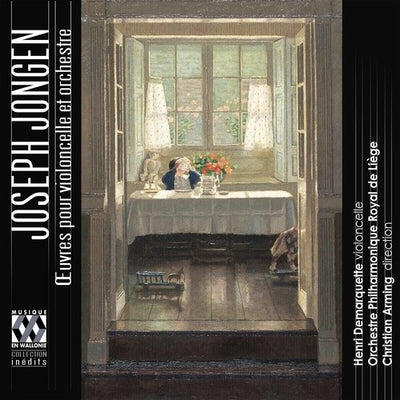
Jongen: Works for Cello & Orchestra / Arming, Demarquette, Liege Philharmonic
Musique en Wallonie
CD · 1 disc
$20.99May 19, 2017
Anyone who has witnessed the welcome accorded to a national football team returning home after winning an international trophy might find it hard to believe that, not all that long ago, composers too were the object of similar popular adulation. The contest that gave rise to the most extreme transports of delight and pride was the Prix de Rome. Instituted by the Belgian government in 1841 on the model of the French prize of the same name, it was awarded every two years to young composers of under thirty. After being awarded the Prix de Rome in 1897, Joseph Jongen (1873-1953) began to compose vast works for cello and orchestra. These testify to a culture both Germanic and French which allows him to make the link between the works of Richard Strauss- whom he met in Munich- and Ernest Chausson. These three pieces are performed by the brilliant French cellist Henri Demarquette, accompanied by the Liege Royal Philharmonic- whose reputation is well known- conducted by the Austrian chef Christian Arming.