One-Day Sale
Our One-Day Sale is back and better than ever — 100 hand-picked titles are 50% OFF now at ArkivMusic!
While supplies last — no backorders at these prices! Shop the sale before it ends at 9:00am ET, Wednesday, March 25th, 2026.
99 products
Haydn: Piano Concertos 3, 4 & 11 / Bavouzet

A couple of years ago this release would have made an easy reference recording. Bavouzet’s Haydn thus far has been excellent, and his playing on this disc is extremely fine: tasteful in its sustained lyricism in the adagios, and brilliant in the outer movements. Indeed the finales are, if anything, perhaps too quick to permit the fullest characterization of the music, but there’s no questioning their dazzling virtuosity.
Unfortunately for Bavouzet, this repertoire is now very well covered both on period instruments (for BIS and Harmonia Mundi) and above all by Marc-André Hamelin and Les Violons du Roy on Hyperion, which gives you the best of both worlds. Make no mistake, the Manchester Camerata under Gábor Takács-Nagy plays very well, and they are of one mind with Bavouzet. It’s just that the competition is better, however marginally. In the slow movement of the Concerto in F Major, the use of solo strings to open and close the movement strikes me as unnecessarily mannered, and Bavouzet’s cadenza, intended as a tribute to Friedrich Gulda in jazz mode, comes across almost as a weird paraphrase of the theme song from “The Young and the Restless”.
This is the only questionable moment in what is otherwise a wholly enjoyable release, and if you’ve been collecting Bavouzet’s Haydn (and you should be) then I can recommend this latest installment warmly. But as I said, there are several alternatives, Hamelin above all, that you might prefer if you have limited shelf space.
-- David Hurwitz, ClassicsToday.com
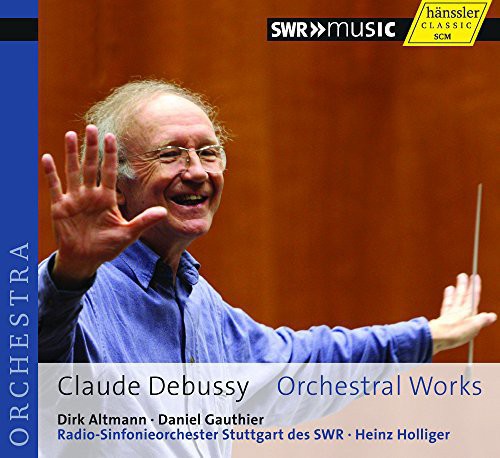
Debussy: Orchestral Works
Nielsen: Symphonies Nos. 1 & 4 / Gilbert, New York Philharmonic
REVIEW:
These are strong, exciting performances of symphonies that demand the sort of bold muscularity in their execution that these artists offer. In Alan Gilbert’s hands the First Symphony sounds extremely confident and wholly mature. It starts with a bang and the tension in the first movement never lets up. The playing of the New York Philharmonic throughout is fresh and unaffected, full of spirit and drive. Even the Andante flows purposefully forward, and contrasts nicely with the Allegro comodo that does duty for a scherzo–with its harmonic kinks so personal to Nielsen. The finale has the same “pedal to the metal” drive as the opening, bringing the performance to a rousing conclusion.
The performance of the “Inextinguishable” Fourth Symphony also features some really impressive energy and power. In the first movement the brass play with a precision and clarity that few other versions can match, and in the finale the dueling timpani compete with real bravura. The slow movement here reminds me of Shostakovich in its bleak intensity, and my only quibble with Gilbert’s interpretation concerns the symphony’s coda where, like most of his colleagues, Gilbert broadens the pace in the closing bars when Nielsen clearly wants to drive the music home in tempo. Gilbert does pull it off: with an orchestra that has the weight and strength of the New York Philharmonic the effect is convincing, but Gibson (on Chandos) remains unmatched here.
Dacapo’s engineering, as with the previous release in this series, is natural and very present. The woodwinds feel just slightly recessed in more fully scored sections, but I can attest that the music really does sound like this in actual performance with a large orchestra, and certainly nothing gets lost. More importantly, the engineers have captured the impression of a live performance, caught on the wing, and the audience is mercifully quiet. This is a very impressive release.
– David Hurwitz, ClassicsToday.com
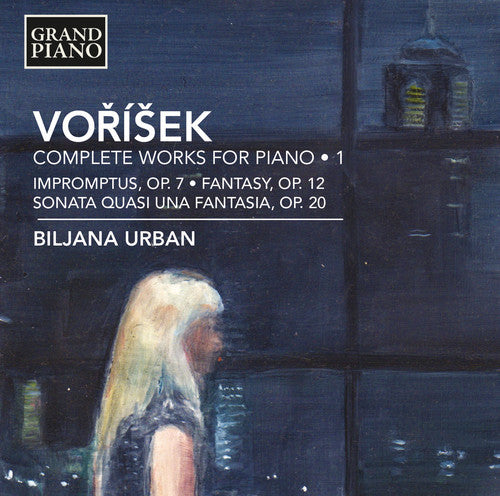
Voríšek: Complete Works for Piano, Vol. 1
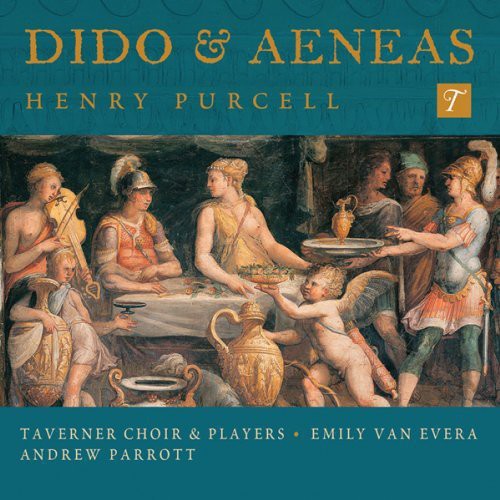
Purcell: Dido & Aeneas
In a performance that charms as well as moves in abundance (BBC Music), Andrew Parrott directs a hand-picked team of singers and instrumentalists in this classic recording. (Avie)
Bach: St. John Passion
Babadjanian: Complete Works for Piano Solo
Mahler: Symphony No. 2, 'Resurrection' (arrangement for smal
TENEBRAE RESPONSES GOOD FRIDAY
Bach Repurposed: Solo Bach For Clarinet
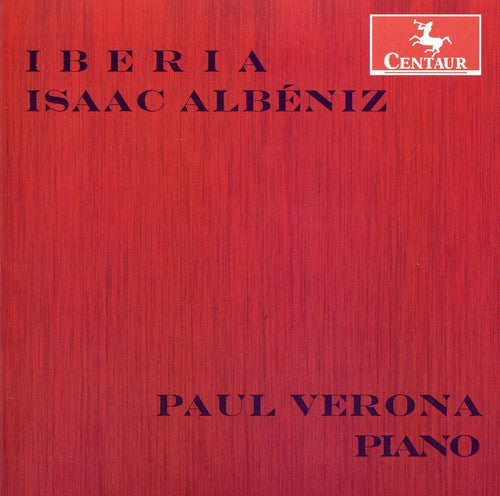
Albeniz: Iberia
Werke fur Violine und Violoncello
Sound Waves
Violin Sonatas: Strauss, Respighi / Little, Lane
R. STRAUSS Violin Sonata, Op. 18. RESPIGHI Violin Sonata in b. Six Pieces: Melodia; Valse caressante; Serenata • Tasmin Little (vn); Piers Lane (pn) • CHANDOS 10749 (65:50)
Violinist Tasmin Little has amassed a very respectable discography on a number of different labels, though of late, she seems to have settled in as one of Chandos’s house artists. Her recent recording of Delius’s Violin Concerto received an urgent recommendation from me in 35:4, so I really looked forward to receiving her latest release of these two late romantic sonatas.
On the surface, Richard Strauss and Respighi may not seem to have a lot in common, but their respective violin sonatas have been paired on disc before, notably by Kyung-Wha Chung and Krystian Zimerman for Deutsche Grammophon and by Frank Almond and William Wolfram for Avie. Strauss composed his sonata in 1887 at the age of 23. It’s an inspired outpouring of youth hardly recognizable as music by the composer that Strauss would become. Respighi’s B-Minor Sonata—an earlier sonata in D Minor dates from the composer’s teens—was written in 1917, exactly 30 years later than Strauss’s sonata, by a more mature composer of 38.
Strauss’s sonata will no doubt be permanently associated with Heifetz, not because he championed it and twice recorded it, but because of his callous and stubborn determination to perform the piece in 1953 before an Israeli audience that still considered Strauss a Nazi collaborator and whose emotions were still raw from the Holocaust. That little stunt nearly cost Heifetz his career when an assailant attacked him outside his hotel, striking his right arm with an iron bar. While I don’t condone the death threats and violence against him, I understand the intensity of feelings that were aroused. Heifetz had no one to blame but himself for his own arrogance and intractable insensitivity. He canceled his last concert and departed Israel post haste, not to return there again until 1970.
The shame of it all is that Strauss’s sonata was written half a century before Hitler rose to power, and the piece is a passionate and deeply touching reflection of the late 19th-century German musical culture in which Strauss came of age. Unsurprisingly, Liszt and Wagner, both recently dead, appear as frequent ghosts throughout the sonata’s pages, but another guest one meets, less frequently perhaps but still very much alive when Strauss wrote the piece, is Brahms.
Respighi is not an easy composer to categorize. Some see him, as they see Strauss, Puccini, Rachmaninoff, and Sibelius as manifestations of a resistant strain of late romanticism that persisted well into the 20th century, while others have referred to Respighi as an Impressionist. I think one could support either view. There’s no question but that Respighi’s sonata is the more modern of the two works on the disc, at least in terms of its approach to harmony and tonality, but it remains an essentially romantic work in its gestural language—i.e., in its sweeping vistas and appeal to the emotions, both public and private.
The last time I reviewed a recording of Strauss’s violin sonata was in 32:3. That Atma CD also contained violin and piano works by Elgar and Ravel in performances by Jonathan Crow and Paul Stewart which I called “a desideratum of indescribably beautiful music matched by indescribably beautiful playing.” Pardon the pun, but Tasmin Little brings more than a little of Crow’s eloquent and elegant playing to the Strauss, but I would also have to say that in some of the sonata’s more technically taxing passages, she can sound ever so slightly flustered; and while the notes never actually get away from her, one senses she’s making an effort to stay on top of them. Next to Crow’s Strauss, another performance I’ve long liked is that by Dmitri Sitkovetsky on Virgin Classics. He has the technical chops to pull it off smoothly, but I don’t find him quite as emotionally engaged as either Crow or Little. Whatever the reason, Respighi’s sonata seems to suit Little a little better, both technically and temperamentally. Her performance of the piece is lithe and fully responsive to the score’s rapidly shifting moods and colors. In my opinion, it easily outclasses Tanja Becker-Bender on Hyperion, whose reading I find somewhat flighty and rudderless.
Overall, this has to be rated a very fine effort, and not just by Little, but also by Piers Lane who partners her most excellently on the piano, and by Chandos, which provides its usual deep and vivid sound. This may not be the absolute best Strauss out there, but it’s definitely among the very best of the Respighis, and the extra three encores from Respighi’s Six Pieces for Violin and Piano make for a most enriching program. Easily recommended.
FANFARE: Jerry Dubins
-----------
Chandos have prided themselves on having a deep and long-term available back catalogue. Though distantly separated in time the present CD can be seen as an adjunct to two of the grand Chandos series of the 1980s and 1990s. The first was the Respighi orchestral music edition built around the Edward Downes BBCPO symphonies and concertos but supplemented by earlier discs conducted by Geoffrey Simon - still truly splendid - and later ones from Hickox and Noseda. The Downes and Simon discs would shine anew if issued in a box or boxes. The second comprised the half dozen discs they issued in the 1980s golden days of Järvi conducting the then SNO in the major orchestral works of Richard Strauss.
These two violin and piano works have previously appeared - although separately - on Chandos. There were in fact two CDs of the Strauss Sonata – one from Lydia Mordkovitch and the other from Sasha Rozhdestvensky. It comes as no surprise that the Respighi was also recorded by Mordkovitch. She contributed so much to the label that I have every reason to expect that, one of these days, there will be a complete Mordkovitch Chandos Edition. It’s certainly deserved – at least as much as a Takako Nishizaki edition for Naxos.
Little and Lane’s Strauss Sonata is flooded with melodic light and surges and muses with all the eruptive and serenading romance of the same composer’s Don Juan. Both Tasmin Little and Piers Lane are obviously up for it and flatter the 1887 Strauss with a most inward reading which makes it appear a greater work than perhaps it is. The stormy romance of the outer movements of the 1917 Respighi Sonata is emphasised by the utterly peaceful and romantically centred Sargasso calm of the Andante second movement. It stands head and shoulders above the other sonata movements on this disc, masterfully treading that febrile line between poetry and self-conscious sentimentality. Both Little and Lane have every right to be proud of their achievement here. Speaking of that mood we have three movements from the salon-destined and designed Sei Pezzi. I lament that the other three Kreislerian movements were not included – there was space. A puzzling and regretted omission.
With thanks to Chandos for commissioning a liner-note from the inspired Jessica Duchen. Such a fine writer and one whose Korngold book (Phaidon Press) has been unjustly eclipsed by the ‘major definitive biography’. The Duchen is much more than a valid alternative. Indeed, Korngold is a far from irrelevant comparison in the company of the two composers so nobly represented on this disc.
– Rob Barnett, MusicWeb International
Berlioz: Symphonie Fantastique, Concert Overtures / Norrington, Cambreling
Hector Berlioz remains to this day the arch Romantic composer. His imagination knew no bounds and through his often-extreme visions, he revolutionized the way composers would approach the orchestra in the future. Spooky, wild, tender and utterly without inhibition perfectly describes the "Symphonie fantastique". But even some of his overtures are not for the faint-of-heart, especially when two masterful conductors at the helms of two of Europe's finest orchestras give these colorful scores full rein. Unquestionably, Berlioz at his best! - Hänssler Classic
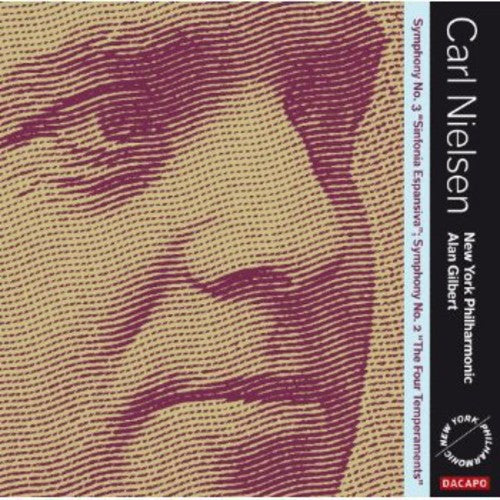
Nielsen: Symphonies Nos. 2 & 3 / Gilbert, New York Philharmonic
"I’m sure that Nielsen’s time is coming, and I’m looking forward to sharing this wonderful music with the audience." - Alan Gilbert 2011 = "Mr. Gilbert drew colorful, glittering and full-bodied playing from the musicians." - The New York Times, concert review of Nielsen's Symphony No. 3, June 2012 = “Music is life, and like it inextinguishable,” said the Danish composer Carl Nielsen (1865-1931). With indomitable courage and infinite curiosity Nielsen developed into one of the 20th century’s greatest symphonists, after being raised in the Danish countryside as the son of a poor folk musician. With this new series of recordings, Nielsen crosses the Atlantic as the New York Philharmonic and their Music Director Alan Gilbert shed new light on the composer's uniquely Nordic symphonic sound. = ABOUT THE NIELSEN PROJECT = This is the first volume of the new recording series of Denmark's national composer Carl Nielsen's complete symphonies and concertos by The New York Philharmonic and their chief conductor Alan Gilbert. All works are recorded live during the New York Philharmonic's concert series in Avery Fisher Hall which has already impressed critics and audiences alike.
REVIEW:
As already suggested, Gilbert’s interpretations take no prisoners, and frankly that is just what Nielsen needs. The Allegro collerico opening of “The Four Temperaments” is really ferocious, the finale almost giddy. And yet, Gilbert’s tempos in the Andante pastorale of the “Espansiva”, or the Andante malincolico of the “Temperaments”, are also perfectly judged, sensitive, and expressive. The former, especially, reveals a combination of tranquility and flow unique in the work’s discography. The string playing is particularly beautiful here, and the Philharmonic’s woodwinds, solo oboe especially, do themselves proud in music that often relies on their artistry and character. Gilbert also very convincingly paces the tricky finale of the same work, with its hymn-like main theme that still has to sound “allegro”.
Dacapo, of course, already has an excellent Nielsen cycle—indeed, the reference edition—in its catalog, featuring Michael Schønwandt and the Danish National Radio Symphony Orchestra (also available on Naxos). So the question must be whether or not this newcomer is distinctive enough to warrant the duplication, and the answer is a definite “yes”. Gilbert reveals a genuine affinity for the music, and Nielsen’s athleticism suits the orchestra very well indeed. If this series keeps up as it has begun, it’s going to be stupendous.
-- ClassicsToday.com
Schubert: Symphonies 4 & 5
Haydn: The Seasons / Muller-Kray, Wunderlich, Engen, Giebel
Haydn wrote his oratorio "The Seasons" between the years 1799 and 1800. The work is based on the poem "The Seasons" by James Thomson in the German translation of the Baron van Swieten. The contemporary descriptions of nature and genre scenes are a work of perfection, insuring the composition's enduring popularity.
This early festival recording is a true time-capsule, recorded on May 24th, 1959 featuring in addition to Wunderlich, the vocal artistry of Agnes Giebel, and Kieth Engen, who together bring Haydn's secular oratorio to vivid life.
Vivaldi: Violinkonzerte / Flötenkonzerte
Bach: Orchestral Suites (Suites) BWV 1066-1069
Frank, C.: Beatitudes (Les)
Norgard, P.: Seadrift / Nova Genitura / Fons Laetitiae
Lorraine at Emmanuel / Lieberson
As it happens, this release serves as tribute not only to Hunt Lieberson, who died in 2006, but also to her frequent close collaborator Craig Smith, the founder of Emmanuel Music, who died in November. And the material is choice: spacious arias from two Bach cantatas and extended excerpts from Handel’s oratorio “Hercules.”
The disc begins with a 1992 recording of the aria “Kommt ihr angefochtnen Sünder” from Bach’s Cantata No. 30: Something of a tease as the opening instrumental passage heightens the anticipation of Hunt Lieberson’s entrance, more than two minutes into the disc. But that glorious Voice, when it appears, meets every expectation.
The “Hercules” excerpts, from 1999, trace the travails of the hero’s wife, Dejanira, culminating in a harrowing mad scene.... Although Hunt Lieberson’s compelling stage presence added mightily to any performance, the voice alone amply conveys her characteristic intensity here....
Dare we hope for more?"
– James R. Oestreich, New York Times [8/10/2008]
The early death of Lorraine Hunt Lieberson deprived the world of an exceptional artist and one, moreover, who left all too few commercial recordings. However, some archive recordings are now beginning to emerge and this new release, featuring previously unissued live recordings is one such. The CD also forms a tribute to one of her mentors, Craig Smith, Music Director at Emmanuel Church, Boston from 1970 until his death in November 2007 at the age of sixty.
Smith founded Emmanuel Music, which, besides fulfilling a liturgical function at the church, evolved also into a concert ensemble of no little distinction. Perhaps Smith’s greatest achievement was to inaugurate the practice whereby each Sunday between October and April, the main Sunday morning church service includes a cantata by Bach appropriate to the day. That tradition continues to this day and later this year the thirty-ninth consecutive season of liturgical cantatas will commence.
It was through Emmanuel Music that the then Lorraine Hunt took some of the first steps on her solo singing career and she maintained the connection, I believe, for the rest of her life, including appearances in the Sunday cantata series. This disc, therefore, takes us back to her singing roots.
The disc begins and ends with arias taken, I presume, from complete Sunday service performances of Bach cantatas. The aria "Kommt ihr angefochtnen Sünder" comes from the cantata Freue dich, erlöste schar, written for the feast of St. John the Baptist. Alfred Dürr writes thus of the cantata: "The underlying mood is joyful, relaxed and unproblematical, not only in the opening chorus but in the four arias, where a dance-like style is often clearly evident." Unfortunately, to judge by this aria at least, Craig Smith seems to have a different conception. Presumably with the agreement of his soloist, he sets and extremely slow tempo and the aria lasts 8:46.
This sent me scurrying to my shelves for comparisons. John Eliot Gardiner, in his Bach Cantata Pilgrimage performance takes a mere 5:27 but he is surely too fleet – at his pace the aria sounds like a gambol through the Elysian meadows. So that might seem to suggest that Smith is "simply" old fashioned in his conception. But turn to Fritz Werner’s 1971 performance and you find a tempo that seems to me to be just right – he takes 6:03. Beside Werner I’m afraid Smith sounds laboured. What saves the performance is the sheer beauty and inwardness of Lorraine Hunt Lieberson’s singing. On its own terms the performance is quite lovely and no admirer of the singer will be disappointed but I just think the basic conception is wrong.
Things are much more satisfactory in the other Bach aria, which is placed at the opposite end of the programme. This aria is from the cantata Allein zu dir, Herr Jesu Christ, which is for the Thirteenth Sunday after Trinity. Again, Miss Hunt Lieberson’s singing is beautiful and communicative and this time the pace is much more sensible, I think. The conductor here is the composer, John Harbison, who has also had a long association with Emmanuel Music and who, in fact, is currently the Acting Artistic Director. He adopts a slow pace, but this aria can take it. Again comparisons were instructive. Eliot Gardiner’s tempo is almost identical and he takes exactly as long as does Harbison. Werner didn’t record this cantata but another celebrated Bach traditionalist, Karl Richter, did. In his 1976/7 recording he takes 9:34 but his soloist, Julia Hamari, sounds cool besides either of her rivals and she and Richter, whose direction is smooth and relaxed, convey no real sense of trepidation. Nathalie Stutzmann, for Eliot Gardiner, is perhaps a touch more inward than Hunt Lieberson but she’s equally involving and it’s only by the merest whisker that I come down in favour of this present, excellent performance.
The remainder of the disc is devoted to excerpts from Handel’s oratorio, Hercules and these excerpts contain all the music for Dejanira, the wife of the eponymous hero. I presume, though it’s not clear from the documentation, that these extracts are taken from a live account of the complete work.
The role of Dejanira is an exceptionally demanding one, both vocally and emotionally. She is, in Craig Smith’s words, a "monumental character." I can well imagine that Lorraine Hunt Lieberson was a pretty formidable presence in the performance of the oratorio for these extracts show us a vivid character portrayal.
In her first aria, "The world when day’s career is run," she is fully the grief-stricken wife, yet she still retains dignity. Much of Dejanira’s music is in moderate or slow tempo but when swifter music arrives, in "Begone, my fears, fly, hence, away," Miss Hunt Lieberson excels in the passagework.
As her jealousy of the captive princess, Iole, begins to take hold and her certainty that Hercules has been unfaithful increases there’s great sadness in the aria ‘When beauty sorrow’s liv’ry wears’ and that is splendidly conveyed here. Particularly outstanding is the account of "Cease, ruler of the day, to rise," where the singing is particularly expressive. Writing of this disc elsewhere, but of another aria in the programme, the critic Michael Kennedy spoke of Miss Hunt Lieberson’s "power to humanise every note and bring the music to new life." How I agree and I’d say that this comment applies even more strongly to this deep aria.
The final excerpt is the Mad Scene. Here Miss Hunt Lieberson is intensely dramatic without ever going overboard. This is extremely demanding music and she performs it vividly and, once again, when the divisions arise she displays fine vocal agility. Hers is a tremendous performance of this recitative and aria and, unsurprisingly, it sparks an ovation from the audience who, otherwise, are commendably silent throughout.
These extracts contain some superb Handel singing. Frequently I was reminded of Dame Janet Baker’s assumption of Handelian roles and I can pay no higher compliment than that.
Despite my reservation over the one Bach item – a reservation that does not concern the singing per se – this is a superb disc that all admirers of this much-missed singer will want to have. And if you’ve not heard Lorraine Hunt Lieberson before, buy this disc and discover for yourself what all the fuss is about.
– John Quinn, MusicWeb International
Romantic Classics / Various [2 CDs]
Excellent, two-disc collection of romantic classics from a wealth of composers. Works are included from Mozart, Elgar, Myers, Walton, Beethoven, J.S. Bach, and more! (Chandos)