One-Day Sale
Our One-Day Sale is back and better than ever — 100 hand-picked titles are 50% OFF now at ArkivMusic!
While supplies last — no backorders at these prices! Shop the sale before it ends at 9:00am ET, Wednesday, March 25th, 2026.
99 products
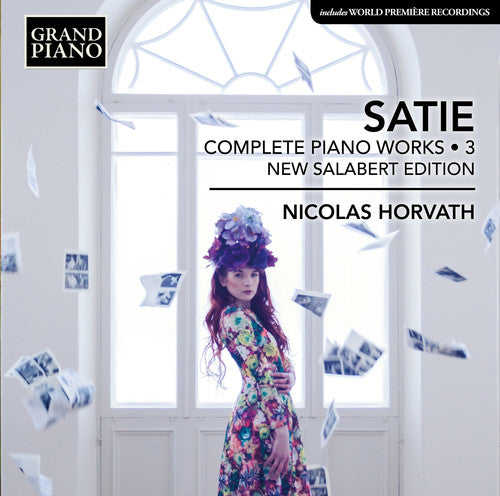
Satie: Complete Piano Works, Vol. 3 / Horvath
This third volume of Erik Satie’s complete solo piano music using Satie scholar Robert Orledge’s new Salabert Edition focuses on music composed between 1892-1897, including theatrical scores such as the revolutionary uspud, and the Danses gothiques and famous Vexations written while the composer was hiding from a tempestuous love affair. The period closes with Satie composing in what he called “a more flexible and accessible way withthe final Gnossienne and the six Pieces froides.” Recognized at once as a great interpreter of Liszt’s music, Nicolas Horvath became in recent years one of the most sought after pianists of his generation. Holder of a number of awards, like the First Prize of the Scriabin and the Luigi Nono International Competitions, he frequently organizes events and concerts of unusual length, sometimes over twelve hours, such as Philip Glass complete piano music or Erik Satie’s Vexations.
Burgess: The Bad Tempered Electronic Keyboard / Ginsburgh
Anthony Burgess, the world famous author of A Clockwork Orange, had been steeped in music since childhood, and during army service in the Second World War worked as a pianist and dance-band arranger. He wrote prolifically in many genres. His 24 Preludes and Fugues, called The Bad-Tempered Electronic Keyboard, were written to celebrate the 300th anniversary of the birth of Johann Sebastian Bach. This ingenious and inventive piece, with its brief romantic and music hall elements, not only pays homage to Bach but also references the modernity of Shostakovich, whose own set of Preludes and Fugues had been written in 1950. This is the world premiere recording of these works. These pieces are performed by renowned contemporary music interpreter Stephane Ginsburgh.
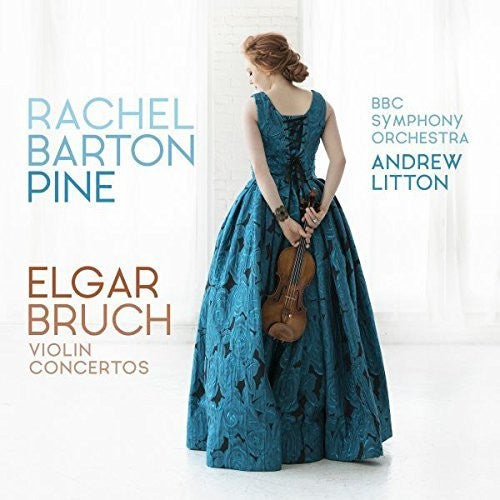
Elgar & Bruch: Violin Concertos / Pine, Litton, BBC Symphony
The album is dedicated to “the memory of a musical hero and generous friend, Sir Neville Marriner,” who was to have reunited with Rachel on this album. She was fortunate to work with him on the scores, with Sir Neville vividly relating accounts of his teacher Billy Reed, former leader of the London Symphony Orchestra, who collaborated with Elgar on the creation of his violin concerto. Grammy Award-winning conductor Andrew Litton brings his own Romantic pedigree to the recording, as does the BBC Symphony Orchestra and celebrated producer Andrew Keener who himself has overseen award winning versions of the Elgar and Bruch concertos.
-----
REVIEW:
Pine’s interpretation of the Elgar is as emotionally satisfying as it is dazzling. The slow movement is mysteriously veiled and luminous, providing a palpable sense of the music’s darker undercurrents. She is most impressive, perhaps, in the finale, where her easy virtuosity sends sparks flying, though never at the expense of the long line.
Her performance of the Bruch is wholly persuasive in its mittel-European heartiness. The outer movements abound with snap and spice, and the Adagio has a warm solemnity that, one might argue, offers a foretaste of Elgarian nobilmente. The recorded sound is glorious, with a near-ideal balance between soloist and orchestra.
– Gramophone
Mariss Jansons: Portrait - Beethoven, Haydn, Mahler, R. Strauss & More / BRSO
In an interview about great conductors with the newspaper Die Welt in 2015, Sir Simon Rattle said of Mariss Jansons, “He’s the best of all of us!” This new release from BR-Klassik focuses on the career of Mariss Jansons, and contains a total of five albums offering a representative cross-section of the classical symphonic repertoire- as well as a cross-section of the repertoire for which the chief conductor of the Symphonieorchester des Bayerischen Rundfunks has been highly praised again and again for his outstanding interpretative qualities. Landmarks of great choral music can be found here, as well as milestones in symphonic development and select orchestral songs. The works range from music of the First Viennese School to early 20th-century late romanticism; from Haydn’s “Harmoniemesse” to the Minuet from Haydn’s Symphony Hob. I:88; from Beethoven’s Fourth Symphony, Brahms’ Fouth Symphony and Mahler’s Ninth Symphony to Strauss’ Eine Alpensinfonie.
REVIEW
Jansons’ thoughtful interpretations are consistently clear and often profoundly insightful, and the playing of the Bavarian Radio Symphony Orchestra is impressive, whether in purely orchestral performances or with the Bavarian Radio Chorus in the Haydn and the Stravinsky. Considering Jansons’ high productivity, this set can only give a small sample of his many recordings, but fans who have yet to delve into his full repertoire will appreciate this package.
– AllMusic Guide.com
Schifrin: Piano Works / Conti
Lalo Schifrin, the internationally renowned composer of classic film and TV scores such as Bullitt, Dirty Harry and Rush Hour, has collaborated with fellow Argentinian pianist Mirian Conti for this collection of his complete works for solo piano to date, including several world premières. A unique arrangement of the famous theme to Mission: Impossible is included, as well as his most recent compositions: the two richly sensuous tangos, and the powerful Jazz Sonata, composed especially for Conti.
-----
REVIEWS:
Conti’s performances connect well with the rhythmic vitality of Schifrin’s music, ably delivering the gorgeous melodic content and rich, extended jazz harmonies. The recording features a crisp, dry acoustic that allows for good clarity. Those listeners who love Schifrin’s film work but are less familiar with his other endeavors will likely find a lot to enjoy here as well.
– Film Score Monthly
Some of the music is extremely difficult to play but is played with panache and dexterity. I enjoyed most of the music; all of the pieces are engaging and interesting. For Schifrin’s fans this is a must. For the rest of us, it’s entertaining. The sound is excellent.
– American Record Guide
Bach: Magnificat in E-Flat Major & Missa in F Major / Gardiner

The Monteverdi Choir and English Baroque Soloists celebrate Christmas with a mixed programme of J.S. Bach’s sacred choral works. As we approach the 500th Anniversary of the Lutheran Church, these works transport listeners to 18th-century Leipzig for a traditional Christmas celebration. The programme moves from the intimacy of “Süßer Trost” to the vast celebration of joy that is Bach's Magnificat. The Bach at Christmas project is dedicated to the memory of philanthropist and patron of the Monteverdi choir, Sir Ralph Kohn. The concerts from which these recordings were taken took place at the Alte Oper, Frankfurt, in December of 2016.
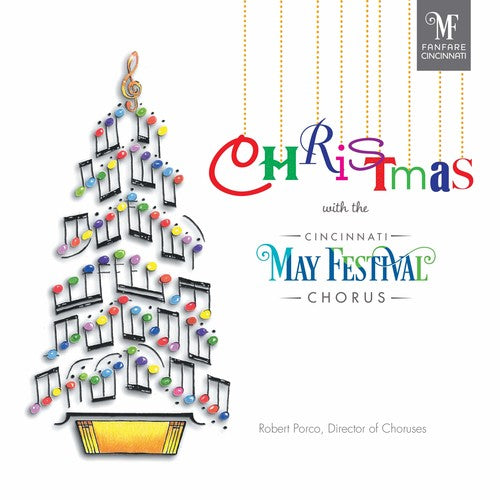
Christmas With The Cincinnati May Festival Chorus
The Cincinnati May Festival Chorus, the official chorus of the Cincinnati Symphony Orchestra and Cincinnati Pops, performs a capella traditional Christmas carols under the direction of Robert Porco. The May Festival Chorus has earned acclaim locally, nationally, and internationally for its musicality, vast range of repertoire and sheer power of sound. The Chorus of 145 professionally trained singers is the core artistic element of the Cincinnati May Festival as well as the official chorus of the Cincinnati Symphony Orchestra and Cincinnati Pops. Founded in 1873, the annual May Festival is the oldest, and one of the most prestigious, choral festivals in the Western Hemisphere. In this release, the Chorus performs sublime a capella arrangements of traditional Christmas hymns and carols.
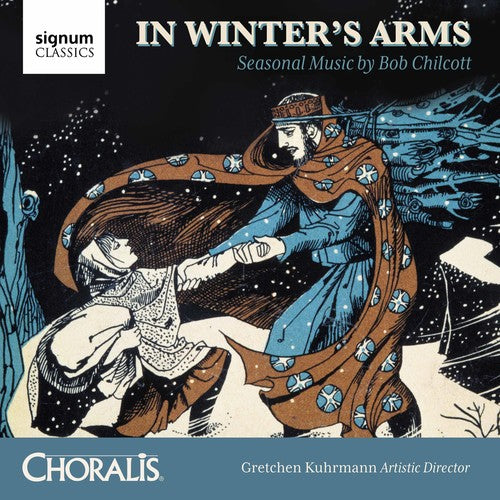
In Winter's Arms: Seasonal Music by Bob Chilcott / Kuhrmann, Choralis
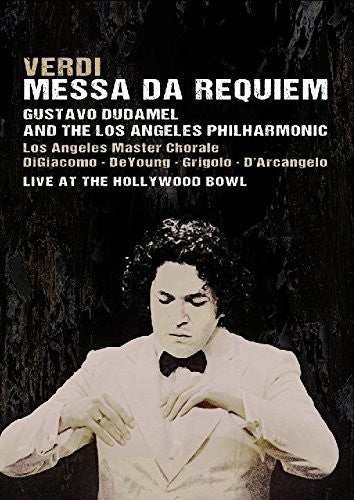
Verdi: Messa da Requiem
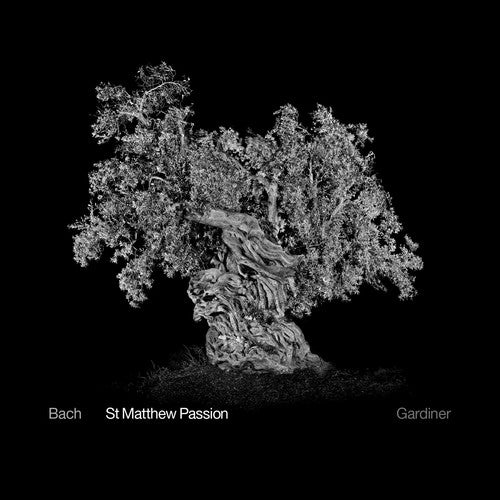
Bach: St. Matthew Passion / Gardiner, Monteverdi Choir

This stunning new live recording of Bach’s St. Matthew Passion (Matthauspassion BWV 244) was recorded in Pisa Cathedral during the Anima Mundi Festival as part of the Monteverdi Choir and Orchestra’s 2016 tour. Conducted by Sir John Eliot Gardiner, the brilliant cast includes James Gilchrist as the Evangelist and Stephan Loges as Jesus. The Trinity Boys Choir adds an exciting color to this recording as well. The Monteverdi Choir was founded by Sir John Eliot Gardner in 1964. The ensemble’s first performance was the Monteverdi Vespers in King’s College Chapel, Cambridge. The group has become known worldwide for their stylistic conviction and their ability to perform an extensive repertoire, from Renaissance motets to Classical music of the Twentieth Century.
-----
REVIEW:
Musically this is a very fine performance. The choir are excellent, of course, with a solid but clear and intimate sound even in the larger choruses, no end of expressive means in the chorales, and a thrilling quickness in the crowd choruses. Gardiner asks for a lot of quiet singing from them and they execute it with a superbly controlled beauty.
The orchestra is as skilled and musical as you like in their obbligatos, and exquisitely responsive in Gardiner's subtle shapings.
The experienced Evangelist of James Gilchrist and Christus of Stephan Loges are not to be faulted, and none of the nine young aria soloists is a weak link; each one lives up to their moment in the drama.
All of these things you will find in many other Matthews, but you will rarely find the same careful relishing of the German text. What really makes this one special, however, is its emotional integrity, coming not from affected theatricality but from a pervading sense of profound sadness. This recording is one of Gardiner's finest achievements.
– Gramophone
Bach: St. John Passion / Sorrell, Apollo's Fire
-----
REVIEW:
Apollo Fire's St. John Passion has dramatic tautness tempered by musical finesse nurtured by conductor Jeanette Sorrell. The Apollonian music-making is characterized by instrumental playing of elegant refinement, polished choral singing, and communicative delivery of the text. Sorrell's attention to detail ensures that in many respects this recording hits the sweet spot time and again.
– Gramophone
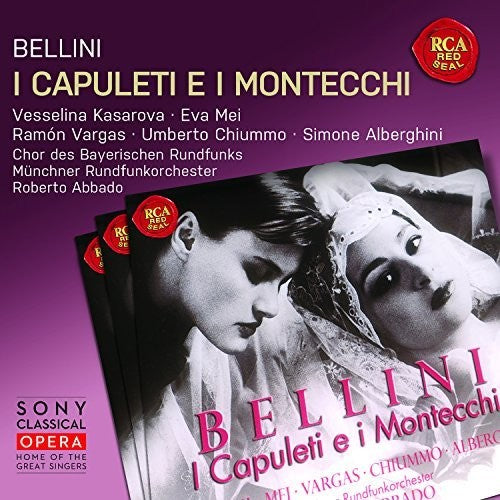
Bellini: I Capuleti e I Montecchi / Abbado, Kasarova, Mei, Vargas, Munich Radio Symphony
I Capuleti e i Montecchi, Bellini’s exquisitely lyrical treatment of Romeo and Juliet, has garnered renewed popularity in recent decades. The 1998 Munich recording reissued here is one of the catalogue’s most acclaimed, particularly for the vibrant, expressive Romeo of mezzo Vesselina Kasarova and the conducting of Roberto Abbado, who, wrote Gramophone, “has Bellini’s lyricism within him (hear the finale to Act 1, for instance). He elicits fine playing from the Munich orchestra.”
Currier, Escaich, Thierry: Concertos for Orchestra / Langree, Cincinnati Symphony
Since its founding, the Cincinnati Symphony Orchestra (CSO) has maintained an unfaltering commitment to commissioning new music, resulting in substantial new works from a diverse array of composers including Aaron Copland and Philip Glass. For the 2015-16 season, three exciting international composers originating from three different continents, Sebastian Currier, Thierry Escaich and Zhou Tian, were each commissioned to write a new concerto for orchestra, showcasing the virtuosity, style, and sound of the CSO, thus furthering a genre championed by the likes of Bartók and Lutoslawski. The resulting three works featured on this live recording represent the culmination of this exciting project, and once again affirms the CSO’s core value of being a place of experimentation.
Michael Gielen Edition, Vol. 3 (1989-2005): Brahms - Symphonies and Concertos
-----
REVIEW:
Gielen proposes we listen to Brahms for the sake of his musical arguments rather than for the lustrous sounds that he's capable of conjuring, an approach that seems eminently sensible, and a valid alternative to various fleshier interpretive options.
– Gramophone
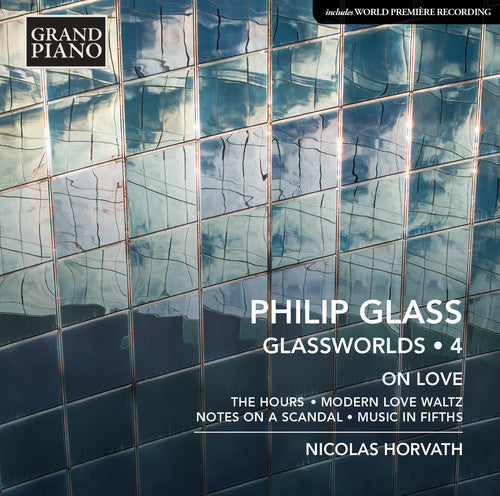
Philip Glass: Glassworlds, Vol. 4 - On Love / Horvath
One of Philip Glass’ most glorious themes, this release focuses on the subject of love. From his BAFTA award-winning music for The Hours to his iconic Music In Fifths, the genius of this composer is felt throughout the duration of this album. The Hours is featured here in its entirety, complete with three previously unpublished movements. The release also includes the breathtaking Modern Love Waltz and the world premiere recording of Notes On A Scandal. Performing these works is Nicolas Horvath.
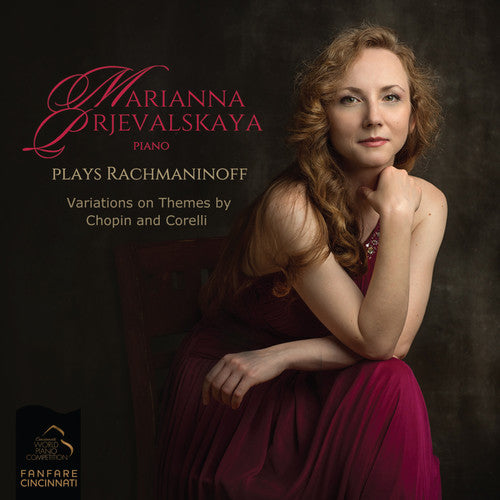
Rachmaninoff: Variations on a Theme of Chopin, Op. 22 & Vari
Beethoven: Fidelio / Altmeyer, Jerusalem, Masur, Gewandhausorchester Leipzig
REVIEW:
Altmeyer's exchanges with Jerusalem's stalwart Florestan are highly charged and the dialogue catches fire as never before. Siegmund Nimsgern's villain keeps temperatures boiling.
– BBC Music Magazine
Dvořák: Symphony No. 8 - Suk: Serenade / Jansons, BRSO
Since its premiere in Prague in 1890, Dvořák’s Eighth Symphony has become one of the composer’s most-performed works. Josef Suk, Dvořák’s son-in-law and student-is obviously influenced by Dvořák, but displays his compositional skills in his own right in his Serenade for Strings. Consistently praised for his interpretation of Slavic music, Mariss Jansons conducts the Symphonieorchester des Bayerischen Rundfunks in this live recording.
REVIEW
This disc contains three very fine performances and I thoroughly enjoyed it all. The BR Klassik recording is very good indeed. I’ve come to expect clarity and very pleasing, natural sound from this label and this latest disc is another excellent example of their work.
--MusicWeb International (John Quinn)
Testament: Bach - Complete Sonatas & Partitas for Solo Violin / Pine
Rachel Barton Pine’s ‘Testament’ is one of the best of this set of peerless works to have been released since Isabelle Faust’s definitive volumes of 2010 and 2012.
There is in her interpretation a surprisingly striking contrast between its crystalline voicing, clear articulation, and warm tone that makes the listener feel that it is concerned with the plain and simple beauty of the music as much as with the genius of its counterpoint and relationships between movements. All this is further supported by the sensible combination of Baroque bow and metal strings on a period instrument in modern set-up – the tuning is unfailingly accurate and the strength of the bowing means there is never any interference with the musical line by a squeak or break.
These are thoughtful and generous performances amplified by great maturity and depth.
– Gramophone (Editor's Choice; June 2016)
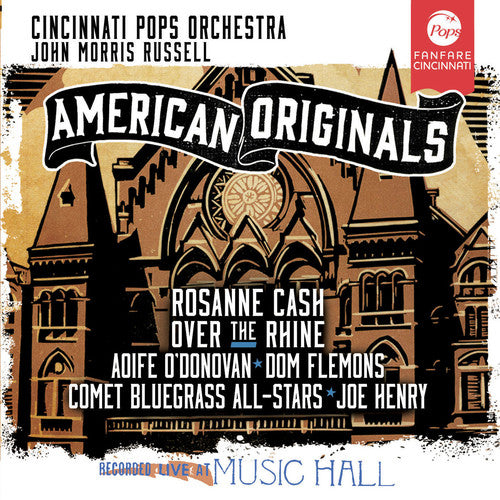
American Originals / Russell, Cincinnati Pops
Scriabin - Mussorgsky
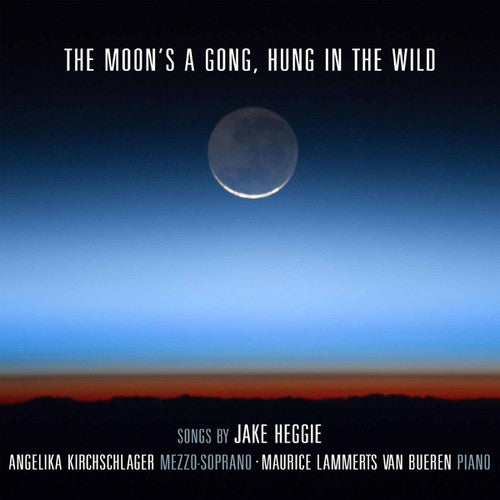
The Moon’s a Gong, Hung in the Wild
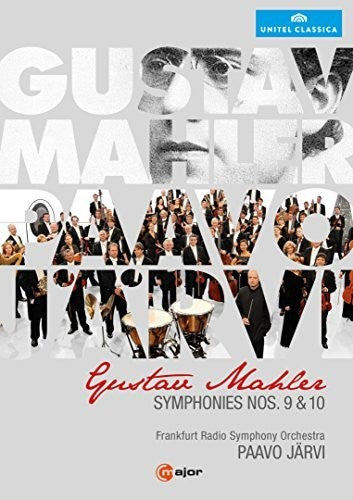
Mahler: Symphonies Nos. 9 and 10
Nielsen: Symphonies No. 5 & 6 / Gilbert, New York Philharmonic
REVIEW:
Nielsen was a high energy composer, perfectly suited to a “muscle” orchestra like the New York Philharmonic. Listening to these two performance we are reminded how the world of classical recordings has been taken over by orchestras of the second rank–professionally adequate, ambitious, able to fund their own recording programs and often to get released on major labels, but singularly lacking in the sort of corporate virtuosity and ensemble balances at all dynamic levels so tellingly in evidence here. If you like your Nielsen big, bold, and gutsy, then this is the cycle you need to own.
This doesn’t mean that Gilbert and his players are in any way crude. The opening of the Fifth Symphony emerges with gossamer delicacy, and the solo wind playing is as sensitive as one could wish. But the hostile snare drum entrance carries real menace, while the movement’s adagio second half, beautifully spun out by the strings, features the best percussion cadenza since Horenstein, leading to an absolutely apocalyptic climax. Similarly, Gilbert brings thrilling energy to the start of the second movement. The ensuing quick fugue isn’t as swift as some, but the orchestra’s weight of tone, its attention to detail, makes the music unusually vicious, while the race to the closing bars has seldom sounded more exhilarating.
The Sixth Symphony can come off as sort of a bitter, denatured coda to the previous five. Again, without minimizing the work’s etherial moments and often stark instrumental textures, Gilbert and the orchestral put the meat back on the music’s bony skeleton. The climax of the first movement is really terrifying, the Humoresque vividly grotesque. In the Adagio “Proposta seria,” the strings dig into their parts with painful intensity, leaving a finale in which Gilbert ensures that each variation has its own vivid character. The wacky waltz, even in it’s ghostly early stages, seethes with a latent energy that makes sense of the violent eruptions from the brass and bass drum that rip it apart shortly afterwards.
One textural note: these performances seem not to be using the latest Critical Edition of the symphonies–you can tell from the fact that the loud timpani triplets are still present towards the end of the finale’s opening section, to cite one example. This is not a wrong decision; the Critical Edition took an excessively dogmatic view in its efforts to present Nielsen’s first thoughts, eliminating revisions based on the practical realities of performance, even if these were accepted–whether tacitly or explicitly–by the composer. Nielsen was never faced with a situation like Bruckner’s, in which a crew of well-meaning but misguided supporters altered and manifestly falsified the basic text. Additions and modification to his scores were limited mostly to small but sometimes telling details, such as the additional timpani part just mentioned.
The excellent live sonics add to the tactile immediacy of the performances. If the foregoing sounds as though this team saved their best for last, well, I would say that they did. One quibble though: the booklet notes, by Jens Cornelius, are surprisingly poor. He seems to think that the snare drummer in the Fifth Symphony is a timpanist, and his language is both pretentious and stilted. Normally I wouldn’t care or mention it, save for the fact that it seems so odd and uncharacteristic. Never mind, it’s the music that matters, and about that there can be no question whatsoever. This is fantastic.
– David Hurwitz, ClassicsToday.com