

One-Day Sale
Our One-Day Sale is back and better than ever — 100 hand-picked titles are 50% OFF now at ArkivMusic!
While supplies last — no backorders at these prices! Shop the sale before it ends at 9:00am ET, Wednesday, March 25th, 2026.
99 products
-
![]()

-
![]()

-
 On Sale
20th Century Foxtrots, Vol. 3: Central & Eastern Europe / Wallisch
CD$19.99$9.99Grand Piano
Oct 08, 2021GP854 -
![]()

-
![]()

-
 On Sale
Solitude - Piano Works by Florent Schmitt / Urban
CD$19.99$9.99Grand Piano
Oct 08, 2021GP850 -
![]()

-
![]()

-
 On Sale
Messiaen: Orchestral Works / Nagano, BRSO
CD$34.99$17.49BR Klassik
Oct 01, 2021BRK900203 -
 On Sale
Juilliard String Quartet: The Early Columbia Recordings
CD$54.98$27.48Sony Masterworks
Sep 17, 202119439831102 -
![]()

-
![]()

-
 On Sale
God Loves the French / Karr, Leblanc
CD$17.99$8.99Centaur Records
Sep 17, 2021CRC3875 -
![]()

-
![]()

-
 On Sale
Mendelssohn: Concertos & Duets / Nadrzycki, Kaczka, Cernohorsky, Janácek Philharmonic Orchestra
CD$20.99$10.49Haenssler Classic
Aug 20, 2021HC21034 -
![]()

-
![]()

-
 On Sale
Arne: Artaxerxes
CD$27.99$13.99Signum Classics
May 14, 2021SIGCD672 -
![]()

-
![]()

-
 On Sale
The Brandenburg Project - 12 Concertos / Dausgaard, Swedish Chamber Orchestra
SACD$64.99$32.48BIS
Apr 23, 2021BIS-2199 -
![]()

-
![]()

-
 On Sale
Joseph Szigeti: Complete Columbia Album Collection
CD$59.98$29.97Sony Masterworks
Apr 09, 202119075940352 -
![]()

-
![]()

-
 On Sale
English Music for Strings / Wilson, Sinfonia of London
SACD$21.99$10.99Chandos
Feb 05, 2021CHSA 5264 -
![]()

-
![]()

-
 On Sale
Tangorama: An Anthology of 20th Century Tango, Vol. 1 / Miriam Conti
CD$19.99$9.99Grand Piano
Jan 15, 2021GP856 -
![]()

-
![]()

-
 On Sale
Spendiarov: Complete Piano Works and Chamber Works with Pian
CD$29.99$14.99Grand Piano
Jan 15, 2021GP852-53 -
![]()

-
![]()

-
 On Sale
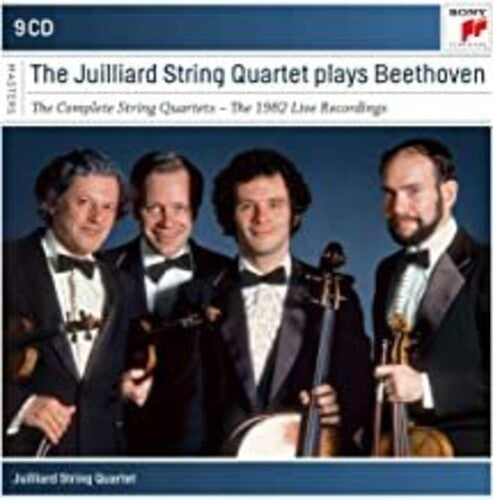
Beethoven: The Complete String Quartets (1982 Live Recordings) / Juilliard String Quartet
CD$28.98$14.48Sony Masterworks
Dec 04, 202019075964442 -
![]()

-
![]()

-
 On Sale
Ge Gan-Ru: Piano Music / Yiming Zhang
CD$19.99$9.99Grand Piano
Oct 09, 2020GP835 -
![]()

-
![]()

-
 On Sale
King Frederik IX Conducts the Royal Danish Orchestra & Danish National Symphony
CD$51.99$25.98Dacapo Classical
Jul 31, 20208204001 -
![]()

-
![]()

-
 On Sale
Beethoven: Complete Piano Concertos / Mustonen, Tapiola Sinfonietta
CD$26.99$13.49Ondine
May 01, 2020ODE 1359-2T -
![]()

-
![]()

-
 On Sale
Beethoven/Liszt: Symphony V & VII
CD$18.99$9.49Centaur Records
Jan 17, 2020CRC3758 -
![]()

-
![]()

-
 On Sale
Satie: Complete Piano Works, Vol. 4 (New Salabert Edition)
CD$19.99$9.99Grand Piano
Sep 13, 2019GP823 -
![]()

-
![]()

-
 On Sale
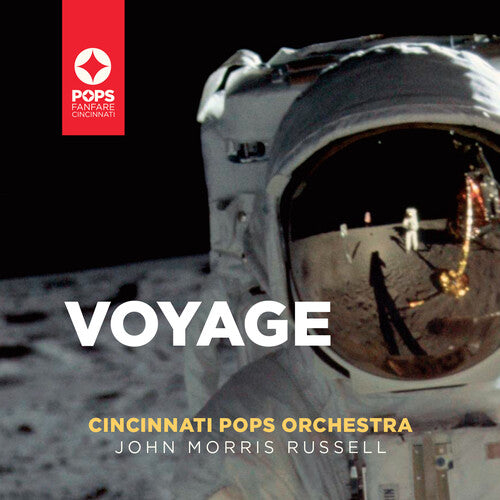
Voyage / Russell, Cincinnati Pops Orchestra
CD$18.99$9.49Fanfare Cincinnati
Jul 05, 2019FC-015 -
![]()

-
![]()

-
 On Sale
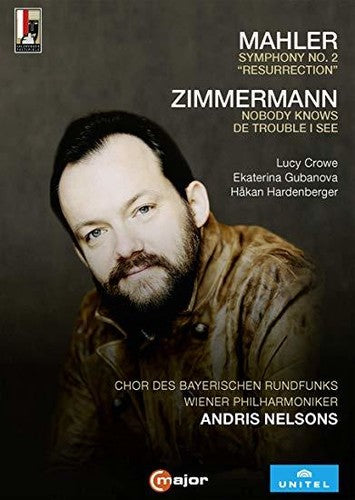
Mahler: Symphony No. 2 - Zimmermann: Trumpet Concerto / Hardenberger, Nelsons, Vienna Philharmonic
DVD$32.99$16.49C Major Entertainment
May 24, 2019748908 -
![]()

-
![]()

-
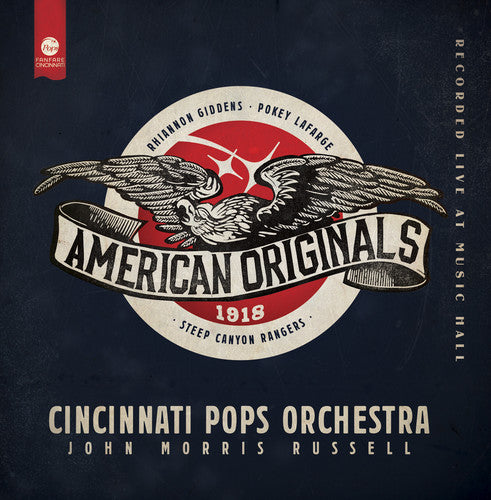 On Sale
American Originals / Russell, Cincinnati Pops
CD$18.99$9.49Fanfare Cincinnati
Nov 09, 2018FC-013 -
![]()

-
![]()

-
 On Sale
Monteverdi: Il ritorno d'Ulisse in patria / Gardiner, English Baroque Soloists
CD$38.99$19.49SDG
Nov 09, 2018SDG730 -
![]()

-
![]()

-
 On Sale
Festival - Classical Music in Switzerland
CD$83.98$41.97Sony Masterworks
Sep 07, 201888985476732 -
![]()

-
![]()

-
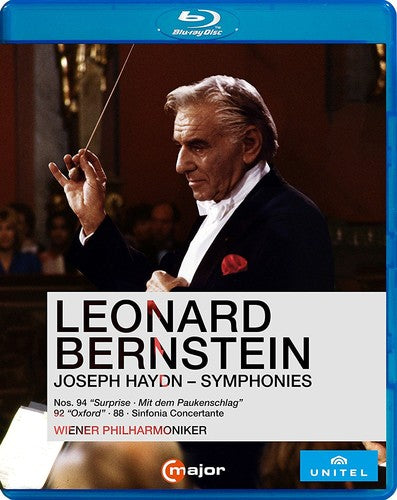 On Sale
Haydn: Symphonies Nos. 94, 92 & 88 & Sinfonia Concertante / Bernstein, Vienna Philharmonic
DVD$32.99$16.49C Major Entertainment
Jun 22, 2018746408 -
![]()

-
![]()

-
 On Sale
Beethoven: Piano Concerto No. 5 & Works for Solo Piano / Bax
CD$19.99$9.99Signum Classics
May 18, 2018SIGCD525


20th Century Foxtrots, Vol. 3: Central & Eastern Europe / Wallisch
Pre-order your copy today! This release is scheduled to ship on or about Friday, October 8.
Also available: 20th Century Foxtrots, Vol. 1 and 20th Century Foxtrots, Vol. 2
Gramophones and radios brought the voice of America, its fashion, its carelessness and joie de vivre into every corner of Europe during the Roaring Twenties, and no composer could remain immune to the hot jazz influences of the Foxtrot, Shimmy and Charleston. This third volume of jazzy piano dances features composers from nine Central and Eastern European countries, from Misha Spoliansky’s hypnotizing Valse Boston ‘Morphium’ to Leonid Polovinkin’s extremely entertaining and refreshingly futuristic approach to the genre. Gottlieb Wallisch continues his ‘most surprising and consistently charming recording project’ (The New York Times on Volume 2, GP814).


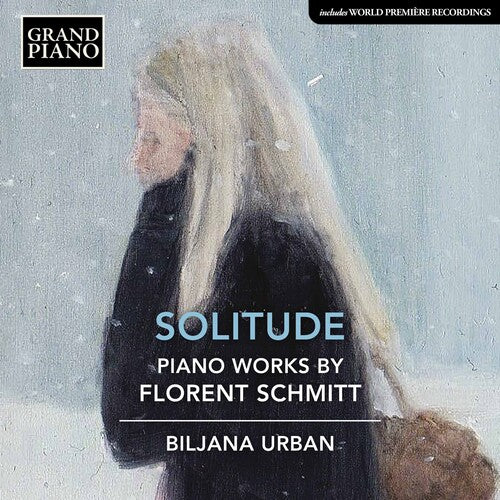
Solitude - Piano Works by Florent Schmitt / Urban
Florent Schmitt was a strikingly original composer whose influences were as varied as his own restless and imaginative music. A number of his solo piano works are little known and offer an important insight into his compositional development. Neuf Pièces, Op. 27, which includes a Spanish-infused Gitanella movement, was composed during his first period of travel. The expressive and vivid elements of Crépuscules, Op. 56 are infused with harmonic richness and quiet melancholy, while Ritournelle, Op. 2 No. IIbis displays an airiness and wit characteristic of French music of the Roaring Twenties. Internationally renowned pianist, Biljana Urban, presents a selection of neglected gems of French piano literature including many world première recordings.


Messiaen: Orchestral Works / Nagano, BRSO
Few performers are more familiar with the musical language of the French composer Olivier Messiaen than the American conductor Kent Nagano. Nagano has had Messiaen's orchestral works and oratorios in his program for several decades now, and he also participated in the world premiere of “Saint François d'Assise”, Messiaen's only opera. During the year 1982 Nagano spent his time with Messiaen in Paris, where not only an artistic relationship but also a close personal one developed between the two musicians.
BR-KLASSIK has now released three masterpieces by the French composer with the magical sound, presented by Kent Nagano to the Munich concert audience in recent years as conductor of the Symphonieorchester des Bayerischen Rundfunks: the oratorio “La Transfiguration de Notre Seigneur Jésus-Christ" (The Transfiguration of Our Lord Jesus Christ) for chorus, seven solo instruments and orchestra, the song cycle "Poèmes pour Mi" for soprano and orchestra, as well as "Chronochromie" for large orchestra. These three live recordings document outstanding artistic events from the Munich concert program of June 2017, July 2018 and February 2019.


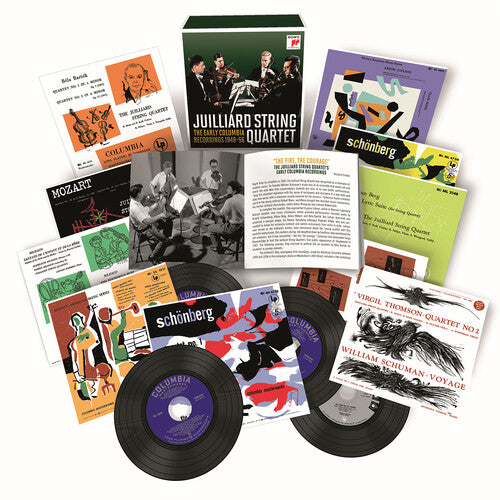
Juilliard String Quartet: The Early Columbia Recordings
Following up its widely acclaimed reissues of the Juilliard Quartet’s complete Epic and RCA Victor albums – originally issued between 1956 and 1960 – Sony Classical is excited to present a new box set collecting the earliest albums of this august American ensemble. Made between 1949 and 1956 in Columbia’s studio on Manhattan’s 30th St., these landmark recordings are mostly new to CD.
From its first appearances in New York, the Juilliard Quartet was identified as a champion of modern music. Its first recordings for American Columbia, all included here, were dedicated to the works of Alban Berg and Béla Bartók (then only recently deceased), as well as to Arnold Schoenberg (still very much alive), and to active American composers including William Schuman. But the heart of this release comprising 16 newly mastered CDs and also featuring works by Mozart, Ravel, Webern, Milhaud, Copland, Peter Mennin, Alexei Haieff and Andrew Imbrie, are three discs containing the premiere of Béla Bartók’s six quartets on records, which were set down in 1949. They appeared on LP and 78s the following year, bringing the Juilliard Quartet its first real celebrity. Recorded on 78-rpm shellacs rather than on tape, this path-breaking set thus consists of live, unedited performances. When reissued some years ago on CD – the only portion of the new Sony Classical box set ever to have appeared before on silver discs – it was rapturously praised in Fanfare magazine for “its joy of discovery, which remains completely fresh and vivid” even though numerous other traversals of the Bartók cycle had appeared in the meantime.
Another Juilliard milestone was the premiere of Arnold Schoenberg’s four quartets on records, set down in 1951–52. At last, all these historic Juilliard String Quartet recordings are available to today’s music lovers.
REVIEWS:
[An] engrossing 16-disc box set of [the Juilliard Quartet's] earliest recordings for the Columbia label, many appearing on disc for the first time.
What other quartet of that era would have made its recorded debut not with standard repertoire but with a cantata by Darius Milhaud, written just a few years before? There are works here by composers both renowned (Berg, Webern, Copland) and virtually forgotten (Peter Mennin, Alexei Haieff), all rendered in the Juilliard’s trademark sound: X-ray clear and devoid of schmaltz.
Two complete cycles anchor the set: Bartok (the first recording of his six quartets) and Schoenberg. Given how unfamiliar these works were at the time, the Juilliard’s confidence and authority is stunning. Subsequent recordings may have disclosed other aspects of this repertory, but that does not dampen the freshness and sense of discovery audible here.
-- The New York Times
If patience is a virtue, then fans of the Juilliard String Quartet’s earliest records must be saints. For only now have these much-cherished monaural recordings returned to circulation, some 70 years after their debuts, in a new 16-CD set from Sony Classical titled “Juilliard String Quartet: The Early Columbia Recordings, 1949-56.” The quartet, currently observing its 75th anniversary, is still going strong, though the present ensemble naturally comprises personnel entirely different from those selected for the group at its founding in 1946 by the composer William Schuman, then president of the famed Juilliard School in New York.
Sony has been good to the Juilliard, having previously released important sets of recordings from a bit later in the group’s life, specifically the 1950s and ’60s, when the quartet made what quickly became fabled discs for Epic and RCA Victor. The addition of this box means the quartet’s early prime is now thoroughly documented. (That said, good luck acquiring those Epic and RCA reissues, which were quicky snatched up—something worth keeping in mind while pondering this latest one.)
String quartets, with their changing personnel and specialized repertory, have rarely achieved lasting fame, at least among the larger population. They have never in modern times commanded the attention that celebrated instrumental soloists garner, and they haven’t the institutional resources that orchestras command. So releases like this one serve a special purpose. They make us aware of great musicians who might otherwise be, at best, dimly recalled. And, certainly in this case, they return to public attention extraordinary performances that should never have been out of the limelight.
-- The Wall Street Journal


God Loves the French / Karr, Leblanc
| This new release is a showcase of French masterworks by composers including Debussy, Ravel, and more. Kathleen Karr is the Principal Flutist of the Louisville Orchestra and Flute Professor at the University of Louisville. In 2012, she was awarded the Distinguished Teaching Professor Award for the University of Louisville. At the University of Louisville, Kathleen teaches all applied flute students , flute ensemble, flute studio class, flute literature, flute pedagogy, chamber music coaching and performs with the faculty woodwind quintet. A frequent soloist with the Louisville Orchestra, Kathleen has most recently performed the Mozart G Major Flute Concerto with the Louisville Orchestra during the 2014-15 season. Kathleen has taught flute and chamber music at the Interlochen Arts Camp (Interlochen, Michigan), Bellarmine University, Centre College (Danville, Kentucky) and Indiana University Southeast. Dr. Denine LeBlanc teaches music in the Jefferson County Public School system where she has taught for over twenty-five years. From 1978 until its closure in the spring of 2020, she taught piano in the Community Music Program at the University of Louisville School of Music. |


Mendelssohn: Concertos & Duets / Nadrzycki, Kaczka, Cernohorsky, Janácek Philharmonic Orchestra
| To make the dream come true and record the music for the album, Kaczka and Nadrzycki had to conquer thousands of kilometres and overcome numerous obstacles. The mental barrier turned out to be the hardest: if they wanted to focus strictly on the music, they had to forget about cancelled flights and restrictions, not to mention all the disturbing news regarding the global spread of SARS-Co-V 2 or the insecure artistic and professional prospects for the future in face of the lockdown and closed concert halls. But they succeeded. They managed to devote themselves to the music entirely, the result being an exquisite album that for listeners will prove to be a welcome respite from the pandemic and a space to breathe freely. |


Arne: Artaxerxes
A composer inextricably linked with London’s Covent Garden, Thomas Arne’s greatest opera, Artaxerxes, was premièred at the Theatre Royal, the predecessor of the Royal Opera House, on 2 February 1762, and remained in the Covent Garden repertory until the late 1830s – where it received a documented 111 performances before 1790. The young Mozart almost certainly attended a performance when he came to London in the mid-1760s, and Haydn was also acquainted with the work, enthusiastically exclaiming that he “had no idea we had such an opera in the English language.” The Mozartists, under the dynamic leadership of conductor and artistic director Ian Page, are leading exponents of the music of Mozart and his contemporaries. Originally called Classical Opera, the company was founded in 1997, and has received widespread international acclaim for its stylish and virtuosic period-instrument orchestra, its imaginative and innovative programming, and its ability to nurture and develop world-class young artists. Renowned for their fresh and insightful interpretations of well-known masterpieces as well as for their ability to bring rare and neglected works to light, they have mounted staged productions of many of Mozart’s operas. In 2015 the company launched MOZART 250, a ground-breaking 27-year project exploring the chronological trajectory of Mozart’s life, works and influences. Described by The Observer as “among the most audacious classical music scheduling ever”, this flagship project presents 250th anniversary performances of most of Mozart’s important works, placing them in context alongside other significant works by Mozart’s contemporaries.


The Brandenburg Project - 12 Concertos / Dausgaard, Swedish Chamber Orchestra
Along with Vivaldi’s ‘Seasons’ or Beethoven’s ‘Fifth’, Bach’s Brandenburg Concertos belong to those works that are so well-known that we risk taking them for granted. In order to (re-)discover the special qualities that can inspire us today, in 2001 Thomas Dausgaard and the Swedish Chamber Orchestra decided to contact six contemporary composer, asking each of them to compose a companion piece to one of the concertos. Seventeen years later, in 2018, it was time to present the result, with a performance at the BBC Proms of all the works – new and old. Recorded over a period of 18 months leading up to this event, the present boxed set provides a unique opportunity to experience six very different musical minds and idioms entering into conversation with Bach: Mark-Anthony Turnage, Steven Mackey, Anders Hillborg, Olga Neuwirth, Uri Caine and Brett Dean. Bach’s concertos are remarkable in that they are all scored for different instrumental combinations, and part of the brief to the group of composers was to reflect this. In her Aello, Olga Neuwirth has for instance used several ‘instruments’ to stand in for Bach’s harpsichord, including a synthesizer, a milk frother and a typewriter. Brett Dean, on the other hand, has stayed very close to Bach’s instrumentation, but has chosen to write his work as a preparation for Brandenburg Concerto No. 6 – an Approach to Bach’s extremely tight canonic writing. In performing the twelve works the orchestra and Dausgaard are joined by leading soloists including Clare Chase, Mahan Esfahani, Håkan Hardenberger, Pekka Kuusisto and Tabea Zimmermann.


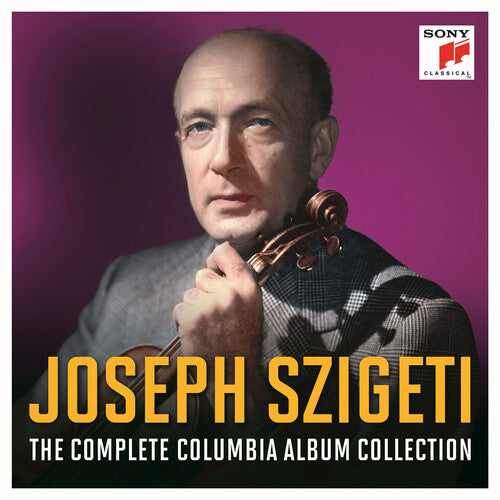
Joseph Szigeti: Complete Columbia Album Collection
Sony Classical is pleased to announce the release of a 17-CD box set collecting the recordings made between 1940 and 1956 for American Columbia by the renowned Hungarian violinist Joseph Szigeti.
Szigeti had a remarkable career. Born in 1892 in Budapest, where he studied with Jenő Hubay, one of most celebrated virtuosos and teachers of that golden era of violin playing, he was praised by the iconic German violinist Joseph Joachim at his Berlin debut in 1905; lived in London for several years following his acclaimed 1907 debut and played chamber music with, among others, Myra Hess and Ferruccio Busoni; was a frequent visitor after the war to the Soviet Union, where he introduced Prokofiev’s First Violin Concerto; made his triumphant American debut at Carnegie Hall under Stokowski in 1925; toured the world during the 1930s before finally settling in the US in 1940.
It was in that year that Szigeti renewed his friendship with fellow Hungarian émigré Béla Bartók, and in April the two gave a now-legendary recital in Washington which featured Bartók’s First Violin Rhapsody of 1928 – a work dedicated to and premiered by Szigeti in Europe. In May 1940, Columbia recorded their interpretation of this “vehicle for Szigeti’s biting and wholly magnificent fiddling” (MusicWeb International) in New York. That performance appears here for the first time on CD, along with another important work by Bartók, the classic first recording of his Contrasts for clarinet, violin and piano, written for and performed with Szigeti and Benny Goodman.
The rest of the new collection displays many more treasures of Szigeti’s passionate dedication to chamber music: in Bach, Handel, Tartini, Mozart, Beethoven, Schubert, Brahms, Dvořák, Debussy, Ravel, Bloch, Busoni, Prokofiev, Stravinsky and Henry Cowell, collaborating with such artists as Andor Foldes – another Hungarian émigré – as well as with Mieczyslaw Horzowski, Myra Hess, Pablo Casals and Igor Stravinsky.
There are, of course, major orchestral works represented in the new Szigeti edition, including two towering concertos in D major – the Brahms, recorded in 1945 with Eugene Ormandy conducting the Philadelphia Orchestra, and the Beethoven, recorded in 1947 with Bruno Walter and the New York Philharmonic (“an account of impassioned grandeur” – MusicWeb International) – along with Busoni’s early Violin Concerto in D major, recorded in 1954 with Thomas Sherman conducting the Little Orchestra Society. Szigeti’s numerous Bach concerto recordings for Columbia are here as well, conducted by Casals, Fritz Stiedry and George Szell.
As Nathan Milstein, one of his great colleagues, said in a touching tribute to Szigeti, who died in 1973: “He was an incredibly cultured musician. Actually, his talent grew out of his culture. … I always admired him, and he was respected by musicians.” In his late years, Joseph Szigeti finally got the appreciation he deserved from the general public as well. Sony Classical’s new collection his Columbia recordings, many never before released on CD at Sony Classical, can only further enhance that appreciation.
REVIEWS:
Joseph Szigeti (1892-1973) was the violinistic equivalent of a “kunst diva”, just as Gidon Kremer is today. He never had a particularly beautiful tone, while his bowing and intonation grew less dependable with age. Yet Szigeti never put a wrong musical foot forward. His phrasing communicated form, character, architecture, and astute harmonic awareness, with musical considerations always taking precedence over physical expediency.
Sony/BMG’s 17-CD collection of Szigeti’s complete Columbia Masterworks recordings stands out for exemplary remasterings that stem from the best possible source material. His intense yet thoughtful collaborations with Mieczyslaw Horszowski in Beethoven’s Sonatas Nos. 1, 5, 6, and 10 have never sounded so full-bodied and detailed as they do here. The same goes for the 1947 Beethoven Concerto, where the New York Philharmonic turns in firm and insightfully aligned playing under Bruno Walter’s direction. It contrasts to the conductor’s relatively casual and deferential backing in Szigeti’s 1932 recording, which, however, finds Szigeti on far better form.
Rehearing Szigeti’s 1949 Bach Sonata No. 3 in C major for violin solo reminded me just how much more fluent and controlled this performance is in comparison to the violinist’s relatively tenuous Vanguard remake. Likewise, his masterful 1940 account of the D minor concerto based on Bach’s keyboard concerto BWV 1052 is technically, musically, and sonically superior to the bloated 1950 reading under Pablo Casals’ direction. Szigeti’s Casals Festival contributions are admittedly uneven.
His collaborations with Béla Bartók, Igor Stravinsky, and Henry Cowell are both historically important and musically illuminating. Somehow the older Szigeti’s wiry tone imparts welcome character and tension to sonatas by Hindemith, Ravel, and Busoni, as well as the rarely heard Prokofiev solo sonata and Busoni concerto. It must be said, though, that the latter’s final scherzando-like passages are heavy going for the veteran violinist, as are the Busoni sonata’s overextended fugal sequences.
Listeners expecting suaveness and elegance in Brahms’ G major Op. 78 and D minor Op. 108 sonatas with Horszowski may wince at Szigeti’s tremulous and effortful execution. Still, he makes every note count, and the aching fragility that emerges from Op. 78’s outer movements and Op. 108’s deliberately unfolding third movement compels my undivided attention. Yet this Brahms D minor pales next to the power and authority of Szigeti’s great 78 rpm edition with pianist Egon Petri. As for the short encore-type pieces favored in the shellac era, Szigeti plays them dutifully rather than lovingly; he wasn’t a charmer like Kreisler, Elman, Milstein, or Ricci. Or Heifetz, for that matter.
The booklet includes full discographical data, an informative essay by Tully Potter, and Szigeti’s own notes for a 1970 Japanese reissue of his Schubert recordings. Even if just half of this collection represents Szigeti at his best, Sony/BMG’s comprehensive and meticulous production values deserve the highest accolades. In the meantime, a complete edition of Szigeti’s pre-war European 78s is long overdue.
-- ClassicsToday.com (Jed Distler)
The 31 works, from sonatas to chamber works to concertos, span Bach and Beethoven to Debussy, Ravel, Busoni and Henry Cowell. Bartók is pianist in his own Rhapsody No 1 for Violin and Piano. All the Brahms, including the Trio No 2 in C major with Hess and Casals, is to treasure. Szigeti plays Dvořák with grace and melancholy, and gives bite and attack to Stravinsky. The style may be redolent of another era, yet still this playing speaks to us.
– Guardian (UK)
This is a quite wonderful set, one of the highlights being an all-Busoni disc, the Second Sonata with Mieczysπaw Horszowski and the Violin Concerto with the Little Orchestra Society under Thomas Sherman. No one listening could fail to grasp the profound level of Szigeti's musical understanding.
– Gramophone
SET CONTENTS
DISC 1:
Bartók: Violin Rhapsody No. 1, Sz.87 (Remastered)
Bartók: Contrasts for Clarinet, Violin and Piano, Sz.111
Bloch: Three Pictures of Chassidic Life for Violin and Piano (Remastered)
Milhaud (arr. Lévy): Saudades do Brasil, Op. 67: No. 9, Sumare (Remastered)
Falla (arr. Levy): El Sombrero de Tres Picos, Parte I, Danza de la molinera (Remastered)
Mozart: Divertimento No. 15 in B-Flat Major, K. 287, "2. Lodronsche Nachtmusik" (Remastered)
DISC 2:
Mussorgsky-Rachmaninoff: Sorochintsy Fair, Act III: No. 5, Gopak (Remastered)
Dvorák (arr. Kreisler): Slavonic Dance in E Minor, Op. 46, No. 2 (Arr. in G Minor) (Remastered)
Dvorák (arr. Kreisler): Slavonic Dance No. 3 in A-Flat Major, Op. 46, No. 3 (Arr. in E Minor) (Remastered)
Hubay: Scènes de la Csárda No.4, Op. 32, "Hejre Kati", I. Lento ma non troppo. Allegro moderato (Remastered)
Hubay: Scènes de la Csárda No.4, Op. 32, "Hejre Kati", II. Allegro molto (Remastered)
Kodály (arr. Szigeti): Háry János Suite, IZK 26: V. Intermezzo (Remastered)
Brahms: 21 Hungarian Dances for Orchestra, WoO 1: No. 5 in G Minor (Remastered)
Debussy: Violin Sonata No.3 in G Minor, L. 140 (Remastered)
Hubay: The Zephyr, Op. 30, No. 5 (Remastered)
Schubert, Francois: Bagatelle Op. 13, No. 9, "Die Biene" (Remastered)
Stravinsky: Duo Concertant for Violin and Piano
Stravinsky: Pastorale, Song without Words for Violin & Woodwind Quartet
Stravinsky: Russian Maiden's Song
DISC 3:
Beethoven (Cadenza: Joseph Joachim): Violin Concerto in D Major, Op. 61
DISC 4:
Brahms: Violin Concerto in D Major, Op. 77
Brahms: Violin Sonata No.3 in D Minor, Op.108: II. Adagio
DISC 5:
Beethoven: Violin Sonata No.1 in D Major, Op. 12, No. 1 (Remastered)
Schubert: Violin Sonata in D Major, D.384
Schubert (arr. Friedberg): Piano Sonata No.17 in D Major, D.850: IV. Rondo. Allegretto moderato (Remastered)
Beethoven: Violin Sonata No.7 in C Minor, Op. 30, No. 2 (Remastered)
DISC 6:
Prokofiev: Violin Sonata No.1 in F Minor, Op. 80 (Remastered)
Prokofiev: Violin Sonata No. 2 in D Major, Op. 94bis (Remastered)
DISC 7:
Bach, J.S.: Violin Sonata No. 3 in C Major, BWV 1005
Bach, J.S. (arr. Reitz): Keyboard Concerto No. 1 in D Minor, BWV 1052
DISC 8:
Schubert: Fantaisie for Piano & Violin in C Major, Op.Posth. 159, D. 934
Corelli (arr. H. Leonard): Violin Sonata in D Minor, Op.5 No.12 "La Folia" (Variations Serieuses)
Debussy (arr. Roelens): Suite bergamasque, L. 75: No. 3. Clair de lune
Lalo (arr. Szigeti): Aubade from "Le Roi d'Ys" (Act III)
Tchaikovsky: 6 Pieces, Op. 51: No. 6, Valse sentimentale
Bach, J.S. (arr. Szigeti): Violin Partita No.3 in E Major, BWV 1006: VI. Bourrée (Remastered)
DISC 9:
Bach, J.S.: Concerto for Flute, Violin and Keyboard in A Minor, BWV 1044 (Remastered)
Bach, J.S.: Violin Concerto No. 1 in D Minor, (arr. BWV 1052/1056) (Remastered)
Bach, J.S.: Brandenburg Concerto No. 5 in D Major, BWV 1050
DISC 10:
Schubert: Rondo in B Minor for Piano and Violin, D.895 (Op.70) "Rondeau brillant"
Beethoven: Violin Sonata No.10 in G Major, Op. 96 (Remastered)
Schubert: Violin Sonata in A Major, Op. 162. D. 574 "Grand Duo" (Remastered)
DISC 11:
Brahms: Piano Quartet No. 3 in C Minor, Op. 60
Brahms: Piano Trio No. 2 in C Major Op. 87
DISC 12:
Cowell: Sonata No. 1 for Violin and Piano (1945) (Remastered)
Shapero: Sonata for Piano Four Hands (1941) (Remastered) (Harold Shapero, piano; Leo Smit, piano)
Cowell: Celestial Vision: How Old Is Song? (Remastered)
DISC 13:
Beethoven: Violin Sonata No.5 in F Major, Op. 24 "Spring"
Beethoven: Violin Sonata No. 6 in A Major, Op. 30, No. 1
DISC 14:
Bach, J.S. (arr. Szigeti): Violin Concerto in G Minor, BWV 1056 (Remastered)
Handel: Violin Sonata in D Major, HWV 371 (Remastered)
Tartini (Cadenzas: Szigeti): Violin Concerto in D Minor, D. 45 (Remastered)
Tartini: Violin Sonata in G Major, B. G19 (Remastered)
DISC 15:
Ravel: Violin Sonata No.2 in G Major, M. 77
Hindemith: Violin Sonata in E Major (1939)
Prokofiev: Sonata for Solo Violin in D Major, Op. 115 (Remastered)
Prokofiev: Five Melodies for Violin and Piano, Op. 35bis (Remastered)
DISC 16:
Busoni: Violin Concerto, Op.35a, BV 243
Busoni: Violin Sonata No.2, Op.36a, BV 244
DISC 17:
Brahms: Violin Sonata No.1 in G Major, Op. 78 "Regen" (Remastered)
Brahms: Violin Sonata No.3 in D Minor, Op.108 (Remastered)


English Music for Strings / Wilson, Sinfonia of London
During the 1930s, Bliss, Britten, and Berkeley all contributed major works to the repertoire for string orchestra, following in the footsteps of Elgar and Vaughan Williams. They are joined on this album by Frank Bridge whose Lament was composed during the First World War. This is the fourth recording by John Wilson with his award-winning Sinfonia of London. Bliss composed Music for Strings after he had completed the film score for Korda’s Things to Come, driven by his desire to compose a piece of ‘pure music’, expressing his own ideas rather than those of others. Commissioned in May 1937 by Boyd Neel for the Salzburg Festival that summer, Britten’s Variations on a Theme of Frank Bridge was composed at great speed, and helped to establish the young composer’s international reputation. Dedicated to his teacher, Frank Bridge, the theme is taken from the second of Bridge’s Three Idylls for string quartet. Lennox Berkeley composed his Serenade for Strings at Snape Maltings, where he was living with Britten in 1938 / 39. By the time of its completion the nation was at war and the music seems to reflect the composer’s anxious mood as the world faced an uncertain future.
REVIEWS:
The players may have changed since Barbirolli but the spirit has not. And the sound. Sumptuous is one word – but because this is Wilson that goes hand-in-hand with the keenest articulation. There’s a rosiny immediacy about it all, like being on the podium, or better yet inside the sound.. Wilson’s way with strings has come a long way from Hollywood – but the lustre is inescapable.
– Gramophone (Editor's Choice, February 2021)
Here in the Bridge Lament is a prime example of the heartfelt precision and beauty of tone that typifies John Wilson’s Sinfonia of London. There’s plenty of heart, too, in their superlative treatment of Britten’s marvellous Bridge variations, warmly delivered even during the parody character pieces clustered together in the first half. Wilson’s team prove equally adroit in Berkeley’s Serenade.
– BBC Music Magazine


Tangorama: An Anthology of 20th Century Tango, Vol. 1 / Miriam Conti
This panoramic survey of Argentine tangos shows the genre in all its rich variety of moods and virtuosity. It salutes Angel Villoldo, the father of tango, whose El choclo (‘The Corncob’) is one of the most famous tangos of all time, and charts the music’s evolution towards the romanticism and lush harmonies of Augustín Bardi. Improvisatory styles, syncopation and jazz harmonies were introduced by such great composers as José Pascual and Orlando Goñi, whilst Enrique Francini developed his personal qualities of dissonance and rhythmic flair into the 1960s. This survey is the first in a series that will document around one hundred rare and classic tangos, all performed by the Argentine pianist Mirian Conti.
REVIEW:
Tangorama: a wonderful aural trip to the southernmost South American nation
Tangorama, Vol. 1 is the first of an upcoming series of tango albums lovingly selected and superbly played by the terrific Argentine-American pianist Mirian Conti. This first in the series features over two dozen gems that trace the development of the Argentine tango from its humble origins rooted in Afro-Argentine and Cuban-influenced dance forms birthed in the bars an dives on the shores of the River Plate to the sophisticated compositions of mid-20th century composer-performers that inflected the form with European harmonies and counterpoint while retaining the syncopated underpinning of the original dance form.
– Rafael's Music Notes (Rafael de Acha)
Argentine-American pianist and recording artist Mirian Conti has recently released her new solo album, Tangorama, performing a collection of 25 vintage tangos, written over the span of half a century. Tango originated in Argentina and Uruguay in the late 1800’s as immigrants poured in from all parts of Europe. They brought their music with them: waltzes, polkas and mazurkas, which blended with Cuban habanera and African candombe music and rhythms to create early forms of tango music and dance. These early years, from about 1895 to 1925, are known as Guardia Vieja, the Old Guard, when tango began to develop structure and identity. One of the early composers was Angel Villoldo (1861-1919), generally considered the father of the tango. Three of his tunes are included on this disc, all in early tango 2/4 duple meter. In 1903 Angel composed the well-known El Choclo, one of the best of the early tangos, which became a popular hit song again in 1952 as “Kiss of Fire”. Mirian performs these piano arrangements with a light, graceful touch and a delightful sense of rhythm, timing and phrasing. Another early tango is the famous La Cumparsita, the most popular tango ever written. It was composed in 1917 by Geraldo Matos Rodriguez (1897-1948), and originally written for a marching band. The tune is driven by the bold arrastre sound of slurring chords mixing with crisp staccatos.
The tango period known as Guardia Nueva, or New Guard, lasted roughly from 1925 to 1955. This included the Golden Age of the 1940’s, which was the hey-day of the big tango orchestras. Generally coinciding with the explosion of the Big Band era, tango began developing and maturing in form and complexity. Alfredo Gobbi (1912-1965) was a violinist and composer who wrote El Andariego in 1951. The tune features a smoother 4/8 meter, slower tempo, heavy rubato, and delicate staccato passages. From 1955 to 1970, tango went through an Avant-Garde period of development and began moving in new directions. Julian Plaza (1928-2003) was an outstanding musician and composer who wrote Melancolico in 1960 and Nostalgico in 1962. The tunes are intoxicating with dramatic tango rhythms, melodies and dissonant harmonic structures. Mirian presents them with beautiful dynamics and phrasing, meticulous keyboard technique and solid intuition.
This music was recorded on 15-24 September 2020 on two Yamaha Disklaviers, one each at Conti Studio in Buenos Aires and at Yamaha Artists Service in New York. Mirian Conti and G. Richard Glasford were the producers, and Aaron David Ross was the engineer. Joseph Patrych performed the mastering. A 28-page booklet is included, with photographs and commentary in Spanish and English. The sound quality is excellent.
--MusicWeb International (Bruce McCollum)


Spendiarov: Complete Piano Works and Chamber Works with Pian


Beethoven: The Complete String Quartets (1982 Live Recordings) / Juilliard String Quartet
In the 1960s and in the decades following, the Budapest String Quartet’s mantle at Columbia was passed on to the Juilliard String Quartet. Over the years, with some changes in personnel, the ensemble repeatedly set down its famously lean, energetic and expressive interpretations of the Beethoven quartets in New York recording studios. These have remained catalogue staples. Less well known is the Beethoven cycle they recorded live in Washington at the Library of Congress in 1982. Gramophone singled out this complete traversal for its special depth and flexibility. Presented here on 9 albums, this is its first Sony release.
REVIEW:
The slow introduction to the C Major Quartet No. 9 is handled wonderfully, which sets up well for the rest of the movement and the work as a whole. These are followed by nice recordings of the “Harp” and “Serioso” quartets, thus bringing the middle period to an end.
The late quartets open with a really nice recording of the Nos. 12 and 13, with the first of these being particularly fine. The final disc of the nine houses the 15th and 16th quartets, which again receive fairly good recordings. Overall, the tempos selected here tend to be slower than in their earlier recording, which is usual for live recordings.
Overall sound quality is, at times, a bit of an issue here, even taking into account the live nature of these recordings, and overall isn't up to the sound quality of the quartet's highly regarded 1960s studio cycle of these works for RCA.
– MusicWeb International


Ge Gan-Ru: Piano Music / Yiming Zhang
Ge Gan-ru’s Twelve Preludes is heard here in the world premiere recording of its revised version. The release also features Ancient Music, in which he employs the prepared piano to evoke the intimate sounds of Chinese instruments, as well as Wrong, Wrong, Wrong! and the world premiere recording of Hard, Hard, Hard! written for toy piano. Yiming Zhang has a wide spectrum of musical interests ranging from the Baroque period to the present day. In recent years, he has pursued a particular interest in contemporary Chinese piano music, and has comprehensively researched and performed the piano music of the composer Wang Lisan. Besides this recording project of the complete piano works of Wang Lisan for Naxos, he has also written a substantial biography of the composer, for publication by the People’s Music Publishing House. In addition, he is a frequent collaborator with other contemporary Chinese composers such as Ge Gan-ru (b.1954) and Wang Xilin (b.1937).


King Frederik IX Conducts the Royal Danish Orchestra & Danish National Symphony


Beethoven: Complete Piano Concertos / Mustonen, Tapiola Sinfonietta
Ondine celebrates Beethoven’s 250th anniversary of birth by re-issuing Olli Mustonen’s Beethoven cycle with the Tapiola Sinfonietta. The three volumes were originally released in three separate volumes from 2007-2009. Mustonen, described by The Sunday Times as “living dream of pianism”, is known for delivering fresh and visionary approach to standard works – this is evident in these masterful recordings of Beethoven’s concertos. Mustonen is a particularly fitting exponent for Beethoven’s music as the composer himself was also both visionary and revolutionary in his approach to tradition. The recording of Piano Concerto No. 1 includes Mustonen’s own cadenzas. Beethoven’s own Piano Concerto arrangement of his Violin Concerto is also featured – one of Mustonen’s signature pieces.
REVIEW:
Mustonen plays the five concertos of a piece, not starting out with Mozartean elegance in the first two and building up to mature Beethoven somewhere in Concerto No. 3. He attacks every bar vigorously and with decisive intent. In my experience, no one since Mikhail Pletnev’s highly original and at times eccentric cycle on DG has sounded so personal in music that too often trips off the fingers with glib sameness.
My overall defense of a cycle that will strike other listeners as totally arbitrary comes down to Mustonen being a composer, not a touring pianist playing subscription concerts. These are a composer’s responses to Beethoven, and Mustonen has the fingers to express them with confident assurance and at times with dazzling flourishes. In my corner this release is one of the most refreshing of the Beethoven year.
– Fanfare


Beethoven/Liszt: Symphony V & VII


Satie: Complete Piano Works, Vol. 4 (New Salabert Edition)


Voyage / Russell, Cincinnati Pops Orchestra
Voyage is the newest release from the Cincinnati Pops conducted by John Morris Russell and features the world premiere recording of the title track by Academy Award-winning composer Michael Giacchino, written to commemorate the 50th anniversary of the Apollo 11 Moon Landing and the historic “giant leap for mankind.” This 96th Cincinnati Pops album draws inspiration from the stars and also features selections from Holst’s The Planets, as well as science fiction favorites from both the big and small screens.


Mahler: Symphony No. 2 - Zimmermann: Trumpet Concerto / Hardenberger, Nelsons, Vienna Philharmonic
Conducting the Wiener Philharmoniker, Andris Nelsons presents a concert night which concentrates every conceivable passion: Bernd Alois Zimmermann’s Trumpet Concerto “Nobody knows de trouble I see” performed with “technical perfection” (Kronenzeitung) by “the fantastic Håkan Hardenberger” (Salzburger Nachrichten) and Mahler’s Symphony No. 2 in C minor “Resurrection”. “Nelsons proved to be delicate but hearty when interpreting Mahler.” (Wiener Zeitung) The conductor led the Vienna Philharmonic Orchestra to “enticingly beautiful sounds” (Die Presse). “High praise goes to the vocal soloists Ekaterina Gubanova, Lucy Crowe and the Bavarian Broadcasting choir.” (Salzburger Nachrichten) “Standing ovation”! (Kurier)
-----
REVIEW:
This is a pretty compelling performance of the ‘Resurrection’ Symphony. The orchestral playing is superb, as you’d expect, and the quality of the singing is no less fine. Andris Nelsons is in his element with this dramatic, highly charged work and he does full justice to Mahler’s amazingly imaginative score. Lest it be thought that this is simply a no-holds-barred performance, let it be remembered that the less theatrical inner movements come off very well too.
Throughout the Zimmermann Concerto the soloist plays almost continuously and though the duration is only just over 15 minutes Hardenberger looks physically drained at the end. Nelsons is an alert and watchful accompanist. The Salzburg audience received the performance very warmly indeed.
– MusicWeb International


American Originals / Russell, Cincinnati Pops
American Originals: 1918 is the newest release from the Cincinnati Pops conducted by John Morris Russell and features iconic American songs interpreted by a diverse array of acclaimed musical collaborators including MacArthur “Genius” Fellow Rhiannon Giddens, Grammy-winning Steep Canyon Rangers, Americana artist Pokey LaFarge, and tap dancer Robyn Watson. The follow-up to the Pops’ innovative American Originals album, American Originals: 1918 reimagines songs first brought to life in the first third of the 20th century as well as American popular standards from World War I and some of the first well-known tunes from the advent of jazz. The 95th Cincinnati Pops album includes fresh new renditions of “Over There,” “God Bless America,” “Swing Along,” “Memphis Blues,” “I’m Just Wild About Harry,” “How Ya Gonna Keep ‘em Down on the Farm,” and “I Ain’t Got Nobody,” among many other classic tunes. In addition, the collection includes the world premiere of Grammy-nominated composer Peter Boyer’s “In the Cause of the Free,” commissioned by the Pops to commemorate the 100th Anniversary of the end of World War I.


Monteverdi: Il ritorno d'Ulisse in patria / Gardiner, English Baroque Soloists

Monteverdi’s great opera is a celebration of unwavering devotion, conveyed in some of the composer’s most poignant, heart-breaking music. After two brutal decades of war, the weary Ulysses is washed up on the rocky shore of his home island of Ithaca. There, he discovers the hordes of depraved admirers who have beseiged his faithful wife Penelope in his 20-year absence – and launches into battle to win back her love. Monteverdi’s opera is a celebration of unwavering devotion, conveyed in some of the composer’s most poignant, heartbreaking music. John Eliot Gardiner leads an exemplary cast of world-class singers alongside the Monteverdi Choir and English Baroque Soloists in this live recording from The National Forum of Music in Wroclaw, Poland – part of their critically acclaimed Monteverdi 450 tour in 2017.
-----
REVIEWS:
Faced with lots of recitative and practically no arias, singers and players abandon themselves to intense arioso, jazzy cross-rhythms between poetry and continuo, and take-no-prisoners dissonances. Furio Zanasi, Lucile Richardot, and Hana Blažiková bring a depth of acting almost without rival.
– BBC Music Magazine
Recitatives flicker and spark with detail. Instrumental textures are spare and speeds swift, and there’s a welcome sense of narrative drive. Text is king, but it’s the rhetoric of the English Baroque Soloists that really counts. Zanasi is a smooth, patrician Uliss. There are more classically beautiful accounts of Il ritorno d’Ulisse available, but perhaps none with quite so much life.
– Gramophone


Festival - Classical Music in Switzerland
Traditionally, Switzerland has an important and impressive heritage regarding festivals for classical music, among them the famous Lucerne Festival, rooting back to the so-called "Concert de Gala" in the gardens of Richard Wagner's villa at Tribschen in 1938 conducted by Arturo Toscanini. This release features the fascinating variety and the many facets of the classical festival scene in Switzerland. The selection of the works takes the importance of big names and well known works into account, but also presents modern or even avant-garde approaches or less well known chamber music works.
The world’s leading orchestras, conductors and soloists, outstanding concert venues like the KKL Culture and Convention Centre by the renowned architect Jean Nouvel in Lucerne, a breathtaking landscape: there are many reasons for falling in love with the Swiss music festivals. The Swiss festivals now draw more than 500,000 classical music enthusiasts to the shores of Lake Lucerne or the Verbier mountains every year. And the numbers of visitors is growing from year to year. With this release, you will understand why.
CONTENTS:
DISC 1:
Beethoven: Piano Concerto No. 3 in C Minor, Op. 37
Francesco Piemontesi, piano
Chamber Orchestra of Europe / Roger Norrington, conductor
Mozart: Symphony No. 39 in E-Flat Major, K. 543
Francesco Piemontesi, piano
Le Cercle de L'Harmonie / Jérémie Rhorer, conductor
DISC 2:
Mozart: Symphony No. 40 in G Minor, K. 550
Mozart: Symphony No. 41 in C Major, K. 551, "Jupiter"
Le Cercle de L'Harmonie / Jérémie Rhorer, conductor
DISC 3:
Elgar: Introduction and Allegro, Op. 47
Schumann Quartett
CHAARTS Chamber Artists
Felix Froschhammer, concert master
Kancheli: Chiaroscuro for Violin and Orchestra
Sebastian Bohren, violin
CHAARTS Chamber Artists
Andreas Fleck, conductor
Schumann:
Dein Angesicht, Op. 127 No. 2
Lehn' deine Wang' an meine Wang', Op. 142 No. 2
Es leuchtet meine Liebe, Op. 127 No. 3
Mein Wagen rollet langsam, Op. 142 No. 4
Ian Bostridge, tenor
Saskia Giorgini, piano
Ralph Vaughan Williams: On Wenlock Edge: V. Bredon Hill
Ian Bostridge, tenor
Casal Quartett
Purcell: The Fairy Queen, Z. 629: O Let Me Weep
Regula Mühlemann, soprano
Robin Müller, violin
CHAARTS Chamber Artists
DISC 4:
Brahms: Piano Trio No.1, Op. 8
Jonian-Ilias Kadesha, violin
Vashti Hunter, cello
Joonas Ahonen, piano
Blum: Luzerner Kreisel
Silke Gäng, mezzo-soprano
Oliwia Grabowska, piano
Gesualdo: Madrigals, Libro 6: II. Beltà poi che t'assenti
Davos Festival Kammerchor
Dalbavie: Palimpseste für Flöte, Klarinette, Violine, Viola, Violoncello und Klavier
Àgnes Vass, flute
Joonas Ahonen, piano
Dickkopf: Paris
Davos Festival Männerchor
DISC 5:
Beethoven: Violin Concerto in D Major, Op. 61
Lily Francis, violin
Festival Orchestra / Willem de Bordes, conductor
Enescu: Romanian Rhapsodies, Op. 11: No. 1 in A Major
Jonian-Ilias Kadesha, violin
Festival Orchestra / Daniel Bard, concert master
DISC 6:
Beethoven: Piano Trio No. 5 in D Major, Op. 70 No. 1 "Ghost"
Candida Thompson, violin
Xenia Jankovic, cello
Paolo Giacometti, piano
Enescu: Octet in C Major, Op. 7
Daniel Bard, violin
DISC 7:
Bach: Jesu, meine Freude, BWV 227
Britten: Hymn to St. Caecilia
Gabrieli Consort & Players
Paul McCreesh, conductor
DISC 8:
Mozart: Requiem in D Minor, K. 626
Elgar: They Are at Rest
Gabrieli Consort & Players
Paul McCreesh, conductor
DISC 9:
Haydn: Symphony No. 6 in D Major, Hob. I:6 "Le Matin"
CHAARTS Chamber Artists
Gregory Ahss, concert master
Sollima: Fecit Neap 17
Giovanni Sollima, cello
CHAARTS Chamber Artists
Gregory Ahss, concert master
Schönberg: Verklärte Nacht, Op. 4
Felix Froschhammer, violin
Gregory Ahss, violin
Lawrence Power, viola
Razvan Popovici, viola
Maximilian Hornung, cello
Andreas Fleck, cello
DISC 10:
Webern: Sechs Stücke für großes Orchester, Op. 6
Orchestra of the Lucerne Festival Academy / Susanna Mälkki, conductor
Neuwirth: Trurliade - Zone Zero
Victor Hanna, percussion
Orchestra of the Lucerne Festival Academy / Susanna Mälkki, conductor
Rihm: Gruss-Moment für Pierre Boulez
Ligeti: San Francisco Polyphony
Orchestra of the Lucerne Festival Academy / Matthias Pintscher, conductor
DISC 11:
Shostakovich: From Jewish Folk Poetry, Op. 79
Shostakovich: Cello Sonata in D Minor, Op 40
Rachmaninoff: Cello Sonata in G Minor, Op. 19
Bloch: From Jewish Life, IEB 6
Sol Gabetta, violin
Bertrand Chamayou, piano
DISC 12:
Mahler: Symphony No. 5
UBS Verbier Festival Orchestra / James Levine, conductor
DISC 13:
Bach: Concerto for 4 Keyboards in A Minor, BWV 1065
Martha Argerich, piano
Evgeny Kissin, piano
James Levine, piano
Mikhail Pletnev, piano
Haydn: Symphony No. 88 in G Major, Hob. I:88
Verbier Festival Chamber Orchestra / András Schiff, conductor
Rachmaninoff: Cello Sonata in G Minor, Op. 19
Lynn Harrell, cello
Yuja Wang, piano
Ysaye: Sonata for 2 Violins in A Minor, Op. posth.
Joshua Bell, violin
Leonidas Kavakos, violin


Haydn: Symphonies Nos. 94, 92 & 88 & Sinfonia Concertante / Bernstein, Vienna Philharmonic
Haydn is generally seen as one of the main originators of the “Viennese sound”, the inimitable style of playing which is still very much alive today and is particularly cultivated by the Vienna Philharmonic Orchestra. This orchestra has Haydn’s music in its blood, and its interpretation of his symphonies demonstrates a supreme confidence, musical sophistication and lightness of touch. As a noted American music critic remarked following a performance of the Oxford Symphony conducted by Leonard Bernstein: “Let’s have no further argument: the Vienna Philharmonic is the world’s greatest orchestra. Bernstein’s interpretations of the symphonies have consistently met with unreserved critical acclaim. He, of all conductors, possessed precisely the qualities which Haydn’s music requires: grace, charm and a generous measure of wit.” The present recording was recorded at Grosser Musikvereinssaal Wien in 1984 and 1985. This is truly documentation of a master at work.
-----
DETAILS:
Booklet: English, German, French
Run time: 111 minutes
Disc Format: DVD 9
Picture: NTSC 4:3
Audio: PCM Stereo
Region Code: 0 (worldwide)


Beethoven: Piano Concerto No. 5 & Works for Solo Piano / Bax
-----
REVIEW:
His playing is consummately lyrical. His expressive molding and the very forward recording quality make for an overall result that is more immediate. All in all, this is an impressive disc, which repays repeated listening and can stand comparison with many of the biggest names.
– Gramophone
