One-Day Sale
Our One-Day Sale is back and better than ever — 100 hand-picked titles are 50% OFF now at ArkivMusic!
While supplies last — no backorders at these prices! Shop the sale before it ends at 9:00am ET, Wednesday, March 25th, 2026.
99 products
Wagner: Das Rheingold
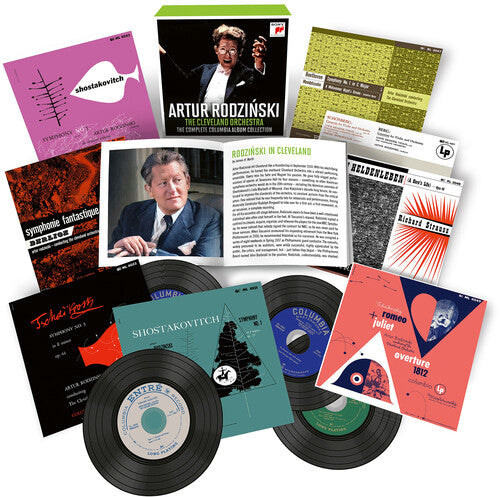
Artur Rodziński: The Complete Cleveland Orchestra Recordings
Following Sony Classical’s 16-CD release of Artur Rodziński’s New York Philharmonic recordings, here is the label’s eagerly awaited 13-disc collection of his complete recordings with the Cleveland Orchestra, which Rodziński headed from 1933 to 1943. The fiery, volatile Polish conductor (1892–1958) – whose lean, propulsive style emulated that of his idol Toscanini – earned a reputation as a builder of great orchestras: he led and developed the Los Angeles Philharmonic before taking up his position in Cleveland. In 1935, he brought nationwide attention to the midwestern orchestra when he conducted it in the US première of Shostakovich’s opera Lady Macbeth of the Mtsensk District. During his tenure in Cleveland, Rodziński moulded its orchestra into a brilliant ensemble which his successor, George Szell, would then elevate to international pre-eminence. Meanwhile, Rodziński was also active in Europe, becoming the first naturalized American to conduct the Vienna Philharmonic at the Salzburg Festival. There Toscanini admired his work and in 1938 picked him to train his new NBC Symphony Orchestra. In Cleveland between 1939 and 1942, Rodziński conducted a number of important recordings for Columbia Masterworks, all of them contained in this new set.
With dedicatee Louis Krasner as soloist, he made the first studio recording of the Berg Violin Concerto. His other acclaimed 78-sets include the Berlioz Symphonie fantastique, Rimsky-Korsakov’s Scheherazade (“among the finest statements ever given this incorrigibly popular score” – High Fidelity), Strauss’s Ein Heldenleben, the Fifth Symphony of Tchaikovsky (“Remarkable here is the tension of the second movement and the heroic close to the first” – Gramophone) as well as those of Sibelius and Shostakovich, Tchaikovsky’s Romeo and Juliet (“Unsullied excitement” – Gramophone), Debussy’s La Mer and the orchestral “scenario” from Jerome Kern’s Show Boat – plus a previously unreleased recording of Mendelssohn’s Violin Concerto with Nathan Milstein. Until now, most of these albums have only been released on 78s and reissued on LP. Thus Sony Classical’s meticulously transferred and mastered 13-disc collection of Rodziński’s Cleveland recordings fills a large gap in this still widely admired conductor’s CD discography.
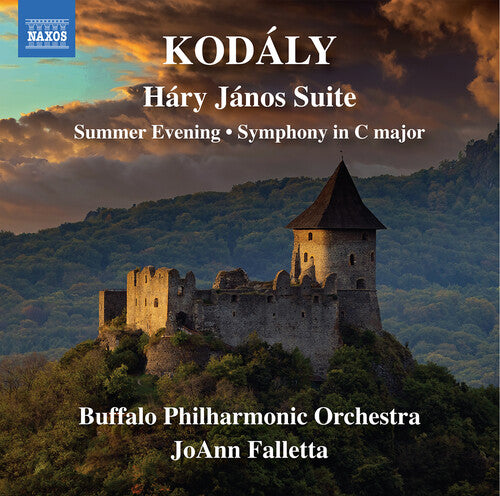
Kodály: Háry János Suite; Symphony in C / Falletta, Buffalo Philharmonic
Zoltán Kodály’s orchestral output is relatively small but brimming with Hungarian spirit. JoAnn Falletta and the Buffalo Philharmonic (BPO) present one of the composer’s most popular works, the Háry János Suite, alongside Summer Evening and the Symphony in C major. Falletta and the BPO’s acclaimed previous Kodály album is on 8573838.
REVIEW:
This is JoAnn Falletta’s second recording for Naxos of music by Kodály and it is every bit as fine as that earlier one. It includes two works which deserve greater exposure than they have received. It also contains Kodály’s most popular orchestral piece, the Háry János Suite. There have been plenty of excellent accounts of this suite, particularly by such Hungarian conductors as István Kertész and Iván Fischer. Falletta holds her own against those, even if none I have heard surpasses Kertész in this music, including his 1964 recorded sound.
The primary reason to get this CD is the rarely performed Symphony in C, a piece that Kodály worked on over a long period beginning in the 1930s and completing only in 1957. It is an attractive and well-orchestrated work with memorable themes and characteristic of Kodály in its harmony and rhythms.
There is plenty of detail to be savoured and at the same time good, but not excessive reverberation. Another fine production from Naxos.
-- MusicWeb International
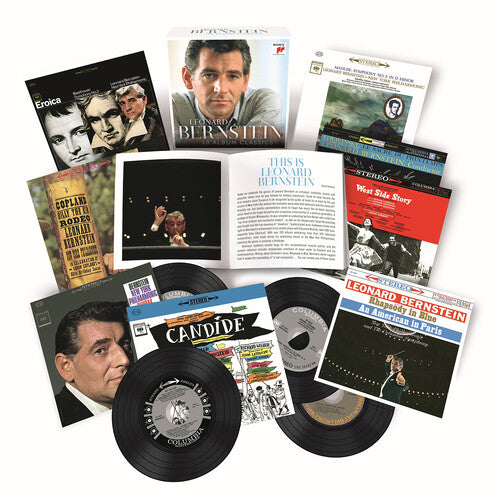
Leonard Bernstein - 10 Album Classics
Sony Classical is pleased to present a special edition of Leonard Bernstein’s American Columbia recordings from the 1950s and 1960s. Some of the conductor-composer’s most celebrated interpretations and works are collected here on these carefully chosen 10 original albums on 11 CDs.
There is, of course, the still-astonishing album that launched Leonard Bernstein’s international reputation as the most dynamic and charismatic conductor of his era, Stravinsky’s Rite of Spring recorded in January 1958 – two months after his appointment as the youngest music director in the New York Philharmonic’s history. Reviewing a 2013 reissue, ClassicsToday.com declared: “It has an excitement, spontaneity, and primal fury that no other version quite matches.”
The Bernstein recording that launched the “Mahler Renaissance” in the 1960s is also here: his Third Symphony with the New York Philharmonic, which has arguably never been surpassed. And while we’re talking about Third Symphonies, Bernstein’s “Eroica” still sounds “wonderfully vibrant” (Gramophone) a half century after its first release. There is also his reading of Dvořák’s most popular symphony – “There’s no such thing as a ‘definitive’ recording [of the “New World”], but if there were, this one would come close to that imagined ideal” (ClassicsToday) – and two from Haydn’s magnificent “Paris” set: “It’s debatable whether there have been better performances” (ClassicalNet).
Bernstein himself conducts and plays Gershwin’s Rhapsody in Blue (“The one indispensable recording of this familiar work, paired with an equally fine American in Paris” – New York Times). Bernstein the pianist also accompanies Dietrich Fischer-Dieskau, at the peak of his matchless career, in an acclaimed album of Mahler lieder. The ballets Rodeo and Billy the Kid by Bernstein’s mentor and friend Aaron Copland are included: “Even the composer couldn't make [them] dance the way Bernstein does” (New York Times).
Bernstein the composer is also generously represented. The original Broadway cast recording of Candide from 1956 is included, as is the definitive version of his most famous work: the original Broadway cast recording of West Side Story from 1957.
The re-masterings in this new collection are the best ever issued of these thrilling recordings by one of the last century’s greatest musicians, selected from the Grammy® award-winning Leonard Bernstein – The Composer and the Leonard Bernstein – Remastered editions. Sony Classical’s new 11-CD Leonard Bernstein box set is the perfect introduction to the work of this American genius.
Past praise of previously released recordings included in this set:
Mahler: Symphony No. 3 / Lipton, Bernstein, NYP
This was the finest performance of Mahler’s Third when it was first issued back in 1962, and in some ways it has never been surpassed. Bernstein catches the riotous vulgarity of the first movement march music like no other conductor–not even his own digital remake reaches the level of sheer abandon he whips up here, and he also has the best of all fifth movements (bright and cheery, with dazzlingly prominent percussion).
-- ClassicsToday.com (10/10; David Hurwitz)
Dvořák: Symphony No. 9 / Bernstein, NYP
There’s no such thing as a “definitive” recording, but if there were, this one would come close to that imagined ideal. Its special qualities haven’t dimmed a bit in decades since it was recorded, and every interpretive decision comes across with the inevitability of fate itself. First, you get the first-movement exposition repeat (very unusual for its time), then there’s the very slow (but still very flowing) Largo, gorgeously played and far from the trudge-fest that Bernstein would make of for DG. The scherzo goes like the wind, the fastest ever, and the finale offers simply the last word in excitement. If you don’t own this performance in some form, then you don’t know the “New World”.
-- ClassicsToday.com (10/10; David Hurwitz)
Istrian Rhapsody / Repušic, Munich Radio Orchestra
The folk music of the Croatian peninsula of Istria is as characteristic as it is extraordinary. Its melodies, harmonies and rhythms are unique, and sonorously expressed by the sopila - a traditional shawm instrument - as well as through choral singing and folk dances. The music with its asymmetrical rhythms is based on the so-called "pentatonic Istrian scale", which consists of major and minor seconds and is thus clearly different from the other musical styles of Croatia. Numerous non-Istrian musicians and composers have been fascinated by it - among them the Croatian composer Natko Devčić, with his "Istrian Suite" for orchestra (1946), or the young Croatian pianist and composer Dejan Lazić with his "Concerto in Istrian Style for Piano and Orchestra” op. 18 (2014/2021), or his "Alterations on the Istrian Folk Hymn" op. 29 (2022).
Natko Devčić was one of Croatia's most important composers and music educators, leaving a lasting impression on subsequent generations of musicians. His most lasting success as a composer came with his "Istrian Suite" for orchestra from 1946, which uses Istrian folk music as a source of inspiration and as a link between Slavic late Romanticism and the avant-garde.
Dejan Lazić’s five-movement "Concerto in Istrian Style for Piano and Orchestra” op. 18 is closely connected to Istrian music, with its melodies, harmonies and rhythms, and features the "Istrian scale" as well as the typical melodies played in thirds. The central movement of the concerto is an extended cadenza in which Lazić – who has already composed cadenzas for piano concertos by Haydn, Mozart, and Beethoven and also arranged Brahms' Violin Concerto op. 77 for piano and orchestra – demonstrates his diverse experience in this field. Lazić's "Alterations on the Istrian Folk Hymn" op. 29 were written for the present CD and are dedicated to the Munich Radio Orchestra and its principal conductor Ivan Repušic.
The song "Draga nam je zemlja", recorded by Ivan Matetić Ronjgov, was and continues to be sung as a folk hymn in Istria, and in his work Lazić has taken its melody as the basis for a theme and twelve variations with coda for orchestra.
Verdi: Falstaff - Salzburg Festival 1982 / Taddei, Panerai, Aranza, Ludwig, Karajan
Based, in part, on Shakespeare’s The Merry Wives of Windsor, Falstaff is Verdi’s last work for the stage – and only his second comic opera. And yet the humor in this multilayered masterpiece is distinctly wry, for all the main characters exhibit an array of human weaknesses that are implacably exposed by Verdi and his librettist Arrigo Boito. In this legendary performance from the Salzburg Festival, Herbert von Karajan is not only leading a stunning cast of singers featuring the Wiener Philharmoniker, he too directed the opera, in the amazing set design of Günther Schneider-Siemssen.
Handel: Judas Maccabaeus
When Handel composed his Judas Maccabaeus in 1746 he had brought to an end his activity for the (Italian) opera in London and begun a second career as an oratorio composer, which at first got off to a very successful start but then soon experienced a decline, for which there had been various causes. Judas Maccabaeus is the evidence that Handle had recovered from this setback, and to this day the work is considered one of his most successful. Rafael Kubelík relies, without ifs and buts, on the Handel Edition by the North German musical scholar Friedrich Chrysander that appeared in the second half of the 19th century and represents a monument of the scholarly musical historicism that probably could appear only in Germany and not in England, Handel’s artistic home. Apart from the old-fashioned German translation, most astonishing is the drastic cuts that Chrysander made. This historical live recording from 1963 presents Fritz Wunderlich as Judas together with Agnes Giebel, Julia Falk, Naan Pöld and Ludwig Welter.
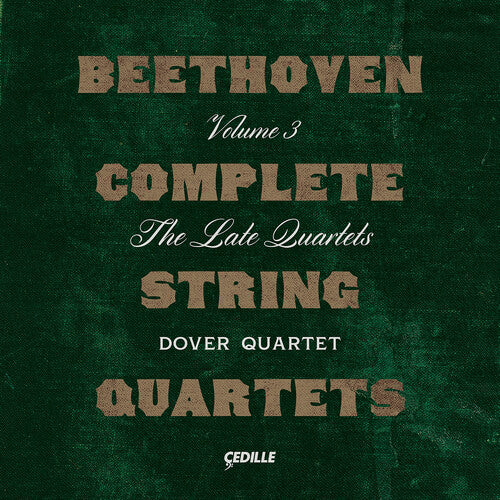
Beethoven: Complete String Quartets, Vol. 3 - The Late Quartets / Dover Quartet
The celebrated Dover Quartet, the young, Grammy-nominated ensemble brimming with prestigious awards and residencies, concludes its critically acclaimed, three-volume Beethoven cycle with the composer’s five monumental, revolutionary Late Quartets and imposing Grosse Fugue. The triple-album release comprises Beethoven’s very last compositions — remarkable and often daunting works that upended the concept of the string quartet. Many critics and scholars consider them the ultimate expression of Beethoven’s artistry. At the same time, lyrical, songlike “vocal” writing pervades the Late Quartets, delighting the same audiences who flocked to Rossini’s operas. The Dover’s first two Beethoven installments were greeted with ecstatic reviews: “Beethoven would find it hard to believe that his quartets could be played with such perfection of execution, such beauty of tone, such nuance of expression, and such keen understanding of his music’s meaning and intent.” (Fanfare) “Their Beethoven is, simply, perfection.” (Classical CD Reviews)
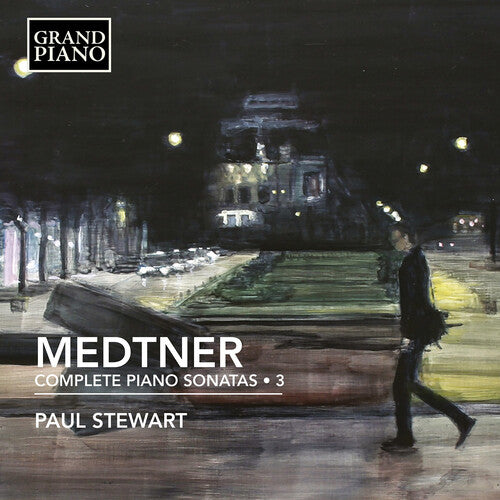
Medtner: Complete Piano Sonatas, Vol. 3 / Stewart
This new release is the penultimate volume in this acclaimed series of Medtner’s Complete Piano Sonatas performed by series pianist Paul Stewart. Medtner’s 14 piano sonatas, the most significant achievement in this genre by any major composer since Beethoven, span his career. The Sonata-Ballade explores a tempestuous musical allegory – the triumph of Light over Darkness, of Faith over Doubt; while the Sonata in A minor is cast in a single, terse movement, with folkloric elements and frequent use of bell-like features that exude Russianness. By contrast, the ‘Night Wind’ Sonata is a monumental epic of exceptional complexity that stunned Rachmaninov and led composer and critic Sorabji to call it ‘the greatest piano sonata of modern times.’
Palmgren: Complete Piano Works, Vol. 5 / Somero
Ullmann: Der Kaiser von Atlantis / Eröd, Hahn, Munich Radio Orchestra
Viktor Ullmann's one-act chamber opera Der Kaiser von Atlantis [The Emperor of Atlantis] was written in the Theresienstadt concentration camp and did not see its premiere until December 16, 1975 in Amsterdam, since the performance was banned after its dress rehearsal in 1944. The concert performance of the version by Henning Brauel and Andreas Krause (Schott), which took place on October 10, 2021 at the Prince Regent's Theatre in Munich, was recorded for this CD. Alongside the internationally renowned Austrian Kammersänger Adrian Eröd in the title role, mainly young performers sang, accompanied by the Munich Radio Choir conducted by Patrick Hahn, who made his debut here as the orchestra's principal guest conductor.
Viktor Ullmann, born in 1898 in Teschen, Silesia, studied with Arnold Schönberg and Alois Hába in Vienna. He worked first as a bandmaster and then as a bookseller, and settled in Prague as a freelance artist in 1933. Because he came from a Jewish family, he was deported to the Theresienstadt camp by the Nazis in 1942. In October 1944 he was murdered in Auschwitz-Birkenau, together with composers Pavel Haas and Hans Krása, who were almost the same age. Since the Nazis allowed a lively cultural life in their "showcase camp" of Theresienstadt, Ullmann was also able to be musically active. The intellectual and cultural heritage of that time is reflected in his music – also, and especially, in the "one-act play" that he wrote there entitled “Der Kaiser von Atlantis oder Die Tod-Verweigerung" (The Emperor of Atlantis or the Disobedience of Death), based on a libretto by his fellow prisoner Peter Kien.
REVIEWS:
The confident conducting of the young Austrian Patrick Hahn stands out for a fascinating transparency, as well as an accentuated lightness, which makes the voices all the more haunting. In addition to the striking baritone of Adrian Eröd as the Emperor, the bass Tareq Nazmi is very convincing in the role of the striking Death. Highly expressive and with an impeccably managed mezzo voice, Christel Loetzsch is a most impressive drummer.
Singing very sensitively are tenor Johannes Chum as soldier Harlequin and bass Lars Woldt in the role of the speaker. The soprano Juliana Zara can also please as Bubikopf.
And so this is then a gripping interpretation of Ullmann’s opera, which pleases on the one hand by the refinement of the orchestral performance and on the other hand by excellent voices.
--Pizzicato
It is remarkable how calmly Patrick Hahn, permanent guest conductor of the Munich Radio Orchestra, with his highly concentrated soloists in the Prinzregententheater, keeps a balance between existential commitment and a certain lightness, which the piece also requires.
The lively soprano Juliana Zara brings a ray of hope...Christel Loetzsch, as the drummer, gives the best impression of the theatrical potency of the piece: she announces total war in a mezzo whose timbral beauty extends to all registers of the role's enormous scope.
--Munich Evening Times
This is the version of Viktor Ullmann’s opera, recorded live in October, 2021 in Munich, that features an expanded instrumental score...this [version], edited by Henning Brauel, while retaining much of the instrumental ensemble’s theatre/cabaret aspects, has an overall more polished, softening of the edges quality, thanks to a richer, fuller string sound (helped also by the warm recording ambience).
[The] singers here are all excellent, and the orchestra, members of the Munich Radio Orchestra, is equally, expectedly fine...the notes also include a fascinating discussion...of the many musical and cultural references in the libretto and in the music.
--ClassicsToday.com
The Emperor of Atlantis has achieved a well-deserved reputation as one of the strongest works to have been composed by any of the several important composers who died in the Holocaust. Ullmann’s music is a heady mix of grim and playful, making allusions to hymn tunes and popular-music styles, with instrumental flourishes, propulsive rhythms, and sweet-sour harmonies that evoke, at times, such composers of his era as Hindemith, Weill, and Prokofiev but that, taken together, create a distinctive sound-world like no other.
This latest recording was made during an unstaged (or minimally staged) performance in front of an audience, and it is wonderful[.] The cast members all have steady and healthy-sounding (young?) voices. Often, indeed, they sing with astounding beauty of tone, which helped keep my ear glued to the proceedings, whereas I have sometimes felt that I was being shouted-at in my contacts with the work (on recordings and in live performance). The all-crucial words are rendered clearly and idiomatically by all concerned. I cannot resist praising Tareq Nazmi.
-- Artsfuse (Ralph P. Locke)
20th Century Foxtrots: France & Belgium, Vol. 4 / Wallisch
Gottlieb Wallisch continues his acclaimed survey of jazz-influenced piano literature. In this volume we explore le tumulte noir (‘the Black craze’) for African American music in the French-speaking countries after the First World War, taking us to Paris and Brussels where the mood was hot for dancing. This environment lured writers, composers, intellectuals and artists from all over the world, with American jazz music as the latest rage in the cafes and bistros of the day. The influence of dances from overseas spread like wildfire, taking hold amongst French and Belgian composers eager to free themselves from Germanic Wagnerism while riding the wave of popularity of hit records and cinema.
REVIEW:
Pianist Gottlieb Wallisch’s most enjoyable, ongoing exploration of the early 20th century music and dance craze, the Foxtrot, explores works by composers from France and Belgium. Less familiar names find a place among the famous, including Auric, Ibert, and Dutilleux before the disc moves to Belgium with five ‘World Premiere Recordings’, including a powerful Jazz Fantaisie from August Louis Baeyens.
-- David's Review Corner (David Denton)
His playing throughout is powerfully, emphatically rhythmic, as suits the music.
-- Pizzicato
Praise for prior volumes in this series from The New York Times:
20th Century Foxtrots, Vol. 1: Austria & Czechia / Wallisch
While jazz-inspired music by the likes of Stravinsky and Weill has never been forgotten, the similar efforts of dozens of other composers from the same period have fallen into obscurity. Now some of those experiments are enjoying a fresh hearing. Pianist Gottlieb Wallisch’s revealing and entertaining new recording is mostly made up of world-premiere recordings of these dance-oriented works, in their piano arrangements.
20th Century Foxtrots, Vol. 2: Germany / Wallisch:
In Wallisch’s latest batch of performances there are once again some discoveries from lesser-known artists. (Multi-movement works by Leopold Mittmann and Walter Niemann are a delight to encounter.) The new album kicks off with a spirited performance of a Paul Hindemith fox trot. And this edition also includes the world premiere recording of a piano arrangement of a “Tango” by Kurt Weill.
20th Century Foxtrots, Vol. 3: Central & Eastern Europe
Past editions surprised and delighted in equal measure; this latest album on the Grand Piano label extends the streak. The repertoire is principally devoted to jazz-age classical miniatures crafted in response to the global fascination with then-new dance rhythms. There are some familiar artists in both cases (think Shostakovich and Spoliansky), but also more obscure names: Yevgeny Mravinsky (“Fox-Trot,” 1929) and Alexandre Tansman (“Tempo Americano,” 1931). Who knew? Wallisch did, for one. As did the historian Mauro Piccinini, whose erudite liner notes are another valuable part of this zesty ongoing series.
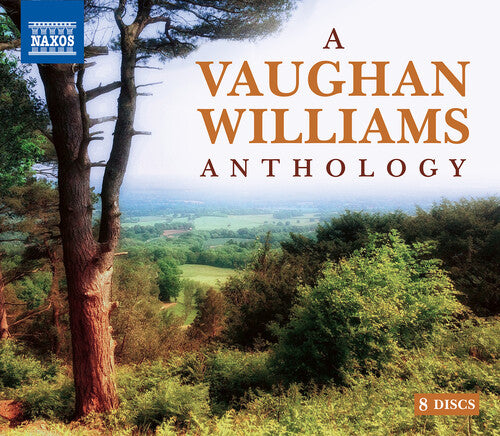
A Vaughan Williams Anthology
Ralph Vaughan Williams is one of Britain’s most illustrious composers, and this specially curated selection of works demonstrates the sheer breadth of his achievement. As a major 20th century symphonist he is represented by four of his nine symphonies, all in critically acclaimed recordings (‘A clear top recommendation’ wrote Gramophone of A Sea Symphony). Popular orchestral works such as the celebrated Tallis Fantasia and The Lark Ascending are also included. Vaughan Williams’ chamber works are performed by the Maggini Quartet, his greatest contemporary champions; while the sublime Mass in G minor shows the composer’s high standing in the English choral tradition.
REVIEW:
More Vaughan Williams—and very welcome, too. While admirers may favour other performances, every take here on the composer’s exquisite scores is more than competitive. This curated selection of works is a measure of RVW’s achievements. As a major 20th-century symphonist he is represented by four of his nine symphonies, all in much-praised recordings, while winning orchestral works such as the celebrated Tallis Fantasia and The Lark Ascending are also included. Vaughan Williams’ chamber works are performed by the Maggini Quartet, his greatest contemporary champions; while the sublime Mass in G minor is a solid addition.
-- Classical CD Source (Barry Forshaw)
Castrucci: Sonatas for Violin, Cello, & Harpsichord / Elias, Kishi, Palmer-Jones
Schuyler: Seven Pillars Of Wisdom / Masterson
Kaunzner & Medtner: Eurasian Gold / Kaunzner, Seung-Hee, Poliansky, Hyo-Young
Felix Mendelssohn & Bruch: Romantic Violin Concertos / Pochekin, Tewinkel, Württemberg Philharmonic Reutlingen
Three Centuries of Female Composers
Ranging from the 18th century to the music of our time, this collection of critically acclaimed recordings explores the significant contribution to solo piano repertoire made by a wide variety of women composers. These rare and important pieces include the works of the celebrated pianist Anne-Louise Brillon de Jouy and of Hélène de Montgeroult, whose sonatas are distinctive additions to the Classical and early Romantic periods. Maria Szymanowska’s deft dances contrast with the fearsome demands of Teresa Carreño, herself a great virtuoso. Vítězslava Kaprálová was the most important female Czech composer of the 20th century, while Agathe Backer Grøndahl was one of Norway’s most respected composer-pianists. Tanya Ekanayaka continues the lineage in her own diverse and hybrid pieces.
Volumes included:
Carreño: Rêverie & Selected Music for Piano
Szymanowska: Complete Dances for Solo Piano
Kaprálová: Complete Piano Music
Pioneers: Piano Works by Female Composers
Brillon de Jouy: The Piano Sonatas Rediscovered
Ekanayaka: The Planets & Humanity - Piano ReflectionsMontgeroult: Complete Piano Sonatas
Backer Grøndahl: Piano Works
REVIEWS:
French pianist Nicolas Horvath reveals more of the music of Hélène de Montgeroult, the pianist, composer, and teacher whose background influence on such seminal figures as Chopin and Schumann – and quite possibly Brahms – is only now being acknowledged. Horvath makes appealingly light work of her nine keyboard sonatas, several recorded for the first time.
-- BBC Music Magazine
Nicolas Horvath clearly enjoys de Jouy’s work, and delivers readings which are spirited and lyrical, playful and reflective, easing into the minor mode (in which most of the sonatas were composed) as though at the daybreak of Romanticism. In this particular recording, I was struck by the clarity of sound, which made it easier to hear the evenness and responsiveness of Horvath’s touch.
-- Fanfare
Venezuelan pianist-composer Teresa Carreño had a dramatic, colorful career that is hard to believe. Of the works presented in this fascinating recording, all but one are world premieres. This music has a gentle melancholy. Several of these miniatures have Chopinesque harmonies and perfumes. The album ends on an upbeat note, the composer’s Opus 1, a highly accomplished waltz full of scintillating episodes written for Gottschalk. The latter must have been knocked out by this charmer.
Alexandra Oehler plays with sensitive phrasing and skillful voicing. Her refined musical sensibility is just right for this repertory. The recording, like the music, is warm and inviting.
-- American Record Guide
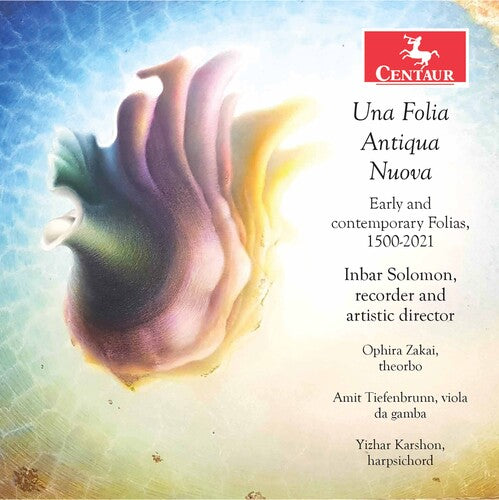
Una Folia Antiqua Nuova - Early and Contemporary Folias, 1500-2021 / Solomon, Zakai, Tiefenbrunn, Karshon
Shostakovich: Doppeltes Spiel / Jansons, Bavarian Radio Symphony Orchestra
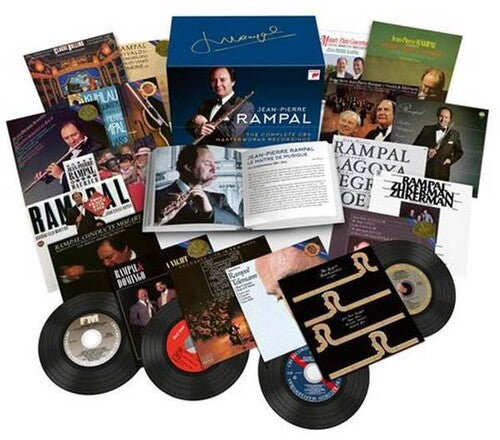
Jean-Pierre Rampal – The Complete CBS Masterworks Recordings
Before Jean-Pierre Rampal appeared on the music scene in the 1950s, wind players were rarely hired as soloists with orchestras. This legendary French flute virtuoso broke through that barrier with his astonishing talent, flair, and commanding stage presence, attaining the kind of visibility previously enjoyed only by pianists and violinists. He regularly filled the world’s largest concert halls for his recitals and chamber performances. Rampal was the father figure of the flute renaissance in the 20th century which restored the instrument to the exalted position it held during the 18th century.
He also became one the world’s most recorded artists, commanding all the essential repertoire of his instrument but equally embracing previously unknown works, his own discoveries, jazz, pop, folk and contemporary works. Virtually anything written for the flute or plausibly adapted for it was grist for his mill. In his autobiography Rampal referred to the discography that brought him numerous prizes and awards as being so enormous that not even he could keep track of it. In 1969, he began recording for CBS, and in 1979 he signed an exclusive contract with the label.
To mark his 100th birthday, Sony Classical released in a 56-CD box set the first complete edition of Jean-Pierre Rampal’s recordings for CBS, RCA, and Sony Classical.
SET CONTENTS:
DISC 1: Mozart: Flute Quartets
DISC 2: Bach Family
DISC 3: Bolling: Suite for Flute and Jazz Piano
DISC 4/5: Rampal and Lagoya in Concert
DISC 6: Vivaldi/Telemann
DISC 7: Bolling: "Picnic Suite"
DISC 8: Mozart: Flute Quartets K. 285 & K. 298/Divertimento K. 334
DISC 9: Carnaval de Rampal (Showpieces)
DISC 10: Schubert: Sonata In A Minor/Moscheles: Sonata concertante
DISC 11: Pastorales De Noel
DISC 12: Dvořák, Feld, Martinů: From Prague With Love
DISC 13: Japanese Melodies, Vol. III
DISC 14: Haydn: Divertimentos
DISC 15: Sonatas of J.S. Bach and sons
DISC 16: Jean-Pierre Rampal plays Scott Joplin
DISC 17: Weber: Sonatas for Violin and Piano
DISC 18: Bach: Concerto for Flute, Strings and Basso Continuo
DISC 19: Vivaldi: Six Concertos for Flute
DISC 20: Fascinatin' Rampal: Jean-Pierre Rampal plays Gershwin
DISC 21/22: Bach: Sonatas and Partita for Flute
DISC 23/24: Haydn: Concertos
DISC 25: The Flute at The Court of Frederick The Great
DISC 26: Night at The Opera: The Magic Flute
DISC 27: Chants de Noel / Children’s Songs
DISC 28: Mozart: Sonatas
DISC 29: Bolling: Suite No. 2 For Flute and Jazz Piano Trio
DISC 30: Mozart: The Flute Quartets
DISC 31: Telemann: Overture/Concertos
DISC 32: Telemann, Kuhlau, Bach, Mozart, Doppler
DISC 33: Kuhlau: Flute Quintets
DISC 34: Mozart: Concerto for Flute and Harp/Sinfonia concertante
DISC 35: Carulli: Flute Concerto and more
DISC 36: Concertos for Two Flutes
DISC 37/38: C.P.E. Bach: The Complete Flute Concertos
DISC 39: Mozart: Flute Concertos
DISC 40: Music for Flute and Harp
DISC 41: Mozart,Telemann, J.C. Bach, Reicha
DISC 42: Vivaldi: 6 Double Concertos
DISC 43: Rameau: Pièces de clavecin en Concerts
DISC 44: Italian Flute Concertos
DISC 45: Mozart: Divertimento, K.334/Adagio And Rondo, K.617/Andante, K.616/Quintet, K.557
DISC 46: Haydn: London Trios
DISC 47: Vivaldi: The Four Seasons
DISC 48: Kathleen Battle and Jean-Pierre Rampal in Concert
DISC 49: Pla: Catalan Flute Music of the 18th Century
DISC 50: Boccherini: Flute Quintets
DISC 51: Collaborations
DISC 52: Mozart: Symphonies Nos. 36 & 38 – Jean Pierre Rampal, conductor
DISC 53: Carulli/Haydn: Guitar Concertos – Jean Pierre Rampal, conductor
DISC 54: Bolling: Suite for Chamber Orchestra and Jazz Piano Trio – J.P. Rampal, conductor
DISC 55: Romantic Harp Concertos – J.P. Rampal, conductor
DISC 56: Mozart: March/Serenade K. 250 “Haffner” – J.P. Rampal, conductor
REVIEW:
Flautist Jean-Pierre Rampal brought the instrument to new prominence, proving its enormous potential in a wide range of repertoire. Sony’s new collection, ‘The Complete CBS Masterworks Recordings’, opens to a benchmark 1969 recording of the Mozart flute quartets where Rampal joins forces with Isaac Stern, Alexander Schneider, and Leonard Rose, and ends with more Mozart – and more Stern – for a keenly played 1994 version of Mozart’s Haffner Serenade. Especially noteworthy are three Kuhlau flute quintets where Rampal joins forces with the Juilliard Quartet: this is superior music, beautifully performed and recorded.
Contemporary repertoire is represented in the first instance by a colorfully inventive and well-performed Penderecki Concerto under the composer’s own direction, surely the best ‘modern’ piece in the set. Rampal enjoyed a fruitful musical relationship with the French jazz pianist, composer and arranger Claude Bolling. Of those pieces included in the set, I’d gravitate first to the Suite for chamber orchestra and jazz piano trio, with its classical resonances; on the other hand, programs devoted to Scott Joplin rags and Gershwin (including a musically pointless abbreviation of An American in Paris) are best left in the box. I’m all for creative crossover but the Gershwin in particular misfires, musically. Still, to be landed with just two ‘duffs’ in a collection of 56 CDs is pretty good going.
As you can imagine, some of the featured repertoire appears more than once but there are sufficient differences in approach between alternative recordings to justify spending time comparing. What’s most interesting is the typically wide range of music on offer, some of it of exceptional quality.
Overall, this is a most enjoyable set, sturdily boxed, with original jacket sleeves that include readable spines, and a hardcover 220-page accompanying book that will give you informative annotations and all the discographical information you need. As diverting collections go, this is certainly one to consider.
-- Gramophone (Rob Cowan)
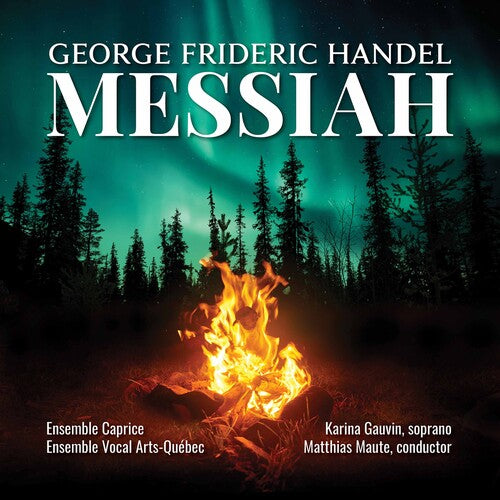
Handel: Messiah
Ensemble Caprice and Ensemble Vocal-Arts Québec, under the direction of Matthias Maute, present George Frideric Handel’s Messiah featuring Karina Gauvin. Although it is certainly not the first recording of The Messiah, it serves as an opening act to new beginnings; a breath of fresh air after the isolation and empty concert halls caused by the pandemic. These Messiah excerpts feature Canadian soprano Karina Gauvin, known especially for her interpretation of Baroque music, and the recipient of the prestigious award of “Soloist of the year” award by the Communauté internationale des radios publique de langue français. The recording also features the flute part from Mozart’s arrangement of The Messiah, honoring the two giants, Handel and Mozart, of the classical compositional world. Opening the album is composer Jaap Nico Hamburger’s Hope and Belief, which served as the title track for Ensemble Caprice and Ensemble Vocal-Arts Québec Mini Concerts Sante, and closes with Matthias Maute’s piece “O magnum mysterium,” which “attempts to grasp something of the elusive mystery of music.”
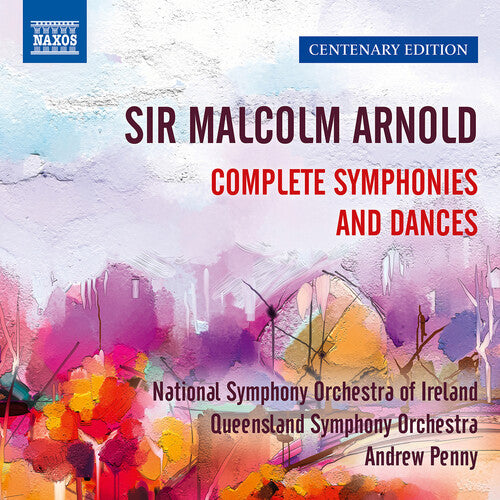
Arnold: Complete Symphonies & Dances / Andrew Penny
Recorded in the presence of the composer, Andrew Penny’s survey of the Complete Symphonies and Dances by Sir Malcolm Arnold has long been considered to contain benchmark recordings. Born in 1921, Sir Malcolm Arnold quickly established himself as a fluent and versatile composer, a gifted tunesmith and a brilliant orchestrator. His music is typically lucid in texture, rich in melody and clear in draughtsmanship yet there are frequent signs of a complex musical personality and dramatic tensions not far beneath the surface. The Dances are light-hearted, vivid and jaunty, yet the nine symphonies explore the composer’s darker side, painting a picture of his private ‘journey through hell’ as he struggled with physical and mental health issues. They are masterworks which exert continued appeal and stimulate repeated listening.
REVIEW:
These are performances of uniformly high quality made in the presence of the composer and recorded with more realistic balances and cleaner textures than any of their rivals. While all of these readings are first class, highlights include a superb Symphony No. 5 and interpretations of Nos. 7 and 8 in which conductor Andrew Penny sets tempos that allow Arnold’s fanciful orchestrations to register with maximum color and impact.
– ClassicsToday.com (10/10; David Hurwitz)
Vivaldi: The Four Seasons / Fullana, Sorrell, Apollo's Fire
Grammy Award-winning baroque orchestra Apollo’s Fire and its founder-director Jeannette Sorrell have blazed trails in the world of historically informed performance with pioneering programming, presentational flair and an entrepreneurial spirit, qualities that have earned them eight Billboard chart-topping albums and more than 7 million views on YouTube. Their latest release, which launches the ensemble’s 30th anniversary season, is destined to soar to similar heights: the ensemble’s first recording of the perennial audience favourite, Antonio Vivaldi’s The Four Seasons, featuring the phenomenal Spanish-born fiddler Francisco Fullana. Frequently performed at Apollo’s Fire home base in Cleveland, Ohio and on their international tours, “Sorrell’s vivid approach to the pictorial elements make these familiar works seem freshly minted, full of astonishing incident”, according to Seen & Heard International. Fullana, winner of the 2018 Avery Fisher Career Grant, has been dubbed a “rising star” by BBC Music Magazine, and an “amazing talent” by conductor Gustavo Dudamel. The Four Seasons is the first of five releases spread throughout the season celebrating Apollo’s Fire’s milestone 30th anniversary.
Bruckner: Symphony No. 7 / Haitink, Netherlands Radio Philharmonic
Bernard Haitink was born and educated in Amsterdam. His conducting career began at the Netherlands Radio where in 1957 he became the Chief Conductor of the Radio Philharmonic Orchestra. The links between Bernard Haitink and the Radio Philharmonic Orchestra have withstood the test of time, even when his career was taking him all over the world. One fine example of this was Berlioz’s Damnation of Faust in 1998, later issued on CD(CC 72517). He returned on 15 June 2019, when he gave his very last concert in Amsterdam, with Bruckner Symphony no. 7, a work that has always been especially dear to him.