

Opus Arte New Year's Sale
Almost 400 titles from Opus Arte are on sale now at ArkivMusic!
Discover audiovisual titles from Opus Arte, including Royal Opera House productions of The Tales of Hoffmann and Madama Butterfly, Royal Ballet productions of Swan Lake and Don Quixote, and much more.
Shop the sale now before it ends at 9:00am ET, Tuesday, February 17, 2026.
387 products
-


-


-
 {# optional: put hover video/second image here positioned absolute; inset:0 #}
On SaleOpus Arte
{# optional: put hover video/second image here positioned absolute; inset:0 #}
On SaleOpus ArteBallet for Children / The Royal Ballet
Joby Talbot ALICE’S ADVENTURES IN WONDERLAND Ballet in 2 Acts Alice – Lauren Cuthbertson Jack / Knave of Hearts – Sergei Polunin...
November 13, 2012$64.99$45.99 -

-

-
 {# optional: put hover video/second image here positioned absolute; inset:0 #}
On SaleOpus Arte
{# optional: put hover video/second image here positioned absolute; inset:0 #}
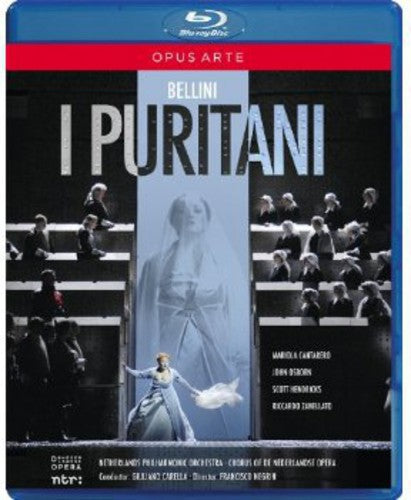
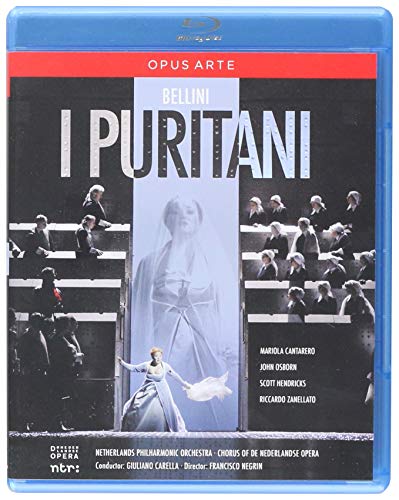
On SaleOpus ArteBellini: I Puritani
In this darkly dramatic production of I Putitani, Mariola Cantarero is compelling as the heroine on the verge of insanity in one...
October 30, 2012$40.99$28.99 -

-

-
![Wagner: Lohengrin / Nelsons, Vogt, Zeppenfeld, Dasch, Rasilainen [blu-ray]](//arkivmusic.com/cdn/shop/files/2017620.jpg?v=1749393398&width=800) {# optional: put hover video/second image here positioned absolute; inset:0 #}
On SaleOpus Arte
{# optional: put hover video/second image here positioned absolute; inset:0 #}
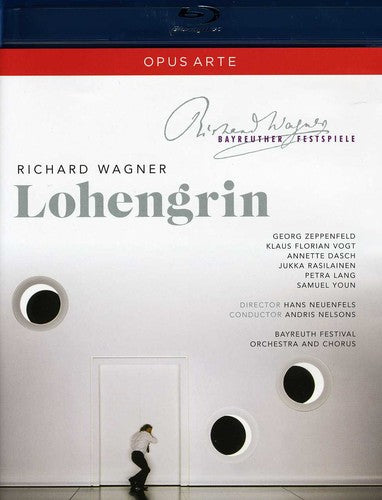
On SaleOpus ArteWagner: Lohengrin / Nelsons, Vogt, Zeppenfeld, Dasch, Rasilainen [blu-ray]
This Blu-ray Disc is only playable on Blu-ray Disc players and not compatible with standard DVD players. Also available on standard DVD...
July 31, 2012$39.99$29.99 -

-

-
 {# optional: put hover video/second image here positioned absolute; inset:0 #}
On SaleOpus Arte
{# optional: put hover video/second image here positioned absolute; inset:0 #}
On SaleOpus ArteWagner: Lohengrin / Nelsons, Vogt, Zeppenfeld, Dasch, Rasilainen, Lang
WAGNER Lohengrin • Andris Nelsons, cond; Klaus Florian Vogt (Lohengrin); Annette Dasch (Elsa); Jukka Rasilainen (Friedrich von Telramund); Petra Lang (Ortrud); Georg...
July 31, 2012$39.99$29.99 -

-

-
 {# optional: put hover video/second image here positioned absolute; inset:0 #}
On SaleOpus Arte
{# optional: put hover video/second image here positioned absolute; inset:0 #}
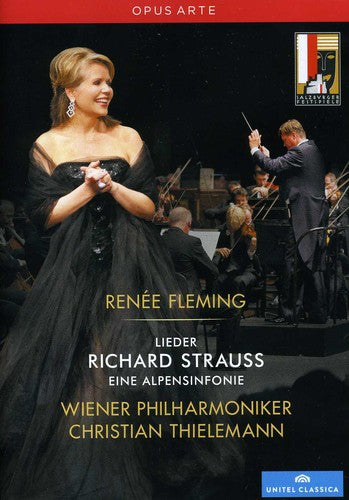
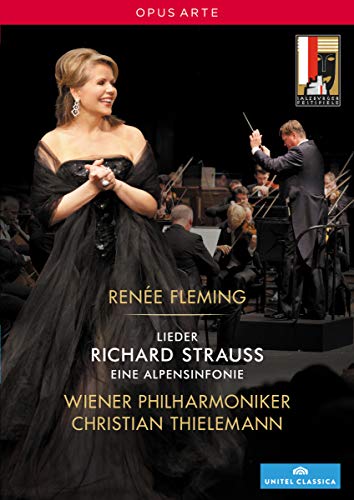
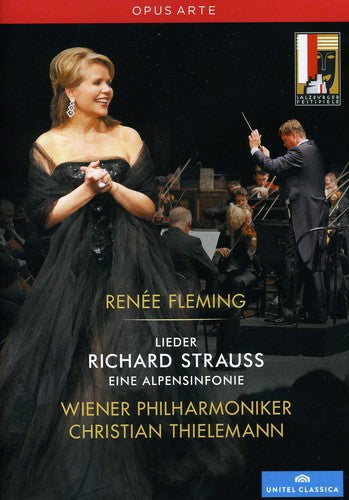
On SaleOpus ArteStrauss: Lieder, Alpensinfonie / Fleming, Thielemann
Also available on Blu-ray Gloriously affirming the Salzburg Festival’s long-standing reputation as a supreme musical event, this concert honours one of its...
June 26, 2012$21.99$15.99 -


-


-
 {# optional: put hover video/second image here positioned absolute; inset:0 #}
On SaleOpus Arte
{# optional: put hover video/second image here positioned absolute; inset:0 #}
On SaleOpus ArteLove, Passion & Deceit - Rossini, Mozart, Strauss / Glyndebourne Festival
R E V I E W S: Die Fledermaus: When a director and a production team have a concept for an opera...
June 26, 2012$32.99$23.99 -


-


-
![Verdi: Macbeth / Keenlyside, Aceto, Monastryrska, Cliffe [blu-ray]](//arkivmusic.com/cdn/shop/files/1957524.jpg?v=1749393371&width=800) {# optional: put hover video/second image here positioned absolute; inset:0 #}
On SaleOpus Arte
{# optional: put hover video/second image here positioned absolute; inset:0 #}
On SaleOpus ArteVerdi: Macbeth / Keenlyside, Aceto, Monastryrska, Cliffe [blu-ray]
This Blu-ray Disc is only playable on Blu-ray Disc players and not compatible with standard DVD players. Also available on standard DVD...
March 27, 2012$39.99$29.99 -
 {# optional: put hover video/second image here positioned absolute; inset:0 #}
On SaleOpus Arte
{# optional: put hover video/second image here positioned absolute; inset:0 #}
On SaleOpus ArteVerdi: Macbeth / Pappano, Keenlyside, Monastyrska, Royal Opera
An excellent release, altogether, and something that any fan of the opera would enjoy. Theatrical events in the cinema have become one...
March 27, 2012$34.99$26.99 -


-


-
![Mozart: Die Zauberflote / Boer, Shagimuratova, Tynan, Esposito, Groissbock [blu-ray]](//arkivmusic.com/cdn/shop/files/1948584.jpg?v=1749393351&width=800) {# optional: put hover video/second image here positioned absolute; inset:0 #}
On SaleOpus Arte
{# optional: put hover video/second image here positioned absolute; inset:0 #}
On SaleOpus ArteMozart: Die Zauberflote / Boer, Shagimuratova, Tynan, Esposito, Groissbock [blu-ray]
This Blu-ray Disc is only playable on Blu-ray Disc players and not compatible with standard DVD players. Also available on standard DVD...
February 28, 2012$39.99$29.99 -


-


-
 {# optional: put hover video/second image here positioned absolute; inset:0 #}
On SaleOpus Arte
{# optional: put hover video/second image here positioned absolute; inset:0 #}
On SaleOpus ArteAshton: Les Patineurs, Divertissements, Scenes De Ballet / Royal Opera House Ballet
An all-Ashton DVD is a treat, for apart from several full-length ballets we have been lacking examples of the choreographer’s work in...
January 31, 2012$34.99$26.99 -


-


-
![Pergolesi: Adriano In Siria / Dantone, Comparato, Dell’oste, Heaston [blu-ray]](//arkivmusic.com/cdn/shop/files/1925707.jpg?v=1749393385&width=800) {# optional: put hover video/second image here positioned absolute; inset:0 #}
On SaleOpus Arte
{# optional: put hover video/second image here positioned absolute; inset:0 #}
On SaleOpus ArtePergolesi: Adriano In Siria / Dantone, Comparato, Dell’oste, Heaston [blu-ray]
This Blu-ray Disc is only playable on Blu-ray Disc players and not compatible with standard DVD players. Also available on standard DVD...
January 31, 2012$39.99$29.99 -

-

-
 {# optional: put hover video/second image here positioned absolute; inset:0 #}
On SaleOpus Arte
{# optional: put hover video/second image here positioned absolute; inset:0 #}
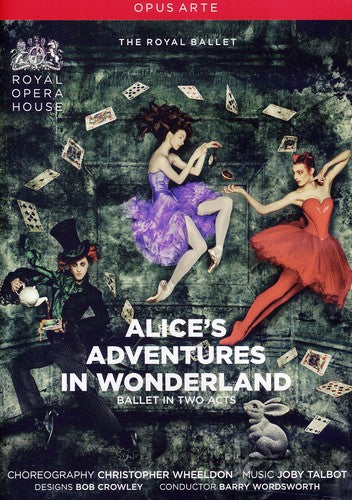
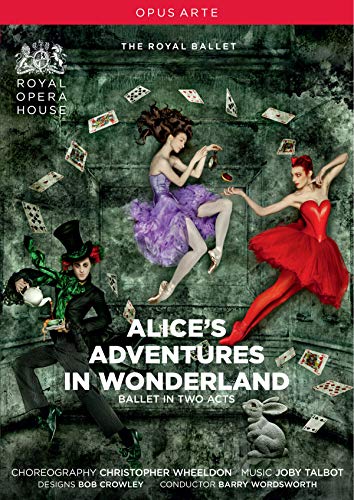
On SaleOpus ArteAlice's Adventures In Wonderland - Royal Ballet / Talbot, Wheeldon
Also available on Blu-ray Joby Talbot ALICE’S ADVENTURES IN WONDERLAND Ballet in 2 Acts Alice – Lauren Cuthbertson Jack / Knave of...
October 25, 2011$34.99$26.99 -

-

-
 {# optional: put hover video/second image here positioned absolute; inset:0 #}
On SaleOpus Arte
{# optional: put hover video/second image here positioned absolute; inset:0 #}
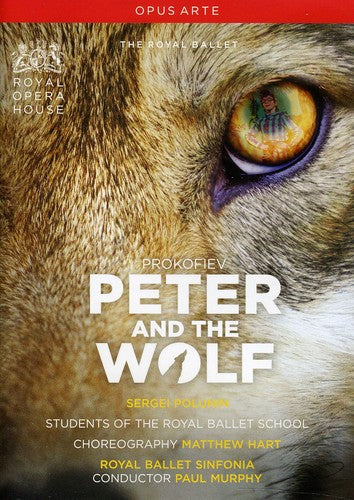
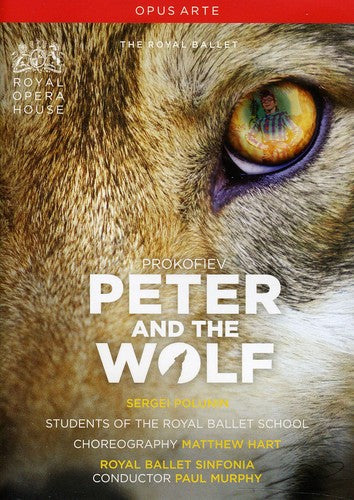
On SaleOpus ArtePeter & The Wolf / Murphy, Royal Ballet Sinfonia
Also available on Blu-Ray disc. Peter and the Wolf, Prokofiev’s musical fairy tale, has been delighting children since 1936. Nearly 60 years...
October 25, 2011$24.99$18.99 -


-


-
![Janacek: Jenufa / Roocroft, Polaski, Schukoff, Bolton [Blu-ray]](//arkivmusic.com/cdn/shop/files/1890404.jpg?v=1749393583&width=800) {# optional: put hover video/second image here positioned absolute; inset:0 #}
On SaleOpus Arte
{# optional: put hover video/second image here positioned absolute; inset:0 #}
On SaleOpus ArteJanacek: Jenufa / Roocroft, Polaski, Schukoff, Bolton [Blu-ray]
Note: This Blu-ray Disc is only playable on Blu-ray Disc players and not compatible with standard DVD players. Also available on standard...
September 27, 2011$42.99$30.99 -

-

-
 {# optional: put hover video/second image here positioned absolute; inset:0 #}
On SaleOpus Arte
{# optional: put hover video/second image here positioned absolute; inset:0 #}
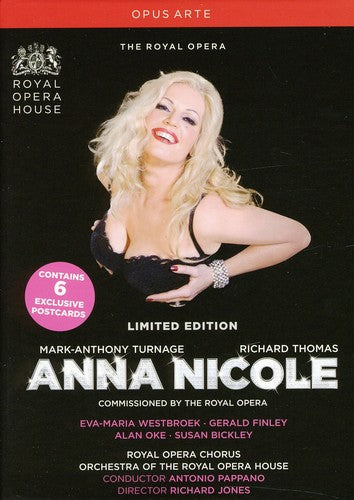
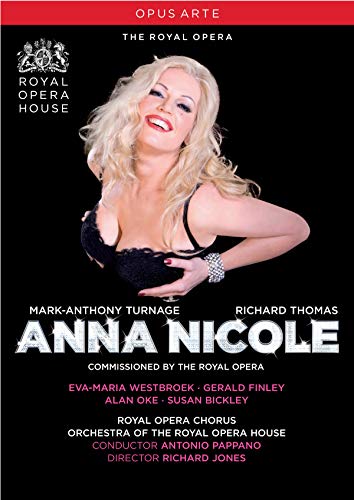
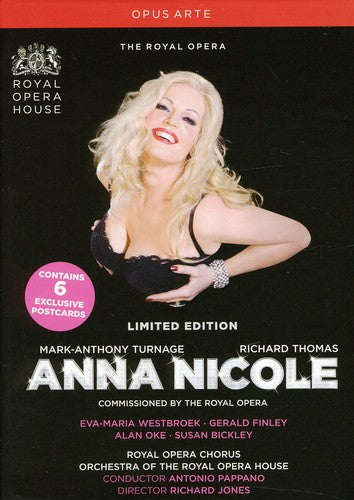
On SaleOpus ArteTurnage: Anna Nicole / Westbroek, Finley, Pappano
Also available on Blu-ray "I attended the premiere, fearful that the opera would be tawdry and terrible, that the work would make...
September 27, 2011$32.99$23.99


Ballet for Children / The Royal Ballet
ALICE’S ADVENTURES IN WONDERLAND
Ballet in 2 Acts
Alice – Lauren Cuthbertson
Jack / Knave of Hearts – Sergei Polunin
Lewis Carroll / White Rabbit – Edward Watson
Mother / Queen of Hearts – Zenaida Yanowsky
Father / King of Hearts – Christopher Saunders
Magician / Mad Hatter – Steven McRae
Duchess – Simon Russell Beale
Royal Ballet
Royal Opera House Orchestra
Barry Wordsworth, conductor
Christopher Wheeldon, choreography
Bob Crowley, designs
Nicholas Wright, scenario
Natasha Katz, lighting design
Recorded live from the Royal Opera House, Covent Garden, 9 March 2011.
Bonus:
- Cast Gallery
- Documentary – Being Alice
Picture format: NTSC 16:9 anamorphic
Sound format: LPCM 2.0 / DTS 5.1
Region code: 0 (worldwide)
Subtitles: English, French, German, Spanish
Running time: 120 mins (ballet) + 30 mins (bonus)
No. of DVDs: 1 (DVD 9)
R E V I E W:
A stimulating production.
It is a brave company that is prepared to take such a surrealist novel and turn it into a stage show. Where film can provide the visual trickery necessary to give visual magic, theatre machinery is cumbersome and pedantic in comparison. Yet the development of technical resources and video projection can help. With ballet, a large part of the stage must be kept free of obstructions to allow ballet routines to progress unimpeded.
To then faithfully transfer to a video medium without high level on-line visual trickery may not ideally help the viewer. So how then has Covent Garden fared in bringing about a stimulating production?
Very well, in fact. The prologue where Dodgson (Lewis Carroll) is taking photographs of the family group works excellently. It is set in a realistic deanery garden. Bob Crowley’s backdrop painting in faded Victorian hues is in keeping. In this opening scene we are introduced to the personalities that later appear as stereotypes in the fantasy world Alice uncovers. The only odd thing in a private deanery garden is having a nurse wheel a perambulator across the stage as if in a busy street.
Some of the settings contain more subtlety than might at first sight be noticed. Monotone backdrops, the Cheshire Cat and a paper boat are styled on the engravings found in Carroll’s first edition book. As the ballet progresses the settings become more flamboyant and graphically modern.
Particularly stunning is the Playing Cards scene. Choreography and costumes strike just the right note. A clever routine with a segmented Cheshire Cat allows believable animation.
As one might expect, the dancing is up to the exacting standards of the corps with a Covent Garden reputation. The problem of having Alice change size was well contrived and Lauren Cuthbertson’s acting is excellent. The character of the White Rabbit is extremely officious throughout I noticed, yet pales before the bombastic pomp of the Queen of Hearts (Zenaida Yanowsky).
The orchestra plays well under the secure direction of Barry Wordsworth, a conductor not seen enough of nowadays. Talbot’s music has facets of talent and although classical harmony is mainly maintained, it is heavy, strongly percussive and is often reminiscent of the fight scene of West Side Story. One could hardly call the music melodious which is a pity as it misses out in appealing to the younger generation for whom the story is intended. I find the scoring unnecessarily heavy and is an ill fit with the elegance of classical ballet choreography.
The DVD is divided into play chapters, and contains a gallery photographs of the key dancers. It has the bonus of a well compiled and informative BBC documentary ‘Being Alice’. In it we see the planning, realisation and execution of the staging through the eyes of the principal dancer, Lauren Cuthbertson. Subtitles are provided in English, French, German and Spanish. In-depth background production notes with synopsis by David Nice are written in English, French and German.
-- Raymond J Walker, MusicWeb International
----------------------
Pyotr Il'yich Tchaikovsky
THE NUTCRACKER
"One of the very best seasonal treats for children and adults alike, the Royal Ballet’s Nutcracker is a handsome, magical, thoroughly traditional rendering of ETA Hoffmann’s immortal if deeply strange story." -- Sunday Express
This all-time ballet favourite, in which young Clara is swept into a fantasy adventure when one of her Christmas presents comes to life, is at its most enchanting in Peter Wright’s glorious production – as fresh as ever in its 25th year. Tchaikovsky’s ravishing score, period designs by Julia Trevelyan Oman (including an ingenious magical Christmas tree), an exquisite Sugar Plum Fairy (Miyako Yoshida) and chivalrous Prince (Steven McRae), the mysterious Drosselmeyer (Gary Avis) and vibrant dancing by The Royal Ballet make for a captivating performance. Filmed in High Definition and recorded in true surround sound.
The Sugar Plum Fairy – Miyako Yoshida
Nephew / Nutcracker – Ricardo Cervera / Steven McRae
The Prince – Steven McRae
Drosselmeyer – Gary Avis
The Royal Ballet
The Orchestra of the Royal Opera House
Koen Kessels, conductor
Peter Wright, choreographer and director
(after Lev Ivanov)
Recorded live at the Royal Opera House, November and December 2009.
Bonus:
- Cast gallery
- Rehearsing at White Lodge
- Peter Wright tells the story of The Nutcracker
Picture format: NTSC 16:9 anamorphic
Sound format: LPCM Stereo 2.0 / DTS 5.0
Region code: 0 (worldwide)
Menu language: English
Subtitles: English, French, German, Spanish
Running time: 127 mins
No. of DVDs: 1
----------------------
Peter and the Wolf, Prokofiev’s musical fairy tale, has been delighting children since 1936. Nearly 60 years later, in 1995, the young choreographer Matthew Hart created a witty choreographed version for the Royal Ballet School with designs by Ian Spurling. Described as ‘an utterly delightful ballet and a perfect showcase for the younger students,’ by the Royal Ballet’s Director, Monica Mason, it was staged again and recorded for this DVD.
"...Matthew Hart’s Peter and the Wolf is one of the most beguiling children’s ballets around.” - The Telegraph
Matthew Hart, choreographer
The Wolf – Sergei Polunin
Grandfather – Will Kemp
Peter – Kilian Smith
Duck – Charlotte Edmonds
Bird – Laurine Muccioli
Cat – Chisato Katsura
The Royal Ballet School
Royal Ballet Sinfonia
Paul Murphy, conductor
Recorded live at the Royal Opera House, 16 and 18 December 2010.
Bonus:
- Cast gallery
- Documentary feature on rehearsing Peter and the Wolf
Picture format: NTSC 16:9 anamorphic
Sound format: LPCM 2.0 / DTS 5.0
Region code: 0 (worldwide)
Menu language: English
Subtitles: English, French, German, Spanish
Running time: 38 mins
No. of DVDs: 1
This enchanting DVD captures 2011’s Christmas performance from the students of the Royal Ballet Lower School. All of the cast seem to be of primary school age, with the adult dancers Sergei Polunin and Will Kemp brought in as the Wolf and Narrator. Matthew Hart’s realisation of Prokofiev’s score as a ballet had first been seen in 1995 and it works very well indeed. Hart says in a short extra film that one of his aims had been to get as many dancers as possible onto the stage. He provide roles not only for the principal characters but for the corps as the physical elements of the story: dancers embody the hunters, the grass of the meadow, the waves of the pond, the trees of the forest and the wall next to Peter’s house. The choreography is simple without being simplistic and Hart tells the story very well. The principals are all extraordinarily proficient for their age, particularly the three girls playing the bird, duck and cat, who have the flexible movement of their creatures down to a T. Kilian Smith’s Peter is brave and likeable, while Polunin’s wolf embodies the sinister characteristics of a pantomime villain with that extra bit of danger. Will Kemp doubles as on-stage narrator and as Grandfather. The bright primary colours of both set and costumes work very well, and the only piece of staging is a bulky frame which is used for the tree, covered in graffiti about the story. The orchestra plays very well and the 5.1 surround sound brings the story to life. The only thing I missed, compared to an audio only recording, is the sense of intimacy with the narrator, something necessarily lost in a production such as this one, but if you don’t mind that then you’ll enjoy this very much. If you know some children who enjoy dancing, or if you want to get some children interested in dance for the first time, then this is especially for you.
-- Simon Thompson, MusicWeb International
----------------------
Frederick Ashton (the other major choreographer of the second half of the 20th century) created his ballet Tales of Beatrix Potter for the camera in 1971 (still available on DVD). In 1992, Anthony Dowell created a stage version for the Royal Ballet, revived in 2007 and filmed during the subsequent performances. David Nice’s essay in the accompanying booklet tells us much about the score, “composed” by John Lanchberry using Victorian waltzes and ballads and excerpts from various 19th-century ballets (Minkus, Glazunov), as well as his own version of La fille mal gardée , to all of which Ashton choreographed a number of gems, at the same time parodying the 19th-century classics in solos and pas de deux.
It is difficult to comment extensively on the individual dancers, as the animal masks by Rostislav Dobujinsky entirely cover the dancers’ faces. But through movement, gesture, and even posture the individual roles are neatly characterized, from the footwork of Gemma Sykes’s Jemima Puddle-Duck to the exuberance of Zachary Faruque’s Jeremy Fisher or Steven McRae’s Squirrel Nutkin. Jonathan Howells has a difficult task, succeeding the choreographer himself as Mrs. Tiggy-Winkle, but is almost as eloquent, although expanding Ashton’s few little movements into a full-length solo calls for too much repetition of the steps and attitudes. The adaptation was no simple task, as the film shows us Beatrix Potter herself in between the dance episodes, Mrs. Tiggy-Winkle strolling through the English countryside before starting her solo; but Dowell has eliminated that aspect and gives us a pure dance spectacle that is a delight from start to finish. And it must be exhausting for the dancers who must perform in real time. The Royal Ballet Sinfonia under Paul Murphy offers a sparkling rendition of the composite score that equals Lanchberry’s version for the film or even the LP that was released in the 1970s. For those unfamiliar with the children’s classic, a brief synopsis will fill you in, but this is, in any event, an instant classic for the young at heart.
FANFARE: Joel Kasow
Mrs Tittlemouse: Victoria Hewitt
Johnny Town-Mouse: Ricardo Cervera
Mrs Tiggy-Winkle: Jonathan Howells
Jemima Puddle-Duck: Gemma Sykes
The Fox: Gary Avis
Pigling Bland: Bennet Gartside
Pig-Wig: Laura Morera
Aunt Pettitoes: David Pickering
Mr Jeremy Fisher: Zachary Faruque
Tom Thumb: Giacomo Ciriaci
Hunca Munca: Iohna Loots
Peter Rabbit: Joshua Tuifua
Squirrel Nutkin: Steven McRae
REGIONS: All
PICTURE FORMAT: 16:9
SOUND: 2.0 LPCM STEREO / 5.1 DTS SURROUND
SUBTITLES: English, French, German, Spanish, Italian
 {# optional: put hover video/second image here positioned absolute; inset:0 #}


Bellini: I Puritani
 {# optional: put hover video/second image here positioned absolute; inset:0 #}


Wagner: Lohengrin / Nelsons, Vogt, Zeppenfeld, Dasch, Rasilainen [blu-ray]
Also available on standard DVD
Lohengrin is staged by the enfant terrible Hans Neuenfels, and offers a thought-provoking production of brilliant visual clarity. The performance by Klaus Florian Vogt in the title role is staggering and impressive. There is beauty and purity in his voice, but in this role in particular, one truly senses something unheimlich, other-worldly, which fits superlatively both with work and production. Conductor Andris Nelsons brings out the best in the festival chorus and orchestra. It is a Lohengrin one does not easily forget and puts Bayreuth back in the vanguard of Wagner interpretation.
Richard Wagner
LOHENGRIN
König Heinrich – Georg Zeppenfeld
Lohengrin – Klaus Florian Vogt
Elsa Von Brabant – Annette Dasch
Friedrich Von Telramund – Jukka Rasilainen
Ortrud – Petra Lang
Der Heerrufer Des Königs – Samuel Youn
Bayreuth Festival Orchestra and Chorus
Andris Nelsons, conductor
Hans Neuenfels, stage director
Recorded live at the Bayreuth Festival, 14 August 2011
bonus
- Cast gallery
- Interviews with Katharina Wagner, Hans Neuenfels, Klaus Florian Vogt & Annette Dasch
- Animations
Picture format: 1080i High Definition
Sound format: LPCM 2.0 / DTS 5.1
Region code: 0 (worldwide)
Subtitles: English, French, German, Spanish
Running time: 209 mins + 25 mins
No. of Discs: 1 (BD 50)
R E V I E W:
WAGNER Lohengrin • Andris Nelsons, cond; Klaus Florian Vogt ( Lohengrin ); Annette Dasch ( Elsa ); Jukka Rasilainen ( Friedrich von Telramund ); Petra Lang ( Ortrud ); Georg Zeppenfeld ( Heinrich ); Samuel Youn ( Herald ); Bayreuth Fest O & Ch • OPUS ARTE OAA BD7103 D (Blu-ray: 209:00) Live: Bayreuth 8/14/2011
& Interviews with Katharina Wagner, Hans Neuenfels, Klaus Florian Vogt, and Annette Dasch. Animations
I saw this vastly entertaining Lohengrin at Bayrueth in August 2011, six days before it was filmed with the same cast for this Blu-ray release, and can attest that it was as enthusiastically received as it appears to be on its video representation. Yes, a few boos can be heard at the close of each act, but this is easily the most successful Bayreuth production since “the girls” (as Katharina Wagner and Eva Wagner-Pasquier, the composer’s great-granddaughters, are known to the locals) officially took over the festival from the long-lived Wolfgang Wagner.
The director Hans Neuenfels, and those who designed the production, imagine Lohengrin as a kind of bio-psychological scientific experiment and the set evokes a “Skinner Box,” the apparatus used for operant conditioning testing. The good people of Brabant are, indeed, rats with cartoon-like hands, feet, tails, and large mesh heads with glowing rodent eyes. A briskly efficient crew of men in blue hazard suits supervises them periodically. These are, it should be noted, rats with a real sense of style, and the stage picture at the end of act II is stunning. The element of fantasy (and, yes, humor) is entirely in keeping with the conception of Lohengrin as a “fairy tale opera.” It’s magical, but there’s plenty of darkness lurking below the surface as well, as there has always been in fairy tales from the Grimm Brothers to Maurice Sendak.
The scientific issue being considered here centers on Elsa, of course: will she or won’t she? Remarkably, these Bayreuth performances represent the German soprano Annette Dasch’s first go at the role and she gives a richly complex realization. Her opening lines in act II (“Euch Lüften, die mein Klagen”) are anything but chaste, a quasi-erotic reverie that concludes with her kissing a swan with a phallicly elongated neck. On the other hand, Dasch makes it clear early on in the act III bedroom scene that Elsa has something else on her mind other than connubial bliss, that is, her obsession with her new husband’s identity.
As opposed to Dasch, Klaus Florian Vogt is the world’s most sought-after Lohengrin, a veteran of many esteemed productions and two video representations—this one in addition to an estimable Lohengrin directed by Nikolaus Lehnhoff and conducted by Kent Nagano— plus an SACD version (with Annette Dasch) on PentaTone. Vogt doesn’t disappoint—his voice is so well suited to the part and his musical instincts so good, how could he?—but his interpretation is by no means fixed. (Says Dasch in her interview feature: “He wasn’t just reeling off his standard Lohengrin!”) Vogt, himself, reports that he learned a lot from the director and feels that the character has been more “humanized,” in this production. But irrespective of a director’s interpretation of the story, the dramatic power of the work rides squarely on the shoulders of the singer in the title role and here Vogt delivers as surely as ever. From his act I entrance right through “In fernem Land,” he holds Elsa, the people of Brabant, and us in his thrall.
As Ortrud, Petra Lang is about as malignantly evil as Wagner’s villains get, sneering, leering, and glaring pretty much every second she’s on camera and offering up some venomous vocalism. Jukka Rasilainen is no weak pawn of his consort—he doesn’t invoke nearly as much pity as some Telramunds, and that’s fine. Georg Zeppenfeld has a strong bass instrument but his relatively slight physical presence matches well Wagner’s implication of a weak and insecure monarch. Samuel Youn, an experienced Wagnerian, makes the Herald into something more than a talking head. His wild hair and air of efficiency suggest a mad scientist, maybe the one in charge of this experiment.
The chorus, as always at Bayreuth, is phenomenal and Andris Nelsons leads with a sure hand (impressing me far more than he did on a Blu-ray release of the Shostakovich Symphony No. 8, reviewed last issue). This is the fourth Blu-ray release from Bayreuth on the Opus Arte label, and these discs, especially when played back in multichannel, get you as close to the reach-out-and-touch-it acoustic experience of the Festspielhaus as any previous recording. At the end of the evening, when the crowd stomps its approval on the old wooden floor of the raked amphitheater, the sense of a large space being acoustically energized is uncanny. The cinematography is superb and the imaginative animations that are projected onstage at various points throughout the opera can be ideally viewed in the Extra section along with interviews of Katharina Wagner (vacuous), Klaus Florian Vogt and Annette Dasch (interesting), and Hans Neuenfels (profound.) And which of Vogt’s three commercial, high-resolution Lohengrin s should you get—the Blu-ray led by Nagano, the PentaTone SACD, or this one? Sorry. If you’re a true Wagnerite, you need all three.
FANFARE: Andrew Quint
![Wagner: Lohengrin / Nelsons, Vogt, Zeppenfeld, Dasch, Rasilainen [blu-ray]](http://arkivmusic.com/cdn/shop/files/2017620.jpg?v=1749393398&width=800) {# optional: put hover video/second image here positioned absolute; inset:0 #}
{# optional: put hover video/second image here positioned absolute; inset:0 #}


Wagner: Lohengrin / Nelsons, Vogt, Zeppenfeld, Dasch, Rasilainen, Lang
WAGNER Lohengrin • Andris Nelsons, cond; Klaus Florian Vogt (Lohengrin); Annette Dasch (Elsa); Jukka Rasilainen (Friedrich von Telramund); Petra Lang (Ortrud); Georg Zeppenfeld (Heinrich); Samuel Youn (Herald); Bayreuth Fest O & Ch • OPUS ARTE OAA BD7103 D (Blu-ray: 209:00) Live: Bayreuth 8/14/2011
& Interviews with Katharina Wagner, Hans Neuenfels, Klaus Florian Vogt, and Annette Dasch. Animations
I saw this vastly entertaining Lohengrin at Bayrueth in August 2011, six days before it was filmed with the same cast for this Blu-ray release, and can attest that it was as enthusiastically received as it appears to be on its video representation. Yes, a few boos can be heard at the close of each act, but this is easily the most successful Bayreuth production since “the girls” (as Katharina Wagner and Eva Wagner-Pasquier, the composer’s great-granddaughters, are known to the locals) officially took over the festival from the long-lived Wolfgang Wagner.
The director Hans Neuenfels, and those who designed the production, imagine Lohengrin as a kind of bio-psychological scientific experiment and the set evokes a “Skinner Box,” the apparatus used for operant conditioning testing. The good people of Brabant are, indeed, rats with cartoon-like hands, feet, tails, and large mesh heads with glowing rodent eyes. A briskly efficient crew of men in blue hazard suits supervises them periodically. These are, it should be noted, rats with a real sense of style, and the stage picture at the end of act II is stunning. The element of fantasy (and, yes, humor) is entirely in keeping with the conception of Lohengrin as a “fairy tale opera.” It’s magical, but there’s plenty of darkness lurking below the surface as well, as there has always been in fairy tales from the Grimm Brothers to Maurice Sendak.
The scientific issue being considered here centers on Elsa, of course: will she or won’t she? Remarkably, these Bayreuth performances represent the German soprano Annette Dasch’s first go at the role and she gives a richly complex realization. Her opening lines in act II (“Euch Lüften, die mein Klagen”) are anything but chaste, a quasi-erotic reverie that concludes with her kissing a swan with a phallicly elongated neck. On the other hand, Dasch makes it clear early on in the act III bedroom scene that Elsa has something else on her mind other than connubial bliss, that is, her obsession with her new husband’s identity.
As opposed to Dasch, Klaus Florian Vogt is the world’s most sought-after Lohengrin, a veteran of many esteemed productions and two video representations—this one in addition to an estimable Lohengrin directed by Nikolaus Lehnhoff and conducted by Kent Nagano—plus an SACD version (with Annette Dasch) on PentaTone. Vogt doesn’t disappoint—his voice is so well suited to the part and his musical instincts so good, how could he?—but his interpretation is by no means fixed. (Says Dasch in her interview feature: “He wasn’t just reeling off his standard Lohengrin!”) Vogt, himself, reports that he learned a lot from the director and feels that the character has been more “humanized,” in this production. But irrespective of a director’s interpretation of the story, the dramatic power of the work rides squarely on the shoulders of the singer in the title role and here Vogt delivers as surely as ever. From his act I entrance right through “In fernem Land,” he holds Elsa, the people of Brabant, and us in his thrall.
As Ortrud, Petra Lang is about as malignantly evil as Wagner’s villains get, sneering, leering, and glaring pretty much every second she’s on camera and offering up some venomous vocalism. Jukka Rasilainen is no weak pawn of his consort—he doesn’t invoke nearly as much pity as some Telramunds, and that’s fine. Georg Zeppenfeld has a strong bass instrument but his relatively slight physical presence matches well Wagner’s implication of a weak and insecure monarch. Samuel Youn, an experienced Wagnerian, makes the Herald into something more than a talking head. His wild hair and air of efficiency suggest a mad scientist, maybe the one in charge of this experiment.
The chorus, as always at Bayreuth, is phenomenal and Andris Nelsons leads with a sure hand (impressing me far more than he did on a Blu-ray release of the Shostakovich Symphony No. 8, reviewed last issue). This is the fourth Blu-ray release from Bayreuth on the Opus Arte label, and these discs, especially when played back in multichannel, get you as close to the reach-out-and-touch-it acoustic experience of the Festspielhaus as any previous recording. At the end of the evening, when the crowd stomps its approval on the old wooden floor of the raked amphitheater, the sense of a large space being acoustically energized is uncanny. The cinematography is superb and the imaginative animations that are projected onstage at various points throughout the opera can be ideally viewed in the Extra section along with interviews of Katharina Wagner (vacuous), Klaus Florian Vogt and Annette Dasch (interesting), and Hans Neuenfels (profound.) And which of Vogt’s three commercial, high-resolution Lohengrins should you get—the Blu-ray led by Nagano, the PentaTone SACD, or this one? Sorry. If you’re a true Wagnerite, you need all three.
FANFARE: Andrew Quint
 {# optional: put hover video/second image here positioned absolute; inset:0 #}


Strauss: Lieder, Alpensinfonie / Fleming, Thielemann
Gloriously affirming the Salzburg Festival’s long-standing reputation as a supreme musical event, this concert honours one of its founding fathers, Richard Strauss. Renée Fleming, Christian Thielemann and the Vienna Philharmonic Orchestra unite for a programme of song, opera and tone poem, genres central to the composer’s extraordinarily fruitful career. Fleming interprets four of his songs with orchestra, including the deeply moving Befreit, and provides a substantial taste of perhaps her finest operatic role, Arabella. New vistas then open as Thielemann and the Vienna Philharmonic take the spectacular mountain journey mapped by the composer in his titanic Alpine Symphony.
Richard Strauss:
Befreit, Op. 39, No. 4
Winterliebe, Op. 48, No. 5
Traum durch die Dämmerung, Op. 29, No. 1
Gesang der Apollopriesterin, Op. 33, No. 2
Arabella: Mein Elemer!
Eine Alpensinfonie, Op. 64
Renée Fleming, soprano
Vienna Philharmonic Orchestra
Christian Thielemann, conductor
Recorded live at the Salzburg Festival, August 2011
Picture format: NTSC 16:9
Sound format; LPCM 2.0 / DTS 5.0
Region code: 0 (worldwide)
Subtitles: English, French, German, Spanish
Running time: 84 mins
No. of DVDs: 1
R E V I E W:
R. STRAUSS An Alpine Symphony. Befreit. Winterliebe. Traum durch die Dämmerung. Gesang der Apollopriesterin. Arabella: act I concluding scene • Christian Thielemann, cond; Renée Fleming (sop); Vienna PO • OPUS ARTE 7101 (Blu-ray: 84:00) Live: Salzburg 8/2011
Renée Fleming, Christian Thielemann, and the Vienna Philharmonic Orchestra giving a Richard Straus concert at Salzburg would seem to be a no-brainer for Richard Strauss fans. Put it on your Blu-ray machine, turn off the lights, and surrender to Strauss’s beloved soprano voice and luscious orchestration. Fleming has stated that his music is ideal for her voice. And so it is. Strauss was seemingly addicted to the soprano voice, but you have to wonder if he ever heard an instrument like Fleming’s singing his music. Her rich, creamy tone blends so perfectly with Strauss’s lush orchestration that you have to forgive her when she sometimes tends to over-interpret these songs. Her lovely tone and wistful mood are perfect for the concluding scene from Arabella. Yes, she owns the part with a voice that is even more innately suited to this music than Kiri Te Kanawa’s. Gesang der Apollopriesterin is overwhelming in the hands of Fleming, Thielemann, and the Vienna Philharmonic. Despite sometimes seemingly getting lost in the sheer beauty of the sound of her voice as it relates to this music (who can blame her?), Befreit also shows why Fleming is a great Straussian. The magnificent Vienna Philharmonic plays an equal role in the songs, as it should.
For some, An Alpine Symphony will never be more than a monstrous exercise in musical megalomania (sometimes I wonder whether those critics are afraid to allow themselves to actually enjoy music, rather than view it as a painful academic exercise). After all, orchestration and melody are in many cases just as important as counterpoint and structure (which is not to say that Strauss could not write structurally sound music, even if he was not a symphonist). Anyway, Thielemann seems content to let the orchestra do its thing with just the right amount of control, and the video director discreetly gives us a helpful view of all the soloists within Strauss’s gigantic orchestra, especially the woodwinds. What a pleasure it is to hear the trumpets playing effortlessly without sounding annoying or inappropriately piercing through the instrumental fabric. And those trombone fanfares are stunning. Thielemann’s tempos are generally slow, but he presses forward in the climactic “At the Summit,” thus assuring that his interpretation does not bog down or sound over-indulgent. On the other hand, he slows too much to the point of micro-managing without enhancing the music’s atmosphere for the “Vision,” “Elegy,” and “Calm Before the Storm.” For Thielemann, the true climax appears to be “Sunset,” where he broadens the tempo and unleashes a torrent of luxurious sound. The organ is too subdued in the “Storm,” but blends nicely with the orchestra elsewhere.
The DTS surround sound is ideal for the Alpine Symphony, and the video direction shows plenty of detail without being choppy. My one quibble would be that you never get a complete view of the important percussion section. There are extreme close-ups of drum sticks (but not the timpanist) and the wind and thunder machines, but not the rest of the players. Subtitles are available in English, French, German, and Spanish. What more can I say? It is hard to imagine a better audio-visual feast for Straussians.
FANFARE: Arthur Lintgen
 {# optional: put hover video/second image here positioned absolute; inset:0 #}


Love, Passion & Deceit - Rossini, Mozart, Strauss / Glyndebourne Festival
Die Fledermaus:
When a director and a production team have a concept for an opera production that alters the composer-librettist’s original vision, the results can vary from imaginative to hubristic expressions of a director trying to be unique—or just unusual. The concepts that work best are the ones that retain the integrity of the opera. Such is the case with this DVD of Die Fledermaus derived from performances at Glyndebourne. The action has been moved into the early 20th century, art deco simplicity has replaced 19th-century fussiness. The score remains intact, but the dialogue is new—yet it remains quite faithful to the story line. It was adapted by Stephen Lawless and Daniel Dooner, written in English, and then translated into German by Johanna Mayr. Purists are not likely to be offended by Glyndebourne’s updated Die Fledermaus, and most viewers will probably greatly enjoy this production.
The cast is a talented ensemble that excels not only as musicians but actors as well. Thomas Allen and Pamela Armstrong are wonderful as the Eisensteins. Their comic timing creates characterizations that are in equal measure sophisticated and droll. The act-II seduction with the watch is terrific. Lyubov Petrova makes the most out of Adele, the chambermaid with a mind of her own. Håkan Hagegård is an especially genial Dr. Falke, with intriguing glimpses of the anger prompting the Revenge of the Bat. Pär Lindskog makes a suitably lecherous Afredo. Special kudos to Malena Ernman in the trouser role of Prince Orlofsky. She does a convincing male impersonation complete with bushy mustache.
Udo Samel has the non-singing role of Frosch, the jailer. Frequently the role is assigned to the comedian of the day who pads the third act with a monologue of trademark shtick or topical humor. Mr. Samel introduces himself as Frosch — James Frosch. He admits his banter is intended to cover a scene change; however, this interplay with the audience has been edited from the operetta and appears as part of the Extras.
The biggest liability of Die Fledermaus is the third act. The first act lays the groundwork for the disguises and intrigues in act II. The third act serves as the dénouement, the unmasking after the splashy second-act party...Happily, this Glyndebourne production keeps affairs moving along nicely. The cast maintains the energy level from the first two acts. Quite a feat, since it appears the entire performance was done without intermissions.
Scene designer Benoit Dugardyn has created a clever set on a revolving stage...in this case the set is interesting and adapts quite well to the scenic demands of each act. A rather nifty scene change transforms the Eisenstein home into the Orlofsky ballroom. During the second act, the set frequently revolves, adding interesting dimensions and scenic interest.
Acts I and II and the Entr’acte to act III are on the first disc, act III is on the second disc, along with a number of interesting extra features and interviews. A compliment is due to television director Francesca Kemp and television producer Ross MacGibbon for the excellent transference of a stage production to home video. This video is respectful of the stage production without gimmicky distractions. There is very much a sense of being in the theater while watching....the new Glyndebourne production makes any evening New Years Eve.
David L. Kirk, FANFARE
La cenerentola
This is a conventional production of La cenerentola in most respects. The stage sets are sparsely suggestive rather than literal and detailed, but sufficient. Costumes are excellent, and Peter Hall gets superior comic acting from his principals. Timing and definition of gesture are especially good, with Di Pasquale and Alberghini making the most of their respective parts, minus any distracting add-on gags that all too often disrupt both the work’s rhythm and audience’s attention.
I have one reservation concerning Hall’s production, however: his treatment of the concertato . This Italian operatic convention completely stops the action and allows all characters on stage to express their thoughts simultaneously; which in Rossini’s comic operas invariably means stupefaction and derision. Hall exchanges conventional lighting at these instances for blue scrims, and sets his performers moving and weaving about in odd, slow motion patterns. In theory, this is interesting; in practice, I admittedly found it hard not to laugh at something Hall intended to be taken earnestly. I could only recall Eugene O’Neill’s pretentious 1929 play, Strange Interlude , with its characters given to occasional zombie-like speeches out of time, revealing their thoughts; or to Groucho Marx’s satire on it in the 1930 movie, Animal Crackers : “I see figures . . . strange figures . . . weird figures . . . Steel 186, Anaconda 74, American Can 138 . . .”. Hall’s desire to gussy up each concertato (and there are several, if you count smaller sections of otherwise standard ensembles, as Hall does) with a psychological dimension definitely raised a specter, but I don’t think Rossini had bushy eyebrows, a moustache, and a cigar. It’s possible to work up an academic thesis about the depth and seriousness of anything meant humorously, and the liner notes accompanying this release strive earnestly to accomplish this. But sometimes the light is just that—all light, no shadows; and this composer wasn’t a post-modernist.
Like most other Rossini operas, for many years La cenerentola went unperformed because of changing public tastes that in turn led to an absence of singers who could handle the parts. This was a vicious circle—for a lack of appropriate voices meant a lack of productions, and the absence of productions meant no need to train the voices. What are Rossini voices? They require the same qualities that can be found in other bel canto music: great agility, firm breath support, good enunciation, proper score-reading habits, and schooling in style. All of these qualities can be found in varying degrees in the seven performers who take a major stage part in this La cenerentola . Please note this; because if you ever doubted we’re entering a renewed age of bel canto , then a Rossini production that can boast of three basses, a tenor, two sopranos, and a mezzo, all reasonably fluent in coloratura, is surely as good an indication as any. However, I will single out only Ruxandra Donose for praise. Hers is a dusky mezzo, even in coloration, volume, and support across the registers. The voice is able to handle exacting coloratura without any aspiration or evidence of strain. Her forthright, focused attack in her final aria (“Non più mesta”) brought memories of Marilyn Horne in the 1970s; and like Horne, Donose builds her part from the text, not by working around it. A young singer with little as yet on CD or DVD, she clearly bears watching.
Jurowski is incisive, and alert to his singers’ needs. Sound is available in LPCM stereo and surround sound, while the video is offered in 16:9 anamorphic. Finally, there are subtitles in English, French, German, Spanish, and Italian, as well as one of those bits-and-pieces interviews (entitled “Insights,” just in case you missed what it offered) that tries to sell a darker view of the opera. It doesn’t work, but it also doesn’t matter. This production of La cenerentola was a good one for Rossini, and the audience agreed. I think you will, too.
FANFARE: Barry Brenesal
Cosi Fan Tutte
Simply put, this widely praised Glyndebourne production is the Così we’ve been waiting for. Yes, there are plenty of alternatives. But little of the video competition has fared well on these pages. Sometimes the problems stem from the musical performance: the Pritchard-led Glyndebourne predecessor was dismissed as “largely routine” by David Kirk (29:5); the Östman was ruled out of court by Barry Brenesal, who said that the “conducting belonged to the then-new movement that found only three tempos in Mozart operas: fast, faster, fast forward” (30:4). Others were panned because of inadequate production values: Chereau’s “takes itself far too seriously,” according to Brian Robins (30:3); Bob Rose was less charitable still with Hermanns’ “simply rotten” production that, he said, “reveals the producers’ lack of understanding Mozart’s genius” (30:6). Only Muti’s Vienna production (Brenesal 32:3) and Harnoncourt’s from Zurich (Christopher Williams, 30:1) received passing grades.
So what makes this performance stand out? First, the singing of the young cast is uniformly excellent. Or perhaps not quite uniformly: as is the case with her new Susanna in Pappano’s Figaro , Miah Persson is even better than excellent, combining a gorgeous, flexible, and stunningly controlled voice (even in the most challenging coloratura passages) with her by-now familiar depth of dramatic insight. Just listen to (and watch) the solid scorn on “Come scoglio”—or, even better, the subtle variations in mood in her wrenching account of “Per pietà”—and you’ll understand why she’s my favorite Mozart soprano these days.
But the rest of the cast is nearly as good. Anke Vondung holds her own as Dorabella (certainly, a less rich part), and their voices blend extremely well. Topi Lehtipuu and Luca Pisaroni capture the emotional wobbles of the two self-deluded lovers—their ardor, their ungrounded confidence, their fury—with unerring security and luxurious tone. More than most performances, too, this one reveals a key social dynamic: the deception works in part because they’re so much sexier when their costumes allow them to abandon the constraining propriety imposed by the social conventions that normally govern their behavior. Ainhoa Garmendia is a pert, disdainful Despina who doesn’t over-camp the impersonations; and running the show tactfully is Nicholas Rivenq. An unusually attractive Don Alfonso, he’s younger and far more fit than most in this role (he looks as if he just came off the racquet-ball court), and he seems an intellectual without a trace of pedantry; you can really believe that he wants to educate these two naive friends. Iván Fischer conducts with more romantic flexibility than you often get with period-instrument orchestras—and balance (both among the singers and between stage and pit) is finely calibrated. Purely as an audio version, this would stand up to any I’ve heard.
Fortunately, Nicholas Hytner’s production is equally impressive—hardly a false step from beginning to end. In general, this staging takes the opera—arguably, Mozart’s most intellectually challenging—seriously. But the seriousness does not bring solemnity. Hytner may avoid extreme farce, but there’s plenty of wit, energy, and color throughout. More important, he doesn’t condescend to the characters: you can understand both why they’re so foolish and why they’re so torn, and the final shots (where the resolution is clearly only partial) create tremendous poignance. The sets and costumes—simple but far from austere—suggest the late 18th or early 19th century, without creating a very specific moment; and while the production doesn’t ostentatiously update the action, it stresses those aspects of character and situation that still ring true today. One point highlighted here is the bond between the sisters—indeed, one could argue that it’s really Dorabella who seduces Fiordiligi; and while there is nothing louche or tasteless in the presentation of their relationship, it’s obvious that they have a strong erotic link. Not that there’s any lack of heterosexual electricity—as a result, the final scene, where nearly every possible pairing seems highly charged, is as smoldering as any you’ll see. Yet aside from one or two moments, the sex is handled with tact: the performance is hardly prudish, but it’s never aggressive either.
The Blu-ray video quality is stunning: you can see each leaf on the salads that our heroines are eating in act I. The 5.0 channel PCM is excellent as well. And while the extras are nothing special, both the conductor and the director offer intelligent insights into the opera. Two numbers are omitted, No. 7 (the duet “Al fato dan legge”) and No. 24 (Ferrando’s “Ah, io veggio”), but that’s a minor issue. All in all, if this doesn’t make it to my next Want List, we’ve got quite a year in store for us.
FANFARE: Peter J. Rabinowitz
 {# optional: put hover video/second image here positioned absolute; inset:0 #}


Verdi: Macbeth / Keenlyside, Aceto, Monastryrska, Cliffe [blu-ray]
Also available on standard DVD
Black, red, cream and gold are the colours that define Phyllida Lloyd’s Royal Opera House staging of Verdi’s robust, yet penetrating setting of Shakespeare’s Scottish play. Manipulated by a whole coven of cunning, scarlet-turbanned witches, the characters often evoke figures in a splendid Gothic fresco. With Simon Keenlyside as an athletic, brooding Macbeth and Liudmyla Monastyrska as his Lady, both imperious and subtle, this performance, masterfully conducted by Antonio Pappano, goes far beyond mere sound and fury.
‘…an impressive company showcase, full of moments when chorus and orchestra are at full throttle. Whipped up by Antonio Pappano's baton, they sound truly thrilling.’ – The Guardian
Giuseppe Verdi
MACBETH
(Blu-ray Disc Version)
Macbeth – Simon Keenlyside
Banquo – Raymond Aceto
Lady Macbeth – Liudmyla Monastryrska
Servant – Nigel Cliffe
Malcolm – Steven Ebel
Lady – Elisabeth Meister
Macduff – Dmitri Pittas
Royal Opera House Chorus and Orchestra
Antonio Pappano, conductor
Recorded live at the Royal Opera House, 13 June 2011
Bonus:
- Cast gallery
- Interviews with Simon Keenlyside, Raymond Aceto and Liudmyla Monastryrska
- Rehearsing Macbeth with Antonio Pappano
Picture format: 1080i High Definition
Sound format: LPCM 2.0 / DTS 5.1
Region code: 0 (worldwide)
Menu language: English
Subtitles: English, French, German, Italian, Spanish
Running time: 170 mins
No. of Discs: 1
![Verdi: Macbeth / Keenlyside, Aceto, Monastryrska, Cliffe [blu-ray]](http://arkivmusic.com/cdn/shop/files/1957524.jpg?v=1749393371&width=800) {# optional: put hover video/second image here positioned absolute; inset:0 #}
{# optional: put hover video/second image here positioned absolute; inset:0 #}

Verdi: Macbeth / Pappano, Keenlyside, Monastyrska, Royal Opera
Theatrical events in the cinema have become one of the cultural phenomena of the last decade, and opera has led the way. The New York Met went first with their live HD relays, and others like Glyndebourne have followed. It’s exciting to see the Royal Opera House doing the same thing. This is a DVD release of their Macbeth that was relayed into cinemas in 2011. It’s very good all-round, well filmed and well captured in excellent sound but, as it should be, it’s the performances of the two leads that will capture the attention.
Simon Keenlyside and Liudmyla Monastyrska give one of the finest portrayals of the couple that I have come across. In both cases what lifts them into the category of the very special is the way they manage to chart the character’s development. Macbeth is a role that Keenlyside has grown into. He has the depth, the charisma and the energy that make the role complex and interesting; more than a great soldier laid low. His baritone is rounded and complex, just right to capture the many facets of the character’s journey. In the opening scene with the witches he comes across as vulnerable and impressionable into the bargain. However, he noticeably hardens in the second scene, and the dagger soliloquy finds him tougher and less humane. Even in the great duet after the murder his voice has more steel than remorse. This trajectory continues right to his final aria, Mal per me, which is extraordinary in its power and its sense of a life wasted. Perhaps he goes a little too far into snarling in the “sound and fury” sequence, but this remains an extraordinary interpretation of the character that I would love to have heard live. He is partnered by an equally exciting soprano in Liudmyla Monastyrska, a new name to me. She, too, charts the character’s development brilliantly, but she does so with quite extraordinary vocal tools. Her opening salvo, Ambizioso spirto, is exhilarating in its gleam, but cold with a palpable edge of steel which she maintains throughout the scene. Her vocal equipment is thrilling to listen to, however, not least in the coloratura of her cabaletta and the Brindisi of the second act. However, she undergoes the opposite journey to her husband so that, by the sleepwalking scene, she has shaded down her vocal colour to be a shadow of what it was. It’s a remarkable transition, and it makes the sleepwalking scene so much more effective, not least when she rises to a remarkable pianissimo in her final phrase. For these two alone this DVD would be required viewing. The others are fine, if not exceptional. Aceto sings Banquo’s aria very well but the character is rather uninvolving. The same is true of Macduff, though he isn’t quite as interesting to listen to. Malcolm’s few stage moments go off well, but there’s no doubt that it’s the Macbeths themselves who are the main draw here.
The production is fine too, stark in its contrasts of black, red and gold. Lloyd adopts a fairly minimalist approach, relying on lots of squares and cubes, most notably as an open cage where Duncan is murdered and the Macbeths plot the future. It’s her use of the witches that is most interesting. For her they are not restricted to the scenes on the heath; they invisibly orchestrate much of the action, most notably assisting the escape of Fleance after Banquo’s murder. The third act begins with a fantastic image of the great cube spinning around, controlled by the witches, with Macbeth and his wife inside. The direction of the two leads is very good and, while there isn’t much to say about the other characters, there is nothing in the production to insult or distract.
The chorus, so important in this opera, are very good indeed, whether playing witches, murderers, soldiers or refugees. The orchestra are fantastic too. Pappano’s direction is thrilling throughout. In one of the short extra films - all fine if unremarkable - he says that Macbeth is one of his favourite operas and you can tell in the way he screws up the tension to a thrilling climax in the chorus following Duncan’s murder. He shapes a compelling, dark vision of the score and has a whale of a time while doing so. The camera direction is always appropriate and the DTS sound comes through very well.
An excellent release, altogether, and something that any fan of the opera would enjoy.
-- Simon Thompson, MusicWeb International
Macbeth – Simon Keenlyside
Banquo – Raymond Aceto
Lady Macbeth – Liudmyla Monastryrska
Servant – Nigel Cliffe
Malcolm – Steven Ebel
Lady – Elisabeth Meister
Macduff – Dmitri Pittas
Royal Opera House Chorus and Orchestra
Antonio Pappano, conductor
Recorded live at the Royal Opera House, 13 June 2011
Bonus:
- Cast gallery
- Interviews with Simon Keenlyside, Raymond Aceto and Liudmyla Monastryrska
- Rehearsing Macbeth with Antonio Pappano
Picture format: NTSC 16:9 Anamorphic
Sound format: LPCM 2.0 / DTS 5.1
Region code: 0 (worldwide)
Menu language: English
Subtitles: English, French, German, Italian, Spanish
Running time: 170 mins
No. of DVDs: 1
 {# optional: put hover video/second image here positioned absolute; inset:0 #}


Mozart: Die Zauberflote / Boer, Shagimuratova, Tynan, Esposito, Groissbock [blu-ray]
Also available on standard DVD
From the Queen of the Night’s vocal pyrotechnics to Papageno’s chirpy birdsongs, The Magic Flute is one of Mozart’s most charming and engaging operas. However, its fairytale surface conceals the mysteries of an initiation ritual and a multi-layered plot, packed with allegories to fire up the imagination. This celebrated production by artist William Kentridge joyfully bursts onto the stage of Teatro alla Scala in Milan, featuring the dazzling Russian coloratura Albina Shagimuratova as the Queen of the Night, and Italian bass Alex Esposito as Papageno, one of the most sought after artists of his generation.
Wolfgang Amadeus Mozart DIE ZAUBERFLÖTE (Blu-ray Disc Version)
Sarastro – Günther Groissböck
Tamino – Saimir Pirgu
Queen of the Night – Albina Shagimuratova
Pamina – Genia Kühmeier
Papagena – Ailish Tynan
Papageno – Alex Esposito
Monostatos – Peter Bronder
Milan La Scala Chorus and Orchestra
Roland Böer, conductor
William Kentridge, stage director
Recorded live at La Teatro alla Scala, 20 March 2011
Bonus:
- Overview of The Magic Flute
- Illustrated synopsis
Picture format: 1080i High Definition
Sound format: LPCM 2.0 / DTS 5.1
Region code: 0 (worldwide)
Subtitles: English, French, German, Italian, Spanish
Running time: 150 mins
No. of Discs: 1
![Mozart: Die Zauberflote / Boer, Shagimuratova, Tynan, Esposito, Groissbock [blu-ray]](http://arkivmusic.com/cdn/shop/files/1948584.jpg?v=1749393351&width=800) {# optional: put hover video/second image here positioned absolute; inset:0 #}
{# optional: put hover video/second image here positioned absolute; inset:0 #}


Ashton: Les Patineurs, Divertissements, Scenes De Ballet / Royal Opera House Ballet
Scènes de Ballet is a postwar creation that has never achieved the widespread currency of Patineurs , yet remains a signal piece in Ashton’s oeuvre, much as Symphonic Variations, of which we desperately need documentation. A lead couple is supported by four men and a corps of women, and the choreographer continually astounds us with the patterns he weaves. His response to Stravinsky is perhaps not as direct as that of Balanchine, but then Mr. B never gave us his version of this “dancy” work. It is nonetheless fascinating to watch the Ashtonian sensibility at work, while Miyako Yoshida and Ivan Putrov show off both the music and the choreography. Ashton’s delicate references to such classics as the Rose Adagio from Sleeping Beauty cannot be missed. André Beaurepaire’s sets and costumes are the only things that appear dated in what is otherwise a major contribution to the repertoire of the Royal Ballet.
The divertissements show Ashton’s craftsmanship in the “Awakening” pas de deux from Sleeping Beauty with the ravishing Darcey Bussell and Jonathan Cope; two excerpts from a wartime ballet created for American Ballet Theatre; Devil’s Holiday , especially the man’s solo eloquently danced by Viacheslav Samodurov; and three pièces d’occasion : a duet to the Méditation from Massenet’s Thaïs (Mara Galeazzi and Thiago Soares), Five Brahms Waltzes in the Manner of Isadora Duncan (Tamara Rojo), and the Voices of Spring pas de deux (Leanne Benjamin and Carlos Acosta). The Brahms is the most interesting of the lot as Ashton had seen Duncan when he was a young man, and later created his own work for Lynn Seymour. Rojo is astounding in this re-creation, as she conveys Ashton’s own impressions but also embodies much of what one has read about Duncan in other sources.
FANFARE: Joel Kasow
 {# optional: put hover video/second image here positioned absolute; inset:0 #}


Pergolesi: Adriano In Siria / Dantone, Comparato, Dell’oste, Heaston [blu-ray]
Also available on standard DVD
PERGOLESI Adriano in Siria. Livietta e Tracollo 1 • Ottavio Dantone, cond; Marina Comparato ( Adriano ); Lucia Cirillo ( Emirena ); Annamaria dell’Oste ( Farnaspe ); Nicole Heaston ( Sabina ); Stefano Ferrari ( Osroa ); Francesca Lombardi ( Aquilio ); 1 Monica Bacelli ( Livietta ); 1 Carlo Lepore ( Tracollo ); Accademia Bizantina • OPUS ARTE OA 1065D (2 DVDs); OA BD7098D (Blu-ray: 190:00 + 12:00) Live: Jesi 2010
Adriano in Siria is a Baroque opera and a prime example of the genre of opera seria , a stylized form that was to dominate Italian opera production for nearly the entire first half of the 18th century. Handel and Vivaldi both composed opera seria but were good enough musicians and smart enough theater professionals not to let the conventions rule them; they made numerous changes to the format to suit their own audiences. Adriano has a libretto by Pietro Metastasio, as many other operas of the period do. His poetry dominated the era and his librettos were set over and over again by many different composers. Adriano had been written only two years previously when Giovanni Batista Pergolesi set it for Naples in 1734, and it had already been set by two other composers and would be set by many more to follow. Pergolesi was from the town of Jesi in the Italian Marches near the Adriatic coast, but was sent to Naples as a boy to study at one of the music academies. When he graduated he was talented enough to find a patron there. His entire short career (he died at 26, it is thought from tuberculosis) was spent in the orbit of the then-dominant Naples music establishment. Pergolesi wrote eight surviving works for the stage as well as his well-known Stabat Mater and other sacred works. In 2010 the Pergolesi Spontini Foundation in Peri announced it would be helping to underwrite the production and video recording of all of Pergolesi’s operas and intermezzos, the first two of which are seen here. Interpolated between the three acts of Adriano is the short comedic intermezzo Livietta e Tracollo.
To say the libretto is by Metastasio is a bit misleading, since many of the arias were rewritten by local poets to suit the particular singers. In the case of Adriano, seven of the 27 musical numbers provided by Metastasio were jettisoned, and of those remaining, 10 were rewritten. The stars of the original production were the castrato Caffarelli and the soprano known as “La Droghierina,” both of whom later appeared with Handel in London. Two additional arias are cut here, which seems a bit odd if one reason for recording the work is to save it for posterity. A new critical edition of the score prepared by Dale E. Monson is used. The story involves the Roman Emperor Hadrian (yes, the same guy who built the wall in Great Britain to keep out the wild Scots from the north). He is in Antioch after defeating the Parthians and their king, Osroa. He holds captive Osroa’s daughter, Emirena, with whom he is falling in love. Farnaspe, a Parthian army leader and Emirena’s beloved, comes to plead for her release. To complicate the situation Adriano’s own intended, Sabina, shows up from Rome wondering what’s going on, and Osroa, the defeated king, is also present in disguise. After quite a bit more opera and many musical numbers, Adriano does the noble thing, pardoning all the Parthians, giving the king back his kingdom, and reuniting Farnaspe and Emirena, pledging his own love for Sabina.
This production from the small regional opera house in Jesi is quite charming. Although Pergolesi’a opera calls for six scene changes, there is only one set here, an open area surrounded by broken columns and fallen large building stones as if in the ruins of a great castle. Chains come down from above to form a cell door when a prison scene is needed. Of the four male roles three are taken here by women; only Osroa is a male, and unusually, a tenor King! All of the six young singers seen on the video sing exceptionally well in this music, though Pergolesi apparently doesn’t really challenge the singers in these roles like Mozart or Handel were wont to do. Annamaria dell’Oste, who plays the soldier Farnaspe, suffers from rather amateurish makeup and her costume does nothing to hide her rather voluptuous female curves. The acting is a bit stilted, as one would expect from young singers, and many of the arias are stand-and-deliver, but that is partly the nature of opera seria . The small Baroque pit band propels the action well but doesn’t show much flexibility in tempos to accommodate the singers; it just keeps chugging along. The intermezzo seen between acts of the main opera is quite charming as well. Two singers, including the only one here I’d ever heard of before, mezzo Monica Bacelli, drive the comedic action of this piece. It is not as good or funny as the only other intermezzo Pergolesi wrote, the famous La Serva Padrona , but it makes a refreshing break from the more serious opera.
Adriano is not really compelling drama; apparently most of the Italian patrons already knew the story, ignored the recitatives, and only paid attention when the most florid singing was occurring. Otherwise they chatted, ate, or played cards. Tough crowd. This production is, however, a fascinating glimpse of a genre long dead, performed and sung well in a setting not unlike one where it may have been performed nearly 300 years ago. It is much more compelling visually in the Blu-ray format. I enjoy it; you just might as well. Conductor Ottavio Dantone talks about the opera, the composer, and this production in the interesting bonus feature.
FANFARE: Bill White
------
Adriano Marina Comparato
Emirena Lucia Cirillo
Farnaspe Annamaria Dell’Oste
Sabina Nicole Heaston
Osroa Stefano Ferrari
Aquilio Tribuno Francesca Lombardi
Accademia Bizantina
Director Ignacio García
Conductor Ottavio Dantone
Recorded live from the Teatro Comunale Pergolesi, Jesi, 2010
Extra features:
Interview with Ottavio Dantone
Cast gallery
Duration: 188 mins
Regions: All regions
Picture Format: 1080i High Definition
Sound Type: LPCM 2.0 / DTS 5.1
Subtitles: English, French, German, Spanish, Italian
![Pergolesi: Adriano In Siria / Dantone, Comparato, Dell’oste, Heaston [blu-ray]](http://arkivmusic.com/cdn/shop/files/1925707.jpg?v=1749393385&width=800) {# optional: put hover video/second image here positioned absolute; inset:0 #}
{# optional: put hover video/second image here positioned absolute; inset:0 #}


Alice's Adventures In Wonderland - Royal Ballet / Talbot, Wheeldon
Joby Talbot
ALICE’S ADVENTURES IN WONDERLAND
Ballet in 2 Acts
Alice – Lauren Cuthbertson
Jack / Knave of Hearts – Sergei Polunin
Lewis Carroll / White Rabbit – Edward Watson
Mother / Queen of Hearts – Zenaida Yanowsky
Father / King of Hearts – Christopher Saunders
Magician / Mad Hatter – Steven McRae
Duchess – Simon Russell Beale
Royal Ballet
Royal Opera House Orchestra
Barry Wordsworth, conductor
Christopher Wheeldon, choreography
Bob Crowley, designs
Nicholas Wright, scenario
Natasha Katz, lighting design
Recorded live from the Royal Opera House, Covent Garden, 9 March 2011.
Bonus:
- Cast Gallery
- Documentary – Being Alice
Picture format: NTSC 16:9 anamorphic
Sound format: LPCM 2.0 / DTS 5.1
Region code: 0 (worldwide)
Subtitles: English, French, German, Spanish
Running time: 120 mins (ballet) + 30 mins (bonus)
No. of DVDs: 1 (DVD 9)
R E V I E W:
A stimulating production.
It is a brave company that is prepared to take such a surrealist novel and turn it into a stage show. Where film can provide the visual trickery necessary to give visual magic, theatre machinery is cumbersome and pedantic in comparison. Yet the development of technical resources and video projection can help. With ballet, a large part of the stage must be kept free of obstructions to allow ballet routines to progress unimpeded.
To then faithfully transfer to a video medium without high level on-line visual trickery may not ideally help the viewer. So how then has Covent Garden fared in bringing about a stimulating production?
Very well, in fact. The prologue where Dodgson (Lewis Carroll) is taking photographs of the family group works excellently. It is set in a realistic deanery garden. Bob Crowley’s backdrop painting in faded Victorian hues is in keeping. In this opening scene we are introduced to the personalities that later appear as stereotypes in the fantasy world Alice uncovers. The only odd thing in a private deanery garden is having a nurse wheel a perambulator across the stage as if in a busy street.
Some of the settings contain more subtlety than might at first sight be noticed. Monotone backdrops, the Cheshire Cat and a paper boat are styled on the engravings found in Carroll’s first edition book. As the ballet progresses the settings become more flamboyant and graphically modern.
Particularly stunning is the Playing Cards scene. Choreography and costumes strike just the right note. A clever routine with a segmented Cheshire Cat allows believable animation.
As one might expect, the dancing is up to the exacting standards of the corps with a Covent Garden reputation. The problem of having Alice change size was well contrived and Lauren Cuthbertson’s acting is excellent. The character of the White Rabbit is extremely officious throughout I noticed, yet pales before the bombastic pomp of the Queen of Hearts (Zenaida Yanowsky).
The orchestra plays well under the secure direction of Barry Wordsworth, a conductor not seen enough of nowadays. Talbot’s music has facets of talent and although classical harmony is mainly maintained, it is heavy, strongly percussive and is often reminiscent of the fight scene of West Side Story. One could hardly call the music melodious which is a pity as it misses out in appealing to the younger generation for whom the story is intended. I find the scoring unnecessarily heavy and is an ill fit with the elegance of classical ballet choreography.
The DVD is divided into play chapters, and contains a gallery photographs of the key dancers. It has the bonus of a well compiled and informative BBC documentary ‘Being Alice’. In it we see the planning, realisation and execution of the staging through the eyes of the principal dancer, Lauren Cuthbertson. Subtitles are provided in English, French, German and Spanish. In-depth background production notes with synopsis by David Nice are written in English, French and German.
-- Raymond J Walker, MusicWeb International
 {# optional: put hover video/second image here positioned absolute; inset:0 #}


Peter & The Wolf / Murphy, Royal Ballet Sinfonia
Peter and the Wolf, Prokofiev’s musical fairy tale, has been delighting children since 1936. Nearly 60 years later, in 1995, the young choreographer Matthew Hart created a witty choreographed version for the Royal Ballet School with designs by Ian Spurling. Described as ‘an utterly delightful ballet and a perfect showcase for the younger students,’ by the Royal Ballet’s Director, Monica Mason, it was staged again and recorded for this DVD.
"...Matthew Hart’s Peter and the Wolf is one of the most beguiling children’s ballets around.” - The Telegraph
Matthew Hart, choreographer
The Wolf – Sergei Polunin
Grandfather – Will Kemp
Peter – Kilian Smith
Duck – Charlotte Edmonds
Bird – Laurine Muccioli
Cat – Chisato Katsura
The Royal Ballet School
Royal Ballet Sinfonia
Paul Murphy, conductor
Recorded live at the Royal Opera House, 16 and 18 December 2010.
Bonus:
- Cast gallery
- Documentary feature on rehearsing Peter and the Wolf
Picture format: NTSC 16:9 anamorphic
Sound format: LPCM 2.0 / DTS 5.0
Region code: 0 (worldwide)
Menu language: English
Subtitles: English, French, German, Spanish
Running time: 38 mins
No. of DVDs: 1
This enchanting DVD captures 2011’s Christmas performance from the students of the Royal Ballet Lower School. All of the cast seem to be of primary school age, with the adult dancers Sergei Polunin and Will Kemp brought in as the Wolf and Narrator. Matthew Hart’s realisation of Prokofiev’s score as a ballet had first been seen in 1995 and it works very well indeed. Hart says in a short extra film that one of his aims had been to get as many dancers as possible onto the stage. He provide roles not only for the principal characters but for the corps as the physical elements of the story: dancers embody the hunters, the grass of the meadow, the waves of the pond, the trees of the forest and the wall next to Peter’s house. The choreography is simple without being simplistic and Hart tells the story very well. The principals are all extraordinarily proficient for their age, particularly the three girls playing the bird, duck and cat, who have the flexible movement of their creatures down to a T. Kilian Smith’s Peter is brave and likeable, while Polunin’s wolf embodies the sinister characteristics of a pantomime villain with that extra bit of danger. Will Kemp doubles as on-stage narrator and as Grandfather. The bright primary colours of both set and costumes work very well, and the only piece of staging is a bulky frame which is used for the tree, covered in graffiti about the story. The orchestra plays very well and the 5.1 surround sound brings the story to life. The only thing I missed, compared to an audio only recording, is the sense of intimacy with the narrator, something necessarily lost in a production such as this one, but if you don’t mind that then you’ll enjoy this very much. If you know some children who enjoy dancing, or if you want to get some children interested in dance for the first time, then this is especially for you.
-- Simon Thompson, MusicWeb International
 {# optional: put hover video/second image here positioned absolute; inset:0 #}


Janacek: Jenufa / Roocroft, Polaski, Schukoff, Bolton [Blu-ray]
Also available on standard DVD
Grandmother Buryja – Mette Ejsing
Laca Kleme? – Miroslav Dvorský
Števa Buryja – Nikolai Schukoff
Kostelni?ka Buryja – Deborah Polaski
Jen?fa – Amanda Roocroft
Foreman – Károly Szemerédy
Mayor – Miguel Sola
Mayor’s wife – Marta Mathéu
Karolka – Marta Ubieta
Shepherdess – María José Suárez
Barena – Sandra Ferrández
Jano – Elena Poesina
Aunt – Marina Makhmoutova
Teatro Real Chorus and Orchestra
Ivor Bolton, conductor
Stéphane Braunschweig, stage director
Recorded live at the Teatro Real, October 2009.
Bonus:
- Cast gallery
- Illustrated synopsis
Picture format: 1080i High Definition
Sound format: LPCM 2.0 / DTS 5.1
Region code: 0 (worldwide)
Subtitles: English, French, German, Spanish
Running time: 136 mins
No. of Discs: 1 (Blu-ray)
Review:
JANÁ?EK Jen?fa • Ivor Bolton, cond; Amanda Roocroft ( Jen?fa ); Deborah Polaski ( Kostelni?ka ); Miroslav Dvorský ( Laca ); Nikolai Schukoff ( Števa ); Teatro Real Ch & O • OPUS ARTE OA 1055 D (DVD: 128:00); OA BD 7089D (Blu-ray: 128:00) Live: Madrid 12/22/2009
The liner notes for this 2009 performance from Teatro Real Madrid remark on the verismo qualities of Jen?fa, but the conductor and singers here tap into the very Wagnerian character of the work. Like some Ring cycles of earlier eras, the booklet prints a family tree, reminding us that Jen?fa is related by blood to both of the men in her romantic life, Števa Buryja and Laca Klemen; this is a family unit worthy of comparison to the good folks of Valhalla. Kostelni?ka is a Wotan-like presence, at once arrogant (in her misguided belief that a carefully conceived plan can circumvent an unwanted outcome) and profoundly sympathetic because of her weaknesses. Deborah Polaski, who has portrayed most of the demanding Wagnerian soprano roles over her distinguished career—she was 60 when this performance was filmed—is a commanding presence in the part, which in many ways is more critical to the dramatic resonance of the opera than the title character. Her singing is powerful and expressively colored. Justifiably, Polaski receives the loudest demonstration from the audience at her curtain call.
The rest of the cast is excellent as well. The English soprano Amanda Roocroft represents Jen?fa as a naive, fragile victim—during her act I musings over the possibility that Števa won’t marry her, her distress over the potential for a lifetime of shame is palpable. Nikolai Schukoff nails Števa’s loutish cluelessness. He’s not aware of what a charmed life he leads and we can understand why his half-brother detests him for that. Miroslav Dvorský, singing Laca with a Puccinian splendor, evolves before our eyes and ears from his bitter, impulsive state in act I into an exemplar of unconditional love later on; his duet with Roocroft that closes the opera is quite moving.
Ivor Bolton leads a top-notch orchestra idiomatically, disclosing both Janá?ek’s distinctive musical syntax and the Wagnerian overtones. (Listen to the cello passage right before Laca and Jen?fa’s act II duet and just try not to think of Die Walküre ’s opening act.) The production, a cooperative effort with La Scala and based on an earlier one from Théâtre du Châtelet in Paris, is spare but often visually striking. The video quality isn’t particularly high-def—there’s the feel of mid 1980s videotape, the 1080i video specification notwithstanding. The multichannel audio is very dimensional and spacious, significantly more involving than the quite respectable stereo option. The booklet lacks a track listing (of course, you can pull it up onscreen, but who wants to do this while viewing the opera?) and there are no extras other than the standard plot synopsis and “Cast Gallery.”
FANFARE: Andrew Quint
![Janacek: Jenufa / Roocroft, Polaski, Schukoff, Bolton [Blu-ray]](http://arkivmusic.com/cdn/shop/files/1890404.jpg?v=1749393583&width=800) {# optional: put hover video/second image here positioned absolute; inset:0 #}
{# optional: put hover video/second image here positioned absolute; inset:0 #}


Turnage: Anna Nicole / Westbroek, Finley, Pappano
"I attended the premiere, fearful that the opera would be tawdry and terrible, that the work would make fun of Smith, who died in 2007 at 39. But it proved a weirdly inspired work: engrossing, entertaining and ultimately quite moving... Here is an unlikely holiday gift that should delight and fascinate anyone interested in contemporary opera and American popular culture." -- Anthony Tommasini, The New York Times [11/20/2012]
"Anna Nicole may not be the new Madame Butterfly, but its subject matter certainly constitutes a modern-day Lulu of sorts. Prudes should run for cover, ’cause almost everything in this opera is out in the open. Everyone else has gotta see it." -- San Francisco Classical Voice
In a tragic-comic take on the extremes of celebrity culture, composer Mark Anthony Turnage, librettist Richard Thomas and director Richard Jones add Anna Nicole Smith to opera’s gallery of bad, sad girls. A pneumatic Playboy model who married an octogenarian billionaire, she achieved grotesque fame before her destitute, drugriddled death. With its jazz-coloured score and Eva-Maria Westbroek’s starry performance, this is, as the New York Times said: “an engrossing outrageous, entertaining and, ultimately deeply moving opera”.
"...It's a tremendous show...shocking it isn't; stunning it is!" The Independent
Anna Nicole – Eva-Maria Westbroek
Old Man Marshall – Alan Oke
The Lawyer Stern – Gerald Finley
Virgie – Susan Bickley
Cousin Shelley – Loré Lixenberg
Larry King – Peter Hoare
Aunt Kay – Rebecca de Pont Davies
Older Daniel – Dominic Rowntree
Blossom – Allison Cook
Doctor – Andrew Rees
Billy – Grant Doyle
Mayor – Wynne Evans
Royal Opera Chorus
Royal Opera House Orchestra
Antonio Pappano, conductor
Richard Jones, stage director
Recorded live at the Royal Opera House, 23 & 26 February 2011.
Bonus:
- Cast Gallery
- Illustrated synopsis
- Behind the scenes feature including artist interviews
Picture format: NTSC 16:9 anamorphic
Sound format: LPCM 2.0 + DTS 5.1
Region code: 0 (worldwide)
Subtitles: English, French, German, Spanish
Running time: ca. 120 mins
No. of DVDs: 1
Also available on Blu-ray
 {# optional: put hover video/second image here positioned absolute; inset:0 #}