

Opus Arte New Year's Sale
Almost 400 titles from Opus Arte are on sale now at ArkivMusic!
Discover audiovisual titles from Opus Arte, including Royal Opera House productions of The Tales of Hoffmann and Madama Butterfly, Royal Ballet productions of Swan Lake and Don Quixote, and much more.
Shop the sale now before it ends at 9:00am ET, Tuesday, February 17, 2026.
387 products
-

-

-
![Turnage: Anna Nicole / Westbroek, Finley, Pappano [Blu-ray]](//arkivmusic.com/cdn/shop/files/1890501.jpg?v=1749393371&width=800) {# optional: put hover video/second image here positioned absolute; inset:0 #}
On SaleOpus Arte
{# optional: put hover video/second image here positioned absolute; inset:0 #}
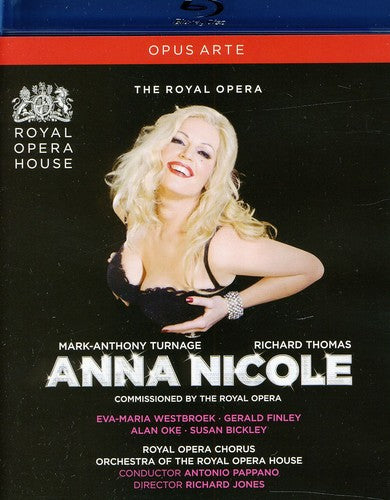
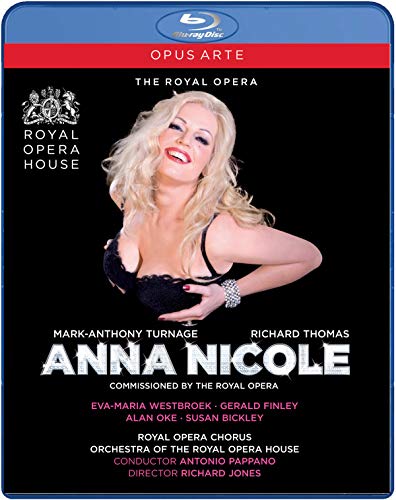
On SaleOpus ArteTurnage: Anna Nicole / Westbroek, Finley, Pappano [Blu-ray]
Note: This Blu-ray Disc is only playable on Blu-ray Disc players and not compatible with standard DVD players. Also available on standard...
September 27, 2011$39.99$29.99 -


-


-
 {# optional: put hover video/second image here positioned absolute; inset:0 #}
On SaleOpus Arte
{# optional: put hover video/second image here positioned absolute; inset:0 #}
On SaleOpus ArteGlyndebourne - Comedy & Tragedy
Giacomo Puccini GIANNI SCHICCHI Gianni Schicchi – Alessandro Corbelli Rinuccio – Massimo Giordano Lauretta – Sally Matthews Zita – Felicity Palmer La...
July 26, 2011$52.99$39.99 -
![Tchaikovsky: Pique Dame / Didyk, Magee, Boder [blu-ray]](//arkivmusic.com/cdn/shop/files/1867601.jpg?v=1749394232&width=800) {# optional: put hover video/second image here positioned absolute; inset:0 #}
On SaleOpus Arte
{# optional: put hover video/second image here positioned absolute; inset:0 #}
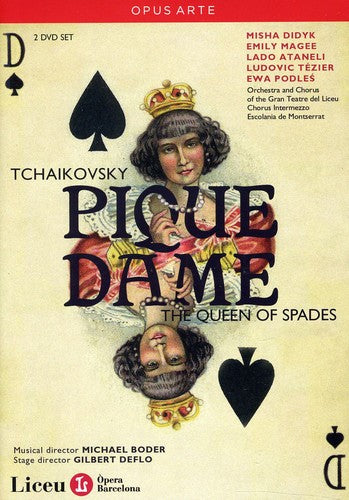
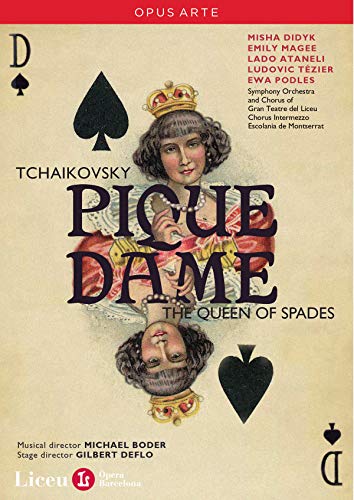
On SaleOpus ArteTchaikovsky: Pique Dame / Didyk, Magee, Boder [blu-ray]
Note: This Blu-ray Disc is only playable on Blu-ray Disc players and not compatible with standard DVD players. Also available on standard...
July 26, 2011$39.99$29.99 -

-

-
 {# optional: put hover video/second image here positioned absolute; inset:0 #}
On SaleOpus Arte
{# optional: put hover video/second image here positioned absolute; inset:0 #}
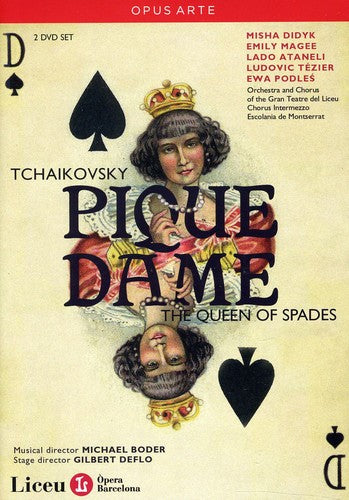
On SaleOpus ArteTchaikovsky: Pique Dame (The Queen of Spades)
Misha Didyk, Emily Magee, Lado Ataneli, Ludovic Tezier, Elena Zaremba, Ewa Podles, Mikhail Vekua, Fransisco Vas, and Claudia Schneider star in this...
July 26, 2011$39.99$29.99 -

-

-
 {# optional: put hover video/second image here positioned absolute; inset:0 #}
On SaleOpus Arte
{# optional: put hover video/second image here positioned absolute; inset:0 #}
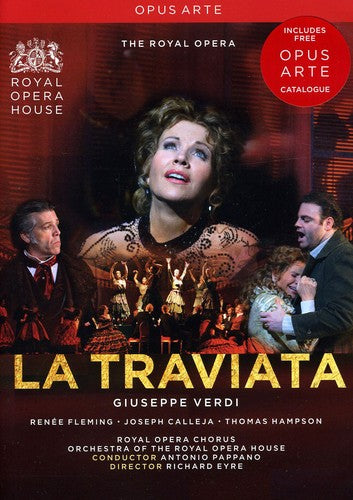
On SaleOpus ArteVerdi: La Traviata / Pappano, Fleming, Calleja, Hampson, Wade
R E V I E W: 3525240.az_VERDI_La_Traviata_Antonio.html VERDI La Traviata • Antonio Pappano, cond; Renée Fleming ( Violetta ); Joseph Calleja (...
May 31, 2011$34.99$26.99 -


-


-
![Verdi: La Traviata / Pappano, Fleming, Calleja, Hampson, Wade [Blu-ray]](//arkivmusic.com/cdn/shop/files/1844810.jpg?v=1749393324&width=800) {# optional: put hover video/second image here positioned absolute; inset:0 #}
On SaleOpus Arte
{# optional: put hover video/second image here positioned absolute; inset:0 #}
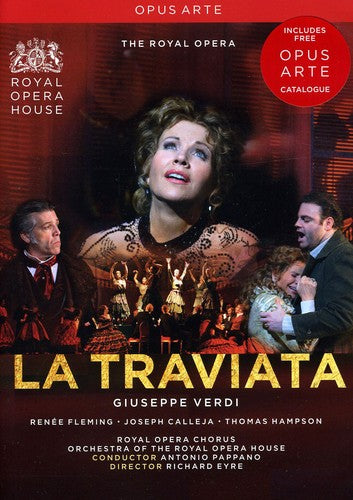
On SaleOpus ArteVerdi: La Traviata / Pappano, Fleming, Calleja, Hampson, Wade [Blu-ray]
This Blu-ray Disc is only playable on Blu-ray Disc players and not compatible with standard DVD players. Also available on standard DVD...
May 31, 2011$39.99$29.99 -

-


-
 {# optional: put hover video/second image here positioned absolute; inset:0 #}
On SaleOpus Arte
{# optional: put hover video/second image here positioned absolute; inset:0 #}
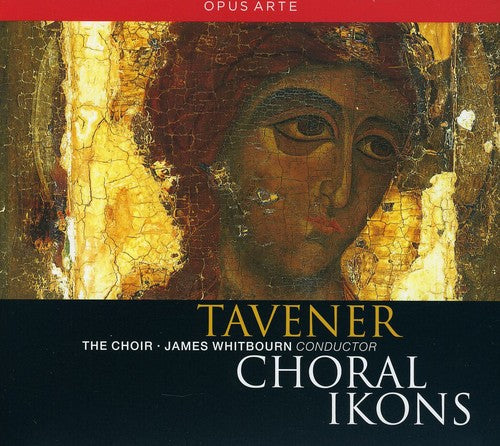
On SaleOpus ArteTavener: Choral Ikons / Whitbourn, The Choir
John Tavener describes his music as resembling ‘ikons in sound’ – a window on to the Divine world. On the album, the...
March 29, 2011$21.99$15.99 -


-


-
 {# optional: put hover video/second image here positioned absolute; inset:0 #}
On SaleOpus Arte
{# optional: put hover video/second image here positioned absolute; inset:0 #}
On SaleOpus ArteStrauss: Elektra / Watson, Henschel, Thielemann
Also available on Blu-ray Conducted by Christian Thielemann, this performance was the sensation of the 2010 Baden-Baden Festival. A one-act masterpiece inspired...
January 25, 2011$34.99$26.99 -

-

-
 {# optional: put hover video/second image here positioned absolute; inset:0 #}
On SaleOpus Arte
{# optional: put hover video/second image here positioned absolute; inset:0 #}
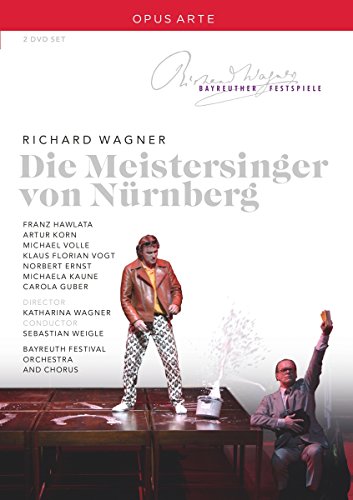
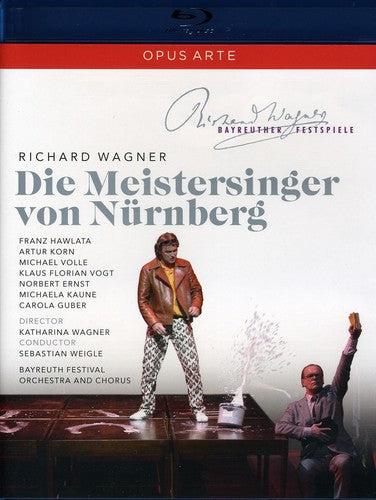
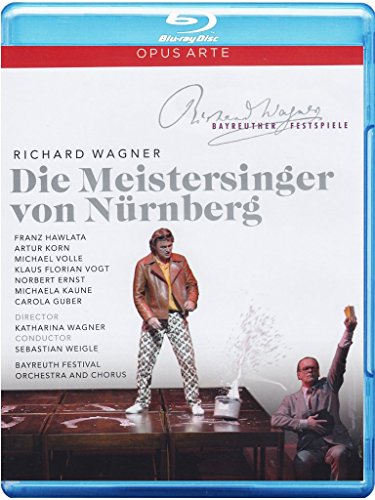
On SaleOpus ArteWagner: Die Meistersinger von Nürnberg
Franz Hawlata, Arthur Korn, Michael Volle, Klaus Florian Vogt, Norbert Ernst, Michaela Kaune, and Carola Guber star in this Bayreuth Festival production...
January 25, 2011$39.99$29.99 -

-

-
![Wagner: Die Meistersinger Von Nurnberg / Hawlata, Vogt, Kaune, Weigle [Blu-ray]](//arkivmusic.com/cdn/shop/files/1796916.jpg?v=1749394240&width=800) {# optional: put hover video/second image here positioned absolute; inset:0 #}
On SaleOpus Arte
{# optional: put hover video/second image here positioned absolute; inset:0 #}
On SaleOpus ArteWagner: Die Meistersinger Von Nurnberg / Hawlata, Vogt, Kaune, Weigle [Blu-ray]
Note: This Blu-ray Disc is only playable on Blu-ray Disc players and not compatible with standard DVD players. Also available on standard...
January 25, 2011$39.99$29.99 -

-

-
 {# optional: put hover video/second image here positioned absolute; inset:0 #}
On SaleOpus Arte
{# optional: put hover video/second image here positioned absolute; inset:0 #}
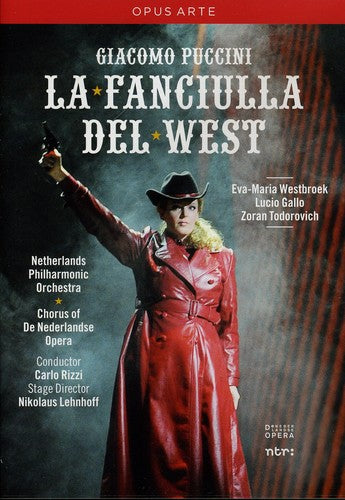
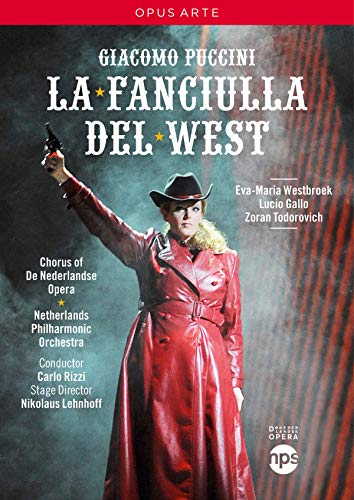
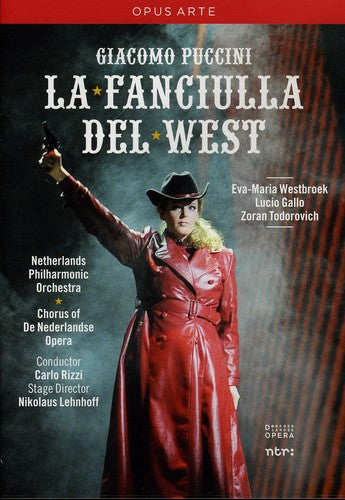
On SaleOpus ArtePuccini: La Fanciulla del West
Eva-Maria Westbrook, Lucio Gallo, and Zoran Todorovich star in this de Nederlandse Opera production of the Puccini opera conducted by Carlo Rizzi...
November 16, 2010$34.99$26.99 -
 {# optional: put hover video/second image here positioned absolute; inset:0 #}
Opus Arte
{# optional: put hover video/second image here positioned absolute; inset:0 #}
Opus ArteShakespeare: Comedy Tragedy Romance / Globe Theatre
William Shakespeare COMEDY, ROMANCE, TRAGEDY (4 DVD Box Set) Shakespeare's Globe productions of As You Like It, Love's Labour's Lost and Romeo...
$58.99October 26, 2010 -


-


-
![Tchaikovsky: The Nutcracker / Royal Ballet [Blu-ray]](//arkivmusic.com/cdn/shop/files/1745613.jpg?v=1766534115&width=800) {# optional: put hover video/second image here positioned absolute; inset:0 #}
On SaleOpus Arte
{# optional: put hover video/second image here positioned absolute; inset:0 #}
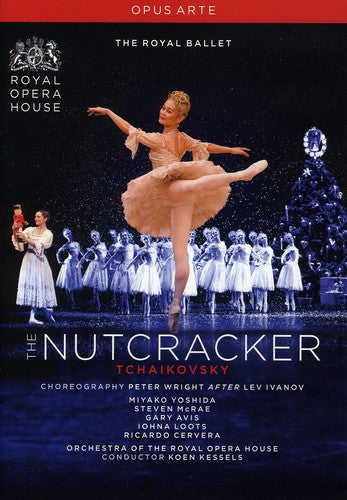
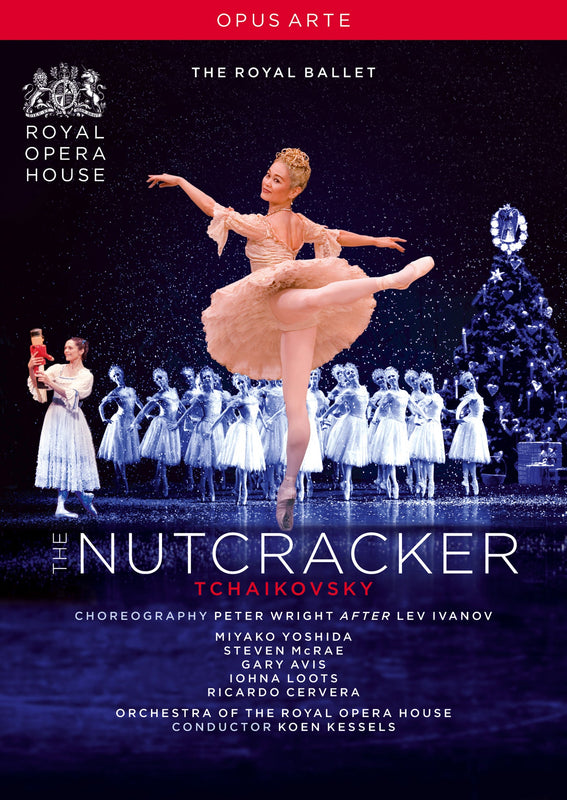
On SaleOpus ArteTchaikovsky: The Nutcracker / Royal Ballet [Blu-ray]
Note: This Blu-ray Disc is only playable on Blu-ray Disc players and not compatible with standard DVD players. Also available on standard...
October 26, 2010$39.99$29.99 -

-

-
 {# optional: put hover video/second image here positioned absolute; inset:0 #}
On SaleOpus Arte
{# optional: put hover video/second image here positioned absolute; inset:0 #}
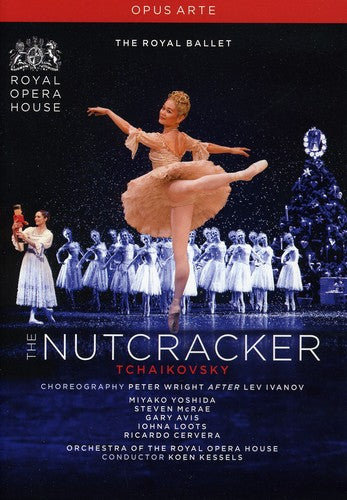
On SaleOpus ArteTchaikovsky: The Nutcracker / Royal Ballet
Also available on Blu-ray Pyotr Il'yich Tchaikovsky THE NUTCRACKER "One of the very best seasonal treats for children and adults alike, the...
October 26, 2010$34.99$26.99 -


-


-
 {# optional: put hover video/second image here positioned absolute; inset:0 #}
On SaleOpus Arte
{# optional: put hover video/second image here positioned absolute; inset:0 #}
On SaleOpus ArteThe Blu-ray Experience II - Opera, Ballet and Theatre Highli
Included are works by Handel, Delibes, Shakespeare, Purcell, Mozart, Herold, Puccini, Cavalli, Henze, Humperdinck, and Tchaikovsky, performed by Carlos Acosta, Darcey Bussell,...
October 26, 2010$10.99$7.99


Turnage: Anna Nicole / Westbroek, Finley, Pappano [Blu-ray]
Also available on standard DVD
"I attended the premiere, fearful that the opera would be tawdry and terrible, that the work would make fun of Smith, who died in 2007 at 39. But it proved a weirdly inspired work: engrossing, entertaining and ultimately quite moving... Here is an unlikely holiday gift that should delight and fascinate anyone interested in contemporary opera and American popular culture." -- Anthony Tommasini, The New York Times [11/20/2012]
In a tragic-comic take on the extremes of celebrity culture, composer Mark Anthony Turnage, librettist Richard Thomas and director Richard Jones add Anna Nicole Smith to opera’s gallery of bad, sad girls. A pneumatic Playboy model who married an octogenarian billionaire, she achieved grotesque fame before her destitute, drugriddled death. With its jazz-coloured score and Eva-Maria Westbroek’s starry performance, this is, as the New York Times said: “an engrossing outrageous, entertaining and, ultimately deeply moving opera”.
"...It's a tremendous show...shocking it isn't; stunning it is!" The Independent
Anna Nicole – Eva-Maria Westbroek
Old Man Marshall – Alan Oke
The Lawyer Stern – Gerald Finley
Virgie – Susan Bickley
Cousin Shelley – Loré Lixenberg
Larry King – Peter Hoare
Aunt Kay – Rebecca de Pont Davies
Older Daniel – Dominic Rowntree
Blossom – Allison Cook
Doctor – Andrew Rees
Billy – Grant Doyle
Mayor – Wynne Evans
Royal Opera Chorus
Royal Opera House Orchestra
Antonio Pappano, conductor
Richard Jones, stage director
Recorded live at the Royal Opera House, 23 & 26 February 2011.
Bonus:
- Cast Gallery
- Illustrated synopsis
- Behind the scenes feature including artist interviews
Picture format: 1080i High Definition
Sound format: LPCM 2.0 + DTS 5.1
Region code: 0 (worldwide)
Subtitles: English, French, German, Spanish
Running time: ca. 120 mins
No. of Discs: 1 (Blu-ray)
Also available on standard DVD
![Turnage: Anna Nicole / Westbroek, Finley, Pappano [Blu-ray]](http://arkivmusic.com/cdn/shop/files/1890501.jpg?v=1749393371&width=800) {# optional: put hover video/second image here positioned absolute; inset:0 #}
{# optional: put hover video/second image here positioned absolute; inset:0 #}


Glyndebourne - Comedy & Tragedy
Gianni Schicchi – Alessandro Corbelli
Rinuccio – Massimo Giordano
Lauretta – Sally Matthews
Zita – Felicity Palmer
La Ciesca – Marie McLaughlin
London Philharmonic Orchestra
Vladimir Jurowski, conductor
Annabel Arden, stage director
Recorded live at Glyndebourne Opera House, East Sussex, United Kingdom, 11 July 2004.
Bonus:
- interviews with Alessandro Corbelli, Vladimir Jurowski, and Annabel Arden
Gaetano Donizetti
L’ELISIR D’AMORE
Adina – Ekaterina Siurina
Nemorino – Peter Auty
Sergeant Belcore – Alfredo Daza
Dr Dulcamara – Luciano di Pasquale
Giannetta – Eliana Pretorian
Glyndebourne Chorus
(chorusmaster: Thomas Blunt)
London Philharmonic Orchestra
Maurizio Benini, conductor
Annabel Arden, stage director
Recorded live at Glyndebourne Opera House, East Sussex, United Kingdom, August 2009.
Bonus:
- Illustrated synopsis
- Cast gallery
Giuseppe Verdi
FALSTAFF
Dr Caius – Peter Hall
Sir John Falstaff – Christopher Purves
Bardolph – Alasdair Elliott
Pistol – Paolo Battaglia
Mrs Page (Meg) – Jennifer Holloway
Mrs Ford (Alice) – Dina Kuznetsova
Mistress Quickly – Marie-Nicole Lemieux
Nannetta – Adriana Kucerova
Fenton – Bulent Bezduz
Ford – Tassis Christoyannis
Glyndebourne Chorus
London Philharmonic Orchestra
Vladimir Jurowski, conductor
Richard Jones, stage director
Recorded live at Glyndebourne Opera House, East Sussex, United Kingdom, June 2009.
Bonus:
- Illustrated synopsis
- Cast gallery
Georges Bizet
CARMEN
Moralès – Hans Voschezang
Micaëla – Lisa Milne
Don José – Marcus Haddock
Zuniga – Jonathan Best
Carmen – Anne Sofie von Otter
Frasquita – Mary Hegarty
Mercédès – Christine Rice
Lillas Pastia – Anthony Wise
Escamillo – Laurent Naouri
Le Dancaïre – Quentin Hayes
Le Remendado – Colin Judson
Le Guide – Franck Lopez
The Glyndebourne Chorus
London Philharmonic Orchestra
Philippe Jordan, conductor
David McVicar, stage director
Recorded live at Glyndebourne Opera House, East Sussex, United Kingdom, 17 August 2002.
Bonus:
- Illustrated synopsis and cast gallery
- Costume design
- Choreographing Carmen
- How to fight on stage
- The Gardens of Glyndebourne
Sergei Rachmaninov
THE MISERLY KNIGHT
Albert – Richard Berkeley-Steele
Servant – Maxim Mikhailov
Moneylender – Viacheslav Voynarovskiy
The Duke – Albert Schagidullin
The Baron – Sergey Leiferkus
Aerialist – Matlida Leyser
London Philharmonic Orchestra
Vladimir Jurowski, conductor
Annabel Arden, stage director
Recorded live at Glyndebourne Opera House, East Sussex, United Kingdom, 11 July 2004.
---
Picture format: NTSC 16:9 Anamorphic
Sound format: LPCM 2.0 / DTS 5.1
Region code: 0 (worldwide)
Menu language: English Running time: 12 hours 30 mins No. of DVDs: 6
 {# optional: put hover video/second image here positioned absolute; inset:0 #}
![Tchaikovsky: Pique Dame / Didyk, Magee, Boder [blu-ray]](http://arkivmusic.com/cdn/shop/files/1867601.jpg?crop=center&height=800&v=1749394232&width=800)
Tchaikovsky: Pique Dame / Didyk, Magee, Boder [blu-ray]
Also available on standard DVD
Pyotr Il’yich Tchaikovsky
PIQUE DAME
(Blu-ray Disc Version)
Hermann – Misha Didyk
Liza – Emily Magee
Count Tomsky – Lado Ataneli
Prince Yeletsky – Ludovic Tézier
Polina – Elena Zaremba
Countess – Ewa Podles
Chaplitsky – Mikhaïl Vekua
Chekalinsky – Francisco Vas
Masha – Claudia Schneider
Escolania de Montserrat
Intermezzo Choir
Liceu Grand Theatre Chorus and Orchestra
Michael Boder, conductor
Gilbert Deflo, stage director
Recorded live from the Gran Teatre del Liceu, 2010.
Picture format: 1080i High Definition
Sound format: LPCM Stereo 2.0 / DTS 5.1
Region code: 0 (worldwide)
Menu language: English
Subtitles: English, French, German, Spanish, Catalan
Running time: 183 mins
No. of Discs: 1 (Blu-ray)
---------
TCHAIKOVSKY Pique Dame • Michael Boder, cond; Emily Magee ( Lisa ); Elena Zaremba ( Pauline/Milovzor ); Ewa Podle? ( Countess ); Misha Didyk ( Hermann ); Ludovic Tézier ( Yeletsky ); Lado Ataneli ( Tomsky ); Liceu Th Ch & O • OPUS ARTE OA BD 7085D (Blu-ray: 180:00) Live: Barcelona 06/30–07/01/2010
Generally speaking, the failure rate for opera performances on DVD is far higher than for CDs; they tend to preserve inept to ludicrous stagings saddled with mediocre to intolerable voices. Consequently, it is always a special treat to review an opera DVD that squarely hits the mark with a first-rate production and singing. Last issue I had the pleasure of doing that with the marvelous Glyndebourne realization of Benjamin Britten’s Billy Budd , and now have the privilege of following it with this excellent version of Pique Dame , a first-rate performance of Tchaikovsky’s late operatic masterwork that not only assumes pride of place among versions available on DVD but holds its own with the best versions on CD as well. It presents a thoroughly traditional staging, more lavish than the 1983 Bolshoi version under Yuri Simonov on Kultur, more focused than the 1992 Kirov production led by Valery Gergiev on Philips (given a mixed review by James Camner in Fanfare 26:3), and free from the occasional miscalculations of the 1992 Glyndebourne version conducted by Andrew Davis on Arthaus, or the perverse 2005 Paris production led by Gennady Rozhdestvensky on TDK and Arthaus (properly damned by Henry Fogel in 31:4). Costumes and sets are elegant, stylish, and free from eccentricity (for example, references to madness and death are effectively but unobtrusively made at key moments by the simple use of a black curtain); stage movements, especially the choral scenes, are well managed.
The singing, while not peerless, is extremely solid. The ancient Greek mathematician Eratosthenes was affectionately nicknamed “beta” by his peers for being an excellent second-best in many things but not the best in any one thing. A similar observation applies to the casting here; while in almost any given role one can find a superior singer elsewhere, no other production on DVD except the Kirov possesses a comparably uniform degree of high quality throughout, and the minor caveats that I note are inconsequential in comparison to the impressive whole. The top honors go to tenor Misha Didyk as the tormented Hermann; if his voice is not as weighty in its lower register or as tormented as that of Vladimir Galouzine for Rozhdestvensky, it has a steadier (if occasionally stressed) top, plus more body and variety in tone than Gegam Grigorian for Gergiev and more cultivated vocal technique than Vladimir Atlantov in his various performances, while he sings as expressively as any of them. An added advantage is that he looks the part perfectly, with a virile, well-built physique, ruggedly handsome features, and fine head of blond hair.
As Lisa, Emily Magee does not have the Slavic timbre and edge of Maria Guleghina under Gergiev (some may consider that an asset), the occasional top note is a tad strained, and she does not blend ideally with Didyk in their duets. However, her Russian is quite good, her voice is attractive and steady, and she sings and acts with conviction. As Tomsky, Lado Atanelli has a slight spread in his upper register, but not to a degree that is distracting, and he plays his role convincingly. (He also doubles as Zlatogor/Plutus in the ballet sequence, where he is vocally miscast.) Ludovic Tézier has made a specialty role of Yeletsky; his singing here is suitably warm and gentlemanly, and superior to his effort in the 2005 Paris production, though a slight degree of strain at the very top makes one yearn in his lovely act II aria “Ya vas lyublyu” for the gloriously effortless magic of Pavel Lisitsian (though of course such a voice comes along only once or twice a century). Thankfully, for once the role of the Countess is satisfactorily cast with the famed Polish contralto Ewa Podle? instead of an aged mezzo whose voice went to seed a decade or two before. The Surin (Alberto Feria), Chekalinsky (Francisco Vas), and Prilepa/Daphnis (Michelle Marie Cook) are all quite good; the only failings are in the minor supporting roles of Pauline and Milovzar/Chloë, where Elena Zaremba has a jackhammer Slavic wobble, and Lisa’s maid Masha wields a squally soprano in her few lines. The chorus is excellent; the orchestra starts out sounding a bit thin but soon warms to its task. Conductor Michael Boder guides the forces with a sure hand, ably shaping the lyrical passages with flowing warmth and the dramatic ones with tension and power.
Subtitles are provided in an impressive array of languages: English, French, German, Spanish, and Catalan; however, they are rather small and sometimes difficult to read, especially when the background is light. The recorded sound is entirely satisfactory; the only extra feature is a cast gallery. While not absolutely flawless, this performance is enthusiastically recommended, and is an outside candidate for the 2012 Want List.
Of competing versions on DVD, the 1992 Gergiev and 1983 Simonov performances are worthwhile if visually somewhat inferior alternatives. Both the Davis and Rozhdestvensky versions, particularly the former, suffer from lethargic conducting as well as problematic stagings, and the Davis is also marred by the horribly miscalculated decision of Yuri Marusin to portray the madness of Hermann by singing most of his role deliberately out of tune. Completely out of the running is the 1992 Vienna production on Sony, led by Seiji Ozawa, afflicted by severe cuts and a cast of vocally over-the-hill former stars. I have not seen the 1960 film version issued by Kultur, with actors lip-synching the vocal roles of a Bolshoi Opera cast of soloists led by Yevgeny Svetlanov. I have an off-the-air recording of Elijah Moshinsky’s 1999 Metropolitan Opera production with Plácido Domingo; if not as visually opulent as this production it is musically superb, and one hopes that the Met will soon release it commercially. On CD, out of several adequate to strong contenders I would recommend three: the 1999 recording on the Relief label with Vitaly Tarashschenko, Natalia Datsko, Dmitri Hvorostovsky, Grigory Gritsuk, Alexander Verdernikov, and Irina Arkhipova under Vladimir Fedoseyev; the 1992 Kirov/Gergiev performance in its CD incarnation with Grigorian, Guleghina, Arkhipova, Nikolai Putiin, Vladimir Chernov, and Olga Borodina; and the historic 1949–50 Bolshoi production with Georg Nelepp, Evgeniya Smolenskaya, Pavel Lisitsian, and Alexei Ivanov under Alexander Melik-Pasheyev, an excellent version worth acquiring for Lisitsian alone.
FANFARE: James A. Altena
![Tchaikovsky: Pique Dame / Didyk, Magee, Boder [blu-ray]](http://arkivmusic.com/cdn/shop/files/1867601.jpg?v=1749394232&width=800) {# optional: put hover video/second image here positioned absolute; inset:0 #}
{# optional: put hover video/second image here positioned absolute; inset:0 #}


Tchaikovsky: Pique Dame (The Queen of Spades)
 {# optional: put hover video/second image here positioned absolute; inset:0 #}


Verdi: La Traviata / Pappano, Fleming, Calleja, Hampson, Wade
R E V I E W:
VERDI La Traviata • Antonio Pappano, cond; Renée Fleming ( Violetta ); Joseph Calleja ( Alfredo ); Thomas Hampson ( Germont ); Royal Op House Ch & O • OPUS ARTE OA 1040 D (DVD); OA BD7076 D (Blu-ray: 154:00) Live: Covent Garden 6/27 & 30/2009
Back in Fanfare 34:1 I reviewed the recent DVD of La traviata with Angela Gheorghiu, Ramón Vargas, Roberto Frontali, and Lorin Maazel at La Scala. To summarize that briefly, my verdict was: excellent staging, superlative Gheorghiu, good Vargas and Maazel, hapless Frontali and comprimario singers. I also provided an extensive overview of other versions of the opera on DVD; all are flawed, but the best alternatives are the 1968 film version on VAI with Anna Moffo, Franco Bonisolli, Gino Bechi, and Giuseppe Patané; a 1972 Tokyo staging starring Renata Scotto, José Carreras, Sesto Bruscantini, and Nino Verchi, also on VAI; and the 2006 Los Angeles Opera production on Decca with Renée Fleming, Rolando Villazón, Renato Bruson, and James Conlon. Opus Arte now brings us a new version with Renée Fleming, and while it too is not without its flaws, it joins the aforementioned entries in the top rank of La traviata performances on video.
At the risk of seeming like a gaggle of geese nibbling this DVD to death, I will state up front that this version of the opera is carried by a few great strengths over multiple secondary weaknesses. The strengths are easy to state: All the principal roles are securely sung, a top-notch conductor is on the podium, and the staging is sensible. In particular, Joseph Calleja is one of the greatest Alfredos ever to record the role. While not ideally handsome and dashing in physical appearance, he has the ringing tenor voice, secure technique, heartbreaking plangency of timbre, and interpretive imagination for the ideal Alfredo. Every time he opens his mouth, you simply don’t want him to close it again. He is also an effective actor whose facial expressions, postures, and gestures harmonize with his singing.
After Calleja, however, the “yes, but” element of this review enters in for everyone and everything else, beginning with the Violetta of Renée Fleming. Doubtless she is a very good Violetta, and superior to many rivals, but I do not think she is a truly great one. Compared to her Los Angeles performance from three years earlier, her interpretation is considerably deeper but her vocal technique (particularly in “Sempre libera”) is more labored and the sound less creamy. Thankfully, she does far less of the distracting grimacing and bizarre grinning than before, though sometimes it still intrudes (someone needs to tell her to rehearse in front of a mirror). However, my greater concern is that her acting is too calculated and external to the character rather than indwelling it; she expends too much energy portraying, rather than being, Violetta. The gestures and movements all seem too self-conscious; instead of just picking up a champagne bottle, or flitting a handkerchief, or sitting down in a chair, one can almost see her thinking, “Now I’m supposed to pick up the champagne bottle,” “Now I should flit my handkerchief,” “Now I should sit down in this chair.” Again, I would prefer to emphasize the real improvement in her characterization in just three years, but this dimension is present and it does matter.
Next there is the Germont of Thomas Hampson. The good news is that he is in steady and secure voice here—not always the case recently—which is more than can be said for much of his painfully superannuated competition. The less than ideal news is that, in order to keep the voice steady, he constantly forces it so that every syllable is pushed out at a forte with a hard, unyielding tone that limits him to a single mode of expression, one of preemptive sternness. His acting and facial gestures are similarly limited and wooden; when Violetta pleads for his fatherly embrace he remains stock-still and ignores her, and displays equal unconcern for his son at “Di Provenza il mar.” In an unintentionally comic sartorial aspect, the light green piping on his brown suit unavoidably conjures up a chocolate sundae with mint drizzle icing, while his stiff posture and lumbering gait in an over-padded full-length fur coat keep bringing to mind actor Fred Gwynne (aka Herman Munster). Again, I don’t want these smaller details to override the fact that Hampson’s Germont trumps that of many lesser singers, but again they are present and do matter.
The rest can be summarized more briefly. One always expects fine Verdi conducting when Antonio Pappano is in the pit, and so it proves here; but this time he seems a bit too deferential to his singers and the performance lacks the extra frisson found in his very best interpretations, and I actually find myself preferring Maazel overall despite his occasional eccentricities. The comprimario singers are uniformly excellent to a rare degree—every one of them could easily be singing a principal role in a major opera instead—and the deft stage direction makes their momentary interactions contribute far more to the cogency of the plot that I have ever experienced before. The recorded sound and film quality are quite good, with the quality of the Blu-ray disc only marginally superior to that of the regular DVD; the camerawork is sensible if not exceptional; the costumes are of the period and (Hampson’s suit and coat excepted) attractive and elegant; the ballet sequence at Flora’s party is nicely staged.
My one other major reservation concerns the production’s sets, which are quite pedestrian. Act I is set in a round room with brown wood paneling and a single large window with blinds in the back, with a small round settee and semicircular padded backless benches around it—no banquet table, chandelier, or anything else to indicate either elegance or the intended significance of Violetta in the round. While not the awful Willy Decker sofa and clock, it’s a major disappointment. The villa interior for act II, scene 1 is painted a drab eggshell blue and has no furniture other than a long work table and a few chairs. Several paintings—whether waiting to be hung or sold is not clear—are stacked on the floor to one side, and several little squares painted with stripes—color swatches, perhaps?—rest in a row on the wall molding halfway off the floor. It’s not very attractive, and simply leaves one baffled regarding the desired effect. By contrast, Flora’s party in act II scene 2 is appropriately elegant, marred only by garish red stage lighting, a huge modern dome light fixture hanging from the ceiling like an oversized cafeteria heat lamp hovering over sandwiches. Act III has an appropriately simple setting of a bare room outfitted with a bed, a dresser, and a couple of chairs, but again is marred by two enormous windows with blinds, against which inexplicably tall shadows (up to 30 feet) of carnival revelers are cast after Violetta finishes “Addio del passato.” Compared to the high-class La Scala staging for Gheorghiu, this is an impoverished country cousin.
So, once again, we still await the ideal La traviata . In the best of all possible worlds, I would be able to take the La Scala production, replace its wretched comprimario singers with their Covent Garden counterparts, swap out Vargas for Calleja, and replace Frontali with almost any other baritone from another DVD. (Leonard Warren, where are you when we need you?) Barring such a pleasing impossibility, however, this production is as good as any other and better than most, and is recommended accordingly.
FANFARE: James A. Altena
 {# optional: put hover video/second image here positioned absolute; inset:0 #}


Verdi: La Traviata / Pappano, Fleming, Calleja, Hampson, Wade [Blu-ray]
Also available on standard DVD
Giuseppe Verdi
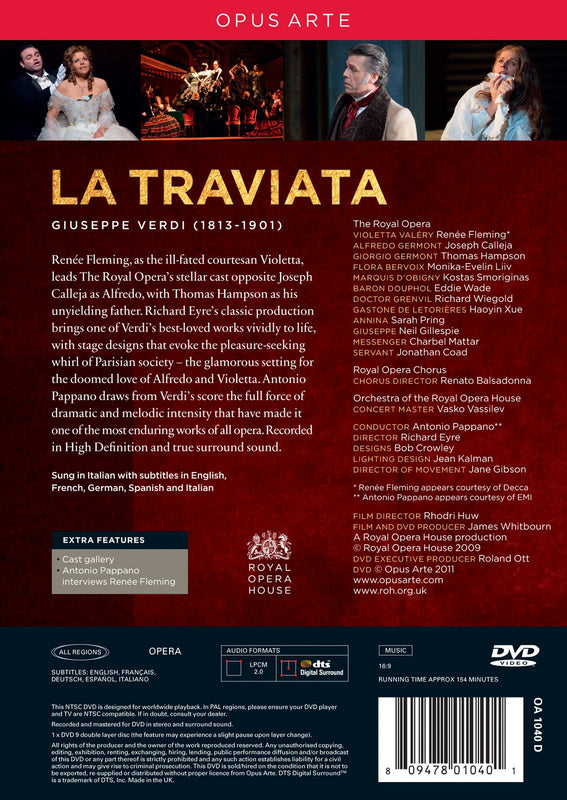
LA TRAVIATA
(Blu-ray Disc Version)
Violetta – Renée Fleming
Alfredo Germont – Joseph Calleja
Giorgio Germont – Thomas Hampson
Baron Douphol – Eddie Wade
Doctor Grenvil – Richard Wiegold
Royal Opera House Chorus and Orchestra
Antonio Pappano, conductor
Richard Eyre, stage director
Recorded live at the Royal Opera House, Covent Garden, London, June and July 2009.
Bonus:
- Cast gallery
- Antonio Pappano interviews Renée Fleming
Picture format: 1080i High Definition
Sound format: LPCM 2.0 / DTS 5.1
Region code: 0 (worldwide)
Menu language: English
Subtitles: English, French, German, Spanish, Italian
Running time: 135 mins
No. of Discs: 1 (Blu-ray)
R E V I E W:
VERDI La Traviata • Antonio Pappano, cond; Renée Fleming ( Violetta ); Joseph Calleja ( Alfredo ); Thomas Hampson ( Germont ); Royal Op House Ch & O • OPUS ARTE OA 1040 D (DVD); OA BD7076 D (Blu-ray: 154:00) Live: Covent Garden 6/27 & 30/2009
Back in Fanfare 34:1 I reviewed the recent DVD of La traviata with Angela Gheorghiu, Ramón Vargas, Roberto Frontali, and Lorin Maazel at La Scala. To summarize that briefly, my verdict was: excellent staging, superlative Gheorghiu, good Vargas and Maazel, hapless Frontali and comprimario singers. I also provided an extensive overview of other versions of the opera on DVD; all are flawed, but the best alternatives are the 1968 film version on VAI with Anna Moffo, Franco Bonisolli, Gino Bechi, and Giuseppe Patané; a 1972 Tokyo staging starring Renata Scotto, José Carreras, Sesto Bruscantini, and Nino Verchi, also on VAI; and the 2006 Los Angeles Opera production on Decca with Renée Fleming, Rolando Villazón, Renato Bruson, and James Conlon. Opus Arte now brings us a new version with Renée Fleming, and while it too is not without its flaws, it joins the aforementioned entries in the top rank of La traviata performances on video.
At the risk of seeming like a gaggle of geese nibbling this DVD to death, I will state up front that this version of the opera is carried by a few great strengths over multiple secondary weaknesses. The strengths are easy to state: All the principal roles are securely sung, a top-notch conductor is on the podium, and the staging is sensible. In particular, Joseph Calleja is one of the greatest Alfredos ever to record the role. While not ideally handsome and dashing in physical appearance, he has the ringing tenor voice, secure technique, heartbreaking plangency of timbre, and interpretive imagination for the ideal Alfredo. Every time he opens his mouth, you simply don’t want him to close it again. He is also an effective actor whose facial expressions, postures, and gestures harmonize with his singing.
After Calleja, however, the “yes, but” element of this review enters in for everyone and everything else, beginning with the Violetta of Renée Fleming. Doubtless she is a very good Violetta, and superior to many rivals, but I do not think she is a truly great one. Compared to her Los Angeles performance from three years earlier, her interpretation is considerably deeper but her vocal technique (particularly in “Sempre libera”) is more labored and the sound less creamy. Thankfully, she does far less of the distracting grimacing and bizarre grinning than before, though sometimes it still intrudes (someone needs to tell her to rehearse in front of a mirror). However, my greater concern is that her acting is too calculated and external to the character rather than indwelling it; she expends too much energy portraying, rather than being, Violetta. The gestures and movements all seem too self-conscious; instead of just picking up a champagne bottle, or flitting a handkerchief, or sitting down in a chair, one can almost see her thinking, “Now I’m supposed to pick up the champagne bottle,” “Now I should flit my handkerchief,” “Now I should sit down in this chair.” Again, I would prefer to emphasize the real improvement in her characterization in just three years, but this dimension is present and it does matter.
Next there is the Germont of Thomas Hampson. The good news is that he is in steady and secure voice here—not always the case recently—which is more than can be said for much of his painfully superannuated competition. The less than ideal news is that, in order to keep the voice steady, he constantly forces it so that every syllable is pushed out at a forte with a hard, unyielding tone that limits him to a single mode of expression, one of preemptive sternness. His acting and facial gestures are similarly limited and wooden; when Violetta pleads for his fatherly embrace he remains stock-still and ignores her, and displays equal unconcern for his son at “Di Provenza il mar.” In an unintentionally comic sartorial aspect, the light green piping on his brown suit unavoidably conjures up a chocolate sundae with mint drizzle icing, while his stiff posture and lumbering gait in an over-padded full-length fur coat keep bringing to mind actor Fred Gwynne (aka Herman Munster). Again, I don’t want these smaller details to override the fact that Hampson’s Germont trumps that of many lesser singers, but again they are present and do matter.
The rest can be summarized more briefly. One always expects fine Verdi conducting when Antonio Pappano is in the pit, and so it proves here; but this time he seems a bit too deferential to his singers and the performance lacks the extra frisson found in his very best interpretations, and I actually find myself preferring Maazel overall despite his occasional eccentricities. The comprimario singers are uniformly excellent to a rare degree—every one of them could easily be singing a principal role in a major opera instead—and the deft stage direction makes their momentary interactions contribute far more to the cogency of the plot that I have ever experienced before. The recorded sound and film quality are quite good, with the quality of the Blu-ray disc only marginally superior to that of the regular DVD; the camerawork is sensible if not exceptional; the costumes are of the period and (Hampson’s suit and coat excepted) attractive and elegant; the ballet sequence at Flora’s party is nicely staged.
My one other major reservation concerns the production’s sets, which are quite pedestrian. Act I is set in a round room with brown wood paneling and a single large window with blinds in the back, with a small round settee and semicircular padded backless benches around it—no banquet table, chandelier, or anything else to indicate either elegance or the intended significance of Violetta in the round. While not the awful Willy Decker sofa and clock, it’s a major disappointment. The villa interior for act II, scene 1 is painted a drab eggshell blue and has no furniture other than a long work table and a few chairs. Several paintings—whether waiting to be hung or sold is not clear—are stacked on the floor to one side, and several little squares painted with stripes—color swatches, perhaps?—rest in a row on the wall molding halfway off the floor. It’s not very attractive, and simply leaves one baffled regarding the desired effect. By contrast, Flora’s party in act II scene 2 is appropriately elegant, marred only by garish red stage lighting, a huge modern dome light fixture hanging from the ceiling like an oversized cafeteria heat lamp hovering over sandwiches. Act III has an appropriately simple setting of a bare room outfitted with a bed, a dresser, and a couple of chairs, but again is marred by two enormous windows with blinds, against which inexplicably tall shadows (up to 30 feet) of carnival revelers are cast after Violetta finishes “Addio del passato.” Compared to the high-class La Scala staging for Gheorghiu, this is an impoverished country cousin.
So, once again, we still await the ideal La traviata . In the best of all possible worlds, I would be able to take the La Scala production, replace its wretched comprimario singers with their Covent Garden counterparts, swap out Vargas for Calleja, and replace Frontali with almost any other baritone from another DVD. (Leonard Warren, where are you when we need you?) Barring such a pleasing impossibility, however, this production is as good as any other and better than most, and is recommended accordingly.
FANFARE: James A. Altena
![Verdi: La Traviata / Pappano, Fleming, Calleja, Hampson, Wade [Blu-ray]](http://arkivmusic.com/cdn/shop/files/1844810.jpg?v=1749393324&width=800) {# optional: put hover video/second image here positioned absolute; inset:0 #}
{# optional: put hover video/second image here positioned absolute; inset:0 #}


Tavener: Choral Ikons / Whitbourn, The Choir
"The power of the performances is overwhelming and the credit goes to James Whitbourn and his vocal ensemble The Choir" - The Organ.
 {# optional: put hover video/second image here positioned absolute; inset:0 #}


Strauss: Elektra / Watson, Henschel, Thielemann
Conducted by Christian Thielemann, this performance was the sensation of the 2010 Baden-Baden Festival. A one-act masterpiece inspired by Greek mythology, it is a dense, jagged cry for justice and vengeance. With its powerfully expressive chords, spooky waltz rhythms and mad dance of triumph, it shakes the audience to the core. Herbert Wernicke’s legendary production for the Bayerische Staatsoper stands out for its clear lines, classical structural elements and striking colour contrasts. Linda Watson, one of the great Wagnerian sopranos of today, superbly masters her role debut as Elektra, one of opera’s most demanding roles.
Elektra – Linda Watson
Klytämnestra – Jane Henschel
Chrysothemis – Manuela Uhl
Aegisth – René Kollo
Orest – Albert Dohmen
Orest's Tutor – Andreas Hörl
A young servant – Jörg Schneider
An old servant – Carsten Sabrowski
An overseer – Irmgard Vilsmaier
Vienna Philharmonia Chorus
Munich Philharmonic Orchestra
Christian Thielemann, conductor
Herbert Wernicke, stage director
Recorded live at Festspielhaus Baden-Baden, 29 January, 1 and 4 February 2010.
Bonus:
- Cast gallery
Picture format: NTSC 16:9
Sound format: LPCM Stereo 2.0 / DTS 5.1
Region code: 0 (worldwide)
Menu language: English
Subtitles: English, French, German, Spanish
Running time: 100 mins
No. of DVDs: 1
 {# optional: put hover video/second image here positioned absolute; inset:0 #}


Wagner: Die Meistersinger von Nürnberg
 {# optional: put hover video/second image here positioned absolute; inset:0 #}


Wagner: Die Meistersinger Von Nurnberg / Hawlata, Vogt, Kaune, Weigle [Blu-ray]
Also available on standard DVD
Richard Wagner
DIE MEISTERSINGER VON NÜRNBERG
(Blu-ray Disc Version)
Hans Sachs – Franz Hawlata
Veit Pogner – Artur Korn
Kunz Vogelgesang – Charles Reid
Konrad Nachtigall – Rainer Zaun
Sixtus Beckmesser – Michael Volle
Fritz Kothner – Markus Eiche
Balthasar Zorn – Edward Randall
Ulrich Eisslinger – Hans-Jürgen Lazar
Augustin Moser – Stefan Heibach
Hermann Ortel – Martin Snell
Hans Schwarz – Andreas Macco
Hans Foltz – Diógenes Randes
Walther von Stolzing – Klaus Florian Vogt
David – Norbert Ernst
Eva – Michaela Kaune
Magdalene – Carola Guber
Ein Nachtwächter – Friedemann Röhlig
Bayreuth Festival Chorus and Orchestra
(chorus master: Eberhard Friedrich)
Sebastian Weigle, conductor
Katharina Wagner, stage director
Tilo Steffens, stage and costume designer
Michaela Barth, costume designer
Andreas Grüter, lighting designer
Recorded live at the Bayreuth Festival, 2008
Bonus:
- Cast gallery
- The Making of Die Meistersinger von Nürnberg
Picture format: 1080i High Definition
Sound format: LPCM Stereo / DTS-HD Master Audio 5.1
Region code: 0 (worldwide)
Subtitles: English, French, German, Spanish
Running time: 4 hours 45 mins
No. of Discs: 1 (BD 50)
Total Playing Time: 04:45:00
![Wagner: Die Meistersinger Von Nurnberg / Hawlata, Vogt, Kaune, Weigle [Blu-ray]](http://arkivmusic.com/cdn/shop/files/1796916.jpg?v=1749394240&width=800) {# optional: put hover video/second image here positioned absolute; inset:0 #}
{# optional: put hover video/second image here positioned absolute; inset:0 #}


Puccini: La Fanciulla del West
 {# optional: put hover video/second image here positioned absolute; inset:0 #}

Shakespeare: Comedy Tragedy Romance / Globe Theatre
COMEDY, ROMANCE, TRAGEDY
(4 DVD Box Set)
Shakespeare's Globe productions of As You Like It, Love's Labour's Lost and Romeo & Juliet are offered in this exclusive limited edition box set.
Thea Sharrock’s irresistible new production of Shakespeare’s popular romantic comedy As You Like It stirs wit, sentiment, intrigue and love into a charming confection which challenges the traditional rules of romance.
Using every kind of verbal gymnastics to poke fun, Shakespeare’s most intellectual comedy Love’s Labour’s Lost is brought to hilarious life in Dominic Dromgoole’s highly entertaining production, rich in visual humour and sexual innuendo. Dominic Dromgoole’s production of Romeo & Juliet brings refreshing clarity to one of Shakespeare’s most famous and best-loved tragedies. Ellie Kendrick, a truly youthful Juliet, and Adetomiwa Edun, a boyish Romeo, head an excellent cast whose period costumes point to the timelessness of parental disapproval, adolescent temperament, rivalry and violence.
As You Like It
Duke Frederick – Brendon Hughes
Orlando – Jack Laskey
Adam – Trevor Martin
Oliver – Jamie Parker
Rosalind – Naomi Frederick
Celia – Laura Rogers
Touchstone – Dominic Rowan
Le Beau / William – Gregory Gudgeon
Charles / Corin – Sean Kearns
Duke Senior – Philip Bird
Amiens / Sir Oliver Martext – Peter Gale
Silvius – Michael Benz
Jaques –Tim McMullan
Audrey – Sophie Duval
Phebe – Jade Williams
Hymen – Ewart James Walters
Thea Sharrock, director
Dick Bird, design
Fin Walker, choreographer
Music composed by Stephen Warbeck
Recorded live at Shakespeare's Globe Theatre, London, October 2009.
Love's Labour's Lost
King of Navarre – Philip Cumbus
Berowne – Trystan Gravelle
Longaville – William Mannering
Dumaine – Jack Farthing
Princess of France – Michelle Terry
Rosaline – Thomasin Rand
Maria – Jade Anouka
Katharine – Siân Robins-Grace
Boyet – Tom Stuart
Don Armado – Paul Ready
Moth – Seroca Davis
Holofernes – Christopher Godwin
Sir Nathanial – Patrick Godfrey
Dull – Andrew Vincent
Costard – Fergal McElherron
Jaquenetta – Rhiannon Oliver
Mercadé – James Lailey
Dominic Dromgoole, stage director
Jonathan Fensom – design
Music composed by Claire van Kampen
Recorded live at Shakespeare's Globe Theatre, London, October 2009.
Romeo and Juliet
Prince Escalus – Andrew Vincent
Mercutio – Philip Cumbus
Paris – Tom Stuart
Montague – Michael O'Hagan
Lady Montague – Holly Atkins
Romeo – Adetomiwa Edun
Benvolio – Jack Farthing
Abraham / Apothecary – Graham Vick
Balthazar / Peter / Gregory – Fergal McElherron
Capulet – Ian Redford
Lady Capulet – Miranda Foster
Juliet – Ellie Kendrick
Tybalt – Ukweli Roach
Nurse – Penny Layden
Friar John / Sampson – James Lailey
Friar Lawrence – Rawiri Paratene
Dominic Dromgoole, director
Simon Daw, design
Sian Williams, choreographer
Music composed by Nigel Hess
Recorded live at Shakespeare's Globe Theatre, London, August 2009.
Bonus:
- Cast gallery
- Famous speeches
Picture format: NTSC 16:9 Anamorphic
Sound format: LPCM 2.0 / DTS 5.1
Region code: 0 (worldwide)
Menu language: English
Subtitles: English
Running time: 8 hours 5 mins
No. of DVDs: 4 (DVD9)
 {# optional: put hover video/second image here positioned absolute; inset:0 #}


Tchaikovsky: The Nutcracker / Royal Ballet [Blu-ray]
Also available on standard DVD
Pyotr Il'yich Tchaikovsky
Pyotr Il'yich Tchaikovsky
THE NUTCRACKER
The Sugar Plum Fairy – Miyako Yoshida
Nephew / Nutcracker – Ricardo Cervera / Steven McRae
The Prince – Steven McRae
Drosselmeyer – Gary Avis
The Royal Ballet
The Orchestra of the Royal Opera House
Koen Kessels, conductor
Peter Wright, choreographer and director
(after Lev Ivanov)
Recorded live at the Royal Opera House, November and December 2009.
Bonus:
- Cast gallery
- Rehearsing at White Lodge
- Peter Wright tells the story of The Nutcracker
Picture format: 1080i High Definition
Sound format: LPCM Stereo 2.0 / DTS 5.0
Region code: 0 (worldwide)
Menu language: English
Subtitles: English, French, German, Spanish
Running time: 127 mins
No. of Discs: 1 (BD 50)
R E V I E W:
TCHAIKOVSKY The Nutcracker • Koen Kessels, cond; Iohna Loots ( Clara ); Ricardo Cervera ( Nutcracker ); Gary Avis ( Drosselmeyer ); Genesia Rosato ( Dancing Mistress ); David Pickering ( Mouse King ); Miyako Yoshida ( Sugar Plum Fairy ); Steven McRae ( Prince ); Royal Op O • OPUS ARTE 1036 (DVD); OA BD7072D (Blu-ray) (127:00 Text and Translation) Live: Covent Garden 11/26 and 12/2/2009
& Rehearsing at White Lodge (10:12); Peter Wright tells the Nutcracker story (8:56)
If you are one of those who think there’s nothing new under the sun, particularly so far as The Nutcracker goes, this production will turn your world on its ear. Moreover, it is the very best Nutcracker production, and performance, I’ve ever seen in my life, and I’ve seen some good ones (Cincinnati Ballet’s classic 1970s production, elements of which were “borrowed” by ballet companies around the country; Balanchine’s not-so-classic New York production of the same decade; and Baryshnikov’s unusual but ultimately failed attempt at it in the 1980s).
Choreographer Peter Wright, now 81, has first and foremost revamped the narrative of the plot to make it more sensible and, in both plot restructuring and staging, managed to make the usually fragmented and boring act II more continuous with act I. Second, it is, in costuming and set design, both lavish and traditional, yet with numerous little touches that clearly point to an updating. And third, it is so well cast, from the principal roles down to the very last flower, mirliton, mouse, and child dancer, that it is almost mind-boggling. In short, this is as close to a perfect Nutcracker as you are likely to see in your lifetime.
It’s so good, in fact, that I must say this, it was not merely a pleasure but a privilege for me to review it. If it weren’t so obvious that every single cast member is really enjoying himself or herself in addition to being brilliant onstage, it might have been one of those cold-but-perfect experiences that continue to crop up on video, but everyone certainly looks as if they enjoy giving this performance as much as the audience enjoys watching it.
Pride of place goes to Miyako Yoshida as the Sugar Plum Fairy rather than Iohna Loots as Clara, but only because Yoshida is jaw-droppingly stunning whereas Loots is “merely” fabulous. Principal ballerina of the Royal Ballet for at least a decade, Yoshida gives here a performance on par with late-period Margot Fonteyn. There are a few very tiny breaks in form, but otherwise, she is perfect. And I mean PERFECT. I even get the impression that Loots herself enjoys watching this performance—how could she not? Yet Loots is an exceptional dancer, with outstanding entrechats and excellent form. It also helps, from the believability standpoint, that she is a very small woman with a youthful face, so it is quite easy for her to play a 14-years-old without the audience thinking, “14, my eye.” Ricardo Cervera, as her nutcracker and, later, prince, is equally outstanding. He’s the best I’ve seen in many a year, capable of extraordinary leaps, fancy footwork, and spins that put me in mind of Roman Jasinski. In the second act, he even joins the Russian dancers and takes center stage during the kazatsky!
Wright’s genius is in rethinking the entire Nutcracker plot, divorcing the first act from the shattered remnants of E. T. A. Hoffmann’s story (which had been thoroughly diluted by Marius Petipa in the first place) and creating a new narrative structure into which everything fits. In Wright’s Nutcracker, Drosselmeyer had previously invented a trap for a royal household that killed off half the mouse population. In revenge, the wicked Mouse Queen cast a spell over his nephew, Hans-Peter, turning him into an ugly nutcracker doll. The only way to break the spell is for a young girl to love and care for him despite his awful appearance, and have him slay the Mouse King. In this context, Wright creates a prelude scene played out during the overture, showing Drosselmeyer in his study, looking longingly at a portrait of his cursed nephew and wrapping up the “nutcracker” as a Christmas gift for his favorite niece, Clara. In this production, Drosselmeyer forsakes the usual grotesque makeup and costuming borrowed from Hoffmann; he is older but distinguished-looking, wearing a flowing cape (which Gary Avis really knows how to throw around the stage!), performing numerous magic tricks for his family at the Christmas party (and which he pulls off splendidly), and continuing his appearance after most Drosselmeyers have disappeared for the duration. He comes out of the standing “owl clock” to direct the scene during the growing of the tree, sprinkles glitter across the stage to presage the appearance of angels (who really do appear to be floating across the stage … watch their controlled positions in these and other scenes!), and brings in the magic carriage that takes Clara and the now-transformed Hans-Peter to the second act, where Drosselmeyer puts on an entertainment to salute both of them for their bravery.
This new scenario works brilliantly and, as I said, it establishes continuity in the second act by having Cervera and Loots participate in some of the dances. Costuming and lighting are flawless, and the entire production has the quality of a dream. Not just the angels, but everyone else as well, appears to be literally floating across the stage as they move with the gossamer lighting effects and their controlled body positioning. Mother Goose is dispensed with (thank goodness). At the end, Hans-Peter puts his cloak over Clara’s bare shoulders as a keepsake, then returns to his uncle’s study—the very scene of the opening—to be embraced by the older man and bring closure to the entire production.
If you are a Nutcracker fan, or know someone who is, you MUST buy this DVD. If you are a choreographer or set designer, you must see how Wright and set designer Julia Oman work hand-in-glove to produce a masterpiece. And if you’re a dancer, you need to have this disc in your collection to watch, over and over and over again. You won’t believe your eyes at the sheer perfection of it all. Your jaw will drop, too, and you’ll understand how the usually staid Covent Garden audience goes absolutely berserk, screaming and applauding this Nutcracker —and particularly Yoshida—in a way British audiences rarely do. The bonus rehearsal sequence shows, as usual, some of the hard work behind the perfection, but also shows how Wright prods, cajoles, and encourages the children into giving their best—and, as he puts it, “for heaven’s sake, enjoy yourself!”
FANFARE: Lynn René Bayley
![Tchaikovsky: The Nutcracker / Royal Ballet [Blu-ray]](http://arkivmusic.com/cdn/shop/files/1745613.jpg?v=1766534115&width=800) {# optional: put hover video/second image here positioned absolute; inset:0 #}
{# optional: put hover video/second image here positioned absolute; inset:0 #}


Tchaikovsky: The Nutcracker / Royal Ballet
Pyotr Il'yich Tchaikovsky
THE NUTCRACKER
"One of the very best seasonal treats for children and adults alike, the Royal Ballet’s Nutcracker is a handsome, magical, thoroughly traditional rendering of ETA Hoffmann’s immortal if deeply strange story." -- Sunday Express
This all-time ballet favourite, in which young Clara is swept into a fantasy adventure when one of her Christmas presents comes to life, is at its most enchanting in Peter Wright’s glorious production – as fresh as ever in its 25th year. Tchaikovsky’s ravishing score, period designs by Julia Trevelyan Oman (including an ingenious magical Christmas tree), an exquisite Sugar Plum Fairy (Miyako Yoshida) and chivalrous Prince (Steven McRae), the mysterious Drosselmeyer (Gary Avis) and vibrant dancing by The Royal Ballet make for a captivating performance. Filmed in High Definition and recorded in true surround sound.
The Sugar Plum Fairy – Miyako Yoshida
Nephew / Nutcracker – Ricardo Cervera / Steven McRae
The Prince – Steven McRae
Drosselmeyer – Gary Avis
The Royal Ballet
The Orchestra of the Royal Opera House
Koen Kessels, conductor
Peter Wright, choreographer and director
(after Lev Ivanov)
Recorded live at the Royal Opera House, November and December 2009.
Bonus:
- Cast gallery
- Rehearsing at White Lodge
- Peter Wright tells the story of The Nutcracker
Picture format: NTSC 16:9 anamorphic
Sound format: LPCM Stereo 2.0 / DTS 5.0
Region code: 0 (worldwide)
Menu language: English
Subtitles: English, French, German, Spanish
Running time: 127 mins
No. of DVDs: 1
 {# optional: put hover video/second image here positioned absolute; inset:0 #}


 {# optional: put hover video/second image here positioned absolute; inset:0 #}