

Search results: Search results
525 results
Products
-

-

-

-

-

-

-

-

-

-

-

-

-

-

- Monteverdi: Il primo libro de madrigali, 1587
- Monteverdi: Il secondo libro de madrigali, 1590
- Monteverdi: Il terzo libro de madrigali, 1592
- Monteverdi: Il quarto libro de madrigali, 1603
- Monteverdi: Il quinto libro de madrigali, 1605
- Monteverdi: Il sesto libro de madrigali, 1614
- Monteverdi: Il settimo libro de madrigali, 1619 'Concerto'
- Monteverdi: Il ottavo libro de madrigali, 1638 'Madrigali guerrieri et amorosi'
- Monteverdi: Il nono libro de madrigali, 1651
- Monteverdi: O ciechi il tanto affaticar, SV 252
- Monteverdi: Voi ch'ascoltate
- Monteverdi: È questa vita un lampo
- Monteverdi: Spuntava il dì, SV 255
- Monteverdi: Chi vol che m’innamori
- Monteverdi: Confitebor tibi III alla francese, SV267
- Monteverdi: Gloria a 7, SV 258
- Monteverdi: Crucifixus, SV 259
- Monteverdi: Pianto della Madonna 'Iam moriar, mi fili' (sopra il Lamento dell'Arianna), SV 288
- Monteverdi: Et resurrexit, a quattro
- Monteverdi: Et iterum
- Monteverdi: Laudate Dominum in sancta Eius
- Monteverdi: Salve Regina, SV 285
- Monteverdi: Laudate Dominum
- Monteverdi: Beatus vir (from Selva Morale e Spirituali)
- Monteverdi: Sanctorum meritis (Primo)
- Monteverdi: Dixit [Dominus] Primo
- Monteverdi: Ab aeternum, SV 262
- Monteverdi: Confitebor tibi Domine, SV266
- Monteverdi: Memento Domine David
- Monteverdi: Laudate pueri Primo
- Monteverdi: Salve Regina, SV 284
- Monteverdi: Laudate Dominum omnes gentes II
- Monteverdi: Magnificat Primo
- Monteverdi: Gloria (1641)
- Monteverdi: Dixit Dominus secondo a8 SV 192
- Monteverdi: Deus tuorum militum sors et corona
- Monteverdi: Confitebor tibi, Domine
- Monteverdi: Iste confessor
- Monteverdi: Beatus vir (second setting)
- Monteverdi: Ut queant laxis, hymnus sancti Joannis
- Monteverdi: Laudate pueri (Secondo)
- Monteverdi: Deus tuorum militum sors et corona
- Monteverdi: Credidi propter quod locutus sum, SV 275
- Monteverdi: Jubilet a voce sola in dialogo
- Monteverdi: Magnificat (Secondo)
- Monteverdi: Salve Regina
- Monteverdi: Laudate Dominum
- Monteverdi: Canzonette
- Monteverdi: Vespro della beata Vergine (1610)
- Monteverdi: Cantate Domino
- Monteverdi: O beatae viae
- Monteverdi: Currite populi
- Monteverdi: Ego flos campi
- Monteverdi: Venite, venite
- Monteverdi: Christe, adoramus te
- Monteverdi: O quam pulchra es
- Monteverdi: Salve Regina
- Monteverdi: Fuge, anima mea
- Monteverdi: Sancta Maria
- Monteverdi: Domine, ne il furore
- Monteverdi: Ego dormio
- Monteverdi: Ecce sacrum paratum
- Monteverdi: Salve Regina
- Monteverdi: O bone Jesu, o piissime Jesu
- Monteverdi: En gratulemur hodie, SV 302
- Monteverdi: Laudate Dominum omnes gentes
- Monteverdi: Adoramus te, Christe
- Monteverdi: Messa a 4 voci da Cappella (1650)
- Monteverdi: Dixit [Dominus] Primo
- Monteverdi: Confitebor tibi, Domine
- Monteverdi: Nisi Dominus a 6, SV201
- Monteverdi: Laudate pueri
- Monteverdi: Laetatus sum
- Monteverdi: Lauda Jerusalem a 3, SV202
- Monteverdi: Beatus vir (from Selva Morale e Spirituali)
- Monteverdi: Magnificat Primo
- Monteverdi: Missa 'In illo tempore' (1610)
- Monteverdi: Dixit Dominus II
- Monteverdi: Confitebor tibi Domine II, SV194
- Monteverdi: Nisi Dominus a 6, SV201
- Monteverdi: Laudate Dominum, SV197a
- Monteverdi: Laetatus sum
- Monteverdi: Laetaniae della Beata Vergine a 6 voci
- Monteverdi: Lauda Jerusalem a 5, SV203
- Monteverdi: L'Orfeo
- Monteverdi: Il ritorno d'Ulisse in patria
- Monteverdi: L'incoronazione di Poppea
-

-

-

-

-

-

-

The Decline and Fall of the Roman Empire, Vol. 5 (Unabridged
Naxos AudioBooks · Sep 201421 discsCD$125.98 -

-

-
 Sale
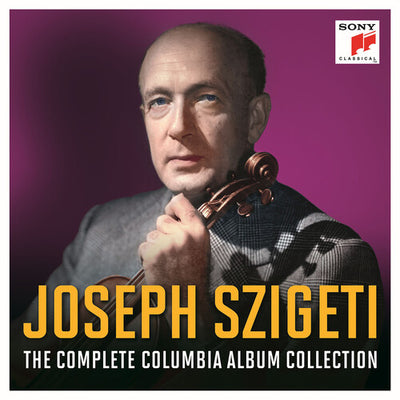
Joseph Szigeti: Complete Columbia Album Collection
Sony Masterworks · Apr 202117 discsCD$59.98$29.97 -

-

-

-

-

-

-

-

-

-

-

-

-

-

-

-

-

-

-

-

-

-

-

-

-


SONATA XIII MUSIC FOR MARCEL


zeit(t)räume


VOICES DEEP WITHIN


Hanson: Merry Mount / Schwarz, Flanigan, Macneil, Et Al
In 1932 Nathaniel Hawthorne’s novella ‘The Maypole of Merry Mount’ became the subject of a published poem by Richard Stokes. The poem caught the attention of the Nebraskan composer Howard Hanson who at that time had two distinctively romantic symphonies to his name. He had completed his signature work - Symphony No. 2 Romantic - only two years earlier and suggestions of that work can be heard in the grandiloquent love music of the resulting opera.
In this opera the sensual delights and torments of puritan Pastor Wrestling Bradford are played out against the backdrop of a New England community in the 1600s. A ship arrives from England with a contingent of dissolute Cavaliers. With them is the beautiful Lady Marigold Sandys who becomes the centre of Bradford’s obsession. On Merry Mount, with the maypole at the centre of the open-air dancing ground, Sandys is to be married to Gower Lackland. Bradford intervenes and carries her off. Finally alone with her Bradford unveils his love for Marigold. Lackland appears, there is struggle and Lackland is killed by Bradford. Act II scene 3 is a vision of hell but because this is in the similitude of Bradford’s dream it is an erotic vision in which amid the sensuality he replays his killing of Gower who appears as Lucifer. Bradford wakes as the RedIndians - who have been treated abysmally throughout the opera – sack the village and begin to kill and scalp the setters. The village burns as Bradford and Sandys return. The settlers put the Indians to flight but Bradford, conscious of the condemnation awaiting Marigold and himself, sweeps her up into his arms and strides into the furnace flames of his blazing church – a suitably Puccinian end to a superheated opera.
No wonder the subject appealed so strongly to Hanson. Harking back to the First Symphony the mood is brooding and fiercely devotional. This couples well with the Old Testament ferocity of the words. Early on in the first act the choral writing ascends to typically long-breathed nobility which is wonderfully contrasted with baritonal string writing. The Sibelian element is also present. Listen to the Pohjolan harp underpinning at 7:20 on tr. 2 for the women's voices. Attenmd also to the stertorous stentor of the horns on tr. 3 1:23. Schwarz gives Hanson's opera the dolcissima it clamantly demands and receives from orchestra and chorus, from Bradford and from the delightfully named Plentiful Tewke. Listen to Flanigan’s limning of the melodic pulse in tr. 7 when she is alone with Zeller’s Bradford. The rapturous romantic cantilena of Bradford and Lady Marigold Sandys in tr. 12 is positively symphonic in its stride. The hymnal and romantic meet in tense adversity - sacred and profane. It’s a potent mix. This contributes to the Mussorgskian glowering choral grandeur of end of act I. It is excitable and noble writing in line with Ireland’s These Things Shall Be and Hanson’s own masterwork Lament of Beowulf. At the end of each Act – thankfully not each scene - we are reminded by the applause that this is a recording of a live event. There is the occasional and rare cough as at start of tr. 4. CD1. In Act II we encounter playful zephyrs with these breezy gestures developing into a full-blown Borodin-like climax preceded by jazzy syncopations. The clapping rhythmic song rises to Prince Igor abandon. The Merry Mount scene of the wedding of Lady Marigold and Gower is carefully set but the Puritans enter and brutally end the merrymaking. The innocent maypole dances will be familiar if you know The Merry Mount suite from its many versions. Bradford's dream includes the most atmospheric of the music. In tr. 11 aggressively edgy rhythmic material is emphasised and accented by the brass with more ruthlessness than lilt - more hysteria than loving kindness. This is the Hanson equivalent of Night on the Bare Mountain. Scene 2 of Act III has it all: the brutality of the Indian attack and its repulse. The villagers turn against Lady Marigold and superstitiously blame her for the destruction. Bradford is tormented by passion and guilt and the music echoes this in climactic Puccinian ascent as he strides with the hapless Lady Marigold into the flames of the church.
Presentational issues: The two discs are in a single width case. Sadly there is no libretto. There's no Naxos site for downloading the libretto. We do get Keith Anderson's meticulously detailed synopsis which is pretty good. This keys in with the detailed tracking - 12 for CD1 and 19 for CD2.
It is a surprise it has not made more headway in opera houses. As it is it remains in the same category as Sessions Montezuma. Sure it is weakened by an excessive number of characters and generally by its jejune rocking horse name. However Hanson's singing and lyrical impulse is heard at full stretch in this opera. This splendidly representative red-blooded recording should win the work new admirers.
-- Rob Barnett, Musicweb International, June 2007


Isang Yun: Three Late Works / Park, Vänskä, Seoul Philharmonic
At the end of a career spent between his native Korea and Germany, during which he produced works that span the musical traditions of both countries, Isang Yun expressed a wish to limit himself ‘to what is substantial, in order to transmit more peace, more goodness, more purity and warmth into this world’.
With Silla (1992) the composer pays tribute to the origins of Korean culture and philosophy, to the court music introduced from China, and to the period when Korea’s political unity was established (676–935 AD). Describing its mood, Yun provided such keywords as ‘nocturnal, festive…mirthful but also melancholy’. From the same year, Violin Concerto III was composed after a stay in hospital, and Yun once described it as a birthday present to himself. At the age of 75 he no longer felt the need to take contemporary currents, aesthetic trends or technical restraints into consideration. The work holds in store a wealth of musical occurrences that could perhaps be deciphered in the context of its composers own life, and is here performed by the young South Korean violinist Sueye Park. Closing the disc is Chamber Symphony No. 1 from 1987, a work in one movement but with three distinct sections. In it, Yun combines instruments that forge changing musical alliances while engaging in rivalry or complementing each other. The mood is evocative of an, at times, animated conversation.
REVIEW:
This is a superb disc of wonderfully expressive, thoroughly accessible music, and is immensely welcome for several reasons. Firstly, for turning a spotlight on the music of the composer’s last decade, which includes some of his most powerfully communicative compositions. Secondly, it is heartwarming to hear the late flowering of a composer of utterly assured compositional expertise, writing the music that flowed spontaneously out of him from a situation of creative and personal freedom – not complacency, but with nothing to prove, no particular school or doctrine to follow – after a lifetime of personal and musical turmoil and searching re-invention...The final race to the finish [of the Chamber Symphony] is as exciting and robust as anything in the Romantic literature.
-- Records International


Monteverdi Edition
This substantial set dedicated to the vocal music of Claudio Monteverdi (1567–1643) features the great cycle undertaken (to date) by Krijn Koetsveld and the singers of Le Nuove Musiche: all nine books of madrigals, the music in Monteverdi collections such as the Selva Morale e Spirituale (1641), the posthumous Messa a quattro voci ed salmi (1650), and the individual works by Monteverdi compiled in the collections of others, the so-called Fragments. To this is joined the cycle of operas directed by Sergio Vartolo and sung by casts of Italian early music specialists, including the first recording of the five-act version of Il ritorno d’Ulisse in patria.
These thoroughly researched, historically informed interpretations demonstrate Monteverdi’s pioneering and transformative role in the emergence and development of staged, dramatic vocal music. Also featured are the grand Vespers – sacred music in the Gregorian plainchant tradition but on an operatic scale – in a fantastic recording with fine Italian soloists and authentic period instruments including the early brass of La Pifarescha. Federico Bardazzi and Ensemble Felice make scrupulous interpretative decisions about the order of movements, interpolating the choral motets within the prescribed sequence of psalms to great effect. Finally, there are Monteverdi’s youthful three-part canzonettas, written when the composer was 17. They are rather simpler than the madrigals, both to sing and to appreciate, but their musical worth is amply demonstrated by the largely female voices of Armoniosoincanto joined by a mixed period-instrument ensemble of flutes, violas, theorbo and harpsichord. They impart just the right light-hearted mood and dramatic impact to the playful, folkloric secular strophic poetry.
CONTENTS:


Homilius: Complete Organ Chorales


Parry: 12 Sets of English Lyrics, Vol. 3


The 18th Century Symphony - Kraus: Symphonies Vol 3
Though the C-sharp minor and E minor works that open and close this program fully reflect the tastes and semantics of their era, the Symphony in C minor, subtitled "Symphonie funèbre", is an astonishing discovery. Written in April, 1792, following the assassination of Gustav III (the event inspired operas by Verdi and Auber and its political repercussions were felt throughout Europe), this is one of the most extraordinary musical valedictions to pre-date Beethoven's Eroica. All four movements are somber and slow-moving, and the use of timpani, solemn brass, and muted strings seem uncomfortably alien to a work of the period. This is an exceptionally fine account; Sundkvist's orchestra plays magnificently under his watchful direction, and the solo cello and horn in the chorale section of the finale sound suitably eloquent.
This disc also includes Kraus’ Overture in D minor (according to Haydn's friend Fredrik Silverstolpe, Swedish ambassador to Vienna, it was performed by mixed wind band at Good Friday services in Stockholm for many years) in its original instrumentation, the outcome of detailed reconstruction of Kraus' original manuscripts. Another surprise is the C # minor 'Sinfonia da camera'; the second section of its minuet is simply the first part played backwards (a trick Haydn himself tried on occasion)! As with previous releases, the Swedish Chamber Orchestra and Sundkvist, offer spirited and polished orchestral playing and a bright-well-balanced recording. Highly recommended.
--Michael Jameson, ClassicsToday.com


SACRIFICIAL CODE


The Decline and Fall of the Roman Empire, Vol. 5 (Unabridged


Joseph Szigeti: Complete Columbia Album Collection
Sony Classical is pleased to announce the release of a 17-CD box set collecting the recordings made between 1940 and 1956 for American Columbia by the renowned Hungarian violinist Joseph Szigeti.
Szigeti had a remarkable career. Born in 1892 in Budapest, where he studied with Jenő Hubay, one of most celebrated virtuosos and teachers of that golden era of violin playing, he was praised by the iconic German violinist Joseph Joachim at his Berlin debut in 1905; lived in London for several years following his acclaimed 1907 debut and played chamber music with, among others, Myra Hess and Ferruccio Busoni; was a frequent visitor after the war to the Soviet Union, where he introduced Prokofiev’s First Violin Concerto; made his triumphant American debut at Carnegie Hall under Stokowski in 1925; toured the world during the 1930s before finally settling in the US in 1940.
It was in that year that Szigeti renewed his friendship with fellow Hungarian émigré Béla Bartók, and in April the two gave a now-legendary recital in Washington which featured Bartók’s First Violin Rhapsody of 1928 – a work dedicated to and premiered by Szigeti in Europe. In May 1940, Columbia recorded their interpretation of this “vehicle for Szigeti’s biting and wholly magnificent fiddling” (MusicWeb International) in New York. That performance appears here for the first time on CD, along with another important work by Bartók, the classic first recording of his Contrasts for clarinet, violin and piano, written for and performed with Szigeti and Benny Goodman.
The rest of the new collection displays many more treasures of Szigeti’s passionate dedication to chamber music: in Bach, Handel, Tartini, Mozart, Beethoven, Schubert, Brahms, Dvořák, Debussy, Ravel, Bloch, Busoni, Prokofiev, Stravinsky and Henry Cowell, collaborating with such artists as Andor Foldes – another Hungarian émigré – as well as with Mieczyslaw Horzowski, Myra Hess, Pablo Casals and Igor Stravinsky.
There are, of course, major orchestral works represented in the new Szigeti edition, including two towering concertos in D major – the Brahms, recorded in 1945 with Eugene Ormandy conducting the Philadelphia Orchestra, and the Beethoven, recorded in 1947 with Bruno Walter and the New York Philharmonic (“an account of impassioned grandeur” – MusicWeb International) – along with Busoni’s early Violin Concerto in D major, recorded in 1954 with Thomas Sherman conducting the Little Orchestra Society. Szigeti’s numerous Bach concerto recordings for Columbia are here as well, conducted by Casals, Fritz Stiedry and George Szell.
As Nathan Milstein, one of his great colleagues, said in a touching tribute to Szigeti, who died in 1973: “He was an incredibly cultured musician. Actually, his talent grew out of his culture. … I always admired him, and he was respected by musicians.” In his late years, Joseph Szigeti finally got the appreciation he deserved from the general public as well. Sony Classical’s new collection his Columbia recordings, many never before released on CD at Sony Classical, can only further enhance that appreciation.
REVIEWS:
Joseph Szigeti (1892-1973) was the violinistic equivalent of a “kunst diva”, just as Gidon Kremer is today. He never had a particularly beautiful tone, while his bowing and intonation grew less dependable with age. Yet Szigeti never put a wrong musical foot forward. His phrasing communicated form, character, architecture, and astute harmonic awareness, with musical considerations always taking precedence over physical expediency.
Sony/BMG’s 17-CD collection of Szigeti’s complete Columbia Masterworks recordings stands out for exemplary remasterings that stem from the best possible source material. His intense yet thoughtful collaborations with Mieczyslaw Horszowski in Beethoven’s Sonatas Nos. 1, 5, 6, and 10 have never sounded so full-bodied and detailed as they do here. The same goes for the 1947 Beethoven Concerto, where the New York Philharmonic turns in firm and insightfully aligned playing under Bruno Walter’s direction. It contrasts to the conductor’s relatively casual and deferential backing in Szigeti’s 1932 recording, which, however, finds Szigeti on far better form.
Rehearing Szigeti’s 1949 Bach Sonata No. 3 in C major for violin solo reminded me just how much more fluent and controlled this performance is in comparison to the violinist’s relatively tenuous Vanguard remake. Likewise, his masterful 1940 account of the D minor concerto based on Bach’s keyboard concerto BWV 1052 is technically, musically, and sonically superior to the bloated 1950 reading under Pablo Casals’ direction. Szigeti’s Casals Festival contributions are admittedly uneven.
His collaborations with Béla Bartók, Igor Stravinsky, and Henry Cowell are both historically important and musically illuminating. Somehow the older Szigeti’s wiry tone imparts welcome character and tension to sonatas by Hindemith, Ravel, and Busoni, as well as the rarely heard Prokofiev solo sonata and Busoni concerto. It must be said, though, that the latter’s final scherzando-like passages are heavy going for the veteran violinist, as are the Busoni sonata’s overextended fugal sequences.
Listeners expecting suaveness and elegance in Brahms’ G major Op. 78 and D minor Op. 108 sonatas with Horszowski may wince at Szigeti’s tremulous and effortful execution. Still, he makes every note count, and the aching fragility that emerges from Op. 78’s outer movements and Op. 108’s deliberately unfolding third movement compels my undivided attention. Yet this Brahms D minor pales next to the power and authority of Szigeti’s great 78 rpm edition with pianist Egon Petri. As for the short encore-type pieces favored in the shellac era, Szigeti plays them dutifully rather than lovingly; he wasn’t a charmer like Kreisler, Elman, Milstein, or Ricci. Or Heifetz, for that matter.
The booklet includes full discographical data, an informative essay by Tully Potter, and Szigeti’s own notes for a 1970 Japanese reissue of his Schubert recordings. Even if just half of this collection represents Szigeti at his best, Sony/BMG’s comprehensive and meticulous production values deserve the highest accolades. In the meantime, a complete edition of Szigeti’s pre-war European 78s is long overdue.
-- ClassicsToday.com (Jed Distler)
The 31 works, from sonatas to chamber works to concertos, span Bach and Beethoven to Debussy, Ravel, Busoni and Henry Cowell. Bartók is pianist in his own Rhapsody No 1 for Violin and Piano. All the Brahms, including the Trio No 2 in C major with Hess and Casals, is to treasure. Szigeti plays Dvořák with grace and melancholy, and gives bite and attack to Stravinsky. The style may be redolent of another era, yet still this playing speaks to us.
– Guardian (UK)
This is a quite wonderful set, one of the highlights being an all-Busoni disc, the Second Sonata with Mieczysπaw Horszowski and the Violin Concerto with the Little Orchestra Society under Thomas Sherman. No one listening could fail to grasp the profound level of Szigeti's musical understanding.
– Gramophone
SET CONTENTS
DISC 1:
Bartók: Violin Rhapsody No. 1, Sz.87 (Remastered)
Bartók: Contrasts for Clarinet, Violin and Piano, Sz.111
Bloch: Three Pictures of Chassidic Life for Violin and Piano (Remastered)
Milhaud (arr. Lévy): Saudades do Brasil, Op. 67: No. 9, Sumare (Remastered)
Falla (arr. Levy): El Sombrero de Tres Picos, Parte I, Danza de la molinera (Remastered)
Mozart: Divertimento No. 15 in B-Flat Major, K. 287, "2. Lodronsche Nachtmusik" (Remastered)
DISC 2:
Mussorgsky-Rachmaninoff: Sorochintsy Fair, Act III: No. 5, Gopak (Remastered)
Dvorák (arr. Kreisler): Slavonic Dance in E Minor, Op. 46, No. 2 (Arr. in G Minor) (Remastered)
Dvorák (arr. Kreisler): Slavonic Dance No. 3 in A-Flat Major, Op. 46, No. 3 (Arr. in E Minor) (Remastered)
Hubay: Scènes de la Csárda No.4, Op. 32, "Hejre Kati", I. Lento ma non troppo. Allegro moderato (Remastered)
Hubay: Scènes de la Csárda No.4, Op. 32, "Hejre Kati", II. Allegro molto (Remastered)
Kodály (arr. Szigeti): Háry János Suite, IZK 26: V. Intermezzo (Remastered)
Brahms: 21 Hungarian Dances for Orchestra, WoO 1: No. 5 in G Minor (Remastered)
Debussy: Violin Sonata No.3 in G Minor, L. 140 (Remastered)
Hubay: The Zephyr, Op. 30, No. 5 (Remastered)
Schubert, Francois: Bagatelle Op. 13, No. 9, "Die Biene" (Remastered)
Stravinsky: Duo Concertant for Violin and Piano
Stravinsky: Pastorale, Song without Words for Violin & Woodwind Quartet
Stravinsky: Russian Maiden's Song
DISC 3:
Beethoven (Cadenza: Joseph Joachim): Violin Concerto in D Major, Op. 61
DISC 4:
Brahms: Violin Concerto in D Major, Op. 77
Brahms: Violin Sonata No.3 in D Minor, Op.108: II. Adagio
DISC 5:
Beethoven: Violin Sonata No.1 in D Major, Op. 12, No. 1 (Remastered)
Schubert: Violin Sonata in D Major, D.384
Schubert (arr. Friedberg): Piano Sonata No.17 in D Major, D.850: IV. Rondo. Allegretto moderato (Remastered)
Beethoven: Violin Sonata No.7 in C Minor, Op. 30, No. 2 (Remastered)
DISC 6:
Prokofiev: Violin Sonata No.1 in F Minor, Op. 80 (Remastered)
Prokofiev: Violin Sonata No. 2 in D Major, Op. 94bis (Remastered)
DISC 7:
Bach, J.S.: Violin Sonata No. 3 in C Major, BWV 1005
Bach, J.S. (arr. Reitz): Keyboard Concerto No. 1 in D Minor, BWV 1052
DISC 8:
Schubert: Fantaisie for Piano & Violin in C Major, Op.Posth. 159, D. 934
Corelli (arr. H. Leonard): Violin Sonata in D Minor, Op.5 No.12 "La Folia" (Variations Serieuses)
Debussy (arr. Roelens): Suite bergamasque, L. 75: No. 3. Clair de lune
Lalo (arr. Szigeti): Aubade from "Le Roi d'Ys" (Act III)
Tchaikovsky: 6 Pieces, Op. 51: No. 6, Valse sentimentale
Bach, J.S. (arr. Szigeti): Violin Partita No.3 in E Major, BWV 1006: VI. Bourrée (Remastered)
DISC 9:
Bach, J.S.: Concerto for Flute, Violin and Keyboard in A Minor, BWV 1044 (Remastered)
Bach, J.S.: Violin Concerto No. 1 in D Minor, (arr. BWV 1052/1056) (Remastered)
Bach, J.S.: Brandenburg Concerto No. 5 in D Major, BWV 1050
DISC 10:
Schubert: Rondo in B Minor for Piano and Violin, D.895 (Op.70) "Rondeau brillant"
Beethoven: Violin Sonata No.10 in G Major, Op. 96 (Remastered)
Schubert: Violin Sonata in A Major, Op. 162. D. 574 "Grand Duo" (Remastered)
DISC 11:
Brahms: Piano Quartet No. 3 in C Minor, Op. 60
Brahms: Piano Trio No. 2 in C Major Op. 87
DISC 12:
Cowell: Sonata No. 1 for Violin and Piano (1945) (Remastered)
Shapero: Sonata for Piano Four Hands (1941) (Remastered) (Harold Shapero, piano; Leo Smit, piano)
Cowell: Celestial Vision: How Old Is Song? (Remastered)
DISC 13:
Beethoven: Violin Sonata No.5 in F Major, Op. 24 "Spring"
Beethoven: Violin Sonata No. 6 in A Major, Op. 30, No. 1
DISC 14:
Bach, J.S. (arr. Szigeti): Violin Concerto in G Minor, BWV 1056 (Remastered)
Handel: Violin Sonata in D Major, HWV 371 (Remastered)
Tartini (Cadenzas: Szigeti): Violin Concerto in D Minor, D. 45 (Remastered)
Tartini: Violin Sonata in G Major, B. G19 (Remastered)
DISC 15:
Ravel: Violin Sonata No.2 in G Major, M. 77
Hindemith: Violin Sonata in E Major (1939)
Prokofiev: Sonata for Solo Violin in D Major, Op. 115 (Remastered)
Prokofiev: Five Melodies for Violin and Piano, Op. 35bis (Remastered)
DISC 16:
Busoni: Violin Concerto, Op.35a, BV 243
Busoni: Violin Sonata No.2, Op.36a, BV 244
DISC 17:
Brahms: Violin Sonata No.1 in G Major, Op. 78 "Regen" (Remastered)
Brahms: Violin Sonata No.3 in D Minor, Op.108 (Remastered)

The Orphans & Poe


Lully & Campistron: Acis Et Galatee [DVD Video]


Verdi: Otello / Antonenko, Stoyanova, Muti, Chicago
VERDI Otello • Riccardo Muti, cond; Aleksandrs Antonenko ( Otello ); Krassimira Stoyanova ( Desdemona ); Carlo Guelfi ( Iago ); Juan Francisco Gatell ( Cassio ); Barbara Di Castri ( Emilia ); Eric Owens ( Lodovico ); Chicago SO & Ch • CSO RESOUND 9011301 (2 SACDs: 135:57 Text and Translation)
Riccardo Muti’s Otello derives from three concert performances given at Chicago’s Orchestra Hall in 2011. The recording combines the excitement of a live performance with the virtues of an excellently engineered studio effort that brilliantly captures orchestral and choral detail within a huge dynamic range. CSO Resound provides a booklet that includes essays and a libretto, and there’s no applause or audience sound.
Muti’s masterful conducting of Verdi’s greatest tragic opera would make this an important Otello to hear even if it weren’t for its generally strong vocal performances. In the first act’s storm and sequence of choruses, Muti’s slightly restrained tempos resemble Fürtwangler’s more than the forward momentum of Kleiber or Toscanini, but he generates taut excitement through control of dynamics, precise rhythm, and steady, logical pacing. The Chicago Symphony, which performed the opera under Solti, plays wonderfully well. Throughout the performance, Muti has the orchestra make subtle differences in articulation from what one traditionally hears.
A unique feature of this recording is the inclusion of a rarely heard revision of the busy ensemble that closes act III that Verdi made for a Paris production in 1894, seven years after Otello ’s La Scala premiere. The last operatic music that Verdi composed, its musical and dramatic quality is equal to that of the more familiar concertato , but its increased clarity allows Iago’s asides to be heard more clearly.
Aleksandrs Antonenko sang Otello with Muti conducting (with a different Iago and Desdemona) in Salzburg in 2008, and judging from the excerpts that I’ve seen of that performance, he improved significantly by the time of the Chicago performances. He has the right (and rare) heroic voice for Otello, and he sings musically and technically well, with comfortable-sounding Italian in a performance that begins strongly, but gains conviction in the two final acts. While he doesn’t yet imprint the role with the kind of distinctive personality that its greatest interpreters have done, singing and acting Otello tends to be a career-long process, and Antonenko sings the part far better than Cura, Galouzine, Botha, or Heppner, to name some other tenors who have undertaken the role, A.D. (After Domingo). It remains to be seen whether Jonas Kaufmann can summon the vocal power to sing the part live, but the two Otello excerpts on his recent Verdi recital are a very promising sign that perhaps, not too long from now, two castable Otellos (Kaufmann and Antonenko) may walk the earth.
The wobble in baritone Carlo Guelfi’s delivery of Iago’s first line, “È infranto l’artimon,” warns of vocal trouble, and it turns out that he lacks the required power and the ability to sing sustained notes in the drinking song, and more importantly, in the Credo. Actually, Guelfi does well with the lighter, insinuating side of of Iago’s music, such as the dialogue with Roderigo in act I, and much of act III. There’s pleasure to be had in hearing an Italian baritone in the role, but a successful Iago must be able to really sing, not just do well with role’s parlando aspects. Many a worthy Otello recording has been undermined by odd casting of Iago; I’m thinking of Fischer-Dieskau, Schöffler, Glossop, and Leiferkus. Then there are baritones whose voices are right, but whose characterizations are insufficient: Protti, Capuccilli, even Milnes. Giuseppe Valdengo, in Toscanini’s recording, demonstrates what’s possible in a performance that’s both magnificently characterized and beautifully sung.
An experienced Desdemona, Krassimira Stoyanova gives a strong performance, singing with focused, lovely tone, if not achieving the poignancy of the greatest Desdemonas in act IV: Tebaldi, Freni, de los Angeles. The smaller parts are all efficiently performed, with no particular singer standing out.
Defining what makes a great performance of Otello is straightforward. The opera requires an authoritative, exciting conductor, plus three perfectly cast singers. Good sound is a bonus, but not essential. Del Monaco and Domingo are each essential Otellos to hear, but I think of their many performances as a composite and wouldn’t single out any one particular recording. I’m particularly fond of the espressivo quality that Ramon Vinay and Jon Vickers bring to the role, and recommend the Met video with Vickers, MacNeil, and Scotto, conducted by Levine. Toscanini’s recording is thrilling, though not expansive enough in some of the opera’s lyrical music. I enjoy Solti’s first recording, with the under-appreciated Otello of Carlo Cossuta and beautiful singing by Margaret Price. But the greatest recorded Otello that I know—indeed one of the greatest of all preserved operatic performances—is the 1938 Met broadcast, conducted not only with manic energy, but with uncommon flexibility and imagination, by Ettore Panizza. Giovanni Martinelli’s splendid Otello and Elizabeth Rethberg’s Desdemona are the important interpretations of their day, and Lawrence Tibbett’s is the greatest recorded portrayal of Iago.
FANFARE: Paul Orgel


Helper and Protector


SIENA TAPES


Live at Blue Llama


The Symphonic Euphonium, Vol. 2
David Childs is joined by the BBC Philharmonic and Ben Gernon for this second volume of Euphonium concertos, featuring music by Vaughan Williams, Mealor, Gregson and Ball. King Edward III once said: "If you want to train a longbowman, start with his grandfather." This adage holds just as true for British euphonium soloist David Childs, born in 1981, to a family whose name had been synonymous with brass for the last two generations. His grandfather John was a well-respected euphonium player from the Welsh Valleys who inspired his sons, Robert & Nicholas to take up euphonium. Robert began teaching his son David from an early age and in recent years David has emerged as one of the finest brass soloists of his generation. In the year 2000 he broke new ground for the euphonium becoming the first euphonium soloist to win the brass final of the televised 'BBC Young Musician of the Year’ which led to David’s highly acclaimed première performance of Philip Wilby’s Concerto for Euphonium with the BBC Philharmonic under Yan Pascal Totelier. In the same year David was awarded the coveted ‘Euphonium Player of the Year’ title, a title he won again in 2004 and still holds today. Since that time David has been instrumental in raising the euphonium’s profile in the classical world of music and has not ceased to wow audiences with his astonishing technique, extrovert musicality and engaging stage presence.


Tchaikovsky: Symphony No 3 / Pletnev, Russian NO
Subjected to the scrutiny of others, not all of Pletnev’s releases in this new cycle have received unstinting praise. Colleague Boyd Pomeroy wondered if the conductor’s Fourth wasn’t too refined in a Karajanesque manner, while Peter J. Rabinowitz generally approved of Pletnev’s Fifth but noted some balance problems and a trace of the old Soviet vibrato. And even yours truly, after waxing ecstatic over Pletnev’s “Pathétique,” was not entirely convinced by the conductor’s follow-up “Winter Daydreams” (No. 1) in 35:6.
With this No. 3, we have the final curtain call for Pletnev’s PentaTone cycle and, as cycles go, I’d have to give this one an overall outstanding rating. Personally, I can’t get too excited about Tchaikovsky’s Third Symphony. As I said in my review of Pletnev’s Second, between the Second and Third, it’s a tossup as to which is the weakest of Tchaikovsky’s six numbered symphonies. The Third Symphony was composed in fairly short order between June and August 1875, and there’s little evidence that Tchaikovsky fretted over it or kept tweaking it as he did with his First Symphony. For the neurotic and generally insecure composer, it seems that he was satisfied with the completed score and called it done. His only complaint was that the first performance could have gone better had there been more rehearsals. The work is unique among Tchaikovsky’s symphonies in that it’s the only one in five movements, and, unless one counts the composer’s abandoned Seventh Symphony in E?-Major, it’s the only one among the standard six that’s in a major key. It seems I’m not alone in my opinion of the work. Critical commentary has been mixed at best. Musicologist David Brown rated the Third, “the most inconsistent and least satisfactory of the symphonies and badly flawed” ( Tchaikovsky: The Crisis Years, 1874–1878 , and Tchaikovsky: The Final Years, 1855–1893 ). And to that I would add the least consequential.
If the score is one you find appealing, I can think of no better proponent of it than Pletnev. As with all previous releases in this cycle, Pletnev has the Russian National Orchestra playing in top form, and he finds many felicities in the piece, like the coquettish wind asides in the Alla tedesca movement that delight the ear and give Tchaikovsky’s note-spinning a serenade-like gracefulness.
The Coronation March that fills out the disc—or, to give its full title, Festival Coronation March —is one of those potboiler pieces composers are often called upon to provide for political events or ceremonies of state. In this case, the ceremony was the coronation of Tsar Alexander III in 1883. Tchaikovsky received the commission to write the piece from Moscow’s mayor—it was more of an order than it was an offer—while he was in Paris working on his opera Mazeppa , and he was royally roiled, writing to Nadezhda von Meck, “My plans have been upset by two unexpected and very burdensome tasks foisted upon me. The city of Moscow has commissioned from me a ceremonial march to be played at the festivities which are to be organized for the Sovereign at the Sokol’nikii. Hardly had I managed to reconcile myself to the thought that I must tear myself away from the opera for the march, when suddenly I received a letter from the festival committee about a cantata. Both works, especially the cantata, have to be ready very soon, a prospect which fills me with dread.” If he’d put as much time and effort into working on the assignments as he did kvetching to von Meck about them, he might have produced something more worthy of his reputation. Still, in the end, Tchaikovsky seems to have thought highly enough of his march to make a piano transcription of it. Shades of the 1812 Overture come to mind, but without the cannon, carillon, or La Marseillaise , and all condensed down to less than seven minutes. It’s not very good, but at least it’s loud.
FANFARE: Jerry Dubins


LONDON CIRCA 1760: J.C. BACH C.F. ABEL & FRIENDS


CYRUS CHESTNUT QUARTET


Refracted Resonance: Contemporary Music for Guitar


Bach: Well-Tempered Consort I / Phantasm
-----
REVIEWS:
As you would expect, the playing here is expressive while not being unidiomatic. Phrasing and the balancing of voices is a delight throughout, and this is reflected in a recording that allows the ear to follow any of Bach’s contrapuntal voices with ease. If you love the viol sound then you will relish this recording and, like me, be looking forward to future volumes.
– MusicWeb International
The most compelling reason to play Bach’s most densely wrought instrumental music on the viol is because it sounds fresh and appealing. Bach’s contrapuntal achievements sparkle in the hands of Phantasm.
– American Record Guide
