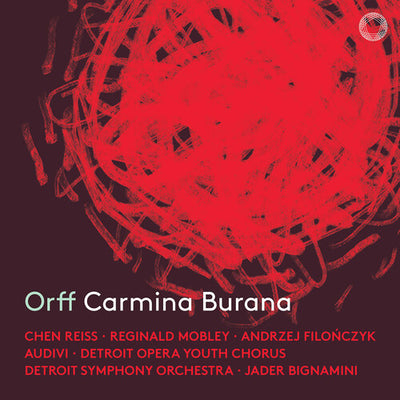
The Detroit Symphony Orchestra and it's Music Director Jader Bignamini present Carl Orff's Carmina Burana, one of the most electrifying works of the twentieth century. Drawing on thirteenth-century manuscripts from Benediktbeuern Abbey, Orff transformed the exuberant, irreverent texts of wandering scholars and rebellious clerics into a monumental scenic cantata. From the iconic opening of "O Fortuna" to the exuberant outdoor dances, tavern scenes, and courtly love interludes, the work pulses with elemental rhythms and striking orchestration, with chorus, percussion, two pianos, and celesta playing central roles. Motifs from "O Fortuna" recur throughout, linking the contrasting worlds of humour, erotic longing, and the inexorable wheel of fate. Orff balances diatonic simplicity with rhythmic ostinati, while movements such as the flute-timpani duet, castanets solo, and piano-percussion passages evoke primal energy and recall Stravinsky's Les noces. From the introspective soprano arias in "In trutina" to the sardonic baritone tavern numbers, the score alternates between joy, melancholy, and satire, culminating in the final return of "O Fortuna" to close the cycle. Following their acclaimed release of Marsalis' Blues Symphony in March 2025, the Detroit Symphony Orchestra and Jader Bignamini return to PENTATONE, reaffirming their mastery of landmark repertoire.
Preserved in three different libraries, the Marciana in Venice, the Library of the Naples Conservatory, and the State and University Library in Hamburg, the six cantatas that make up this world-premiere recording were composed by Benedetto Marcello in the early 18th century. These are thus youthful works, quite interesting for the originality of their writing, which helps us understand why their author was so highly regarded during his lifetime - even called the "prince of music" - and also by posterity, as he managed to blend his personal sensibility with lessons drawn from tradition and the influences of a life rich in cultural encounters. The compositional structure of these works - less known than his concertos and theatrical works - follows the traditional format of alternating recitatives and arias. However, this does not prevent the author from experimenting with innovative solutions, particularly in the treatment of the voice. Typical of Marcello's style is a certain inclination toward the bizarre, with the use of harmonies that can sound "estranging," sudden modulations, chromaticism, augmented sixth chords, and the melodic interval of the diminished fourth. In some passages, he even seems to anticipate the models of the "sublime" style theorized in the mid-to late 18th century.