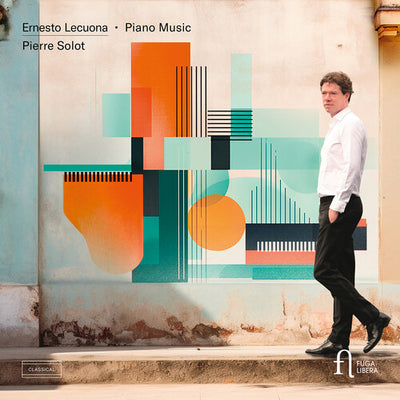
Ernesto Lecuona

Ernesto Lecuona

Composer

1895–1963. Composer in the Cuban Nationalism tradition.

Ernesto Lecuona is the most celebrated Cuban composer of the 20th century, known for blending Afro-Cuban rhythms with classical piano writing. Malagueña is his most internationally recognized work. Often grouped with Latin American contemporaries like Villa-Lobos and Piazzolla.

Signature works: Malagueña, Andalucía Suite, La Comparsa, Siboney, Suite Cubana.
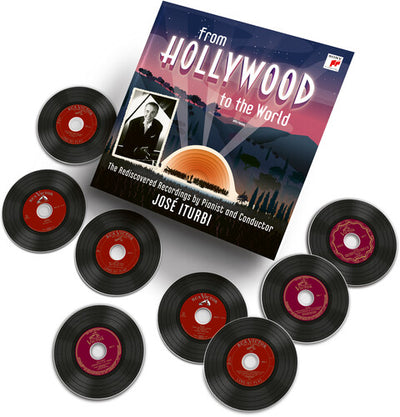
    Sony Masterworks

    The Rediscovered RCA Victor Recordings / José Iturbi

    CD · 16 discs

    $62.96 $125.98 Save 50%
    Composer
    Isaac Albeniz, Johann Sebastian Bach, Ludwig van Beethoven, Lazar Berman, Manuel Palau Boix, Emmanue
    Artist
    Jose Iturbi, Amparo Iturbi, Symphon
    Released
    Mar 03, 2023

    This collection stands as a valuable time capsule from which one comes away with a fuller understanding of Iturbi’s prominence in American wartime and postwar culture.

    The complete RCA Victor Recordings by José Iturbi from 1933 to 1953, include his piano duo recordings with sister Amparo Iturbi as well as Amparo Iturbi’s solo recordings on 16 CDs, restored and remastered from the original lacquer discs and analogue tapes using high-resolution 24 bit/192 kHz mastering technology with about 95% of the recordings appearing on CD for the first time and 23 pieces previously unreleased. As well as a new, captivating essay by Grammy-nominated singer, pianist, and music anthropologist Michael Feinstein on the life and work of José Iturbi and a photo book with previously unseen photos and facsimiles from the Iturbi Archives in Hollywood.

    There was a time when classical music was a natural part of Hollywood. From the moments with Jascha Heifetz in They Shall Have Music (1939) to the unrivaled performances of Oscar Levant and Isaac Stern in Humoresque (1946). In its Golden Era, Hollywood adorned itself with the Who's Who of classical music. Today, alongside icons such as Marylin Monroe and James Dean, the names of Leonard Bernstein, Maria Callas and Arturo Toscanini, as well as Rudolf Serkin, Joseph Szigeti, or José Iturbi were immortalized on the famous Hollywood Walk of Fame. This edition is a loving homage to Hollywood in the 1940s and 1950s, made possible through the generous support of the José Iturbi Foundation and the Hollywood Museum Board of Directors, who contributed to the lavish restoration of many previously lost unpublished recordings. The publication was also made possible by contributions of singer, pianist, and music archivist Michael Feinstein, the Ambassador for the Great American Songbook.

    REVIEW:

    During the 1940s and 1950s the “World’s Most Popular Classical Pianist” mantle fell comfortably upon José Iturbi (1895-1980). His recognition as a radio personality led to a movie career that yielded ten feature films between 1943 and 1951 where the pianist mostly starred as himself. Yet for all of Iturbi’s renown, he was hardly a poseur. He worked with Wanda Landowska in Paris, and gave Stravinsky’s Piano Rag Music its world premiere, as well as the first complete Carnegie Hall performance of Liszt’s Transcendental Etudes.

    He also conducted. When Eugene Ormandy assumed the Philadelphia Orchestra’s music directorship in 1936, his chief rival for the position was Iturbi, who wound up taking charge of the Rochester Philharmonic that same year. Once Hollywood beckoned, however, Iturbi became the brunt of intellectual critics, who basically wrote him off as a sell-out and an artistic lightweight.

    Time, of course, brings perspective, and Sony/BMG’s lavishly produced 16-CD collection containing Iturbi’s complete RCA Victor recordings invites a fairly thorough examination of the musician behind the personality, plus an opportunity to reassess a largely forgotten body of recorded work. A 188-page coffee table book contains photos in abundance, with all original-jacket artwork represented, including the most politically incorrect cover art ever to grace Dvorák’s “New World” symphony. We get complete session and release discographies, an Iturbi filmography, plus a brilliant in-depth biographical essay by Michael Feinstein, who co-produced this collection with Robert Russ.

    It’s a pity that the session discography is not cross-referenced to corresponding CD tracks, not to mention the absence of a discography by composer. This makes it difficult to navigate the contents with ease, especially in works that Iturbi recorded more than once. For example, it took some sleuthing on my part to discover that Discs 5 and 11 each contained the Liszt Liebestraum No. 3, Schumann Arabeske, Debussy Reverie, and Chopin Polonaise in A-flat Op. 53, and that the performances were not identical.

    With few notable exceptions, Iturbi’s solo recordings mostly consist of short, encore-length pieces. He’s especially at home in Spanish music: Iturbi’s accentuation, phrasing, and timing throughout Falla’s Ritual Fire Dance define perfection, while he shapes Granados’ Spanish Dance No. 2 (“Oriental’) with sensitivity and tenderness. Classical selections also stand out for Iturbi’s bracing articulation. True, the outer movements of his Mozart K. 331 and 332 sonata recordings are overly facile and insufficiently inflected when measured alongside contemporaneous Mozartean rivals like Schnabel, Gieseking, Fischer, and Haskil. Yet the sheer evenness and poised symmetry of Iturbi’s finger-work easily explains why pianists like Julius Katchen and William Kapell praised his Mozart.

    Iturbi also revels in the Haydn C major Theme and Variations’ sly wit. By contrast, introspection and sobriety characterize Iturbi’s measured unfolding of Beethoven’s Andante favori. Similar gravitas elevates Paderewski’s Minuet in G to near-masterpiece status. Iturbi’s virtuosic glitter befits his dashing Saint-Saëns Allegro appassionato more than in his glib Liszt Les jeux d’eaux à la Villa d’Este.

    Iturbi’s Chopin hits and misses. His Mazurkas lack the ardency and rhythmic snap that distinguishes a Second Scherzo that gets better as it progresses. Also note the pianist’s dotting the duple rhythms in the A-flat Polonaise’s main theme that Horowitz, Rubinstein, and Lhevinne play straight on their rival RCA versions.

    The later recordings reveal Iturbi’s pianism losing some of its erstwhile luster and subtlety, possibly exaggerated by the close microphone placement and twangy patina typical of late 1940s/early 1950s piano recordings stemming from RCA’s Hollywood recording studio. For example, the two Debussy Arabesques recorded in New York in 1939 have a supple elegance missing in their glassy-sounding 1950 Hollywood counterparts (sound clips). The blustery, hard-toned, and harshly engineered Liszt Concerto No. 1, Mendelssohn Concerto No. 1, and Beethoven Concerto No. 3 were non-starters in their day, with the piano way up in the mix, relegating the crackerjack RCA Symphony musicians to doormat status. Still, the Mendelssohn’s outer movements feature some of Iturbi’s most scintillating pianism on disc.

    While Iturbi’s two-piano distribution of the solo part of Gershwin’s Rhapsody in Blue is surprisingly effective and discreet, he and his pianist sister Amparo turn in a crass, alternately whipped up, and sappily sentimentalized interpretation. Works of Mozart, Debussy, and Milhaud better represent their dazzling ensemble rapport, but again, the boxy, claustrophobic engineering undermines their efforts. Similar dryness typifies Amparo’s idiomatic solo recordings of Spanish repertoire. Still, it’s nice to have her rare 1954 Granados Goyescas back in circulation, although it pales alongside Alicia de Larrocha’s far more nuanced and texturally differentiated interpretation from the following year.

    The collection also showcases Iturbi’s work on the podium. His 1940 Rochester Philharmonic versions of the Mozart D minor and Beethoven C minor concertos are more judiciously balanced than his orchestrally superior 1952 RCA Victor Symphony remakes. Each contains lively and engaging outer movements that flank wooden, hard-toned slow movements.

    Iturbi’s 1951 Liszt Hungarian Fantasy with the Valencia Symphony Orchestra has a snarling rawness that differs from the sheen and suavity of the 1952 Arrau/Ormandy and late 1940s Solomon and Moiseiwitsch editions. As with many second-tier American orchestras in the 1940s, the Rochester Philharmonic boasted strong strings but less proficient winds and brass. Consequently, Iturbi’s Mendelssohn “Scottish” Symphony took a back seat to Mitropoulos’ powerful 1941 Minneapolis version, while the aforementioned Dvorák New World lacked the Szell/Czech Philharmonic recording’s flavorful ensemble discipline.

    The prize of Iturbi’s Rochester discography is a snazzy and brilliantly turned-out Morton Gould “Latin American” Symphonette, which is surprisingly well-engineered for its 1944 vintage. Another delightful curiosity is William J. Reddick’s Espanharlem, a brief orchestral work whose quick changing moods and jazzy underpinnings wouldn’t be out of place in a Carl Stalling Bugs Bunny cartoon soundtrack. There’s also a previously unpublished recording conducted by Werner Janssen of Iturbi’s orchestral composition Soliloquy. The piece amounts to 14 and a half minutes’ worth of rambling 1940s film music clichés filtered through third-rate Lecuona. Why Iturbi is credited as piano soloist when there’s no piano to be heard is anyone’s guess!

    Notwithstanding the artistic unevenness of Iturbi’s recorded output he always had the self-respect to keep his technique in world-class repair, unlike his rival classical pianist turned media personality Oscar Levant. Still, music lovers who don’t want to go the whole hog, so to speak, are directed to APR’s 2016 three-disc solo Iturbi compilation. I also hope to see Iturbi’s post-cinema EMI recordings restored. However, beyond purely musical considerations, Sony/BMG’s collection stands as a valuable time capsule from which one comes away with a fuller understanding of Iturbi’s prominence in American wartime and postwar culture.

    -- ClassicsToday.com (Jed Distler)

    CONTENTS:

      • Mozart: Concerto for 2 Pianos and Orchestra No. 10 in E flat, K365
      • Mozart: Piano Concerto No. 20 in D minor, K466
      • Liszt: Piano Concerto No. 1 in E flat major, S124
      • Mendelssohn: Piano Concerto No. 1 in G minor, Op. 25
      • Beethoven: Piano Concerto No. 3 in C minor, Op. 37
      • Gershwin: Rhapsody in Blue
      • Chambers, J C: All American
      • Gould, M: Symphonette No. 4 'Latin-American'
      • Reddick: Espanharlem
      • Iturbi: Soliloquy
      • Mozart: Sonata for 2 pianos in D major, K448
      • Chabrier: Trois Valses Romantiques
      • Iturbi: Spanish Dance
      • Debussy: En blanc et noir
      • Milhaud: Scaramouche, suite for two pianos, Op. 165b
      • Nepomuceno: La siesta
      • Infante: Guadalquivir
      • Infante: Sevillana
      • Debussy: Suite bergamasque: Clair de lune
      • Liszt: Liebestraum, S541 No. 3 (Nocturne in A flat major)
      • Debussy: Rêverie
      • Beethoven: Für Elise (Bagatelle in A minor, WoO59)
      • Schumann: Arabeske in C major, Op. 18
      • Debussy: Deux arabesques, L. 66
      • Falla: Dance of Terror (from El amor brujo)
      • Rachmaninoff: Prelude Op. 3 No. 2 in C sharp minor
      • Liszt: Les jeux d'eaux à la Villa d'Este, S. 163 No. 4)
      • Falla: Ritual Fire Dance (from El amor brujo)
      • Saint-Saëns: Allegro appassionato, Op. 70
      • Albéniz: Malagueña (No. 3 from Espana, Op. 165)
      • Chopin: Étude Op. 10 No. 12 in C minor ‘Revolutionary'
      • Chopin: Polonaise No. 6 in A flat major, Op. 53 'Héroïque'
      • Debussy: Estampe No. 3 - Jardins sous la pluie
      • Schumann: Romance in F sharp major, Op. 28 No. 2
      • Chopin: Prelude Op. 28 No. 9 in E major
      • Chopin: Prelude Op. 28 No. 10 in C sharp minor
      • Chopin: Prelude Op. 28 No. 15 in D flat major ‘Raindrop'
      • Chopin: Nocturne No. 9 in B major, Op. 32 No. 1
      • López-Chavarri: El viejo castillo moro
      • Iturbi: Cancion de cuna
      • Granados: Orientale (No. 2 from 12 Danzas españolas)
      • Chopin: Mazurka No. 6 in A minor, Op. 7 No. 2
      • Chopin: Mazurka No. 7 in F minor, Op. 7 No. 3
      • Chopin: Mazurka No. 24 in C major, Op. 33 No. 3
      • Chopin: Mazurka No. 27 in E minor, Op. 41 No. 2
      • Chopin: Mazurka No. 25 in B minor, Op. 33 No. 4
      • Chopin: Scherzo No. 2 in B flat minor, Op. 31
      • Debussy: Children's Corner
      • Ravel: Jeux d'eau
      • Guastavino: Gato
      • Mozart: Concerto for 2 Pianos and Orchestra No. 10 in E flat, K365
      • Mozart: Piano Concerto No. 20 in D minor, K466
      • Beethoven: Piano Concerto No. 3 in C minor, Op. 37
      • Gershwin: Rhapsody in Blue
      • Ravel: Pavane pour une infante défunte
      • Bach, J S: Passacaglia in C minor, BWV582
      • Mozart: Piano Sonata No. 11 in A major, K331 'Alla Turca'
      • Mozart: Piano Sonata No. 12 in F major, K332
      • Chopin: Impromptu No. 4 in C sharp minor, Op. 66 'Fantaisie-Impromptu'
      • Chopin: Waltz No. 6 in D flat major, Op. 64 No. 1 'Minute Waltz'
      • Chopin: Waltz No. 7 in C sharp minor, Op. 64 No. 2
      • Chopin: Mazurka No. 5 in B flat major, Op. 7 No. 1
      • Albéniz: Sevilla (from Suite Española, Op. 47)
      • Granados: Goyescas: Quejas ó La Maja y el Ruiseñor
      • Scarlatti, D: Keyboard Sonata K27 in B minor
      • Scarlatti, D: Keyboard Sonata K159 in C major 'La caccia'
      • Paradies: Toccata in A
      • Iturbi: Pequena danza espanola
      • Beethoven: Andante Favori in F, WoO 57
      • Albéniz: Cantos de España (5), Op. 232, No. 4
      • Lazăr, F: Piano Sonata No. 2 in F Minor, Op. 15: III Tempo di Marcia funebre
      • Saint-Saëns: Caprice arabe, Op. 96
      • Debussy: L'isle joyeuse
      • Infante: Danze andaluse (for 2 pianos): No. 2 Sentimento
      • Debussy: Deux arabesques, L. 66
      • Bach, J S: Fantasia in C minor, BWV906
      • Granados: Danza española, Op. 37 No. 10 'Melancólica'
      • Gould, M: Boogie Woogie Etude
      • Gould, M: Blues
      • Falla: Ritual Fire Dance (from El amor brujo)
      • Falla: Dance of Terror (from El amor brujo)
      • Debussy: Suite bergamasque: Clair de lune
      • Liszt: Liebestraum, S541 No. 3 (Nocturne in A flat major)
      • Chopin: Polonaise No. 6 in A flat major, Op. 53 'Héroïque'
      • Schumann: Arabeske in C major, Op. 18
      • Debussy: Rêverie
      • Haydn: Theme and Variations in C major, Hob.XVII:5
      • Paderewski: Minuet in G major, Op. 14 No. 1
      • Beethoven: Für Elise (Bagatelle in A minor, WoO59)
      • Schumann: Träumerei (from Kinderszenen, Op. 15)
      • Ravel: Pavane pour une infante défunte
      • Rachmaninoff: Humoresque in G major, Op. 10 No. 5
      • Infante: Danses andalouses
      • Tchaikovsky: The Seasons, Op. 37b: June (Barcarolle)
      • Tchaikovsky: The Seasons, Op. 37b: November (Troika)
      • Mussorgsky: Une Larme (A Tear)
      • Mendelssohn: Symphony No. 3 in A minor, Op. 56 'Scottish'
      • Dvořák: Symphony No. 9 in E minor, Op. 95 'From the New World'
      • Liszt: Hungarian Rhapsody, S244 No. 14 in F minor
      • Falla: El sombrero de tres picos: Dance of the Neighbours (Seguidillas)
      • Falla: El sombrero de tres picos: Danza del molinero (farruca)
      • Falla: El sombrero de tres picos: Final Dance (Jota)
      • Palau Boix: Marche burlesque
      • Palau Boix: Hommage a Debussy
      • Iturbi: Seguidillas
      • Cuesta: Danza valenciana in A major
      • Falla: Siete Canciones populares españolas
      • Turina: Homenaje a Lope de Vega, Op. 90: I. Cuando tan hermosa os miro
      • Granados: Danza española, Op. 37 No. 8 'Sardana'
      • Granados: Danza española, Op. 37 No. 12 'Arabesca'
      • Granados: Danza española, Op. 37 No. 9 'Romántica'
      • Turina: Mujeres Españolas, Series 1, Op. 17: 2. La andaluza sentimental
      • Turina: Mujeres Españolas, Series 1, Op. 17: 3. La morena coqueta
      • Infante: Pochades andalouses: Canto flamenco
      • Infante: ochades andalouses: Danse gitane
      • Infante: Pochades andalouses: Aniers sur la route de Seville
      • Infante: Pochades andalouses: Tientos
      • Albéniz: Granada (from Suite española No. 1, Op. 47)
      • Albéniz: Córdoba (No. 4 from Cantos de España, Op. 232)
      • Cuesta: Danza valenciana in G major
      • Lecuona: Malagueña
      • Griffes: The White Peacock
      • Infante: Guadalquivir
      • Infante: Pochades andalouses: Ritmo
      • Mozart: Sonata for 2 pianos in D major, K448: Allegro molto
      • Granados: El Pelele
      • Granados: Goyescas (piano suite)
      • Ravel: Valses nobles et sentimentales
      • Chabrier: Scherzo-valse (No. 10 from Pièces pittoresques)
      • Chabrier: Idylle (No. 6 from Pièces pittoresques)
      • Chabrier: Bourrée Fantasque
      • Schubert: Valses Sentimentales, D 779 Op. 50 (Excerpts)
      • Schubert: 12 Valses Nobles, D 969 Op. 77: selection
      • López-Chavarri: Danza de las labradoras Valencianas
      • Shostakovich: Prelude for piano, Op. 34 No. 2 in A minor
      • Shostakovich: Prelude for piano, Op. 34 No. 14 in E flat minor
      • Shostakovich: Prelude for piano, Op. 34 No. 24 in D minor
      • Fauré: Impromptu No. 3 in A flat major Op. 34
      • Mozart: Piano Sonata No. 13 in B flat major, K333
    View full page
  • The Rediscovered RCA Victor Recordings / José Iturbi
    Sale

    The Rediscovered RCA Victor Recordings / José Iturbi

    Sony Masterworks Mar 2023
    16 discs
    CD
    $125.98 $62.96
    Sono Luminus

    The Year That Never Was - Piano Music / Matei Varga

    CD · 1 disc

    $9.49 $18.99 Save 50%
    Composer
    Mily Balakirev, Ludwig van Beethoven, Frederic Chopin, George Gershwin, Ernesto Lecuona, Domenico Sc
    Artist
    Matei Varga
    Released
    Jul 08, 2022

    Matei Varga writes: “To paraphrase Tolstoy, all happy memories feel more or less the same; but the unhappy times are experienced differently by each one of us. We’ve all had some really tough weeks, which sometimes turned into months, and (with a bit of bad luck) into years… I like to think that “off” years help us grow and prepare for the beautiful things that will undoubtedly come our way (I am an optimist at heart), but living through dark times is a complicated process.

    The year 2020 was complicated indeed. The world was put on hold and we hardly remember what we did in February, or May, or September… Many suffered from isolation and the inability to socialize - and they probably prefer to think back to 2020 as a year that never happened… I, on the other hand, felt liberated by the lack of schedules, appointments and the pressure to be productive - that horrid word which is killing our souls, slowly but surely. Instead I embraced seclusion and enjoyed the time off which was forced upon us. Yes, I did miss performing in front of a live audience and traveling to beautiful places, but I found that staying home, with my piano, offered me a better view towards my inner self and a chance to experience the joy of a new discovery. That was for me the Cuban master Ernesto Lecuona…Two years later, the pandemic isn’t over and neither is the collective anxiety- but at least I can offer you this very personal recording, which I hope will take your mind away from current realities. This is music’s most phenomenal power- to bring joy when we really need it!...”

    REVIEW:

    The Year That Never Was in Romanian pianist Matei Varga’s title here is 2020; he writes of how he came to embrace the COVID-era isolation and explored the work of Ernesto Lecuona, a composer about whom he had previously known little. The output of Cuban composer Lecuona is sometimes categorized as salon music, and while it includes a few classical hits like the opening Andalucía (from the Suite española), much of his large production of some 600 works remains little explored. Here, the excerpts from the Danzas cubanas del siglo XIX and Danzas Afro-Cubanas will be worth the price of admission for Lecuona fans. He wants to expand the notion of salon music to include some of its predecessors, not only Chopin but going back as far as Domenico Scarlatti. That pandemic seems to have produced a boomlet in recordings of salon music, which is probably understandable, and Varga’s release is a novel take on the idea.

    -- AllMuic.com (James Manheim)

    View full page
  • The Year That Never Was - Piano Music / Matei Varga
    Sale

    The Year That Never Was - Piano Music / Matei Varga

    Sono Luminus Jul 2022
    1 disc
    CD
    $18.99 $9.49
    Ars Produktion

    Saudades

    SACD · 1 disc

    $21.99
    Composer
    VARIOUS
    Artist
    Roman Nosbaum
    Released
    Jan 03, 2020
    Every piece on this album by pianist Romain Nosbaum has a reference to the Portuguese word 'Saudades'. It embodies the desire for a place (Adios a Cuba, Asturias), the soul, the human being (Alma Brasiliera) or popular manifestations. The music usually has a close connection to dance and is very much connected to the human emotional world. Romain Nosbaum is an individualist among the pianists of his generation. Without airs and graces, but with modesty and passionate devotion, he is solely focused on music. Both the grand gesture and sheer brilliancy have no meaning to him - instead, his playing stands out through intelligence, subtle individuality and technical perfection. The subtlety and immediacy of his pianistics encourage Romain's repertoire, which focuses on the romantic piano literature as well as music of contemporary composers. A universal interest in 'tradition and innovation' expresses itself not only soloistically, but also through his activities as a passionate chamber musician. Thus, he regularly performs as a vocal accompanist with artists such as his sister Véronique. He is also a member of the Random Trio, which comes with the colorful instrumentation of flute, violoncello, and piano. Moreover, Romain is very involved in interdisciplinary projects such as Claude Mangen's staging of Schubert's Winterreise, Giorgio Mancini's live choreography A nima, or the musical readings of texts by Vaslav Nijinsky and Michel Houellebecq together with actor Christian Berkel and pianist Kevin Tamanini.
    View full page
  • Saudades

    Saudades

    Ars Produktion Jan 2020
    1 disc
    SACD
    $21.99
    Centaur Records

    A New Yorker: Impressions / Chang

    CD · 1 disc

    $17.99
    Composer
    VARIOUS
    Artist
    Joanne Chang
    Released
    Apr 17, 2020

    Here, pianist Joanne Chang performs a group of her favorite works. All are done from the perspective of Joanne as a New Yorker. Described for her captivating and poetic musical interpretations, Malaysian pianist, Joanne Chang has performed and taught internationally in Asia, North America, and Europe. Joanne has been featured on WQXR’s Young Artist Showcase (New York), WFMT’s Fiesta Latin America (Chicago), International Menuhin Music Academy (Switzerland), BFM’s Front Row Podcast (Kuala Lumpur), Indiana University’s Latin American Music Center (Bloomington), Sphinx Connect (Detroit), and the National Youth Orchestra of China (Beijing), among others. As a pedagogue, Joanne is faculty member at the Indiana University Young Pianists Academy and Camp Encore/Coda (Maine). She also held teaching positions at Indiana University and Florida State University. At IU, Joanne served as Associate Instructor in Piano and program assistant to the Secondary Piano and Accompanying Departments. Joanne is president/founder of the Music Teachers National Association (MTNA) Collegiate Chapter at IU, established Fall 2019.

    View full page
  • A New Yorker: Impressions / Chang

    A New Yorker: Impressions / Chang

    Centaur Records Apr 2020
    1 disc
    CD
    $17.99
    Genuin

    Latin Piano Music for 4 Hands from South America / Duo Lontano

    CD · 1 disc

    $20.99
    Composer
    VARIOUS
    Artist
    Babette Hierholzer, Jurgen Appell
    Released
    Feb 07, 2020
    Latin American music is rarely heard in classical music. And wrongly so, as Duo Lontano prove on their new GENUIN album. Babette Hierholzer and Jürgen Appell present arrangements for piano four hands, introducing us to the world of tangos, waltzes, and capriccios of the diverse continent. Among them are compositions by Louis Moreau Gottschalk, whom Chopin once predicted to become the "king of pianists." This is indeed the case, at least in Latin America, where he laid the groundwork and inspired many other wonderful works by Teresa Carreño and José White Lafitte. Duo Lontano also interpret "Latin" tango classics by Carlos Gardel and Astor Piazzolla as well as well-known melodies such as "Bésame mucho" or "Malagueña" with plenty of temperament and elegance.
    View full page
  • Sarahbanda (Colored LP Version)
    Alpha

    Sarahbanda (Colored LP Version)

    Vinyl · 1 disc

    $20.99
    Composer
    Georges Bizet, Julio Cesar Gonzalez, Marcelino Guerra, Ernesto Lecuona, Yuniet Lombida, Cesar Portil
    Artist
    Sarah Willis, The Sarahbanda
    Released
    Oct 04, 2024
    Meet The Sarahbanda - the Cuban band with a twist! Formed as part of the popular Mozart y Mambo project by Sarah Willis of the Berlin Philharmonic, The Sarahbanda explores the captivating Cuban dance rhythms in a way never heard before. How? By featuring an instrument not typically included in traditional Cuban band music - the French horn. The sound of Sarah´s horn combined with Cuban grooves played by some of Cuba´s most talented musicians creates an exciting and passionate group unlike any other. With their exclusive new arrangements of some of Cuba's best known songs such as Chan Chan and Sandunguera, original compositions by members of the band, and some classical-meets-Cuban surprises, The Sarahbanda brings a whole new sound - fresh, innovative, irresistible and one you simply have to get up and dance to!
    View full page
  • Sarahbanda (Colored LP Version)

    Sarahbanda (Colored LP Version)

    Alpha Oct 2024
    1 disc
    Vinyl
    $20.99
  • Mirrors and Echoes
    Resonus Classics

    Mirrors and Echoes

    CD · 1 disc

    $16.99
    Composer
    Ludwig van Beethoven, Johannes Brahms, Gara Garayev, Aida Lahlou, Ernesto Lecuona, Maurice Ravel, Al
    Artist
    Aida Lahlou
    Released
    Nov 21, 2025
    This debut album presents a vivid reinterpretation of Ravel's Miroirs, illuminating the work's resonances within the wider piano repertoire by placing it in conversation with lesser-known miniatures from around the world. From luminous and atmospheric bell textures to incisive dance rhythms, we are guided through a narrative exploring the themes of nature, spirituality, memory, and self-discovery. A compelling artistic statement from a distinctive new voice in classical piano.
    View full page
  • Mirrors and Echoes

    Mirrors and Echoes

    Resonus Classics Nov 2025
    1 disc
    CD
    $16.99
  • Guastavino, Lecuona, Piazzolla, Ponce & Villa-Lobos: Latin A

    Guastavino, Lecuona, Piazzolla, Ponce & Villa-Lobos: Latin A

    Centaur Records Jul 2024
    1 disc
    CD
    $15.99
  • Olga Samaroff & Frank La Forge - Complete solo recordings
    APR

    Olga Samaroff & Frank La Forge - Complete solo recordings

    CD · 2 discs

    $21.99
    Composer
    Johann Sebastian Bach, Ludwig van Beethoven, Johannes Brahms, Cecile Chaminade, Frederic Chopin, Cla
    Artist
    Olga Samaroff, Frank La Forge
    Released
    Jun 28, 2024
    OLGA SAMAROFF (1880-1948) and FRANK LA FORGE (1879-1953) were amongst the earliest pianists to record for the US Victor label, both making most of their discs in the acoustic era before 1925. Though American, both went to Europe to study - Samaroff to the Paris Conservatoire and La Forge to Leschetizky in Vienna. Samaroff was the greater virtuoso, as can be heard in her famous recording of Wagner's 'Ride of the Valkyries', but after a fall, in 1926 she retired to an equally successful teaching career at the Juilliard School, her pupils including William Kapell, Raymond Lewenthal and Rosalyn Tureck amongst many others. La Forge gravitated towards accompanying and went on to record hundreds of discs for Victor in that capacity. His discs as soloist include some of the earliest attempts to record concerted works.
    View full page
  • Lecuona: Piano Music
    Fuga Libera

    Lecuona: Piano Music

    CD · 1 disc

    $20.99
    Composer
    Ernesto Lecuona
    Artist
    Pierre Solot
    Released
    Jun 21, 2024
    The pianist Pierre Solot here rediscovers the works of Ernesto Lecuona: their roots lie in many cultures and blend romantic virtuosity, Cuban dances, passionate avowals, evocations of distant lands, and the last decadent traces of 19th-century Vienna.   The Cuban-born Ernesto Lecuona (1895-1963), a composer and virtuoso pianist, was acclaimed by both George Gershwin and Maurice Ravel when he toured Europe and the United States, following in the footsteps of the 19th-century piano virtuosi who, driven by their passion, set concert halls and audiences aflame. These were pianists whose charismatic wizardry transformed the piano into an orchestra that could not only set the world ablaze and make it dance, but also evoke solitude and lovelorn exile.
    View full page
  • Lecuona: Piano Music

    Lecuona: Piano Music

    Fuga Libera Jun 2024
    1 disc
    CD
    $20.99