Vaughan Williams: Songs Of Travel; Job / Neal Davies, Sir Mark Elder, Halle
Halle
CD
$20.99Oct 02, 2020
The Hallé announces the latest release in their series of works by Vaughan Williams, with two landmark pieces which are pinnacles of the composer’s output. Composed between 1901 and 1904, the Songs of Travel, settings of Robert Louis Stevenson for voice and piano (some orchestrated by the composer and some by composer and arranger Roy Douglas), proved a significant landmark in the emergence of Vaughan Willams’s personal voice. The work reflects the composer’s interest in folk song and is characterized by highly evocative orchestrations, ardent melodic lines, wide ranging expressions of emotion from joy to melancholy and highly effective word setting. Winner of the Lieder Prize at the 1991 Cardiff Singer of the World Competition, Neal Davies has sung with the world’s leading orchestras, conductors and opera companies and received much critical praise for performances in concert, on stage and in recordings. Ralph Vaughan Williams’s ‘masque for dancing’, Job, is one of his supreme achievements and was considered by Gustav Holst to be a masterpiece. Scored for large orchestra, the work was written between 1927 and 1930 and shows the composer’s imagination at its most vivid. Inspired by William Blake’s dramatic engravings, interpreting a Biblical narrative which examines human suffering in relation to a deity of justice, Vaughan Williams deploys traditional folk dances as a means of creating an idiomatic English dance style.
The Hallé completes its highly regarded Ring cycle, with the live recording of its acclaimed Bridgewater Hall performance under Sir Mark Elder. “Roaring jubilation and radiant beauty from Elder and the Halle…. Elder is a superb Wagnerian, acutely conscious of the complex relationship between tempo and pace, and immaculate in his judgment both of the span of each act and the ebb and flow of detail within it. Thrilling climaxes alternated with moments of astonishing beauty and quiet, almost exquisite terror.” (The Guardian on the Halle’s performance of Siegfried) The third element of Wagner’s Ring cycle contains humor, drama and a concluding ecstasy as the eponymous hero meets his heroine Brünnhilde, setting up the explosive finale of the concluding opera. With enormous orchestral forces and dramatic use of leitmotiv themes the music portrays the full gamut of emotions and provides a perfect vehicle to display the heights of the Hallé’s powers under Elder. This production was recorded at the Bridgewater Hall, capturing all the drama of the acclaimed live performance.
For TRACKLIST/PERFORMERS SUMMARY, please expand note below:
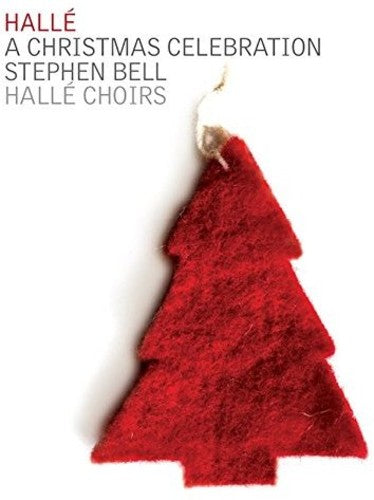
One of the best parts of the Halle Christmas celebration is the inclusion of the entire Halle family- the Halle and Halle Choir, as well as Halle’s Youth Choir and Children’s Choir. This lovely collection of popular, rare, and newly discovered holiday gems will bring festivity to all of your holiday gatherings. Compositions include works from film composers such as John Williams and Nigel Hess, as well as choral superstars like John Rutter and John Gardner. Especially notable is the orchestral showpiece Noel!, which was written specifically for Halle and conductor Stephen Bell by Roderick Elms, and is receiving here its world premiere recording. “A lovely festive celebration and a reminder of what Christmas is all about” (Oldham Chronicle)
-----
TRACKLIST/PERFORMERS:
A Christmas Overture - Nigel Hess O Holy Night Adam - arr. Battiwalla * Tomorrow Shall Be My Dancing Day - John Gardner ^ In Dulci Jubilo - arr. Pearsall *^ Noel - Roderick Elms Somewhere in my Memory - John Williams ~ Fairytale Sleighride - Adam Saunders Angels’ Carol - John Rutter * Waltz, Winter Bonfire - Sergei Prokofiev Personent Hodie - arr. Gustav Holst * The Holy Boy - John Ireland Jesus Christ the Apple Tree - Elizabeth Poston ^ A Christmas Carnival - Richard Bissill In The Bleak Midwinter - Harold Darke/Christina Rossetti *^ Dance of the Tumblers - Nikolai Rimsky-Korsakov Christmas on the Beach at Waikiki - Marta Keen arr. Alwyn Green ~ Sleighride - Leroy Anderson We wish you a Merry Christmas *^
Following their acclaimed previous Wagner opera releases, Halle presents the remastered recording of their 2013 Prom performance, recorded live at the Royal Albert Hall. “Working with his orchestra, the Halle, Sir Mark Elder produced an account of this miraculous score which, for a combination of passion and precision, surpassed any other that I have ever heard.” (Michael Tanner, The Spectator, August 2013) Wagner’s last opera, Parsifal, which the composer declared to be his “farewell to the world” has been described as being in many ways the most “total” of all his “total art works.” His spiritual swansong unfurls as a slow-moving, ritualistic drama, and is arguably the best-suited of all his operas to the style of concert staging offered here. This release was recorded live at the Royal Albert Hall, London at the 2013 BBC Proms, featuring dramatic spatial placing of off-stage choruses and musicians. It was audio remastered by Halle’s award-winning engineer Stever Portnoi: the original multitrack recordings of both rehearsals and concert were edited to eliminate audience noise whilst retaining the sense of place and the staged nature of the performance. The edited multitrack was then remixed to achieve a sound in keeping with Halle label releases.
Huw Watkins: Fanfare for the Halle, Symphony No. 2 & Concert
Halle
CD
$20.99Mar 20, 2026
This album celebrates a warm and close musical relationship between composer, conductor, and orchestra - and the extraordinary impact the Covid pandemic had on British cultural life. Sir Mark and the Hallé commissioned and premiered the works on this album between 2020 and 2025, with Huw Watkins writing with the specific sound of the Hallé in mind. Symphony No. 2 and Fanfare for the Hallé were born of the pandemic. The symphony was composed during Covid lockdown, and Watkins said this influenced the work's character, with a determination that it should end positively. This is uplifting music, crafted in a symphonic tradition whilst offering a fresh voice and skilful use of instrumental writing. The performance was awarded the South Bank Sky Arts Classical Music Award for 2022. The Fanfare for the Hallé was commissioned by the Hallé to celebrate the return of the orchestra to the concert platform following the first Covid lockdown. Scored for 11 brass instruments, the work moves from a tentative beginning to a confident and defiant conclusion - arguably reflecting much of the national mood during the pandemic. Following almost a quarter of a century as Music Director of the Hallé, Sir Mark premiered Watkins' Concerto for Orchestra in his first concert as Conductor Emeritus. The piece particularly reflects the qualities of the orchestra and it's musicians, and their longstanding relationship with Sir Mark. The work exudes positivity, with rhythmic deftness and highly effective orchestral colourations, displaying the musical strengths of all sections of the orchestra, in writing that is beguiling and joyous.
This release captures the January 2025 concert from Manchester's Bridgewater Hall. Rapturously received by the capacity audience and acclaimed by the critics, the Halle's performance of this monumental work marks a significant milestone in Kahchun Wong's tenure as Principal Conductor. Thought of as being the composer's most ambitious search for the meaning of life, the Second Symphony is conceived and delivered on an epic scale, featuring soloists, choir and an enlarged orchestra. The music offers a directness of expression which transports the listener through a series of climaxes and reflections, culminating in a Last Judgement in which the composer said, 'an overwhelming love illuminates our being'. The release is accompanied by a personal introduction from Kahchun Wong, reflecting on what the music of Mahler means to him, and a programme note by Mahler expert, composer David Matthews.
Thomas Ades, William Marsey & Oliver Leith: Orchestral Works
Halle
CD
$20.99Jul 04, 2025
This album celebrates the work of Thomas Ades, one of Britain's 'most imaginative composers' The Guardian, and Artist-in-Residence of the Halle (2023-25). Alongside a survey of his recent works for orchestra are two pieces by composers who have been championed by Ades. Conducted by Thomas Ades, 'one of the most accomplished and complete musicians of his generation' (New York Times) this album features three world premiere recordings, including Ades' Aquifer. Taking it's name from an underground geological structure through which water seeps and flows, the work features orchestral writing which is full of colour and movement, flamboyant climaxes and rich expression. Written during the first Covid lockdown, for an orchestra that had to play socially distanced, Dawn is constructed from a slowly unfolding passacaglia which passes between instruments, depicting the sunrise moving continuously around the world, in music of sonic beauty. Repetition is also at the heart of Shanty, as material is passed between orchestral voices, with hypnotic and captivating results. In contrast, ingenious use of imitation and repetition produce a gripping effect in the invigorating brass fanfare Tower. Premiere recordings of two works closely associated with the Halle complete this album. Leith's Cartoon Sun, described as 'mesmeric' (The Arts Desk), was commissioned by the Halle. The processional piece displays a rich soundscape, coloured with large tolling bells and stunning orchestral climaxes. The Halle and Ades gave the world premiere of William Marsey's Man with Limp Wrist' in 2023. Inspired by a Salman Toor oil painting and with writing which is rooted in historical melody and harmony, the music is full of emotion and expression. Thomas Ades, CBE: internationally acclaimed composer, pianist and conductor whose work has been presented in leading concert halls and opera houses worldwide. Recordings of his works have received numerous international awards and in 2024 Ades received the prestigious Royal Philharmonic Society Gold Medal from Sir Simon Rattle, who described him as being an 'outrageously gifted' musician.
Taken from a rapturously received and critically acclaimed performance at The Bridgewater Hall (with The Times' 5* review describing a 'splendid night' and hailing the magnificent sound of the 'blazing Halle) this recording will prove essential for those wishing to hear the work in the intended four movement form. The recording is accompanied by a booklet containing a personal introduction from Kahchun Wong and a note from Dr. John A. Phillips, surveying the material Bruckner left for the Finale and detailing the work done on reconstructing it for performance.
This album marks the beginning of an innovative journey for the Halle under it's newly appointed Principal Conductor and Artistic Advisor, Kahchun Wong. Internationally acclaimed for his dynamic stage presence and his thoughtful exploration of Eastern and Western artistic legacies, Singaporean-born Kahchun Wong assumes his new role with the Halle in September 2024, following his electrifying debut with the orchestra last season. This recording of the complete The Prince of the Pagodas ballet, the first in over a decade, reflects Wong's interest in Balinese Gamelan and the deep connection he made during his composition studies to the work of Britten. Music which he says, 'resonates deeply inside me'.
Among the first releases on the Hallé recording label, established in 2003, were Elgar’s Symphonies Nos. 1 and 2. This recording revisits those works nearly 20 years later and marks the culmination of Sir Mark Elder’s tenure as Music Director. The First Symphony was premiered in the Free Trade Hall, Manchester, in 1908 by the Hallé and its Music Director, Hans Richter, to whom the symphony is dedicated. It is a work of astonishing musical and structural mastery which was greeted with worldwide acclaim, receiving one hundred performances in its first year. The musical material demonstrates Elgar’s skill at melody and transformation and presents a wide emotional range.
By contrast, the Second Symphony, with its deeply personal ‘pilgrimage of a soul,’ initially received a more muted reception. However, it came into its own after the end of the First World War when the tone of remembrance and tribute possibly reflected the national mood, in what is now considered to be one of Elgar’s finest works.
Tabakova: Orchestral Works & Concerti / Lazarova, Johnston, Rysanov, The Hallé
Halle
CD
$20.99Oct 06, 2023
This album marks the culmination of two special Hallé collaborations and includes four major pieces from one of the most distinctive of current British compositional voices. Delyana Lazarova (Hallé Assistant Conductor 2020-23) and composer Dobrinka Tabakova (Hallé Artist in Residence 2022-23) were both born in the historic city of Plovdiv, Bulgaria. Working together for the first time during their time with the orchestra they formed a strong musical connection in which the Hallé musicians displayed a close understanding of the intricacies and dialect of Tabakova’s musical language. This album contains two of Tabakova’s major orchestral works. The three-part Earth Suite, which the composer says was inspired by ‘the overwhelming force of Nature’, recently drew ‘exquisite playing’ from the Hallé (Bachtrack, April 2023).
Orpheus Comet features fast rhythmic material combined with atmospheric transparent orchestrations and a glorious climax featuring quotations from Monteverdi. The two significant concertos for strings and soloists included on this album solidified Tabakova’s reputation as an outstanding contemporary voice and display the composer’s close affinity with string instruments. Ukrainian-British Maxim Rysanov, is one of Tabakova’s longest collaborators who premiered the Concerto for Viola and Strings in 2004, a piece described as being ’saturated with an inner, captivating and natural energy’ (Culture Magazine, Nov 2004). The Concerto for Cello and Strings (whose score was described as ‘gorgeous’ by the Daily Telegraph, Australia) is here performed by Guy Johnson, one of the most exciting British cellists of his generation.
Elgar: The Dream of Gerontius; The Apostles; The Kingdom / Elder, Halle Orchestra
Halle
CD
$69.99Jun 02, 2023
Sir Mark Elder has long been hailed for his interpretation of the works of Sir Edward Elgar. This special release box set celebrates the twentieth anniversary of the Hallé label and marks Hallé’s Elgar oratorios festival at the Bridgewater Hall in June 2023. Elgar’s three major oratorios are brought together in this special release box set. The multiple award-winning recordings feature the highly acclaimed Hallé Chorus and Youth Choir and a stellar line-up of major international vocal soloists.
Vaughan Williams: The Complete Symphonies / Elder, Hallé
Halle
CD
$69.99Jun 03, 2022
This boxed set includes all nine Vaughan Williams symphonies, attractively packaged and released at a special price to mark the occasion of the composer’s 150th anniversary. These award-winning performances are accompanied by an extensive booklet, including new material charting the Hallé’s historic relationship with Vaughan Williams, and featuring material drawn from the orchestra’s archives. The releases follow the joint Hallé/BBC Philharmonic festival of Vaughan Williams Toward the Unknown Region - RVW150 which will run in Manchester from February to May 2022.
Premiered by the Hallé under Sir John Barbirolli in 1953, the Sinfonia antartica originated in Vaughan Williams’ score for the film ‘Scott of the Antarctic’. With a highly original scoring (including solo soprano, wordless women’s chorus, organ, piano and extensive percussion section), the work depicts the struggle of man over nature, as epitomized in Captain Scott’s ill-fated expedition to the South Pole. The symphony is characterized with heroic themes, evocative orchestral effects and music which is at turns emotive and powerful. In contrast the Ninth Symphony depicts the more philosophical challenges of mankind. Initially receiving a lukewarm reception it has come to be seen as a work imbued with what Vaughan Williams authority Michael Kennedy described as ‘a new richness of sound’. This enigmatic work is scored for standard orchestral forces, with the addition of saxophones and flugelhorn which add orchestral color. This was the composer’s last symphony and was premiered just four months before his death in 1958. In construction it stands as the culmination of his compositional career, with elusive and constantly developing themes and evocative depictions of a wide range of emotions. The symphonies are coupled with two orchestral works, Norfolk Rhapsody No.1 and The Lark Ascending, which were previously released as part of an English music mixed composer collection.
The sound is exemplary in clarity, warmth, and balance. None of this is “great” music but committed Elgarians will relish the delicacy and sensibility of Elder’s performance.
Miniatures though they be, the two Wand of Youth suites are not just “light” music, in that there is much here which is – charming, yes, but also emotionally deeply evocative and musically profound. Their quality has attracted recordings from celebrated conductors such as Boult, Handley, Mackerras, Bryden Thomas and van Beinum, to name but a few; now Mark Elder includes them in his series of Elgar works with the Hallé, which has hitherto garnered much critical acclaim – my own favourite recordings of the symphonies are Elder’s.
These works were based on material written by Elgar many years before as a teenager as accompaniment to a play, reworked by the composer as a man of fifty while simultaneously composing his First Symphony - so they presumably provided some relief from that arduous task. They are characteristically innocent and nostalgic, evoking an idealised fairyland free from adult taint; both were dedicated to friends, as was Elgar’s custom, most famously in the Enigma Variations.
The variety of orchestral colour and melodic invention mark these suites out as typical of the composer; the Overture of the first suite starts with a bustling motif played with great brio followed by a falling Seventh –a motif very recognisably Elgarian. A gentle “Serenade”, an elegant parody of a Handelian minuet, a shimmering, Mendelssohnian “Sun Dance” ending in a blaze of brass encompass so many of the tropes we know from the more famous works while also paying homage to Elgar’s predecessors; while the string passage is all Elgar, if the sinuous clarinet motif at the heart of the “Fairy Pipers” isn’t at least unconsciously inspired by Tchaikovsky’s “Arabian Dance” from the Nutcracker, I have no ears.
The pattern of great thematic and colourific variety continues into the second suite, although I do not find it quite as uniformly captivating as the first. Elgar introduces a glockenspiel into the “The Little Bells”, employs graceful arabesques to suggest the flow of water in “Fountain Dance” and creates two contrasting bear portraits, the first melancholy, `the second rumbustious; Elder and the Hallé successfully capture all these moods.
The Nursery Suite was Elgar’s final foray into mining his juvenilia: it is more, lovely, pastoral music, including an extended solo for flute in The Serious Doll, played with assured, liquid musicality by Katherine Baker. Likewise, Lyn Fletcher plays a fine violin solo in the final movement, Envoy (Coda). The Wagon (Passes) was encored at its premiere at the request of the Duke and Duchess of York (the future King George VI and Queen Elizabeth). Dreaming has one of those long, languorous melodies we know from the symphonies.
Bonus “lollipops” are provided in the form of the lush, orchestrated versions of Salut d’amour and Chanson de nuit, both so delightfully sentimental and redolent of the Edwardian drawing room, beautifully played.
The sound is exemplary in clarity, warmth, and balance. None of this is “great” music but committed Elgarians will relish the delicacy and sensibility of Elder’s performance.
Elgar: The Dream Of Gerontius Op. 38 / Elder, Groves, Terfel, Coote, Et Al
Halle
CD
$32.99Oct 01, 2008
A remarkable achievement.
Last year, when I surveyed most of the available recordings of The Dream of Gerontius, I expressed the hope that Mark Elder, as he then was, and his Hallé forces might make a commercial recording of the work. That hope was inspired by the remarkable performance that they had given at the 2005 Henry Wood Promenade Concerts, which, as I commented at the time, made a great impression on me. Having re-listened to it more than once in the off-air recording I made, I now feel it was, quite simply, the finest live account of the work that I ever expect to hear. And now, with almost identical forces, the newly-knighted Sir Mark Elder has made a studio recording. It comes too late for the 150th anniversary of Elgar’s birth but instead, and more fittingly, perhaps, it marks the Hallé’s own 150th birthday, which falls this year.
The inevitable question is: has it been worth the wait for this recording? The answer is an unequivocal "yes".
The American tenor, Paul Groves, reprises the role of Gerontius, as I hoped he would. I hadn’t realised it at the time but we learn from the booklet biography that his performance at the 2005 Proms was his debut in the role, which makes his achievement that night all the more remarkable. His greatest virtue of all, it seems to me, is the clarity and ease of his singing. Every note is hit right in the centre and his voice has an exciting and pleasing ring. The top notes are always true and secure. I followed in the score but, frankly, that was superfluous as far as the text is concerned for Groves’ diction is crystal clear – as, indeed, is that of the other soloists and the choirs.
In Part I Elgar sets his tenor a task that is almost impossible. The singer must try to suggest the frailty of a man on his death bed while, at the same time, he must be able to deliver heroic, dramatic passages, such as ‘Sanctus fortis’. Groves is fully equal to the dramatic sections though sometimes he does sound a little too healthy for a dying man. ‘Sanctus fortis’ is a huge test and it’s one that Groves passes with flying colours. He starts it in ringing, forthright voice but later on, just before cue 48 in the vocal score, he shades off the end of the phrase "Parce mihi, Domine" with great sensitivity. In this aria, and frequently during the performance as a whole, he demonstrates prodigious breath control. One example occurs in ‘Sanctus fortis’, where the whole eight-bar phrase, "For the love of Him alone, Holy Church as his creation" is taken in one span, where most tenors take a breath, quite legitimately, after the comma. Later, the first phrase of ‘Take me away’ is one glorious, seamless whole, as it should be but often isn’t. Returning to ‘Sanctus fortis’, there’s a lovely piangendo at cue 53, when the words "Sanctus fortis" are repeated gently by Gerontius, and then the phrase "O Jesu, help" is truly anguished. Groves’ delivery of the climatic "In Thine own agony", top B flat and all, is magnificent. In all, his performance of this testing keynote aria is very fine.
Part II brings different demands for the tenor soloist. Now he represents the soul of the dead Gerontius. Quite a bit of the music in Part I required the vocal resources of a heldentenor but the opening pages of Part II needs the subtlety of a lieder singer. I’m not sure that Groves is quite successful in these passages. The clear, pleasing singing remains a constant feature but he doesn’t seem to delve as deeply into the words as do some of his distinguished predecessors in the role. As an example, I compared the first solo – "I went to sleep" - as sung on disc by John Mitchinson (for Rattle) and by Anthony Rolfe Johnson (Vernon Handley). Both are so much more responsive to the words and both also sing more quietly. Groves can’t quite match those experienced masters of the role. But he brings his own insights and subtleties to the part and his dialogue with the Angel is intelligently and sensitively sung. Inspired, no doubt, by the presence of an audience, he was a touch more spontaneous at times in the live Proms performance. On the other hand, on that occasion he had to project into a huge acoustic. Here, recording under studio conditions, he can offer a more subtly nuanced reading. The last section of the role, the aria ‘Take me away’, is another hugely demanding solo. Groves’ opening is superb. Later on, perhaps, a little more dynamic contrast would have been welcome but his fervour – not overdone - firm tone and excellent breath control offer ample compensation and the final phrase – "there let me be" – is most affecting.
Alice Coote, who was the Angel in the Proms performance, once again takes the role for the recording. Like Paul Groves she offers much but I found it interesting to compare this performance with her live account. To my ears her voice has a slight edge to it at times in this present performance and her tone doesn’t have quite the same degree of warmth and fullness that she exhibited at the Proms. That said, she is right inside the role, she sings with feeling and commitment and her performance gives a great deal of pleasure. I like, for example, the inflection she brings to the words, "this child of clay". A little later on, she has the right amount of legato and warmth for "A presage falls upon thee." That wonderful passage "There was a mortal" is done with appropriate inwardness – I think she does this passage even better here than in the Proms performance. Her account of the celebrated Farewell is lovely. She brings compassion and dignity to this solo and sends the Soul of Gerontius on his way in a most reassuring way.
There is one change to the line up of soloists that took part in the Prom performance and it’s a significant one. In place of Matthew Best, who sang in 2005, Bryn Terfel sings the two bass solos. This is luxury casting indeed. Terfel is a magisterial Priest. His opening phrases are delivered with all the power and sonority that one would expect from this singer. However, I was delighted to note how, as the aria unfolds, he’s attentive to Elgar’s dynamic markings, which are often quiet, and by so doing he makes the Priest’s words properly prayerful. He’s an imposing Angel of The Agony, singing this dramatic solo quite splendidly. One relishes the sheer amplitude of his voice but, once again, one notes how attentive he is to the dynamic markings – and it makes such a difference. Often I’ve found that a soloist is more suited to one of these two solos than the other but on this occasion Terfel is completely successful in both.
At the Proms performance the Hallé Youth Choir, a mixed-voice choir whose members are aged between twelve and nineteen years, sang the crucial semi chorus parts. Their contribution was important then and I’m delighted to find them similarly involved this time. The involvement of these young singers, for whom this recording must have been a tremendous experience, gives this performance an edge over most of its CD rivals. Benjamin Britten scored a significant coup by using the choir of King’s College, Cambridge as the semi chorus when he recorded Gerontius in 1971 and I wonder if Sir Mark Elder had that precedent in mind. The use of young voices, with their completely different timbre, results in a sharp and very telling contrast and I find the effect is really exciting and atmospheric. The writing for the semi chorus is often extremely exposed but the young Hallé singers rise to the challenge superbly and their fresh, youthful voices add an additional and very welcome dimension to the choral sound. I think their involvement is a major success and I applaud it unreservedly.
Their adult colleagues in the main Hallé Choir are also on top form. They’ve obviously been prepared superbly by their chorus master, James Burton. So, every strand is clear in "Be merciful" and they bring real bite and urgency to "Rescue him." In the Demons’ Chorus their singing is virile and has excellent definition. Perhaps they could have snarled a bit more but it’s an exciting account of the chorus. Equally fine is ‘Praise to the Holiest’ and, towards the end, they are clear, controlled and atmospheric at "Lord, Thou hast been our refuge", never an easy passage to bring off.
The orchestral contribution is, if anything, even finer. From the very start of the Prelude to Part I you sense we’re in for something a bit special. The playing glows here and elsewhere. Dynamics are beautifully observed, the rhythms are well articulated and there’s a consistent feeling that the players are right inside the idiom and playing with belief. Two things are worthy of special comment. Firstly, the engineers have contrived to balance the organ beautifully so that whenever it plays it enriches the textures without being unduly prominent. Secondly, the harp part is hugely important and once again, the instrument is balanced perfectly so that time and again one is aware of its importance yet it never draws unwarranted attention to itself.
But for all the splendour of these contributions the whole is knitted into something much greater than the sum of its parts by Sir Mark Elder. Writing of his Prom performance I suggested that one or two of his tempi were a fraction too fleet. I have no such feelings here. I cannot recall a single bar in the whole score when I felt that the pacing wasn’t just right. Elder has demonstrated in several previous Elgar recordings and performances that he is a master interpreter of this composer. This superb interpretation confirms that judgement in spades. His shaping of the Prelude is masterly and that sets the tone for the whole performance. He is scrupulous in his observance of Elgar’s markings and in many ways that’s the key to success in Elgar performance for the composer was copious in the indications he gave in the score and if a conductor trusts Elgar and follows the markings that’s more than half the battle.
The performance has huge sweep and conviction but there are also many small points that show Elder’s meticulous and perceptive attention to detail. One example comes in the Prelude a couple of bars before cue 17 when the orchestra plays a quiet, stabbing chord, with the gong adding a frisson. Elder places and balances that chord to perfection. Move on to the short, hushed Prelude to Part II, for the strings alone. Elder obtains miraculous, luminous textures from his players and in a mere twenty-six bars he establishes an otherworldly atmosphere, just as Elgar intended. Best of all, at cue 3 the dynamic marking is an incredible pppp. Elder achieves precisely that and the effect is superb. Only one other conductor in my experience has matched this, namely Simon Rattle in his 1986 EMI recording, but to be honest, I think even Rattle is put in the shade at this point. These are very small points in themselves but they catch the ear and show the scrupulous attention to detail that has gone into the preparation of this performance.
Elder, however, is anything but a micro-manager. He is magnificent in the big moments. The end of Part I, after the chorus has joined the bass soloist at "Go, in the name of Angels and Archangels", is brought off expertly. Every strand of Elgar’s many-layered tableau is given its proper weight and the whole passage causes the eyes – or my eyes, at any rate – to prickle, as it should. Even better is the long build up to ‘Praise to the Holiest’. This long passage, after the Angel’s solo "There was a mortal" is challenging, but Elder’s direction is superbly assured. Once again, all the various strands - semi chorus, chorus, orchestra and two soloists - are knitted together perfectly. One thing I admired particularly is the way in which Elder paces the several short sections marked Poco più animato with a vernal eagerness and then observes the decelerations, marked by Elgar, to perfection. Here the ladies of the chorus and the younger ladies in the semi chorus sing with a wide-eyed freshness that is completely appropriate to Angelicals. The whole passage is an unqualified success and Elder builds the tension and the atmosphere so that when the choir erupts at "Praise to the Holiest" it is as if great gold doors have been thrown open to reveal blinding light. Elder handles the ensuing chorus masterfully. The last pages, from cue 94 onwards, are tremendously exciting without recourse to excessive speed as Sakari Oramo does on his CBSO recording (see review). The end of the chorus bids fair to lift the roof off the Bridgewater Hall yet Elder’s forces have more to give and manage to observe the crescendo on the last, long chord. It’s a thrilling moment.
One more example of Elder’s perceptive command of the score and of his forces will suffice. In Part II, starting at cue 114, is the remarkable passage where Gerontius sings, "I go before my Judge", followed by the choir’s muffled entreaties, "Be merciful". Elder distils the most incredible atmosphere in these bars. The music has an awestruck quality that I’ve never heard brought out so well. It sounds as if everyone – Paul Groves, the choirs, the orchestra – is on tenterhooks, scarcely daring to articulate the notes. It’s the most remarkable piece of music making imaginable.
So how can I sum up this recording? I think it’s a remarkable achievement and I have been greatly moved by hearing it. Paul Groves and Alice Coote both deliver very fine performances. I feel that both gave a little more in terms of spontaneity during the Proms performance, inspired by the presence of an audience. On the other hand, under studio conditions they achieve some subtle points that were not possible in the huge arena that is the Royal Albert Hall. Bryn Terfel is a superb addition to the cast. The choirs and orchestra are on inspired form and Sir Mark Elder confirms that he is the finest Elgar interpreter now before the public. Under his inspired leadership the white-hot inspiration of Elgar’s visionary score comes alive.
The performance is captured in excellent, atmospheric sound. The recording doesn’t quite have the punch and presence of the Oramo recording but it’s not far short in terms of immediacy. The forces are splendidly and truthfully balanced and the whole project is a great success for the engineers. The notes are by Michael Kennedy and up to that fine writer’s usual immaculate standard.
It has been well worth the wait for this recording. For over forty years Sir John Barbirolli’s great 1964 recording of Gerontius has dominated the catalogue. I’m sure he would rejoice that, in their 150th anniversary year, his beloved Hallé and their distinguished current Music Director have produced a worthy successor and one that offers irrefutable proof that the Elgar tradition of the Hallé is being maintained in the twenty-first century. Let us hope that Sir Mark will go on to give us new and equally fine recordings of Apostles and Kingdom but even if that doesn’t happen they have done Elgar proud with this distinguished recording which I have found to be a very moving experience.