Dramatic
Mood
Music built on contrast and tension, where the interest lies in how forcefully one idea is set against another. Expect wide dynamic range, decisive gestures and a strong sense of narrative.
1412 products
-
-
-
Malipiero & Monteverdi-Malipiero: Music for String Quartet / Quartetto Sincronie
Stradivarius · Jan 2024CD$18.99 -
-
-
-
-
-
-
-
-
-
-
J.S. Bach, Kurtág & Ligeti: Flowers we are... / Ani & Nia Sulkhanishvili
Ars Produktion · Sep 2023SACD$23.99 -
-
-
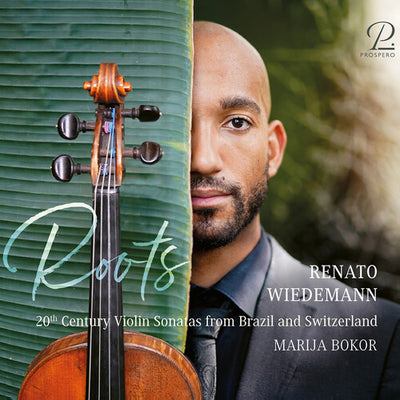
Roots: Violin Sonatas from Brazil & Switzerland / Wiedemann, Bokor
Prospero Classical · Feb 2024CD$23.99 -
-
-
-
Chaconne 1927 - Works for Organ
The Rise of the Italian Cello
Malipiero & Monteverdi-Malipiero: Music for String Quartet / Quartetto Sincronie
In the dark years of the Nazi-Fascist period, when the light of the end was still far off, Malipiero completed a long-awaited undertaking: an edition of the complete works of Claudio Monteverdi. Its last volume, the sixteenth, came out in 1942 at the height of the war. The edition contained the sacred production that the publisher Vincenti had assembled in the collection Messa a 4 voci et salmi (1650).
Quartetto Sincronie’s choice to include an arrangement of Monteverdi’s Mass, alternating the parts with Malipiero’s work, is yet another example of reinvention-creation that Malipiero would likely have appreciated. In the composers’ poetics, instruments are asked to sing as voices, and so the opposite—voices translated to instruments—is fitting. Philological rigor was, after all, foreign to Malipiero’s worldview. Instead, the composer spoke of his relationship with Monteverdi as a kind of psychic channeling: finding synchronicity within the synchrony of listening, which dissolves the distance of centuries. The Mass for Four Voices is thus split into parts throughout the record, but it remains possible to orient oneself. The cohesion is melodic: there’s a descending tetrachord G-F-E-D at the beginning of the Kyrie that returns in various guises (inverted, diminished, augmented), articulating the contrapuntal fabric of the different movements. The listener can thus follow this pathway, from the Gloria to the Agnus Dei, in a zigzag that turns Monteverdi the sacred “refrain” to Malipiero’s profane cycle of quartets.
Rimsky-Korsakov: Scheherazade, A Tale
Fly - Electronic Music for Accordion
Between the new and the familiar, the accordion is a young instrument. This is precisely why I believe it lends itself almost naturally, or rather vocationally, to experimentation. At the same time, its place in the collective imagination, its wide diffusion in popular and folkloric cultures, also make it a “familiar”, “domestic” instrument. This combination of “familiarity” and experimentation is, then, the inspiration behind the entire “Fly. Electronic Music for Accordion” project. New works for accordion and electronics aimed precisely at enhancing such duplicity: the feeling of familiarity and the disconcerting activation of the new. For this purpose, I involved some of the Italian composers among those I most respect, with whom I could establish a creative relationship that could lead to the development of particularly significant works featuring this instrument. At least in my ambitions and intentions. What the outcome will be is not for me to say. The fact remains that when a new work is born, especially one with some compositional weight, we are always faced with an event, the opening up of a world, which, however bewildering, or perhaps precisely because of this, proves capable of putting us in relation with ourselves and with the contemporaneity in which we live. Besides this, the choice of alternating the electroacoustic works with “small” pieces (in terms of duration) taken from the historical, classical literature to which we belong, is also intended to promote precisely the coexistence between familiarity and experimentation. A piece of “easy” listening, “familiar”, a prelude or postlude, as it were, in order to “cleanse” the ear, in some way to prepare it for a different kind of listening, that of electroacoustic music, which is complex and full of novel information, not “familiar”. Fragments of history, therefore, that intervene in the rhythm of listening, supposing a linear path, almost like recollections that assail the involuntary memory, to try to undergo an experience that allows us to achieve a relationship between reminiscence and the new.
Germano Scurti
Tabula-Tour
Forqueray: Integrale des pieces de violes
Opus 2576
The Bremen-born painter and sculptor Hugo Körtzinger (1892 - 1967) was a close friend of his much more famous colleague Ernst Barlach. Both were in the favor of the well-known Hamburg art patron Hermann F. Reemtsma. In 1937, Reemtsma financed a new workshop for Hugo Körtzinger in the small town of Schnega (Wendland), where he saved sculptures of his friend Barlach, which were considered "degenerate art", from being melted during the Nazi era. In 1937, Germany's most important organ-building company at that time, E.F. Walcker, built a new 3-manual instrument for Körtzinger's studio as their Opus 2576 - at the request of the customer with many unusual timbres. The instrument was continuously extended in individual construction steps until 1947.
A few years ago, the studio and the organ, which had been completely unplayable for many decades, were renovated thanks to the support of the Hermann F. Reemtsma Foundation. Martin Schmeding presents the instrument on a double SACD with music by baroque composers, played in the style of the 1930s aesthetic, as well as with original works from the time the instrument was built. This program gives an impression of the works that may have been played in the Körtzinger atelier between 1937 and 1967. The program is supplemented by Schmeding's improvisations on sculptures by Ernst Barlach.
USP: the first recording of an organ that is probably one of the largest private organs in Germany. Very comprehensive booklet (48 pages) with many illustrations and descriptions of Körtzinger and the recorded music. Double SACD in stereo and 5.1 surround sound. Rarely heard works from the 1930s and 1940s.
J.S. Bach: Alio Modo
Music has its own language. Its beauty immediately discloses emotions but sometimes also conceals its meanings. The musician is compelled by this dualism to make choices, which are not always painless. To enhance one of them entails attenuating what is immediately perceptible, in order to highlight what, although existing, is not. This peculiarity makes both studying and performing a piece difficult, and must always be taken into account. This often occurs in Johann Sebastian Bach. He is always searching for some kind of absolute truth. However, we are not given to grasp it in its entirety and in its incomparable complexity: only through continuous research and assiduous work we are able to comprehend a small part of it. The art of music resembles an extraordinary journey encompassing infinite dimensions; the most important aspect is treasuring what we experience and discover along the way, not just reaching the destination, because even then we would realize that the journey is far from over. As Bach suggests in his Musical Offering, there is only one road: quaerendo invenietis, seeking you will find; this is what I have tried to accomplish in this new recording project dedicated to the genius from Eisenach. The anthological choice of this CD stems from the need to provide a significant overview of this interpretative philosophy, which allows us to shed new light on the kaleidoscopic world of Bach. My previous recording project “Domenico Scarlatti alio modo” followed this same criterion, albeit on different bases.
Schoenberg: Pelleas und Melisande; Verklarte Nacht
Bruckner & Klose: String Quartets / Quatuor Diotima
J.S. Bach, Kurtág & Ligeti: Flowers we are... / Ani & Nia Sulkhanishvili
With György Kurtág (born 1926); György Ligeti (1923-2006) and Péter Eötvös (born 1944); Hungary has produced three of the most important and internationally successful composers of the post-war era. This recording brings together piano works by Kurtág and Ligeti. It shows that the four-hand piano character piece also has musical expressiveness and genre-technical justification in contemporary musical art. Ani and Nia Sulkhanishvili were born as twins in Tbilisi / Georgia in 1988. At the age of 6 they received their first piano lessons from Svetlana Arakelova. The highlight of their career so far was the 2nd prize at the "64th ARD International Music Competition" in Munich in 2015. This was the start of an international career with performances in Europe, America and China. The piano duo has mastered a large repertoire spanning the epochs from classical to modern.
J.S. Bach: Cello Suites Nos. 5 & 6
Messiaen: Catalogue d'oiseaux / Aimard
Renowned pianist Pierre-Laurent Aimard’s recording of Olivier Messiaen’s Catalogue d’Oiseaux created a sensation when first released on PENTATONE in 2018, and now returns to the market in an attractively priced stereo reissue./p>
Aimard had intimate ties to the composer himself and his wife, Yvonne Loriod, for whom Messiaen wrote the Catalogue, a grand hymn to nature from a man who never ceased to marvel at the stupefying beauty of landscapes or the magic of birdsong. With his Catalogue, Messiaen tried – in his own words – “to render exactly the typical birdsong of a region, surrounded by its neighbours from the same habitat, as well as the form of song at different hours of the day and night,” suggesting an almost scientific approach to his subjects. The idea of ‘reproduction’ may have been central to Messiaen’s conception of the Catalogue d’Oiseaux, but in the finished work we hear a great composer at work, a master of innovative structures who finds an astonishing range of piano sonorities. Thanks to Aimard’s ability to evoke this colourful opus, his interpretation has turned into an absolute reference recording.>/p>
This first release within Aimard’s exclusive partnership with PENTATONE received many accolades, including a Jahrespreis der deutschen Schallplattenkritik. Since then, recordings of Beethoven (2021), Bartók (2023, with San Francisco Symphony and Esa-Pekka Salonen), and Schubert (2024) have appeared on PENTATONE, as well as piano four hands albums with Tamara Stefanovich (Visions in 2022 and Nicolaou: Etudes & Frames in 2023).
Deep River / Alchymy Viols
Debussy & Szymanowski: Quartets
The Sounds of Wood / Fiorio & Fiorio
One hundred years of Romanticism, about sixty years of postromanticism and another sixty of filologic research and adhesion to "original versions" of past musical compositions got used to us badly.
Romanticism conditioned us to think that what was written by the hand of a composer has to be untouchable, a sacred document that's perfect like it is; postromanticism convinced us that this idea had to be applied to any artwork, even the ones that were written before the '800s; lastly, the meritorious and sacrosanct philologic enforcement to the research of the 'original text' have definitely forced us to believe that the only 'original version' of a composition is the one that reproduces exactly the text, recovered with all the tricks modern and performed with instruments as close as possible to the 'original' instruments of the time in which the composition was, in fact, composed.
These three elements, put together, even if they seem contradictory to each other, actually go to form a perfect storm, a kind of explosive mixture that makes people look askance artistic achievements such as the one proposed by the program of this CD.
But fortunately, for some, very little indeed, time, we have awakened from these paths so tremendously binding, starting right from the end, from the last step. And so 'historically informed' executions, those in which, that is, the performers tell you “I know very well that I am playing with a modern instrument an ancient music, but I also know that…”.
Music has always been there, especially chamber music, which is done at home, among friends with the mere pleasure of playing together, is written for variable organics. And even if we find the name of one or more instruments on the title page of the critical edition, the author is actually giving the eventual executor only an 'executive suggestion', as if he was telling us: “check the range of your instrument, and if with it you can play the notes that are written, this song is for you”. Be it melodies or accompaniment chords. This has always been the meaning of chamber music. Making music together for someone to listen to, or just for the pleasure of making it.
Maria Chiara Mazzi