The flourishing genre of the comic opera had its roots in eighteenth-century Italian opera buffa, whose irrepressible brio was soon taken up outside the country’s borders. In France it produced opéra comique and operetta, and in German-speaking countries Spieloper and Viennese operetta. Some of the world’s most popular comic opera overtures, filled with gorgeous tunes, brilliant orchestration and race-to-the-finish endings, are presented here. They include staples of the concert repertoire such as Hérold’s dramatic Zampa, the textual delicacy of Wolf-Ferrari’s Il segreto di Susanna and the vivid colour of Lortzing’s Zar und Zimmermann.
Mozart: Le Nozze Di Figaro / Barenboim, Tomlinson, Rodgers, Composer: Wolfgang Amadeus Mozart, Performer: John Tomlinson, Phyllis Pancella, Joan Rodgers, Richard Brünner, Conductor: Daniel Barenboim, Orchestra/Ensemble: Berlin Philharmonic Orchestra, Berlin RIAS Chamber Chorus, "Barenboim continues to favors a forceful, big-scale reading with often deliberate speeds for the slower numbers, a musically accomplished, thought-through account of the crucial finales to Acts 2 and 4, lively treatment of the recitative, finely-honed playing of the wind, alert rhythms and an avoidance for the most part of appoggiaturas... John Tomlinson is much better suited by Figaro than he was by Alfonso, but still wants in tonal focus... but he does at all times create a lively personality, a force to be reckoned with... Sir Geraint Evans is even more individual in his characterization - listen to the recitative before his Act 4 aria - and has the more agile voice, helped by the fact that it tends more towards the baritonal." - Gramophone
American Classics - Daugherty: Philadelphia Stories, Ufo / Glennie, Alsop, Et Al
Naxos
CD
$9.99$19.99Save 50%Oct 19, 2004
This is the third major-label monograph of diverse music of Michael Daugherty (b. 1954), the University of Michigan faculty member known for his engagement with pop-culture subject matter. The first, of his Superman-inspired Metropolis Symphony and other works, made a splash. Another brought us a series of sound-gags, including the bassoon concerto Dead Elvis. There’s also a release of his opera Jackie O and scattered works on numerous compilations, as well as a symphonic band version of UFO and other works on the Klavier label. This is his first Naxos release, part of the terrific “American Classics” series.
Philadelphia Stories, considered by the composer his Third Symphony, was commissioned by the Philadelphia Orchestra, which premiered it under David Zinman in 2001. The work is in three movements, as much a triptych of tone poems as an abstract symphony—an urban La mer. The titles of the movements indicate the gist: “Sundown on South Street,” “Tell-Tale Harp,” “Bells for Stokowski.” The piece is just under half-an-hour long, each of the first two movements being about seven-and-a-half minutes and the third about 14.
If you know anything of Daugherty’s music, much of what’s here won’t surprise you for the most part. Daugherty frequently draws on pop and kitsch music archetypes in building up evocative larger forms. I can’t pin down any specific paraphrases in the first movement, but the several different kinds of orchestral pop, jazz, and Latin jazz conjure the atmosphere of Philly’s South Street, a byway of the musical night life where Daugherty himself had performed jazz and experimental music. The movement is a fantasia for two solo harps and orchestra, the title referring to The Tell-Tale Heart, which Edgar Allan Poe wrote in Philadelphia. Daugherty likens the somewhat gas-lit mood of the movement to Poe’s lyric poetry. The big shadow to go along with Stokowski’s in the last movement is Bach’s, alluding of course to the conductor’s famous orchestral transcriptions of Bach’s music. Daugherty begins the movement with a solo violin theme (arguably in the style of Bach), which serves as a basis for wide-ranging variations, Daugherty writes, “in my own musical language.”
The second work, UFO (1999), is a five-movement concerto for percussion and orchestra, written for soloist Evelyn Glennie and the National Symphony and conducted at its premiere by Leonard Slatkin. The five movement titles are as evocative as those in Philadelphia Stories: “Traveling Music,” “Unidentified,” “Flying,” “???,” and “Objects”; each concentrates on different percussion instruments. There are a few neat moments, but from the subject matter one expects a more imaginative (Lachenmann-like? Messiaen-ish?) orchestral experience than one gets. Deft, but largely predictable—as in Philadelphia Stories. The latter, though, is a far more satisfying work; it suffers less from a desperation solely to entertain. (The symphonic-band instrumentation of this piece was created in 2000; it was commissioned by a consortium of university bands and recorded by Glennie and the University of North Texas Wind Symphony, Eugene Migliaro Corporon conducting.)
Daugherty is a good composer from the standpoint of his ability to get what he wants out of his materials, but it’s hard to put one’s finger on what his true voice (that “my own musical language” of the above quote) might be beneath the busy surface of style-dropping. It could be argued that style isn’t something that can be heard from moment to moment, necessarily—that the whole of the work, the choices the composer makes in his gleanings from others, his extramusical impetus, are the style. Daugherty definitely has a taste for particular kinds of borrowings.
The performances are excellent. Marin Alsop obviously knows the Colorado Orchestra well and leads them with confidence through this often tricky music; they seem like they’re having fun. Glennie is outstanding as usual as a performer, but once again, she’s playing a commissioned piece that remains a little flat. Still, this disc is all in all a good and inexpensive introduction to Daugherty’s work. This Naxos series is invaluable.
Claude Baker: Glass Bead Game / Slatkin, Vonk, St. Louis Symphony
Naxos
CD
$9.99$19.99Save 50%Sep 25, 2012
BAKER The Glass Bead Game.1 Awaking the Winds.2 Shadows: Four Dirge-Nocturnes.3 The Mystic Trumpeter4 • Leonard Slatkin, cond; 4Hans Vonk, cond; Saint Louis SO • NAXOS 8.559642 (66:36) Live: St. Louis 11/21–24/1991; 25/14–16/1993; 35/18–20/1990; 44/16–18/1999
From 1991 to 1999 Claude Baker was the composer-in-residence to the Saint Louis Symphony, the fourth and last in a program in which he was preceded by Joseph Schwantner (1982–85), Joan Tower (1985–88), and Donald Erb (1988–91). Recorded souvenirs of the residencies of the first three were issued by Nonesuch and New World; neither Schwantner release made it to CD, but the Tower and Erb did and can still be purchased. Though arguably the most compelling artist of this distinguished quartet—please don’t send nasty notes—and certainly the one longest in residence, Baker was not so honored. A 1993 live recording of Shadows: Four Dirge-Nocturnes was included in the limited edition commemorative set, The Slatkin Years, but that is long out of print. (The Naxos disc opts for the 1990 premiere.) So this Naxos release of live recordings originally made for broadcast between 1990 and 1999, funded by Indiana University in Bloomington where Baker holds an endowed professorship, is a most welcome redress of an unfortunate oversight.
The Glass Bead Game (1982/83)—inspired, as is almost all of his music, by a literary work and quoting from the compositions of others as annotation—is quintessential Claude Baker and therefore a perfect work to open the program. Baker, inspired by Hermann Hesse’s novel of the same name, takes his thesis from the intellectual narcissism of Hesse’s Castalian scholars. Their obsession with analyzing the past, their fascination with games, trivial detail, cleverness, and systemic complexity, and their eventual stagnation and decline through failure to create anything new are all reflected in the musical program. Baker uses Hesse and the music to shine a light on 20th-century musical obsessions, using a brilliantly executed numerologically complex serial canon; a dream-like, period-correct performance of a Johann Schein courtly dance commented upon by modern atonality; and an amazing collage of six works by Dallapiccola, Schoenberg, Vaughan Williams, Shostakovich, Penderecki, and Liszt, given unity by their incorporation of the famous B-A-C-H motive. These six pieces are assimilated Castalian-syle into a final movement, which is both amazing in its virtuosity and sobering in its ultimate emptiness.
Shadows: Four Dirge-Nocturnes (1990) and The Mystic Trumpeter (1999) are grounded as well in literary sources. In Shadows, Baker explores four haiku, using characteristics of the form—syllable counts, binary construction, and motivic concision—as compositional elements. The verses and the music are dark, evoking death, the graveyard, and mourning in each of the seasons from spring through winter. Woven into the nocturnal work are gestures, fragments, and quotes from works by Mahler, Britten, and Stravinsky, ending touchingly with a quote from “In diesem Wetter” from Kindertotenlieder. The Mystic Trumpeter concerns itself with Walt Whitman, finding both literal and symbolic connection between the verse—the title poem and “The Dalliance of the Eagles”—and Ives’s The Unanswered Question, and works by Messiaen, George Rochberg, and medieval troubadour Guiraut de Bornelh. Awaking the Winds (1993) is the anomaly. It has no literary precursor, contains no borrowed music, and is “freely chromatic” rather than Baker’s usual combination of tonality and atonality. Unlike the other works that are heavily driven by the percussion section, this one eschews even timpani. It essentially is a pastorale, though the composer disavows any programmatic intent, with suggestions of wind and sounds of nature, a storm, and a quiet dénouement.
During the decade of these performances, Leonard Slatkin and the SLSO had a well-deserved reputation as promoters of new music, especially by native composers, and the orchestra was in superb shape, able to play anything that their composer might write for them. Vonk, who took over the podium in 1996, may not have taken to the idiom as naturally, but the orchestra still knew the way home and the Dutch maestro paces them most effectively. The execution of this bold, dramatic, and exceedingly challenging music is flawless, the moments of quiet and delicacy are sublimely poised, and even more to the advantage of the music, all is presented with absolute conviction. Recordings exist online of Indiana University ensembles playing this music—although The Mystic Trumpeter seems to have disappeared for now—but good as they are—and the fine Shadows is even conducted by Slatkin—none of the IU performances can match these in function or insight. The recordings themselves, the majority engineered by the late/lamented William Hoekstra, are demonstration class, and reveal little of the very quiet audiences. I was present for at least three of these concert series, so for me there could not be a better tribute to Claude Baker or to his years with the SLSO than the release of these recordings. They should serve admirably to introduce the work of the composer to those not so fortunate, as well.
Verdi: Attila / Catana, Cremonini, Branchini, Battistoni, Teatro Regio Di Parma [blu-ray]
C Major Entertainment
Blu-Ray
$18.99$37.99Save 50%Nov 13, 2012
VERDI Attila • Andrea Battistoni, cond; Giovanni Battista Parodi (Attila); Sebastian Catana (Ezio); Susanna Branchini (Odabella); Roberto De Biasio (Foresto); Cristiano Cremonini (Uldino); Zyian Atfeh (Leone); Teatro Regio di Parma O & Ch • C MAJOR 721608 (DVD); 721704 (Blu-ray) (118:00 + 10:00) Live: Busseto 10/2010
A life of looting and pillaging may hold certain attractions, but after ravaging the countryside for long enough most of the inhabitants are driven off and there is no one left to grow new crops and raise new livestock. In the days of yore invading armies lived off the land, be they Romans, or Macedonians, or Huns and Visigoths, and without supplies for men and horses they could not sustain themselves. Such were the conditions in most of Northern Italy when the opera Attila opens. Attila and his barbaric tribes had already sacked and razed the substantial northern city of Aquileia in 452 A.D. and driven many of its surviving inhabitants into the nearby marshes (thereby creating the conditions for the founding of Venice). The victorious Hun leader then turned his sights on the much richer plum of a not yet totally defenseless Rome, as in the opera, and held parlays with several Roman envoys seeking desperately to broker peace, including Leo I, Bishop of Rome. In Verdi’s opera Attila’s forces are then turned upon in a sneak attack of Roman legions in consort with a group of surviving fighters from Aquileia. Attila himself is slain by the warrior Princess Odabella (also from Aquileia) whom he is about to wed, in revenge for the slaying of her own father. In actuality, the wily old Hun leader recognized there was simply not enough food available in the surrounding countryside to sustain an attack on Rome and took his forces safely back home to Germany. He died a year later, reportedly from overeating or overdrinking at a wedding feast. The city of Rome wasn’t spared for long, it was sacked and burned by other Germanic tribes just two years later.
One of the problems with this early Verdi opera is there is no one to like. The so-called good guys are all busy plotting with each other and doing underhanded things. Odabella makes nice to Attila in order to further her lust for revenge and actually prevents him from being poisoned at a celebration in his camp so she can do the dirty deed herself. Her boyfriend Foresto, leader of the remaining Aquileia forces, spends most of the three acts moaning about Odabella’s unfaithfulness (not true). He plots with the Roman general Ezio to set upon Attila’s forces even though their own men have been granted safe passage by the Huns. Ezio, with the only opposing professional soldiers in the area, first tries to cut a political deal with Attila to divvy up the territory, and with that rejected, schemes with Foresto to first poison Attila and then betray his honorable truce. So, who do we root for, Attila, the scourge of God on earth? Poor Hun, everyone’s out to get him. The opera itself hangs precariously off the edge of the standard repertoire, trotted out now and then because it has such a juicy role for a star basso. This particular production is a part of the “Tutto Verdi” project sponsored by the Regio di Parma Foundation in conjunction with C Major to perform all of Verdi’s operas and record them on Blu-ray disc.
The opera house and stage in Busseto are both very small. Stage Director Pierfrancesco Maestrini must find creative ways to use the small space to advantage. He generally does very well, foregoing heavy stage scenery for a few light props and appropriate videos on the rear backdrop that set the scene then freeze-frame as the action begins on stage. It helps that there are only four principal singers who can be grouped in tight tableaus, but things get a bit crowded when the chorus of Huns or refugees from Aquileia are called upon. Attila descends from on high on a platform surrounded by skulls in the Prologue and departs dead on the same platform to end act III. Costumes are a bit campy, perhaps fantasy Hun: animal skull headpieces, fierce face paint, and plenty of robes and animal skins. The Roman soldiers appear vaguely military, but not like Roman soldiers from the classic movies of the ’50s and ’60s, Ben Hur, Cleopatra, etc. Odabella, ostensibly a warrior, looks rather sexy in her outfit but she couldn’t possibly have been fighting in it. The Huns and Visigoths seem a pretty tame bunch for pillagers and rapists. Performances are a mixed bag here. Giovanni Batista Parodi provides a good bass voice and much fine singing in the lead role, but lacks the stage presence, gravitas, and acting skills to really bring off the critical role of Attila. Soprano Susanna Branchini brings a big voice into the small house and frankly, everything she sings sounds double forte. She also has trouble modulating in her top range, approaching shriek level to hit some of the notes. She sings much better in lower registers and she handles the young Verdi’s ornamentation quite competently. The Foresto of Italian tenor Roberto De Biasio and the Ezio of baritone Sebastian Catana are both very well sung and prove to be highlights of this set. It is hard to believe the Teatro Regio Orchestra from Parma can stuff enough bodies in that small orchestra pit to produce such a full sound, but they somehow manage to do it quite well under the leadership of conductor Andrea Battistoni. The smallish chorus sounds good too.
Competing sets of this opera on video include a 1985 production from the Arena di Verona which I have not seen and a 1991 live production from La Scala in Milan that I have. The La Scala set features Samuel Ramey in the lead role when he was still singing well and the Odabella of Cheryl Studer in the midst of her very few peak seasons. Both are superior in their roles to the two on this C Major disc, Ramey bringing a major stage presence and gravity to the role of Attila that makes you really believe he is a grade-A scourge. The two Busseto singers get the nod over Giorgio Zancanaro as Ezio and Kaludi Kaludov as Foresto at La Scala, but the larger house in Milan has one of Italy’s finest orchestras and choruses. Sets and costumes are quite traditional at La Scala as well. The Blu-ray hi-def video and audio is a definite plus for this C Major production, but I would give the slight edge overall to La Scala, just for Ramey’s menacing presence and fine acting. This C Major set also provides a quite fine portrayal of Verdi’s opera and you won’t go wrong with either choice. Recommended.
Nordin: Voices from the Past / Broman, Musica Vitae, Harding, Swedish RSO
BIS
CD
$10.99$21.99Save 50%Jul 07, 2023
Leading Swedish composer Jesper Nordin’s soundscape lies at the crossroads of Swedish traditional music, rock and improvised music. On this recording, Daniel Harding and the Swedish Radio Symphony Orchestra perform Röster (‘voices’), a trilogy whose works are each based on different kinds of Swedish music which the composer sees as being part of his background. In Åkallan (‘Invocation’), Nordin has used the traditional vocal technique called kulning as his starting point. Extreme metal rock (through the band Meshuggah) provided the material for Ärr (‘Scar’) and the result is an explosive rhythmic scream that has seldom been heard in Classical music. Finally, Öde (‘Fate’ or ‘Deserted’) incorporates recordings by the legendary Swedish opera singers Birgit Nilsson and Jussi Björling in an electronic part which interacts with the orchestra. Performed by violinist Malin Broman and the ensemble Musica Vitae, 3rd Retrospective belongs to a series of works in which Nordin looks back on his own music in various ways. Here, he goes back to the music of his childhood, written and played on the violin by his father. More specifically, he uses a tune from a play written by Nordin’s father, namely a polska, a traditional dance whose origins are to be found in Poland.
The Danish String Quartet's love of traditional Scandinavian folk music is almost as well known as the Quartet's performances of the classical repertoire. The album "Wood Works," presents four favorite tunes from Nordic folk history, including a 400 year old fragment from Fano, also heard within a movie seen by over 50,000 viewings. - Dacapo, (translated from Danish)
Over the last decade the music of the Puerto Rican composer Roberto Sierra has become internationally admired, and this has led to prestigious commissions and performances around the world. Fandangos was heard at the BBC Proms in London and employs a harpsichord work attributed to Antonio Soler as a departure for a richly inventive orchestral fantasy. The dramatic Sinfonia No. 4 was described by ArtsNowNashville as 'a textbook example of how this composer breathes new life into old forms. The piece is basically a classic Germanic symphony imbued with Spanish sensibilities and reinvigorated with new harmonies and rhythms.' Robert Schumann is subtly evoked in Carnaval, five character pieces that explore mythical creatures, both menacing and serene.
T he Strauss family was one of music's greatest dynasties. In this glittering disc, we hear such classics as the Radetzky March of Johann Strauss I, and his son, Johann Strauss II's overture to Der Zigeunerbaron (The Gypsy Baron), one of the enduring masterpieces of the Viennese concert repertoire. The irresistibly exciting Unter Donner und Blitz (Thunder and Lightning) offers thunderous delight, whilst Ander schenen blauen Donau (On the Beautiful Blue Danube) is one of the most unforgettable melodies ever written. Strauss the Elder's second son, Josef, was an outstanding composer in his own right, as demonstrated by the frenzy of excitement that is the Jokey-Polka (Jockey-Polka). After positions as Chief Conductor of Prague State Opera and First Permanent Conductor of Leipzig Opera, Johannes Wildner was the General Music Director of the New Philharmonic Orchestra of Westphalia (Germany) for ten years from 1997. His years of experience as a member of the Vienna Philharmonic and the Vienna State Opera Orchestra have given his conducting a distinctive stamp.
Not too many listeners are Dybbuk admirers, and even Bernstein's supporters find this music less interesting than much else that he wrote. The fact that the music resorts to some dodecaphonic and numerological compositional techniques isn't a point in its favor, though in actual sonority it's entirely characteristic of Bernstein, and at this late date it's easy to hear that his personality inhabits every bar. If there's a problem with the piece, it likely stems from the fact that the overall impression it makes is a bit glum, lacking in that special snap that makes his best work so memorable. Certainly the supernatural subject is a dark one, and it calls forth plenty of eerie, atmospheric scoring; but the actual musical material seems stretched thinly over the work's 45 minutes (48, if you're the composer). Bernstein recorded the complete work for Sony, but broke it up into a pair of suites for his DG remakes. I do prefer the original; the music is what it is, and over time it has grown on me--and might well do so for you too.
Fancy Free of course is delightful, and often recorded, but this performance holds its own with the best--and I frankly prefer Andrew Mogrelia to the composer in Dybbuk. He's just that much livelier, and the Nashville Symphony sounds as inside the idiom as the New York Philharmonic of several decades' past. This newcomer also is better recorded than Bernstein's performances either on Sony or DG, and the excellent version of "Hot Stuff" that opens Fancy Free also is a plus. If you're a Bernstein fan, you will certainly want this. --David Hurwitz, ClassicsToday.com
American Classics - Gloria Coates: Symphonies 1, 7 And 14
Naxos
CD
$9.99$19.99Save 50%Apr 18, 2006
G. COATES Symphonies: No. 1;1 No. 7;2 No. 143 ? Jorge Rotter, cond;1 Siegerland O;1 Olaf Henzold, cond;2 Bavarian RSO;2 Christoph Poppen, cond;3 Munich CO;3 Raymond Curfs (kd)3 ? NAXOS 8.559289 (65:47)
First, this is Gloria Coates (b. 1938) not Eric. Second, we have a welcome addition to a still-too-small discography of one of the most original living American composers. I will confess this is my first encounter (far too late) with her music, but I have been primed by word of mouth, above all by former Fanfare critic Kyle Gann, who praises her lavishly in his American Music in the Twentieth Century. And the advance word has been confirmed by the music I?ve finally heard.
Coates is definitely a composer in the mold of the American ?ultramodernists? of the early 20th century. The listener will immediately sense an adventurous, uncompromising, cantankerous spirit in her work that is a descendant of such as Ives, Ruggles, Cowell, and Crawford. Her most distinguishing technique is that of the string glissando, which in lesser hands can be a cheap symbol of modernist instability, and a passport to aural seasickness. Not here. Coates is careful to place her sliding tones at the service of larger processes: canons in particular, or ?additive/subtractive? lines that expand and contract the range of the glissando over time and in perceptible patterns. She?s a wonderfully paradoxical composer because, on the one hand, the music is highly experimental in its surface technique, but on the other hand, classical in its attention to form and development within the symphonic argument. She?s a very conceptual composer, as both the titles of movements (Symphony No. 7?s movements are ?The Whirligig of Time,? ?The Glass of Time,? and ?Corridors of Time?) and her attachment to strict processes, nowadays called algorithms, may suggest. But no matter how idealistic the music, it always carries a visceral impact, or in good old American terms, a real wallop.
The three works on this program nicely cover the composer?s entire symphonic cycle (up to this point), dipping into the start, the middle, and end. Symphony No. 1 (1972?73) is her best-known work, also referred to as ?Music on Open Strings.? The work begins with an alternate pentatonic tuning of the instruments, and in the third movement incorporates the scordatura (retuning) of the strings back to the conventional tuning into the real-time performance fabric. Not all the sounds are just the five pitches, though, as Coates inserts all sorts of glissandos that enrich the texture, even if they don?t establish other firm pitch centers. It?s a highly original work, and a bracing combination of both minimalist and modernist practices.
The Symphony No. 7 (1990; a tribute to ?Those who brought down the Wall in PEACE,? though there is little I hear that?s programmatic in the actual music) is the most European sounding of the three works: not a surprise, as the composer has lived her mature artistic life in Germany, another marker of her ?outsider? status. It?s highly abstract in its materials, and verges on being the work whose glissandos wear out their welcome. But just when I started feeling the music was becoming predictable (in the first and third movements), it marshals its forces to create overwhelming climaxes that simultaneously sound surprising yet natural. I don?t know exactly what the technique is, but I suspect Coates has deep processes at work that lead to a culmination one desires but can?t easily predict. The relentless growth and impact of the piece, a storm in sound, is similar to Xenakis?s Jonchaies for orchestra, though I don?t claim it?s quite as great a work.
The final work, Symphony No. 14 (2001?02, ?Symphony in Microtones?), is by far the most American-sounding piece, for at least two obvious reasons. First, the piece (for strings and timpani?only the Seventh uses full orchestra on this collection) divides the string orchestra into two halves, tuned a quarter tone apart. Some of the music is so dense one doesn?t really perceive the differences, but in cases of the hymn quotation discussed below, it can be striking. The effect is the most Ivesian of this set and, in particular, I think of the composer of the Robert Browning Overture as an antecedent here.
Second, the first two movements quote pieces by Supply Belcher (a late 18th-century Maine hymnodist) and William Billings, the Boston Revolutionary-period composer who was himself an aesthetic revolutionary of the first order. The Billings choice is particularly apt, as it is ?Jargon,? his completely atonal (though better stated, it could be called ?non-functional,? as all the intervals are consonant, but they don?t make up traditional tonal chords) choral work, a message from another universe to the 18th century. In both movements, the antique sources emerge from Coates?s swirling textures like apparitions, an effect that is magical and unnerving. In the Billings movement, after appearing, the source is then stated with the quarter-tone difference, which feels like a true enrichment rather than a mere distortion.
In short, this is remarkable music. At times it can seem too crude and obvious, spurning standards of polish and taste, and then at the next moment it blindsides you with the power of its vision, a balanced match of manner and substance, form and content, style and idea. And on top of it all, if the booklet?s cover is any guide, Coates is a talented visual artist as well, in the tradition of Ruggles.
The sonic standards of the disc are variable: Symphony No. 1 is a recording from 1980, with more surface noise than we?re now accustomed to, and No. 7 comes from a concert recording of the world premiere. Only No. 14 has the clarity and crispness listeners have come to expect. At the same time, this doesn?t bother me, as none of the earlier sonic flaws are too distracting, and the music overcomes any such obstacle on its innate strengths. There is one serious competitor to this disc, cpo 999 392, which includes Nos. 1 and 7, substituting No. 4 for No. 14. I have not heard it, but I note from its online data that No. 1 is also a live recording from the same year as the Naxos (1980), and No. 7 was recorded in 1991, so I suspect at the very least there are similar sonic issues involved. I have a hunch that, based on repertoire, the Naxos disc will be preferable as an introduction, providing a broad sweep of the composer?s career. But based on what I?ve heard, I also suspect if you are hooked on Coates, you?ll probably need to get the cpo eventually.
Glass: Symphonies Nos 2 & 3 / Alsop, Bournemouth Symphony
Naxos
CD
$9.99$19.99Save 50%Nov 16, 2004
The competition is full-priced, from Nonesuch, and the formidable Glass-specialist and collaborator Dennis Russell Davies. On sonic grounds, I’d prefer this new Naxos disc of two symphonies from the mid 1990s. Davies is irreproachable as a Glass conductor, but in the case of these works, I find the Nonesuch recordings a touch claustrophobic, with much of the air sucked out of the acoustic. The older Glass/Naxos disc was even more successful in this regard (the Violin Concerto on 8.554568) but this is pretty good sound, captured by Tim Handley in the Concert Hall, Lighthouse, by the busy harbor at Poole in Dorset, England. The bustling, maritime setting seems to infect the music-making, especially for the rousing finale of the Second Symphony, like an Olympic yacht-race through a choppy sea on a bright, bracing morning. American symphonies used to stumble at the finale obstacle (so did symphonies everywhere) but through patient application of his familiar style, and his patented modal, orchestral dynamism, Glass whizzes around the course with no faults or penalties. This should make converts of anyone who enjoys symphonies from Bax to Bernstein.
Elsewhere, the dark and brooding moods are never overplayed or undersold by Marin Alsop. This isn’t the world’s most virtuosic band, but they rarely, and only very slightly sound strained by Glass’s high-lying violin lines. More performances from the big-name orchestras would bring a more expressive, forthright performing tradition, and maybe a faster finale for the Third. Glass’s Indian roots are often on display (there’s an Eastern cut to his thematic jib, here), but expressive results are fruitful. There are some reminders of other symphonists. In the Second it sometimes seems Alan Hovhaness, Lou Harrison, and Bill Schuman have met up for a drink with Sibelius, who is playing the Widor Toccata over there in the corner. Glass’s individual symphonism works, though, in this 43-minute piece, thanks to the skillful manipulation of orchestral contrasts as a structural device, a legacy, maybe, of his film-score experience. The Third Symphony is closer to the Glass mainstream, in four short movements for strings alone. Here, Alsop’s patient approach brings out the meaning in the music, away from the talk of polyrhythm and process. There’s fear, anxiety, and dismay (the world) behind some of those sunny repetitions, and physicality in the dance rhythms. Well-caught pizzicatos in the second movement, too, and an expressive solo display from the violin in the edgy, pulsating third section, which is a major success in this tense, sensual reading.
I wholeheartedly recommend this release (the first of a cycle, I trust), and again salute Philip Glass for doing it his way. The music deserves the widest exposure and popularity, and it deepens with acquaintance. This Naxos CD transformed my opinion of these works.
Paul Ingram, FANFARE
Philip Glass' symphonies are unique among the composer's output for their relative harmonic and thematic complexity. Listeners put off by Glass' endlessly repeated arpeggios will be relieved to find scant evidence of them in these works. Instead, like his opera Beauty and the Beast, Glass spins long melodic lines that go through many harmonic permutations before they are inevitably repeated. Thus, Symphony No. 2's first movement creates an air of expectation, something that Glass maintains through shifting instrumental timbres and stimulating dynamic contrast as the movement builds, Bolero-like, to a grand climax. After the soothing, somewhat meditative sonic environment of the slow movement, the finale breaks in with its agitated dance rhythms. This movement has the least harmonic variety of the three, and listeners unsympathetic to Glass' method may experience repetition fatigue.
Symphony No. 3 is almost radical in its use of traditional forms, including chaconne and rondo. Glass replaces the expansiveness of the earlier work with a highly concentrated thematic process that packs substantially more musical ideas into only slightly more than half the former symphony's duration. The second movement is particularly interesting, with its compound meters and hints of Bartók. Marin Alsop brings her long familiarity with the composer's music to her convincing performances of both works, although she faces strong competition in the No. 3 from Glass specialist Dennis Russell Davies, who leads a slightly more compelling rendition with the Stuttgart Chamber Orchestra. For its part, the Bournemouth Symphony plays keenly, maintaining enthusiasm and rhythmic exactitude even in the more repetitious passages. Naxos' warm and spacious recording presents the music with a compelling impact. [12/03/2004] --Victor Carr Jr, ClassicsToday.com
Prokofiev: Romeo and Juliet Suites Nos. 1 and 2 - Pushkin Wa
Naxos
CD
$9.99$19.99Save 50%Jul 31, 2012
Sergey Prokofiev's Romeo and Juliet was completed after the composer's final repatriation to Soviet Russia after a period abroad. It was written for the Kirov Ballet but early productions faltered, and Prokofiev soon adapted his music to the concert hall. The Suites avoid narrative sequence, selecting crucial moments such as the famous "balcony scene", and dramatic climaxes such as the Death of Tybalt. Composed to celebrate the famous author's 150th anniversary, the Pushkin Waltzes are relaxed, easygoing, and with a typically witty edge.
Flagello: Symphony No. 2; Rosner: Symphony No. 8 / Bertman, U. Of Houston Wind Ensemble
Naxos
CD
$9.99$19.99Save 50%May 28, 2013
FLAGELLO Symphony No. 2, “Symphony of the Winds”1. Concerto Sinfonico (trans. Merlin Patterson).1,2 Odyssey1. Valse Noire (trans. Walter Simmons)2. ROSNER Symphony No. 8, “Trinity”1 • 1David Bertman, cond; 1University of Houston Wind Ens; 2University of Houston Sax Qrt • NAXOS 8.573060 (74:37)
The first thing regular readers will notice about this release is a heavy Fanfare presence. Our longtime reviewer Walter Simmons transcribed Flagello’s Valse Noire for saxophone quartet; that haunting, minor-key waltz was originally composed in 1964 for accordion. A more recent contributor, Merlin Patterson, transcribed Flagello’s Concerto Sinfonico (a concerto for saxophone quartet and orchestra) for symphonic band. The disc was produced by Merlin Patterson, with Walter Simmons as executive producer. Also, Fanfare reviewer Carson Cooman contributed to the digital editing of the recording. Under the circumstances it would be difficult for me to give this release a bad review; luckily, there is no need. The music is first-rate and the performances are excellent.
The second of Nicolas Flagello’s two symphonies was written for wind band in 1970 but did not receive its first public performance until nine years later. This kind of lengthy delay was typical during the final stages of the composer’s career, when his music was considered unfashionably romantic—if it was considered at all. The three movements’ subtitles convey the overall mood: The first is “The Torrid Winds of Veiled Portents,” the second, “Dark Winds of Lonely Contemplation,” and the third, a fugue, is called “The Winds of Re-birth and Vitality.” Like all of the composer’s works that I have heard, it is what I would call “high stakes” music. The emotional content is turbulent in the restless first movement, itself another ghostly waltz, but there is no relaxation of tension in the plaintive aria of the second movement nor in the finale, which engages in some tough contrapuntal writing. Throughout, Flagello’s sense of structure and the effectiveness of his scoring show the highest degree of expertise. This must be exciting music to play, and certainly stretching technically; I was struck by some tricky writing for trumpet in the second and third movements. Simmons’s notes do not mention it, but I wonder whether Flagello turned to this medium in the hope of emulating the success of his mentor Vittorio Giannini, whose Symphony No. 3 of 1958 for wind ensemble became a major repertory piece.
The characterful tone poem Odyssey of 1981 teems with even more “veiled portents” than the symphony, despite its comparatively jaunty central section. The tension of the grim opening is fearsome—so much so, I was reminded of Max Steiner’s atmospheric score for King Kong.
Naxos has previously released a fine recording of the original version of Flagello’s Concerto Sinfonico, and it is enlightening to compare the two. Patterson’s transcription is first-rate; like all good arrangements, it never hints that the work might have been conceived for different forces. Hearing the saxophone quartet as a sub-group of the wind ensemble clarifies the counterpoint (of which there is a lot in this work) and points up the intricacies of the interplay between the concertante and ripieno groups. The version with full orchestra sounds more like a concerto, with the soloists set in higher relief against the texture of strings. Again, it is a tough work but full of integrity, and though it was Flagello’s final completed composition it shows no sign whatsoever of his failing mental and physical condition.
Arnold Rosner is a younger composer than his discmate. Their two symphonies are quite unalike, except that both composers use tonal harmony. Rosner’s primary influence is the music of pre-Baroque eras, and I think the sonorities of the symphonic wind band emphasize this. The first movement of his symphony (titled “Ave Maria”) has an authentic feel of antiquity about it, almost as though it were a transcription of a Palestrina motet. A brass cantus firmus in the third movement (“Pythagoras”) brings overtones of Gesualdo, while the frequent use of sparkling tuned percussion across the top of the polyphonic texture suggests court music of the medieval period. Yet there is a freedom in the handling and development of this material that is distinctly 20th century. (The symphony was composed in 1988.) It is a fascinating and beautiful piece, probably my favorite of the composer’s works that I know.
The sound is close-up in the Naxos tradition, but that is no problem because the University of Houston Wind Ensemble plays magnificently. Its blend, attack, and range of dynamics are all this music requires and more, under Bertman’s strong direction. Playing standards have varied in the Naxos Wind Band Classics series, but this is one of the very best and a welcome addition to the growing Flagello discography.
Brotons: Symphony No. 6 'concise'; Rebroll; Obstanacy; Glosa De L'emigrant
Naxos
CD
$9.99$19.99Save 50%Feb 10, 2015
The acclaimed conductor and composer Salvador Brotons is renowned for his music for symphonic band. It was Rebroll (Rebirth), a symphonic poem in one movement inspired by contemporary events, which first earned him international recognition, and is performed worldwide. Symphony No. 6 'Concise' charts a dramatic course between rhythmic dynamism, ceremonial grandeur and lyrical intimacy. Glosa de l'Emigrant is a nostalgic song cast as a sardana, the national dance of Catalonia, and features the beautiful sound of the tenora, a Catalan folk instrument. Brotons' Symphony No. 5 and his Oboe Concerto can be heard on 8.573163.
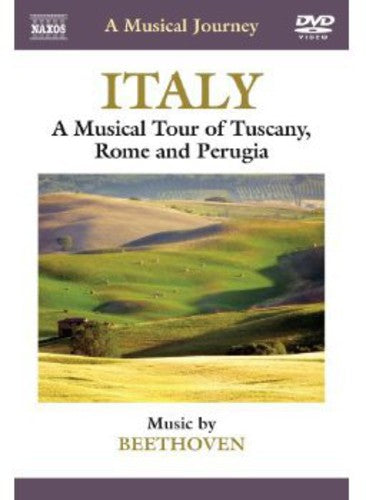
ITALY: A Musical Tour of Tuscany, Rome and Perugia (NTSC)
The Places The journey starts in the countryside near Arezzo, and passes from there to other districts of Tuscany, to the wine-producing fields near Montalcino, and thence to Rome and to the volcanic Lake Bracciano. The tour ends in the ancient town of Perugia, for long an artistic centre.
The Music The music of the tour consists of Beethoven’s Symphony No. 7 of 1812 and two overtures, Coriolanus and The Consecration of the House. The Coriolanus overture was written for a play by Heinrich von Collin on the plot familiar from Shakespeare, and the second overture for the opening of a new theatre in Vienna in 1822.
Picture format: NTSC 4:3 Sound format: PCM Stereo 2.0 Region code: 0 (worldwide) Running time: 54 mins No. of DVDs: 1
With a tradition going back to its formation in 1941, The United States Air Force Band has long been the Air Force’s premier musical organisation, inspiring audiences in America and all over the world. Many of the works on this album demonstrate the history and importance of flying, from Philip Wilby’s vision of a bygone era in Dawn Flight, Bruce Yurko’s Red Tail Skirmish dedicated to the heroism of Tuskegee Airmen in WWII, and the futuristic excitement of Asimov’s Aviary by Joel Puckett. The spectacular virtuosity of The United States Air Force Band can also be heard in Time Travels by the band’s chief arranger, Senior Master Sgt. Robert Thurston, and in the superb arrangement of three movements from Holst’s The Planets.
The All-Star Orchestra gives you a front row seat to the world’s greatest music, performed by top players chosen from over 30 great American orchestras, and conducted by Gerard Schwarz. The programs feature complete performances of popular masterpieces and world premieres of new works by leading American composers. Filmed in High-Definition with multiple cameras in and around the orchestra, the All-Star Orchestra celebrates the symphonic experience in the 21st c. Gershwin’s immortal Rhapsody in Blue is featured in the rarely heard original jazz-band version from the 1924 New York premiere. This iconic work is complemented by Aaron Copland’s 1925 jazz-age classic “Music for the Theatre.” Robert Beaser’s “Ground O” offers a contemporary musical perspective of New York after the attacks of 9/11. (Program 9: Visions of New York) This exotic orchestral showpiece is based on fantastical tales that - according to tradition - were told by the ingenious wife of a cruel Sultan so as to prolong her life for 1001 nights. Concertmaster David Kim conveys the voice of the wily heroine Scheherazade in virtuosic violin solos. (Program 10: 1001 Arabian Nights – The Legend of Scheherazade)
THE ALL-STAR ORCHESTRA Programs 9 & 10
Program 9: Visions of New York
George Gershwin: Rhapsody in Blue Aaron Copland: Music for the Theatre Suite Robert Beaser: Ground “O”
Program 10: 1001 Arabian Nights – The Legend of Scheherazade
Nikolay Rimsky-Korsakov: Scheherazade
Lola Astanova, piano David Kim, violin The All-Star Orchestra Gerard Schwarz, conductor
Recorded live from the Great Hall, Purchase College Performing Arts Center, New York, 26–27 August 2014
Picture format: NTSC 16:9 Sound format: PCM Stereo / Dolby Digital 5.1 / DTS 5.1 Region code: 0 (worldwide) Language: English Running time: 114 mins No. of DVDs: 1