Rossini: Overtures / Reiner, Chicago Symphony Orchestra
Sony Masterworks
CD
$11.98Apr 05, 2011
"These six overtures were recorded in a single day, November 22, 1958, at Orchestra Hall in Chicago. Intended originally by RCA Victor to be the stereophonic successor to Toscanini's recordings of five of the six, Reiner in this recording held to tempos in many cases a few seconds faster than Toscanini's; yet, notwithstanding, he managed to inject an element of geniality into the music absent in Toscanini's vivid thrust and forward drive. No one, however, could make The Barber of Seville Overture scintillate the way Toscanini did, be it with the New York Philharmonic or the NBC Symphony , but Reiner does bring a liquidity to the score that is quite refreshing. Reiner's The Thieving Magpie Overture and II Signor Bruschino Overture are even more successful, with sharp detail, bravura, and panache, totally exhilarating in their sparkling frothiness. Conversely, there is a decided lushness in the opening of The Silken Ladder Overture and in Reiner's approach to the Cinderella Overture that may not appeal to those who want the refined polish Karajan brought to the former or the tauter rhythms and dry finesse Abbado brought to the latter; but Reiner could, for all his discipline and precision, be a musical sybarite at times and he obviously relished this music. As if to make up for it, his opening to the William Tell Overture is more reserved, lacking the immediate plunge into darkness and mystery that characterized Toscanini's way with this music or the dramatic intensity of Leonard Bernstein in what is my preferred recording of it (but, actually, Reiner is only toying with the listener, holding back so he can finish in a flourish of brass that generates terrific excitement. The original recordings were magnificent sonically and that warmth, lushness, clarity, and vigor have been quite successfully transferred to the new format."
-- Jon Tuska, Fanfare [9/1990] Reviewing RCA 60387
Brahms: Symphonies No 1-4 / Zinman, Tonhalle Orchestra Zurich
RCA
CD
$21.98Mar 20, 2012
After his highly variable Mahler cycle, it's very good to be able to report that David Zinman is back in top form for Brahms. For the most part, these are splendid performances, beautifully played and recorded. The very opening of the First symphony sets the tone: rich, emphatic, but not exaggerated. Textures are clear, bass lines unusually audible. Zinman handles some of Brahms' most intransigent bits of orchestration, such as the opening of the Third symphony, with its perpetually syncopated accompaniment, with effortless mastery. The inner movements of all four symphonies are without exception perfectly paced, including the slow movements of the Second and Fourth symphonies.
Are there a few quibbles? Naturally. The introduction to the First symphony's finale lacks mystery, while the coda of the Second symphony's finale would have benefited from slightly more prominent brass and a surge of additional energy from the podium. On the other hand, the finale of the Third never has sounded better, the coda tremendously fulfilling, while the Fourth's passacaglia is really imposing, but also energetic. Here the trombones truly make their presence felt. In short, this set stands with the best, and I suspect its stature will only grow over time.
-- David Hurwitz, ClassicsToday.com
-----
Brahms had a special connection with Zurich. He attended the opening of the Tonhalle, the city’s famous concert hall, in 1895 and was the only living composer to be featured on the ceiling painting; it’s reproduced in the booklet for this set, part of the altogether splendid packaging. The latter-day descendants of the orchestra for that opening concert have here given us a cycle of symphonies with which I am sure the composer would have been very pleased.
The first thing that strikes you is the beauty and colour of the playing. Both times I’ve heard them live, it’s the Tonhalle strings that have impressed me most, rich and rounded, oozing with character. This makes them ideal for Brahms. The mellow beauty of the Second’s first movement suits them perfectly, but they also develop a distinctive sheen, even a slight hard edge, for the more high energy moments, such as the opening movement of the First or the invigorating downward sweep that opens the Third. There is also some sensational wind playing and some first rate solos, such as the oboe in the First and the clarinet in the slow movements of the Third and Fourth. The playing alone would be worth the asking price, but it’s Zinman’s dynamic conducting that holds the set together. His reading of each symphony carries a clear sense of a transformational journey which, for me, went beyond the ordinary. The transition from darkness to light in the First is obvious, but Zinman breaks it down still further so that there is ebb and flow in each movement: in the first movement’s Allegro, for example, there is an almost tangible feeling of the drama and tension of the first subject being tamed by the gentler lyricism of the second. The Second carries a steady trajectory towards the celebration of the finale, but Zinman takes this movement just a touch slower than many so that the ebullience is contained within a certain set of rules. The Third also seems to go on a steady path from the exhilaration of the opening to an increasing sense of melancholy which is almost - but not quite - solved by the finale. Only in the first two movements of the Fourth was that sense of direction a little lacking. The tension and energy ups dramatically with the Scherzo and the final Passacaglia becomes so intense as to be almost unbearable.
It helps that these live recordings were all taped within two days, so we have here an unusually coherent reading of Brahms’ symphonic oeuvre. Sections of the press have damned this set with faint praise, calling it a safe middle-of-the-road Brahms cycle, but for me it’s much more than that: it’s an intelligent, well argued reading of this great cycle which stands comparison with any Brahms set that has come my way in recent years. Zinman is very much in the traditional mould of Brahms interpreters, eschewing the approaches of Harnoncourt or Gardiner, but he argues convincingly that there is still a place for this in our 21st century and he certainly carried me along with him. The sound, by the way, is excellent, rich and bloomy with plenty of clarity for the inner voices.
Incidentally, for those who are interested in such things, Zinman observes all the exposition repeats. Live as these recordings are, the audience is exceptionally well behaved and there is not a hint of a cough throughout. Applause, and there must have been much, is also absent. My only quibble is that the CDs give us barely any time to digest one movement before the next begins, surely an unnecessary compression of space when there is so much spare time on each disc.
Sony Classical is pleased to announce the second solo album by exceptional young American organist, Cameron Carpenter, All You Need is Bach. Bach’s great keyboard masterpieces provide an ideal platform for Carpenter’s formidable creative gifts and the seemingly limitless possibilities of his dream instrument – his signature International Touring Organ. The album takes is cue from The Beatles’ classic “All You Need is Love”, where Bach’s Invention No. 8 in F major proudly rises out of the coda’s collage-like texture. Works include Contrapunctus IX from The Art of Fugue, Organ Sonatas in D minor and E-flat major, Prelude and Fugue in B minor, Invention No. 8 and, as the centerpiece, the great Passacaglia and Fugue in C minor. The latter holds a special place in Carpenter’s affections. “It is undoubtedly one of the Top 10 masterworks of all music, no matter how you evaluate it.”
A virtuoso composer-performer unique among organists, Cameron Carpenter’s approach is to smash the stereotypes of organists and organ music. Described as “extravagantly talented” (New York Times), and “smasher of cultural and classical music taboos,” (The New Yorker), Cameron is the first organist ever nominated for a Grammy Award® for his debut album, Revolutionary. All You Need is Bach is the second recording made on Cameron’s new International Touring Organ. The organ, designed by Cameron himself, is a mobile digital organ that is artistically and sonically equal to any of the world’s great organs and will challenge the way the world thinks about organs.
Issued complete for the first time, including several albums new to CD, is the Philips catalogue of the Netherlands Wind Ensemble - an ensemble that made a defining contribution to Dutch musical life in the 1970s. The Netherlands Wind Ensemble began life in 1959 as a wind quintet, but soon expanded to play Classical-era serenades and divertimenti which were hardly known at the time but have since been recognised and enjoyed as masterpieces of entertainment music, notably the Gran Partita of Mozart, the late Octet by Beethoven and the wonderful Octet-Partitas by his Viennese contemporary, Franz Krommer. Starting to record for Philips in 1968, the Netherlands Wind Ensemble immediately won critical praise for the technical precision of it's playing as well as the brilliance and wit of it's interpretations, whether led by it's regular conductor Edo de Waart (himself a former oboist and member of the ensemble) or played as true chamber music. The ensemble made one of the first comprehensive recordings of Mozart's wind music, including miniatures, no less delightful for their brevity and rarity, and a precious but little-known collaboration with the much-loved Dutch soprano Elly Ameling. The youthful, funky vibe of the Netherlands Wind Ensemble was captured by Philips both in exceptionally vivid recordings as well as kooky cover designs, which are reproduced on the sleeves of the issues. A booklet essay by Peter Quantrill outlines the history and character of the ensemble, drawing on a new interview with Edo de Waart. The repertoire extends into the nineteenth century with a classic account of the Wind Serenade by Dvorak - the ensemble's debut on disc - as well as ingenious arrangements of overtures and arias by Rossini, and a unique collection of 'little marches by great masters'. The Netherland Wind Ensemble's long-standing commitment to modern music is represented by the wind music of Richard Strauss and Stravinsky, and the pioneering Jazz Symphony by the Franco-American 'bad boy' of classical music in the 1920s and 30s, Georges Antheil, recorded live at the 1976 Holland Festival.
This recording is the second of a highly-rated three-volume Stravinsky series recorded by the London Philharmonic Orchestra with then Principal Conductor (now Conductor Emeritus) Vladimir Jurowski. This series documents Jurowski's year-long Stravinsky festival with the LPO in 2018, 'Changing Faces'. The festival surveyed Stravinsky's works, programed chronologically alongside his influences and those he influenced. The Fairy's Kiss is a work close to Jurowski's heart. The LPO had performed this work 17 times under his baton by the time of this recording, and the partnership between the conductor and the Orchestra culminates in this performance. It is rare to find a live performance recording of The Sleeping Beauty excerpts. The most recent commercial recording of the Pas de deux was 2012. Stravinsky was in the audience, as an 8-year old, for the premiere performance of Tchaikovsky's The Sleeping Beauty, a performance that was to have a profound effect on him as a composer. Stravinsky's music in the hands of Jurowski delivers live in concert a focus and clarity that is beautifully preserved and realised on these recordings.
CHOPIN ORBIT The eagerly anticipated second album by celebrated Japanese pianist and composer Hayato Sumino (aka 'Cateen') Available on CD & Vinyl. - Following the success of his acclaimed Sony debut Human Universe, Hayato Sumino-known globally as 'Cateen'-returns with Chopin Orbit, a conceptually rich and emotionally resonant album that places the music of Frederic Chopin at it's center. - Chopin, Sumino's favorite composer, has long been a gravitational force in his artistic life. That connection was first spotlighted during his standout performances at the 2021 International Chopin Competition and now takes full flight in Chopin Orbit. This unique collection features Sumino's original compositions inspired by Chopin's masterpieces, not as imitations but as creative echoes-melodies and motifs reimagined through the lens of a 21st century classical artist. - Included are pieces such as Chopin's Polonaise-Fantasie op. 61, Nocturne in C-sharp minor, Berceuse, and Raindrop Prelude, alongside Hayato's original works White Keys and Post Rain. Also featured are works by Thomas Ades, Leopold Godowsky, and Leos Janacek-highlighting Chopin's influence across generations
Pierre Boulez's early ambitions to become a concert pianist provided the impetus to write piano music as a composition student at the Paris Conservatoire. The Theme et variations pour la main gauche and Trois Psalmodies reveal his extraordinary talent in their compelling mix of energy, drama and playfulness. Presenting these works alongside two later compositions provides a unique glimpse into the full arc of Boulez's musical journey. These pieces are powerful, their emotions raw and unfiltered, offering listeners a chance to experience the early foundations and mature reflections of a master composer.
What happens when the illustrious brass sections of the Berlin and Vienna Philharmonic come together? The answer: The Philharmonic Brass Making it's debut in Vienna's Musikverein in April 2023 the group will come together for recording, tours and education work. Comprising some of the best-known faces in the brass world from Berlin, Vienna and their friends, the group includes Sarah Willis, horn and Paul Halwax, tuba. Their Debut album 'Overture!' was conducted by Tugan Sokhiev and released through Decca Classics. Now it's time for the following up album through the new label Supreme Classics: Italiana! Conducted by Maestro Riccardo Muti includes virtuoso arrangements of some of the best-known music including Verdi's Sinfonia di Nabucco, Rossini: Guillaume Tell - Overture and many more.
A genuine masterpiece inspires musicians to adopt, adapt, or transcribe it without losing any of it's greatness. Nevermind's four baroque aces, Anna Besson, Louis Creac'h, Robin Pharo and Jean Rondeau, have taken a creative look at Bach's famous Goldberg Variations and have made their own stylishly insightful 'variations' on the work. As they themselves explain: 'We needed only an informal rehearsal to grasp the incredible potential of a transcription for our ensemble. There have been other arrangements, but nobody has ever attempted this one before now, even though our instruments are among those most typically used in J.S. Bach's chamber music, in his many solo sonatas for flute, violin or gamba with bass continuo and obbligato harpsichord - and they also frequently feature in the arias of his cantatas and Passions.'
Ysaÿe: The 6 Sonatas on the Composer's Violin / Khachatryan
Naïve
CD
$18.99Apr 05, 2024
In this album, Sergey Khachatryan presents the first recording of Ysaÿe's 6 Solo Sonatas Op.27 on the composer’s Guarneri del Gesù violin - a magnificent, hypnotic instrument!
Ysaÿe’s Op. 27 is not new to Sergey Khachatryan, who has been performing the cycle in concert for a long time. Today aged thirty-eight and the precocious First Prize Winner of the International Sibelius Competition in 2000 and the Queen Elisabeth Competition in 2005, the Armenian violinist once more demonstrates his radiant maturity, akin to his sumptuous recording of Bach’s Sonatas and Partitas (naïve, 2008-2009, V 5181).
Here Sergey Khachatryan delivers an interpretation of heightened feelings, where what might otherwise come across as impish is deliberately turned into something fierce (the Prelude of Sonata No. 2, which uses the opening motif of Bach’s Partita No. 3), or that which is merely imitative becomes wild and relentless (the Finale of Sonata No. 4). He willfully emphasizes the popular inspiration underlying the complete collection, imbuing it with shadings and a sumptuousness previously unheard.
The pieces chosen and performed by the refined violinist Liliana Bernardi for this third CD, created with the auspices and support of the Associazione Nazionale Italia-Austria of Rome, admirably highlight the contribution given in the seventeenth/eighteenth centuries by Italian musicians to compositions for solo violin, according to the new aesthetic canons based on the sounds of nature and the movements of sentiments. (Vittorio Tedeschi - President of the Associazione Nazionale Italia-Austria)
On Darknesse Visible, Inon Barnatan brings together French and British composers with works by Maurice Ravel, Claude Debussy Thomas Ades and Ronald Stevenson. The album title is derived from Ades's piece of the same name and conveys some of the aspects that Barnatan finds most fascinating about the music on this album: all the pieces are inspired by stories or poems, and in all of them dark and light are intertwined. Ades and Stevenson both take their inspiration from existing pieces, by Dowland and Britten respectively. Ravel's Gaspard de la Nuit and La Valse showcase the evocative power and colour of his music, while Debussy's Suite Bergamasque contains the world-famous Clair de lune.
Having completed the entire trilogy of Handel's Concerti grossi, the Akademie Fur Alte Musik Berlin presents a recording of the first six Concerti grossi, Op. 6 by the composer, ensemble leader and violin virtuoso Arcangelo Corelli, who received the almost cult-like reverence during his lifetime. The composer had been experimenting with this one of the most distinctive forms of instrumental music of the Baroque era since the late 1670s, but it was only towards the end of his life that he sought to publish these compositions and selected only twelve exemplary pieces from what was probably a much larger collection. He laid the foundations of this instrumental form for future composers such as the aforementioned Georg Frederic Handel, who paid tribute to the Italian Baroque master with his two opuses. The Akademie Fur Alte Musik Berlin and it's two concertmasters, Mayumi Hirasaki and Georg Kallweit, who demonstrate their extraordinary virtuosity, only prove why they are regarded as one of the most influential period-instrument ensembles of today. The Akademie Fur Alte Musik Berlin has a substantial PENTATONE discography, including the Diapason d'Or awarded CANTATA with Bejun Mehta (2018), Handel's Concerti grossi Op. 3 and 6 (released in 2019 and 2020), Telemann's Miriways (2020), Handel's Messiah (2020), Haydn's L'isola disabitata (2021), La Passione with Christina Landshamer (2022), a recording of Mozart's Paris and Haffner symphonies and the Oboe Concerto with Xenia Loffler (2023), Telemann's Ino (2024), and a recording with Mozart's symphonies Nos. 29 & 33 and the Clarinet Concerto with Ernst Schlader (2024).
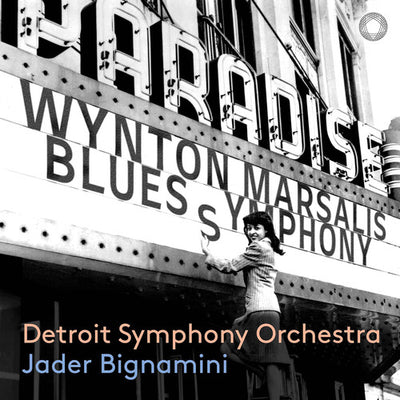
Marsalis: Blues Symphony / Bignamini, Detroit Symphony
PENTATONE
CD
$19.99Mar 14, 2025
The Detroit Symphony Orchestra and it's Music Director Jader Bignamini present Wynton Marsalis' Blues Symphony. The piece is a triumphant ode to the power of the blues and the scope of America's musical heritage. With a blend of influences from ragtime to habanera, the piece takes listeners on a sonic journey through America's revolutionary era, the early beginnings of jazz in New Orleans, and a big city soundscape that serves as a nod to the Great Migration. Detroit being one of the most vibrant melting pots of musical cultures in the US, the Detroit Symphony Orchestra seems the ideal advocate for this original contribution to the symphonic repertoire. The recording is also the first with Jader Bignamini, giving a new dimension to his music directorship. Wynton Marsalis is a world-renowned trumpeter, bandleader, composer, and a leading advocate of American culture. Jader Bignamini has worked with the world's leading orchestras and opera companies, preferably conducting without a score to guarantee maximum engagement with his players. The Detroit Symphony Orchestra, America's fourth-oldest, has a history as varied and exciting as that of it's hometown.
Sacred Music: From Bach to Bruckner / Herreweghe, Collegium Vocale Gent
PHI
CD
$53.99Oct 06, 2023
Philippe Herreweghe and Collegium Vocale Gent have made a lasting impression on the Bach discography with their many recordings devoted to the Kantor. They have also explored other sacred repertoires by Beethoven, Haydn, Dvorák and Bruckner, to which they have brought all their excellence and sensitivity. Here they are together for the first time in a boxed set of 11 CDs.
Brooklyn based SydeBoob Duo is dedicated to pushing the boundaries of contemporary performance in repertoire for soprano and flute, bringing their virtuosity to ambitious works that highlight their committment to broad representation alongside the highest aesthetic standards. On this debut full length release, they perform works by Rebecca Saunders, Eric Moe, Anthony Braxton, Ramin Akhavijou, Max Johnson, and Beat Furrer that are both landmark works for the instrumentation and core works that have shaped Sydeboob as an ensemble.
This album features Christmas music for the piano in a timeless journey through the decades and centuries. These songs have been through a remarkable evolution over the course of several centuries, with the changes they have undergone reflecting the shifting musical styles and cultural influences that prevailed in various times.
The Concerto Koln goes on a journey of discovery and contrasts the famous Johann Sebastian Bach with the now unknown Johann Adolf Scheibe?. The ensemble is accompanied by the excellent soprano Marie Sophie Pollak. Together they present the two rivaling composers in a way, where instrumental and vocal composition by Bach and Scheibe alternate on the album?.
Rachmaninoff Reflections - Piano Works / Inon Barnatan
PENTATONE
CD
$19.99Nov 10, 2023
Inon Barnatan presents Rachmaninoff Reflections, offering some of the composer’s most cherished piano works, including his Moments musicaux, Prelude in G-Sharp Minor and Barnatan’s own arrangement of the Vocalise. Centrepiece of this project is Barnatan’s breathtaking new piano arrangement of the Symphonic Dances. Inon Barnatan is one of the most admired pianists of his generation (New York Times). His Pentatone discography consists of Time Traveler’s Suite (2021), Beethoven’s complete cello sonatas with Alisa Weilerstein (2022), as well as complete recordings of Beethoven’s piano concertos together with the Academy of St. Martin in the Fields and Alan Gilbert (2019 and 2020).
Learn more about this recording on the Naxos Classical Spotlight podcast!
Mandolinist Alon Sariel continues his series of Bach transcriptions with Plucked Bach II. On his first Plucked Bach album, Sariel played the Cello Suites on a wide range of plucked instruments. Yet in this new recording, he performs works for the lute, organ and violin - all performed on 'only' two types of mandolins. By offering a distinctive and groundbreaking interpretation of his own transcriptions and arrangements, Sariel manages to breathe new life into some very well-known works by Johann Sebastian Bach.
The iconoclast Toccata and Fugue in D Minor (BWV 565) for the organ receives a contemplative and intimate character on the mandolin. Excerpts of the Lute Suite (BWV 998) and the Violin Partita No. 3 in E Major (BWV 1006) are drawn in a whole new palette of colors. For Bach's Violin Sonata No. 2 in A Minor (BWV 1003), Alon Sariel shows the in-credible suitability of the mandolin for Bach's music. And as an encore, you will hear his rendition of Ysaÿe's dazzling Obsession. Alon Sariel is one of today's most versatile performers, known as a multi-instrumentalist in the realm of plucked strings with a growing reputation as a fascinating Bach interpreter.
Pianist Yulianna Avdeeva makes her Pentatone debut with Resilience, presenting music by Szpilman, Shostakovich, Weinberg and Prokofiev, composers who – each in their own way – maintained themselves in times of great instability. The focal point of this album is Wladyslaw Szpilman, a Polish Jew who survived World War II thanks to the power of his music, and is widely known as the title hero of Roman Polanski’s award-winning film The Pianist. Incited by the unique opportunity to play on Szpilman’s house piano, this recording project helped Avdeeva to cope with the challenges of our current times, and it may offer fortitude and consolation to listeners as well. A pianist of fiery temperament and virtuosity, Yulianna Avdeeva plays with power, conviction, and sensibility, having won over audiences all over the world.
Since 2017, violinist Emmanuelle Dauvin plays whilst accompanying herself on the organ pedalboard - recalling the musical technique of Nicolaus Bruhns at the end of the seventeenth century. This is OVNI Baroque : a spectacular yet forgotten musical practice. Alongside soprano Heather Newhouse, she created Cantata a 2 : a concert programme of arias and instrumental pieces, for soprano, violin and bass, by J.S. Bach, presented here in an innovative arrangement. The arias bring a consolidating balance to the sonata trio in which the text unfolds from the vocal line. From the purity of the trio by two, emerges a bounteous expression.
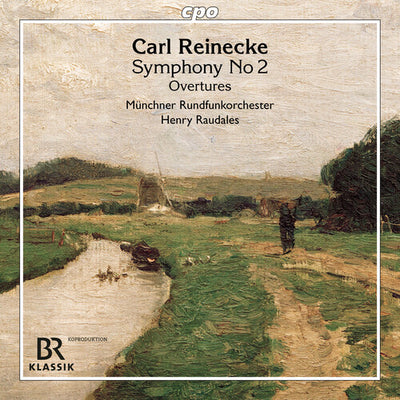
Anyone interested in Romantic music will inevitably come across the name Carl Reinecke. Countless aspiring composers from Germany and Scandinavia went to him to learn their craft. To those who wanted to make it in the city of the famous Gewandhaus Orchestra, he was an institution. Reinecke the composer enjoyed great success during his lifetime. However, as a preservationist of musical traditions, he was quickly forgotten after his death. The inevitable course of musical development swept him out of the way. This was not due to the quality of his music. Not only does his compositional technique stand up to scrutiny, but also his music as a sonic experience. This is particularly true of his three symphonies, all of which are now available in our catalogue with the release of the powerful Second in C minor
Profesión - Guitar Music of Villa-Lobos, Ginastera & Barrios / Sean Shibe
PENTATONE
CD
$19.99Nov 17, 2023
Sean Shibe returns to the classical guitar on Profesión, bringing together works by Agustín Barrios, Heitor Villa-Lobos and Alberto Ginastera. The album derives its name from Barrios’s “Profesión de Fe” (profession of faith), a poem which he often used as a preface to his concerts. The poem references indigenous mythological deities, and praises the power of the guitar as the ultimate conduit to the secrets of the divine South-American destiny. Barrios’s La Catedral and Julia Florida are combined with Villa Lobos’s 12 Études, while Ginastera’s Sonata completes the program.
These works by South American composers begin with homage and pastiche in reverence of the Old World, but build towards a totally original idiom - musical magical realism. The repertoire is voluminous, indulging in excess, and narcotic, and as such creates a counterweight to the reserved and introspective nature of Shibe’s acclaimed classical predecessor album Camino.
This will be Shibe’s first-ever album focusing on repertoire that was originally written for the classical guitar, and he plays a Hauser copy built for Julian Bream. It was considered one of the best instruments of the 1930s, and fits the sound world of this program like a glove.
REVIEWS:
It’s an extraordinary account [of the Villa-Lobos], bursting with nuance and personality and easily rivaling Julian Bream’s classic, late-1970s version.
— Gramophone
This is a gleaming and brilliant album that doesn’t fail to awaken the senses to the exhilarating world of un-adulterated acoustic sound.
A rarely heard, fascinating solo instrument and an internationally multi-award-winning performer: on the new GENUIN album "From Keys to Strings", we are presented with an exciting combination! For her prizewinner production from the 2023 ARD Music Competition, harpist Tjasha Gafner has put together an unusual program in which she arranged works for her instrument. These are pieces that Joseph Haydn and Wolfgang Amadeus Mozart originally wrote for keyboard - or, in the case of Johann Sebastian Bach, for lute (or a lute-harpsichord?). The clarity and transparency of both transcription and interpretation by this outstanding young harpist provide surprising insights and new listening experiences!
Bach on Nine Strings - Suite, Partita and Sonata for Two Pic
Arcana
CD
$20.99Feb 27, 2026
Two violoncellos piccoli, one with four strings, the other with five, making a total of nine strings: it is as if a new instrument were born, an organ with strings instead of pipes, to perform virtuoso polyphonic masterpieces with a larger, enriched sound palette. Taking Gustav Leonhardt's keyboard transcriptions of the Suites, Sonatas and Partitas as his point of departure, Mario Brunello adds a new sonic dimension to three of Bach's solo pieces for unaccompanied violin and cello, making the polyphony previously confined to only four strings audible. He is partnered by his longstanding friend the specialist Mauro Valli, who has already appeared on Arcana with his personal reinterpretation of the Cello Suites (Bach in Bologna A459, 2019).
The final volume in a new groundbreaking and much-praised complete symphony cycle of Ferdinand Ries' (1784-1838) symphonies by the Tapiola Sinfonietta and conductor Janne Nisonen includes the composer's two final statements in the symphony genre. Like most of his symphonies, also Ries' Symphony No. 6 was premiered in London in 1822. His 7th Symphony, written a decade later, remained in the shadows and was published only in 2004. Both works, however, are full of discoveries.