de Falla, Mussorgsky, Ravel & Scriabin: Intrigues of the Dar
Channel Classics
CD
$20.99Sep 06, 2024
Anna Fedorova explores the Intrigues of the Darkness in these programmatic and extremely virtuosic works for solo piano. The journey from darkness to light begins with Scriabin's terrifying "Black Mass" Sonata. The work represents a satanic ritual that is possessed by the spectre of the Mephistophelian Liszt. de Falla's Suite from El Amor brujo conjures a mysterious world, full of magic, rituals and ghost visitations. Ravel described his Gaspard de la nuit as "romantic and of transcendent virtuosity". These highly evocative pieces are based on Aloysius Bertrand's prose poems depicting scenes of a hanged man sighing on the gallows and a devilish dwarf. Mussorgsky's Pictures at an Exhibition portrays many scenes of darkness but emerges into light with the Great Gate of Kiev, in which triumphant episodes alternate with moments of religious contemplation.
Following the departure (of his own accord) of it's founder Damien Guillon, Le Banquet Céleste has reinvented itself as a collective of musicians and singers, all committed to continuing to explore the Baroque repertoire with the stylistic rigour that has established the ensemble's reputation. For this first recording by the "new" Banquet, Bach is in the spotlight, with Cantatas BWV 85 and 115 featuring violoncello piccolo obbligato: "Smaller in size, the violoncello piccolo has a truly special timbre that can be grave and passionate, but also wiry and sensitive. In the arias where it engages in concertante dialogue with the vocal soloist, it most often embodies the voice of tenderness and consolation, and the confident promise of the hereafter," writes musicologist Corinne Schneider. The Sixth Suite for Cello, BWV 1012, completes the programme: "Radiant and joyful, it sounds like a deliverance, in perfect accord with the themes developed in these two cantatas," she concludes. Céline Scheen, Alexander Chance, Thomas Hobbs and Benoît Arnould are the vocal soloists, and Julien Barre plays the piccolo cello.
J. S. Bach: Goldberg Variations (Arr. for Double Reed Trio b
Leaf Music
CD
$18.99Feb 13, 2026
Bach's Goldberg Variations stands among the most profound works in the Western canon-an inexhaustible exploration of harmony, structure, and human expression. Originally written for harpsichord, this timeless masterpiece has inspired countless interpretations across instruments and generations. In this remarkable new arrangement by Caitlin Broms-Jacobs for oboe, English horn, and bassoon, the Tacamis Trio reimagines Bach's contrapuntal writing through the warm and expressive voices of the double reed family. Formed within the Manitoba Chamber Orchestra, the Tacamis Trio [Caitlin Broms-Jacobs (oboe/arranger), Tracy Wright (English horn), and Allen Harrington (bassoon)] brings over a decade of shared artistry and ensemble unity to this recording. Their performance unites warmth and transparency, allowing each voice to emerge naturally within Bach's intricate counterpoint. This project, conceived during the stillness of the pandemic, grew from a period of isolation into a celebration of collaboration and renewal. Through the process of arranging and performing the work, the trio uncovered fresh dimensions of colour and dialogue in Bach's music, affirming it's boundless adaptability and emotional reach. Goldberg Variations for double reeds is at once a homage and a discovery-a return home through sound, guided by friendship, resilience, and Bach's enduring genius. About the Artists Caitlin Broms-Jacobs is principal oboist of the Manitoba Chamber Orchestra, praised for her "gorgeous singing tone" and "sensitive musicality" (Winnipeg Free Press). She performs widely across Canada as a soloist and chamber musician and is one half of the oboe-piano duo Fierbois. Tracy Wright is the English hornist of the Manitoba Chamber Orchestra and a longtime member of the Winnipeg Symphony Orchestra. Known for her expressive sound and collaborative artistry, she appears regularly in chamber, orchestral, and new-music performances across the Prairies. Allen Harrington is professor of woodwinds at the University of Manitoba's Desautels Faculty of Music, where he teaches bassoon and saxophone. A versatile performer, he appears frequently as a soloist and chamber musician and serves as principal bassoonist with the Manitoba Chamber Orchestra.
Musica viva KALITZKE AND FERRARI Johannes Kalitzke: Zeitkapsel - Totentanz fur großes Orchester ("Time Capsule - Dance of Death for large orchestra") Luc Ferrari: Histoire du Plaisir et de la Desolation ("A Story of Pleasure and Desolation") On November 10, 2023, Johannes Kalitzke presented himself in a double role as conductor and composer ("the one makes you want the other") in the Herkulessaal of the Munich Residenz with the world premiere of his Zeitkapsel - Totentanz for large orchestra ("Time Capsule - Dance of Death for large orchestra"), commissioned by musica viva, as well as with Luc Ferrari's Histoire du Plaisir et de la Desolation, a sonic search for "new sensuality". - Both compositions can be experienced in this CD live recording of the musica viva concert. Johannes Kalitzke (born 1959) is a renowned German conductor and composer. Zeitkapsel - Totentanz for large orchestra was commissioned by Bavarian Radio's musica viva in 2022-2023. The world premiere documented on this CD took place on November 10, 2023 in Munich. Sebastian Schottke was responsible for the sound direction. Representing time capsules in the material sense, the orchestral piece contains musical artifacts from different times and cultures that were rediscovered at a later date and that characterise the sonic context of the piece, above all the first ever acoustic recording in history: a recording of sound waves on wax paper from 1860. Fragments of it can be heard at the end of the piece, like a revelation. Histoire du Plaisir et de la Desolation for orchestra by Luc Ferrari (1929-2005) was written in 1979-1981 as a Radio France commission for the Orchestre National de France, and was premiered in Paris in 1982 by that orchestra under the direction of Michael Luig. Orchestral music is not necessarily what one associates with the name Luc Ferrari. The composer, who died young, became known primarily as an exponent of musique concrete, opening up new creative paths in his use of tape technology. His sonic quest leads from the promising opening movement Harmonie du diable to the double-edged nature of pleasure (Plaisir-Desir), only to fail brilliantly with the "rupture of all logic" in the final Ronde de la desolation. ? Johannes Kalitzke conducts the world premiere of his orchestral piece Zeitkapsel - Totentanz for large orchestra; live recording from the Herkulessaal of the Munich Residenz as part of Bavarian Radio's musica viva concert series ? He also conducts the impressive and rarely performed orchestral piece Histoire du Plaisir et de la Desolation by the French composer and sound artist Luc Ferrari ? The conductor and composer Kalitzke conducts the Bavarian Radio Symphony Orchestra Bavarian Radio Symphony Orchestra Johannes Kalitzke, conductor
Original & Counterfeit - Concertos after BWV 1052, 1053, 105
Challenge Classics
CD
$16.99Oct 24, 2025
For a long time, the fact that three of J.S. Bach's harpsichord concertos are arrangements of earlier violin concertos led scholars to suspect that the remaining concertos were also adaptations of lost works for strings or winds, prompting several musicologists to attempt reconstructions. However, recent research has shown that they are more likely arrangements of earlier keyboard works. But what would Bach have done if he had to perform one of these pieces again and wished to showcase a different solo instrument? Ensemble Odyssee explores this question with three brand-new arrangements, presented alongside Bach's own arrangement of his Fourth Brandenburg Concerto, each piece showcasing the virtuosity of the ensemble's four core members.
Following her acclaimed debut Diaries, pianist Tiffany Poon returns with Nature, an album that explores the evocative power of French music in capturing the beauty of the natural world from the delicate shimmer of water to the quiet mysteries of the forest and the animals found within. Nature, which Tiffany recorded at legendary Provence recording studio Miraval Studios (Pink Floyd, Sade, Nick Cave and the Bad Seeds) with producer Damien Quintard, brings together works by French composers across centuries, united by an instinctual admiration for the world around them. Guided by intuition and deep personal connection, Tiffany's curated selection featuring pieces by Ravel, Debussy, Rameau and Daquin, moves beyond the structured rigor of Germanic tradition into the fluid, sensuous soundscapes of the French repertoire. Inspired by Rameau's belief that music is rooted in nature itself, she curates a program reflecting her love of animals, woods, and water - translating them into vivid musical expressions. Nature is a testament to music's ability to mirror the natural world, inviting listeners to embrace it's beauty with instinct and abandon.
A re-release of his critically accalaimed recordings of Johann Sebastian Bach´s Secular Cantatas. Recordings from 1994 - 2000, part of the project The Complete Bach on 172 CDs. hänssler CLASSIC is proud to present Helmuth Rilling's landmark recording of the Secular Cantatas in a new collector's edition. Rilling was the first conductor to ever record the complete Bach cantatas and still, 25 years after they were first released in celebration of the Bach tercentennial in 1985, they remain the standard by which all other interpretations are judged. This box set includes timeless performances featuring many of Europe's finest singers at the height of their careers.
Imagining how Bach himself might have transformed the Goldberg Variations for a chamber group, Rachel Podger and Brecon Baroque present a pioneering new arrangement of the Goldberg Variations by Chad Kelly. Employing a variety of instrumental combinations from a typical Bach ensemble of single strings, oboe, flute, bassoon, and harpsichord, these newly-crafted Goldbergs illuminate exquisite responses to the various historical genres inherent in Bach’s scores.
This beloved masterpiece was composed through a period of personal tumult for Bach; two unsuccessful job applications, the premature death of his son Gottfried, and criticism of his music in a prominent Hamburg publication. Bach’s outpouring of beauty in the Goldberg Variations has long captured audience’s imaginations - Chad Kelly, Rachel Podger, and her fleet Brecon Baroque preserve the work’s exquisite intricacy whilst adding breadth, texture and color to its emotional backdrop. This revisioning of Bach’s Goldberg Variations is a perfect transformation of the work for the modern era.
Louise Farrenc's Rondos - heard here in world premiere recordings - were composed within the period of a decade, and are delicious examples of her art: graceful, elegant and expressive. Some of them are based on operatic themes or on songs, while others are simpler and intended for younger performers. Volumes 1 and 2 of this 6 album cycle can be heard on GP912-13 and GP934.
Organist and pianist James McVinnie makes his PENTATONE debut with Dreamcatcher, an intimate sequence of contemporary classical music centred around the act of imagining. The recording features the organ of St Albans Cathedral—an epoch-making instrument closely associated with legendary organists Peter Hurford and Ralph Downes. The piano segments of the album were recorded on a Steinway D of exceptional beauty at Studio Richter Mahr, co-founded by composer Max Richter and visual artist Yulia Mahr.
A mesmerising sonic trip, Dreamcatcher reflects the unique artistic persona of McVinnie, whose mastery of core organ repertoire extends to an extensive body of work written for him by leading contemporary classical composers, as well as collaborations in the world of electronic and experimental music. The album features works by Nico Muhly, Meredith Monk, Laurie Spiegel, John Adams, inti figgis-vizeuta, Gabriella Smith, Giles Swayne, Bryce Dessner & Marcos Balter. The album's title is taken from Marcos Balter’s work of the same name, written in response to the child separation crisis at the US-Mexico border in 2018—“dreamers” being the name given to children separated from their families by the Trump administration’s immigration policy. This record also presents the first ever recording of Giles Swayne's Riff-raff made on the St Albans organ for which the work was written in 1983—McVinnie’s rendition embodying a perfect synergy between the piece’s minimalist roots and the modernist tonal philosophy of this instrument.
Through his boundless approach to music making, innovative programming and captivating musicianship, James McVinnie has carved out a unique career as an organist and keyboard player.
“McVinnie's Dreamcatcher is a smartly curated album, where a thoughtful artist challenges us — with extraordinary results — to think of the pipe organ as an instrument of our time.” – Tom Huizenga, NPR All Things Considered
Bach: Mass in B Minor / McGegan, Cantata Collective
Avie Records
CD
$16.49$32.99Save 50%Apr 05, 2024
San Francisco-based early music ensemble Cantata Collective continues its major series of J. S. Bach’s choral works with the Mass in B Minor, a towering testament of sacred music and the composer’s crowning achievement of his final years. With celebrated conductor Nicholas McGegan, four of today’s most distinguished early music vocal soloists and a refined chamber choir, this live recording exudes a spontaneity that reveals the depth and passion of Bach’s glorious affirmation of faith.
REVIEW:
Some of the most impressive choral singing in this recording is heard in the central three choruses of the Symbolum Nicenum, the crowning glory and some of Bach’s best music in the entire Mass. The Cantata Collective’s choral forces shine in their expressive use of color and dynamic shading in the long arching lines of “Et incarnatus est” and “Crucifixus” and are able to hold their own in “Et resurrexit” — due, in part, to McGegan’s careful balancing and phrasing.
"The violinist’s playing is extraordinary — as fresh and improvisatory as though he were composing each sonata on the spot, but also infused with an infectious emotional ardor." -- Cleveland Classical
The Mystery Sonatas by Austrian composer Heinrich Ignaz Franz von Biber, believed to have been penned in the 1670s, remain unsurpassed for their virtuosity and extended use of scordatura, a unique tuning system that underscores different aural colours and timbres of the violin, thereby illuminating the pictorial themes of the Rosary – the processions devoted to major moments in the lives of Christ and the Virgin Mary – which Biber’s work depicts.
Singaporean violinist Alan Choo, the vibrant leader of acclaimed baroque ensemble Apollo’s Fire, headlines a dynamic and descriptive recording of the Mystery Sonatas, enhancing the scordatura with six different violins that require 15 individual tunings. He explains, “The use of a unique scordatura tuning for each sonata means that a violinist needs to use multiple violins if performing several of the pieces in the same week – each violin kept at the tuning of its respective sonata. Otherwise, the constant re-tuning of a violin would destabilize its tuning. I used a total of six violins in this recording. The personality of each instrument shines through.”
Joined by a chamber ensemble of his Apollo’s Fire colleagues, including founding director Jeannette Sorrell on harpsichord, Choo navigates Biber’s extended techniques with aplomb and devotion to the 15 programmatic sonatas which are compiled into three cycles – the Joyful Mysteries (the Angel Gabriel delivers the news to Mary that she will be the mother of the Messiah), Sorrowful Mysteries (Jesus’ agony, knowing he is about to be betrayed) and Glorious Mysteries (the Resurrection of Christ and his ascent to heaven) – and are crowned by the timeless finale, Passacaglia for solo violin.
REVIEWS:
[The Mystery Sonatas'] extraordinary technical challenges include Biber’s requirement that the soloist play violins with strings “mis-tuned” (scordatura) from the normal G-D-A-E pitches for 13 of the 15 sonatas, creating different resonances in the instrument for expressive purposes. For somber subjects like “The Agony in the Garden,” the open strings play A-flat – E-flat – G – D, clashing pitches “evoking a sense of struggle,” as Choo writes. For triumphant subjects like “The Ascension,” the open strings are tuned to create a “glorious” C-Major chord. For the recording, Choo has used a total of six instruments to avoid constant retuning that would be destabilizing.
The violinist’s playing is extraordinary — as fresh and improvisatory as though he were composing each sonata on the spot, but also infused with an infectious emotional ardor.
An important aspect of this recording project is the realization of thebasso continuoline, which could — as on other recordings — simply be chorded by organ or harpsichord. Never one to pass up the opportunity to tell a vivid story, Sorrell writes, "as a continuo player myself, I have always felt that the extraordinarily imaginative writing in Biber’s masterpiece calls for an imaginative and colorful approach to the accompaniment."
Thus Choo’s superb supporting cast includes harpsichord (Sorrell), chamber organ (Peter Bennett), cello and viola da gamba (René Schiffer), archlute and Baroque guitar (Brian Kay), theorbo (William Sims), triple harp (Anna O’Connell), and viola da gamba and lirone (Kivie Cahn-Lipman). There’s even a bit of percussion (Brian Kay) to accompany theAria Tubicinumin “The Ascension.” Used judiciously and only rarely all together, they add texture and depth to the sonatas.
Even if you’re not into Roman Catholic mysticism, this recording should be treasured by fans of early Baroque music.
With a keen sense of musical poetry, pianist Jurg Hanselmann explores the early piano works of Josef Gabriel Rheinberger. The twelve character pieces for the 'new' piano (1864) present the young Liechtenstein composer as a true master of musical miniatures: from the light, dance-like Duettino to the mysterious Notturno to the brilliant Etude and moments of heartfelt melancholy. The program is complemented by the rarely performed Four Fugues for Piano (1862), which impressively showcase Rheinberger's masterful contrapuntal artistry. All works are world premiere recordings. With rich color, clarity, and heartfelt expression, Jurg Hanselmann opens the door to Rheinberger's previously little-known piano universe.
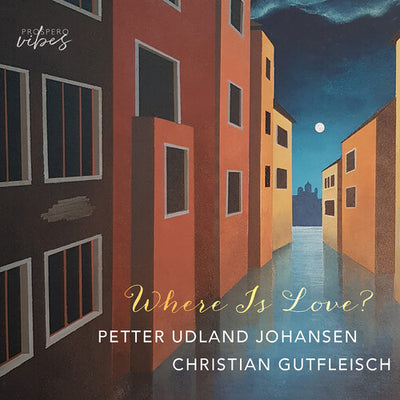
Petter Udland Johansen has been known for years as an exceptional interpreter of early music. With his distinctive voice and keen sense of style and text interpretation, he has made a name for himself as a specialist in repertoire from the Middle Ages to the 18th century. Now he is opening a new chapter: on his album Where Is Love, the versatile singer turns his attention for the first time to the great songs of the American Songbook timeless classics by George Gershwin, Cole Porter, Jerome Kern, Richard Rodgers and other masters. Johansen is joined by Christian Gutfleisch, his ideal musical partner at the piano. Gutfleisch performs on a Bluthner grand piano from 1910, whose warm, velvety tone forms a poetic bridge between past and present. The instrument seems to carry within it the sound world of the very era in which many of these songs were written - while offering an abundance of color and intimacy that perfectly suits the duo's chamber-like approach.
Encounter brings together two towering works of contemporary chamber music that speak across cultures, histories, and inner worlds. Osvaldo Golijov's The Dreams and Prayers of Isaac the Blind and Peteris Vasks' String Quartet No. 6 arise from profoundly different traditions-Jewish mysticism and Baltic spirituality-yet meet in a shared search for truth, memory, and transcendence. Both works are intensely personal, rooted in lived experience and belief, and animated by music's power to give voice to what lies beyond words: longing, suffering, hope, and illumination. In this recording, these worlds do not merely coexist; they listen to, reflect, and transform one another. Performed by the Arethusa Quartet with clarinetist Chen Halevi, Encounter is also a meeting of artistic journeys. Golijov's ecstatic, ritual-like score unfolds as a spiritual ascent through dreams, prayers, and blindness-understood as deeper inner vision-while Vasks' Sixth Quartet traces a life's arc from farewell and remembrance to a final, hushed encounter with transcendence, illuminated by echoes of Beethoven. Across both works, vulnerability and intensity are balanced by stillness and song, darkness by light. What emerges is an album that feels at once intimate and universal: an affirmation of shared humanity, and a reminder of music's enduring ability to connect past and present, earth and spirit, performer and listener. = Curiosa is conceived as a personal "cabinet of curiosities" by violinist Jorge Jiménez, bringing together music that entered his life through years of travel, collaboration, and discovery. The album spans laments, dances, preludes, fugues, and songs from both renowned and anonymous sources, ranging from the Middle Ages to the Baroque and beyond. Each piece is selected for it's emotional depth, strangeness, and expressive power, forming a living repertoire shaped in rehearsals, late-night conversations, concerts, and recording sessions. Central to the project is Jiménez's fascination with unaccompanied music and historical instruments, particularly the baroque violin and vielle, whose raw and earthy sound transports the listener into earlier sound worlds. Throughout Curiosa, Jiménez weaves together personal heritage, musical memory, and imaginative storytelling. His own arrangements connect Bach, Dowland, Strozzi, Gaspar Sanz, and traditional tunes with vivid images. Joined by Joy Smith on early harps and Daniel Garay on historical percussion, and performing with his ensemble Tercia Realidad, Jiménez blends historical insight with spontaneity and improvisation. The result is an album that feels both intimate and expansive-music passed "between hands, ears, and hearts," constantly transforming while remaining deeply rooted in shared curiosity and human connection. Jorge Jiménez: "These pieces entered my life through the extraordinary musicians and ensembles I've been fortunate to work with across Europe. They form a living repertoire shaped in rehearsal rooms, late-night conversations, recording sessions, and concerts." = During the darkest of the lockdowns, I took my daughter to an open field near our home. In a time when the world felt shuttered and small, walking was our only escape from the suffocating stillness. As we reached the field, a sudden sensation washed over me-a quiet awakening. It wasn't just the spring breeze or the scent of the grass; it was a sudden reminder of what being alive meant. I felt I had been touched by Zephyr, the Greek god of the west wind, sparking a renewed wish to create and perform for the world once more. Liberte´: A piece exploring and searching for emotional freedom. Zephyr: Named after the gentle west wind, this track served as the primary source of inspiration for the entire album. Fushigi no Kuni: Translating to "Wonderland" in Japanese, this piece was inspired by Alice's Adventures in Wonderland written by Lewis Carroll. A Troubadour in the Moonlight: A composition and improvisation depicting a minstrel serenading a loved one beneath the moon. For Misato: A heartfelt dedication to Misato-san, my dear friend who departed too young. The five songs above are composed by Yukari. Eurus, Suibokuga, Pandora's Box, Don't Follow the Piper, and Au crépuscule are collective improvisations. = "We can imagine some eyebrows being raised at the description of Dora Pejacevic as a contemporary of Brahms; the two composers were born more than fifty years apart, and their lives only overlapped by twelve years. Yet both works by Pejacevic are unmistakably from the same compositional lineage as that by Brahms; and both are works written early on in Pejacevic's remarkable (and, sadly, all-too-short) life. Both pieces belong clearly to the romantic tradition, displaying no hint of the more modernist directions which her later works would take. We were immediately intoxicated by the passionate sweep of Pejacevic's Piano Quartet, but also the tenderness of it's slow movement, and felt it would make the perfect bedfellow for the First Piano Quartet of Brahms, a piece to which Tom has felt particularly close since student days. Brahms's Piano Quartet is justly one of the best-loved of all chamber works, and few works are more exhilarating to perform: the first movement offers an abundance of glorious themes; the second takes us to a mysterious dreamworld; the third luxuriates in expansive lyricism; then the fiery virtuosity of the gypsy finale sends us headlong to the finish line. This album brings us to the end of our recorded journey through Brahms's three piano quartets, and it has been the greatest privilege and joy to record these works, alongside three major piano quartets by composers who deserve to be far better known. However, we are pleased to say that the series does not end here: looking beyond the piano quartets, we have further albums in preparation, pairing Brahms with his brilliant and lesser-played contemporaries." -Kaleidoscope Chamber Collective
The Brussels court attracted some of the greatest composers and organists of the time at the beginning of the 17th century, including Peter Philips, Peeter Cornet, John Bull, and, a little later, Abraham Van den Kerckhoven, all of whom explored new ways of making organs sound. Flemish and Walloon organ builders throughout Europe, and in Spain and France in particular, were building instruments at that time that were to have a profound influence on organ building in those countries.
Curiosa is conceived as a personal "cabinet of curiosities" by violinist Jorge Jiménez, bringing together music that entered his life through years of travel, collaboration, and discovery. The album spans laments, dances, preludes, fugues, and songs from both renowned and anonymous sources, ranging from the Middle Ages to the Baroque and beyond. Each piece is selected for it's emotional depth, strangeness, and expressive power, forming a living repertoire shaped in rehearsals, late-night conversations, concerts, and recording sessions. Central to the project is Jiménez's fascination with unaccompanied music and historical instruments, particularly the baroque violin and vielle, whose raw and earthy sound transports the listener into earlier sound worlds. Throughout Curiosa, Jiménez weaves together personal heritage, musical memory, and imaginative storytelling. His own arrangements connect Bach, Dowland, Strozzi, Gaspar Sanz, and traditional tunes with vivid images. Joined by Joy Smith on early harps and Daniel Garay on historical percussion, and performing with his ensemble Tercia Realidad, Jiménez blends historical insight with spontaneity and improvisation. The result is an album that feels both intimate and expansive-music passed "between hands, ears, and hearts," constantly transforming while remaining deeply rooted in shared curiosity and human connection. Jorge Jiménez: "These pieces entered my life through the extraordinary musicians and ensembles I've been fortunate to work with across Europe. They form a living repertoire shaped in rehearsal rooms, late-night conversations, recording sessions, and concerts."
Shura Cherkassky was introduced to Nimbus by Wilfred Stiff, then a director of the London agent Ibbs & Tillett. Wilfred recognised a young label pushing ahead fast at the transition point between LP and CD, one with a fondness for artists whose careers were waning. Accordingly, he dispatched one of his most prestigious names to the Nimbus Studio. Cherkassky was at that time acknowledged as one of the 'great' generation whose undoubted king was Horowitz, but after a long, notable career that began in his mid-teens, his popularity in the concert hall and recording studio had fallen. Shura's late career was in need of a final boost. Cherkassky's first visit lasted four days - 31 January to 3 February 1981; the results of that session were released on LP, but never on CD. They are once again available in Volume 1 of this series (NI 7112). For this second session, once again he stayed in the big house, having taken one look at Monmouth's finest hotel - The King's Head - and declared, 'Oh no, I won't be happy here!'. The studio and piano, a 1969 Hamburg Steinway, were set up as before. It was a studio so completely unlike the characterless spaces he had famously grown to decry. Here there was no sterile barrier to his inspiration. The grand Victorian reception room at Wyastone Leys served as a spectacular performance space, it's full-height windows framing commanding views down the Wye Valley. Shura loved it, signing a copy of his Pictures at an Exhibition LP, 'To everyone in Nimbus with love and the most wonderful feeling of inspiration'.
Acclaimed pianist Beatrice Rana presents her latest album, a radiant tribute to J.S. Bach's Keyboard Concertos. Featuring BWV 1052, 1053, 1054, and 1056, this recording captures the intimate chemistry of Rana with the Amsterdam Sinfonietta, with Candida Thompson as concertmaster. Recorded in April 2022, following a 10-concert tour together, the album reflects the depth and brilliance born of their shared musical journey. Bach's timeless elegance and energy are reimagined through Rana's expressive artistry and the ensemble's dynamic interpretation.
Following on the acclaimed 'Where is Home' and 'Hymns of Bantu', two genre-defying albums, 'Four Spirits' is also drawn from Abel's South African roots and seeks to create a communal experience with the audience through cello concerto, percussion, singing & improvisation. His first solo cello concerto and, formally speaking, a concerto cast in four movements - each movement takes an essential aspect of township life: ancestors, children, faith and community. Selaocoe positions himself as chief storyteller, combining cello improvising with lyrics in the Southern Sotho and Zulu languages.
Clara & Robert Schumann: Piano Concertos / Rana, Nézet-Séguin, Chamber Orchestra of Europe
WARNER CLASSICS
CD
$17.28Mar 17, 2023
Beatrice Rana combines Clara Wieck-Schumann and Robert Schumann's piano concertos with the Chamber Orchestra of Europe under conductor Yannick Nézet-Séguin In an interview with the New York Times, Rana, who called the piano concerto by Clara Wieck "a genius work in many ways," said: "I think that it's very, very underestimated - the intellectual value of this concerto in the history of music. It's fascinating to see that she conceived of this music free from any limitations; that as a teenager she composed an uninterrupted concerto with no breaks between the movements. We think of Liszt's First Piano Concerto as revolutionary in that regard, but Clara wrote hers so much earlier, unbroken and with connecting themes linking the movements."
Renaud Capucon recognises Vivaldi's Four Seasons as "a highlight of the violin repertoire", but it has taken him some time to add it to his discography. "For years, I refused to play it," he explains. "I'd heard it too much in the corridors of the Metro in Paris and as holding music on the phone. But once I'd accepted to play it, I was blown away by the power of the music... I realised that it's famous because it's amazing! It's a masterpiece. I've now played it frequently with Orchestre de Chambre de Lausanne and it feels fresh and new every time." He has chosen to complement Vivaldi's four concertos with two sparkling concertos composed in Paris some 40 years after Vivaldi's death. They are by Chevalier de Saint-George (1745-1799), born in Guadeloupe of French and African descent, who became a prominent and influential figure in Paris. He has been described in the New York Times as a composer who holds a "truly unique place in Western classical music history".
This captivating new recording by violinist Viviane Hagner brings together two composers whose music, at first glance, seems to come from very different worlds-yet reveals striking artistic affinities. Max Bruch, a pillar of German Romanticism, and Alexandre Tansman, a cosmopolitan Polish composer who spent much of his life in France, share a gift for melody and expressive nuance. Hagner, joined by the Poznan Philharmonic Orchestra under conductor Lukasz Borowicz, offers radiant performances of Bruch's Konzertstück and the beloved Kol Nidrei, alongside Tansman's rarely heard Violin Concerto and Cinq Pièces pour violon et petit orchestre. Recorded in July 2025 at the Poznan Philharmonic Hall, the album highlights the rich cultural threads linking German and Polish musical traditions, as well as the composers' shared appreciation for their Jewish heritage. With her luminous tone and keen musical insight, Viviane Hagner brings these works to life with both emotional depth and precision. This album is an invitation to rediscover two remarkable composers-and to experience the beauty and breadth of a repertoire that deserves far wider recognition.
Benjamin Grosvenor - "Liszt" Hot on the heels of his 2020 Diapason d'Or and Gramophone Award triumphs, British pianist Benjamin Grosvenor presents his next album with Decca Classics. The album, Liszt, signifies Grosvenor's most substantial solo recording to date, centered around the works of the Romantic piano virtuoso and composer, Franz Liszt. The release marks Benjamin's sixth album on Decca Classics, following the award-winning Chopin Piano Concertos in 2020.
Rachmaninoff's output of chamber music is small but all the more precious for that. Two absolute gems bear witness to the fact: these ‘elegiac trios’, which were produced by a young composer still indisputably under the influence of Tchaikovsky. However, Rachmaninoff’s personality is already fully present, reaching heights of emotion and expressiveness.
The pieces by Suk and Grieg add a further touch of character to the picture, which is painted with an exceptionally rich palette: the artistry of the phenomenal Trio Wanderer.
-----
REVIEWS:
The Rachmaninov Trios share not only a sombre soundworld but a clarity of line that’s captured engagingly in these lyrical yet unsentimental performances by the Trio Wanderer. The Wanderers’ performance, a notch faster than many, has an urgency that is highly persuasive. Grieg’s dark and impassioned Andante con moto fits right in after all this, and the disc is rounded off with a sweetly understated Elegie by Suk. – BBC Music Magazine
The Trio Wanderer’s new disc, centred around Rachmaninov’s youthful trios, has all the finesse and subtlety that we’ve long associated with this French ensemble. From the start, though, one thing struck me – how curiously un-Russian these pieces sound in their hands. It’s partly due to their emphasis on clarity of texture, together with a certain Classical restraint.
Antoine Tamestit and Masato Suzuki, Principal Conductor of the famous Bach Collegium Japan, immersed themselves in Bach's three sonatas for viola da gamba and harpsichord in order to present this sublime interpretation using a modern viola. The change in instrumentation allows the artists total freedom to rediscover the exquisite qualities of these all too rarely played masterpieces. HARMONIA MUNDI
The Beethoven concerto is a piece of overwhelming power," says violinist Vilde Frang. "It is somehow more than music - the dimension of it feels almost cosmic. The force of this concerto takes me by surprise, over and over again." Frang juxtaposes Beethoven's epic, lyrical work with Stravinsky's compact violin concerto, which pays spiky tribute to 18th century models. The conductor is Pekka Kuusisto, himself an adventurous violinist, in his role as Artistic Best Friend of the Deutsche Kammerphilharmonie Bremen. "It was the chamber musical qualities of the Beethoven concerto that provided the key for me," says Frang. "The violin is constantly 'feeding' and playing around the orchestra... In it's own way, the Stravinsky too engages the soloist in a constant dialogue with the orchestra. With Pekka Kuusisto and the Bremen players, I really feel in such a comfort zone... There is a feeling of having everything to gain by gathering together, coming together.
2022 release. The most unforgettable songs from Disney's iconic films reimagined by the greatest living pianist, Lang Lang's The Disney Book tells the story of a century of magical, joyous entertainment for all. Join him on an uplifting, virtuosic journey to experience beloved songs from Disney films with collaborators from across the globe, including Andrea Bocelli, Sebastian Yatra, and Jon Batiste, performing hits from Snow White, Encanto, Beauty and the Beast, Pinocchio and many more.