Alexander Borodin
17 products
-
Baranova - Salon de Ravel
$19.99CDBerlin Classics
Apr 18, 20250303672BC -
-
-
-
-
-
-
-
-
-
-
-
-
-
-
-
Baranova - Salon de Ravel
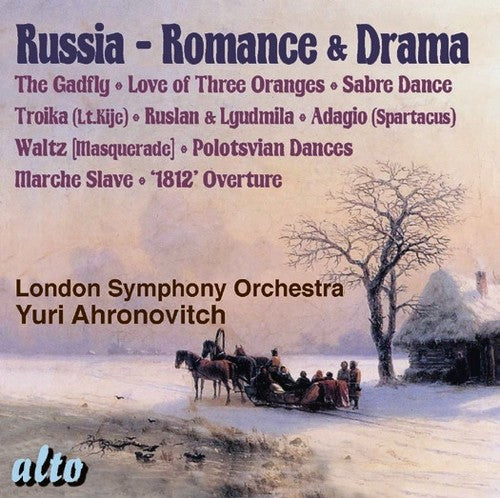
Russia - Romance and Drama
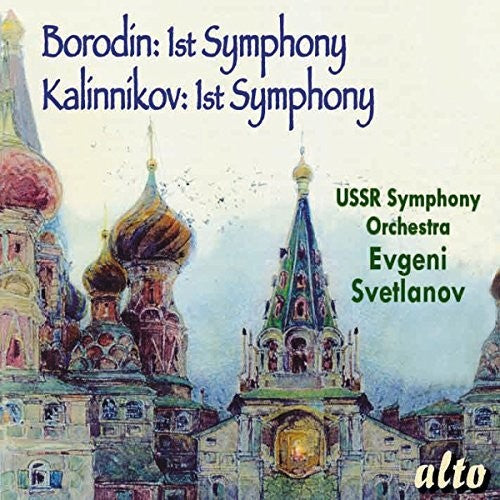
SYMPHONY NO. 1
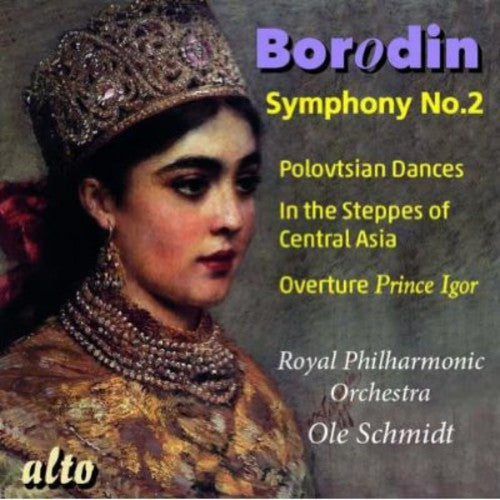
Borodin: Symphony No. 2, Polovtsian Dances & In the Steppes
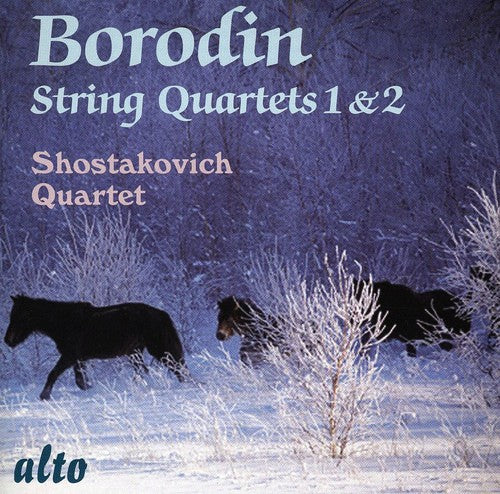
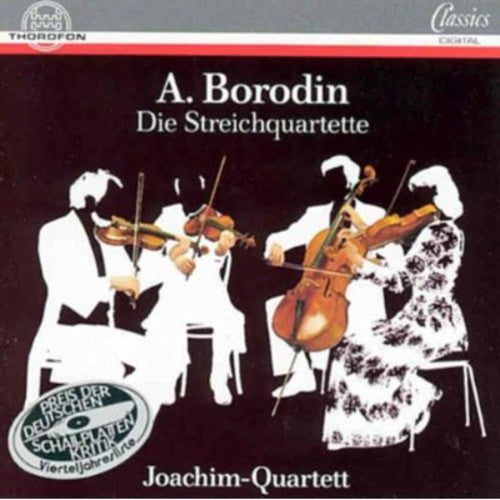
Borodin: String Quartets No. 1 and 2
Borodin, A.P.: String Quartets Nos. 1 and 2
BORODIN: Symphonies Nos. 1, 2 and 3
Wintertraume (Winter Dreams)
Russian Cello Sonatas
Borodin: Symphonies Nos. 1 And 2 / In The Steppes Of Central
Borodin, A.: Symphonies Nos. 1 and 2
George London Sings Offenbach, Tchaikovsky, Borodin, Verdi & Wagner
The present album is a re-release of Bavarian broadcast recordings of 1953-56 featuring legendary bass-baritone George London at the height of his career. Upon its initial release, the album received glowing reviews from critics and fans, and this now can be enjoyed by a new generation of listeners. “(The) collection is vintage London all the way“ (American Record Guide) “The extracts from Aida and Die Walküre with Astrid Varnay are electrifying“ (BBC Music Magazine) “This is a worthy representation of a singer whose career was ended too soon.“ (International Record Review)
REVIEWS:
The excerpts on the present disc are uniformly excellent, and the recorded sound is surprisingly good. … London is a sensitive and expressive Dr. Miracle, and with excellent assistance from Teresa Stich-Randall and Maria von Ilosvay. With Russian speaking parentage, London had a special leaning towards Russian operas…
That London was a great Wotan is very obvious, even more so in the concluding farewell, where his sensitiveness and beauty of tone is striking. One rarely hears such legato singing in Wagner.
London sings Prince Igor’s aria with great dignity and feeling but it is the three final items with Varnay that form the high point of this album, in that they contain both the greatest music and the finest partner.
The playing of the BRSO is fine throughout and all three conductors ensure idiomatic execution.
-- MusicWeb International
London’s voice was massive, focused and dark, with an exciting and secure top. In these recordings he never blusters, and he sings with verbal acuity, noble tone and dramatic verve…The remastered sound is excellent.
-- Opera Now
It’s good to see a dedicated London CD appear on Orfeo, which concludes with the closing sections of Die Walküre, where the great American bass-baritone is heard in duet with Varnay under the direction of Varnay’s husband, Hermann Weigert, who is especially sensitive with accompanying lower string lines near the start of Wotan’s Farewell. London’s deep rolling voice…makes a strong impression.
-- Gramophone
Borodin; Camillo Schumann & Zinzadse: Aus dem Schatten ins Licht
The paths of cellist Nargiza Yusupova and pianist Polina Spirina crossed for the first time in 2016, but not, as one might expect, in the corridors of music academies – curiously enough, in a children's playground. Since then, this Munich duo has attracted attention with its brilliant and sensitive, transparent sound. They also create unique and intimate moments with their charming storytelling and poignant anecdotes from their lives. The listeners and spectators are glued to their lips, their ears follow the passionate and sensual playing of this chamber music fusion. It is the very special closeness to the selected audience, personal and approachable. Nargiza Yusupova & Polina Spirina combine their music with a direct mouthpiece to the audience. The press agrees that "the harmony of their virtuoso interplay" makes every concert an "experience of dynamic contrasts and floating sounds". They are the first and so far the only chamber music duo of its kind to bring to life rare or never before performed masterpieces such as those also part of this CD by Camillo Schumann and Alexander Borodin. Thanks to their fine chamber music artistry, outstanding commitment and unique programme selection, Duo Rubikon received funding from the Deutscher Musikrat in 2021 as part of the NEUSTART KULTUR programme "Preserving and Strengthening the Infrastructure for Culture in Germany", which brought this CD to life.
Borodin, Glazunov, Mussorgsky & Rimsky-Korsakov: Dances of Light / Masurenko, Yaruss Quartet
The familiar in a new guise – Tatjana Masurenko and the Yaruss Quartet are therefore in good company when they clothe the music of the Russian Romantics in novel acoustic garments. Using viola, soprano domra and alto domra, accordion and double bass, they play 19th century works in their own arrangements, using gut strings for all of their instruments, the domras sounding somewhat like Italian mandolins. In this guise, compositions by Rimsky-Korsakov, Musorgsky, Borodin and Glazunov seem lighter, more open and agile, their music expressing a fresh elegance with different colours, taking on a completely new character.
Elegy - String Orchestra Music / Taddei, Borzak, Roma Tre Orchestra
Hidden behind the late 19th century’s great symphonies, sumptuous ballets, and concertos with moving climaxes is something much more thoughtful and contemplative. This secret landscape comes courtesy of a few precious pieces for string orchestra by three Russian composers, all active at approximately the same time.
The extremely simple theme in 3/4, from Glazunov’s Theme and Variations in G Minor, Op. 97, has the feel of a solemn, ancient dance, simultaneously nostalgic and sombre. In another example of Glazunov’s crystal-clear yet expressive writing, the string orchestra provides the backdrop and conversation partner for a solo instrument that was a rarity in concertos at the time: the saxophone. Overall, despite the explosive counterpoint in the work’s final movement, it is a dreamy composition, never overly dramatic, and subdued and melancholy in places: almost elegiac, in other words.
The two elegies Tchaikovsky composed for string orchestra are highly refined works that reveal another side to the famous composer. In the same period that Tchaikovsky was writing his elegies, between 1880 and 1885, the composer and chemist Alexander Borodin was drafting his second Quartet. The third movement, a Nocturne, is one of Borodin’s finest works. It was therefore not only written at the same time as Tchaikovsky’s elegies, but also shares their gracefulness.
REVIEW:
Sieva Borzak (b. 1997) serves as the Conductor-in-Residence of the Roma Tre Orchestra, a collegiate ensemble that, when founded in 2005, became the first of its kind in central Italy.
The young musicians play with an artistic maturity and sensitivity well beyond their age; and the entire program bathes the listener in the timeless and contemplative romantic soundscape of the pre-Soviet school. Even so, this remains a student ensemble; and moments of stunning beauty are sometimes followed by shaky intonation and patchy teamwork. Taddei has all the tools for a solo career, executing the Glazounov concerto with splendid poise, expressive phrasing, and superb technique; but his free-blowing set-up always seems on the edge of spreading, even if his control is very good. Nevertheless, this is a fascinating preview of what the next generation of Italian talent has to offer.
-- American Record Guide