Leoš Janáček
21 products
-
-
-
Sentiers de Traverse
$20.99CDCyprés Records
Jan 30, 2026CYP1690 -
In the Mist
$19.99CDDUX
Jan 30, 2026DUX1924 -
Leos Janacek: Jenufa
$27.99CDSterling Records
Oct 03, 2025CDA1879 -
Ancerl conducts Mahler, Sibelius & Janacek
$27.99CDUrania Records
May 02, 2025WS121.421 -
-
-
-
-
-
-
-
-
-
-
-
-
-
-
-
-
-
-
-
-
-
-
-
Leif Ove Andsnes - The Warner Classics Edition 1990-2010
Janáček: Glagolitic Mass, Sinfonietta / Letonja, Strasbourg Philharmonic
Two life-affirming works from Leoš Janáček's prodigious final years are performed by the Orchestre Philharmonique de Strasbourg under Marko Letonja, it's Music Director from 2012 to 2021: the Glagolitic Mass, both monumental and exuberant, and the colourful, multi-faceted Sinfonietta. The vocal soloists are Malin Byström, Jennifer Johnston, Ladislav Elgr, and Adam Plachetka, who are joined by organist Johann Vexo and the Czech Philharmonic Choir of Brno - the city where Janáček made his home and which he evokes in the Sinfonietta. This recording uses a 2011 critical edition of the Glagolitic Mass which captures the true adventure and passion of Janáček's score.
Artemis Quartett - The Complete Recordings 1996-2018
Intense, passionate, and impeccable in its musical disciplines, the Berlin-based Artemis Quartet "consistently finds a balance between projecting musical structure and conveying immediacy." Confirming that verdict from the New York Times is this 23CD collection, encompassing all the recordings the ensemble made between 1996 and 2018.
The Artemis Quartet began life in 1989 and developed a particular reputation in the central Austro-German repertoire. If Beethoven justly asserts a powerful presence, the scope of this collection extends as far as Eastern Europe and South America and well into the 20th century. Over the period of nearly a quarter of a century documented in this box, there were changes in the Artemis Quartet's lineup, but as founding cellist Eckart Runge explains, this "brought new inspiration - an opportunity to broaden horizons and introduce fresh ideas."
The ensemble suffered a tragic loss with the untimely death of violist Friedemann Weigle in 2015. Just days earlier, the Artemis had completed a recording of Dvořák's lyrical and poignant 'American' Quartet; it is now released for the very first time. This landmark box is completed by a comprehensive booklet which includes reminiscences from members of the Artemis Quartet and from sound engineers who collaborated with them.
Echoes in the mists
Sentiers de Traverse
In the Mist
Leos Janacek: The Makropulos Affair; The Diary of One Who Di
Leos Janacek: Jenufa
Ancerl conducts Mahler, Sibelius & Janacek
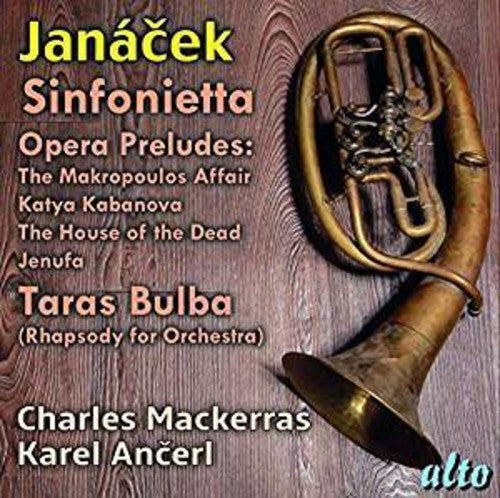
Janácek: Orchestral Works
Janacek
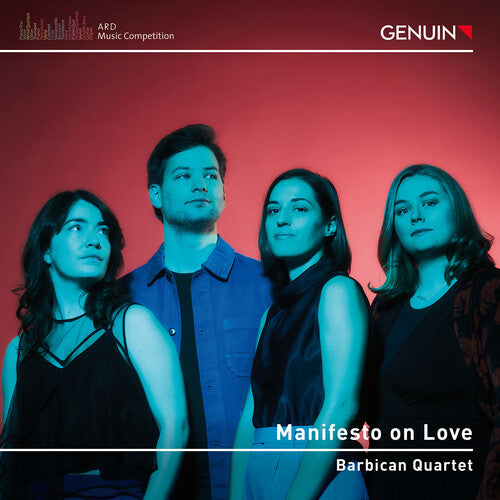
Janacek, Schumann & Tabakova: Manifesto on Love
Janacek
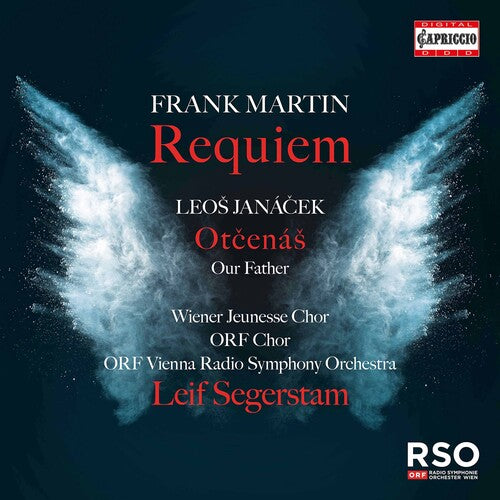
Martin: Requiem; Janácek: Otce náš / Segerstam, ORF Vienna Radio Symphony
It took Frank Martin a long time to heed his deep-seated inner calling to write a Requiem: 'What I have tried to express here is the clear will to accept death; to make peace with it.' The Requiem was composed in 1971/72, Martin utilizes the whole bandwidth of orchestral sound and explores all opportunities for interplay among the vocalists, as well. Leoš Janácek’s setting of the Otcenáš, the Lord’s Prayer, is not a conventionally religious work. The Czech composer was more interested in its social aspects than any theological musings. Conductor Leif Segerstam, Chief conductor of ORF Vienna radio Symphony Orchestra from 1975-1983 loved to surprise his public with non-mainstream repertoire. Two of these live recordings are now restored, re-mastered and first time published for the future.
REVIEW:
Frank Martin’s operatic background is to the fore in his setting of the Requiem. Written towards the very end of his life he had apparently delayed setting the text and once completed declared that his work was now done. Some decidedly 20th Century techniques, such as semi-spoken passages, can be heard in this music which is full of drama and displays a real affinity with the text. Janacek’s settting of the Lord’s Prayer is apparently written from a more detached view, with the composer apparently less committed to the meaning of the text in itself. However, this is still moving music, making for a fine pairing of lesser known liturgically inspired 20th Century (the Janacek only just!) works.
-- Lark Reviews
Poulenc - Janacek - Rachmaninoff
For every cellist; Poulenc's Cello Sonata is demanding in terms of playing technique. Since he had a great affinity for woodwind instruments; his notation is not really written to suit the conditions of a string instrument. He himself was aware of this fact; so he sought expert advice for the composition from the famous cellist Pierre Fournier; who was also the dedicatee and soloist at the premiere in 1948. "Everything we see; hear and feel is connected with feeling." This is how Leoš Janácek defined his artistic attitude; from which grew an idiosyncratic tonal language hardly comparable with other models or traditions of his time. Pohádka means - translated from Czech - "fairy tale". It is based on a fairy tale by the Russian romanticist Wassilij Shukowskj (1783-1852) about the love of a prince for a princess. Janácek's enthusiasm for Russian culture is evident in this choice of theme. Sergei Rachmaninoff was in the limelight as a generous piano virtuoso; but as a composer he was more of a pensive self-doubter. His first symphony had failed with the public. This experience of failure led him into a depression and creative crisis lasting several years. Three years later; he was released from it through a new type of hypnotherapy; which was tantamount to an artistic rebirth. His second piano concerto arose like a phoenix from the ashes and was enthusiastically celebrated. Shortly thereafter; he created his Sonata for Piano and Violoncello opus 19; which is now considered one of his most brilliant compositions. Thematically and motivically; the four movements lead from darkness into light. It was dedicated to the cellist Anatoly Bradukov.
Janáček: Káťa Kabanová from the Salzburg Festival / Winters, Hrůša, Vienna Phil.
Janáček’s opera Káta Kabanová is set in a small Russian town and is based on the play The Storm by Aleksandr Ostrovsky. The story revolves around the central character, Káťa – sung by “the phenomenal Corinne Winters” (Neue Musikzeitung) – who is trapped in a loveless marriage to an abusive man named Boris. Despite her unhappiness, she is bound by the strict societal norms of her time and is unable to escape the situation. However, when she meets and falls in love with a young man named Vána Kudrjáš, she finally experiences happiness and passion. But their relationship is short-lived, as Boris finds out and forces Káta to confess her infidelity in front of the entire town.
Overwhelmed by the shame and guilt, she drowns herself in the nearby river. The opera explores themes of social conformity, oppression, and the consequences of forbidden love. Janáček’s use of musical leitmotifs and repetitive themes reflect the characters’ emotions and psychological states, adding depth and nuance to the story. Stage director Barrie Kosky managed to create an intimate but impressive setting in the magnificent Felsenreitschule. “Jittery and balletic, ecstatic and anxious, Winters has a child’s volatile presence, and her livewire voice conveys Kát'a’s wonder and vulnerability.” (The New York Times) “Corinne Winters is “Kát'a Kabanova”: a great, luminous longing from head to toe. With director Barrie Kosky and conductor Jakub Hruša, she makes the opera in Salzburg a triumph.” (Der Tagesspiegel)
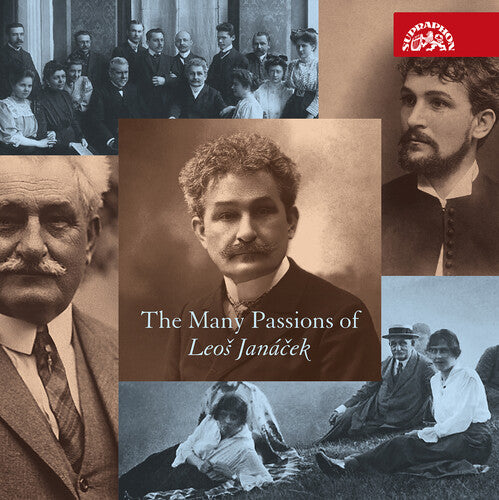
The Many Passions of Leoš Janáček
An original selection of Leoš Janácek’s works released on the occasion of the 95th anniversary of the composer’s death.
In connection with the previous compilation, The Many Loves of Antonín Dvořák, which met with favorable response from reviewers in the USA and in the UK, we asked the BBC3 long-time music producer and one of the great experts in and lovers of Czech music and its recordings, Patrick Lambert, to compile a similar series dedicated to the Moravian master.
Its name alone – Many Passions – reflects Janáček’s temperament and the selection is a result of thorough research into his personality. The composer approached all life’s changes with a wide range of emotions. Therefore, eight categories were created and got the same names as Janáček’s passions: the Folk Tradition; the Czech Case – Politics and Patriotism; Family; Life and Nature; Friendship with Dvorák; Women; Russian Literature; Religious Roots.
The set contains famous pieces, such as Sinfonietta, Taras Bulba, Glagolitic Mass, Jenufa and The Cunning Little Vixen, as well as many discoveries that put Janáček’s work into context, e.g. his choruses Seventy-thousand and The Czech Legion, the Danube Symphony, Prelude in G minor for organ and a fragment of his Mass in E flat major. The selection of performers includes the classics of Janáček interpretation from Brno and Prague and some unique archival recordings as well as many new ones.
Among the conductors are Bretislav Bakala, František Jílek, Jaroslav Vogel, Václav Neumann, Karel Ancerl, Bohumil Gregor, Sir Charles Mackerras and Jakub Hruša, and other performers include important Bohemian and Moravian choirs, soloists Theodor Šrubar, Beno Blachut, Libuše Domanínská and Gabriela Benacková, and instrumentalists Josef Suk, Ilja Hurník, Jan Panenka, the Janáček Quartet and the Pavel Haas Quartet. The choice of compositions deeply reflects Janáček’s greatly varied music, paying homage to the most remarkable 20th-century Czech composer on the occasion of the 95th anniversary of his death and celebrating the unique richness of Supraphon’s archives.
Soulmates - Janacek & Schubert / Herbert Schuch
“The idea of finding relationships between the music of Franz Schubert and Leoš Janácek emerged in my head for the first time in a kind of dreamworld between sleep and waking. I had laid down to take a rest, and my thoughts started to revolve around these two composers. Thus, the point of departure for this album was not something intellectual: it was more like a hunch. I then obviously needed to inspect my idea by daylight to see if it made musical sense – also in terms of interpretation and dramaturgy.”....“Each one of them is a composer who discovers and creates his own world of sound step by step, by groping or wandering. Schubert embarks on his journey with a certain degree of open-mindedness: I get the impression that he is not so certain about where his destination lies or which path he will take to reach it. This feeling of departure, of improvisation, of setting one foot after the other, is something I also sense quite intensely in Janácek. In these two composers, there is a special relationship between the outer world and inner world: their music is clearly connected with nature, but nature is only a mirror of their inner emotions. I find it exciting to juxtapose these two artists – these two human beings, I would say – and see what happens if we let them share a portion of their journey in each other’s company.” (Excerpt from an interview with Michael Kube)
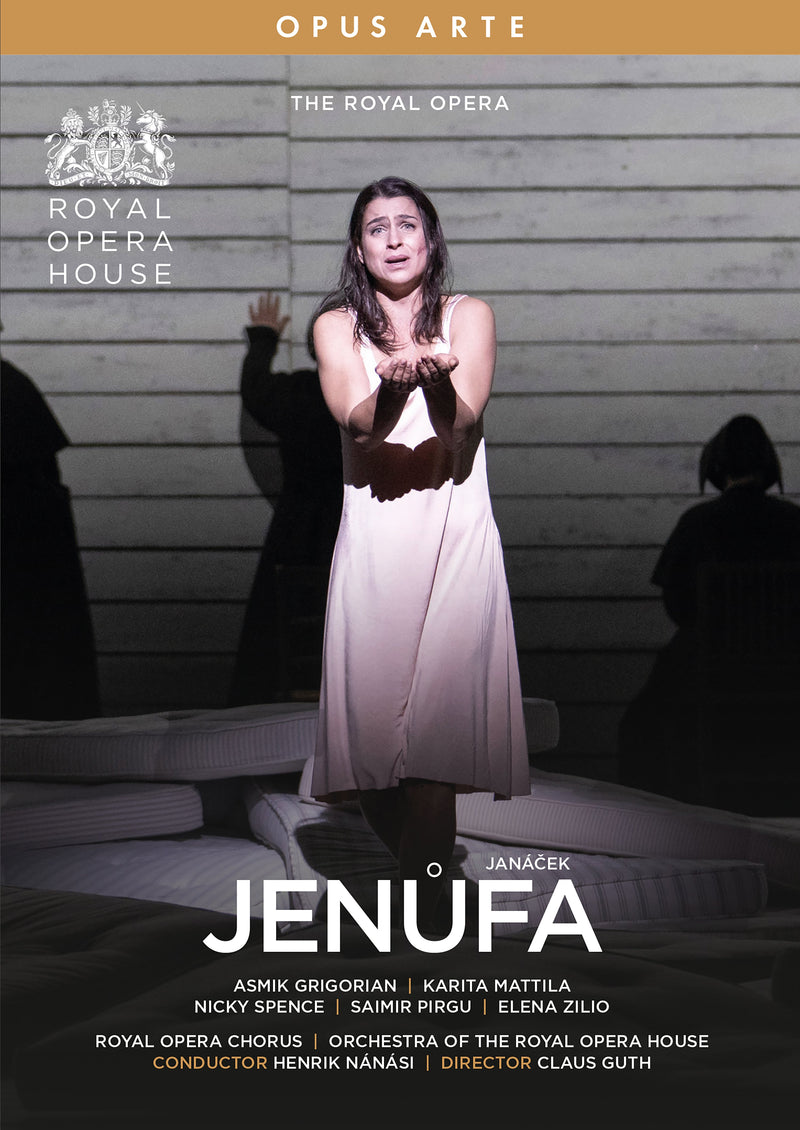
Janáček: Jenůfa / Grigorian, Spence, Mattila, Nánási, Royal Opera House
Award-winning director Claus Guth’s acclaimed production of Jenůfa is a striking representation of an oppressed society ‘infused with heart-warming humanity’ (Evening Standard). Two courageous women struggle for fulfillment against the backdrop of a claustrophobic rural community. With music inspired by the traditional folk melodies of his native Moravia, Janáček’s score movingly captures Jenůfa’s progression from hope to despair to eventual radiant happiness, while her stepmother, the Kostelnicka, is one of opera’s most complex maternal figures. Hungarian conductor Henrik Nánási conducts Asmik Grigorian in her much-anticipated Royal Opera House debut in the title role, alongside Karita Mattila as the Kostelnicka and a star cast.
REVIEW:
The first wave of Czech composer Leoš Janáček’s great operas centered on tragic heroines: together with Káťa Kabanová and The Makropulos Case, which followed it, Jenůfa is a triumphant and insightful music drama, as Oliver Mears’ 2021 staging at London’s Royal Opera House shows. Lithuanian soprano Asmik Grigorian plays the demanding title role sensitively and intelligently, the great Finnish soprano Karita Matilla is just as powerful as Kostelnicka, her stepmother, and conductor Henrik Nánási leads the orchestra and chorus in a gripping account of Janáček’s intense score. The hi-def video and audio are first-rate.
-- The Flip Side (Kevin Filpski)
Janácek & Martinu: Paths / Špacek, Jamník
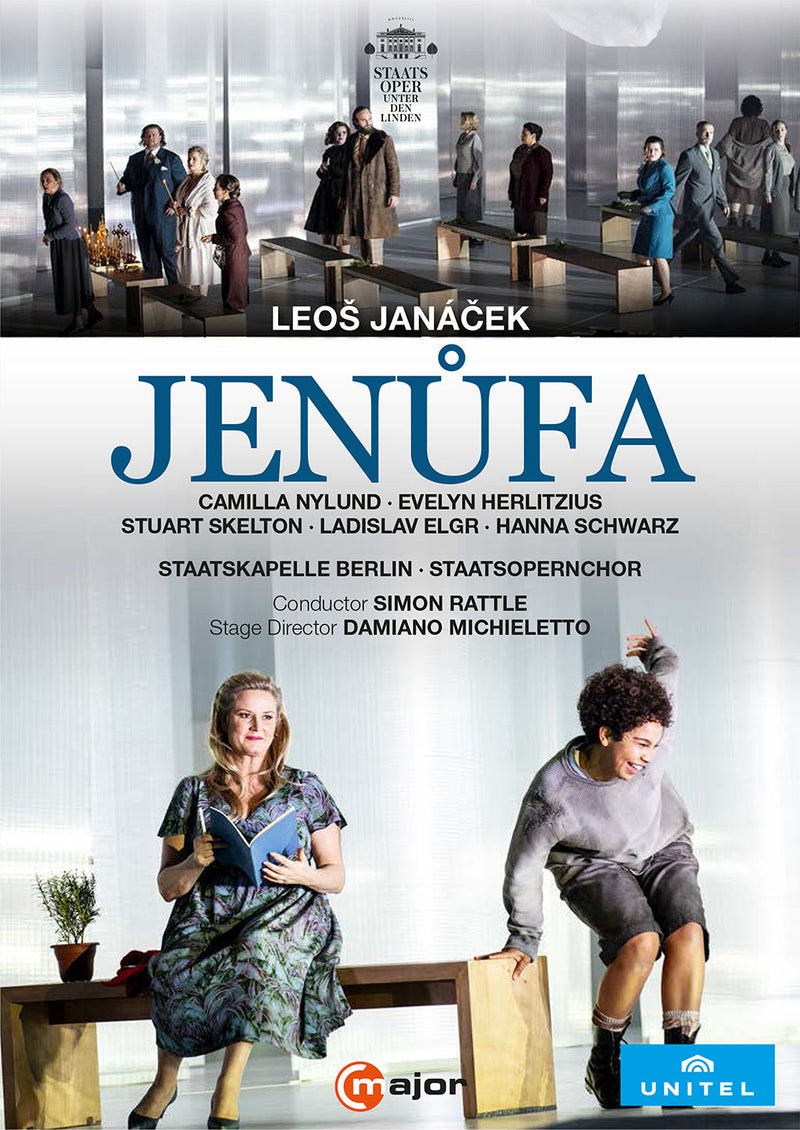
Janáček: Jenůfa / Nylund, Herlitzius, Skelton, Elgr, Schwarz, Rattle, Staatskapelle Berlin
Jenůfa is still Janáček’s most successful and most often performed opera, and the Berlin premiere at the Staatsoper in 1924 brought the work its final breakthrough on German stages. This performance from Berlin’s Staatsoper Unter den Linden is “artistically unsurpassable. There are three reasons for this. Firstly, the cast [...], secondly: the direction [...], thirdly: Simon Rattle, the Staatskapelle and the chorus of the Staatsoper” (BR Klassik).
“Simon Rattle revs up the Staatskapelle Berlin with a passion as if he had to fill a melodrama by Giacomo Puccini with bursting sound life.” (Süddeutsche Zeitung)
“A beguiling mixture of speaking articulation and tonal roundness.” (Frankfurter Allgemeine Zeitung)