

Conductor: Andris Nelsons
17 products
-
![]()

-
![]()

-
![]()

-
![]()

-
![]()

-
 On Sale
Wagner: The Bayreuth Edition
Available as DVD or Blu-Ray or CD$99.99$74.99Opus Arte
Sep 10, 2021OA CD9048BD -
![]()

-
![]()

-
 On Sale
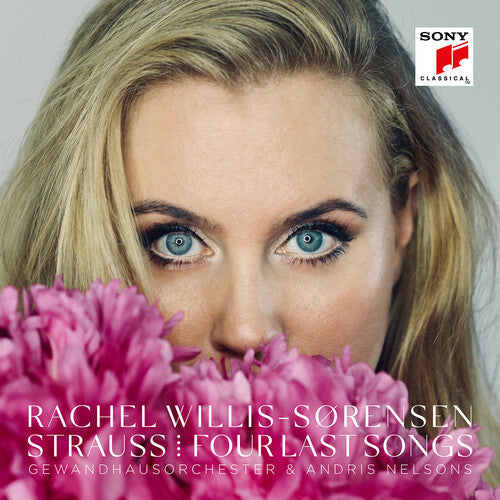
Strauss: Four Last Songs / Willis-Sorensen, Pilgrim, Gewandhausorchester Leipzig
CD$11.98$8.99Sony Masterworks
Mar 10, 202319439921722 -
![]()

-
![]()

-

Dvorak: Symphony No 9, Heldenlied / Nelsons
$19.99CDBR Klassik
Apr 30, 2013900116 -
![]()

-
![]()

-
 On Sale
Andris Nelsons - Lucerne Festival Orchestra, Gewandhausorchester
Available as Blu-Ray or DVD$82.99$62.99Accentus Music
Jun 02, 2023ACC60568 -
![]()

-
![]()

-
 On Sale
Bernstein at 100: A Centennial Celebration at Tanglewood
DVD$32.99$22.98C Major Entertainment
Dec 07, 2018747608 -
![]()

-
![]()

-

Memorial Concert For Claudio Abbado
$31.99DVDAccentus Music
Jan 27, 2015ACC20319 -
![]()

-
![]()

-

Tchaikovsky: Manfred Symphony... / Nelsons, Birmingham
$20.99CDOrfeo
Jun 09, 2015ORF-C895151A -
![]()

-
![]()

-
 On Sale
Berg: Violin Concerto - Mendelssohn: Scottish Symphony / Nelsons, Skride, Gewandhausorchester Leipzig
DVD$31.99$23.99Accentus Music
Sep 07, 2018ACC20443 -
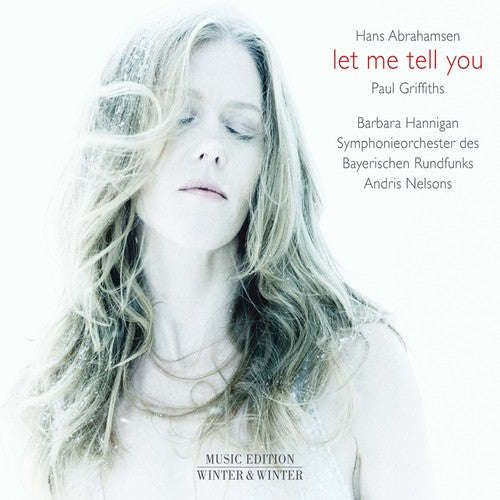
Abrahamsen: Let Me Tell You / Hannigan
$20.99CDWinter & Winter
Jan 15, 2016910232-2 -
![]()

-
![]()

-
 On Sale
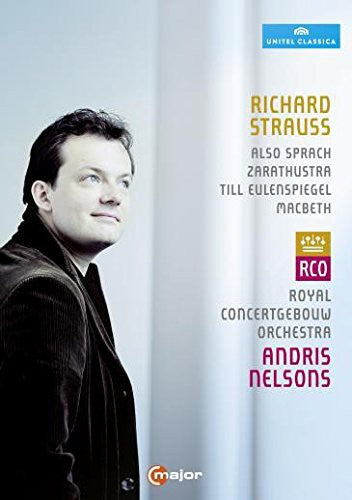
Strauss: Also sprach Zarathustra - Macbeth - Till Eulenspieg
DVD$32.99$16.49C Major Entertainment
Jan 27, 2015718908 -
![]()

-
![]()

-
 On Sale
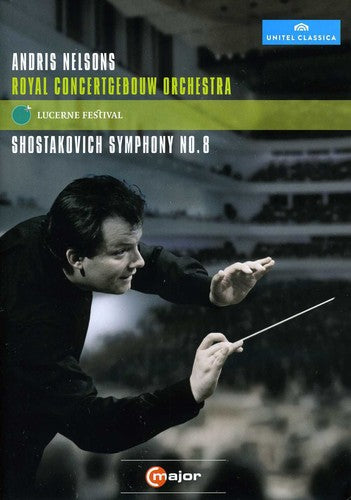
Shostakovich: Symphony No 8 / Andris Nelsons, Royal Concertgebouw Orchestra
DVD$32.99$24.99C Major Entertainment
May 29, 2012709908 -

Puccini: La Boheme / Nelsons, Gerzmava, Dukach, Maxwell, Imbralio
$34.99DVDOpus Arte
Jul 27, 2010OA 1027D -
![]()

-
![]()

-
![Memorial Concert For Claudio Abbado [blu-ray]](//arkivmusic.com/cdn/shop/files/2832135.jpg?v=1749391499&width=800)
Memorial Concert For Claudio Abbado [blu-ray]
$41.99Blu-RayAccentus Music
Jan 27, 2015ACC10319 -
![]()

-
![]()

-
![Mahler: Symphony No. 5 & Des Knaben Wunderhorn / Nelsons, Goerne [Blu-ray]](//arkivmusic.com/cdn/shop/files/3055683.jpg?v=1753640851&width=800) On Sale
On SaleMahler: Symphony No. 5 & Des Knaben Wunderhorn / Nelsons, Goerne [Blu-ray]
Blu-Ray$41.99$31.99Accentus Music
Mar 21, 2016ACC10354 -
![]()

-
![]()

-
![Dvorak: From the New World & Other Works / Nelsons, Opolais, Gewandhausorchester Leipzig [Blu-ray]](//arkivmusic.com/cdn/shop/files/3772679.jpg?v=1749389016&width=800)
Dvorak: From the New World & Other Works / Nelsons, Opolais, Gewandhausorchester Leipzig [Blu-ray]
$41.99Blu-RayAccentus Music
Apr 06, 2018ACC10419 -
![]()

-
![]()

-

Brahms: Symphony No 2, Alto Rhapsody / Nelsons, Lucerne Festival Orchestra
$31.99DVDAccentus Music
Apr 28, 2015ACC20325 -
![]()

-
![]()

-
![Beethoven: Piano Concerto No 5; Rimsky-korsakov: Scheherazade / Nelsons, Bronfman [blu-ray]](//arkivmusic.com/cdn/shop/files/1987216.jpg?v=1749393293&width=800)
Beethoven: Piano Concerto No 5; Rimsky-korsakov: Scheherazade / Nelsons, Bronfman [blu-ray]
$45.99Blu-RayC Major Entertainment
May 29, 2012710204


Wagner: The Bayreuth Edition
This epic collection brings together all of Opus Arte's recordings from the Bayreuth Festival. Included are many of Wagner's much-admired operas which show how the mastery of composer, conductor, and performer can combine to create a true musical excellence. Wagner's epic four-opera cycle, Der Ring des Nibelungen, is a work of extraordinary scale and is given an interpretation that is both thrilling and sensitive by the conductor Christian Thielemann and a cast of renowned Wagner interpreters. Thielemann also presents an incredible account of Der fliegende Holländerin a recording which secured his place as the world's greatest Wagner conductor. Klaus Florian Vogt is staggering in the title role of Lohengrin, with Andris Nelsons brings out the best in the festival chorus and orchestra. This recording of Tannhäuser, Wagner’s tale of the struggle between spiritual and profane love, and of redemption through love, was described by Opera Journal as 'outstanding’, whilst Die Meistersinger von Nürnberg, which tells a humorous tale about artistically inclined craftsmen, was described as ‘on an entirely new Wagnerian scale...” (The Washington Post). The set is completed by the critically acclaimed recording of Tristan und Isolde starring the leading Wagner exponents Robert Dean Smith and Iréne Theorin in the title roles.


Strauss: Four Last Songs / Willis-Sorensen, Pilgrim, Gewandhausorchester Leipzig
The second album from the impressive American soprano after her critically acclaimed debut album, "Rachel". Includes Richard Strauss' most renowned song-cycle for soprano plus the final scene from his last opera, 'Capriccio'. Rachel's glistening tone, faultless technique and expressiveness make her the perfect interpreter of Strauss's works and she is joined by fellow "Strauss-aficionados” the Gewandhausorchester Leipzig and conductor Andris Nelsons.


Dvorak: Symphony No 9, Heldenlied / Nelsons
No jaded reaction here to just another decent but unneeded Dvorák Ninth. This may be the most spectacular “From the New World” recording to hit the listings in, well, forever. The first thing to love about it is the recording itself. It’s not an SACD, but it’s speaker-blowing and eardrum-popping dynamic, with timpani rolls that will shiver your timbers, and massed brass and string Fortissimo s that will rattle your windows. Elsewhere, there are velvet string murmurings and delicate flute fluttering so sweet as to arrest the singing of birds outside in the trees.
The second thing to love about this performance—if, like me, you believe the symphony is called “ From the New World” (as in a letter being sent home), and not “ The New World,” for a reason—is that Andris Nelsons doesn’t try to make it sound either American or Czech. Rather, he sees the score for what it is, a mainstream late-Romantic symphony in the Austro-German tradition, exactly contemporaneous with Tchaikovsky’s “Pathétique”—both were written in 1893—and among the last to be completed in the 19th century.
Nelsons’s way with the work is very refreshing; it avoids common performance clichés that have arisen around the piece, like sentimentalizing the Largo and italicizing the alleged Native American melodies. The net effect is a cleansing one, similar to the sometimes astonishing results we witness when the paintings of old Renaissance masters are cleaned and restored. Suddenly the colors are brighter and details are revealed that were long hidden. Similarly, Nelsons’s reading of Dvorák’s Ninth Symphony makes it sound fresh and “new” all over again.
If this magnificent performance and recording of the Ninth were not enough, Nelsons gives us Dvorák’s last and least often recorded tone poem, Heldenlied (Hero’s Song), composed in 1897. Though classified as a tone poem, it’s a tone poem with no specific literary program or narrative. Formally, it’s a symphony contained within a single movement, but having four distinct sections that correspond to the four standard movements of a classical symphony. The work was premiered by Gustav Mahler and the Vienna Philharmonic in 1898.
As stunning as the recording of the Ninth Symphony is, the recording of Heldenlied , taken from another live performance 16 months later, has even more palpable presence. It made my far from inexpensive B&W speakers sound like Transmission Audio’s $2-million Ultimate speaker system, not that I’ve actually ever heard one.
This is one helluva CD. I’m not on the jury, but if I were, I’d give it the orchestral disc-of-all-time award. For a great Dvorák Ninth and a spectacular sonic experience, this is a must-have purchase.
FANFARE: Jerry Dubins


Andris Nelsons - Lucerne Festival Orchestra, Gewandhausorchester
This box set documents Andris Nelson's work with two world-class orchestras. After Claudio Abbado's death, he led the Lucerne Festival Orchestra in 2014-15, the "greatest challenge" - as he himself called it - of his career until then. In the recording of his first concert with the orchestra, Nelsons explores the musical landscape of the German Romantic composer Johannes Brahms through his Second Symphony and Second Serenade. A year later, he impresses with a fiery and powerful interpretation of Mahler's Fifth Symphony and excerpts from "Des Knaben Wunderhorn" with Matthias Goerne. For his inaugural concert as the new Gewandhauskapellmeister, Andris Nelsons chose three pieces with great symbolic power: the "Scottish" Symphony by his probably most important predecessor in office, Felix Mendelssohn, Alban Berg's Violin Concerto, played by Baiba Skride, and a commissioned work by the Leipzig-based composer Steffen Schleiermacher. A recording of Dvorák's Ninth Symphony "From the New World" and arias with Kristine Opolais demonstrates the instantly close relationship between the Gewandhaus Orchestra and their chief conductor.


Bernstein at 100: A Centennial Celebration at Tanglewood
The Bernstein Centennial Celebration at Tanglewood spotlights Bernstein's wide-ranging talents as a composer, his many gifts as a great interpreter and champion of other composers, and his role as an inspirer of a new generation of musicians and music lovers across the country and around the globe. The gala concert features a kaleidoscopic array of artists and ensembles from the worlds of classical music, film, and Broadway. The entire first half of the program is dedicated to selections from such brilliant Bernstein works as Candide, West Side Story, Mass, and Serenade. Music from the classical canon very dear to Bernstein's heart-selections includes from Mahler's Des Knaben Wunderhorn, the finale of Mahler's Resurrection Symphony and music by Aaron Copland, plus a new work by John Williams.


Memorial Concert For Claudio Abbado
MEMORIAL CONCERT FOR CLAUDIO ABBADO
Ludwig van Beethoven: Symphony No. 3 in E-Flat Major, Op. 55, “Eroica”: II. Marcia funebre*
Franz Schubert: Symphony No. 8 in B Minor, D. 759, “Unfinished”: I. Allegro moderato
Friedrich Hölderlin: Brod und Wein
Alban Berg: Violin Concerto
Gustav Mahler: Symphony No. 3 in D Minor: VI. Adagio
Isabelle Faust, violin
Bruno Ganz, narrator
Lucerne Festival Orchestra
*Claudio Abbado, conductor
Andris Nelsons, conductor
Recorded live at the Concert Hall of KKL Luzern, August 2013
(Beethoven) and 6 April 2014 (all except Beethoven)
Picture format: NTSC 16:9
Sound format: PCM Stereo
Region code: 0 (worldwide)
Subtitles: German, English, French, Japanese, Korean
Running time: 98 mins
No. of DVDs: 1


Tchaikovsky: Manfred Symphony... / Nelsons, Birmingham
– John Quinn, MusicWeb International
Is the finale of Manfred the silliest piece written in the entire 19th century? Is this really what a seamy orgy sounds like? I mean what, after all, is debauched group sex without a tambourine and a fugato? Never mind; the piece is so much fun that it really doesn’t matter. This could have been the Manfred for the ages. Andris Nelsons is that good an interpreter of this truculent work. He projects all the gloom and doom of the outer movements with one hundred percent conviction and a keen attention to rhythm and accent. The scherzo, swift and light, finds the orchestra in top form, while the third movement pastoral has just the right romantic sweep to its climaxes.
So what is the problem? In a word, the brass. This is a live recording, and I have no doubt that in more controlled circumstances Nelsons would have had the trombone play out more when it gets the tune at the very end of the first movement, and would have encouraged a bigger sonority for those fat chords at the start of the fourth movement bacchanal. We know they can do it, but it’s tiny issues like this that prevent my giving this release an absolute top recommendation. Manfred has been unlucky on disc, and while I wouldn’t want to characterize this otherwise stupendous performance in a negative way, there always seems to be something to take a recording down a peg.
The Marche Slave, which opens the disc, is also excellent: swift, hard-hitting, and with plenty of swagger, while the live sonics are vivid, with a particularly solid bass presence. Not perfect, then, but damn close.
– David Hurwitz, ClassicsToday.com


Berg: Violin Concerto - Mendelssohn: Scottish Symphony / Nelsons, Skride, Gewandhausorchester Leipzig
For his inaugural concert as the new Gewandhauskapellmeister, Andris Nelsons chose three pieces, each with symbolic power. At its center is the “Scottish” Symphony by Felix Mendelssohn, his most prominent predecessor, which was premiered by the Gewandhausorchester Leipzig under the baton of the composer himself in 1842. The symphony is framed by a commissioned work by the Leipzig composer Steffen Schleiermacher and Alban Berg’s Violin Concerto, a key work of classical modernism. There is no question about it: this program defines his agenda. It professes Leipzig‘s rich musical tradition, spanning the period from the 19th to the 20th century, and to the music of our time. Andris Nelsons is Music Director of the Boston Symphony Orchestra and is Gewandhauskapellmeister of the Gewandhausorchester Leipzig, with the appointment commencing in February 2018. With these positions, and in leading a pioneering alliance between two such esteemed institutions, Grammy Award-winning Nelsons is firmly underlined as one of the most renowned and innovative conductors on the international scene today.


Abrahamsen: Let Me Tell You / Hannigan

"...This eerily alluring 30-minute work for soprano and orchestra was written for the remarkable Barbara Hannigan, who performed it stunningly..." -- The New York Times
Composed in 2012 and 2013, Let Me Tell You is a dramatic monologue voiced by a character who requires us to hear her. That character is not quite the Ophelia of Shakespeare's Hamlet; her entire text is made up from words Ophelia speaks in that play, but she uses these words in different ways, to express herself differently. Barbara Hannigan is known worldwide as a soprano of vital expressive force directed by exceptional technique. She brings the same high energy to her varied activities as a conductor as well as to her singing, including recent engagements with Simon Rattle, Kent Nagano, and David Zinman.


Strauss: Also sprach Zarathustra - Macbeth - Till Eulenspieg


Shostakovich: Symphony No 8 / Andris Nelsons, Royal Concertgebouw Orchestra
A remarkable concert, splendidly captured on DVD.
This concert, given in the splendid modern concert hall of the Culture and Congress Center, was recorded live at the 2011 Lucerne Festival. I’ve previously seen several DVDs of Claudio Abbado and the Lucerne Festival Orchestra and I can give this present DVD no higher praise than to say that the music making preserved here is of the same exalted standard that I’ve experienced from Abbado.
The programme is a little odd and the rather superficial note by Barbara Eckle is of little help beyond suggesting vaguely that Nelsons wished to contrast the extrovert pieces by Wagner and Strauss with the “sublimation of emotion” - whatever that may mean - in the Shostakovich. However, let’s not waste time trying to discern a shape behind the programming. The Wagner is done very well. It’s evident from his facial expressions that Nelsons delights in the Rienzi’s Prayer theme, which he takes pretty broadly - though the sumptuous, aristocratic playing of the Concertgebouw’s string choir justifies that indulgence. There’s not a lot one can do with the tub-thumping, Weber-esque allegro music except to play it for all it’s worth and Nelsons does just that. He leads a vivid, red-blooded account of the Dance of the Seven Veils, helped by some colourful and suitably seductive paying by the orchestra: the principal flute and oboe players offer particularly delightful contributions. Again, it’s evident that the conductor is relishing the music and the response of the Concertgebouw’s players.
Smiles are absent from Nelsons’ face at the start of the symphony, and rightly so; this is music with a very serious, indeed grim countenance. Right from the outset of the massive first movement - which plays for 25:35 in this performance - Nelsons exerts the control that is vital in this spare, intense music. The long, glacial opening paragraphs, dominated by the strings, are sustained with supreme concentration. Gradually Nelsons and his players ratchet up the tension as the music moves inexorably towards the first climax. This is a gripping account of the movement; one’s attention is held and never slips. When it arrives the towering main climax, underpinned by menacing drum rolls, is shattering, as the composer intended. The extended baleful cor anglais threnody that follows - superbly played here - maintains the tension even though the decibel count has reduced to minimal levels; that’s a remarkable achievement by Shostakovich. Eventually the movement peters out in exhaustion.
The motor rhythms in the second movement are splendidly executed. This is blatant, strutting music, surely depicting sardonically a war machine. The bite and vigour of the Concertgebouw’s playing under Nelsons’ committed direction realises the composer’s intentions to perfection. The brutal menace of the third movement is conveyed no less successfully and the trumpet-led galop in the middle of the movement is expertly done. When the colossal climax arrives one has the sense that the runaway music has run at full tilt into a forbidding rock face and then the momentum drains away and we are left to contemplate the bleak, forbidding wastes of the impassive passacaglia that follows. This is a movement that requires utmost control of dynamics and total concentration on the part of the conductor and all the players. That’s exactly what happens here. The music is almost imperceptible at times, so hushed is the playing. In fact, both individually and collectively, the RCO is superb in the way the players sustain the soft dynamics. There’s some tremendously sensitive playing by the principal horn and by the clarinettists. The performance is quite breathtaking as Nelsons and his players summon up a vision of a wasteland comparable to the one that can be experienced in the last movement of Vaughan Williams’ Sixth Symphony.
The finale finds Shostakovich in enigmatic mode. Surely, the Soviet authorities were expecting their leading symphonist to come up with a symphony whose conclusion celebrated the heroic Soviet military and their repulse of the Nazi invasion. Instead what they got was the desolate passacaglia followed by a movement which, while ostensibly lighter in tone at times is still very far from a victory celebration. The music begins in what might seem a relaxed vein after the rigours of the fourth movement but peer beneath the surface veneer and there’s little genuine optimism. To make matters worse - for those seeking optimism - eventually Shostakovich arrives at an anguished and extended reprise of the grinding climax from the first movement. What, then, is the listener to make of the sardonic passage for bass clarinet and solo violin that follows immediately afterwards? Talk about “a riddle, wrapped in a mystery, inside an enigma”. It’s interesting to see the impish look on the face of Andris Nelsons as he launches into that bass clarinet/violin passage; I wonder what he makes of it? Whatever the meaning may or may not be, the passage is marvellously delivered by the two RCO players, which is entirely in keeping with the superb standard of solo playing on display throughout the whole performance. The symphony ends on a questioning, uncertain note and this strange, hushed music comes over most atmospherically here; thankfully the audience maintain their collective concentration and there’s a long silence after the music has died away before the well-merited ovation begins.
This is a gripping, magnetic account of one of Shostakovich’s finest symphonic utterances. From start to finish the RCO offers peerless playing that seems completely in tune with their conductor’s vision of the piece. As for Nelsons, this is another significant achievement in his recording career. Up to now I’ve only seen him conduct when sitting in the stalls - in other words, he’s had his back to me. Seeing him now from the front it’s fascinating to watch how he communicates with the orchestra through gestures and facial expressions. This concert offers further confirmation that Andris Nelsons is a major talent. The audiences in Birmingham should make the most of him for surely it will not be too long before one of the world’s leading orchestras snaps him up.
It only remains to say that the camera work is excellent, offering unobtrusive but very interesting and varied perspectives on the performers. The sound quality is very good and people who play DVDs through their hi-fi system will get even better results than I did, I’m sure. In short, the technical presentation is fully worthy of this remarkable concert.
-- John Quinn, MusicWeb International

Puccini: La Boheme / Nelsons, Gerzmava, Dukach, Maxwell, Imbralio
Regions: All regions
Picture Format: 16:9 Anamorphic
Sound Type: 2.0 LPCM & 5.1 DTS Surround
Subtitles: English, French, German, Spanish, Italian
Rodolfo: Teodor Ilincai
Mimì: Hibla Gerzmava
Marcello: Gabriele Viviani
Musetta: Inna Dukach
Colline: Kostas Smoriginas
Schaunard: Jacques Imbrailo
Benoit: Jeremy White
Alcindoro: Donald Maxwell
Royal Opera Chorus
Orchestra of the Royal Opera House
Conductor: Andris Nelsons
Director: John Copley
Recorded live at the Royal Opera House, Covent Garden, London, in December 2009
Extra features:
Cast gallery
Interview with Jonathan Copley
Interview with Andris Nelsons
"[Ilincai] gave a thoroughly assured and engaging performance. ... Sumptuously sung, Gerzmava’s portrayal was sensitive and wellrounded – timid yet warm and attractive in her first scene with Rodolfo, intimate rather than melodramatic in her final death-bed moments."
Classical Source


Memorial Concert For Claudio Abbado [blu-ray]
Also available on standard DVD
It was an appropriate and deeply affecting farewell. Anyone who was able to participate in these two hours will never forget the experience. The spirit of Claudio Abbado, the great conductor and founder of orchestras who died on 20 January 2014, was honored in music, words, and silence. With this concert, the members of the LUCERNE FESTIVAL ORCHESTRA remembered with gratitude an extraordinary man and friend who had invited them to help realize his highest ideal of performing orchestral works with the same degree of attention and devotion usually reserved for chamber music. At the beginning of the concert, the conductor’s podium was left unoccupied for the first movement of Schubert’s “Unfinished” symphony.
“Whether his spirit was actually present or the players were able to realize what Abbado – often through his presence alone – had conveyed to them; the experience was both fascinating and moving.” (Der Tagesspiegel)
MEMORIAL CONCERT FOR CLAUDIO ABBADO (Blu-ray Disc Version)
Ludwig van Beethoven: Symphony No. 3 in E-Flat Major, Op. 55, “Eroica”: II. Marcia funebre*
Franz Schubert: Symphony No. 8 in B Minor, D. 759, “Unfinished”: I. Allegro moderato
Friedrich Hölderlin: Brod und Wein
Alban Berg: Violin Concerto
Gustav Mahler: Symphony No. 3 in D Minor: VI. Adagio
Isabelle Faust, violin
Bruno Ganz, narrator
Lucerne Festival Orchestra
*Claudio Abbado, conductor
Andris Nelsons, conductor
Recorded live at the Concert Hall of KKL Luzern, August 2013
(Beethoven) and 6 April 2014 (all except Beethoven)
Picture format: 1080i Full-HD
Sound format: DTS-HD Master Audio 5.1 / PCM Stereo
Region code: 0 (worldwide)
Subtitles: German, English, French, Japanese, Korean
Running time: 98 mins
No. of Discs: 1 (BD 25)
![Memorial Concert For Claudio Abbado [blu-ray]](http://arkivmusic.com/cdn/shop/files/2832135.jpg?v=1749391499&width=800)


Mahler: Symphony No. 5 & Des Knaben Wunderhorn / Nelsons, Goerne [Blu-ray]
Andris Nelsons conducted the Lucerne Festival Orchestra for the third time in August 2015, the orchestra’s second summer without founder and guiding spirit Claudio Abbado. The first half of his concert was already a highlight: the baritone Matthias Goerne seemed completely at home in a selection of songs from Des Knaben Wunderhorn. His warm, dark voice allows him to capture the somber and tragic atmosphere of this music like no one else. Its shaded timbre is most perfectly suited to the work’s melancholy and nocturnal moods, where one can directly experience how an artist of this caliber can bring music to the edge of the abyss. The Lucerne Festival Orchestra, renowned for its unique Mahler sound, had last played Mahler’s Symphony No. 5 in the summer of 2004 with Abbado – a flowing, transparent, and ethereal interpretation. Nelsons finds a completely different approach to the work. His Mahler is fiery, expansive, and powerful. In spite of the introductory funeral march, his reading is more positive than tragic, radiating an intense vitality. It is breathtaking to observe the orchestra’s response to Nelsons’s energetic, physical, and emotional conducting style. The relationship between orchestra and conductor is one of giving and taking, nothing else.
Picture Format Blu?ray: NTSC 16:9, Full HD
Sound Formats Blu?ray: DTS HD Master Audio, PCM Stereo
Region Code: 0 (worldwide)
Running Time: 123:12 min
Disc Format: BD 25
Subtitles: German (Original), French, English, Japanese, Korean
![Mahler: Symphony No. 5 & Des Knaben Wunderhorn / Nelsons, Goerne [Blu-ray]](http://arkivmusic.com/cdn/shop/files/3055683.jpg?v=1753640851&width=800)


Dvorak: From the New World & Other Works / Nelsons, Opolais, Gewandhausorchester Leipzig [Blu-ray]
Also available on standard DVD
Recorded live at the Gewandhaus zu Leipzig in May 2017, this release features a delightful concert by the Gewandhausorchester Leipzig and conductor Andris Nelsons. For the program, the conductor has chosen works by Antonin Dvorak, including the Othello Concert Overture, and his famous Symphony No. 9 in E minor- “From the New World.” Also featured in this concert is young soprano Kristine Opolais. Acknowledged as one of the most exciting sopranos before the public today, she made her debut in October 2010 at the Bavarian State Opera House in Munich in the title role of the new production of Dvorak’s Rusalka directed by Martin Kusej. It seems only fitting that she return to Dvorak for this performance. This recording was made during Andris Nelsons first season as Gewandhauskapellmeister.
![Dvorak: From the New World & Other Works / Nelsons, Opolais, Gewandhausorchester Leipzig [Blu-ray]](http://arkivmusic.com/cdn/shop/files/3772679.jpg?v=1749389016&width=800)


Brahms: Symphony No 2, Alto Rhapsody / Nelsons, Lucerne Festival Orchestra
BRAHMS, J.: Serenade No. 2 / Alto Rhapsody / Symphony No. 2 (Lucerne Festival Orchestra, Nelsons) (NTSC)
In 2014, all signs pointed to a new beginning at the Lucerne Festival. For the first time, the festival would take place without the incomparable Claudio Abbado, with the young Latvian Andris Nelsons leading the Lucerne Festival Orchestra. Nelsons had already won the trust and respect of both listeners and performers in a moving memorial concert for Abbado in Lucerne. He is known internationally as one of the most gifted conductors of his generation. Now he was poised to lead the prestigious festival into a new era – he brilliantly mastered this “greatest challenge”(as he himself called it) of his career. The audience and the musicians responded with heart-felt gratitude. “He is aware of every single player and carries us on an unbelievable wave of enthusiasm”, according to concertmaster Sebastian Breuninger. Solo violist Wolfram Christ adds, “Nelsons accepts what is inherent in our orchestra and what comes from Abbado; he builds on it and makes it into something new.”
ANDRIS NELSONS CONDUCTS BRAHMS
Johannes Brahms:
Serenade No. 2 in A Major, Op. 16
Alto Rhapsody, Op. 53
Symphony No. 2 in D Major, Op. 73
Sara Mingardo, contralto
Bavarian Radio Chorus
Lucerne Festival Orchestra
Andris Nelsons, conductor
Recorded live at the Concert Hall of KKL Luzern, 15–16 August 2014
Picture format: NTSC 16:9
Sound format: PCM Stereo / Dolby Digital 5.1 / DTS 5.1
Region code: 0 (worldwide)
Subtitles: German, English, French, Japanese, Korean
Running time: 109 mins
No. of DVDs: 1 (DVD 9)


Beethoven: Piano Concerto No 5; Rimsky-korsakov: Scheherazade / Nelsons, Bronfman [blu-ray]
The Ruins of Athens, written to accompany August von Kotzebue’s play of the same name, is hardly a Beethovenian staple, but when it’s played with such affection it’s hard to understand why. Right from those opening figures on the double basses it’s clear this is going to be a performance of spontaneity and spirit, the camera cutting to key players when they get the chance to shine. And shine they do, the Concertgebouw as animated as they were the night before. On the podium Nelsons is equally alert, his boyish grin a sign that he’s having fun.
And who wouldn’t, with such thoroughbreds between the shafts? As for the concerto, a warhorse that seldom gets the performance it deserves, it’s played with tremendous brio. Bronfman fingerwork is clear and unmannered, and the orchestra responds with alacrity to Nelsons’ firm tug of the reins. Balances are generally fine, although the brass and woodwinds tend to leap out in the tuttis – some unnecessary knob-twiddling, perhaps – and the bass is not as firm as I’d like. Otherwise the Allegro is both passionate and elegant, and tempi are well judged; there’s plenty of thrust too, although at times momentum does flag.
Such lapses are rare though, Nelsons’ whipping his wayward steeds into line quickly enough. That said, the Adagio and Rondo-Allegro are more problematic. In the former the flute passage before the piano’s first entry is absurdly out of proportion – more intervention, perhaps – and Nelsons moulds the music far too much for my tastes. Yes it is beautiful, but it’s cloying and comes close to limpidity overload; as for Bronfman, his phrasing at the start of the Rondo is less easeful than usual. Even more distracting is the fitful progress, the music lacking the cumulative weight and growing tension one hears in other – more compelling – performances. It seems the audience have no such qualms though, demanding an encore. Bronfman duly obliges with a coruscating rendition of Chopin’s Etude in F major.
I so wanted to wallow in this concerto but alas I’m not likely to return to it in a hurry. At least there’s a consolation prize in the form of Scheherazade, whose terrifying start nearly blew me out of my seat. Having set the volume to a comfortable level for the Beethoven I was not prepared for such an assault on my senses; goodness, this really is Rimsky for the IMAX age, the brass- and timp-drenched climaxes simply crushing. The quieter moments are just as arresting, the Sultana’s beguiling narrative superbly evoked by the violin and harp.
As for ‘The Story of the Kalender Prince’ it’s packed with incident and colour, the many close-ups a reminder of just how virtuosic this piece is, and how exposed players are at times. There’s firm. characterful playing from the woodwinds, and the formidable battery of trombones sounds especially baleful. The big, bold recording handles these dynamic swings with aplomb, although anyone of a nervous disposition – or with unsympathetic neighbours – might want to reduce the volume by a couple of notches. As always, Nelsons is engrossed in the music, and it’s impossible not to succumb to his obvious and infectious enthusiasm.
That’s one of the unexpected joys of this concert; everyone is clearly having fun. What a change from those stiff-backed performers, stern of countenance, we see all too often. The tender music of ‘The Young Prince and the Young Princess’ is most eloquently done, and Nelsons shapes the dance-like episodes very persuasively. It’s the final movement, with its festival and shipwreck, that will take your breath away. The intimidating roar of this orchestra in full spate really confirms the sonic potential of Blu-ray; indeed, I’ve never heard that dash of spray, crack of sail and final cataclysm as powerfully realised as it is here. Those final, sinuous bars – as if enclosing these tales in parentheses – are simply overwhelming in their simplicity and charm.
Not surprisingly the audience demands – and gets – an encore in the shape of one of the Slavonic Dances from Dvor(ák’s Op. 46. It’s a polka, now winsome now trenchant, its storming conclusion a thrilling coda to an exhilarating concert. That said, Nelsons still looks as fresh as a daisy, and his players don’t seem to have wilted either. Despite the rather disappointing concerto I’m very impressed by this multi-talented Latvian; he can certainly batter one’s ear drums – the Rimsky is indeed a knock-out – but as the previous night’s Shostakovich Eighth and his 50th anniversary War Requiem so eloquently demonstrate, he can batter one’s heart as well.
A delightful overture, a competent concerto, and a Scheherazade to die for.
-- Dan Morgan, MusicWeb International
![Beethoven: Piano Concerto No 5; Rimsky-korsakov: Scheherazade / Nelsons, Bronfman [blu-ray]](http://arkivmusic.com/cdn/shop/files/1987216.jpg?v=1749393293&width=800)