

Conductor: Gerard Schwarz
56 products
-
![]()

-
![]()

- My First CLASSICAL MUSIC Album
- My First MOZART Album
- My First BEETHOVEN Album
- My First TCHAIKOVSKY Album
- My First PIANO Album
- My First VIOLIN Album
- My First BALLET Album
- My First LULLABY Album
- My First ORCHESTRA Album
-
 On Sale
My First Classical Albums
CD$53.99$37.99Naxos
Oct 14, 20168509003 -
![]()

-
![]()

-
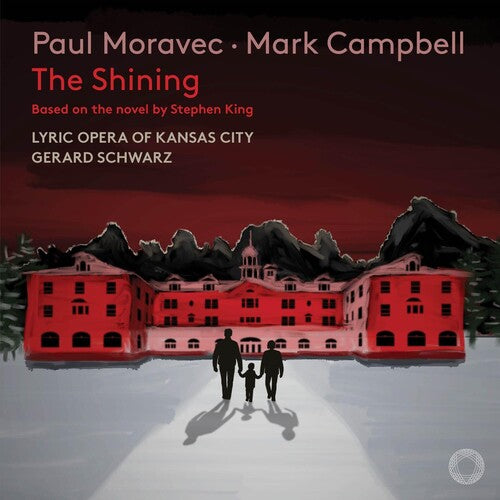
Moravec: The Shining / Schwarz, Kansas City Lyric Opera
$32.99CDPENTATONE
Apr 12, 2024PTC5187036 -
![]()

-
![]()

-
 On Sale
Pfitzner: Symphony in C - Schumann: Konzertstuck for 4 Horns / Schwarz, Seattle Symphony
CD$19.99$9.99Naxos
Sep 25, 20128572770 -
![]()

-
![]()

-
 On Sale
Bach - Orchestral Transcriptions By Respighi And Elgar
CD$19.99$9.99Naxos
Mar 27, 20128572741 -

Hovhaness: Symphony No 60, Guitar Concerto / Leisner, Schwarz
$19.99CDNaxos
Dec 12, 20068559294 -
 On Sale
British Enigmas & Mysterious Mountain / Schwarz
DVD$24.99$12.49Naxos AudioVisual
Sep 08, 20172110562 -
![]()

-
![]()

-
 On Sale
Hanson: Merry Mount / Schwarz, Flanigan, Macneil, Et Al
CD$29.99$14.99Naxos
May 29, 20078669012-13 -
 On Sale
American Classics - Schuman: Symphonies No 4 & 9 / Schwarz
CD$19.99$9.99Naxos
May 17, 20058559254 -

American Classics - Piston: The Incredible Flutist, Etc
$19.99CDNaxos
Apr 01, 20038559160 -
![]()

-
![]()

-
 On Sale
Schuman: Symphony No 6 / Schwarz, Seattle Symphony
CD$19.99$13.99Naxos
Nov 17, 20098559625 -
 On Sale
American Classics - Schuman: Symphonies No 7 & 10 / Schwarz
CD$19.99$9.99Naxos
Oct 18, 20058559255 -
![]()

-
![]()

-

Booming Bass and Baritone - Best Loved Opera Arias
$19.99CDNaxos
Apr 23, 20218578191 -
![]()

-
![]()

-

William Schuman: Symphony No 3 & 5 / Schwarz, Seattle
$19.99CDNaxos
Dec 12, 20068559317 -
![]()

-
![]()

-

Hanson: Symphonies Nos. 6 & 7 / Schwarz, Seattle Symphony
$19.99CDNaxos
Jan 31, 20128559704 -
![]()

-
![]()

-

American Mystic - Music of Alan Hovhaness
$18.99CDDelos
Oct 25, 2011DE 3421 -
![]()

-
![]()

-
 On Sale
American Classics - M. Brouwer: Aurolucent Circles, Etc
CD$19.99$13.99Naxos
Jan 17, 20068559250 -
![]()

-
![]()

-

Diamond: Symphony No. 3 / Schwartz, Seattle Symphony
$19.99CDNaxos
Apr 01, 20038559155 -
![]()

-
![]()

-
 On Sale
Diamond: Symphonies Nos. 2 & 4 / Schwartz, Seattle Symphony
CD$19.99$13.99Naxos
Jun 01, 20048559154 -
![]()

-
![]()

-
 On Sale
Schuman: Symphony No 8, Night Journey / Schwarz, Seattle Symphony
CD$19.99$13.99Naxos
Feb 23, 20108559651 -
![]()

-
![]()

-
 On Sale
Samuel Jones: Symphony No 3, Tuba Concerto / Olka, Schwarz
CD$19.99$9.99Naxos
Feb 24, 20098559378 -
![]()

-
![]()

-

A Day In The Life Of Leo - Music For You & Your Cat
$13.99CDDelos
Jan 01, 2000DE 1616 -

Mennin: Moby Dick, Symphonies 3 & 7 / Schwarz, Seattle Symphony
$19.99CDNaxos
Jul 31, 20128559718 -
![]()

-
![]()

-

Hovhaness: Symphonies No 1 & 50 / Schwarz, Seattle
$19.99CDNaxos
Jul 31, 20128559717 -
![]()

-
![]()

-

Bloch: America, Epic Rhapsody / Schwarz, Seattle Symphony
$19.99CDNaxos
Apr 24, 20128572743 -
![]()

-
![]()

-
 On Sale
Wagner: Orchestral Excerpts, Vol. 2 / Gerard Schwarz, Seattle Symphony
CD$19.99$9.99Naxos
Aug 28, 20128572768 -
![]()

-
![]()

-

Serene Journeys through Classical Music
$26.99CDDelos
Jan 01, 1998DE 1608 -
![]()

-
![]()

-

Romance Classics
$13.99CDDelos
Jan 01, 1996DE 1602 -
 On Sale
Masterpieces for Symphonic Band, Programs 1-3 / Schwarz, United States Marine Band
Vinyl$20.99$10.49Naxos AudioVisual
Nov 09, 20182110589 -
![]()

-
![]()

-

Great Russian Symphonies
$74.99CDNaxos
Apr 24, 20128501059 -
![]()

-
![]()

-
 On Sale
Echoes - Classic Works Transformed / Schwarz, Seattle Symphony
CD$19.99$9.99Naxos
Jun 28, 20118559679


My First Classical Albums
CONTENTS:


Moravec: The Shining / Schwarz, Kansas City Lyric Opera
Lyric Opera of Kansas City presents the world-premiere recording of Paul Moravec and Mark Campbell’s opera The Shining (2016). Based on the novel by Stephen King, this opera “elevates the tale from horror story to a human drama” (Wall Street Journal) thanks to Moravec’s atmospheric, electrifying score and Campbell’s deft libretto.
While staged performances have received critical and public acclaim, this engaging masterpiece can now be enjoyed as a recording for the first time. The Kansas City Symphony and Lyric Opera of Kansas City Chorus are led by the eminent conductor Gerard Schwarz and join forces with an excellent cast of soloists. The main role of Jack Torrance is interpreted by Edward Parks, who was part of the Grammy-winning recording of Mason Bate’s The (R)evolution of Steve Jobs, released on Pentatone in 2018.


Pfitzner: Symphony in C - Schumann: Konzertstuck for 4 Horns / Schwarz, Seattle Symphony
The musical expression of German Romanticism is the theme of this disc. The trajectory of Schumann’s Konzertstück, Op 86, written for four horns and orchestra, goes from heroism to introspection. Two of his Symphonic Etudes, Op 13, were orchestrated by no less a figure than Tchaikovsky, while Albert Parlow orchestrated four of Brahms’ most exciting Hungarian Dances. Mendelsssohn’s Overture to his Ballad Opera Die Heimkehr aus der Fremde (Song and Stranger) embodies classical virtues. Anton Webern’s Langsamer Satz for string quartet has been vibrantly orchestrated by Gerard Schwarz. Hans Pfitzner, one of the last representatives of the movement, is represented by his concise, melodic Symphony in C major.


Bach - Orchestral Transcriptions By Respighi And Elgar
– David Hurwitz, ClassicsToday.com


Hovhaness: Symphony No 60, Guitar Concerto / Leisner, Schwarz

Hovhaness has found a strong advocate in Gerard Schwarz, and about time too. This prolific and at times prolix composer's music, with its expressively limited mixture of bell sounds, modal and Eastern harmonies, and simple counterpoint, can sound naïve and even irritating in large doses. What is so often missing from many performances is committed playing, giving the music the strength, beauty, and confidence that so often makes all the difference between "getting through the notes" and the quality of response that these pieces need and deserve. This disc, all premiere recordings, does the latter, and even if you dislike Hovhaness you might well be impressed by the results.
Khrimian Hairig is a short, pretty work for solo trumpet and strings much like the composer's Prayer of St. Gregory. It makes a very nice program opener even though it tells us nothing especially new. That certainly isn't true of the larger works. The Guitar Concerto must be numbered among the more successful works in its genre. It has all of the composer's hallmark fingerprints, but it also reveals an astutely judged understanding of how to pit such a weak-toned instrument against a large orchestra. In terms of color, texture, and contrast, the music is wholly beguiling and never overstays its welcome.
The same holds true for Symphony No. 60. At a bit more than half an hour, this is a long work for Hovhaness, but the inclusion of some American folk music makes an interesting contrast with his usual Eastern modes, while the four movements once again offer an unusually broad range of contrast and sonority. Best of all, the entire program is extremely well played, from guitarist David Leisner on up. This isn't difficult music technically, but it must never sound tired or lazy, and here it doesn't. The disc offers what in effect is an entire mini-concert--overture, concerto, and symphony--and you can listen to the whole thing straight through without fear of monotony. Sensitive and coherent notes by the late composer's wife add to the overall appeal, as does the excellent sound, particularly in the difficult-to-balance Guitar Concerto.
– David Hurwitz, ClassicsToday.com


British Enigmas & Mysterious Mountain / Schwarz
The All-Star Orchestra gives you a front row seat to the world’s greatest music, performed by top players chosen from over 30 great American orchestras, and conducted by Gerard Schwarz. The programs feature complete performances of popular masterpieces and world premieres of new works by leading American composers. Filmed in High-Definition with multiple cameras in and around the orchestra, the All-Star Orchestra celebrates the symphonic experience in the 21st century. The first work on this release is Edward Elgar’s Enigma Variations. The score is dedicated to “my friends pictured within,” and each Variation represents a real person. As he was finishing the work, Elgar wrote: “The enigma I will not explain- it’s ‘dark saying’ must be left unguessed, and I warn you that the apparent connection between the Variations and the Theme is often of the slightest texture.” A musical mystery of great beauty and endless fascination. The next piece is Benjamin Britten’s Young Person’s Guide to the Orchestra. The perennial family favorite showcases- one by one- all the instruments of the orchestra. Next is Alan Hovhaness’ Symphony No. 2, opus 132 “Mysterious Mountain.” The composer wrote: “Mountains are symbols, like pyramids, of man’s attempt to know God. Mountains are symbolic meeting places between the mundane and spiritual world.” Finally is Eugene Goossens’ Jubilee Variations. This is a world premiere video recording of this unpublished 1944 work created by Eugene Goossens with contributions from ten composer friends, including Aaron Copland, Howard Hanson, William Schumann, and more.


Hanson: Merry Mount / Schwarz, Flanigan, Macneil, Et Al
In 1932 Nathaniel Hawthorne’s novella ‘The Maypole of Merry Mount’ became the subject of a published poem by Richard Stokes. The poem caught the attention of the Nebraskan composer Howard Hanson who at that time had two distinctively romantic symphonies to his name. He had completed his signature work - Symphony No. 2 Romantic - only two years earlier and suggestions of that work can be heard in the grandiloquent love music of the resulting opera.
In this opera the sensual delights and torments of puritan Pastor Wrestling Bradford are played out against the backdrop of a New England community in the 1600s. A ship arrives from England with a contingent of dissolute Cavaliers. With them is the beautiful Lady Marigold Sandys who becomes the centre of Bradford’s obsession. On Merry Mount, with the maypole at the centre of the open-air dancing ground, Sandys is to be married to Gower Lackland. Bradford intervenes and carries her off. Finally alone with her Bradford unveils his love for Marigold. Lackland appears, there is struggle and Lackland is killed by Bradford. Act II scene 3 is a vision of hell but because this is in the similitude of Bradford’s dream it is an erotic vision in which amid the sensuality he replays his killing of Gower who appears as Lucifer. Bradford wakes as the RedIndians - who have been treated abysmally throughout the opera – sack the village and begin to kill and scalp the setters. The village burns as Bradford and Sandys return. The settlers put the Indians to flight but Bradford, conscious of the condemnation awaiting Marigold and himself, sweeps her up into his arms and strides into the furnace flames of his blazing church – a suitably Puccinian end to a superheated opera.
No wonder the subject appealed so strongly to Hanson. Harking back to the First Symphony the mood is brooding and fiercely devotional. This couples well with the Old Testament ferocity of the words. Early on in the first act the choral writing ascends to typically long-breathed nobility which is wonderfully contrasted with baritonal string writing. The Sibelian element is also present. Listen to the Pohjolan harp underpinning at 7:20 on tr. 2 for the women's voices. Attenmd also to the stertorous stentor of the horns on tr. 3 1:23. Schwarz gives Hanson's opera the dolcissima it clamantly demands and receives from orchestra and chorus, from Bradford and from the delightfully named Plentiful Tewke. Listen to Flanigan’s limning of the melodic pulse in tr. 7 when she is alone with Zeller’s Bradford. The rapturous romantic cantilena of Bradford and Lady Marigold Sandys in tr. 12 is positively symphonic in its stride. The hymnal and romantic meet in tense adversity - sacred and profane. It’s a potent mix. This contributes to the Mussorgskian glowering choral grandeur of end of act I. It is excitable and noble writing in line with Ireland’s These Things Shall Be and Hanson’s own masterwork Lament of Beowulf. At the end of each Act – thankfully not each scene - we are reminded by the applause that this is a recording of a live event. There is the occasional and rare cough as at start of tr. 4. CD1. In Act II we encounter playful zephyrs with these breezy gestures developing into a full-blown Borodin-like climax preceded by jazzy syncopations. The clapping rhythmic song rises to Prince Igor abandon. The Merry Mount scene of the wedding of Lady Marigold and Gower is carefully set but the Puritans enter and brutally end the merrymaking. The innocent maypole dances will be familiar if you know The Merry Mount suite from its many versions. Bradford's dream includes the most atmospheric of the music. In tr. 11 aggressively edgy rhythmic material is emphasised and accented by the brass with more ruthlessness than lilt - more hysteria than loving kindness. This is the Hanson equivalent of Night on the Bare Mountain. Scene 2 of Act III has it all: the brutality of the Indian attack and its repulse. The villagers turn against Lady Marigold and superstitiously blame her for the destruction. Bradford is tormented by passion and guilt and the music echoes this in climactic Puccinian ascent as he strides with the hapless Lady Marigold into the flames of the church.
Presentational issues: The two discs are in a single width case. Sadly there is no libretto. There's no Naxos site for downloading the libretto. We do get Keith Anderson's meticulously detailed synopsis which is pretty good. This keys in with the detailed tracking - 12 for CD1 and 19 for CD2.
It is a surprise it has not made more headway in opera houses. As it is it remains in the same category as Sessions Montezuma. Sure it is weakened by an excessive number of characters and generally by its jejune rocking horse name. However Hanson's singing and lyrical impulse is heard at full stretch in this opera. This splendidly representative red-blooded recording should win the work new admirers.
-- Rob Barnett, Musicweb International, June 2007


American Classics - Schuman: Symphonies No 4 & 9 / Schwarz
"...Though separated by decades, the two war symphonies are exceptional -- exemplary showcases of "The American Sound" in symphonic music (i.e. athletic, modal, spacious, dramatic, starkly songful). They are soundscapes full of mass sonority, vigor and seriousness. The performances and recordings are brand new and superb." - John Simon, Buffalo News, Sunday, May 22nd, 2005

Click Here for the complete Naxos American Classic Series


American Classics - Piston: The Incredible Flutist, Etc
Listeners new to Piston's music would do well to audition this disc, as it includes a nice cross-section of the composer's output, from his first published work (Suite for Orchestra) to his last (Concerto for String Quartet). In between and opening this disc is the delightful ballet suite to The Incredible Flutist, a piece that features a slithering tango, a lusty Spanish waltz, and a spirited Circus March that concludes with a barking dog (a real one named Nori!). This quirky work--a sort of cross between Petrushka and Parade--alone belies the academic patina that has plagued Piston's name for decades. The fact that he wrote the leading textbook on orchestration should lead more people to think that maybe he actually knew something about it.
The dynamic Suite will excite anybody who loves Bartók, full as it is with resounding canonic brass fanfares, pounding percussion (watch out for the bass drum in the third movement), and chattering strings. Piston also had a flair for elegiac melodies, as evidenced by his soulful English horn writing (a bit aridly played and closely miked in this performance) in the Fantasy for English horn, harp, & strings, and by the slow, calmer parts for string quartet in the Concerto (especially the quixotic concluding viola solo).
Piston's orchestral expertise finds expression in the superbly crafted choral works that close this disc, works that are as buoyant as they are mysterious--and unforgettable. Of course, there are other superlative performances of these individual works (Bernstein's Incredible Flutist on Sony), but Schwarz's surveys remain essential listening for both lovers and newcomers to this great American composer.
--Michael Liebowitz, ClassicsToday.com


Schuman: Symphony No 6 / Schwarz, Seattle Symphony
SCHUMAN Symphony No. 6. Prayer in Time of War. New England Triptych • Gerard Schwarz, cond; Seattle SO • NAXOS 8559625 (60:51)
I was working as office administrator for a church at the time of 9/11, and can still remember the shock and angst following the attack and its aftermath. The minister came to me one day and mentioned how horrible things were. I remarked that at times like this I thought of Olivier Messiaen and his three fellow musicians, held prisoner in a Nazi POW camp, thinking that not only their own ends were near but the end of the world, and how Messiaen responded, artistically, with his masterly Quartet for the End of Time. The minister looked at me as if I had just said I came from Mars and said, “Well, I don’t know how to rock and roll any more!”
Different strokes for different folks, I suppose. I respond more to Messiaen and those other works written as a response to the angst of a war that shattered mankind to the very depths of its soul. William Schuman’s response was his 1943 Prayer in Time of War and, afterwards, his abstract but darkly soul-shattering Symphony No. 6. The Prayer met with good critical response when it first appeared, the symphony with antipathy bordering on outright hostility. Its premiere with the Dallas Symphony conducted by Antal Dorati on February 27, 1949, incensed the audience so much that, in Schuman’s words, “They questioned whether they should even complete payment of the commission.”
The symphony, following the dark music he wrote for ballets by Antony Tudor ( Undertow ) and Martha Graham ( Night Journey ), is similarly black and angst-ridden. Like Vaughan Williams’s own Sixth Symphony, it is a highly personal reaction to a postwar world in which so many thousands of lives were ended or disrupted, a world dominated by power struggles with the Soviets, the atomic bomb, and the intense effort it took to pick up shattered lives and move on. The fact that Vaughan Williams’s work was understood and appreciated in England while Schuman’s was vilified in America probably has something to do with the level of property destruction the former country suffered. America itself was largely protected, at least physically, and like the onset of the Depression, the postwar years created a market for soft, soothing music. Schuman’s existentialist bombshell was not what audiences wanted to hear.
Even today—perhaps especially today, in an uncertain world caught between Islamic jihads on one side and an economic freefall on the other—Schuman’s symphony and Prayer speak to us deeply unless, of course, you are one of those who just don’t know how to rock and roll. The Prayer is gentler in expression. Despite a dangerous-sounding Più animato section in which the storm of war is depicted, its overall mood is soothing in its multitonal, Ives-like expression. The second outburst, consisting of brass fanfares and animated strings, is more hopeful than nihilistic, and it ends with the same soft chord with which it began. Conversely, the symphony is consistently dark, a tunnel with no light at its end but only the quietude of resignation and emotional defeat. One of the more furious outbursts at about the 20-minute mark didn’t seem to me as well composed as the rest of the work, but even this somewhat spurious moment seemed to me to indicate our powerlessness against forces too strong to fight.
Gerard Schwarz has developed over the years into an outstanding conductor, with only a few of his recordings sounding emotionally shallow. This music is very much his métier as, apparently, was the Mahler Seventh he recorded a while back. These performances lack nothing in drama, feeling, or outstanding orchestral balance. Schwarz’s only rival in the symphony with which I’m familiar is the recording by American conductor Hugh Keelan with the New Zealand Symphony (Koch 7290), a fine performance as well if, to my ears, a little less seamlessly joined than Schwarz’s. The Prayer is combined with Schuman’s Fourth Symphony and Judith on First Edition 11, played by Jorge Mester and the Louisville Symphony, but the splendidly professional polish of the Seattle Symphony surpasses Louisville’s playing capacity of that time.
After two such melancholy works, Schwarz ends this CD with one of Schuman’s most popular pieces, the New England Triptych , three pieces for orchestra after William Billings. Here the language is also bitonal but the overall mood more positive. It’s a wonderful way for the disc to end and, again, Schwarz gives a performance comparable to the best available, including Howard Hanson’s classic account for Mercury Living Presence (432755) and Leonard Slatkin with the St. Louis Symphony (RCA 61282). Their versions have, perhaps, a trifle more swagger, but Schwarz is not eclipsed; and, when combined with these shattering performances of the symphony and Prayer, it makes for an indispensable disc for those who admire Schuman’s unique musical aesthetic.
FANFARE: Lynn René Bayley
If we set to one side the disavowed first two symphonies Gerard Schwarz has now completed recording the Schuman symphonies. Only the Schwarz-Seattle-Naxos Eighth awaits issue. The series began with a handful of Schuman symphonies recorded by Delos in the 1990s. Naxos has picked up the baton dropped when the gloriously ambitious Delos project stumbled and fell. That they are doing this at bargain price is remarkable as with so much that Naxos does. Naxos have reissued all the Delos session symphonies and continued and completed the cycle in Seattle. This disc mixes the Delos-originated 1990 session for the Triptych with newer Naxos fixtures in 2005 and 2008. The transcript of an interview with Gerard Schwarz can be found on the Naxos website.
The Sixth Symphony was first recorded by Ormandy in the 1960s on CBS AML 4992 and reissued on Albany TROY256. It’s a work of nocturnal reclusion; not at all restful. Although Schuman has his lyric heart on display it is not close to his sleeve. The song is sweet but haunted and darkly clouded with Bergian strands – even a touch of Allan Pettersson about it. Barber in his most introspective brown study comes to mind and the tension never lets up. Kinetic fury has usually been part of the Schuman palette and so it is here (try. 20:00 onwards) although occluded lyricism dominates and acts as an indefatigable magnetic pull. The work is presented in a single half hour track. The Sixth was commissioned by the Dallas Symphony Orchestra League and the Dallas orchestra premièred it with Antal Doráti conducting on 27 February 1949. It’s an impressive piece if without the compulsive concentration that bowls over listeners to the Third Symphony and the Violin Concerto.
Prayer in a Time of War first saw light of day with Fritz Reiner and the Pittsburgh Orchestra on 26 February 1943. It’s a substantial movement of symphonic bearing and unyielding seriousness as befits the subject. The language is touched with some bleakness but it is less convoluted than that of the Sixth Symphony. This is the Schuman of the Third Symphony admitting and radiating facets that recall Roy Harris and Aaron Copland. The brass writing is gaunt, statuesque and excoriating; the drum-taps and cold fanfares referencing Lincoln and Whitman. It’s is a grand statement to put alongside his works of similar concision: Credendum, In Praise of Shahn and American Hymn. This is not its first recording; that honour goes to the Louisville and Jorge Mester – still to be had on Louisville First Edition.
New England Triptych is in three movements: I. Be Glad Then, America [5:05]; II. When Jesus Wept [7:53] III. Chester [3:08]. The outer movements are redolent of Tippett in zest, springiness and riotous exuberance. The Triptych was premièred in Miami on 28 October 1956, with Andre Kostelanetz conducting the University of Miami Symphony Orchestra. The next month Kostelanetz took it to the New York Phil. It is one of Schuman’s most accessible works despite its date. The three movements are based on hymns by the Revolutionary period figure, William Billings (1746– 1800). Schuman refers to “a fusion of styles and musical language”; acidic-epic Schuman meets devout Hanoverian. The middle movement recalls RVW’s Tallis and Bliss’s Blow Meditations.
Let’s not write off those first two symphonies (1935, 1937). I have heard the Second Symphony in a 1930s broadcast by Howard Barlow and the CBS orchestra and it’s by no means negligible. Then there are other works which will be worth revival – principally theConcerto on Old English Rounds and the spectacular symphonic cantata Casey at the Bat, superbly revived by Dorati in Washington as part of the American centennial event diary.
It’s a pleasure to report that this disc was generously supported by the National Endowment for the Arts who seem to have moved away from a policy that appears at one time to favour only the work of the adherents of academic dissonance.
The notes are by Joseph W. Polisi, currently sixth president of The Juilliard School and author of “American Muse: The Life and Times of William Schuman” (Amadeus Press, 2008).
Keep watching for the Naxos Schuman Eighth secure in the knowledge that Schwarz and his Pacific Edge orchestra are fully equal to the challenges set by Schuman. Naxos will again, I am sure, provide a stunning recording as they have done here across a span of eighteen years – session to session.
-- Rob Barnett, MusicWeb International


American Classics - Schuman: Symphonies No 7 & 10 / Schwarz
During his time William Schuman (1910?1992) was a notable part of American musical life, as a teacher, administrator, and composer. His legacy of musical compositions is significant and distinctive, and this release couples two striking examples of his art.
Symphony No. 7, premiered by Charles Munch and the Boston Symphony in 1960, is in four movements played continuously, beginning with a pregnant, sinewy, and dark, slow movement that is succeeded by a brief Scherzo that is typically pugnacious and characteristically scored, not least in the percussion. The slow mood returns for a radiant Cantabile intensamente that grows in emotion, and the symphony concludes with a propulsive finale that begins skittishly (reminding us of Copland and developing an exuberance that suggests Leonard Bernstein) and ends in thrilling clamor. Whether this lively movement is quite the expected corollary to what has gone before is a moot point, although there is no doubting the sheer quality of the music, and the uplift of the final measures.
Symphony No. 10, ?American Muse,? was first heard in Washington, DC, in 1976, Antal Dorati conducting the National Symphony Orchestra. Leonard Slatkin and the Chicago Symphony then took it up, and Slatkin recorded American Muse , dedicated ?to the country?s creative artists, past, present and future,? and other works of Schuman, for RCA with the Saint Louis Symphony in either 1991 or 1992 (RCA?s booklet doesn?t specify what was recorded when). It?s a great piece, the last of Schuman?s 10 symphonies (the first two were withdrawn by the composer), a vindication of writing real symphonic music, and begins with a sustained, brass dominated Con fuoco that is a virtuoso display of considerable import; a tidal wave of communication. The lengthy Larghissimo that follows is hauntingly beautiful, very personal, even private, but it steals to the listener?s heart, and the finale, having begun in exploratory fashion, is an optimistic summation.
Both Slatkin and Gerard Schwarz are deeply sympathetic conductors of Schuman?s music, but I imagine Slatkin?s version of ?American Muse? is now deleted. Schwarz?s leading of both symphonies is excellent; so, too, the sound quality; and the music is superb. With Schuman 4 and 9 already released from Seattle, one hopes the other four symphonies will follow. Very important.
FANFARE: Colin Anderson


Booming Bass and Baritone - Best Loved Opera Arias
For anyone new to opera, the first question is often: where to start? The 'Best Loved' series offers an easy answer to that question with a perfect introduction to the wonderful, varied world of operatic music. Highlighting some of the best-loved arias ever written, the series provides a convenient introduction to opera's extensive variety of sounds and styles. Opera can be defined as drama told through music and, at the height of it's popularity, conventions arose in which certain voice types came to share features of the characters they represented. This series presents the main vocal categories (soprano, mezzo-soprano, contralto, tenor, baritone and bass) by dividing them across four albums. The 'Best Loved' Arias series aims to demonstrate why opera as an art form remains as relevant and entertaining today as it was at it's inception 400 years ago.


William Schuman: Symphony No 3 & 5 / Schwarz, Seattle
SCHUMAN Symphonies: No. 3; No. 5. Judith • Gerard Schwarz, cond; Seattle S • NAXOS 8.559317 (67:45)
In the early days of the LP, reviewing was a snap. The Schwann Catalog was the size of a pamphlet, a reviewer therefore had a pretty easy time assessing all that was out there, and in harmony with the Consumer Reports function of a magazine like Fanfare , could easily make his or her case for the best possible (implying definitive) recording of this or that work. Now it’s a whole different universe, with firms like Naxos attempting to record the entire and ever-expanding world’s worth of music—possibly even music not yet composed. To continue my reviewer’s lament for a moment: those of us who review only recordings work at a disadvantage. Critics who deal with live concerts know that a performance is merely a single event in an ever-evolving landscape. On the other hand, those of us who basically deal with recordings often fall into the trap of regarding their first-acquired recording of a particular work as a legitimate template. A live concert is a fleeting affair; a recording will be listened to over and over again until the gray matter of the auditor’s brain is thoroughly grooved and ossified. Add to this that my first exposure to the symphonies of William Schuman were from Leonard Bernstein’s 1960s landmark LP of Schuman’s Third and Fifth Symphonies, which inspired me to acquire his subsequent 1985 recording of Schuman’s Third Symphony paired with Harris’s Third Symphony on DG (similarly impressive, and captured in more impactful sound), one can easily understand my initial reaction when I found this Naxos release in my mailbox: “Why is Schwarz even bothering?”
Listening to this offering, my first reaction was to focus on what Schwarz missed—the snare drum rim shots at the end of the finale were not loud enough and the overlaying brass and woodwinds didn’t provide enough crescendo; his wind solos in the second movement were not as well characterized as Bernstein’s in both his recordings; his opening of the first movement was not nearly as bard-like as Bernstein’s, etc. etc. A good deal of this has to do with recording technology. That earliest 1960 Columbia Masterworks Bernstein offering was, by modern standards, dynamically compressed, making the score’s pianissimos louder, and leading to a more effectively detailed registration of the symphony’s opening bars. In the realm of recorded music, if it’s louder, it’s de facto more impressive. In Bernstein’s subsequent DG go around, the dynamics were more realistic and the resulting sound is closer to Schwarz’s. Nonetheless, Schwarz’s opening still sounds comparably weak and undercharacterized. But what follows does not.
Schwarz takes the symphony’s structure more literally than Bernstein. Its two movements are given Baroque sub designations—Passacaglia and Fugue; Chorale and Toccata. Schwarz is Baroqueishly strict in terms of tempo, and revealingly evenhanded in his instrumental balances; Bernstein is more episodic, projecting the Amerikanisch hymnody underlying so much of Schuman’s thought.
In sum, Bernstein’s two recordings are indeed hard acts to follow, but Schwarz does so with distinction. He achieves, throughout, stunning brass balances. He infuses the music with a wonderfully heady forward momentum, and his more modern recording conveys the loud low percussion with lease-breaking power. Over the years of his tenure as music director of the Seattle Symphony, Schwarz (himself a trumpet virtuoso, which accounts for his expertise in conducting his brass) has forged a fine ensemble able to rise to any and all musical demands.
In Schuman’s “Symphony for Strings,” also designated as the Fifth Symphony, Schwarz again comes head to head with Bernstein. In this piece Schuman proves that he can fugue with the best of them. Bernstein’s 1966 Columbia Masterworks (now Sony) recording is a typically in-your-face effort—viscerally exciting indeed. Here, Schwarz’s recording is more realistically balanced. When all is said and done, Bernstein emerges as the winner. His recording conveys more internal detail than is found here. That aside, Schwarz’s offering, in terms of tempos, is almost identical to Bernstein’s. Here the palm, alas, goes to Bernstein, but Schwarz’s effort is a commendable reading of the score.
The ringer is the last piece— Judith, a choreographic poem for orchestra—commissioned in 1949 by the Louisville Orchestra, which asked Martha Graham to create a ballet dealing with the beautiful Jewish widow who liberated her people from Nebuchadnezzar’s army by seducing and killing its general, Holofernes. The result was a typically Technicolor score from Schuman. Here it is realized most vividly.
As to which recording will I go to when I want to hear Schuman’s Third Symphony—well, it’s a toss up, and that says a lot.
FANFARE: William Zagorski


Hanson: Symphonies Nos. 6 & 7 / Schwarz, Seattle Symphony
This is the fifth volume in Gerard Schwarz’s fervent traversal of the seven Hanson symphonies for Delos. The three pieces are drawn from DE 3160, 3092 and 3130. As with the earlier volumes Schwarz brooks no dilution of the music. Nothing is routine or careless.
The old passionate munitions and the aggressive air-burst energy is still there in the six-movement Sixth Symphony. Hanson was writing way against the prevailing current of the times – it was 1968 – but the fuel still ignites! This work initially took a while to take a hold on me but now its swaying Nordic romance will not let go. The music has exuberance, chattering Sibelian zest, an epic stride and the benefit of a resplendent recording. It was dedicated to Leonard Bernstein and the NYPO. Schwarz takes things at a faster lick than Siegfried Landau and the Music for Westchester Symphony Orchestra version from the early 1970s. Landau was first issued on Turnabout LP TV-S34534, revived on CD on Excelsior and also as part of a VoxBox CDX5092.
Lumen in Christo growls with awe. Somewhere in there we are told that there is material by Handel and Haydn. It is deeply subsumed. The choir sings texts with light as their subject from the Latin Requiem and from The Bible. The music has a symphonic mien so do not expect much in the way of relaxation after the rippling power of the Sixth Symphony.
The Seventh also uses the Seattle Symphony Chorale. It’s a setting for choirs and orchestra of texts by Walt Whitman. Hanson – then within four years of his death - sticks to his last. The style essays no change. Indeed he even incorporates that long-breathed treasure of a melody – the grand theme from The Second Symphony. He first set Whitman’s verse in 1915 and latterly in Drumtaps (1935), Song of Democracy (1957) and The Mystic Trumpeter (1970; rec. Delos DE3160). This is not the work’s first recording. That honour rests with the World Youth Symphony Orchestra Interlochen and the National Music Camp High School Choir who recorded it in August 1977 on Bay Cities BCD 1009. Atmospheric though that original is it cannot hope to compete with Schwarz’s fully professional version.
Let’s keep our fingers crossed for a final Schwarz Naxos disc including the Piano Concerto and The Mystic Trumpeter. In due course I would guess that Naxos will also issue a boxed set as they did for Barber and Schuman.
– Rob Barnett, MusicWeb International


American Mystic - Music of Alan Hovhaness
Heralded by a New York Times article honoring the centenary year of Hovhaness’ birth, Delos celebrates this wonderfully eclectic “American Mystic’s” glowing niche in the pantheon of American musical history from a new angle: Hovhaness as a composer of what we now call “World Music” though on a more exalted plane than most of that genre’s content.
We call Hovhaness a “mystic” largely due to his insatiable curiosity about pan-global musical traditions: primarily exotic sounding middle- and far-Eastern modes, scales and rhythms that, owing to their alien impact upon Western ears, tend to convey mystically spiritual impressions. On top of his own Armenian musical roots, he compulsively explored the music of other Arabic regions as well as the traditions of India, Japan, Korea and Indonesia, absorbing them all into his overall musical consciousness, to be tapped at need to suit his unique creative designs. Accordingly, Delos has combed through its many distinguished previous recordings of Hovhaness’ music to find the individual works that best support such a World Music classification. And everything fits: Like that of many current world music artists, the music of Hovhaness blends disparate musical influences and impulses in musical fusions that are framed by Western contexts of sound, form and instrumentation. - Delos
R E V I E W S:
"This year [2011] is the centennial of Hovhaness’s birth, and for the occasion Delos Records just released a commemorative CD of some of his most important orchestral and chamber works, called “American Mystic: Music of Alan Hovhaness...from childhood Hovhaness had been immersed in the work of Komitas Vartabed, an Armenian priest and musicologist of the late 19th century who specialized in the medieval liturgical and folk music of his homeland in the Caucasus. In the world of mainstream American classical music, however, Hovhaness, who died in 2000, was —and remains an outlier. At a time when dissonance, serialism and other styles were in vogue and many of his colleagues were writing works meant to be both modern and specifically American, Hovhaness embraced tonality and also showed a fondness for archaic elements like the polyphony of Renaissance music and the counterpoint of Baroque fugues...his music could also be deeply spiritual, a quality on display in well-known works like his Symphony No. 2, called “Mysterious Mountain,” and his “Prayer of St. Gregory,” both of which feature soaring trumpet and meditative string parts."
- Larry Rohter, New York Times


American Classics - M. Brouwer: Aurolucent Circles, Etc
Margaret Brouwer (born in 1940) is head of the composition department at the Cleveland Institute of Music. Based on this excellent new Naxos recording, she has an individual voice with a fine ear for orchestral colors. Her 2002 Concerto for Evelyn Glennie? Aurolucent Circles ?is immediately arresting, with its powerfully phrased opening voiced in the lower strings. The evocative entrance of Glennie in its potent mystery reminded me of some of Holst?s outer and more arcane planets. This is appropriate, as the concerto?s first movement is titled ?Floating in Dark Space.? Besides virtuoso passages for the soloist accompanied by full orchestra, the work has strongly contrasting sections employing two concertino groups which show off the very fine first-desk players in the Royal Liverpool Philharmonic. Glennie?s solos cover a kaleidoscopic range of percussion instruments and colors. The second movement, ?Stardust,? takes those colors and plays them about the stage, drifting and more often sweeping through various sections of the orchestra. The final movement, ?Cycles and Dances,? continues the notion of motion about and through the orchestra in a frenetic dance interrupted by lower brass?a favorite gesture of Brouwer?s. Glennie is the star around which all this revolves. The recording of the concerto (and the remainder of the disc as well) is both exciting and detailed, with a convincing sense of space around the instruments.
Mandala was inspired by a Tibetan sand painting and a Dutch psalm melody (Psalm XCI in the Dutch Reformed hymnal.) The trombone intoning the Psalm tune could equally be playing a version of the Buddhist om. Adding to this interesting musical-cultural mix are musicians whispering barely audible bits of random text, always with the ever-present Psalm never far from the surface. Whether this adds up to a work that will stand up to repeated hearing remains to be seen: I have a strong feeling it well may.
Pulse is an accessible and attractive score with an unexpectedly melismatic theme heard mainly from the winds and then the solo violin. As someone who usually appreciates the elegiac mood, I was looking forward to hearing Remembrance, dating from 1996 and the earliest score on the recording. It is affirmative rather than mournful, but perhaps somewhat long for its material.
Brouwer?s musical commentary on the rapid pace of 21st century life is expressed in the disc?s final work SIZZLE . Three trombones and a horn play a similar role here as in Mandela : they stand apart in time and space, representing different currents in a fast moving stream.
Gerard Schwarz?s performance of all these works is authoritative and convincing. He is ably abetted by his orchestra and the fine production and engineering.
FANFARE: Michael Fine


Diamond: Symphony No. 3 / Schwartz, Seattle Symphony
REVIEW:
It's a mystery why David Diamond has not been generally acclaimed as one of the top handful of American symphonists. His Third Symphony has everything: good tunes, terrific orchestration, tight construction, and a satisfying form. Its beauties are numerous and immediately appealing, from the zesty rhythmic kick of its first and third movements to the lovely writing for harp and piano in the second movement, all grounded in a slow finale of ineffable purity and gentleness. Of course, it's that slow finale that probably seals the symphony's doom in terms of its chances for live performance, but there's no reason we can't enjoy it at home in this excellently played and recorded performance (here getting new lease on life from Naxos after its first appearance on Delos).
The two couplings at first might look to have a certain outward resemblance in that they both enshrine spiritual subjects, but they couldn't sound more different. Psalm (1936) is vintage early Diamond, a slow-fast-slow piece that bespeaks a certain French flavor (Ravel is never far away from Diamond's quiet music). Kaddish (1987), on the other hand, is an elegiac apotheosis of the modes of synagogue chant. It's beautifully played by Janos Starker, and altogether this collection represents a fine tribute to a still underrated major composer.
--David Hurwitz, ClassicsToday.com


Diamond: Symphonies Nos. 2 & 4 / Schwartz, Seattle Symphony
REVIEW:
Gerard Schwarz's David Diamond symphony recordings originally appeared on the Delos label in the early 1990s. They remain impressive (though unfortunately still rare) documents of this composer's uniquely engaging music. In contrast to Symphony No. 1's ebullient opening, Diamond's Second begins with a wistful Adagio funebre, one of the work's longer and more profound movements, another being the beautiful Andante expressivo (with its evocative string and woodwind writing). The harmonic and melodic style occasionally recalls Copland, who comes most immediately to mind in the brass and bass drum play of the scherzo. However, the finale brings that unique blend of folksy Americana and classical rigor that marks much of Diamond's work.
Symphony No. 4's finale uses a similar rhythmic structure and even shares the same key as the Second, but otherwise the two works are quite different. Diamond compacts a lot of material into three brief movements. The musical language is less overtly tuneful than in No. 2, but the composer's expanded harmonic and textural palette ensures ever-captivating sounds, just as his sense of dramatic contrast and well-timed climaxes provide substantial emotional impact throughout. Schwarz conducts both scores with keen sensitivity, while the Seattle Symphony (particularly the brass in No. 4) relishes the challenge of this then-unfamiliar music. The low-level recordings require a volume boost to register fully, and they retain some shallowness, but not enough to detract from full enjoyment of the performances.
--Victor Carr Jr, ClassicsToday.com


Schuman: Symphony No 8, Night Journey / Schwarz, Seattle Symphony
Rejoice! With this disc Naxos complete their survey of the numbered Schuman symphonies. You will look in vain for symphonies 1 and 2: they were disclaimed by the composer. That’s a pity as it would be fascinating to hear these works of the 1930s. I have not given up hope.
Schwarz here has the conqueror-advocate’s measure of the bell-haunted Eighth Symphony. It was premiered in the Lincoln Center in 1962 with Bernstein conducting and was recorded by Bernstein the same year. That recording is easily and inexpensively accessible on a 1998 Sony CD alongside symphonies 3 and 5 via Amazon. While I still recommend that CD for an unassailably vital and kinetic Third Symphony Schwarz is to be preferred in the often more tensely reflective Eighth Symphony. He takes a minute and a half more than the comparatively opaque Bernstein but the Seattle results positively glow. This is a work that can be difficult to approach but I find it completely accessible in this Schwarz-Naxos version. Schwarz’s reading is as much of a revelation as Walter’s Brahms 3, Oramo’s Sibelius 6 and Ormandy’s Nielsen 6. The lucid and directly engaging recording is a co-conspirator in the results. The prestissimo finale showcases the audio engineering which accommodates solo strands and florid climactic material with a natural ease and without any sense of perspective zooming. Even Schwarz cannot completely transform the rather hollow gestures of the last page or two of this score but overall the Symphony emerges wonderfully well – better than ever.
Night Journey was one of four ballets on which Schuman collaborated with Martha Graham. Its spareness of utterance and angularity is only partly accounted for by the score which specifes fifteen instruments. A diminutive orchestra was not an unusual restriction for Graham ballets of that era – no doubt sensitive to cost and touring practicalities. The music has a Bergian astringency whether pensive, charged with nocturnal foreboding or fitfully frenetic. That inward quality echoes Barber’s tense dark chocolate romanticism but presents in more transparent textures. Night Journey has been issued on CD before by CRI but is not currently available. The Ives/Schuman Variations on ‘ America’ is a brilliant showcase built around a song that most Brits will recognise as God Save the Queen. The familiar tune is put through some wheezingly irreverent transformations. This is in no sense a representative Schuman work but is full of left-field fun.
It’s too easy to forget the sponsors without whose sense of judgement and even courage we would not hear the music. It’s much to the credit of the National Endowment for the Arts that they have financial sponsored this disc.
The more than capable notes are by Schuman biographer Joseph W Polisi.
For enthusiasts of the orchestral Schuman and the American 20 th century symphony this disc brings the Naxos Schuman project to a close in style.
-- Rob Barnett, MusicWeb International


Samuel Jones: Symphony No 3, Tuba Concerto / Olka, Schwarz


A Day In The Life Of Leo - Music For You & Your Cat
This selection contains both DDD and ADD recordings.


Mennin: Moby Dick, Symphonies 3 & 7 / Schwarz, Seattle Symphony
"...along with Symphony No. 7 of Peter Mennin...may be the greatest of all American Traditionalist symphonies." - Walter Simmons, Voices in the Wilderness, page 377, (describing both the Symphony No. 1 of Nicolas Flagello and the Symphony No. 7 of Peter Mennin.)


Hovhaness: Symphonies No 1 & 50 / Schwarz, Seattle
With over 500 works to his name Alan Hovhaness may well be the most prolific American composer as well as one of the most fascinating. His music cannot be pigeonholed since he drew influences from so many varied sources. That said, above all, he insisted on melody, having roundly rejected the path of ‘modernism’ that many others followed in the 20 th century. Among those influences was his Armenian heritage inherited through his father. These are very much to the fore in his First Symphony subtitled Exile which references the plight of Armenians who were forced to flee in their millions in the face of an onslaught by Ottoman Turks during the First World War. Lovers of big tunes will revel in the lush sonorities on display. They’re in evidence right from the first notes. These are given to the clarinet which introduces a plaintive tune taken up by other woodwind with the orchestra continuing the Middle Eastern-sounding scales and the music becoming disturbed and agitated. The second, short movement marked Grazioso is further demonstration of the melodies for which Hovhaness is rightly renowned. Woodwind sings out against a background of pizzicato from strings and harp. This allows for an interlude of calm before the third and final movement brings us back to agitation. Driving strings and winds recall the opening theme in chorale form which then becomes the main focus of the orchestra. The powerfully expressed message is that a whole people cannot be suppressed. Its spirit will reassert itself and prevail against all the odds.
One of the other influences Hovhaness exploits is his love and reverence of the music of the Far East, particularly Japan and Korea, having studied both. The second work, Fantasy on Japanese Woodprints, has a title that allows him to explore his own impressions of the music from this part of the world. It involves extremely creative ways of approximating the sounds of Japan through clever and inventive use of the instruments of a Western orchestra. The marimba is the instrument of choice to carry the main theme against a background of orchestral experimentation creating a convincing and effective ‘Japanese’ sound for Western ears.
Yet another influence which has shown itself in many of Hovhaness’s compositions are mountains. He once wrote “Mountains are symbols, like pyramids, of man’s attempt to know God. Mountains are symbolic meeting places between the mundane and spiritual worlds”. It was a natural thing therefore to have been moved to write a symphony that expresses those ideas following the huge explosion of Mount Saint Helens in Washington State in 1980. The first movement sets the scene and pays reverence to the majesty and mystery of the mountain through use of gorgeous harmonically and melodically rich tunes. These emphasise the mountain’s imperious eminence over its surroundings and its naturally serene nature prior to its being geographically changed by the explosion. The second movement is also calm since it describes the fabulous Spirit Lake in whose waters the mountain was often magically mirrored. Once again Hovhaness uses Japanese-sounding melodies to create the air of mystery and natural beauty of a place which was obliterated by the explosion. The finale opens with an almost hymn-like theme from the strings with tubular bells in the background. A sole flute precedes a representation of the cataclysmic events that rent the mountain asunder, and which continues for much of the movement’s 14 minutes. This musical depiction of the destructive power of nature is extremely potent with plenty of work for bass drums and gong as wave after wave of explosions tear the very fabric of the ground on which the mountain stood. Finally the opening hymn returns to re-establish a measure of calm. Hovhaness doesn’t end the symphony there. Instead he creates a coda to signify the “youthful power and grandeur of the Cascades Mountains” that, as he said, renews the vitality of “our peaceful planet, the living earth, the life-giving force building the majestic Cascades Mountains (,) rising, piercing the clouds of heaven”. This symphony represents an extremely satisfying journey that shows the composer’s unique view of how to use music to describe nature in all its creative as well as destructive power. The disc as a whole is a wonderful introduction to this amazing composer’s music that I for one am only beginning to discover. More of Hovhaness’s works are being recorded all the time. With 67 symphonies alone there’s plenty left to record and to discover and that’s an exciting prospect. Gerard Schwarz is a great advocate of American music and he and his orchestra help do the kind of justice Hovhaness deserves. Ron Johnson does a sterling job on the marimba in the disc’s second work. These recordings were originally made by Delos and they offer an extremely rewarding experience for a whole new audience to discover and revel in.
-- Steve Arloff , MusicWeb International


Bloch: America, Epic Rhapsody / Schwarz, Seattle Symphony
— David Hurwitz, ClassicsToday.com


Wagner: Orchestral Excerpts, Vol. 2 / Gerard Schwarz, Seattle Symphony
Under the dual influences of Goethe and Berlioz, Wagner wrote A Faust Overture in Paris. Years later, in 1855, he returned to the work, revising it to create an even greater sense of drama and narrative conviction. In the excerpts from his romantic opera Lohengrin we hear the visionary Prelude to Act I and the Act III Prelude, which includes the well-known Wedding March. Elsa’s Dream is sung by the internationally acclaimed soprano, Alessandra Marc. The orchestral music from Parsifal contains some of the most transcendent music Wagner ever wrote.


Serene Journeys through Classical Music
It's a tough road to get where you're going nowadays - and Delos has created a wonderful new collection, including a delightful bonus, to help make the trip a little easier. Serene Journeys is a specially priced 3-CD set packaged in a 6-CD carrying case, carefully programmed with the most relaxing classical music. This tranquil collection is unique among 'mood' compilations in featuring acclaimed classical artists, such as Carol Rosenberger, Voices of Ascension, the Dallas Symphony, and the Seattle Symphony, all in a value-priced three-disc gift package. Selections include the familiar, such as Barber's Adagio [Agnus Dei], piano selections of Debussy, the Mozart Clarinet concerto, as well as other less familiar works which will help educate and enrich the listener while expanding his knowledge of the classical repertoire.


Romance Classics


Masterpieces for Symphonic Band, Programs 1-3 / Schwarz, United States Marine Band
A unique collaboration: the All-Star Orchestra's Music Director Gerard Schwarz guest conducts the United States Marine Band. Founded by an Act of Congress in 1798, it is America's oldest continually active musical ensemble. Three programs feature masterpieces for symphonic band and the history of the famed ensemble.


Great Russian Symphonies
The word ‘symphony’ is used to describe an extended orchestral composition in Western classical music. By the eighteenth century the Italianate opera sinfonia—musical interludes between operas or concertos—had assumed the structure of three contrasting movements, and it is this form that is often considered as the direct forerunner of the orchestral symphony. With the rise of established professional orchestras, the symphony assumed a more prominent place in concert life between 1790 and 1820 until it eventually came to be regarded by many as the yardstick by which one would measure a composer’s achievement.
The symphony came late to Russia. The first attempts at a Russian Nationalist symphony were made in the late nineteenth-century by Balakirev and his acolytes, Borodin and Rimsky-Korsakov as well as by Tchaikovsky, whose symphonies (despite his European leanings) have a distinctly Russian flavour. In their wake followed numerous composers, from Glazunov to Myaskovsky, similarly instilling their music with the melodies of their homeland. In the years that followed Russian politics had an unmistakable impact on the Russian symphonists, as Rachmaninov and Prokofiev (among others) went into exile whilst composers such as Shostakovich vented their political frustrations through the medium of music—his Leningrad Symphony being a prime example.
R E V I E W:
The most important works here also tend to get the best performances. So let’s proceed in order of overall quality. Best are Shostakovich’s Fifth with Petrenko, Borodin’s Second and Rimsky-Korsakov’s Scheherazade with Schwarz, Kuchar’s Prokofiev First and Fifth, and Kalinnikov’s First, and Antoni Wit in Tchaikovsky’s Fifth and Sixth. All the rest are fair to good. These include Glazunov’s Sixth and Rachmaninov’s Second (and The Rock) with Anissimov, Shostakovich’s Seventh and Miaskovsky’s 25th (Yablonsky), Tchaikovsky’s Fourth and assorted short works (1812 Overture, Romeo and Juliet) with Adrian Leaper, and Scriabin’s Poem of Ecstasy and Third Symphony with Golovschin. Topping it all off is a pretty respectable Antar Symphony conducted by André Anichanov. Yes, you can do better in most of this music, but this 10-disc set is well-chosen and an easy way to get a big pile of popular and unfairly neglected Russian symphonies, so who’s complaining?
-- David Hurwitz, ClassicsToday.com


