

May Blowout Sale
Over 1,000 titles from top classical labels are on sale now at ArkivMusic!
Titles include recordings from acclaimed artists such as The United States Navy Band, BBC Scottish Symphony, The Sixteen, and so many more!
Shop now before the sale ends at 9:00am ET, Monday, May 25th, 2026.
1144 products
-
![]()

-
![]()

-
 On Sale
Gluck, Haydn, Mozart & Porpora: Legacy / La Marca, Chauvin, Le Concert de la Loge
CD$18.99$9.49Naïve
Jan 20, 2023V7259 -
![]()

-
![]()

-
 On Sale
Monteverdi: 7th Book of Madrigals / Alessandrini, Concerto Italiano
CD$21.99$10.99Naïve
Jan 06, 2023OP7365 -
![]()

-
![]()

-
 On Sale
Bach: Clavier-Ubung III / Jeremy Filsell
CD$19.99$14.99Signum Classics
Jan 06, 2023SIGCD744 -
![]()
-
![]()
-
 On Sale
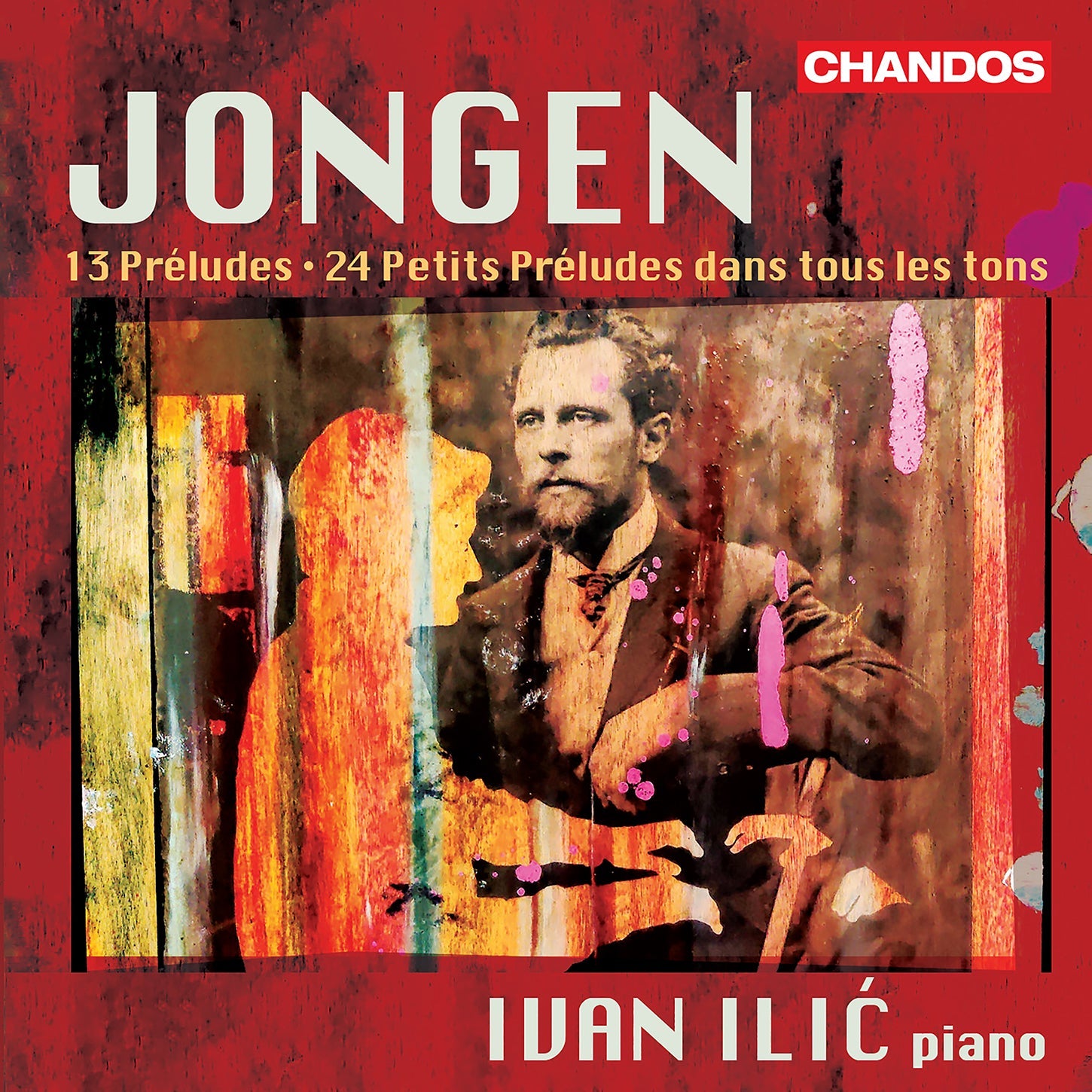
Jongen: Preludes for Piano / Ivan Ilić
CD$21.99$10.99Chandos
Jan 06, 2023CHAN 20264 -
![]()

-
![]()

-
 On Sale
Palumbo: Woven Lights / D'Orazio, Reynolds, London Symphony Orchestra
CD$21.99$15.99BIS
Jan 06, 2023BIS-2625 -
![]()

-
![]()

-
 On Sale
Momotenko: Choral Works / Kļava, Latvian Radio Choir
CD$18.99$9.49Ondine
Nov 18, 2022ODE 1413-2 -
![]()

-
![]()

-
 On Sale
Echo / Ruby Hughes, Huw Watkins
SACD$21.99$10.99BIS
Nov 04, 2022BIS-2568 -
![]()

-
![]()

-
 On Sale
Tchaikovsky: Orchestral Works / Azkoul, United Strings of Europe
SACD$21.99$10.99BIS
Nov 04, 2022BIS-2569 -
![]()

-
![]()

-
 On Sale
Bruch, Mozart, Schumann & Stravinsky: Clarinet Trios / Wigmore Soloists
SACD$21.99$10.99BIS
Nov 04, 2022BIS-2535 -
![]()

-
![]()

-
 On Sale
Ravel: Orchestral Works, Vol. 2 / Trevino, Basque National Orchestra
CD$18.99$9.49Ondine
Nov 04, 2022ODE 1416-2 -
![]()

-
![]()

-
 On Sale
Beethoven: Complete Symphonies; Barry: Orchestral Works / Adès, Britten Sinfonia
CD$97.99$48.97Signum Classics
Oct 21, 2022SIGCD687 -
![]()

-
![]()

-
 On Sale
Nickel: Sonatas & Chamber Music for Oboes / Vanderkolk
CD$19.99$9.99Avie Records
Oct 21, 2022AV2558 -
 On Sale
Bach: Goldberg Variations / Tianqi Du
CD$21.99$10.99Naïve
Oct 21, 2022V7566 -
![]()

-
![]()

-
 On Sale
Elmas: Complete Piano Works, Vol. 1 / Ayrapetyan
CD$19.99$9.99Grand Piano
Oct 14, 2022GP914 -
![]()

-
![]()

-
 On Sale
Beethoven: Complete String Quartets, Vol. 3 - The Late Quartets / Dover Quartet
CD$29.99$14.99Cedille
Oct 14, 2022CDR 215 -
![]()

-
![]()

-
 On Sale
Ravel - Five O'Clock Foxtrot and more works for orchestra / Simon, Philharmonia Orchestra
CD$19.99$9.99Signum Classics
Oct 14, 2022SIGCD2160 -
![]()

-
![]()

-
 On Sale
Ravel: Valley Of The Bells and more works for orchestra / Simon, Philharmonia Orchestra
CD$19.99$9.99Signum Classics
Oct 14, 2022SIGCD2159 -
![]()

-
![]()

-
 On Sale
Chopin: Complete Mazurkas, Vol. 1 / Jablonski
CD$18.99$9.49Ondine
Oct 07, 2022ODE 1412-2 -
![]()

-
![]()

-
 On Sale
Schubert: String Quintet / van der Heijden, Brodsky Quartet
CD$21.99$16.99Chandos
Oct 07, 2022CHAN 10978 -
![]()

-
![]()

-
 On Sale
Upon Further Reflection - Copland, Tilson Thomas & Wild / Wilson
CD$19.99$9.99Avie Records
Sep 30, 2022AV2458 -
![]()

-
![]()

-
 On Sale
Mendelssohn: Early Works / Biondi, Europa Galante
CD$18.99$9.49Naïve
Sep 23, 2022V7262 -
![]()

-
![]()

-
 On Sale
The Scriabin Mystery / Larderet
CD$19.99$9.99Avie Records
Sep 23, 2022AV2500 -
![]()

-
![]()

-
 On Sale
Perfect Moods: Contemplative, Contemporary Piano Miniatures
CD$51.99$25.98Grand Piano
Sep 09, 2022GP898X -
![]()

-
![]()

-
 On Sale
Medtner: Complete Piano Sonatas, Vol. 3 / Stewart
CD$19.99$9.99Grand Piano
Sep 09, 2022GP888 -
![]()

-
![]()

-
 On Sale
Debussy: Piano Duets / Lortie, Mercier
CD$21.99$10.99Chandos
Sep 09, 2022CHAN 20228


Gluck, Haydn, Mozart & Porpora: Legacy / La Marca, Chauvin, Le Concert de la Loge
The cellist Christian-Pierre La Marca always has something to surprise us with: hybrid programs mixing genres and pushing toward musical frontiers, guests who add to an already rich repertoire, and a keen, passionate vision of both music and the world. The title and the composers of his new album may appear “classical”, but his recording, effectively rooted in eighteenth century Vienna, nevertheless once again broadens the horizons and encourages us to see things differently. “I wanted this program to introduce new ways of listening to Haydn’s concertos,” he explains. “Legacy focuses on passing down rather than inheriting – the benevolence of one generation for the next, encounters between musicians who are also enablers, the progression of the instrument in the music.”


Monteverdi: 7th Book of Madrigals / Alessandrini, Concerto Italiano
With this recording of Book VII of Claudio Monteverdi’s madrigals (1619, Venice), Rinaldo Alessandrini and his Concerto Italiano devote themselves to a love theme with a very pastoral edge the composer particularly savored. The Italian harpsichordist and conductor once again offers us a collection of Monteverdi madrigals of the highest quality, in which the poems not only lead the singing, but also determine the arrangement of the madrigals by poet. Inspired by “the hitherto unpublished stamp of a literary intention” indicated by the composer at the start of the collection, Rinaldo Alessandrini and his ensemble, accustomed to enlightening dramatics, offer a sparkling polyphony varying from one to six voices, in a wide range of pitches.
REVIEWS:
Claudio Monteverdi’s Seventh Book of Madrigals have been recorded well by several early music groups, but one expects superior readings from harpsichordist Rinaldo Alessandrini and his vocal-instrumental ensemble Concerto Italiano, and indeed, one gets them here. He presents the madrigals not in the order in which they were published, instead grouping the texted pieces by poet. This points to the stylistic features an audience of Monteverdi’s time would have been interested in, and Alessandrini supports these features with readings that differentiate the pieces sharply from one another. This is an ideal recording of music by the later Monteverdi.
-- AllMusic.com (James Manheim)
This is Book 7, but not as you know it. A must-read booklet essay by Alessandrini himself frames the new recording as a philosophical and dramatic undertaking rather than an exercise in completism. This is opera without the stage – a riveting and incredibly stylish account of this vast and varied book of music.
-- Gramophone


Bach: Clavier-Ubung III / Jeremy Filsell
The monumental third part of the Clavier-Übung (1739) is perhaps one of J S Bach’s greatest musical sequences with its explorations into both Lutheran hymnody and the ‘German Organ Mass’. As a didactic work, it also pursues virtually every contrapuntal device and structure. In giving voice to this immensely varied work, fascinating, inspiring and spiritual in equal measure, it seems particularly apt to make through it an ‘organ tour’ of Saint Thomas Church, with its rich and rewarding instrumental resources.
REVIEW:
Each piece is played with fastidious care, with its mood and scale perfectly matched to an appropriate organ. Jeremy Filsell provides yet another masterclass in manual and pedal dexterity, packed with interpretative insights and always mindful of a sense of flow and grace. Recorded by David Hinitt in the very best sound, this is a Clavier-Übung III to savor and revisit.
-- Gramophone


Jongen: Preludes for Piano / Ivan Ilić
Born in Liège, Belgium, in 1873, Joseph Jongen showed an outstanding precocity for music from a very early age, and was admitted to the Liège Conservatoire at the extraordinarily young age of seven. He won a First Prize for fugue in 1895 and honors diplomas in piano and organ the next year. In 1897, he won the Belgian Prix de Rome, which allowed him to travel to Italy, Germany, and France, where he experienced the music of Brahms and Richard Strauss, Fauré, Debussy, and Ravel, all of which would exert an influence on the young composer. Although he composed in numerous genres, including the symphony and concerto, as well as chamber music, instrumental pieces, and choral works, it is his output for the organ for which he is now best known.
The Serbian-American pianist Ivan Ilić helps to redress the balance with this new recording of two of Jongen’s substantial sets of Préludes for piano. The 13 Préludes, Op. 69 are expansive in nature and extremely poetic – each bears an evocative title. They are dedicated to Émile Bosquet who gave their première, in 1923. The 24 Petits Préludes dans tous les tons were begun in 1940 and (like Bach’s preludes and fugues) circle through each and every key, major and minor. Arranged in twelve pairs, the minor key following the major on the same tonic note, these works reflect Jongen’s affinity for (and mastery of) their free form, as well as demonstrating his mature compositional style.
REVIEW:
The reputation of Belgian composer, organist, and educator Joseph Jongen (1873-1953) basically rests upon one work, his Symphonie concertante for organ and orchestra. However, he composed prolifically in many genres. His solo piano works fall between Franck’s burnished chromaticism and young Scriabin’s sensuous textures while flirting with Debussy and Ravel. Such a style works best when served up in small doses, such as in the Preludes Op. 69.
Jongen may not be a memorable tunesmith, and his phraseology tends to be square, but his exquisite harmonic sense and idiomatic, well-crafted handling of the keyboard more than compensates. In the Op. 60 group, you have, on one hand, Eau tranquille’s gently persistent double notes that contrast to Appassionato’s hammered-out chords that step right out of the finale of Scriabin’s Third sonata.
The 24 Petits Preludes in all of the major and minor keys are less ambitious technically and more conservative, even academic in style. The purity of the contrapuntal writing in slower pieces like Preludes Nos. 10 and 20 smacks of organ technique, while No. 22’s imitative writing suggests a Passepied from a Bach suite in slightly updated modern dress. The pieces fuse charm and seriousness in equal portions, and say what they need to say without overstaying their welcome.
The music’s workmanship mirrors Ivan Ilić’s caringly detailed interpretations. For example, he shapes No. 18’s cascading patterns into cogent melodic arcs, while imparting subtle shadings of timbre to No. 11’s unassumingly beautiful chords. He scales Op. 69 No. 13’s dynamics with care, ensuring that the motoric build-ups do not get too loud too soon, and thereby generating steady momentum. Tempo choices similarly appear to be judicious.
While one might prefer Diane Andersen’s gaunter and more scintillating reading of Papillons noirs (Op. 69 No. 11) in her complete Jongen piano music cycle for the Pavane label, Ilić’s deliberation better allows you to absorb the harmonic motion, together with extra breathing room for the dancing right-hand triplets. In short, Ilić’s mindful virtuosity serves the music first and foremost throughout this highly recommendable and well-engineered release.
-- ClassicsToday.com


Palumbo: Woven Lights / D'Orazio, Reynolds, London Symphony Orchestra
The critically acclaimed Italian composer Vito Palumbo has had works performed all over the world by leading orchestras. He began his career with postmodern experimentation, going on to different forms of music theatre. In recent years Palumbo has focused on works for full orchestra, exploring the possibilities of colors and textures – sometimes with the help of electronics – and putting the concept of ‘historical memory’ at the centre of his own composing.
With echoes seemingly coming from Alban Berg’s violin concerto, Palumbo’s own Concerto for Violin and Orchestra (2015) displays bittersweet lyricism. Characterized by a dramatic language and driven by a strong and varied rhythmic impulse, the single-movement work also offers transitional moments of static beauty typical of the composer’s usual finesse in the scoring. With its title echoing the past, Chaconne for 5-string electric violin and electronics (2019-20) highlights the different ways in which the electronics intertwine with the live electric violin, within a conception animated by a strong theatrical sense, like a script for a play that does not reject emotional gestures. About this work, the composer has remarked ‘I want the meaning of my music to be apparent from listening, without the need for verbal justification.’ Both works are championed by the violinist Francesco D’Orazio, a close collaborator of the composer and the dedicatee of the Chaconne.
REVIEWS:
Cast in a single movement of around 30 minutes, the Violin Concerto (2015) starts out with sepulchral stirrings that gradually open out texturally and dynamically on to an evocative backdrop for the soloist to pursue a mainly lyrical and often imaginative discourse. While the violin is very much first among equals across what unfolds, its contribution stands out owing to the fastidiousness of Palumbo’s orchestration; notably during those later stages (of a piece in several arclike sections) when other instruments come briefly if tellingly to the fore to extend the music’s expressive remit. A final and evidently defining climax precedes its dying down towards the musing and even mystical serenity with which this work closes.
Francesco D’Orazio is the assured soloist both here and in Chaconne (2019-20), its scoring with electronics testament to the scrupulousness by which Palumbo approaches the medium. In the initial ‘Woven Lights’, a five-string electric violin is heard in the context of sampled sounds whose gestural immediacy decreases as these are drawn into a sonic continuum as unpredictable as it is imaginative. A long and often plangent cadenza makes way for ‘The Glows in the Dark’, the violin now surrounded by 30 pre-recorded variants of itself as this music assumes a rarefied while also capricious quality typified by tangible weightlessness.
Francesco Abbrescia has realised the electronics with audible sensitivity, and the London Symphony Orchestra respond with equal finesse to the astute conducting of Lee Reynolds. Warmly recommended[.]
-- Gramophone
Palumbo himself has mentioned Berg’s 1935 Violin Concerto as an inspiration for his own concerto of 2015, and connections are clear in the more recent piece’s sumptuous harmonies and deep lyricism (a wonder-filled section near the end even sounds uncannily like a John Williams movie score). There’s a sense of ever-expanding melody that soloist Francesco D’Orazio captures excellently in his warm, generous playing, with an expressive, finely controlled vibrato and abundant character across the rhapsodic writing; the London Symphony Orchestra provides spirited support under Lee Reynolds.
D’Orazio swaps his Guarneri for a five-string electric fiddle in Palumbo’s two-movement Chaconne, which first pits the soloist against a shimmering electronic backdrop, and later against 30 mirror images of himself. It’s a volatile, sometimes elusive piece that blends fantasy and sonic adventurousness, and D’Orazio responds with far harder-edged, sometimes astringent playing that stands out beautifully against the composer’s washes of sound. The massed, high-pitched violins set microtonally apart in the Chaconne’s second movement make for a rather headache-inducing, if impressive, sonic texture, but it’s the piece’s uneasy relationship with more traditional tonality and playing, and its joyful celebration of the wild unpredictability of sound that make it particularly striking. Recorded sound is close, warm and clear throughout.
-- The Strad
Of the two scores the first is a Concerto for violin and orchestra. This is in a single-tracked 30-minute movement. A solution of tense foreboding and beetling catastrophe are the order of the day. The violin evokes thoughts of Ifrits rising like evocations of flame and driven upwards by superheated thermals. Palumbo embraces some ferociously stropped violent dissonance but weaves in a romantic style: Walton/Berg. It is as if a sky-soaring Ariel is gripped by a mystical pilgrimage. There are moments of appeasing calm (8.40), hesitant wispy writing deep in the undergrowth (18.11). Pizzicati and precipitous slides recall Hovhaness with the solo instrument slipping frictionless and free. (28.00). All ends in silence. This work will appeal to those who warm to the Violin Concerto by Missy Mazzoli – also on BIS.
A change of instrumental cams and gears comes with the other work: a Chaconne for five-stringed electric violin and electronics (2019–20). There’s no orchestra this time. The music is in two substantial movements: Woven Lights and The Glows in the Dark. The first of these has the soloist juxtaposed with sampled sounds and electronics. The second has D’Orazio’s solo plus 30 pre-recorded electric violin parts. Like the more conventionally scored Concerto this work is intricate and delicate: a jangling and twangling Prospero’s Island. It’s another impressively virtuoso piece – a thing of wonder.
As is BIS’s practice these days, the CD comes with a supportive essay and other written material. It’s all in a cleverly contrived card sleeve.
-- MusicWeb International
The year 2023 has served contemporary music rather well on record. Among its many highlights, Vito Palumbo’s new album Woven Lights burns bright indeed. Coming five years after the composer’s first BIS Records release, the second volume brings together two notable scores focusing on the violin – in its acoustic and electric raiments – featuring Francesco D’Orazio as soloist.
The album opens with Palumbo’s thirty-one-minute Violin Concerto (2015) in one movement, followed by the twenty-seven minute Chaconne (2019–20) for electric violin (five strings) and electronics. Cast in two movements – which can also be performed separately – the latter features sampled sounds, electronic soundscapes devised by Francesco Abbrescia and up to thirty pre-recorded electric violin parts.
Documented on microphones at Abbey Road Studio 1, London on 17 September 2016, with D’Orazio joined by the London Symphony Orchestra under Lee Reynolds, the Violin Concerto is given an immersive workout on the new album. Although conceived as extended monolith, one hears traces of more traditional concerto scheme embedded within its awe-inspiring arch. Scored for solo violin and [orchestra], the violin concerto is awash with formidable instrumental writing, giving rise to an enthralling sequence of soundscapes.
Emerging from nowhere, the music begins to take shape in various orchestral noises; tam-tam pulses, low drones, Tibetan bowls and ascending vibraphone patterns. Out of the string fabric, violent orchestral pulses are drawn as the introduction draws to its close, paving the way for the solo violin to enter the soundstage. Accompanied by glockenspiel and strings, soon joined by woodwinds, the soloist begins to unfold an endless melody – to put it in Birtwistlesque terms – colorized by muted brass. This leads to rousingly kinetic section with virtuoso violin figurations and percussive orchestral interjections, contrasted some pages later by cloud-like arpeggios.
Cooling down, the concerto flows into its meditative central section of dazzling color, where the soloist’s candle-lit musings are echoed by translucent orchestral chiaroscuro. Here, Palumbo draws some astounding textures from the solo instrument and the symphonic ensemble alike. However, the music does not linger. Jagged soundscapes re-emerge some four minutes later in a passage of splendid unrest. This, in turn, leads to astounding near-stasis of utmost sonorous focus. Almost imperceptibly, the textures grow increasingly volatile, channeling all their repressed energy into an inevitable burst of instrumental electricity. Out of the rumors, a shadowy section remains, marked by loose melodic threads hanging mid-air between the orchestral instruments and the solo violin – a high-point in the concerto’s musical subtlety.
Rippling figurations mark the transition into a toccata-like tour-de-force passage, featuring hyper-kinetic instrumental singing from the soloist, answered by fluid orchestral propulsion. Cooling down to a riveting hall of mirrors, characterized by slowly-rotating melodic arches and dream-like woodwind pulses, the music crossed the threshold back to the surreal realm from whence it first emerged. Transformed by its journey, the concerto fades into tangible silence.
Given in dream-of-a-performance by D’Orazio and the LSO with Reynolds, the Violin Concerto is served with full spectrum of timbral nuance. Unraveled in ever beautifully aligned layers, the interplay between the soloist and the orchestra comes off admirably throughout the entire musical quest. Embraced with absolute control over the musical narrative, D’Orazio’s take on the solo part is nothing short of remarkable. Peerless in their studio work, the members of the LSO deliver a wonderful take on the orchestral score. Guided by Reynold’s attentive podium sensibilities, the musical discussion between the LSO and their soloist are always spot-on, their sonorous clarity being enhanced by sensitive engineering and post-production.
A concerto for the focused listener, Palumbo’s score keeps unlocking its sonorous secrets in the course of repeated iterations, lending itself marvelously even to the most zealous close examination.
The title track of the album, the eighteen-minute Woven Lights first movement of the Chaconne seems to stem from some realm interrelated – somewhat – to the pensive central sections of the Violin Concerto. An ever-permuting interplay between the fully written-out electric violin part and its real-time computer-processed echoes, interwoven with sampled sounds of glass and metal, the movement is perhaps best described as the musical equivalent of northern lights – if one is to resort into simple analogies. Sonorous aurora of gorgeous blues and greens, the tapestries of Woven Lights call forth a plethora of associations related to time and space, yielding to transformative listening experience.
Bridged with a cadential passage, the music is carried over into The Glows in the Dark second movement. An intricate web of live and pre-recorded parts, the eight-minute soundscape gazes into the open space and nebulae beyond, zooming in and out of musical cloud-formations resulting from multiples of the solo instrument. A quest into the unknown, aural apparitions travel across the resulting contrapuntal network, to a dazzling effect. Disappearing beyond our scopes, the music dissolves into interstellar space, calling forth the listener’s mental theater to complete its narrative.
A superlative rendition from D’Orazio and Abbrescia, the fused creativity of solo instrumental performance and its electronic reimaginations yields to veritable sonic discovery, exploring strange new worlds through shared musical ritual. Fabulously realized on the new album, the Chaconne is a milestone score.
-- Adventures in Music


Momotenko: Choral Works / Kļava, Latvian Radio Choir
Latvian Radio Choir’s new album conducted by Sigvards Kļava marks the international debut of composer Alfred Momotenko (b. 1970). Momotenko was born in Lviv, Ukraine, in 1970. He studied at the Sochi College of Arts and later percussion at the Moscow State University of Culture and Art. In 1990, the political situation having changed, Momotenko moved to the Netherlands where he continued his studies at the Brabant Conservatory and at the Royal Conservatory in the Hague. Momotenko’s timeless choral works continue the centuries old great tradition of choral works combining them with contemporary language, a blend most recently exemplified by the likes of Alfred Schnittke.
Surrounded by choral music in his youth, Momotenko has returned to the world of choral music at a relatively late period: all the works on this album have been written between 2017 and 2022. Many of his enigmatic choral works are religious and could be described as poems or chants – larger than a miniature but less extensive than a fantasy, a narrative, a ballad or a story. Often there are two contrasting musical languages that are present: the ancient, pristine Znamennyj Chant and the modern one. Besides liturgic texts, Momotenko’s choral works include settings to poems by Boris Pasternak and Joseph Brodsky. The largest work, Na Strastnoy (On the Passion), is a companion piece Rachmaninoff’s All-Night Vigil.
REVIEW:
The recital is cleverly structured. We start on familiar ground with Creator of Angels – a setting of lines from Bella Akhmadulina (distilled here into a shorter whole) that supplicate for mercy. Threads of Znamenny chant run through thick vertical textures, always rooted in widespaced bass parts. The effect is ancient, but softening into 21st-century lyricism. We hear flickers of Silvestrov, Tavener and E≈envalds, but also of Chesnokov, Grechaninov and their ilk.
Then we start to push off from land – gently at first in the short Three Sacred Hymns, with their modal harmonies and sinuous lines that always seem to tug back to the fixed point of unison, and then more rhapsodically in Lullaby: upper voices an endless flat horizon, harp ripples and sound-bursts silhouetted against them. We’re in another world by the time we reach On the Passion. This setting of Pasternak’s poetry from Dr Zhivago (this time intended as a companion for Rachmaninoff’s Vespers) is a trove of imagery. Birdsong, bells, Holy Week processions and folk dances draw a musical ‘essay’ from Momotenko that extends the composer’s harmonic and textural vocabulary with nonsense syllables and stamping – effects as well as melodies. Voices are fragmented down to endless solo strands (the technical challenge is immense), intersecting and coming together with Ives-like sonic cinema.
Kl,ava marshals his singers with unobtrusive precision. The 24-strong group are shape-shifters, slipping imperceptibly from chorus to soloists, from knitted web to filigree strands. Balance, not dynamics, is the principal expressive force here. Kl,ava pulls details and lines forwards or pushes them back flush, creating the depth and play of light that really makes this debut sing.
-- Gramophone


Echo / Ruby Hughes, Huw Watkins
Huw Watkins’ song cycle Echo, composed for soprano Ruby Hughes and premiered in 2017 at Carnegie Hall, is at the center of this artfully crafted recital. Setting texts by five different poets, the cycle is a work centered on melancholy – on transience, remembrance, and in the final song a numbed cry of inconceivable loss. As such it permeates the entire program, adding a new and unexpected depth to that which precedes as well as follows. Another strand of the recital is the idea of how composers across the ages have addressed and echoed one another lovingly in their music – often in the most nuanced and unconscious way. Bach’s solo keyboard works capture something of a sense of timelessness, or more accurately, inspire an emotional connection that transcends time. A similar affinity seems to inform Britten’s folksong arrangements and his realizations of Bach’s Geistliche Lieder as well as the Purcell realizations by Thomas Adès and Tippett. A different kind of echo is created by the inclusion of Britten’s version of Dafydd y Garreg Wen(David of the White Rock) – a nod to the performers’ shared Welsh heritage. Closing the disc, three songs by contemporary British composers admired by both Watkins and Hughes also resonate with the previous works, bringing the program full circle.
REVIEW:
Here, in a recital that includes two world premieres, Hughes and longtime collaborator Huw Watkins combine contemporary works with works from centuries past. Somber themes connect them: the transience of life. Loss. Grief.
Watkins’s five Echo songs are exceptionally beautiful. Listen to the falling cascades in his setting of Emily Dickinson’s “For Each Ecstatic Instant.” Admire how vocally responsive Hughes is in the Purcell, how fragile and precious she sounds in Errollyn Wallen’s “Peace on Earth,” and how much she can communicate with barely a whisper of sound. Marvelous.
-- Stereophile


Tchaikovsky: Orchestral Works / Azkoul, United Strings of Europe
After two stylistically diverse anthologies – In Motion and Renewal – the United Strings of Europe and their director Julian Azkoul have chosen to devote their latest project to a single composer: Pyotr Ilyich Tchaikovsky. They open with the composer’s Serenade, a tribute to Mozart’s divertimentos, but infused with Tchaikovsky’s characteristic pathos and melancholy. It is one of his most popular works, with the especially beloved Waltz as its second movement, and a finale featuring Russian folk songs. The other works included on this recording are arrangements tailor-made for the ensemble by Julian Azkoul. Andante cantabile, the slow movement of Tchaikovsky’s First String Quartet, is a piece of great emotional power, based on an old folk song which Tchaikovsky reportedly heard in the Ukrainian town of Kamenka. Composed following a stay in Florence, the Sextet is brooding in temperament and despite its title arguably more Russian than Italian in character. Like the Serenade, it makes use of classical forms and devices but also includes passages evoking traditional Russian music. After completing the work, Tchaikovsky – who was otherwise his own harshest critic – wrote: ‘it’s frightening to see how pleased I am with myself’. The album closes with At Bedtime, an early composition for mixed choir with a meditative quality reminiscent of Eastern Orthodox chant that lends itself well to the string orchestra textures.


Bruch, Mozart, Schumann & Stravinsky: Clarinet Trios / Wigmore Soloists
As core members of the ensemble Wigmore Soloists, Michael Collins, Isabelle van Keulen and Michael McHale present four works for clarinet trio composed over a period of some 130 years. Mozart’s Kegelstatt Trio was long believed to have been composed during a game of bowling. The writing is reminiscent of a conversation between three friends in which contrasts are not excluded: we hear affection, divergences and even disagreements. This atmosphere of friendly, playful, and sometimes very intimate exchange also pervades Schumann’s Märchenerzählungen (Fairy Tales). While its spirited conviviality might give the impression that this work was the product of idyllic times, it was actually composed during Schumann’s last full year of sanity before his final mental collapse in 1854. There is a similar atmosphere of warm intimacy in Max Bruch’s Eight Pieces, written in 1910. Four of them are presented here, giving not a single hint of the approaching First World War. Based on a Russian folk tale, Stravinsky’s stage work L’Histoire du Soldat may be less good-natured than the preceding works. But the music is wonderfully entertaining, borrowing from various genres, including jazz. The composer’s trio version consist of five movements and has deservedly become his most frequently performed chamber composition.
REVIEW:
As expected, the performances are excellent. The Mozart is wonderfully lyrical; the Stravinsky crackles with energy; and the Schumann and the Bruch have the intensity and heartfelt phrasing the composers require. Collins leads with his clear and resonant timbre, dazzling fingers and articulation, and superb musicianship; and McHale lends splendid tone, touch, technique, and sensitivity. Van Keulen demonstrates terrific versatility all through, from warm contralto utterances to spunky fiddle playing, though sometimes her viola lines are a little thin and scrappy. Even so, the profound devotion to each score makes this album very worthwhile.
-- American Record Guide


Ravel: Orchestral Works, Vol. 2 / Trevino, Basque National Orchestra
Robert Trevino’s first album together the Basque National Orchestra featuring orchestral works by the great French-Basque composer Maurice Ravel (1875–1937) received an excellent response. The program in this second volume is perhaps more ‘French’ in nature, but the Basque orchestra is giving dazzling performances of these works by their own national composer. While the first album was focused on some of Ravel’s most popular orchestral works, this album includes some rarities, including Ma mère l’Oye (Mother Goose) in its complete ballet version, as well as one world première recording: Pierre Boulez’s orchestration of Ravel’s World War I-era piano work, Frontispice.
REVIEW:
Can we ever have enough Ravel? Certainly not when the performances are this good. For the second disc in his traversal of Ravel’s orchestral works, Robert Trevino and the Basque National Orchestra offer an enticing mix of familiar and unfamiliar items. You get an aptly crystalline performance of the elusive Valses nobles et sentimentales, fortified by an appealing lightness of rhythm, followed by the zillionth version of the unkillable Menuet antique. Frontispice, a tiny “avant-garde” work originally written for piano five-hands, and here orchestrated by Pierre Boulez, comes off sounding very much like, well, Pierre Boulez. So now we know where he got much of his own inspiration.
The Shéhérazade Overture, Ravel’s first big orchestral work, seldom gets played and the reasons aren’t surprising. It’s long (14 minutes here), kind of formless, and lacking in memorable ideas, but of course the orchestration is marvelous and it’s good to have such a vivid new recording and performance. Finally, there’s the complete Mother Goose ballet, one of Ravel’s major masterpieces. This version is gorgeous, nicely flowing in the main numbers, and full of atmosphere in the evocative interludes between them. Trevino wisely refuses to sentimentalize the concluding “Fairy Garden,” which sounds so much more touching for just that reason. In short, this is a lovely, interesting program that offers far more than the “same old Ravel.” It’s a keeper.
-- ClassicsToday.com (David Hurwitz)


Beethoven: Complete Symphonies; Barry: Orchestral Works / Adès, Britten Sinfonia
To mark their 30th Anniversary, Britten Sinfonia and Thomas Adès are releasing their acclaimed Beethoven and Barry cycle as a box set. The works were recorded between 2017 and 2019 at Barbican Hall, London and Theatre Royal, Brighton. Thomas Adès: “This collection is the fruit of two parallel passions. After twenty years of performing and often premiering Gerald Barry’s works, I was frantic to record as much of it as possible. I had also loved working on Beethoven Symphonies with Britten Sinfonia, and suddenly an idea was born: why not dare the two firebrands to join hands? As soon as this idea took hold, everything fell into place. I believe Ludwig van Beethoven must be treated as a living composer, and I find Gerald’s music to be entirely classic. So the two complement each other ideally.” Gerald Barry: “Tom Adès decided on this pairing. It startled me. The first record I bought when I was about 13 was Beethoven’s Emperor Concerto. We didn’t have a record player so all I could do was study the cover and advertisements on the back. I could look and see but not hear. I would take the record out and smell it. I used my nose as a stylus going round and round.”


Nickel: Sonatas & Chamber Music for Oboes / Vanderkolk
The soulful sounds of the oboe and oboe d’amore infuse the expressive, lyrical new album of solo and chamber works by award-winning Canadian composer Christopher Tyler Nickel. The star of the show is Seattle Symphony principal Mary Lynch VanderKolk, whose artistry plays a vital role in Chris’ compositional process. He explains, “I find ways to incorporate her strengths and personality into expressing the music’s emotions.” The Oboe Sonata, dedicated to Mary, is by turns haunting and pastoral, navigating the full three-octave range of the instrument. The Sonata for Oboe d’amore demonstrates the large timbral and emotional range of the oboe’s lower-pitched cousin, from darkness to light.
Undaunted by the historic canon of iconic solo instrumental works already in existence, Chris – an oboist himself – created a tour de force with his Suite for Unaccompanied Oboe, a work Mary describes as “more cinematic” than his other concert works, not surprising perhaps given his countless award-winning TV, film, and theatrical scores. The album concludes with what is surely the only Oboe d’amore Quintet ever composed. The instrument’s plaintive tone takes center stage against the backdrop of string quartet, as the work moves from serenity, melancholy, and nostalgia, before ending with an invigorating finale that brings the inspiring album to a close.
REVIEWS:
Featuring the talents of oboist Mary Lynch VanderKolk, the new album Christopher Tyler Nickel: Sonatas and Chamber Music for Oboe and Oboe d’amore masterfully explores the full range and lyrical aspects of the oboe while spiritedly challenging its technical capabilities. Opening with the Oboe Sonata specifically composed for VanderKolk, Nickel’s own familiarity with the oboe is clearly demonstrated as he insightfully captures the strengths of the player – creating beautifully sweeping lines that showcase VanderKolk’s colourful and lyrical capabilities as she artfully navigates the dynamic and rhythmic passages in a way that only the most consummate performer could. Imagining the pensive sadness of the lone instrument at twilight is what one may experience as they listen to Nickel’s second piece of this collection, the Oboe d’amore Sonata.
The album concludes with the Quintet for Oboe d’amore for the namesake instrument and string quartet in a uniquely distinctive composition drawing the listener in with the dark, melancholic timbre of the double-reed instrument traditionally only heard in Baroque music, making this piece the first of its kind and a true testament to this Canadian composer’s proclivity for the oboe family and ability to fashion narrowly defined aspects of both music and the instrument into a broader phenomenon.
-- The Whole Note


Bach: Goldberg Variations / Tianqi Du
For his first appearance under the naïve label, the Chinese pianist Tianqi Du majestically embraces a monument for keyboard, the Goldberg Variations. His pianistic interpretation of Bach’s masterpiece affirms the principle of metamorphosis, always reinventing but never altering, emphasizing all the resources of the instrument. A compulsory piece for all keyboardists – and even other instrumentalists, if you count the many transcriptions they have undergone – the Goldberg Variations never sound the same. The voice rendered here by Tianqi Du – a young pianist taught and admired in his home country of China before studying with Meng-Chieh Liu at Boston’s New England Conservatory and now with Nicolas Hodges – is that of a dear, benevolent friend who always stood close by while he was growing up: “My encounter with the Goldberg Variations was like a musical compass that showed me the way,” he confides. “Bach has been a friend, a mentor and a savior in my hours of doubt and confusion.”


Elmas: Complete Piano Works, Vol. 1 / Ayrapetyan
Armenian pianist and composer Stephan Elmas was a child prodigy who met Franz Liszt and became closely acquainted with Rubinstein and Massenet. Elmas’s life was darkened by illness and the tragedy of his homeland, but his music reflects the ease and facility of his technique, harking back to the Romanticism of Chopin, Liszt and Schumann, rather than the challenging times in which he lived, and with a quality of craftsmanship that gives his music a magnetic attractiveness. Mikael Ayrapetyan continues his acclaimed exploration of rediscovered Armenian piano repertoire with the first in this series of Elmas’s complete works for piano.
REVIEWS:
All in all, this was a highly enjoyable recital…What Elmas, and in turn Ayrapetyan, prove throughout this recital is that there is still quite a bit to say in these styles and musical language.
-- Fanfare
this first volume in a complete series is to be welcomed. Mikael Ayrapetan’s performances bring this music to life and make for a very enjoyable collection. This volume places the Seven Nocturnes together with a number of Ballades, Barcarolles and Romance in Eb Major.
-- Lark Reviews


Beethoven: Complete String Quartets, Vol. 3 - The Late Quartets / Dover Quartet
The celebrated Dover Quartet, the young, Grammy-nominated ensemble brimming with prestigious awards and residencies, concludes its critically acclaimed, three-volume Beethoven cycle with the composer’s five monumental, revolutionary Late Quartets and imposing Grosse Fugue. The triple-album release comprises Beethoven’s very last compositions — remarkable and often daunting works that upended the concept of the string quartet. Many critics and scholars consider them the ultimate expression of Beethoven’s artistry. At the same time, lyrical, songlike “vocal” writing pervades the Late Quartets, delighting the same audiences who flocked to Rossini’s operas. The Dover’s first two Beethoven installments were greeted with ecstatic reviews: “Beethoven would find it hard to believe that his quartets could be played with such perfection of execution, such beauty of tone, such nuance of expression, and such keen understanding of his music’s meaning and intent.” (Fanfare) “Their Beethoven is, simply, perfection.” (Classical CD Reviews)


Ravel - Five O'Clock Foxtrot and more works for orchestra / Simon, Philharmonia Orchestra
Ravel grew up in Paris during la belle epoque, the thirty-odd years prior to 1914 when Paris was the unquestioned artistic center of the world. The fin de siecle years saw him enter the Paris Conservatoire. He was an immensely gifted youth, and one by one his early compositions began to show a real mastery of conception and execution-before the 1800s were out, he had produced such assured works as Habenera, Menuet antique, several fine songs, and Pavane pour une infante defunte.


Ravel: Valley Of The Bells and more works for orchestra / Simon, Philharmonia Orchestra
Ravel's status as one of the most popular composers of all time rests to a large extent on the phenomenal success of Bolero. Yet there is much more to this endlessly intriguing man's work than the "seventeen minutes of orchestral tissue without music": childhood fantasy, Spain, the Orient, American jazz, the theater, clockwork toys and all the things mechanical, preoccupied Maurice Ravel throughout his life, and echoes of each can be found in all corners of his music.


Chopin: Complete Mazurkas, Vol. 1 / Jablonski
Internationally acclaimed Swedish pianist Peter Jablonski is known as a fervent champion of Polish music. In this album Jablonski returns to some of his dearest piano music – Chopin’s Mazurkas. For Chopin, the Mazurkas became a deeply personal, intimate statement of his feelings as an émigré Polish composer living in Paris. From some of his very first compositions to his last, it is the only form that Chopin composed regularly throughout his life. Similarly, Chopin’s Mazurkas have followed Peter Jablonski throughout his entire career as a pianist in nearly every solo recital.
REVIEW:
Peter Jablonski is no stranger to Chopin’s Mazurkas, having recorded the Opp 6, 24, 50 and 68 groups in 2008. He’s now setting down the complete Chopin Mazurkas for Ondine.
This first volume reveals an authoritative, idiomatic, and individual stylist. He’s generally an epic, large-scale player who favors a wide range of dynamics and articulations. He can be yieldingly lyrical, yet he’s not afraid to get dirt underneath his fingernails.
He playfully inflects the cross-rhythmic phrases in the central section of the B flat Op 17 No 1. While he takes his time over the A minor Op 17 No 4’s decorative tracery, his grounded tempo is fluid and flexible.
Each of Op 30 No 2’s echoed phrases has its own character and color, words that succinctly describe Jablonski’s edgy way with No 3. The tension and release of No 4’s trills wouldn’t be out of place in Scriabin. Op 33 No 2 is not especially fast yet it still conveys boisterous lilt, and with very little sustain pedal for the most part. Jablonski’s effectively understated Op 33 No 3 sets the stage for a strikingly contrasted and personalised B minor No 4. An angular, questioning take on the short and swift B major Mazurka stands out in the well-played Op 41 group.
Needless to say, I look forward to this excellently engineered and annotated release’s follow-up volume.
-- Gramophone (Jed Distler)


Schubert: String Quintet / van der Heijden, Brodsky Quartet
Celebrating its fiftieth anniversary in 2022, the Brodsky Quartet has performed more than 3000 concerts on the major concert stages of the world and has released more than seventy recordings. A natural curiosity and insatiable desire to explore have propelled the group in many artistic directions and continue to ensure it not only a place at the very forefront of the international chamber music scene but also a rich and varied musical existence. As they comment in their booklet note: ‘It seems fitting to mark the milestone by recording this epic and most celebrated of chamber works, Schubert’s String Quintet in C major, a piece which we have lived with since childhood, and which we have played with a long line of illustrious cellists. One of our earliest performances took place with Terence Weil, our mentor at college, at his retirement concert, just as we were starting out on our professional journey. Now the wonderful young Laura van der Heijden, who comes to this recording with a maturity which belies her years, represents with respect to us a similar age gap, proving that age is insignificant where there is a meeting of musical minds. Now we look forward to whatever our sixth decade might bring.’
REVIEW:
In this exceptional interpretation of Schubert’s C major Quintet, there are plenty of moments where the players individually or collectively make something happen – a tiny inflection in the phrasing here, an applied touch of color there. Yet nothing is overdone, and the music always flows as it wants to.
-- BBC Music Magazine


Upon Further Reflection - Copland, Tilson Thomas & Wild / Wilson
Pianist John Wilson, like his mentor Michael Tilson Thomas, is a servant of the music rather than its dictator and he knows both when and how to step back and let it speak.
The dynamic young American pianist John Wilson first encountered Michael Tilson Thomas (affectionately known as "MTT") in 2015 when he was a fellow with the New World Symphony. John’s protégé status quickly evolved to that of close confidant and collaborator, leading to this solo debut album featuring the world-premiere recording of the title track, MTT’s three-movement suite for piano, Upon Further Reflection. MTT explains innumerable influences that are embedded throughout the work, including the piano music of Debussy and Schumann, bossa nova, gamelan, ragas, Monteverdi, Berg, and Peggy Lee’s rendition of the song "Alley Cat," all of which “flowed together in a way that seemed completely natural... to me anyway.” In 2019, John premiered a portion of Upon Further Reflection that was broadcast live on MediciTV to an audience of over 50,000. John embellishes the album’s Americana theme with two titans of the solo piano repertoire – Aaron Copland’s early Piano Sonata – a work lesser-heard than the composer’s other works for solo piano – and Earl Wild’s virtuoso arrangements of seven of George Gershwin’s most iconic tunes.
REVIEW:
Given the scope and versatility of his long conducting career, it’s no surprise that Michael Tilson Thomas’s work as a composer has, until now, largely passed under the radar. In recent years, though, it’s begun to emerge. MTT’s latest champion is the pianist John Wilson, a former fellow with the conductor’s New World Symphony and a brilliantly gifted pianist.
His new album, Upon Further Reflection takes its cue from Tilson Thomas: the title track is a three-movement meditation on the artist’s early life, while subsequent selections by Earl Wild and Aaron Copland draw out different strands of MTT’s personality and long career. Taken together, the program paints an affecting portrait.
Upon Further Reflection is an ingratiating piece. Its freshness derives partly from its eclecticism – echoes of jazz, bossa nova, and Broadway collide with more abstracted, nostalgic expressivity – and partly from its wild virtuosity. Indeed, no small part of the thrill of Wilson’s performance is hearing the terrific dexterity with which the pianist dispatches its busiest textures (particularly the concluding “You Come Here Often?,” its material adapted from an aborted 1977 musical).
While Wilson’s just as comfortable with the music’s more ruminative moments – the reflective and somewhat brooding outer thirds in “Sunset Soliloquy (Whitsett Avenue 1963)” are tenderly shaped – much of this piece, like MTT, is smartly extroverted. The profile of the refrains in “Bygone Beguine (1973)” grow in intensity and definition as the movement proceeds, but they never lose their soulful vibe.
Filling out the disc are Wild’s 7 Virtuoso Etudes after Gershwin and Copland’s Piano Sonata.
The Wild set, with their knowing adaptations of familiar tunes, fit smartly alongside Reflection. And Wilson, whose playing is magnificently secure and flawlessly balanced, gives a reading that rivals Wild’s own for character; it exceeds it for recorded quality.
Wilson’s account of Copland’s Piano Sonata is shaped with similar thoughtfulness. This 1942 score is years removed from the populist composer of that day – its harmonic acerbity recalls the Piano Variations of 1930 much more than Rodeo or Appalachian Spring. Regardless, it’s a powerfully-structured work whose three movements chart a course from turbulence to nervous peace.
The pianist has got real sympathy for this music: how it’s structured, how the melodic line develops, its drama is paced, the shifting tone colors, and so on. His control of dynamic contrasts and balances in the first movement are masterful, as is his transition in to the driving Allegro. In the central Vivace, the music shimmers, while the stentorian, oracular gestures at the start of the finale simply melt into the movement’s concluding diatonic counterpoint.
True, that transition provides one of the most powerful contrasts on this disc – and it’s more a compositional accomplishment than an interpretive one. But Wilson, like his mentor MTT, is a servant of the music rather than its dictator and he knows both when and how to step back and let it speak. The result is a performance of raw power and touching beauty.
-- The Arts Fuse (Jonathan Blumhofer)


Mendelssohn: Early Works / Biondi, Europa Galante
In this new album of music by the young Mendelssohn, Fabio Biondi and Europa Galante explore the influence of Classicism on the Italian repertoire, while researching some of the composer’s lesser known works. Mendelssohn is rarely spoken of as a child prodigy, and yet he showed extraordinary talent from a very young age. This program of works composed when he was between eleven and eighteen, selected by Fabio Biondi and his ensemble Europa Galante is proof. “Here you can perceive,” writes the Italian violinist and conductor, “this knowledge of the past uniquely combined with an already profoundly Romantic sensitivity: Mendelssohn shows both the teachings of Bach and the Baroque school, and the flamboyant spirit of the young Romantics.”. Taking inspiration from his predecessors in the German tradition, Mendelssohn polished his counterpoint, and practiced the fugue – as Mozart had done before him on discovering Bach – and the concerto. We discover a young composer well versed in Baroque and Classical forms, which he embellished with his own sparkling charm.
This album is also an opportunity to discover some of Mendelssohn’s lesser-known works, including the noteworthy Salve Regina sung by the soprano Monica Piccinini, several solitary fugues, a Largo and Allegro for piano and strings and a Concerto for violin and string orchestra in D minor. “This is a profound work,” says Biondi, who also plays the violin solo here, “with a rich orchestral part, which does not merely accompany the soloist, but is also fully engaged in all its sections, and a particularly interesting violin part. It conveys a constant good humor, in a huge kaleidoscope of formulations, while always retaining its formal construction.”


The Scriabin Mystery / Larderet
The Scriabin Mystery is brought to vivid life by acclaimed French pianist Vincent Larderet and celebrates the 150th anniversary of the birth of the Russian composer. Making his AVIE debut, Larderet presents a comprehensive survey of the scope of Scriabin’s output and the evolution of his style, from his early, post-Romantic works influenced by Chopin and Liszt, through to the modernism of the 20th century in his final works. His harmonies famously colored by his synesthesia, Scriabin’s craft was a revolutionary fusion of freedom of expression underpinned by a sense of unity and geometric proportion, his psychologically complex constructions infused with incandescence and mysticism. Scriabin’s music has long held pride of place in Larderet’s repertoire. He offers a brilliant and broad overview of the composer’s evolution in chronological sequence, revealing the mystery of one of the most visionary composers of the late 19th and early 20th centuries. Scriabin’s life was tragically cut short at the age of 43, leaving his final work, Acte préalable, unfinished. Long thought lost, the sketches were re-discovered by composer and musicologist Manfred Kelkel, who used the material for his composition Tombeau de Scriabine. Vincent includes the Prelude of this work as a touching encore to The Scriabin Mystery.


Perfect Moods: Contemplative, Contemporary Piano Miniatures
This six album boxed set comprises Tanya Ekanayaka’s Twelve Piano Prisms performed by the composer (GP785); works by Valentin Silvestrov performed by Elisaveta Blumina (GP639); Philip Glass’ piano music played by Nicholas Horvath (GP692); and Haro Stepanian’s Preludes (GP760) and Baal HaSulam’s Melodies of the Upper Worlds (GP808) performed by Mikael Ayrapetyan, alongside the pianist’s own A Whole in 12 (GP809). These contemplative contemporary piano miniatures have been expertly curated from the Grand Piano discography, and are sure to leave listeners and critics alike extremely satisfied.
Past praise for previously released volumes included in this set:
Stepanian: 26 Preludes for Piano / Ayrapetyan
Haro Stepanian was a fellow student of Aram Khachaturian. Stepanian himself was certainly a fine composer, based on this collection of preludes written between 1947 and 1965. There are three sets of eight here, completed in 1947, 1948, and 1956, plus two individual preludes written near the end of his life. His style is consistently folk derived, nothing one could call revelatory, but simply well-crafted work across a broad spectrum of emotional expression. The young Armenian pianist Mikael Ayrapetyan is a very fine advocate for this decidedly obscure music.
-- Fanfare
Ekanayaka: 12 Piano Prisms
Tanya Ekanayaka certainly hits her musical mark with these piano pieces. At times contemplative, sometimes raucous, these works have been injected generously with beauty and Rachmaninoff-like technique and drama. These works are certainly recommended to pianists to program for recitals: not only do they take the audience on a lovely, dark journey through the music of different cultures via the lens of a classically-trained pianist, but they sound enjoyable to play.
-- American Record Guide
Silvestrov: Piano Works / Blumina
Silvestrov seems well served by pianist Elisaveta Blumina. All is played and recorded with close and calmingly fervent engagement. Silvestrov’s surprising but pleasing commitment is to a vocabulary chronologically distant from the predominance of the twentieth century, let alone the twenty-first. If he occasionally sounds briefly like Einaudi it is only to remind us that once we listen for more than a couple of minutes Silvestrov is not a minimalist. In this context he is just a composer, one strand of whose creativity is inextricably in thrall to a style that, while familiar, serves his expressive needs better than any other. It is one dimension of the man.
-- MusicWeb International


Medtner: Complete Piano Sonatas, Vol. 3 / Stewart
This new release is the penultimate volume in this acclaimed series of Medtner’s Complete Piano Sonatas performed by series pianist Paul Stewart. Medtner’s 14 piano sonatas, the most significant achievement in this genre by any major composer since Beethoven, span his career. The Sonata-Ballade explores a tempestuous musical allegory – the triumph of Light over Darkness, of Faith over Doubt; while the Sonata in A minor is cast in a single, terse movement, with folkloric elements and frequent use of bell-like features that exude Russianness. By contrast, the ‘Night Wind’ Sonata is a monumental epic of exceptional complexity that stunned Rachmaninov and led composer and critic Sorabji to call it ‘the greatest piano sonata of modern times.’


Debussy: Piano Duets / Lortie, Mercier
Regular duet and two-piano partners Hélène Mercier and Louis Lortie have returned to the studio for this all-Debussy program. The album features duets written by the composer himself -such as the Petite Suite, the Six Épigraphes antiques and the Marche écossaise sur un thème Populaire; as well as a number of arrangements of his solo piano pieces (the Première Arabesque, La Fille aux cheveux de lin and the "Slavic" Ballade). The album ends with André Caplet’s monumental arrangement of Debussy’s best known orchestral work, La Mer. Stripped of its orchestration, this two-piano version allows the listener to more easily appreciate Debussy’s ground-breaking harmonic innovation. The album was recorded in the concert hall at Snape Maltings in Suffolk, using a pair of Bösendorfer 280 VC grand pianos.
REVIEWS:
Regular duet and two-piano partners Hélène Mercier and Louis Lortie present this all-Debussy program, starting and ending on the water. The duo characterize Debussy’s impressionism well with playing that is sensitive and charming.
The album ends with André Caplet’s monumental arrangement of Debussy’s best known orchestral work, La Mer. Stripped of its orchestration, this two-piano version allows the listener to more easily appreciate Debussy’s ground-breaking harmonic innovation.
-- Cumbria Times (Andrew Palmer)
The playing by the two distinguished pianists is faultless, distinctly outlining the notes with a clarity of separation; the recording in the superb acoustic of the Snape Maltings captures the sound ideally; the presentation of the booklet, with extensive and informative notes in three languages by Roger Nichols, is excellent; and the music itself, I need hardly add, is marvelous.
Most frustratingly then, is that Debussy’s masterpiece for the two-piano repertoire, his late En blanc et noir, is missing. That, however, is not to say that the purchaser of this very full disc is under-compensated. Nevertheless, there might be something to be said for letting us hear Debussy’s music in two-piano and piano-duet arrangements, especially those published during his lifetime, even when we may suspect that reasons of commercial necessity may have prompted their original issue.
-- MusicWeb International
