

Outlet CDs
3357 products
-
![]()

-
![]()

-
 On Sale
Jarzebski, Vivaldi, Bach, Pachelbel, Haydn & Lutoslawski: Wo
CD$21.99$10.99DUX
Feb 12, 2016DUX0993 -
 On Sale
Flute Reflections
CD$21.99$10.99DUX
Jun 02, 2017DUX1333 -
![]()

-
![]()

-
 On Sale
Musica Sacromontana - Organ music at the Basilica of the Oratorian Fathers of St. Philip Neri in Gostyn / Gembalski
CD$21.99$10.99DUX
Nov 19, 2021DUX1774 -
![]()

-
![]()

-
 On Sale
Music in the Times of Breakthrough
CD$21.99$10.99DUX
May 21, 2021DUX1741 -
![]()
-
![]()
-
 On Sale
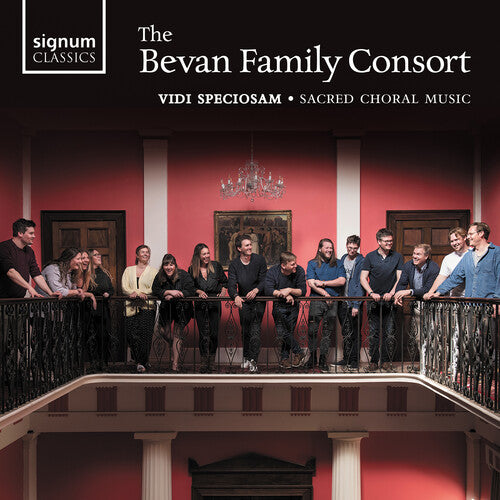
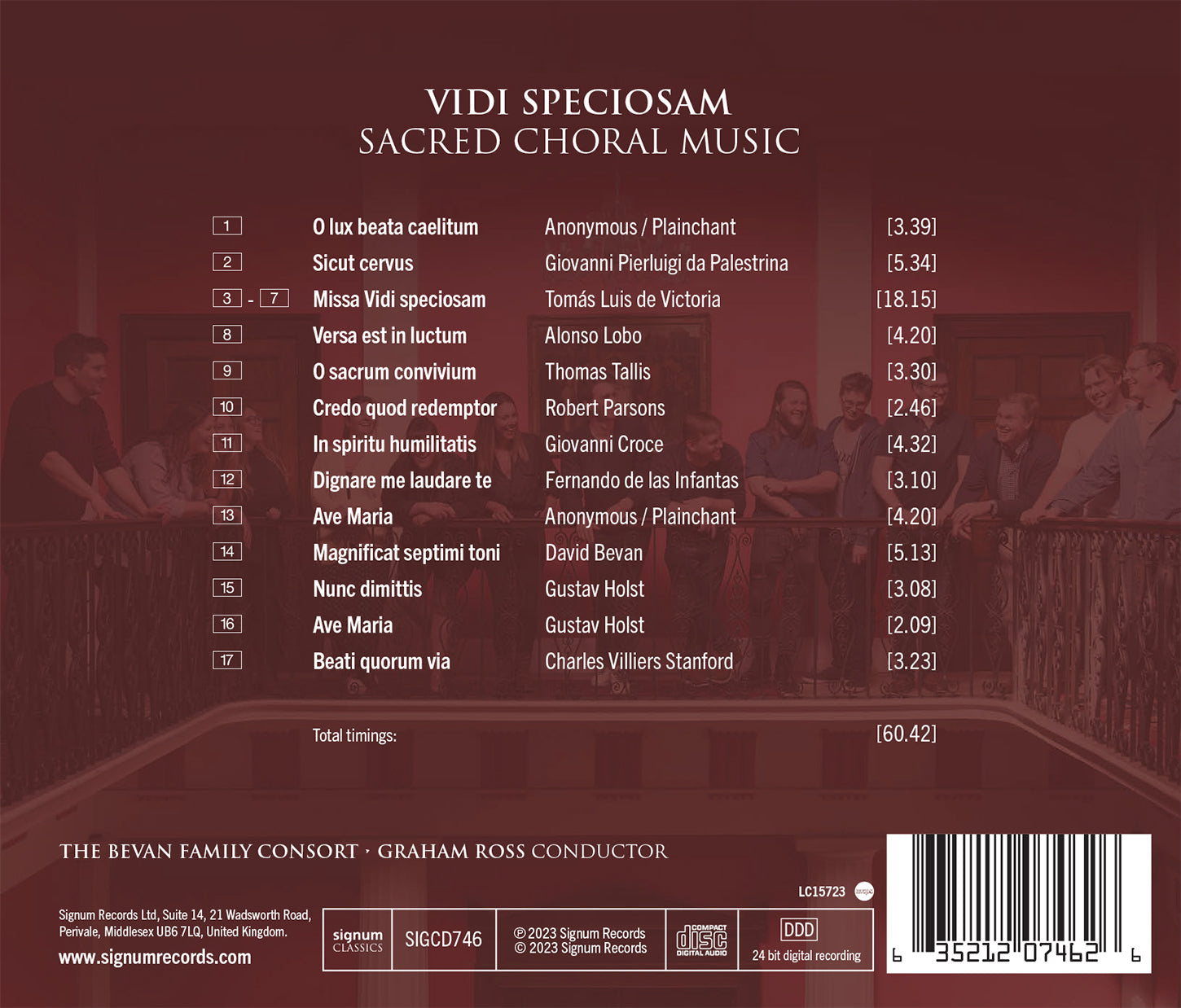
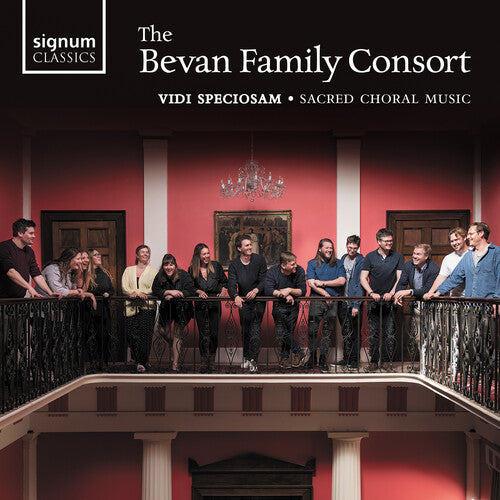
Vidi Speciosam - Sacred Choral Music / Bevan Family Consort
CD$19.99$9.99Signum Classics
May 19, 2023SIGCD746 -
![]()

-
![]()

-
 On Sale
Siegfried Wagner: Der Kobold / Strobel, Broberg, Horn, Et Al
CD$35.99$17.99Marco Polo
May 29, 20078225329-31 -
![]()

-
![]()

-
 On Sale
Phantasmagoria - Danish Piano Trios
CD$13.99$6.99Dacapo Jazz
May 28, 20138226108 -
 On Sale
American in Paris (An) / Porgy and Bess Suite / Gershwin in Hollywood
CD$19.99$9.99Naxos
May 01, 20028559107 -
![]()

-
![]()

-
 On Sale
Symphony No. 3, "Journey Without Distance" / First Light / The Awakened Heart
CD$19.99$9.99Naxos
May 29, 20128559712 -
![]()

-
![]()

-
 On Sale
Holland: Guitar Works & Arrangements / Christopher Mallett
CD$19.99$9.99Naxos
Feb 10, 20238559924 -
![]()

-
![]()

-
 On Sale
Signs, Games, Messages - Violin Sonatas from Eastern Europe / Jennifer Koh, Wosner
CD$19.99$9.99Cedille
Oct 29, 2013CDR 143 -
![]()

-
![]()

-
 On Sale
Chavez: Piano Concerto / Osorio, Prieto, Mexico National Symphony
CD$19.99$9.99Cedille
Apr 30, 2013CDR 140 -
![]()

-
![]()

-
 On Sale
Blackwood: Chamber Music for Piano and Strings
CD$19.99$9.99Cedille
Jan 01, 2005CDR 081 -
 On Sale
Dancing on the Edge of a Volcano
CD$19.99$9.99Cedille
Jan 01, 2002CDR 065 -
![]()

-
![]()

-
 On Sale
Messiaen & Debussy / Oppens, Lowenthal
CD$19.99$9.99Cedille
Aug 31, 2010CDR119 -
![]()

-
![]()

-
 On Sale
Eclipse - Chamber Music by Mischa Zupko
CD$19.99$9.99Cedille
Nov 11, 2016CDR 168 -
![]()

-
![]()

-
 On Sale
Illuminations / Avalon String Quartet
CD$19.99$9.99Cedille
Aug 14, 2015CDR 156 -
![]()

-
![]()

-
 On Sale
Jandali: Concertos / A. McGill, Barton Pine, Alsop, ORF VRSO
CD$19.99$9.99Cedille
May 12, 2023CDR 220 -
![]()

-
![]()

-
 On Sale
Songs from Chicago / Hampson, Kuang-Hao Huang
CD$19.99$9.99Cedille
Sep 14, 2018CDR 180 -
![]()

-
![]()

-
 On Sale
Nielsen: Symphonies Nos. 2 & 3 / Gilbert, New York Philharmonic
SACD$13.99$6.99Dacapo Classical
Sep 25, 20126220623 -
![]()

-
![]()

-
 On Sale
Roussel: Symphony No. 4
CD$19.99$9.99Naxos
Mar 30, 20108572135 -
![]()

-
![]()

-
 On Sale
Webern: Vocal & Chamber Works
CD$19.99$9.99Naxos
Apr 14, 20158557516 -
![]()

-
![]()

-
 On Sale
Arensky: Egyptian Nights / Yablonsky, Moscow Philharmonic Orchestra
CD$19.99$9.99Naxos
Aug 27, 20218573633 -
![]()

-
![]()

-
 On Sale
Santoro: Symphony No. 8; Cello Concerto / Thomson, Goiás Philharmonic
CD$19.99$9.99Naxos
Jul 14, 20238574410 -
![]()

-
![]()

-
 On Sale
Bartók: Piano Music, Vol. 8 / Ránki
CD$19.99$9.99Naxos
Dec 03, 20218574340


Jarzebski, Vivaldi, Bach, Pachelbel, Haydn & Lutoslawski: Wo


Flute Reflections


Musica Sacromontana - Organ music at the Basilica of the Oratorian Fathers of St. Philip Neri in Gostyn / Gembalski
| The church used by members of the Oratory of St. Philip Neri upon their arrival on the Holy Mount in Gostyń most probably contained an organ made in the local workshop of Wojciech Libowicz, who around 1670 is known to have built the instruments in various nearby localities. Regarding the new organ for the basilica of the Oratorian Fathers, historical sources speak of an instrument from the workshop of Jan Bernard Zitner from Głogów. It was installed in the church choir in the years 1766–1768 and remained there until it was replaced in 1855 by an organ made by Konstanty Kamiński from Opalenica. The present -day organ case, with its Classicist prospect, probably dates from that time. In 1958, the Biernacki workshop installed a new instrument inside it, using some of the old pipes. With the passing of time, it ceased to be used and eventually was dismantled in 2016. A new organ was built in 2016–2017 as part of a major project to revitalize the church’s Baroque interior. It has a mechanical action and a timbral aesthetic modelled on the Baroque-Classicist pattern. The historic case has been restored to its former shape and colors. The organ was built by Marek Cepka from Popowo, near Wronki. The works featured in this recording demonstrate the richness of sound of the organ of the Gostyń basilica, while drawing upon the musical tradition of the sanctuary and the two-centuries old musical community at the monastery of St. Philip Neri. These works were written by composers who were known on the Holy Mount from their vocal-instrumental music, as well as by those who participated in the spiritual life of the Oratory of St. Philip Neri. |


Music in the Times of Breakthrough
The ‘time of breakthroughs’ contained in the title of the album, which is the key for the selection of the repertoire recorded on it, can be interpreted on multiple levels. On the one hand, it refers to the period of rebirth of Poland – to one of the most important turning points in the history of this country, which was ‘witnessed’ by music of the composers presented on the album. On the other hand, it points to the turn of the 20th century – an extremely colorful time in the history of the multicultural and vibrant city of Katowice, whose dynamic development, mainly related to its industrial aspect, also included the cultural sphere. One of the important points on the then cultural map of the city was undoubtedly the Evangelical church built in 1856, within the walls of which the material of this album was recorded.


Vidi Speciosam - Sacred Choral Music / Bevan Family Consort
Soprano Mary Bevan writes: In 1975, the original Bevan Family Choir released their debut album on vinyl, featuring an eclectic programme of sacred choral works, Welsh folk songs, and piano music. The Choir consisted of 11 of the 14 Bevan siblings and was conducted by their father, Roger. Later on the Choir was taken over by the second eldest son, David, who was to go on to become Assistant Director of Music at Westminster Cathedral. The musical tradition continued to flourish within the family until, in 2013, some of the second generation of cousins decided to create their own version of the family choir, naming themselves the Bevan Family Consort so as to distinguish them from their parents’ generation. The Consort has since ranged in size from 15-22 of the 53 first cousins. To honour David and the influence he had over us all as musicians, this disc consists of music that was introduced to us by him during his years at the Holy Redeemer Church and that have since become beloved by us as a choir.
REVIEW:
The Bevan Family Consort are particularly good at strongly textured works such as Croce’s In spirito humilitatis, tinged with Venetian monumentalism, or Holst’s Nunc dimittis with its ecstatic ending. This last piece was not discovered until 1979, some 45 years after Holst’s death. Other rarities include the Dignare me by Fernando de las Infantas, apparently a Spanish nobleman working in Rome – so obscure as to be practically confidential. The works with intricate polyphony are pleasingly performed, though in the Kyrie and Gloria of Victoria’s Missa Vidi speciosam the upper voices are a little sharp and the overall acoustic seems rather distant. Breath control and phrasing is always musical and is apparent even in the plainsongs (Ave Maria). The most beautiful work here is Alonso Lobo’s Versus est in luctum. The voices of the Bevan Consort are slightly too disparately coloured to match the magical poise of this work achieved by the group Tenebrae (also on Signum) which shares an album with Victoria’s Requiem.
-- BBC Music Magazine


Siegfried Wagner: Der Kobold / Strobel, Broberg, Horn, Et Al
S. WAGNER Der Kobold • Frank Strobel, cond; Rebecca Broberg ( Verena ); Regina Mauel ( Gertrud ); Andreas Mitschke ( Ekhart ); Achim Hoffmann ( Trutz ); Johannes Föttinger ( Fink ); Philipp Meierhöfer ( Kümmel ); Volker Horn ( Friedrich ); Nicholas Isherwood ( Der Graf ); Martina Borst ( Die Gräfin ); Ksenija Lukic ( Jeannette ); Marco Bappert ( Jean ); Joachim Höchbauer ( Knorz ); Heike Kohler ( Käthe ); Young Jae Park ( Seelchen ); PPP Music Theatre Ens; Nuremberg SO • Marco Polo 8.225329 (3 CDs: 195:27)
Each time I listen to this recording of The Goblin , I am utterly unnerved—do not be fooled by the descending flute figures that cue the overture, like Pan himself coming down to bless the land. Obviously, there is no shortage of warped and twisted librettos, which tend to serve as jumping off points for music yet more warped and twisted, but my goodness, our man Siegfried was exorcising some personal demons with this work—ironically, by enlivening some.
The first “sung” note, once the gentle, autumnal instrumental opening has concluded, is a scream, one that comes through on the recording like a spike—no reverb, no vibrato, just fear, hammered home. We are dealing with a dramatis personae of goblins (including one whose entrance into the world comes courtesy of a mixture of a hanged man’s seed and the yellow grass below), a wizard, some assassins, night phantoms, a few satyrs, a circus collective, a rapist, and such cheery pursuits as infanticide, abortion, flesh trading, and prestidigitation for, shall we say, less than salubrious ends. Good luck sorting out the plot, which is about as close to postmodernism as Siegfried ever got, and features an opera within the opera, and a climax not dissimilar to F. W. Murnau’s Nosferatu , which had the subtitle, intriguingly enough, of “A Symphony of Horrors.”
The quality of the recording itself will jar you, but that’s part of its effectiveness—weapons crash to the ground as though they’ve landed on microphones, or like something is kicking inside the speakers and trying to get out. It’s a fascinating, weird kind of audio-vérité, that further unsettles the nerves; but distortion was Siegfried’s ally in the creation of this work, and some passages even appear, at first, to be atonal. Rebecca Broberg as Verena, the opera’s heroine—a default designation, really, in this case, given her successive and ultimately defeating tragedies—is really stretched on the rack in her exceedingly taxing role, and it is through her vocal lines that we experience whatever empathy—which often takes the forms of anxiety and fear—the opera has to offer. It’s been remarked that for all of its fantastical elements, Der Kobold is something of a gangster story, but the noir -ish element becomes almost hallucinatory in the constant churn of crises, a vortex of demonism, you might say—of both the supernatural and human variety, the latter, of course, always being worse. Cpo has a Siegfried Wagner sampler disc with the West German Radio Symphony Orchestra and Roman Trekel handling an excerpt, but for the whole, vivid nightmare, you’ll need this set to be properly shocked and disturbed. And for those who cherish their illusions of childhood, there is perhaps no 20th-century opera that poses such a menacing threat to any and all forms of latency.
FANFARE: Colin Fleming


Phantasmagoria - Danish Piano Trios


American in Paris (An) / Porgy and Bess Suite / Gershwin in Hollywood


Symphony No. 3, "Journey Without Distance" / First Light / The Awakened Heart


Holland: Guitar Works & Arrangements / Christopher Mallett
Justin Holland was an important African American figure in the national US anti-slavery movement as well as being a significant figure in guitar composition and methodology. As a composer he synthesized European models and embraced popular, church and parlor songs generating a rich variety of works. A master of virtuosic variations, his arrangements are witty, elegant, and colorful, culminating in Carnival of Venice, which shows the full range of his gifts, sweeping in breadth and dazzling in effect.
REVIEW:
Collectors of a certain age may remember this attractive pairing of Mozart’s 17th and 27th piano concertos through its original LP release on Vox’s subsidiary label Candide. It also turned up on CD as part of Vox’s long gone budget Prima series. Newly remastered for Vox’s new Audiophile Series, this 1978 Elite Recordings production supervised by Marc Aubort and Joanna Nickrenz retains its vivid impact and vibrant detail.
Notice the orchestral ritornellos’ ebb and flow under Stanisław Skrowaczewski’s leadership, and how the forward woodwinds and singing strings conversationally interact. Even in loud tuttis one can take dictation from each orchestral strand. Pianist Walter Klien’s Mozart playing is a model of clarity, projection, poise, and proportion, and he never puts an unbalanced or uneven phrase forward. He’s also one of the few pianists on disc who doesn’t approach Mozart’s final concerto with kid gloves, meaning that his slow movement is full-bodied and fluent rather than ethereal and wispy, and that he doesn’t underplay the finale’s scampering thrust. Sometimes Klien’s phrasing falls into square and tinkly assembly line patterns.
You won’t find the witty inflections and dabs of color that you hear from Peter Serkin or Maria-João Pires in K. 453’s wonderful theme and variations finale. Nor does Klien’s clean yet regimented articulation in K. 595’s first-movement development section match Richard Goode’s harmonic subtlety and feeling for chamber-like repartée. Still, these interpretations won’t steer you wrong. And while I have the floor, we need a truly complete boxed set edition of Skrowaczewski’s Vox recordings!
-- ClassicsToday.com (Jed Distler)


Signs, Games, Messages - Violin Sonatas from Eastern Europe / Jennifer Koh, Wosner
Grammy-nominated violinist Jennifer Koh and virtuoso pianist Shai Wosner play 20th century works by three remarkable Central European composers who intertwine folkloric influences with their own unmistakable originality. The album includes Leoš Janáček’s Moravian influenced Sonata for violin and piano, Béla Bartók’s impassioned Violin Sonata No. 1, and compelling miniatures by György Kurtág, including Tre Pezzi for violin and piano and selections from Signs, Games and Messages.
REVIEW:
Jennifer Koh studied with Felix Galimir at the Marlboro School and Jaime Laredo at the Curtis Institute; she won a silver medal at the 1994 International Tchaikovsky Competition (a year in which no gold was awarded) and has appeared with all the major American orchestras and many abroad. One may see her in action on YouTube, performing Paganini with the Chicago Symphony, displaying amazing aplomb and panache for an 11-year old, or for any age. She has tended to avoid the warhorses of the repertory, as her recordings—from Bach to Zorn—show.
In a brief discussion of this disc (also seen on YouTube), pianist Shai Wosner says “it’s intense music; we wanted to milk the most out of every bar.” Yet the Janá?ek performance strikes me as just the opposite: A silky violin and a gentle piano—in a warm, reverberant acoustic setting—emphasize the inherent beauty of this music rather than its intensity or its connections to folk music. Janá?ek’s spiky harmonies and jumpy, stabbing attacks are played down. Many listeners may prefer this Romantic-era approach, but it soft-pedals the composer’s essence, the character that makes him unique. For a more vibrant performance, try Gidon Kremer and Martha Argerich on DG, which John Wiser nailed (Fanfare 16:4) as having “a touch of Gypsy exoticism.”
György Kurtág has written what we call full-length works, but our attention has been focused on his many sets of miniatures. Signs, Games, and Messages (also the title of this disc) and Játékok (also “Games”) are both large collections of small pieces composed over many years. Are they completed? Only the composer could answer that question. The former are for “vn, va, vc, db in various combinations, as solos, duos, trios, qts.” (The New Grove II); these four are played here by the solo violin. Játékok are for piano, some with vocal additions—momentary noises rather than song or poetry. Tre Pezzi are for violin and piano; they are played together, as a three-movement work, whereas the other pieces are more or less randomly distributed around them (at the artists’ pleasure, of course), providing instrumental variety to these 27 minutes. But this variety may disrupt the accumulated effect of a Kurtág collection: a Mode CD has 24 Signs, Games, and Messages played by violist Maurizio Barbetti, and it is stunning—perhaps it is his magnificent performance, capturing every mood, every wry twist, that makes such a difference.
Koh and Wosner are superb in Bartók’s First Sonata. She expresses the full measure of the music without ever producing a single ugly or even awkward note; he is a powerhouse as well as a subtle presence. They do “milk the music” to its fullest intensity. It is astonishing that Koh’s elegant, liquid tones can be so assertive, matching Wosner at every step. There have been so many recordings of the Bartók sonatas, seemingly half of them by Gidon Kremer, often partnered, again, by Martha Argerich. Kremer takes a lighter view of the First Sonata than Koh—I am particularly partial to his 1972 Hungaroton recording with Yury Smirnov. Kremer’s playing has more edge than Koh, in two senses: He finds a special relish in the music, at the cost of some less than silky tones. I like the result, but listeners who prefer a purely beautiful violin should snap up this Cedille disc.
FANFARE: James H. North


Chavez: Piano Concerto / Osorio, Prieto, Mexico National Symphony
Rarely performed, the Piano Concerto of 20th-century Mexican composer Carlos Chavez receives an insightful, idiomatic, and compelling performance from Mexican-born pianist Jorge Federico Osorio, the Orquestra Sinfónica Nacional de México, and conductor Carlos Miguel Prieto. Surprising tempo changes and a whirlwind of styles make the work a thrill ride for performers and audiences alike!
-----------------------
REVIEWS:
Make no mistake, Carlos Chávez’s Piano Concerto is a major work. Symphonic in length and very generous in content, it poses quite a challenge to the soloist, with hyperactive allegros surrounding an intimate and evocatively scored central Molto lento. Jorge Federico Osorio has no peer in this repertoire, at least on disc. He plays the work with unflagging energy and, where called for, sensitivity, and he’s very capably accompanied by Carlos Prieto and the Mexican National Symphony Orchestra. This is an important addition to the Chávez discography, and it’s very well engineered.
The couplings make an attractive series of encores. Both Chávez’s Meditación and Moncayo’s Muros Verdes are lovely, lyrical interludes, but Samuel Zyman’s Variations on an Original Theme is a major work more than a quarter-hour long. It’s not easy listening. The music is thorny and at times highly dissonant, but there’s also no question that the work has great integrity, a wide expressive range, and an impressive level of disciplined craftsmanship, nor is it particularly difficult to follow. Osorio, as in the concerto, plays all three solo works very well indeed, and as you’re not likely to find this repertoire so convincingly done anywhere else, this disc earns an enthusiastic recommendation.
-- David Hurwitz, ClassicsToday.com
----------
The program includes a postlude of solo piano music by Chávez and two of his younger compatriots. The Chaváz piece is a lovely youthful composition, written when he was 19, and owes as much to the influence of Grieg as it does to any New World sources. José Pablo Moncayo, a student of Chávez, contributes a beautiful and rather impressionistic work. Finally, there is the variation set by Samuel Zyman, a contemporary Mexican composer. This dark, even bleak, work is certainly the most harmonically advanced music on the CD, but makes for a somewhat jarring break from the more mellifluous material represented by Chávez and Moncayo. But the reason to acquire this recording is for the brilliant Chávez concerto, which has not been recorded for years.
Peter Burwasser, FANFARE.


Blackwood: Chamber Music for Piano and Strings


Dancing on the Edge of a Volcano
All selections are performed twice on this box set. All selections on CD 1 are sung in their original languages. The same works are repeated on CD 2, where the German language songs are sung in English. The Hebrew and English language works on CD 2 are again sung in their original form.


Messiaen & Debussy / Oppens, Lowenthal
MESSIAEN Visions de l’Amen. DEBUSSY En Blanc et noir • Ursula Oppens, Jerome Lowenthal (pn) • ÇEDILLE CDR 90000 119 (60:51)
In 1941, Olivier Messiaen was released from Görlitz prison camp, where he had been taken following the fall of France in the Second World War. Visions de l’Amen for two pianos was his first large work after this. The listener will search in vain for any shred of a reaction to the war in this music: Messiaen was inhabiting an intellectual and spiritual space far removed from the ravages of war. It was premiered in Paris in 1943 by the composer and his brilliant 19-year-old pupil, and eventual wife, Yvonne Loriod. Her part—taken by Ursula Oppens on the current disc—“has the rhythmic difficulties, the bunches of chords, everything concerned with speed, allure, and quality of sound”; his had “the principal melody, the thematic elements, everything demanding emotion and power.” So Messiaen wrote in the preface to the score.
Messiaen offers seven meditations on various theological subjects, somewhat tenuously linked by the idea of “Amens,” much as he was to do in his next great cycle, Vingt Regards sur l’Enfant Jésus , where another difficult-to-translate word, regard , is used to provide cohesion to the 20 meditations on the birth of Christ. In Visions de l’Amen , the first piece represents an act of creation—no less than the Creation of the Universe—while the last describes the final Consummation. The second and fifth illustrate the adoration of God by cosmic and celestial creatures; the third and sixth describe the suffering of Jesus and of humanity; the central fourth piece is about desire “in its highest spiritual sense,” as the composer put it.
A considerable degree of cohesion over these disparate pieces is achieved by the use of a single theme, the theme of Creation, in four sequences of chords. This provides the material for most of the seven movements. As he was to do with Vingt Regards , Messiaen allots the first movement to a statement of the theme. In this case, over 39 measures, it is played five times by Lowenthal while Oppens contributes metrically complex, bell-like music (“bells shivering in the Light,” as the composer put it). The opening, pianissimo , is wonderfully evocative. The low chords of Creation, deep inside the piano, are barely more than a cosmic growl, Oppens and Lowenthal drawing in the listener compellingly. This opening Amen of Creation is one long crescendo and the players sculpt the increasing dynamics with complete conviction so that the apparently abrupt cut-off is surprising, even on repeated listening.
Jerome Lowenthal observes in his CD notes that, on its first performance, Visions de l’Amen aroused immediate enthusiasm in some and annoyance in others, and it is in pieces like the fourth movement, Amen of Desire , that the possibly annoyed listener is tested the most. Messiaen has two themes of Desire, the first somewhat sweet, the second extraordinarily saccharine, if vigorous. Yet it is essential that we remember that Messiaen was completely sincere and unironic in this writing. It places a huge burden on the performers, who have to play with complete conviction if all parties are not to collapse in laughter. Paul Griffiths in his book Olivier Messiaen and the Music of Time describes this second theme as “[moving] through ever splashier paroxysms of cheapened harmony” and it is to their credit that Oppens and Lowenthal pull this movement off triumphantly.
If the first movement is a composed crescendo, the last, Amen of the Consummation , is a more or less continuous fortissimo . It is a tour de force in this recording: Lowenthal hammers out the Creation theme in the middle register while Oppens manages seemingly superhuman feats in the extreme upper and lower registers simultaneously, peal upon peal of bells pouring out. And, not content with starting this movement seemingly flat-out, both players are able to summon even more energy for the final measures, which are awe-inspiring.
Turning to the fine performance by Katia and Marielle Labèque on Erato, still sounding very good, it is clearly a recording one could live with very happily (as one has). However, the newcomer has the edge in terms of sheer weight of sound. That fuller sound picture emphasizes the intensity of Oppens’ and Lowenthal’s reading, which really takes no hostages. When the sustain pedal is finally released to cut off the huge reverberation of the final chords of the work, one realizes that the attention has been held for 46 minutes through the sheer conviction of all (composer and players) concerned.
Rather than provide more Messiaen, Cedille has opted for Debussy’s two-piano work En Blanc et noir (In White and Black). The link here is that Debussy wrote this music in the France of the First World War. If you’ll look in vain for references to war in Messiaen’s music, here there are a number of allusions, more or less elliptical, to it. The middle of three movements, Lent, Sombre , opens very somberly, and Oppens’ and Lowenthal’s performance brings out all the subsequent mercurial, shadowy shifts of mood and harmony. Their reading of En Blanc et noir is warmer than some—entirely to the advantage of the music—entirely clear and recommendable.
Ursula Oppens turns in a performance of the Messiaen whose “speed, allure, and quality of sound” are impeccable while providing a large amount of “emotion and power” as well, while Jerome Lowenthal is no less compelling in his performance. It’s a shame that Cedille provides only 10 seconds to recover from Visions de l’Amen before the Debussy breaks in, but this is a trivial cavil, faced with such a commanding and excellent disc.
FANFARE: Jeremy Marchant
What a great idea to pair two major 20th-century French two-piano works, both composed in wartime. More importantly, Ursula Oppens and Jerome Lowenthal prove an inspired pair, pianistically speaking. Throughout Visions de l'Amen's seven movements the pianists navigate the composer's tricky rhythms and frequently thick textural hurdles with impressive ensemble exactitude, uninhibited dynamism, and cogent organization of melodic and decorative elements. One good example of this can be found in the third movement, Amen de l'Agonie de Jésus, where, in the Bien modéré section, the second piano's fortissimo tune is perfectly contoured against the first piano's chords in the same register (left-hand forte, right-hand mezzo-forte). Similarly, the duo's long-lined animation and textural diversity in the seventh movement prevents the music from sounding long-winded and from bogging down.
Oppens commands the first piano part's big chords and wide leaps with the utmost solidity, definition, and rhythmic focus, and always knows when to dominate and pull back. Lowenthal has all of the good tunes (as well as the bad ones; I still cannot get through the second piano's sickly sweet fourth-movement solo without wincing), and he relishes accents more than certain of his discographical competitors. He also allows himself freedom in solo passages when expressively appropriate, such as in his ever-so-slight yet heart-quickening accelerandos under certain crescendos in the second movement.
In contrast to the lean and streamlined profile characterizing the Kontarsky brothers' reference recording of Debussy's En blanc et noir, Oppens and Lowenthal opt for full and generous sonorities, even when playing quietly. Although they seemingly employ as little sustain pedal as possible, a mellifluous yet strong legato quality emerges from massive chords, rapid bass-register rumblings, and fleeting flourishes. Who said you can't be impressionistic and clear at the same time? Save for slightly congested climaxes, the full-bodied engineering is excellent. Lowenthal's superb, highly informative annotations add further value to this desirable release.
--Jed Distler, ClassicsToday.com


Eclipse - Chamber Music by Mischa Zupko
Eclipse encompasses world-premiere recordings of inventive, virtuosic, and impassioned chamber works, written in a present-day musical language by the strikingly original American composer and pianist Mischa Zupko. Joining him are two close friends and accomplished colleagues, the sublime violinist Sang Mee Lee, who chairs the string department at the Music Institute of Chicago, and internationally renowned cellist Wendy Warner, a protégé of Mstislav Rostropovich. Eclipse explores themes of separation, contrast, and convergence on cosmic as well as intimate levels. In the album’s centerpiece and title track, Eclipse, violin and cello approach like two celestial bodies, their musical lines merging and becoming one luminous entity. Mischa Zupko is currently the composer-in-residence at the Music Institute of Chicago. He has received plaudits from The New York Times and the Los Angeles Times, and he has been featured in the Chicago Reader and New Music USA’s New Music Box, which called him “a humble, energetic, and constantly searching artist.”


Illuminations / Avalon String Quartet
The Avalon String Quartet, “a remarkably fine ensemble” (The Strad), makes its Cedille Records debut with an irresistible and richly varied program of captivating works by Claude Debussy, Benjamin Britten, Osvaldo Golijov, and rising American composer Stacy Garrop. The ensemble presents the world-premiere recording of Garrop’s String Quartet No. 4: Illuminations, a tantalizing, Pictures at an Exhibition-style tour of spectacular illustrations from an ornate medieval manuscript. Debussy’s lush, exotic String Quartet in G minor unfolds through iridescent quasi-orchestral textures. Golijov’s lyrical, deeply moving Tenebrae (Latin for “shadows”), written for the Kronos Quartet, pays tender tribute to the earth, depicted in its remote celestial beauty, haunted by undertones of human discord. Britten’s youthful, energetic Three Divertimenti and Alla Marcia are alluring, rarely recorded studies in inventiveness and perpetual motion.
The Avalon is quartet-in-residence at the Northern Illinois University School of Music. “…an ensemble that invites you — ears, mind, and spirit — into its music.” (Chicago Tribune)
REVIEW:
The folks at Cedille seem to have mastered the art of putting together classical music collections that make good musical sense. Debussy’s String Quartet is, of course, standard fare, and it usually appears in tandem with the Ravel and something else French. Not here. Instead, we have two Britten rarities, the entertaining Three Divertimenti and the lone Alla Marcia (the first of the Divertimenti is also a march, so you can see the logic), a self-described “Pictures at an Exhibition” type piece by Stacy Garrop, and a moving conclusion in the form of Osvaldo Golijov’s single-movement Tenebrae. The entire program provides consistently interesting and entertaining continuous listening, and the sonics are drop-dead gorgeous.
So, for that matter, is the playing of the Avalon String Quartet. The group’s corporate sonority is warm and mellow, but with just a touch of “rosin” in the tone. They attack rhythmic moments such as the scherzo of the Debussy, the Burlesque and the marches in the Britten pieces, and Garrop’s musically impossibly named “Mouth of Hell” with plenty of guts and precision, but no unpleasant hardness in the tone. The slow music is simply luminous. I am not generally a fan of pseudo-religious programmatic stuff such as Garrop offers here, but it’s awfully well done, and the booklet provides well-produced, full-color reproductions of the illustrations from the late medieval Book of Hours that Garrop took as her inspiration. They are exquisite, as is much of Garrop’s writing more generally.
Here, in short, is another excellent program that chamber music fans looking to venture off the beaten path will surely relish.
- ClassicsToday.com (10/10)


Jandali: Concertos / A. McGill, Barton Pine, Alsop, ORF VRSO
Clarinetist Anthony McGill and violinist Rachel Barton Pine are featured soloists on a new recording of two concertos composed in response to societal injustices by Syrian composer Malek Jandali, performed by the ORF Vienna Radio Symphony Orchestra and led by Marin Alsop, a champion of the composer’s work.
Malek Jandali, called “deeply enigmatic” by Gramophone, has been praised for writing “heart-rending melodies, lush orchestration, clever transitions and creative textures” (American Record Guide). His repertoire, which ranges from chamber music to large scale orchestral works, integrates Middle-Eastern modes into Western classical forms and harmony. Rachel Barton Pine, “an exciting, boundary-defying performer” (The Washington Post), performs Jandali’s Concerto for Violin and Orchestra (2014), a work that honors “all women who thrive with courage” according to the composer. Jandali’s concerto is in recognition of the women of Syria, continuing his aim to preserve the cultural heritage of his homeland.
The Violin Concerto incorporates Syrian melodies and idioms into Jandali’s Western-inspired harmonies and forms. Jandali calls upon an array of Syrian and Arabic music forms and folk melodies including multiple sama’i and bashraf (instrumental pieces), and longa (dances), from different maqam (modes). He also makes use of the oud (Arabic lute) in his symphonic scoring to infuse the work with the authentic sound and feeling of Syria. A particularly notable sama’i inspired by traditional Syrian folk music from the area along the Silk Road Is used for a “Women’s Theme.” This theme is representative of the folk music that is a source of comfort and healing for unjustly detained, peaceful Syrian activists and other women and mothers living in fear.
Jandali’s Concerto for Clarinet and Orchestra (2021) is dedicated to its performer Anthony McGill (“the total package… stylish, passionate and limitlessly fluent on the clarinet,” Bachtrack), “in memory of all victims of injustice.” McGill says of the work, ”In the midst of the pain and the violence and injustice in the world all we are left with is the ability to pour our hearts and our souls into something more beautiful, into something more powerful, so it can communicate throughout all time and live on.” Like all of Jandali’s works, the clarinet concerto is infused with ancient themes from Jandali’s homeland as a means of preservation. Jandali explores variations on themes from old and traditional Syrian musical forms and modalities, with striking musical effects and wide ranging highs and lows in the orchestral writing.
Watch our Live Roundtable with Marin Alsop, Malek Jandali and Anthony McGill!
REVIEW:
The soloists shine, and Alsop and her Vienna Radio Symphony Orchestra accompany them faithfully through every mood.
Jandali’s Violin Concerto has a long and thoughtful opening moment, an introspective middle section and a dancelike finale. He uses the Arabic oud in conversation with the violin, as plaintive voices crying out with dignity and restraint. (Kudos to oud soloist Bassam Halaka.) And maybe that buoyant feeling in the finale represents not exuberance but defiance, as a protest against suppression.
The 25-minute clarinet concerto operates mostly on a mysterious plane, one we associate more obviously with Arabic elements. Some of the subtle, sinuous playing and percussive rhythms would not be out of place in a good Hollywood soundtrack – that’s a compliment – as Jandali slowly brings us into his sound world.
-- WDAV (Classical Public Radio, 89.9FM, Lawrence Toppman)


Songs from Chicago / Hampson, Kuang-Hao Huang
Thomas Hampson, America’s leading baritone and a champion of the art of classic song — poetry set to music — makes his Cedille Records debut with a program of songs by five composers of the early 20th century associated with the city of Chicago: Ernst Bacon, Florence Price, John Alden Carpenter, Margaret Bonds, and Louis Campbell-Tipton. All of them, Hampson says, “have distinguished themselves in history as great voices of the artistic American narrative.” Hailed as “an outstanding recitalist” by Grove Music Online, the much-honored international opera star, recording artist, and “ambassador of song” performs compositions based on poems by Walt Whitman, Langston Hughes, and Rabindranath Tagore, the Bengali poet who became the first non-European to receive the Nobel Prize for Literature. Hampson, whose discography includes more than 170 albums, including Grammy and Grand Prix de Disque award winners, is accompanied on Songs from Chicago by collaborative pianist extraordinaire Kuang-Hao Huang, accompanist of choice for Chicago’s top singers and instrumentalists. The New York Philharmonic’s first Artist-in-Residence, Hampson also has been honored with a Concertgebouw Prize, Library of Congress Living Legends Award, and the Hugo-Wolf-Medal for outstanding achievements in the art of song interpretation, among many other awards.
REVIEW:
It goes without saying that Hampson's singing is gorgeous, and he is ably backed by Chicago pianist Kuang-Hao Huang. An excellent slice of little-known American art song.
– All Music Guide


Nielsen: Symphonies Nos. 2 & 3 / Gilbert, New York Philharmonic
"I’m sure that Nielsen’s time is coming, and I’m looking forward to sharing this wonderful music with the audience." - Alan Gilbert 2011 = "Mr. Gilbert drew colorful, glittering and full-bodied playing from the musicians." - The New York Times, concert review of Nielsen's Symphony No. 3, June 2012 = “Music is life, and like it inextinguishable,” said the Danish composer Carl Nielsen (1865-1931). With indomitable courage and infinite curiosity Nielsen developed into one of the 20th century’s greatest symphonists, after being raised in the Danish countryside as the son of a poor folk musician. With this new series of recordings, Nielsen crosses the Atlantic as the New York Philharmonic and their Music Director Alan Gilbert shed new light on the composer's uniquely Nordic symphonic sound. = ABOUT THE NIELSEN PROJECT = This is the first volume of the new recording series of Denmark's national composer Carl Nielsen's complete symphonies and concertos by The New York Philharmonic and their chief conductor Alan Gilbert. All works are recorded live during the New York Philharmonic's concert series in Avery Fisher Hall which has already impressed critics and audiences alike.
REVIEW:
As already suggested, Gilbert’s interpretations take no prisoners, and frankly that is just what Nielsen needs. The Allegro collerico opening of “The Four Temperaments” is really ferocious, the finale almost giddy. And yet, Gilbert’s tempos in the Andante pastorale of the “Espansiva”, or the Andante malincolico of the “Temperaments”, are also perfectly judged, sensitive, and expressive. The former, especially, reveals a combination of tranquility and flow unique in the work’s discography. The string playing is particularly beautiful here, and the Philharmonic’s woodwinds, solo oboe especially, do themselves proud in music that often relies on their artistry and character. Gilbert also very convincingly paces the tricky finale of the same work, with its hymn-like main theme that still has to sound “allegro”.
Dacapo, of course, already has an excellent Nielsen cycle—indeed, the reference edition—in its catalog, featuring Michael Schønwandt and the Danish National Radio Symphony Orchestra (also available on Naxos). So the question must be whether or not this newcomer is distinctive enough to warrant the duplication, and the answer is a definite “yes”. Gilbert reveals a genuine affinity for the music, and Nielsen’s athleticism suits the orchestra very well indeed. If this series keeps up as it has begun, it’s going to be stupendous.
-- ClassicsToday.com


Roussel: Symphony No. 4


Webern: Vocal & Chamber Works


Arensky: Egyptian Nights / Yablonsky, Moscow Philharmonic Orchestra
A student of Rimsky-Korsakov and the teacher of Rachmaninov and Scriabin, Anton Arensky holds a distinguished place in the history of Russian music as both an academic and a composer. For his 1900 ballet Egyptian Nights, based on Pushkin, he chose an exotic theme – the dangerous love of the handsome Amoun for Queen Cleopatra – and sought authentic melodic material in scholarly texts. With his gift for orchestration and color, Arensky fashioned a sensuous and vivid score, featuring a brilliantly conceived series of dances. This was a world premiere recording on its initial release on Marco Polo 8.225028, recorded in1996. Gramophone wrote: ‘The playing is suitably colorful, the recording responsive to that’, as did Fanfare: ‘The Moscow Symphony Orchestra clearly revels in this repertoire, and it plays with spirit and enjoyment.’
REVIEW:
The present disc is one of many recordings originally on Marco Polo that have been re-released on Naxos. Acoustically, Egyptian Nights could use an up-to-date recording, but one cannot cavil about Dmitri Yablonsky’s powerful performance, which derives the maximum excitement from the score. The Moscow Symphony Orchestra plays equally well and the whole production is a feast for any fan of Russian music of the time.
– MusicWeb International


Santoro: Symphony No. 8; Cello Concerto / Thomson, Goiás Philharmonic
This recording focuses on Claudio Santoro’s output from the 1960s – a significant decade in the composer’s ever-eventful life. It features world premiere recordings of his charged Cello Concerto, fuelled by his experiences in East Berlin, the dramatic Eighth Symphony and the encore piece One Minute Play, alongside Três Abstrações and Interações Assintóticas, Santoro’s only work to use quarter-tone tuning.
Learn more about this title on the Naxos Classical Spotlight podcast!
REVIEW:
I knew nothing of Santoro’s music until I began listening to these releases in the Naxos Music of Brazil series. Recently a number of his Symphonies and other works have been released and here No 8, from 1963, is placed alongside the slightly earlier Cello Concerto and three other works from the same decade. Another informative and enjoyable production.
-- Lark Reviews


