Fall Blowout Sale 2026
Fall into the sounds of the season with 50% off 100+ handpicked titles for a limited time! From the quiet introspection of Satie and the autumnal warmth of Brahms to the lush, romantic beauty of Fauré and more, this collection is made for crisp mornings, golden afternoons, and cozy evenings at home.
Refresh your collection with music that feels right at home this time of year — all at half price! Plus, enjoy FREE SHIPPING on orders of $60 or more, making it the perfect time to stock up on your autumn favorites.
Shop the Fall Blowout now and save 50% while it lasts!
186 products
-
-
-
-
-
-
-
-
-
-
-
-
-
-
-
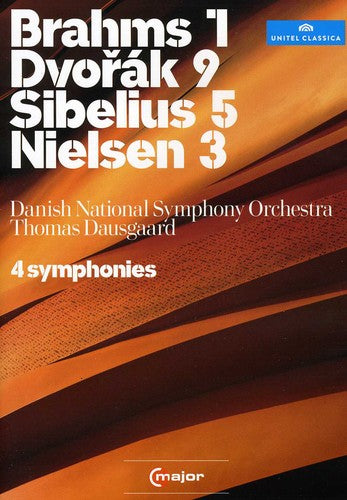
Sale4 Symphonies - Brahms, Dvorak, Sibelius, Nielsen / Dausgaard, Danish National Symphony Orchestra
C Major Entertainment · Jun 2012DVD$32.99$16.49 -
-
-
-
-
-
-
-
-
SaleBrahms: Complete Sonatas for Violin & Piano / Darvarova, Chen
Solo Musica · Feb 2019CD$20.99$10.49 -
-
-
-
-
-
-
-
-
-
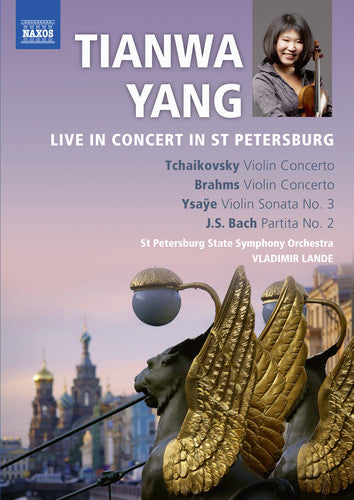
Tianwa Yang Live in Concert in St. Petersburg
The Shepherd on the Rock
Debussy: Hommage
SINGER PUR: Best of
Illuminations / Avalon String Quartet
The Avalon String Quartet, “a remarkably fine ensemble” (The Strad), makes its Cedille Records debut with an irresistible and richly varied program of captivating works by Claude Debussy, Benjamin Britten, Osvaldo Golijov, and rising American composer Stacy Garrop. The ensemble presents the world-premiere recording of Garrop’s String Quartet No. 4: Illuminations, a tantalizing, Pictures at an Exhibition-style tour of spectacular illustrations from an ornate medieval manuscript. Debussy’s lush, exotic String Quartet in G minor unfolds through iridescent quasi-orchestral textures. Golijov’s lyrical, deeply moving Tenebrae (Latin for “shadows”), written for the Kronos Quartet, pays tender tribute to the earth, depicted in its remote celestial beauty, haunted by undertones of human discord. Britten’s youthful, energetic Three Divertimenti and Alla Marcia are alluring, rarely recorded studies in inventiveness and perpetual motion.
The Avalon is quartet-in-residence at the Northern Illinois University School of Music. “…an ensemble that invites you — ears, mind, and spirit — into its music.” (Chicago Tribune)
REVIEW:
The folks at Cedille seem to have mastered the art of putting together classical music collections that make good musical sense. Debussy’s String Quartet is, of course, standard fare, and it usually appears in tandem with the Ravel and something else French. Not here. Instead, we have two Britten rarities, the entertaining Three Divertimenti and the lone Alla Marcia (the first of the Divertimenti is also a march, so you can see the logic), a self-described “Pictures at an Exhibition” type piece by Stacy Garrop, and a moving conclusion in the form of Osvaldo Golijov’s single-movement Tenebrae. The entire program provides consistently interesting and entertaining continuous listening, and the sonics are drop-dead gorgeous.
So, for that matter, is the playing of the Avalon String Quartet. The group’s corporate sonority is warm and mellow, but with just a touch of “rosin” in the tone. They attack rhythmic moments such as the scherzo of the Debussy, the Burlesque and the marches in the Britten pieces, and Garrop’s musically impossibly named “Mouth of Hell” with plenty of guts and precision, but no unpleasant hardness in the tone. The slow music is simply luminous. I am not generally a fan of pseudo-religious programmatic stuff such as Garrop offers here, but it’s awfully well done, and the booklet provides well-produced, full-color reproductions of the illustrations from the late medieval Book of Hours that Garrop took as her inspiration. They are exquisite, as is much of Garrop’s writing more generally.
Here, in short, is another excellent program that chamber music fans looking to venture off the beaten path will surely relish.
- ClassicsToday.com (10/10)
Brahms: The Cello Sonatas / Muller-Schott, Piemontesi
The two cello sonatas by Johannes Brahms are in very stark contrast to each other. This is not solely due to the more than twenty years separating the works. Brahms had a preference for pairs of works with the same instrumentation, which he frequently composed according to the principle of contrast. In the case of the cello concertos, it is above all the character and mood of the respective pieces that describe the contrasts. In the version for cello, the Violin Sonata op. 78, one of Brahms’ finest chamber works, supplements the two original cello sonatas in a charming way. Daniel Müller-Schott and Francesco Piemontesi team up once more for this all Brahms program after the great success of their release of cello sonatas of the 20th century (C872151).
REVIEW:
Poetry, power, and passion are all here, to an unquestionable degree. There were more times when I was struck by the piano’s beautiful tone than the cello’s, but at 44 Müller-Schott has grown into the kind of maturity that still expresses the joy of music in the face of temptations to become a much-in-demand professional repeating the same handful of popular pieces. I haven’t previously associated him with passionate playing, but he’s struck a bond with Piemontesi, whose Liszt can be quite ardent. Every desirable quality is present here.
– Fanfare
The Kernis Project: Debussy / Jaspar String Quartet
The Jasper String Quartet writes of their new release: “This Album marks the culmination of our decade-long journey with Aaron Jay Kernis’ music for string quartet. From the moment we put bow to string for Aaron’s Second Quartet, we realized his special voice and our connection to his music’s ability to capture both the complexity of the world and the simplicity of a moment. This depth fascinated us, inspired our playing and prompted us to dream of commissioning Aaron’s 3rd Quartet. Six years later, after performing and recording his first two Quartets and organizing the commission, we received the first movement of his Third Quartet “River”. As the movements accumulated in our inbox, so did our sense of excitement and dread. It was clear that this piece surpassed its two preceding quartets in complexity and difficulty. The route forward was clear enough, but still daunting. Practice, rehearse, repeat. Through the spring and into the summer the piece started to take shape. Coalescing first a little at a time - glimmers of cleverness, brilliance, atmosphere amid the musical and technical challenges. As those moments grew to sections and then movements that began to make sense, we started to build them into the larger arc. The quartet is subtitled “River”, an analogy for the constancy of change in our lives. The music too is constantly evolving, from moment to moment never predictable, never repeating itself. The flow of ideas isn’t one but four-dimensional, swirling constantly backward and forward in time and space. Yet there is a calculation of purpose, a consideration of form and care to structure that keeps the music grounded and allows a story to build out of the organic chaos…”
The Etudes Project, Vol. 1: Iceberg / Jenny Lin
The term étude first started to turn up in musical literature in the late 1700s, and came into common usage in the first half of the 19th century. The notion of a piece of music exactingly engineered to promote some specific aspect of technique was nothing new; in her public presentations of “The Étude Project,” pianist Jenny Lin traces the concept back to Johann Sebastian Bach’s Clavier-Übung, four volumes of keyboard exercises published between 1726 and 1741 — the final volume known more widely as the “Goldberg” Variations.
Countless composers have risen to the challenge of the étude. This album, the first documentation of a sweeping project conceived by Lin, includes some of the most famous examples – Debussy, Scriabin, Rachmaninoff, Messiaen, Ligeti, and Glass – alongside equally noteworthy contributions to the format by such mavericks as Ruth Crawford Seeger, Toshio Hosokawa, and Unsuk Chin. Lin further pairs each of her canonical selections with an entirely new work by a member of ICEBERG New Music, a determinedly heterodox collaborative of 10 gifted young composers who represent a broad range of stylistic inclinations, but who are united by their enduring faith in substance and craft.
Bucking a current fad, the new études were not proposed as sequels or responses to existing works. Lin simply asked the ICEBERG composers to challenge her, and then used her own keen ear and sure instincts to find sympathetic pairings. Driving rhythms and rich harmonies link pieces by Alex Burtzos and Chopin. Rangy scatterings of notes present a frolicsome affinity between Victor Baez and Unsuk Chin. Stephanie Ann Boyd and Debussy both deploy dreamy arpeggios in rippling waves; and so on. In each case, hearing the new piece enhances your understanding of the older one—and vice versa. Identifying affinities among old and new music, and among familiar and unknown pieces, is a knack Lin has demonstrated again and again throughout her career—and it’s part of what makes her not only a persuasive interpreter, but also an invaluable guide and companion. Stated simply: you are in extraordinarily sure hands, here.
REVIEW:
Aligning with composers of ICEBERG New Music, pianist Jenny Lin gave its ten members absolute freedom of style and pianistic approach when crafting new etudes for her. In addition to her Herculean playing, the fearless pianist brings curatorial prowess to bear in pairing each new etude with an existing work from the canon. Have a listen to this disc and then have another. The Etudes Project will repay you manifestly.
– The Whole Note (CA)
4 Symphonies - Brahms, Dvorak, Sibelius, Nielsen / Dausgaard, Danish National Symphony Orchestra
4 SYMPHONIES • Thomas Dausgaard, cond; Danish Natl SO • C MAJOR 710508 (DVD: 168:00) Live: Copenhagen 2009
BRAHMS Symphony No. 1. DVO?ÁK Symphony No. 9. SIBELIUS Symphony No. 5. NIELSEN Symphony No. 3
If, as I did, you were to begin your examination of this release with disc 1, track 1 (the Brahms symphony), you might well conclude that there was little need to continue. There is something rather too cool and casual about Dausgaard’s interpretation of this powerful music. It lacks inner tension. There is not enough contrast between ideas. Accents are in the wrong places. Short notes are cheated of their value. And that’s not all. The second movement just plods on, the third is charmless, the fourth frantic and lurches from one tempo change to the next. Listening to the complete symphony several times could not induce me to alter my initial unfavorable observations. Adding visual insult to aural injury, sight and sound are not synchronized, and the difference between the two is disturbing, to put it mildly.
But then came the Nielsen symphony. What a difference! Right from the opening moments it had all the vigor and élan and determination lacking in the Brahms. Rhythms were tight and crisp. The music bristled with enthusiasm and commitment. The finale positively beamed with Elgarian nobility and breadth, rising to an absolutely thrilling climax. What a joy! Nielsen’s Third had hitherto never been one of my favorite symphonies, but Dausgaard nearly made it so in this performance.
Does Dausgaard work his magic on the two remaining works as well? The answer, I’m glad to say, is yes. Furthermore, the synchronization problem that affected the Brahms symphony is only minimal in the Nielsen and nonexistent in Dvo?ák and Sibelius. The “New World” Symphony receives one of the finest performances I have heard. Dausgaard’s approach is no romantic wallow but rather a clean, purposeful traversal filled with taut rhythms, precise attacks and releases, glowing sound, and architectural strength. Dausgaard likewise makes a strong case for the Sibelius Fifth, never allowing momentum to sag, carefully propelling the music forward with masterly control. I am particularly impressed with the ease in which he handles the tempo change for the second part of the first movement. By the time the grand climax of the finale arrives, one feels a great journey has been completed.
All four performances were recorded live in Copenhagen’s Koncerthuset in 2009. The personnel changes from symphony to symphony, but both principal horns, both principal trumpets, and both timpanists are star players. Generally the woodwinds are excellent, but violins seem a bit thin for an orchestra that is otherwise so assured and well balanced. However, the basses make up for this deficiency with their huge, rich sound, heard at its best at the quiet endings of three of the Brahms movements and in some of the more powerful moments of the Dvo?ák symphony. Aside from the basses, the orchestra plays with a bright sound, textures are clear and clean, balances are well controlled.
The camerawork is devoted about 20 percent of the time to Dausgaard and his facial contortions, 10 percent to views of the full orchestra from afar, and 70 percent to the business of jerking the viewer’s eyes from one instrumental close-up to another—two seconds of a horn player’s embouchure, a second of flute keys, two notes from the timpani, etc. Who determined that this is what we want to see? I find it annoying to the point where I simply can’t bear to watch.
On ArkivMusic the price for these four symphonies is $27 ($40 for the Blu-ray version)—just under $7 a symphony, a good buy even without the inferior Brahms symphony, especially for performances as fine as the other three.
FANFARE: Robert Markow
Illuminations - Faure, Debussy, & Britten / Nicholas Phan
A New York Times 25 Best Tracks Selection for 2018 - Fanfare
Following acclaimed albums devoted to Britten, baroque lute songs and German lieder, Grammy Award-nominated tenor Nicholas Phan continues to spread his wings with Illuminations, an album featuring compositions by Benjamin Britten, Claude Debussy and Gabriel Faure who were each inspired by the poetry of two nineteenth century French literary titans, Paul Verlaine and his protégé and eventual lover Arthur Rimbaud. The intertwined lives of the French poets and composers manifested themselves in Faure’s impassioned Verlaine-inspired ‘La bonne chanson’ and Debussy’s ‘Ariettes oubliees’ drawn from Verlaine’s ‘Romances sans paroles.’ Just decades later Britten was inspired by Rimbaud’s influential prose-poetry ‘Les Illuminations.’ Critical acclaim for Nicholas Phan has been widespread.
REVIEW:
Britten captures the blend of bizarre, beautiful, decadent, and courtly elements in Rimbaud's symbolist poems. These mingled emotions enliven Mr. Phan’s singing on this recording, starting with the opening “Fanfare,” in which, in trembling voice, he declares that he alone holds the key to this savage parade (of life).
– New York Times
Brahms: Complete Songs, Vol. 1 / Prégardien, Eisenlohr
| This first volume of Brahms’ complete songs spans a period of nearly 25 years. A prolific composer of Lieder, Brahms’ adherence to traditional form was accompanied by a modern approach to compositional style. Thematically, most songs explore ideas of love, loneliness and solitude, perfectly exemplified by the Vier Gesänge, Op.43. In a similar way the Sechs Lieder, Op.86 share a common theme of a farewell to life. This volume contains some of his greatest songs, including Die Mainacht, as well as little-known jewels such as Versunken. |
French Album / Jose Federico Osorio
Distinguished international pianist Jorge Federico Osorio brings his flair for French music to works of the Baroque, Romantic, and early 20th century eras by Jean-Philippe Rameau, Emmanuel Chabrier, Gabriel Fauré, Claude Debussy, and Maurice Ravel. Fittingly, Osorio opens The French Album with Fauré’s exquisite Pavane and concludes with the ever-popular Pavane pour une enfante défunte by Fauré’s student, Ravel. The Mexican-born, European-trained pianist offers eight of Debussy’s pictorial Préludes, each with its unique sound world, including the mystical La Cathédrale engloutie, one of the most stunning pieces ever composed for piano. Another audience favorite is Debussy’s evocative Claire de lune from his Suite bergamasque. Providing contrast, Rameau’s whimsical Les Tricotets conjures the back-and-forth motion of knitting needles. A set of Spanish-flavored works include Chabrier’s Cuban-inspired Habanera; Debussy’s lively La Puerta del Vino, depicting sailors carousing and enjoying their wine, and La soirée dans Grenade, where the piano imitates the sound of a guitar; and Ravel’s Alborado del gracioso, brimming with Iberian rhythms.
REVIEW:
What appears to be a hodgepodge of French pieces actually emerges as a carefully crafted program. Pianist Jorge Federico Osorio begins with Fauré’s famous Pavane, where his elegant phrasing and fluid “walking” tempo assiduously segue into a well-contrasted Debussy group. He brings a strong rhythmic profile and dry-point clarity to works dominated by rapid passagework such as Les collines d’Anacapri, Ce qu’a vu le vent d’Ouest, and Feux d’artifice, as well as Ravel’s Alborada del gracioso.
While Osorio certainly embraces the sensual undercurrents in Clair de lune, Voiles, Feuilles mortes, and La cathédrale engloutie, the climaxes have plenty of backbone. The pianist similarly integrates curvaceous lilt and unsentimental grit in Chabrier’s Habanera and Debussy’s habanera-like La Puerta del Vino and La soirée dans Grenade. Three selections from Rameau’s G major Suite stand out for Osorio’s care over ornaments, although his slightly heavy way with the final selection, Ravel’s Pavane, misses the animation and flexibility of the old Gieseking and Casadesus recordings. All told, an enjoyable and well-put-together recital.
– ClassicsToday.com (Jed Distler)
Brahms: Complete Sonatas for Violin & Piano / Darvarova, Chen
Lullabies for Mila / Bax
Lullabies for Mila is dedicated to Alessio Bax’s daughter, Mila. The album begins with a moving dedication: “This album is not only a carefully curated playlist of soothing classics to calm a baby and perhaps make him or her fall asleep quicker. It is also a gift from parents to their children, with the hope that they will share music with their loved ones, not just to entertain them but also to enrich their lives.”; This disc compiles works from Bax’s past Signum albums, including performances with Southbank Sinfonia and Lucille Chung. It also contains a new recording of the Grieg’s Nocturne from his Lyric Pieces.; Alessio Bax is a celebrated and award-winning pianist. Gramophone says “His playing quivers with an almost hypnotic intensity,” and the Dallas Morning News calls it “an out of body experience.” He has performed as a soloist with over 100 orchestras.
Christmas with Septura
With this recording Septura answers the question, “what if the greatest Christmas music had been written for brass?” In arrangements that go far beyond Yultide clichés, Septura has carefully crafted a programme that explores virtuosity and festive celebration in pieces such as the Christmas Suite with music by J.S. Bach, rapturous serenity from the likes of Robert Parson´s beautiful Ave Maria, and nostalgic favourites such as the ravishingly polyphonic The Three Kings by Peter Cornelius. Septura pushes its colours and combinations to the limit in re-imagining this varied selection of sublime Christmas music from the past 450 years.
REVIEW:
The English brass septet Septura's ensemble work is unimpeachable, but where they break new ground is in their arrangements, which both draw on a slightly wider range of sources than usual and have a more varied selection of textures. The program starts off normally enough with Schütz, Bach, and Praetorius, but brings some delightful surprises in the middle parts, such as arrangements of two sections from Rachmaninoff’s Vespers. There’s nothing to make this collection unsuitable for festive holiday listening, and indeed it will fill the bill elegantly in that regard.
-- AllMusic.com (James Manheim)
Brahms: Cello Sonatas & Songs / Meneses, Wyss
Chopin: Works for Cello and Piano / Désert, Gastinel
but I like to sing... / Carolyn Sampson & Joseph Middleton
After many acclaimed releases on BIS, most recently ‘Sounds and Sweet Airs – A Shakespeare Songbook’ (BIS-2653), Carolyn Sampson’s latest recital with Joseph Middleton lives up to its name: it is an eloquent testimony to the English soprano’s love of her art. This programme artfully blends well-known and lesser-known lieder by German and Austrian masters such as Schubert, Mendelssohn, Brahms, Richard Strauss and Hugo Wolf with French songs by Gounod, Poulenc and Franck, as well as works by Anglo-Saxon composers such as Hubert Parry, Samuel Barber and Ivor Gurney. Female composers are not forgotten, with rarely-performed songs by Rita Strohl based on slightly risqué poems by Pierre Louÿs, music by Cheryl Frances-Hoad, Kaija Saariaho – who has recently passed away – and Deborah Pritchard, whose song presented here was composed especially for Sampson. And while Leonard Bernstein’s comically cheeky song ‘I hate music’, appears to be a call not to let music take itself too seriously, Errollyn Wallen’s ‘Peace on Earth’, which concludes the album, invokes calm and encourages us to find peace, a message that seems more relevant today than ever.