Fall Blowout Sale 2026
Fall into the sounds of the season with 50% off 100+ handpicked titles for a limited time! From the quiet introspection of Satie and the autumnal warmth of Brahms to the lush, romantic beauty of Fauré and more, this collection is made for crisp mornings, golden afternoons, and cozy evenings at home.
Refresh your collection with music that feels right at home this time of year — all at half price! Plus, enjoy FREE SHIPPING on orders of $60 or more, making it the perfect time to stock up on your autumn favorites.
Shop the Fall Blowout now and save 50% while it lasts!
186 products
-
-
-
-
-
-
-
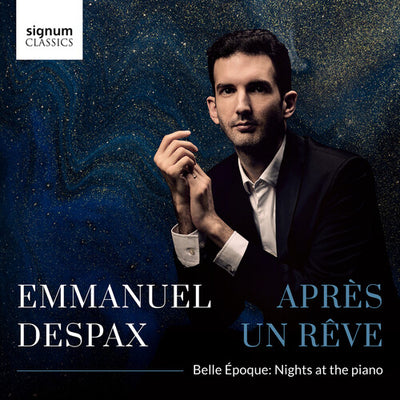
SaleAprès un rêve - Belle epoque: Nights at the Piano / Emmanuel Despax
Signum Classics · Aug 2023CD$19.99$9.99 -
-
-
SaleBrahms, Kahn & Frühling: Trios for Clarinet, Cello & Piano / Quantum Clarinet Trio
Haenssler Classic · Sep 2023CD$20.99$10.49 -
-
-
SaleBerio: Orchestral Realisations - Schubert, Mahler, Brahms / Gardner, Bergen Philharmonic
Chandos · Feb 2012CD$21.99$10.99 -
-
-
SaleLiszt, Debussy, Sastre, Franck: Piano Recital / Koryakin, Breton String Quartet
Naxos · May 2021CD$19.99$9.99 -
-
-
SaleBrahms: The Symphonies, Haydn Variations & 8 Hungarian Dance
Urania Records · Nov 2013CD$42.99$21.48 -
-
-
-
-
-
-
SaleMariss Jansons: Portrait - Beethoven, Haydn, Mahler, R. Strauss & More / BRSO
BR Klassik · Jan 2018CD$49.99$24.98
Walking The Dog
A surprising and refreshing journey which explores the confines of the repertoire for saxophone and piano, Walking the Dog unites two formidable virtuosos of the contemporary classical scene, the Austrian Andreas Mader and the German Joseph Moog.
Walking the Dog is a multifaceted work, an authentic melting-pot, a surprising witness to the richness of the international musical scene at the beginning of the 20th century. One would then encounter styles as diverse as the mambo, the merengue, the habanera, or the samba, or even fusions of these seemingly separate genres.
Andreas Mader and Joseph Moog open their recital with Gershwin's Rhapsody in Blue in the inspiring version of the Japanese Jun Nagao. Under their sensitive and incisive fingers, it becomes the spirit of Jazz itself, sparkling and fresh. The Suite of seven pieces adapted from Prokofiev's Romeo and Juliet pursues it in a trenchant and caustic way: the saxophone, part soprano part tenor, displays all its colours.
This programme also pays tribute to France – a well-deserved homage to the country where Adolf Sax fathered such a great family of instruments. Some works are iconic, such as Debussy's Rhapsody (in a new and impressive version by the saxophonist), Milhaud's Scaramouche, some less known, like the Two Pieces by Lili Boulanger, and we have a genuine rarity, the Five Exotic Dances, a brilliant and exciting suite of miniature compositions from 1961 by Jean Francaix. Andreas Mader and Joseph Moog conclude their journey by a return to the origins – New York – by giving us the little Promenade, under the title "Walking the Dog", that Gershwin composed for the film Shall We Dance with Fred Astaire and Ginger Rogers.
This is an absolutely thrilling album which arouses both curiosity and senses, a true revelation from this surprising duo. It is impossible to resist Andreas Mader's voluptuous saxophone interlocked into the golden piano playing of Joseph Moog.
Apollo & Dionysus / Danae & Kiveli Dorken
After the successful release of "Odyssey," pianist Danae Dörken presents her second album on Berlin Classics. Together with her sister - Kiveli Dörken - she invites the listener to embark on an emotional and psychological journey through a very personal selection of music that characterizes the Greek gods Apollo and Dionysus. This unique journey aims to become aware of the characteristics represented in each of us and create a balance between them. The technical brilliance present in their playing and the insightful, sensitive interpretations already make this album a highlight. Their deep personal connection and the decades of playing together at the piano are audible in every moment of these recordings and set this album apart.
(b)romance
Debussy & Ravel for Two / Bax & Chung Piano Duo
Their third duo album on Signum Classics, husband and wife Alessio Bax and Lucille Chung unite to bring an album of French works by Debussy and Ravel in versions for piano duo and four hands. With arrangements by Dutilleux and Ravel himself key works include ‘Prélude à l’après-midi d’un faune’ for four hands and La valse for two pianos.
Après un rêve - Belle epoque: Nights at the Piano / Emmanuel Despax
“Après un rêve” is an ode to the French Belle Époque repertoire, depicting the beauty of dreams and the night. The album is an opportunity to hear and perhaps discover rarely played / rarely recorded wonderful works (Chaminade Nocturne, Duparc Aux étoiles, Poulenc Les soirées de Nazelles), alongside central pillars of the repertoire, and includes a world premiere of Despax’s arrangement of Après un rêve. The album is attributed to his grandfather, Jacques Charpentreau, a French poet who adored this repertoire and frequently drew inspiration from the night in his works. Despax has curated some of his poetry, as well as works by other poets he admired to complement this music, taking the listener on an immersive poetic and musical journey through this noctur- nal landscape.
REVIEW:
Despax has recorded Bach, Brahms, Chopin, but the works here particularly suit his sensibility. In Maurice Ravel’s haunting masterpiece Gaspard de la Nuit, he masters the ferocious challenges with ease, delicacy, strength.
-- The Guardian (UK)
Brahms, Kahn & Frühling: Trios for Clarinet, Cello & Piano / Quantum Clarinet Trio
The human factor determines the path. The Clarinet Trio op. 114 by Johannes Brahms more or less represents the DNA of the Quantum Clarinet Trio, and the piece was one of the driving forces behind the founding of this young chamber ensemble, whose members first met at the Mozarteum University in Salzburg in 2014. At that time, Italian clarinettist Elena Veronesi had been searching for fellow musicians to collaborate in a late work trio, and she found them in the German cellist Johannes Przygodda and Korean pianist Bokyung Kim. What started as a project has now evolved into a permanent ensemble. This great Brahms trio has continued to be a enterprise in which life converges with art.
Cellists, pianists and clarinettists usually come together when a work requires such a constellation, the line-up going their own separate ways once the project is completed. Compared to piano trios or string quartets, these particular instruments unfortunately rarely come together as a fixed ensemble. The Quantum Clarinet Trio is a welcome exception to the rule, making this encounter with one of Brahms' most important works much more than just a "fleeting liaison".
Berio: Orchestral Realisations - Schubert, Mahler, Brahms / Gardner, Bergen Philharmonic
Berio had an abiding fascination with reconciling the past and the present, which can be seen in his orchestral realisations of works by Mahler and Brahms, and most notably, in Rendering (1990), his typically creative completion of unfinished symphonic sketches by Schubert. In Rendering, Berio - in his own words - sets himself the target of 'following those modern restoration criteria that aim at reviving the old colours without, however, trying to disguise the damage that time has caused, often leaving inevitable empty patches in the composition'. In the 'restoration', Schubert's sketches have been beautifully orchestrated in period style, and the 'empty patches' have been filled with music composed by Berio himself, in his own voice - thereby successfully combining the musical worlds of the early nineteenth and late twentieth centuries into one convincing whole. The Clarinet Sonata by Brahms embodies the composer's taut and concentrated compositional style. In transcribing the work, Berio felt that, when experienced in the less intimate surroundings of today's concert halls, the extreme compression of Brahms's late chamber music style was in need of some additional support, and his version, recorded here, includes a fourteen-bar orchestral introduction to the first movement, leading into Brahms's own, much shorter opening phrase, as well as five additional bars at the beginning of the second movement. Berio completed his orchestration of six early songs by Gustav Mahler in 1987, and conducted the first performance with the Toscanini Orchestra on 7 December that year,with Thomas Hampson the baritone soloist. The six songs in this orchestrated set are 'Hans und Grete', 'Phantasie', 'Scheiden und Meiden', 'Erinnerung', 'Frühlingsmorgen', and 'Ich ging mit Lust durch einen grünen Wald'. The Bergen Philharmonic Orchestra is conducted by Edward Gardner, with Roderick Williams the baritone soloist in the songs by Mahler and Michael Collins the soloist in Brahms's Clarinet Sonata.
Liszt, Debussy, Sastre, Franck: Piano Recital / Koryakin, Breton String Quartet
Alexander Koryakin, winner of the 2019 Jaén Prize International Piano Competition, has selected two perfectly paired masterpieces for his first Naxos recording. Liszts Vallée dObermann is inspired by his travels in Switzerland, and is a true symphonic poem for piano. Francks Piano Quintet in F minor, which Liszt himself found shockingly intense, is a cyclical work of passionate extremes, and a masterpiece of Franco-Belgian repertoire. Also included are Debussys LIsle joyeuse, which offers crystalline brightness, and Jorge Sastres Jaenera Ecos y temple, with virtuoso expression drawing on a wide range of influences. Alexander Koryakin began playing piano at the age of nine, gave his first recital at the age of ten and at eleven won his first competition. Over the course of his career, Koryakin has given over 500 recitals throughout Russia and Europe, including appearances at the Piano Loop Festival in Croatia and Gegen den Strom Festival in Germany.
Home Music Berlin / Piemontosi, Schmidt-Garre
When lockdown was imposed in 2020 many artists began streaming performances from their own homes. In response, pianist Francesco Piemontesi and director Jan Schmidt-Garre launched a concert series to showcase artists living in Berlin, given in the renowned Schinkel Pavillon with an expert technical team assembled at short notice. Fourteen concerts were held, without audiences, under the name Home Music Berlin featuring some of the world’s leading instrumentalists and singers. In addition, a documentary film captured rehearsals and private backstage scenes. This collection of performances is a testament to the resilience and solidarity of these artists during the pandemic.
God Loves the French / Karr, Leblanc
| This new release is a showcase of French masterworks by composers including Debussy, Ravel, and more. Kathleen Karr is the Principal Flutist of the Louisville Orchestra and Flute Professor at the University of Louisville. In 2012, she was awarded the Distinguished Teaching Professor Award for the University of Louisville. At the University of Louisville, Kathleen teaches all applied flute students , flute ensemble, flute studio class, flute literature, flute pedagogy, chamber music coaching and performs with the faculty woodwind quintet. A frequent soloist with the Louisville Orchestra, Kathleen has most recently performed the Mozart G Major Flute Concerto with the Louisville Orchestra during the 2014-15 season. Kathleen has taught flute and chamber music at the Interlochen Arts Camp (Interlochen, Michigan), Bellarmine University, Centre College (Danville, Kentucky) and Indiana University Southeast. Dr. Denine LeBlanc teaches music in the Jefferson County Public School system where she has taught for over twenty-five years. From 1978 until its closure in the spring of 2020, she taught piano in the Community Music Program at the University of Louisville School of Music. |
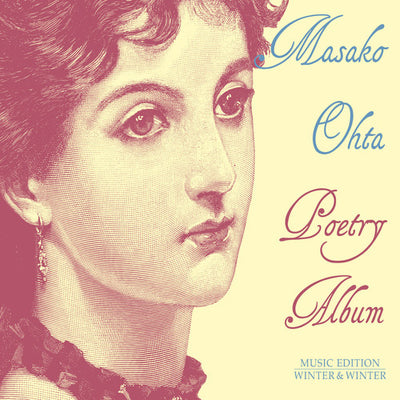
Poetry Album
The Eloquent Saxophone / Tanner, Widner
Navona Records is proud to announce the re-release of David Tanner's 1988 album The Eloquent Saxophone. Tanner is no Stranger to Navona; his compositions and arrangements can be heard on two other Navona releases: Of Birds and Lemons (2012) and Dashing (2016). This was his first album, featuring him as a performer. It includes two unaccompanied pieces and two sax quartets recorded by multi-tracking, as well as a rich variety of works with accompaniment admirably rendered by pianist Marc Widner. The music ranges from Schumann to a stylized blues by Gene DiNovi. Tanner's musical language is enriched by classical training and a career encompassing rock'n'roll and jazz as well as symphony. Reviewer Denis Armstrong wrote in Music Magazine, "Not long into this recording, one begins to marvel at the sheer joy David Tanner's playing conveys... a dense and rich recording... at times elegant and elegiac, other times ribald and visceral. But the one constant is the joy and clarity of expression." The first track sets the tone: "Serenade comique" is a brief, frantic sax quartet composition that evokes Parisian traffic or perhaps a flock of birds. "La Blues," the other quartet selection, evokes the melancholy of New York in the depth of night. "It is a treat for the listener to hear this feat of multi-tracking done so well," said reviewer Joseph Viola in Saxophone Journal. Each track is in contrast to the one before it; each represents something different and interesting. To quote Music Magazine again, "The Eloquent Saxophone [is] a thoroughly eccentric, invigorating and generous treat."
Mariss Jansons: Portrait - Beethoven, Haydn, Mahler, R. Strauss & More / BRSO
In an interview about great conductors with the newspaper Die Welt in 2015, Sir Simon Rattle said of Mariss Jansons, “He’s the best of all of us!” This new release from BR-Klassik focuses on the career of Mariss Jansons, and contains a total of five albums offering a representative cross-section of the classical symphonic repertoire- as well as a cross-section of the repertoire for which the chief conductor of the Symphonieorchester des Bayerischen Rundfunks has been highly praised again and again for his outstanding interpretative qualities. Landmarks of great choral music can be found here, as well as milestones in symphonic development and select orchestral songs. The works range from music of the First Viennese School to early 20th-century late romanticism; from Haydn’s “Harmoniemesse” to the Minuet from Haydn’s Symphony Hob. I:88; from Beethoven’s Fourth Symphony, Brahms’ Fouth Symphony and Mahler’s Ninth Symphony to Strauss’ Eine Alpensinfonie.
REVIEW
Jansons’ thoughtful interpretations are consistently clear and often profoundly insightful, and the playing of the Bavarian Radio Symphony Orchestra is impressive, whether in purely orchestral performances or with the Bavarian Radio Chorus in the Haydn and the Stravinsky. Considering Jansons’ high productivity, this set can only give a small sample of his many recordings, but fans who have yet to delve into his full repertoire will appreciate this package.
– AllMusic Guide.com