Alpha Classics Sale 2026
Over 600 titles from Alpha Classics are on sale now at ArkivMusic!
Discover titles from composers such as Giacomelli, Haydn, Godowsky and more!
Sale ends at 9:00am ET, Tuesday, April 14th, 2026.
622 products
-
-
-
-
-
-
-
-
-
-
-
-
-
-
-
-
-
-
-
-
-
La Nascita del Violoncello — Napoli - Bologna - Modena
CD$39.99$35.99Alpha
Apr 12, 2024ALPHA1023 -
-
-
-
-
-
-
-
-
-
-
-
-
-
-
-
-
-
-
-
-
-
-
-
-
-
-
-
Messiaen - Songs & Vocal Chamber Music / Hannigan, Sy, Frang, Chamayou
Soprano Barbara Hannigan and pianist Bertrand Chamayou unite to record the vocal music of Olivier Messiaen, presenting his two major song cycles from the 1930's. Existing in both the sensual and sacred realms, the Poèmes pour Mi are inspired by the precious relationship of Messiaen and “Mi” - the nickname of his first wife; violinist and composer Claire Delbos. Chants de terre et de ciel also emerges from Messiaen's marriage to Delbos, written just after the birth of their son, Pascal. Both cycles oscillate between hypnotic meditation and ecstatic songs of love, supported by Messiaen's intense spiritual faith. Inspired by Messiaen's words, "It is a glistening music we seek...", Hannigan and Chamayou delve into the composer's complex language to reveal a natural and flowing music, whose roots extend from the earth upwards to a shimmering realm. As a final work on the album, Hannigan and Chamayou included a rarely performed "scena" of Messiaen: La Mort du nombre (1929) is a dialogue between two souls, in which they are joined by the Canadian tenor Charles Sy and the Norwegian violinist Vilde Frang.
Reinvere: Ship of Fools
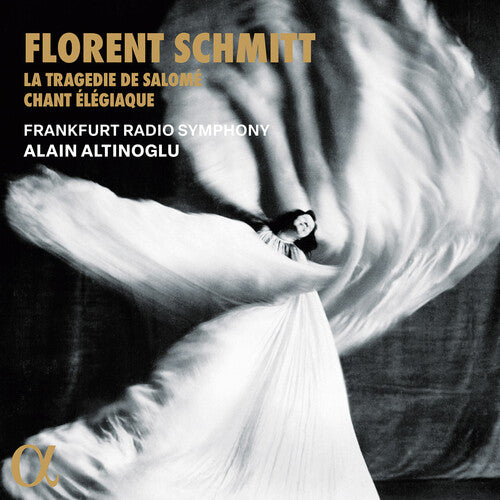
Schmitt: La Tragedie de Salome & Chant elegiaque
In 1907, Florent Schmitt composed music to accompany a ‘mimodrame’ danced by Loïe Fuller, La Tragédie de Salomé. His score is bursting with colour, energy, and voluptuousness – and also with oriental influences stemming from his travels to Morocco and Constantinople, where he discovered the howling dervishes. The final scene features the heart-rending ‘Chant d’Aïça’, an oriental melody sung by a soprano. This music, though bold and modern for the listeners of 1907, nonetheless aroused the admiration of another composer, Igor Stravinsky, to whom Schmitt dedicated the Symphonic Suite he subsequently derived from the work. However, Alain Altinoglu, at the helm of the Frankfurt Radio Symphony Orchestra of which he has been Music Director since 2021, has chosen to record the original version of this landmark of early twentieth-century French music. The beautiful Chant élégiaque, in its 1911 version for cello and large orchestra, completes this programme.
Doux silence / Roset, Richardot, Lazarevitch, Les Musiciens de Saint-Julien
The air de cour has been with me for almost as long as I’ve been playing the flute... For me, it is one of the finest creations of French art. I have assembled these airs from the second half of the seventeenth century to complete the exploration begun with Et la fleur vole (early seventeenth century, ALPHA314) and À l’ombre d’un ormeau (early eighteenth century, ALPHA342),’ says François Lazarevitch in the introduction to this new release.
‘I am particularly interested in combining the qualities of sound and breathiness of the voice and the flute.’ Love songs, dance tunes, and brunettes on pastoral themes follow one another in a program at once moving and erudite. These miniatures are magnificently interpreted by the two outstanding singers who join the instrumentalists (lute, flute, musette, harp, viol) of Les Musiciens de Saint-Julien: the soprano Julie Roset and the mezzo Lucile Richardot.
Haydn 2032, Vol. 15 - La Reine / Antonini, Basel Chamber Orchestra
The fifteenth volume of the Haydn2032 cycle is entitled ‘La Reine’. One might think that this nickname refers to Empress Maria Theresa of Austria, queen of numerous territories, but in fact the monarch honoured by the popular title of Symphony no.85 is her daughter, Marie Antoinette. It was said to be the favourite of ‘La Reine de France’, which is the full nickname of the work. The new volume also includes Symphony no.50, which delighted the Empress’s ears when she visited Prince Nicolaus Esterházy at his ‘Hungarian Versailles’ in 1773. Symphony no.62, which dates from 1780, the fortieth anniversary of Maria Theresa’s accession to the throne and also the last year of a life as eventful as it was glorious, rounds off this latest instalment of the complete recording of the symphonies conducted by Giovanni Antonini, here at the helm of the Basel Chamber Orchestra.
Bach & Telemann: Himmelfahrt / Vox Luminis, Freiburger Barockorchester
Vox Luminis has teamed up with the Freiburger Barockorchester again, and together they celebrate music for Ascension Day. This topic inspired great composers such as Johann Sebastian Bach, four of whose Ascension cantatas have been preserved. The festive and colourful Cantata BWV 128 was composed towards the end of Bach’s second year in Leipzig. The Ascension Oratorio BWV 11 was written for larger forces and ends with a triumphant chorus. In the case of Georg Philipp Telemann, more than thirty cantatas for Ascension Day alone have survived. The cantata Ich fahre auf zu meinem Vater (I ascend unto my Father) was composed in 1721. Lionel Meunier’s ensemble and the FBO give a fervent rendering of this captivating music with its texts focusing on the afterlife.
Liszt: Works for Solo Piano / Nelson Goerner
This is pianist Nelson Goerner’s twelfth recording for the Alpha Classics label. He devotes his new album to the solo piano works of Franz Liszt, with the famous Sonata in B minor as the centrepiece, nearly twenty years after his first CD of the sonata, he felt the urge to re-record it, following a series of critically acclaimed concerts. His talents as a storyteller and as a virtuoso with an eye for nuance are heard to marvellous effect in this monumental work, a veritable ‘musical action’ that undoubtedly belongs in the pantheon of the finest literature for piano. The programme is completed by excerpts from Liszt’s major cycles, including the Petrarch Sonnets from the Années de pèlerinage and the Hungarian Rhapsody No. 6, along with the spectacular concert étude La leggierezza.
REVIEWS:
Nelson Goerner made an excellent studio recording of Liszt’s Sonata in B minor that the Cascavelle label first released in 2007. This live all-Liszt recital from 2023 also features the Sonata. Although it benefits from fuller-bodied engineering, the interpretation offers surprisingly little change in regard to overall design, substance, and execution. Goerner’s tempo relationships remain judicious and unified, while themes are characterized with subtle yet telling contrast.
Forced to choose, I’d favor Goerner’s diversified voicings and greater dynamic projection in the remake’s Andante sostenuto. On the other hand, the earlier Allegro Energico fughetta gathers greater spontaneous momentum, followed by a more incisive yet less grand recapitulation. One could argue that there are fewer distinctly individual touches here in comparison with recent reference-worthy interpretations by Marc-André Hamelin, Benjamin Grosvenor, Joseph Moog, or Giovanni Bertolazzi. Yet that hardly matters, given Goerner’s intelligent mastery and total identification with the score.
If anything, Goerner’s readings of Liszt’s three Petrarca Sonetti offer even more fervent and poetic melodic projection, together with mellifluous legato chord voicings and prominent bass lines. If no one alive plays La Leggierzza with the feathery aplomb of Benno Moiseiwitsch’s unrivaled 1941 HMV recording, Goerner’s impassioned mobility comes pretty darn close to that paradigm, although he never plays softly enough when required.
Lightness and insouciance, however abound in the Valse oubliée No. 2. Goerner takes his sweet time over the Hungarian Rhapsody No. 6’s introduction, milking the music’s bardic implications without lapsing into vulgarity. Most pianists understandably treat the friska section as a high-wire right hand octave etude: think Horowitz, Cziffra, and Argerich. Goerner nails the notes, of course, yet presents both hands as equal partners, letting you hear a piano composition instead of a piano competition. I have no hesitation recommending such a satisfying and well-rounded Liszt program.
-- MusicWeb International (Jed Distler)
Mozart, You Drive Me Crazy! / Schultz, Manacorda, Potsdam Chamber Academy
‘Mozart, You Drive Me Crazy!’ This is the title that the South African soprano Golda Schultz has decided to give to her new album, devoted to the female heroines of Don Giovanni, Così fan tutte and Le nozze di Figaro, roles that have marked her career from Berlin to The Metropolitan Opera: ‘Why does Mozart drive me crazy? First of all, because his music, which sounds so easy when you listen to it, is extremely difficult to perform… And when I immerse myself in the world of Da Ponte and Mozart, I realise that there’s a deep complexity to their female characters: they endure the toughest trials, but they also display great strength. In fact, these operas explore humanity from the feminine perspective: every single one of these women is constantly evolving. They show how human beings transcend trauma and how grief and pain can be overcome.’ The programme is conducted by another eminent Mozartian, Antonello Manacorda, with the Kammerakademie Potsdam.
All These Lighted Things / Elim Chan, Antwerp Symphony
Anyone who has seen the conductor Elim Chan on stage is familiar with the immense energy produced by her baton. With the Antwerp Symphony Orchestra, of which she has been Principal Conductor since 2019, she celebrates a genre dear to her heart, ballet music, which places the emphasis on both physical movement and orchestral power. More than a century of ballet music is presented here, with excerpts from Prokofiev’s Romeo and Juliet suites, oscillating between passionate love and fatal violence; Suite no.2 from Ravel’s Daphnis et Chloé, the fruit of his first collaboration with Diaghilev in 1912, which he described as a ‘choreographic symphony’; and finally a work by Elizabeth Ogonek, All These Lighted Things, premiered in 2017. Although the title of these ‘three little dances for orchestra’ comes from a poem that evokes a soothing union with the earth at the dawn of a sunny day, the piece ends with a sort of folk dance that degenerates into an orchestral storm.
REVIEWS:
Conductor Elim Chan’s remarkable ear for detail is the star of All These Lighted Things, her new, dance-themed album with the Antwerp Symphony Orchestra.
Its title comes from a short set of pieces by Elizabeth Ogonek, who wrote them in 2017 for Riccardo Muti and the Chicago Symphony Orchestra. Highly abstracted though Ogonek’s approach to dance forms here may be, All These Lighted Things’ three movements are highlighted by a constant sense of invention and blazing colors. Particularly striking are the languid textures of the murky middle one.
The Suite No. 2 from Maurice Ravel’s Daphnis et Chloé channels a similar sound world. Though Chan’s approach to the “Danse générale” reads a shade restrained, there’s no denying the clarity or warmth of the Antwerp ensemble’s performance. Indeed, “Lever du jour” is sumptuous and beautifully directed while the “Pantomime’s” flute solos sound fresh and improvisatory.
But it’s in Chan’s compilation of movements from the first two suites from Sergei Prokofiev’s Romeo and Juliet that her virtuosity as a conductor shines the brightest. A host of subtleties emerge, from the quietly suspended woodwind tones in “The Montagues and Capulets” to the marshmallowy textures in the middle of “Friar Laurence,” the burbling accompaniments and pattering flute figures in the “Balcony Scene,” and the luminous play of light and shadow during “Romeo and Juliet Before Parting.”
Taken with their judicious tempos and strong feeling for the music’s narrative character, Chan and the Antwerp SO provide a performance of this favorite that is revelatory in all the right and needed ways. Keep an eye on this pairing: they’re worth watching.
-- The Arts Fuse
Piano Dances / Anna Vinnitskaya
Anna Vinnitskaya celebrates dance, or rather the dances of composers from very different periods and styles: Ravel, Shostakovich and Widmann. ‘In all these works, you can feel in some way transported to the world of childhood. Because I believe the childhoods of each of these three composers are reflected there’, says the pianist. In his Valses nobles et sentimentales, Ravel paid tribute to Schubert. A few years later, he transcribed for solo piano his ballet score La Valse, in which ‘billowing clouds part from time to time, allowing us to glimpse waltzing couples’. Shostakovich’s Dances of the Dolls make me think of the Soviet cartoons of my childhood’, says Anna Vinnitskaya. ‘They also remind me of Mozart: they are as bright as diamonds, sincere and beautiful.’ The Zirkustänze (Circus Dances) composed by Jörg Widmann in 2012, a brilliant kaleidoscope of emotions and parodies, round off the programme.
La Nascita del Violoncello — Napoli - Bologna - Modena
Yvain: Yes! / Les Frivolités Parisiennes
Maurice Yvain’s operettas were immensely successful in the 1920s. The fantasy of the ‘swing’ music, the catchy songs and the perfectly oiled rhythms were all the rage in the Paris of the Roaring Twenties. But the success of these comedies, with their caustic humour, also owed much to the fabulous texts by Albert Willemetz, considered as one of the fathers of modern operetta in the twentieth century. Yvain and Willemetz’s numbers were hummed in the streets and charmed all who hear them – and still do, even a century later! Les Frivolités Parisiennes set out to revive this music, which is still as young as ever. Yes! was premiered at the Théâtre des Capucines on 26 January 1928 and was an immediate hit: this story of a complicated marriage, moving between Le Touquet and London, was to remain on the bill for years to come. The version presented here by Les Frivolités Parisiennes is as close as possible to the spirit of the work’s premiere, and includes all available musical material. With the exceptional participation of Clément Rochefort as narrator.
REVIEWS:
Back in the 1920s and 30s, Maurice Yvain was the undisputed king of the boulevards, his catchy tunes whistled and hummed dans les rues. In 1919, he had a hit with Dansez-vous le foxtrot?, sung by his former army pal Maurice Chevalier. The following year saw the first of many collaborations with the redoubtable actress and singer Mistinguett: Mon Homme was another winner, going on to be sung by Barbra Streisand in Funny Girl.
It was Chevalier who introduced him to Albert Willemetz, a gifted writer of situational farce, whose witty libretti graced a string of popular operettas with one foot in comic opera and one in musicals. Yes!, based on Totte et sa chance (Totte and her luck), a bestselling novel by Pierre Soulaine and René Pujol, opened at the tiny Théâtre des Capucines on 26 January 1928. It was an immediate hit, rapidly transferring to larger theatres before playing all over France and even as far as Hungary. The plot is frivolous, funny and typically French. With its emphasis on marriage, morals and mistresses it is also entirely of its time. Parisian playboy Maxime Gavard lives off his tyrannical father, a wealthy pasta manufacturer known to all as ‘the Noodle King’. When he’s ordered to marry Marquita, an exotic beauty from Valparaiso, his current amour, Madame de Saint-Églefin whose dim-witted husband happens to get on famously with Maxime, advises him to turn out to be married already. Enter Totte, Maxime’s new manicurist, who agrees to a quickie wedding in London. Old man Gavard is duly furious. First, he decides to marry Marquita himself and then threatens to disinherit Maxime if he doesn’t divorce Totte on the spot. The ensuing web takes a deal of untangling, but after much huffing and puffing by Gavard Père all comes good in the end. Given the paucity of performing materials – shows in those days were often throwaway affairs and rearranged for available forces – Les Frivolites Parisiennes has done a thoroughly convincing job. The 34-piece orchestra oozes Gallic charm and the score is delivered with all the fizz of a freshly opened bottle of Dom Perignon. The show itself is chockfull of good tunes, which the lively cast inhabit as to the manner born. There are some cracking earworms, like Maxime’s pattering Si vous connaissiez Papa (If you knew my father), Totte’s chipper Moi je cherche un emploi (I’m looking for a job), or Papa Gavard’s pompous Le Roi Du Vermicelle (the King of Vermicelli). Other numbers display Yvain’s gifts for mood and melody. The trio Il faut chercher (You need to find) is a skilful construction owing simultaneous debts to Weill and Offenbach. Maxime and Totte’s perky duet Londres! could almost be by Poulenc, while Marquita’s delicious song about life among the gauchos channels Gershwin. Once you hear the snappily argumentative Dites à mon fils (Tell my son) I guarantee you’ll be humming the tune. Guillaume Durand’s flexible tenor makes light work of the insouciant Maxime, every word placed with character and care. He’s neatly paired with Sandrine Buendida whose sparkling soprano brings to life the resourceful Totte. Leovanie Raud and Aurélian Gasse have fun with the scheming Saint-Églefins, Irina de Baghy is a fruity Marquita and Philippe Brocard chews up the scenery as a fast and furious Gavard Père. The text is only given in French, but the story is easy to follow from the detailed synopsis and the whole thing is recorded in first-rate sound. Ooh la la, as they say en Paris.
-- Limelight Magazine
O’er the Moor - Songs & Dances from Scotland & Ireland
Handel: Theodora / Cohen, Arcangelo
Among Handel's seventeen English oratorios, Theodora (1750) is unique. The story is not taken from the Bible, it is set in the Christian era, there is no national triumph and it does not end in joy. At the end, the hero and heroine are dead, the community with which the audience identifies is in mortal danger, and the final chorus is in a minor key. As a musical drama, it is the direct ancestor of Dialogues des Carmelites. At the age of 65, Handel produced a work that was too radical and complex for most of his audience. Today, Theodora is regarded as a benchmark "thinking person’s opera", both deeply stimulating and powerfully moving.
Scarlatti & Dvořák: Stabat Mater / Bestion, La tempête
Simon-Pierre Bestion has chosen to mirror two Stabat Mater that are more than 150 years apart: "in these two works I can feel the same tonal language, the same expression of sorrow" says the founder of La Tempête… "I have decided to ‘augment’ Scarlatti’s orchestration and ‘diminish’ Dvorák’s, so they can meet on even ground. To the Scarlatti I have added string parts sometimes doubling the vocal lines, colla parte, as was often done at the period: this not only allows the sound to be amplified, but adds an extra timbre to the voice. For the Dvorák, I have transcribed the original piano part into its minimum orchestral dimension, that is, for strings. This creates a common sound world between the two works – I would even say they have the same kind of lyricism in common, with just the timbres of the piano, organ and theorbo standing out."
Aubert, Bizet, Debussy, Faure & Ravel: Passage Secret
Amid the abundance of French miniatures, the Jeux d'enfants, Petite Suite, Dolly and Ma mère l'Oye cycles stand out in a class of their own: these four collections for 4 hands have become some of the most famous works by their respective composers. Arthur Ancelle and Ludmila Berlinskaia explore the melodic, harmonic and sonic richness of these works while revealing their depth and ingenuity. A veritable treasure chest that deserves to be opened by all listeners, young and old alike.
Mozart: Piano Concertos Nos. 18 & 21 / Fournel, Griffiths, Mozarteum Orchestra Salzburg
Bravo Mozart! exclaimed Emperor Joseph II as he stood up and tipped his hat at the end of the first performance of Piano Concerto No. 18 KV 456, played by Mozart himself on 30 September 1784. Less than a year later, the composer pens his iconic 21st concerto, which is performed here by the Mozarteumorchester Salzburg conducted by Howard Griffiths, and pianist Jonathan Fournel. Winner of the prestigious Queen Elisabeth Competition in 2021, the French pianist has already made a Brahms recording for Alpha (ALPHA851). At the age of 30, he is developing a highly promising career, impressing audiences at every one of his concerts.
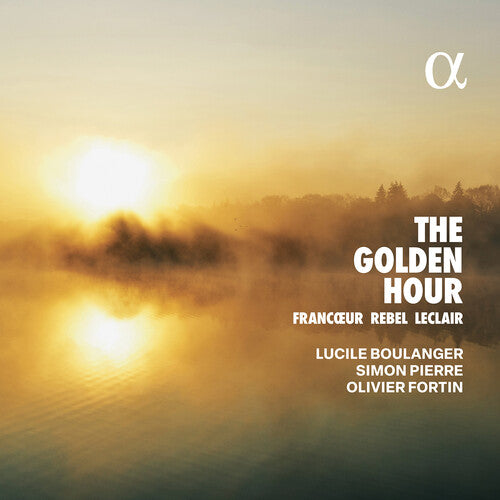
The Golden Hour - French Baroque Violin & Viol Music / Boulanger, Pierre, Fortin
We are around the time of the Regency, at the political crossroads between Louis XIV and Louis XV. The viola da gamba was enjoying its last hours of glory in France, while the violin was beginning to take centre stage. The Golden Hour, which generally refers to the periods after sunrise and before sunset when the light changes, evokes here those years of convergence, even confrontation, between a viola da gamba in the twilight of its life and a violin at the dawn of its soloist destiny.
Strauss: Four Last Songs - Laws of Solitude
Méditation: Keyboard Works by Bach, Couperin & Others / Andreas Staier
Andreas Staier’s informed and inspired interpretations have left their mark on the discography of both the harpsichord and the fortepiano and have enabled us to see Bach, Mozart and Schubert in a completely new light. This is Staier’s first solo album of a projected series for Alpha Classics, in which he also presents his own compositions for the first time. “Two motifs connect the works in this recording: the first is a ancient cantus firmus, a melody in long notes […] the second is the interval sequence of octave, fifth, sixth, and third. […] Anklange, my six pieces for harpsichord, grew out of several conversations I had with the composer Brice Pauset about what it means to compose in our time, and in particular what it implies to compose for historical instruments. This led me to ask myself how I could express and capture my own conception of music in notes, marked as it is not only by Byrd, Bach and Schubert, but also by the music of the 20th and 21st centuries."
REVIEW:
This release is a good example of Andreas Staier’s intelligent program building, both intellectually and musically speaking. Two motifs form a thread that runs through most of the works assembled here. One is the note sequence E–F-sharp–A–G-sharp–F-sharp–E that appears in Johann Caspar Ferdinand Fischer’s E major Prelude and Fugue from Ariadne Musica, Bach’s E major Prelude and Fugue from The Well-Tempered Clavier Book II, plus Froberger’s Fantasia II and Ricercar IV (the latter transposed to begin with G). The other motif is based on a sequence of intervals: octave, fifth, sixth, and third. Other pre-Bach composers include Louis Couperin and Johann Joseph Fux
At the recital’s midpoint, Staier features his own six pieces for harpsichord composed in 2020 that comprise a suite entitled Anklänge. His style forgoes tonality for the most part, yet his boundless palette of sonorities, his dramatic registral deployment, and his instincts for when and how to leave space all generate palpable tension and release. The fourth piece, for example, makes arresting use of thick spread chords that resonate for a long time under the fingers, while No. 6 features aphoristic lines that unfold like skywriting, with plenty of air between each utterance.
Indeed, resonance and breathing room characterize Staier’s performing style, which revels in the colorful variety of stops offered on his harpsichord modeled after a 1734 Hieronymus Albrecht Hass model. You’ll notice this in how Staier times and differentiates his arpeggiations of chords throughout the Couperin Pavane, as well as in the melting impact of his masterful finger legato in the Froberger Meditation. Surprisingly, Staier takes a forthright tempo for the aforementioned Bach Fugue, where his octave couplings have a rather upholstered effect that, for my taste, works against the music’s reflective and vocally oriented nature. Still, Staier remains the masterful instrumentalist and thinking musician that has long enamored me to his extensive and wide-ranging discography.
-- ClassicsToday.com (Jed Distler)
Messiaen, Schubert, Schumann & Stravinsky: Fantasy / Baeva, Kholodenko
Violinist Alena Baeva joins Alpha Classics for several recordings, starting with an album of chamber music with pianist Vadym Kholodenko, her favourite partner. Together they offer an eclectic and unusual programme of Schubert's fearsome and magnificent Fantasy for violin and piano, composed a year before his death… This is followed by Stravinsky's joyous and boisterous miniatures in a collection entitled Divertimento, proposed as an abridgement of the ballet Le Baiser de la fee (The Fairy's Kiss). Olivier Messiaen composed a Fantaisie for his first wife, the violinist Claire Delbos, but the work was not published until 2007. Die Marchenbilder by Schumann complete the programme. Initially a pupil at the Moscow Conservatory, Alena Baeva later left Russia and was taught by Shlomo Mintz, Mstislav Rostropovich, Boris Garlitsky and Seiji Ozawa. At just 16, she won the Grand Prize in the Henryk Wieniawski International Competition, and many other prizes followed. Alena Baeva plays the Guarneri del Gesù "ex-William Kroll" of 1738. Ukrainian pianist Vadym Kholodenko was awarded the Van Cliburn Gold Medal in 2013.
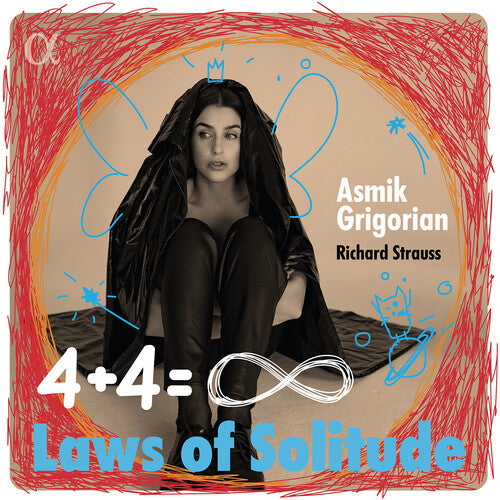
Strauss: Four Last Songs - Laws of Solitude / Asmik Grigorian
Singer Asmik Grigorian has chosen to record both versions of Richard Strauss's ultimate masterpiece, composed in 1948: the version with orchestra and the much rarer version with piano. For her, this work is associated with the idea of solitude, but not an unhappy solitude, rather a journey towards infinity: "Now all my senses long to sink into slumber. And the soul, unguarded, longs to soar up in freedom, so that, in night’s magic circle, it may live deeply and a thousandfold." writes Hermann Hesse in Beim Schlafengehen (Going to Sleep), the third song in the cycle. For this unique coupling, Asmik is joined by two long-time accomplices: conductor Mikko Franck, with the Orchestre Philharmonique de Radio France, and pianist Markus Hinterhauser, artistic director of the Salzburg Festival. The combination of the two versions opens up new sensations: after the well-known abundance of Strauss's orchestration an incredible sensitivity is revealed by the piano version.
Bartók, Nichifor, Poulenc & Schoenfield: Take 3 / Kopatchinskaja, Bieri, Leschenko
The basic idea of this album was to play in threes… Not to play 'something', but to experiment 'in threes' with sound worlds as different as those of Bartók, Poulenc and Schoenfield. With his Contrastes, composed in 1938 for Benny Goodman, Bartók broadened his penchant for traditional music and turned it into a more universal work, influenced by jazz. Poulenc was a child of the Paris of the Roaring Twenties, influenced as much by Stravinsky, Ravel and Satie as by cabaret songs and operetta. Paul Schoenfield, born in Detroit in 1947, also likes to combine styles. Each of the movements in his trio is based on an Eastern European Hasidic melody… not forgetting the breathtaking klezmer dances of Romanian Șerban Nichifor. Almost ten years after Take 2 (Alpha211), Patricia Kopatchinskaja reunites with two great accomplices, clarinettist Reto Bieri and pianist Polina Leschenko, for a programme based around trios that celebrate the roots of these three musicians.
Corelli & Quentin: Flute Sonatas / Besson, Rignol, Rondeau
In 1700, Corelli published his 12 violin sonatas, Opus 5, in Rome. A veritable revolution in violin technique, they won the admiration of eminent composers (Bach, Dandrieu, Couperin) and greatly influenced the French (Francoeur, Leclair, Senaillé, Quentin), who were to try their hand at this virtuoso and brilliant Italian style. At the end of the 1730s, the first six sonatas of opus 5 were"adapted to the transverse flute with the bass" by a Parisian publisher. The level of virtuosity they demanded was quite innovative at the time. This display of virtuosity is also to be found in the compositions of Jean-Baptiste Quentin, known as Le Jeune. We have very little biographical information on Quentin himself, but all his work is greatly inspired by Italian music and is heavily influenced by Corelli. Anna Besson has made the world's first recording of his sonatas, with the help of two other eminent performers of the new Baroque generation, Myriam Rignol on viola da gamba and Jean Rondeau on harpsichord…
Sibelius: Symphony No. 4; The Wood-Nymph; Valse Triste / Rouvali, Gothenburg SO
The Fourth is Sibelius's most difficult symphony. For some, it is his masterpiece. When the symphony was premiered on 3 April 1911 in Helsinki, one critic compared it to Barkbröd - tree bark eaten by the Finns in times of famine! It is fittingly a Finn, conductor Santtu-Matias Rouvali, who explores this symphony that lays bare our emotions. With his Göteborg Symphony Orchestra, he continues his cycle of the complete Sibelius symphonies, with the addition of the famous Valse Triste and the symphonic poem inspired by Swedish folklore called The Wood Nymph.